
Dear Parent,
Take a breath.
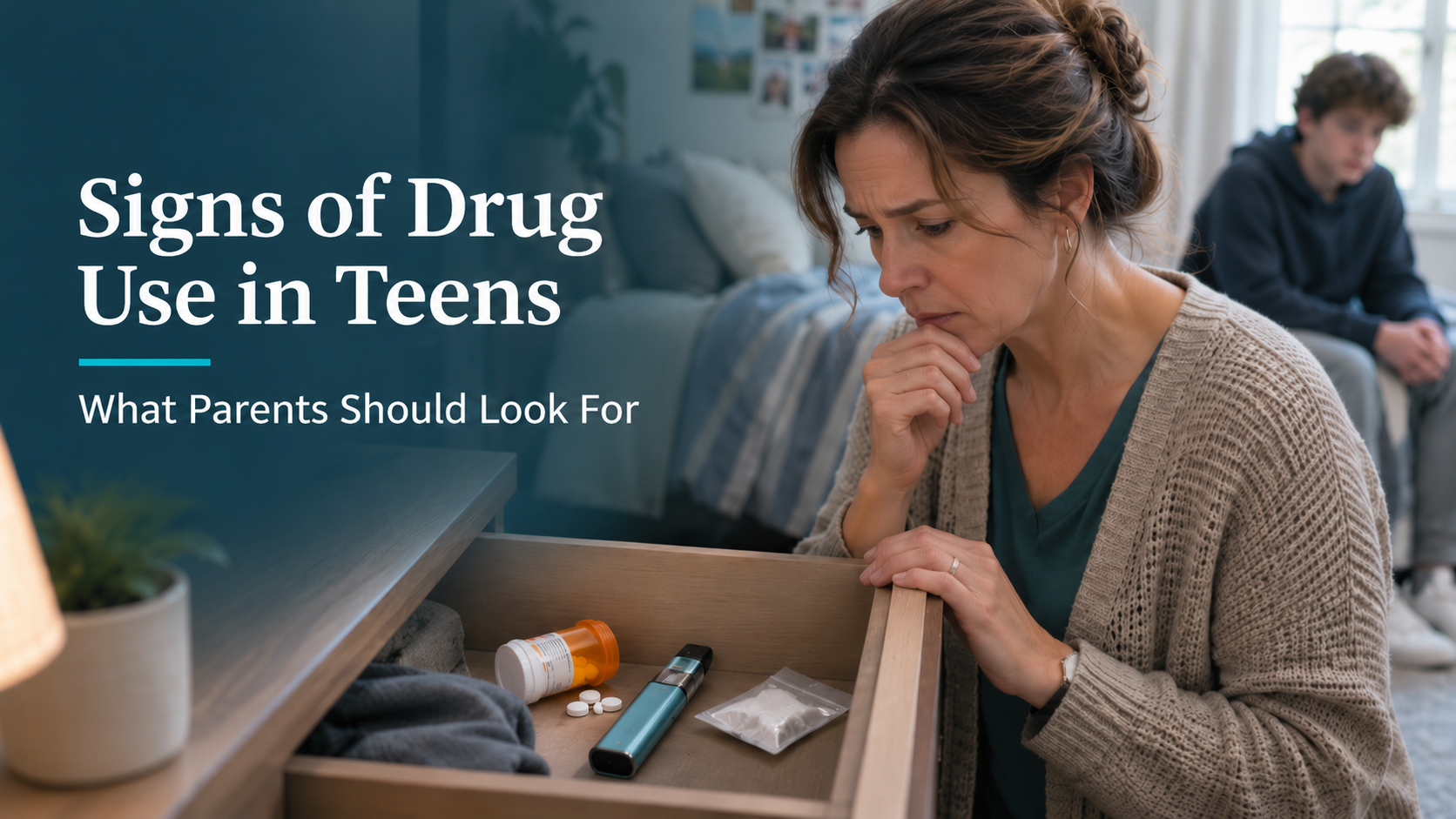
Maybe you were looking for something completely ordinary. Maybe you were putting away laundry, cleaning your child's room, or searching for a missing charger when you noticed something that didn't belong there.
A small packet of pills. A vape tucked inside a drawer. An unfamiliar tablet with a label you didn't recognize. Perhaps something marked 7-OH.
And suddenly, your mind started racing.
What is this? Is my child using drugs? How long has this been happening? Are they in danger? Have I missed something? What do I say? What happens if I confront them?
Before anything else, we want you to know something:
You are not a bad parent because this happened. And your child is not beyond help because you found something frightening.
This is a moment that deserves attention, but it doesn't have to become a moment defined by anger, shame, or panic.
At Altura Recovery, we understand how frightening substance-related concerns can be for families. We also understand that behind every worried parent is someone who loves their child and wants to protect them.
This letter is for you.
Signs of Drug Use in Teens: What Should You Do After Finding Something in Your Child's Room?
Finding pills, a vape, or an unfamiliar substance does not automatically prove that your child has a substance use disorder. But it is a reason to pause, assess the immediate safety situation, and have an honest conversation.
Your first priorities should be:
-
Check whether your child may have taken anything or is experiencing symptoms of an overdose.
-
Keep unfamiliar substances away from children, pets, and anyone who could accidentally ingest them.
-
Avoid experimenting with, tasting, or identifying unknown substances yourself.
-
Approach your child with curiosity and concern rather than immediate accusations.
-
Arrange a conversation with an appropriate healthcare professional if substance use is suspected.
You do not have to solve everything in one evening.
You do need to make sure everyone is safe.
First, Let's Talk About What You Found
Not all substances present the same risks. A prescription medication, an unidentified pill, a nicotine vape, and a concentrated 7-OH product require different considerations.
Understanding what you found can help you decide what to do next.
1. You Found Pills You Cannot Identify
Perhaps you found loose tablets, capsules, prescription medication belonging to someone else, or pills inside an unmarked container.
It is important not to assume what they are based on their appearance.
Some counterfeit pills are made to resemble legitimate prescription medications. They may contain unexpected substances, including fentanyl.
Even a pill that looks familiar may not contain what its packaging or appearance suggests.
What should you do?
-
Do not allow anyone to take the pills.
-
Avoid crushing, breaking, or handling unknown substances unnecessarily.
-
Keep the container or packaging available for medical professionals when safe to do so.
-
Store the items securely, away from children and pets, and seek advice about safe disposal.
-
If you suspect ingestion, contact Poison Control at 1-800-222-1222 in the United States. Do not wait for symptoms to appear.
When there is a suspected overdose, call 911 immediately.
2. You Found a Vape
Vapes can be difficult for parents to identify, especially when products are designed to look like ordinary pens, USB drives, or other everyday objects.
Some contain nicotine. Others may contain cannabis-related substances or unknown liquids.
Nicotine exposure during adolescence is concerning because the developing brain is particularly vulnerable to nicotine addiction.
A vape does not automatically tell you what your child has been using, how frequently they have used it, or whether they are experiencing dependence.
Look at the situation, not just the device.
Have you noticed changes in their routine, unexplained spending, increased secrecy, cravings, or difficulty going without the device?
These observations can help guide a conversation, but they are not proof of addiction.
3. You Found a 7-OH Tablet
This one deserves particular attention.
You may not have heard of 7-OH before. It is short for 7-hydroxymitragynine, a potent opioid-related compound associated with the kratom plant.
Concentrated 7-OH products are sold in different forms, including tablets, gummies, and other products. They may appear in packaging that describes them as natural, botanical, or wellness-related.
However, natural-sounding marketing does not mean a product is safe.
The U.S. Food and Drug Administration has warned consumers about concentrated 7-OH products, stating that they have not been proven safe or effective for any medical use. The FDA has also taken enforcement action against companies distributing products containing 7-OH.
These products can carry serious risks, including potential abuse and opioid-related harm.
What parents should understand:
-
7-OH is not the same thing as an ordinary nicotine vape.
-
It is not simply a harmless herbal supplement.
-
Concentrated products can have opioid-like effects.
-
The contents and actual amount in an unregulated product may be difficult to verify.
-
A product found in a child's room should never be tested by tasting or experimenting with it.
You can read the FDA's official information here: Products Containing 7-OH Can Cause Serious Harm.
Your concern is justified. Your response should be calm, informed, and focused on safety.
When Is It an Emergency? Warning Signs Parents Should Never Ignore
Before planning a conversation, make sure your child is medically safe.
An overdose can happen with many different substances. A person does not need to have a known addiction history to experience one.
Call 911 immediately if your child:
-
Cannot be awakened or is losing consciousness.
-
Has slow, shallow, irregular, or stopped breathing.
-
Has blue, gray, or unusually pale lips or skin.
-
Has a seizure.
-
Is experiencing severe confusion or cannot respond normally.
-
Has collapsed or is experiencing serious breathing difficulties.
If opioid exposure is possible, administer naloxone if available and you know how to use it. Naloxone can temporarily reverse an opioid overdose, but emergency medical help is still essential. Give another dose according to product instructions or emergency guidance if the person does not respond.
Do not leave the person alone or assume they are simply sleeping it off.
If you suspect poisoning or ingestion without obvious emergency symptoms, contact Poison Control at 1-800-222-1222 for immediate guidance.
Never wait for a suspected overdose to become worse before seeking help.
How to Recognize the Signs of Drug Use in Teens Without Jumping to Conclusions
Sometimes, what you find in your child's room is only one part of a much bigger picture.
You may have noticed that something has changed over the last few weeks or months.
Perhaps your normally outgoing child has become withdrawn. Maybe their grades have dropped, they are sleeping differently, or they seem unusually defensive whenever you ask where they have been.
These changes may be signs of a problem, but they can also have other explanations, including stress, depression, anxiety, or normal developmental changes.
Here are some patterns worth paying attention to.
1. Sudden Changes in Friendships
Your child may have started spending time with a completely different group of friends or become unusually secretive about the people they are spending time with.
A change in friendships alone is not proof of substance use.
However, a sudden combination of secrecy, unexplained absences, and other behavioral changes may deserve a closer conversation.
2. Declining School Performance
A child who previously cared about school may suddenly stop completing assignments, miss classes, or lose interest in activities they once enjoyed.
Substance use can affect concentration, motivation, memory, and academic performance.
But remember that school difficulties can also reflect emotional distress or other challenges.
3. Increased Secrecy and Unexplained Spending
Perhaps your child becomes defensive when you ask ordinary questions.
You may notice unexplained withdrawals, missing money, unfamiliar purchases, or frequent requests for cash.
Rather than immediately assuming the worst, look for repeated patterns and ask questions without turning the conversation into an interrogation.
4. Changes in Mood and Behavior
You may notice increased irritability, anger, anxiety, sadness, or unusual emotional reactions.
Some adolescents who are struggling with substances may become withdrawn or lose interest in activities they previously enjoyed.
These are possible warning signs, not a diagnosis.
5. Changes in Sleep and Daily Routine
Unusual sleeping patterns, frequent tiredness, disrupted routines, or unexplained periods of wakefulness may be worth discussing.
Pay attention to whether several changes are happening together rather than treating one isolated behavior as proof of substance use.
The National Institute on Drug Abuse identifies behavioral changes, school difficulties, disrupted relationships, and changes in sleep or eating habits as potential signs that adolescents may need an evaluation.
You can read its guide to adolescent substance use.
The Conversation You May Be Afraid to Have
Now comes the part that may feel even harder than finding the substance.
Talking to your child.
You may be angry. You may feel betrayed. You may be frightened of hearing something you are not ready to hear.
Those feelings are understandable.
But when you approach your child, remember this:
The goal of the first conversation is not to win an argument. It is to understand what is happening and keep your child safe.
You don't need a perfect speech.
You need an honest conversation.
What You Can Say
Consider starting with something simple:
"I found something in your room, and I'm worried about you. I'm not here to attack you. I want to understand what it is, whether you've used it, and whether you're safe."
Then give them time to respond.
They may deny everything. They may get angry. They may become embarrassed or even frightened.
Try not to interpret their first reaction as the complete truth.
Let them know that you are willing to listen, but that their safety is not negotiable.
Questions That Can Help Open the Conversation
Instead of asking questions that sound like accusations, try:
-
"Can you tell me what this is?"
-
"Have you used any of these products?"
-
"Do you know what is actually inside it?"
-
"How long has this been going on?"
-
"Has anyone encouraged you to try it?"
-
"Have you ever felt unwell after using it?"
-
"Is there anything happening in your life that you've been struggling to talk about?"
Ask one question at a time.
Give your child room to answer. If you discover possible regular use, ask whether they have experienced cravings, trouble stopping, or symptoms when they cannot use the substance.
Those details can help a healthcare professional assess what kind of support is needed.
What Not to Say When You Find Drugs in Your Child's Room
We know this is difficult. But a few words spoken in anger can make an already frightening situation harder.
Try to avoid statements such as:
-
"You've ruined your life."
-
"I can't believe what you've done to this family."
-
"You're just like someone I never wanted you to become."
-
"You're a failure."
-
"You'll never get another chance."
These statements can increase shame and make your child less willing to open up.
That doesn't mean you must ignore what happened or remove all consequences.
You can set firm boundaries while still communicating love.
For example:
"I am upset about what I found because your safety matters to me. We are going to take this seriously, and we're going to work out what needs to happen next. But you are not going through this alone."
Compassion does not mean permissiveness.
It means addressing the problem without making your child feel that they have become the problem.
Why Some Teens Turn to Substances in the First Place
One question that may keep coming back is:
Why?
Why would your child take something that could hurt them?
There is rarely one simple answer.
Adolescents may experiment with substances for several reasons, including:
-
Peer pressure and social acceptance.
-
Curiosity and experimentation.
-
Stress related to school, relationships, or family.
-
Anxiety or depression.
-
Trauma or difficult life experiences.
-
A desire to escape uncomfortable emotions.
-
Misleading claims about products that are marketed as natural or harmless.
-
Easy access to substances through friends, social media, or other channels.
Sometimes, what begins as experimentation becomes a pattern that is difficult to control.
This is why understanding the reasons behind substance use can be just as important as addressing the substance itself.
Instead of asking only, "Why did you do this?" consider asking, "What were you hoping this would do for you?"
That question can lead to a much more meaningful conversation.
When Is It Time to Seek Professional Help?
You do not need to wait until your child experiences a crisis before speaking to a professional.
In fact, seeking guidance early can help you understand the situation, assess risks, and decide what kind of support may be appropriate.
Consider arranging a professional assessment when:
-
You suspect repeated substance use.
-
Your child struggles to stop using a substance.
-
You notice increasing secrecy or risky behavior.
-
Their physical health, school performance, or relationships are being affected.
-
They experience cravings or withdrawal symptoms.
-
They use substances to manage anxiety, depression, stress, or emotional pain.
-
You are unsure how to respond safely as a parent.
A pediatrician, primary care clinician, or qualified adolescent behavioral health professional can help determine the appropriate next step.
Treatment is not one-size-fits-all. Some young people need education and early intervention, while others may require specialized substance use treatment, mental health support, or a more intensive level of care.
If your child is a minor, ask specifically about adolescent-appropriate services and qualified providers. Adult outpatient programs are not automatically suitable for teenagers.
What Recovery Can Look Like for Your Family
It is easy to imagine that everything changes overnight once substance use enters the picture.
But recovery is not one single event.
It is a process that may involve medical care, behavioral therapy, family support, healthy routines, and ongoing follow-up.
For some young people, treatment may focus on preventing further experimentation and addressing the circumstances that contributed to substance use.
For others, treatment may involve a structured recovery plan and support for co-occurring mental health concerns.
Families can also benefit from professional guidance.
You may need help learning how to:
-
Set healthy boundaries.
-
Rebuild communication.
-
Respond to difficult conversations.
-
Recognize risky situations.
-
Support recovery without enabling harmful behavior.
-
Manage your own stress and emotional exhaustion.
Remember, your well-being matters too.
You cannot be expected to carry every part of this situation alone.
A Message From Altura Recovery: You Deserve Support Too
At Altura Recovery, we believe that families deserve compassion, understanding, and access to trustworthy recovery resources.
Our Houston-area team provides outpatient addiction treatment for adults, with programs designed around individual clinical needs.
Our services include:
Partial Hospitalization Program (PHP)
Structured, intensive outpatient treatment for adults who need a higher level of daily clinical support.
Intensive Outpatient Program (IOP)
A structured treatment option for eligible adults who need ongoing support while maintaining important responsibilities.
Virtual Intensive Outpatient Program
Remote treatment through secure video sessions for eligible adults across Texas.
Structured Outpatient Program (SOP)
Continuing support for individuals who are ready for a lower-intensity treatment structure.
Our approach also considers co-occurring mental health concerns, including anxiety, depression, and trauma-related difficulties.
An important distinction: Altura's listed treatment programs are adult services, not a dedicated adolescent treatment program. If your child is under 18, our team can discuss whether an appropriate referral or another provider may be needed.
And even when your child is not ready to seek help, you can still begin by getting guidance for yourself.
You do not need to have everything figured out before reaching out.
Contact Altura Recovery:
Website: https://www.alturarecovery.com/
Phone: 713-766-1330
Location: 5555 West Loop South, Suite 240, Bellaire, TX 77401.
You can also explore insurance verification and treatment options through our website.
To the Parent Reading This: One Last Thing
You may be replaying the moment you found that pill, vape, or tablet.
You may be wondering where you went wrong.
You may be scared of what tomorrow will bring.
But please remember:
Finding something in your child's room does not define your parenting.
Your child's current choices do not determine their entire future.
And one difficult conversation does not have to become the end of your relationship.
You can be firm and loving at the same time.
You can establish boundaries and still offer understanding.
You can take the situation seriously without allowing fear to control every decision.
Start with safety. Then start with a conversation. And when you need help, reach out to someone qualified to guide you.
Your child needs support, not shame. And you deserve support, too.
With compassion,
The Altura Recovery Team
Frequently Asked Questions
1. What should I do if I find drugs or unknown pills in my teenager's room?
First, assess whether your child may have taken anything or is experiencing an emergency. Keep the substance secured away from others, do not allow anyone to consume or experiment with it, and contact Poison Control if ingestion is suspected. Start a calm conversation and arrange a professional assessment when appropriate.
2. What are the common signs of drug use in teens?
Potential signs include sudden behavioral changes, declining school performance, unusual secrecy, changes in friendships, disrupted sleep, unexplained spending, and loss of interest in activities. These signs are not proof of substance use and may have other explanations.
3. How can I tell if my teenager is vaping?
Possible clues include finding vape devices or cartridges, unfamiliar charging devices, unexplained spending, and changes in behavior. However, these signs alone cannot establish what a device contains or whether your child is using it.
4. What is 7-OH, and why should parents be concerned?
7-OH, or 7-hydroxymitragynine, is a potent opioid-related compound associated with kratom. Concentrated products may be sold as tablets, gummies, or other products. The FDA warns that these products have not been proven safe or effective for any medical use and should be avoided.
5. Should I punish my child if I find drugs in their room?
Consequences and boundaries may be appropriate, but punishment alone may not address the reasons behind substance use. Focus first on safety, understanding what happened, and determining whether professional help is needed.
6. Can teenagers develop substance use disorders?
Yes. Adolescents can develop substance-related problems, including substance use disorders. A professional assessment can help determine the severity of the problem and the most appropriate intervention.
7. When should I seek professional help for my teenager?
Seek guidance when you suspect repeated substance use, notice significant behavioral changes, or find that substances are affecting your child's physical health, education, or relationships. Seek emergency medical care immediately if you suspect an overdose.
8. Can parents get help even if their child refuses treatment?
Yes. Parents can speak with healthcare professionals, family therapists, and addiction specialists to learn how to establish boundaries, improve communication, and respond safely. You do not have to wait for your child to agree to treatment before getting guidance.
9. Does Altura Recovery provide addiction treatment for teenagers?
Altura Recovery's listed outpatient programs are designed for adults. Parents seeking care for a minor should consult a pediatrician or qualified adolescent substance use specialist for an age-appropriate assessment and referral.
10. Where can families in Houston find addiction recovery support?
Families can explore appropriate medical, behavioral health, and addiction treatment resources in the Houston area. Altura Recovery offers adult outpatient addiction treatment in Bellaire, Houston, and can discuss whether its services or another provider may be suitable.