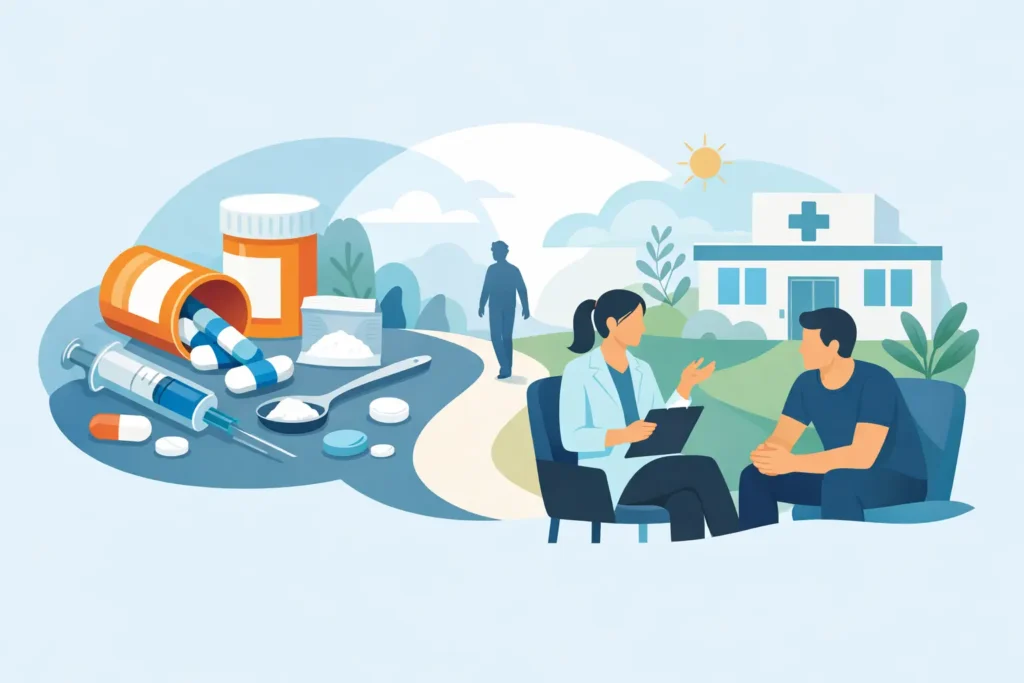
A lot of people ask this question when life has already started to feel unmanageable – after missed classes, strained relationships, close calls at work, or the creeping sense that stopping should be easier than it is. What is drug addiction treatment, really? At its core, it is a structured process that helps a person stop compulsive substance use, understand what is driving it, and build the skills, support, and stability needed for long-term recovery.
That answer sounds simple. In real life, treatment is much more personal than a definition.
For one person, treatment begins after detox, when the physical crisis has passed but cravings, anxiety, and old patterns are still there. For another, it starts before things reach a breaking point – when they can still go to work or school, but they know they are losing control. Effective treatment meets both situations with the same basic principle: addiction is not fixed by willpower alone. It responds best to evidence-based care, accountability, and a plan that fits real life.
What Is Drug Addiction Treatment in Practice?
Drug addiction treatment is a combination of clinical care, behavioral support, and recovery planning designed to help someone reduce or stop substance use and improve daily functioning. That usually includes therapy, relapse prevention, mental health support, and a level of structure that matches the severity of the problem.
The right treatment plan depends on several factors. These include what substance is involved, how long use has been going on, whether withdrawal is a concern, what mental health symptoms are present, and how stable a person’s home, school, or work life is right now. Someone using opioids with a history of overdose may need a different starting point than someone misusing stimulants while also dealing with untreated trauma or depression.
This is why quality care is rarely one-size-fits-all. Good treatment looks at the whole picture, not just the drug use.
Treatment Is More Than Stopping the Substance
Many people think treatment means getting the drugs out of your system. That may be part of the process, but it is only the beginning. Detox addresses the immediate physical side of substance dependence. It does not, by itself, teach someone how to manage stress, repair relationships, handle cravings, or respond differently when shame, loneliness, anger, or panic show up.
Addiction treatment focuses on the patterns underneath use. It helps people identify triggers, recognize distorted thinking, regulate emotions, and replace self-destructive routines with healthier ones. It also addresses the practical side of recovery – sleep, structure, accountability, transportation, school performance, employment, and supportive relationships.
That is one reason outpatient care can be so valuable. For many people, healing has to happen while they are still living real life. They need treatment that supports recovery without requiring them to disappear from their responsibilities completely.
Common Parts of a Drug Addiction Treatment Program
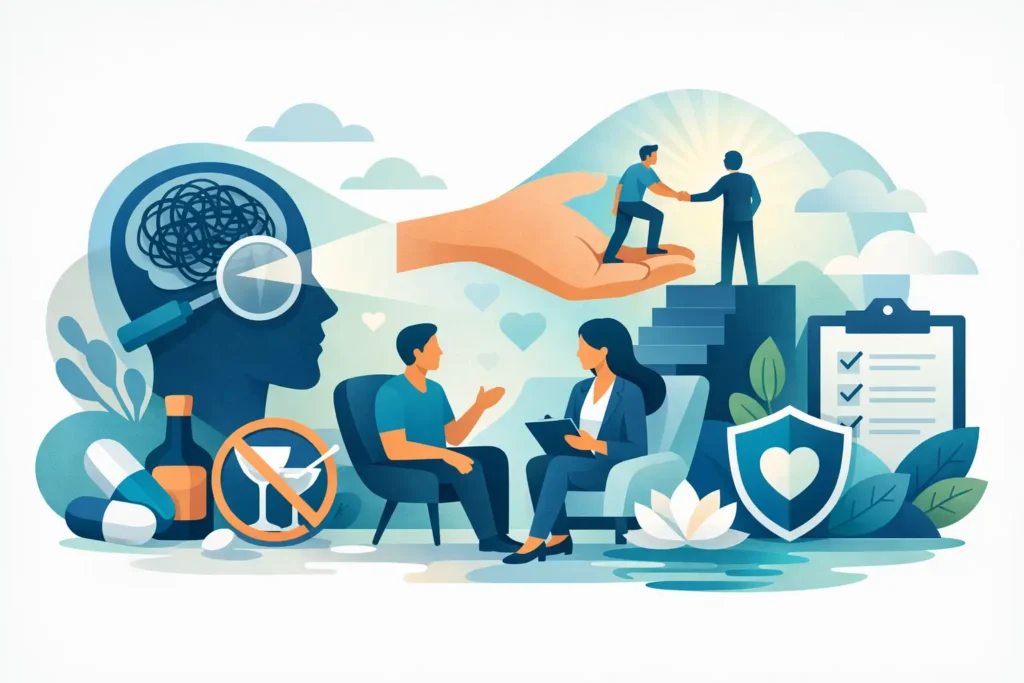
Most treatment programs use a mix of services rather than one single intervention. Individual therapy gives people space to talk honestly about substance use, underlying pain, and the goals they want to work toward. Group therapy adds connection, perspective, and accountability. For many clients, hearing “me too” from someone else in recovery can cut through isolation in a way that private insight alone cannot.
Family involvement often matters as well. Addiction affects the whole system around a person, and treatment can help families rebuild trust, set healthier boundaries, and stop patterns that unintentionally keep the cycle going.
Some people also need psychiatric care or medication support. If anxiety, depression, trauma symptoms, bipolar disorder, or another mental health condition is fueling substance use, those issues need direct attention. Treating only the addiction while ignoring the mental health piece often leads to relapse, not because treatment failed, but because the full problem was never addressed.
Case management, recovery coaching, and life skills support can also play a major role. Recovery is not only about saying no to substances. It is about learning how to function differently when life gets hard.
Levels of Care: Why Structure Matters
Not everyone needs the same intensity of treatment. Some people benefit from a Partial Hospitalization Program, where care is highly structured and frequent but still allows them to return home each day. Others are a good fit for an Intensive Outpatient Program, which offers several hours of therapy and support each week while leaving room for work, school, or family obligations. General outpatient therapy may be appropriate for people with more stability or as a step-down option after a higher level of care.
The trade-off is straightforward. More structure often provides more protection early in recovery, but it also requires more time and commitment. Less intensive care offers greater flexibility, but it may not be enough if cravings are severe, relapse risk is high, or the home environment is unstable.
This is where a careful clinical assessment matters. The best level of care is not the one that sounds most impressive. It is the one that gives a person enough support to make real progress.
What If Mental Health Is Part of the Picture?
Very often, it is.
Many people struggling with substance use are also dealing with depression, anxiety, trauma, ADHD, or other psychiatric concerns. Sometimes the mental health condition came first and substance use became a form of self-medication. Sometimes heavy substance use worsened emotional instability over time. Often, both are tangled together so tightly that separating them is not very useful.
That is why dual diagnosis treatment is such an important part of modern addiction care. It treats substance use and mental health conditions at the same time instead of treating one and postponing the other. This integrated approach tends to be more realistic and more effective, especially for people who keep relapsing when emotional pain goes unaddressed.
Trauma-informed care is especially important here. Not every person with addiction has a trauma history, but many do. Treatment should create safety, build trust, and avoid approaches that feel shaming or punitive.
What Makes Treatment Actually Work?
There is no perfect formula, and no ethical program should promise guaranteed results. Recovery depends on timing, readiness, support, clinical fit, and what happens after the first few weeks of care. Still, some elements consistently matter.
Treatment works better when it is personalized, evidence-based, and sustained long enough to create change. It also works better when people feel respected rather than judged. Shame can push people deeper into secrecy. Clear structure, honest accountability, and compassionate care tend to move recovery forward.
Motivation is helpful, but it is not the only thing that matters. Many people enter treatment feeling ambivalent. They may want help and resent needing it at the same time. That does not mean they are incapable of recovery. A strong program knows how to work with resistance, not just reward certainty.
It also helps when treatment includes relapse prevention from the start. Recovery is not just about getting sober for a short stretch. It is about preparing for the moments that usually knock people off course – conflict, boredom, grief, celebration, loneliness, overconfidence, exhaustion, and contact with people or places tied to past use.
Is Outpatient Treatment Enough?
Sometimes yes, sometimes no. It depends on the severity of substance use, the risk of withdrawal, medical and psychiatric needs, and how safe and supportive a person’s environment is outside of treatment.
For many adults, young professionals, college students, and families trying to hold daily life together, outpatient treatment offers an important middle path. It provides meaningful structure and clinical support without requiring full residential separation from the outside world. That can be especially valuable in a city like Houston, where people are often balancing work, commuting, caregiving, and school all at once.
But outpatient care is not a shortcut. Done well, it is active, serious treatment. It asks clients to show up consistently, participate honestly, practice new coping skills, and make difficult changes between sessions. Flexibility works best when it is paired with accountability.
When to Seek Help
You do not have to wait for the worst-case scenario.
If drug use is affecting your mood, motivation, sleep, relationships, finances, school, work, or sense of self, treatment may be appropriate. The same is true if you have tried to stop and keep returning to use, if cravings feel hard to manage, or if people close to you are expressing concern. Early intervention can reduce harm and make recovery less chaotic.
For families, one of the hardest truths is that love alone cannot treat addiction. Support matters deeply, but professional care adds assessment, structure, and tools that families are not meant to provide by themselves.
At Altura Recovery, this understanding shapes the outpatient model: recovery should be clinically grounded, trauma-informed, and flexible enough to support real life while still challenging people to grow.
Drug addiction treatment is not punishment, and it is not a sign that someone has failed. It is a practical, evidence-based path for rebuilding a life that feels clearer, steadier, and more fully your own.