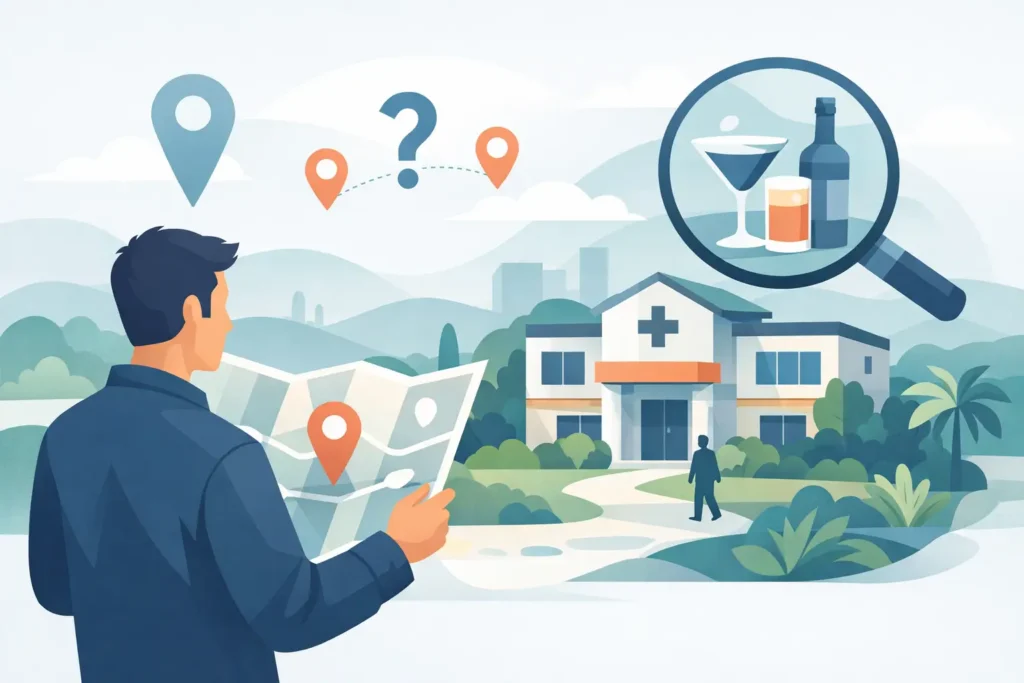

Typing dual diagnosis treatment centers near me usually happens at a breaking point. Maybe substance use has gotten harder to hide. Maybe anxiety, depression, trauma, or mood swings are making recovery feel impossible. Maybe you or someone you love has already tried treatment, only to watch mental health symptoms pull everything back off course.
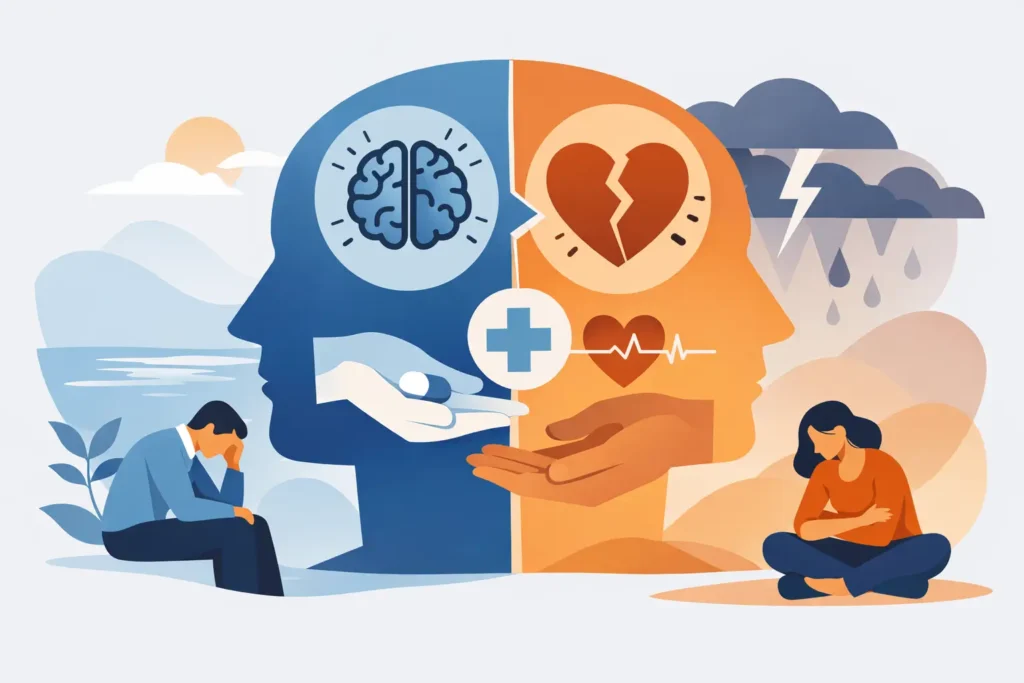
That search matters because co-occurring conditions need more than basic addiction treatment. When substance use and mental health symptoms feed each other, treating only one side often leaves the real problem untouched. The goal is not just to stop using for a few days. It is to build enough stability, insight, and support that healing can actually last.
What dual diagnosis treatment centers near me should actually offer
A true dual diagnosis program does not treat addiction as one issue and mental health as a separate referral. It addresses both at the same time through an integrated plan. That matters whether someone is dealing with alcohol and depression, opioid use and trauma, stimulant use and anxiety, or another combination that keeps repeating the same cycle.
At a minimum, care should include a thorough assessment, individual therapy, group therapy, psychiatric support when appropriate, and a treatment plan that accounts for both substance use and mental health symptoms. Evidence-based approaches matter here. Cognitive behavioral therapy, dialectical behavior therapy skills, trauma-informed care, relapse prevention work, and medication management can all play a role depending on the person.
The biggest sign of quality is coordination. If the therapist, psychiatric provider, and recovery team are working from the same picture, treatment tends to be more focused and more effective. If everything is fragmented, people can end up feeling misunderstood, overmedicated, or stuck repeating their story without making progress.
Why the nearest option is not always the right one
When people search locally, convenience is usually the first filter. That makes sense. If you are balancing work, school, parenting, or simply trying to keep your life from falling apart, distance matters. An outpatient center that is realistically accessible is more likely to support consistency.
But closest is not always best. A program five minutes away may not offer psychiatric care, trauma-informed therapy, or the level of structure you need. A center a little farther across Houston may be a better fit if it offers a stronger clinical team, flexible scheduling, and a clear path from higher levels of care into outpatient support.
This is especially true for people stepping down from detox or inpatient rehab. Early recovery can be unstable. The right outpatient setting should help bridge that transition with structure, accountability, and support for emotional regulation, not just ask you to attend a few groups and figure the rest out alone.
What level of care fits your situation
Not everyone needs the same treatment intensity. That is one reason the phrase dual diagnosis treatment centers near me can lead to very different answers.
If symptoms are severe, daily treatment may be the safest starting point. A Partial Hospitalization Program, or PHP, offers a high level of structure without requiring a residential stay. This can work well for people who need frequent clinical support but do not need inpatient hospitalization.
If someone needs strong support but also has to maintain parts of daily life, an Intensive Outpatient Program can be a better fit. IOP allows people to attend treatment several days a week while continuing with work, school, or family responsibilities. For many adults, young adults, and students, that balance is what makes treatment possible in the first place.
General outpatient therapy may be appropriate later in recovery or for people with milder symptoms, but it is not always enough at the beginning. Choosing too low a level of care can leave people under-supported. Choosing more treatment than necessary can create its own stress. A thoughtful clinical assessment should guide that decision.
Questions to ask before choosing a center
The fastest way to tell whether a program is built for real dual diagnosis care is to ask direct questions. You do not need perfect language. You just need honest answers.
Ask whether the program treats co-occurring mental health conditions as part of addiction treatment or refers them out. Ask if psychiatric evaluations and medication support are available. Ask how they approach trauma. Ask what happens if depression, panic, cravings, or relapse risk gets worse during treatment.
You should also ask about scheduling and daily expectations. If you are trying to stay employed, attend college, or care for children, a rigid schedule may create barriers rather than support. Good outpatient care should be structured, but it should also recognize that real life does not pause for recovery.
Families may want to ask whether loved ones are included in the process. Family support can be a major part of long-term healing, especially when communication has broken down or trust has been damaged. Not every client needs the same level of family involvement, but the option should be there when it helps.
Signs a program may be a strong fit
The best programs tend to feel both clinically grounded and human. You should hear clear information about therapy methods, safety, and treatment planning, but you should also feel seen as a person, not reduced to a diagnosis.
Look for a center that talks about recovery as more than stabilization. Early safety matters, but long-term healing usually requires more. People need support rebuilding routines, learning coping skills, managing triggers, repairing relationships, and making choices that hold up outside the therapy room.
This is where outpatient treatment can be especially powerful. Because clients are still living in the real world, they can practice new skills in real time. The trade-off is that outpatient care requires accountability. If your environment is highly unstable or unsafe, a more intensive setting may be necessary first.
For many people in Houston, flexibility is part of quality. A program that offers multiple levels of care, individualized treatment planning, and support for both addiction and mental health can make recovery more sustainable. Altura Recovery is one example of an outpatient provider built around that kind of integrated, real-life treatment model.
Red flags to pay attention to
If a center gives vague answers about mental health treatment, be cautious. If they focus heavily on addiction but cannot explain how they treat trauma, mood disorders, anxiety, or psychiatric needs, the dual diagnosis label may be more marketing than reality.
Another red flag is one-size-fits-all treatment. Co-occurring disorders are complex. A college student dealing with binge drinking and panic attacks does not need the exact same plan as a working parent managing opioid use and unresolved trauma. Personalized care is not a luxury here. It is basic clinical common sense.
Be wary of promises that sound too simple. Recovery is possible, but it is rarely linear. Good treatment should offer hope without pretending there are no setbacks, medication adjustments, stressors, or hard days ahead.
Finding care that works in real life
For people across Houston and nearby communities, practical fit matters just as much as clinical quality. If you are in Midtown, Katy, Sugar Land, The Woodlands, or Pearland, the right center should be reachable enough to attend consistently. Long commutes can wear people down, especially when treatment happens several times a week.
At the same time, privacy matters. Some clients prefer care outside their immediate neighborhood to create distance from daily triggers or social pressure. Others need something close to home because transportation, work shifts, or family obligations leave little room for travel. There is no universal rule. The best choice is the one you can actually sustain.
If you are helping a loved one search, remember that readiness can look messy. People may feel ashamed, defensive, exhausted, or unsure whether they are “bad enough” for treatment. That uncertainty is common. You do not need to have everything sorted out before making the first call.
The right dual diagnosis center should help bring clarity to a confusing situation. It should explain what level of care makes sense, how treatment can fit around real responsibilities, and what support is available for both substance use and mental health. That first conversation will not solve everything, but it can change the direction of what happens next.
If your search for dual diagnosis treatment centers near me has brought you here, take that as a sign to keep going. The best treatment is not just nearby. It is care that sees the full picture, meets you where you are, and helps you recover in a way that can hold up in everyday life.