When someone is drinking to quiet panic, using drugs to get through depression, or spiraling emotionally after trying to stop, the problem is rarely just one thing. That is the heart of how dual diagnosis treatment works: it treats substance use and mental health conditions together, because each one can intensify the other.
For many people, this is the missing piece. They may have tried therapy without addressing substance use, or addiction treatment without getting real help for trauma, anxiety, bipolar disorder, or depression. Progress stalls when only half the picture is treated. Dual diagnosis care is designed to change that.
What dual diagnosis treatment actually means
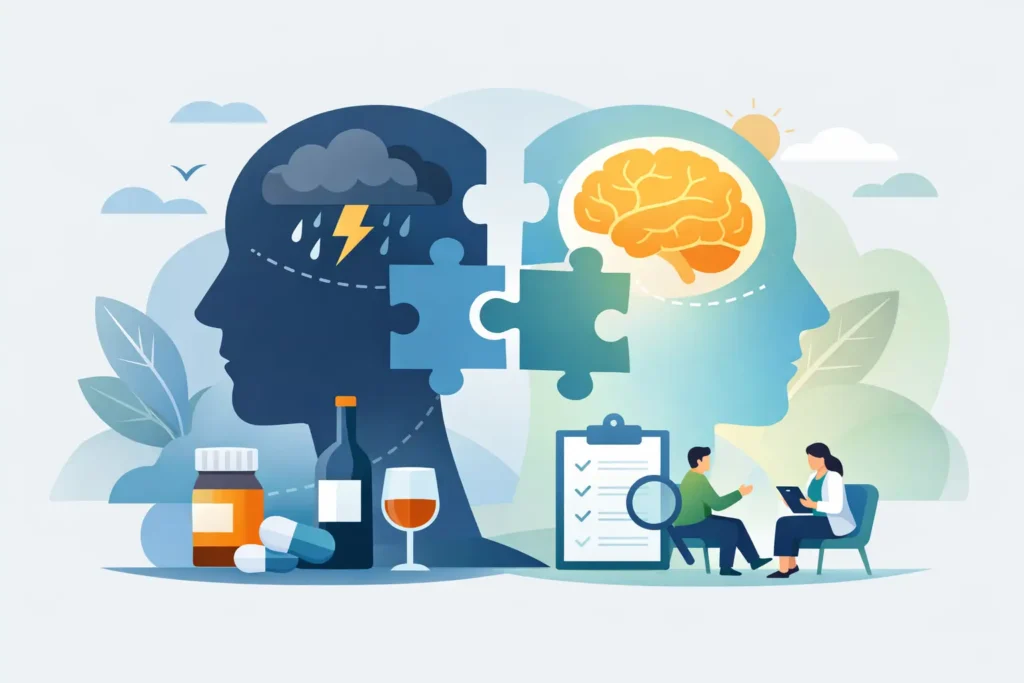
A dual diagnosis means a person is living with both a substance use disorder and a co-occurring mental health condition. That mental health condition might include anxiety, depression, PTSD, ADHD, bipolar disorder, or another psychiatric concern. The two do not always begin at the same time, and one does not automatically cause the other. But once both are present, they tend to interact in ways that make recovery more complicated.
Someone might use alcohol to manage social anxiety, then find that heavy drinking worsens mood instability and sleep. Another person might develop depression after prolonged stimulant use, then keep using because they feel flat and unmotivated without it. In both cases, treating only the substance use or only the mental health symptoms leaves major drivers untouched.
That is why integrated care matters. Instead of separating addiction from mental health, dual diagnosis treatment looks at how the full pattern developed and what support is needed to interrupt it.
How dual diagnosis treatment works in practice
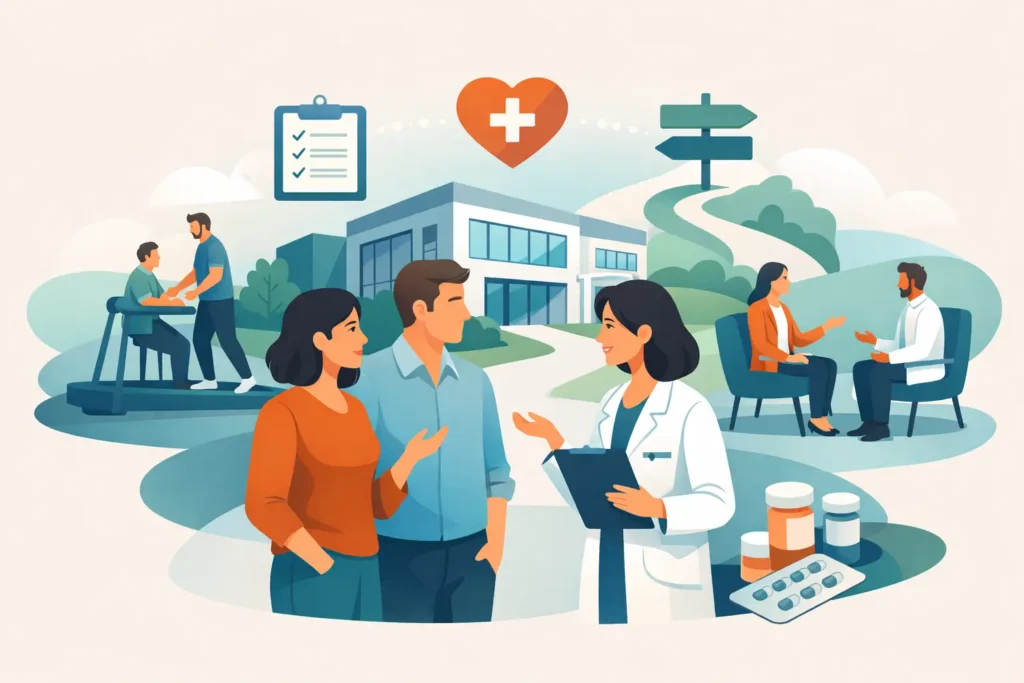
The process usually begins with a thorough assessment. This is more than a checklist. A strong clinical team looks at substance use history, mental health symptoms, trauma exposure, family dynamics, medication history, relapse patterns, physical health, and daily functioning. They also look at practical realities like work, school, transportation, and support at home.
This matters because symptoms can overlap. Substance use can mimic or worsen psychiatric symptoms. Withdrawal can look like anxiety or agitation. Depression may be part of a mood disorder, a trauma response, a consequence of chronic substance use, or some combination of all three. Early treatment often involves clarifying what is happening rather than rushing to a simple label.
From there, a personalized treatment plan is built. In a quality outpatient setting, that plan usually combines individual therapy, group therapy, psychiatric support when appropriate, relapse prevention work, and skill building for daily life. The goal is not just to get someone to stop using. It is to help them become more emotionally stable, more self-aware, and more able to function without relying on substances to cope.
Why integrated treatment works better than split treatment
When care is split between unrelated systems, people can fall through the cracks. A therapist may focus on emotional pain without having a full picture of active substance use. An addiction program may push abstinence without addressing panic attacks, trauma triggers, or severe depression. That disconnect can lead to shame, miscommunication, and repeated relapse.
Integrated treatment brings those pieces together. The same treatment plan addresses cravings, triggers, emotional regulation, psychiatric symptoms, and behavior patterns. Providers can see how one issue affects the other and adjust care in real time.
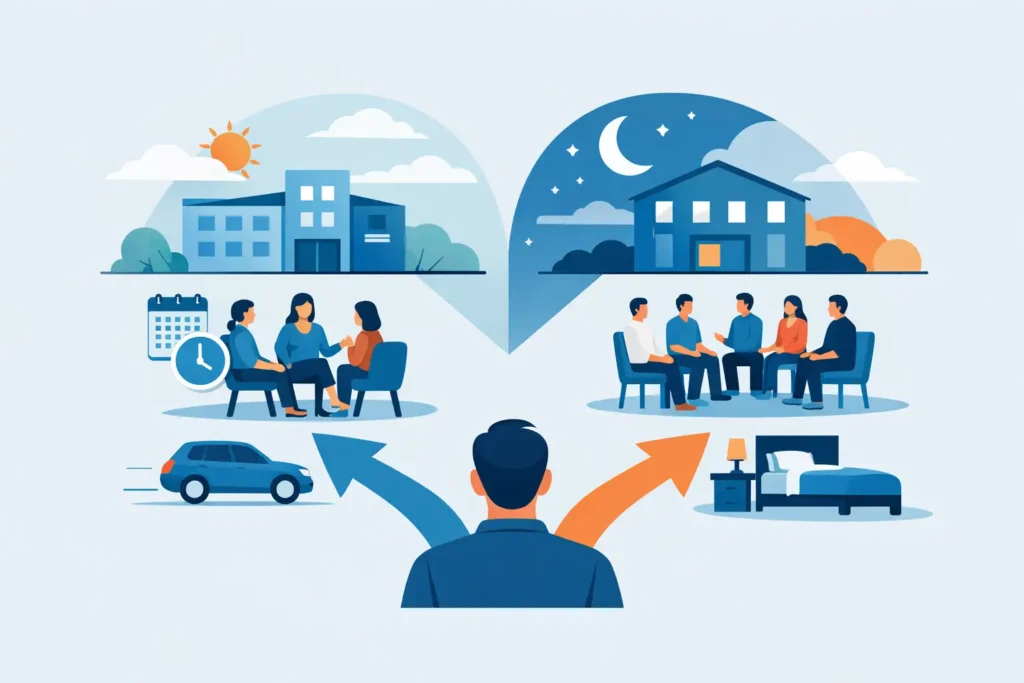
This does not mean every person needs the same level of treatment. It depends on symptom severity, safety concerns, motivation, and stability at home. Some people need a Partial Hospitalization Program for more structure. Others do well in an Intensive Outpatient Program while continuing work, school, or family responsibilities. Flexibility matters, but so does enough support.
Core parts of dual diagnosis care
Therapy is usually the foundation. Individual sessions help clients understand what they are using, what they are feeling, and what patterns keep repeating. A trauma-informed approach is especially important because unresolved trauma often sits underneath both mental health distress and substance use. Treatment needs to move at a pace that is safe and clinically sound. Pushing too fast can backfire.
Group therapy adds another layer. In the right setting, groups help people practice honesty, build accountability, and realize they are not the only ones trying to manage a mind that feels overwhelming. For clients who have felt isolated or misunderstood, that shared experience can reduce shame and strengthen motivation.
Psychiatric care may also be part of treatment. Medication can be helpful for some co-occurring conditions, especially when symptoms are disrupting sleep, concentration, mood, or day-to-day functioning. But medication support should be thoughtful, monitored, and integrated with therapy. It is not a shortcut, and it is not the right fit in the same way for everyone.
Relapse prevention in dual diagnosis treatment goes beyond avoiding people or places associated with use. It includes learning how to recognize emotional triggers early, tolerate distress without impulsive behavior, regulate mood, improve sleep, rebuild routines, and respond to setbacks without giving up. That is where real-world recovery becomes more sustainable.
What recovery looks like day to day
A common misunderstanding is that dual diagnosis treatment is only about crisis stabilization. Stabilization is often the first step, but it is not the finish line. Real healing involves learning how to live differently.
That may mean practicing boundaries with family, repairing a broken schedule, returning to school gradually, or learning how to sit with anxiety without numbing it. It may mean rebuilding nutrition, exercise, and sleep habits that were ignored for months or years. It may also mean facing grief, guilt, or trauma that substances helped keep buried.
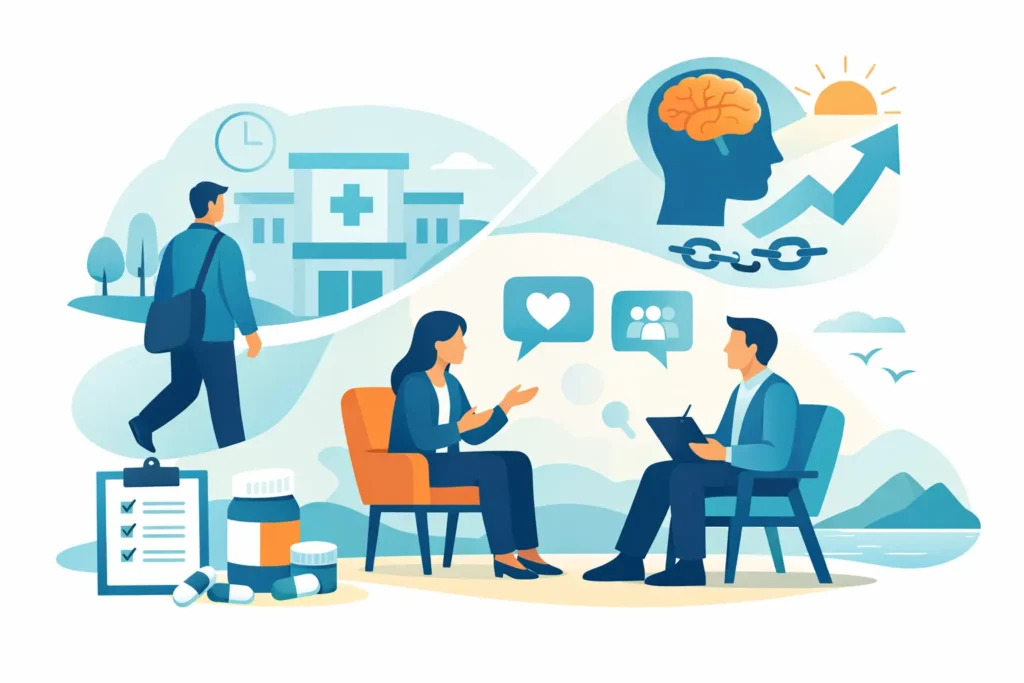
This is why outpatient treatment can be so effective for many people. It allows clients to apply new skills in real life while still receiving structured clinical support. If someone has a hard conversation, a stressful workday, or a triggering weekend, treatment becomes a place to process what happened and adjust the plan. Recovery becomes active, not theoretical.
For adolescents, young adults, and college students, this can be especially valuable. Mental health symptoms and substance use often show up during periods of identity change, academic pressure, and social instability. Treatment works best when it supports emotional growth and life skills alongside symptom reduction.
How families fit into the process
Families often ask whether they should focus on the addiction or the mental health side first. Usually, the better question is how to support treatment of both without enabling either one. Loved ones can play an important role when they learn about co-occurring disorders, communication patterns, boundaries, and recovery expectations.
Family involvement does not mean taking control. It means becoming part of a healthier system. In some cases, families need help understanding that repeated crises are not just about willpower. In other cases, they need support holding clear boundaries while still offering compassion. Both matter.
When dual diagnosis treatment may be needed
Not everyone with addiction has a co-occurring mental health disorder, and not everyone with mental health symptoms is self-medicating with substances. But certain patterns raise concern. If someone keeps relapsing after periods of sobriety, uses substances to manage emotions, feels mentally worse when trying to stop, or has a history of trauma and unstable mood, a dual diagnosis assessment is worth considering.
The same is true when treatment has partly worked before but never lasted. Sometimes the issue is not lack of effort. It is that the treatment model was too narrow.
In Houston, where many people are balancing demanding jobs, school schedules, caregiving, and long commutes, flexible outpatient care can make treatment more realistic. A program has to fit real life well enough for people to stay engaged while still providing enough structure to create change.
What makes treatment effective over time
Dual diagnosis recovery is rarely linear. Symptoms improve, then flare. Motivation rises, then drops. People gain insight, then run into old behaviors under stress. That does not mean treatment is failing. It means recovery needs consistency, adjustment, and support that matches the stage someone is in.
The most effective care is personalized, evidence-based, and practical. It addresses trauma when appropriate, builds coping skills, monitors mental health symptoms carefully, and helps clients reconnect with purpose. It also respects dignity. People do better when they feel understood, not judged.
At Altura Recovery, that kind of treatment is built around comprehensive outpatient recovery services that support both clinical healing and real-life reintegration. For many clients, that combination is what makes lasting change feel possible.
If you or someone you love is dealing with both substance use and mental health symptoms, the next right step is not to guess which problem matters more. It is to get a clear picture of both, then begin treatment that honors the full story.