The first step of recovery isn't making a phone call or walking through the doors of a clinic. It’s the quiet, profound internal shift from denial to acknowledgment. That personal moment of truth—when you finally, fully admit that something has to change—is the real starting line for healing.
The Real Starting Line of Your Recovery Journey
Most people picture recovery beginning with a dramatic, movie-like event, but the journey truly starts with a powerful change in perspective. It's less about a single, grand gesture and more about reaching a psychological turning point.
Think of it like being a ship's captain who has been ignoring the warning signs of being off course. The first step isn’t grabbing the radio for help. It’s the moment they finally look at the compass, accept the reality of their position, and decide to turn the ship back toward land.
This internal admission is the single most important catalyst for change. It’s the point where you stop fighting against the problem and start fighting for your future. Until this acknowledgment happens, any attempts at treatment are often met with resistance because the real motivation just isn't there yet.
"The moment you accept responsibility for everything in your life is the moment you gain the power to change anything in your life."
This fundamental shift creates the foundation upon which all future progress is built. It’s the critical transition from a state of denial to one of honesty and readiness.
From Denial to Action
Before anyone can truly start healing, they have to move through that crucial internal process. The table and infographic below help visualize how this essential shift from denial to acknowledgment makes meaningful action possible.
This starting line looks a little different for everyone, but the core feeling is the same: a shift from resisting the truth to accepting it.
Recognizing Your Personal Starting Line
This table helps identify the internal shifts that signal the true first step, showing how thoughts and feelings evolve from denial to readiness.
| Stage of Realization | What It Sounds Like | What It Feels Like |
|---|---|---|
| Denial & Defensiveness | "I can stop whenever I want." "It's not that bad." | Frustration, anger when confronted, isolation. |
| Bargaining & Minimizing | "I'll just cut back after this week." "At least I'm not as bad as…" | A mix of hope and anxiety, a sense of losing control. |
| The "Lightbulb Moment" | "I can't keep living like this." "I need help." | Exhaustion, surrender, a flicker of genuine hope. |
| Acceptance & Readiness | "What do I need to do to get better?" | Clarity, fear mixed with relief, motivation to act. |
Recognizing where you are in this process is a powerful act of self-awareness. It’s not about judgment; it's about pinpointing the moment you become ready to build a new life.

This visual highlights that before taking any practical steps, a moment of awareness has to click, creating the willingness to seek help. This initial mental step empowers you to take the next one, which often involves reaching out for professional support.
From there, understanding what is rehab and how it can help often follows this moment of clarity, providing a concrete path forward. This acknowledgment isn't a sign of weakness; it's the ultimate act of strength and self-preservation.
Understanding the Psychology of Acknowledgment

Acknowledging a problem is famously the first step of recovery, but it's often the hardest one to take. Powerful emotions like shame, fear, and denial build a psychological fortress, making admission feel impossible. The mind doesn't do this maliciously; it builds these defenses to shield itself from painful realities.
Denial, for example, isn't just stubbornness. It’s a coping strategy that temporarily protects you from overwhelming feelings of failure or loss of control. Shame can whisper that your struggles are a character flaw, pushing you into secrecy and isolation. It’s no wonder facing the truth can feel like an insurmountable hurdle.
The Myth of Hitting Rock Bottom
Many people think acknowledgment only comes after a dramatic, public crisis. But "hitting rock bottom" is deeply personal and rarely looks like it does in the movies. Often, it’s a quiet, internal turning point.
This is the moment when the accumulated pain of staying the same finally becomes greater than the fear of change. It's a profound realization that the current path is unsustainable and that a different future is necessary for survival.
This pivotal moment is less about what’s happening on the outside and more about an internal shift. It's the point where you stop blaming others or your situation and start accepting your own role. This acceptance is the key that unlocks the door to real recovery, allowing you to move forward.
This process is where professional guidance can make all the difference. Learning about what is motivational interviewing therapy shows how skilled therapists help strengthen that internal resolve for change.
Unfortunately, just recognizing the need for help is only half the battle. Data shows that in 2021, only about 6.3% of people with a substance use disorder received any form of treatment. This highlights a staggering gap between acknowledgment and action. You can find out more about the treatment access challenges from NIDA.
How to Ask for Help When You're Ready

You’ve faced the truth and admitted you need a change. That’s a monumental win. But now comes the next move: actually reaching out. This is where the first step of recovery becomes real, and it can feel just as terrifying as the initial admission.
The fear of being judged or turned away is completely normal. Even so, making that connection is the only way to start building the support system you deserve. The key is to start small. You don't have to announce it to the world; just pick one person you trust to listen without trying to "fix" everything.
Think about a close friend, a sibling who has always had your back, or even your family doctor. Their job isn’t to have all the answers—it’s just to be a safe starting point.
Finding the Right Words
Worrying about what to say can keep you stuck. But you don't need a perfectly rehearsed speech. In my experience, simple and honest works best. Getting straight to the point cuts through the anxiety and makes your need clear.
A simple, “I’m struggling with something right now, and I could really use your support,” is more than enough. It's an invitation, not a demand.
That one sentence can shift a moment from intimidating to empowering. All you're asking for is a listening ear or a hand to hold while you figure out the next steps.
Of course, sometimes telling a loved one directly doesn’t feel safe or productive, especially if relationships are already strained. If you’re worried about their reaction or how they might complicate things, a more structured approach might be better. In these cases, learning how to stage an intervention with a professional’s help creates a controlled environment where the focus stays on healing and support for everyone involved.
What to Expect in Your First Professional Consultation
Picking up the phone and scheduling that first meeting is a huge win. It’s a real, tangible part of the first step of recovery. But what actually happens in that conversation? Knowing what to expect can quiet a lot of the anxiety and help you walk in feeling prepared.
The goal of this first meeting is simple: for a professional to understand your situation so they can help you find the safest, most effective path forward. It’s a confidential and completely judgment-free process.
Think of it less like an interrogation and more like a strategy session. A therapist or addiction specialist will ask questions to get a clear, honest picture of your needs, helping you both build a roadmap for your recovery.
Key Topics in Your First Meeting
To figure out the right plan, the specialist needs to understand a few key areas of your life. These questions aren't meant to scrutinize you—they’re designed to help. Your honesty is the most powerful tool you bring to the table.
You can generally expect to talk about:
- Your History: They'll ask about your substance use—what you use, how often, and for how long.
- Your Goals: What do you want to achieve? Are you aiming for total abstinence, or do you have other milestones in mind?
- Your Support System: They’ll want to know about your living situation and the relationships you have with family and friends.
- Your Health: You’ll cover your physical and mental health history to make sure any treatment plan is safe and supportive.
This initial conversation helps pinpoint the best kind of support for you. For most people, this involves therapy-based treatments, which are the bedrock of the addiction treatment industry. In fact, the global market for these services is on track to hit USD 31.20 billion by 2032, driven largely by therapy and medication-assisted treatments (MAT). You can read more about the growth of addiction treatment services on BioSpace.
This first consultation is the beginning of a partnership. It’s where you get clear on your options and the professional gets the information they need to help you succeed. For a deeper look at what comes next, you can learn more about how does rehab work in our detailed guide.
Building the Blueprint for Your Recovery
After the initial consultation, you get to one of the most empowering parts of the first step of recovery: creating your personalized treatment plan. Think of it as the architectural blueprint for the new life you're building. It’s a structured, supportive guide designed to address your specific needs and goals.
This isn’t some generic document handed down from on high. Instead, it’s a collaborative effort between you and your clinical team. Your input, your history, and what you want for your future are the most important pieces of the puzzle. This process ensures the plan feels authentic to you—something you can actually get behind.
What Goes Into Your Treatment Blueprint
A well-rounded plan pulls together multiple layers of support to foster healing from every angle. While every blueprint is unique, most combine proven therapeutic methods, peer support, and medical oversight to ensure your safety and well-being.
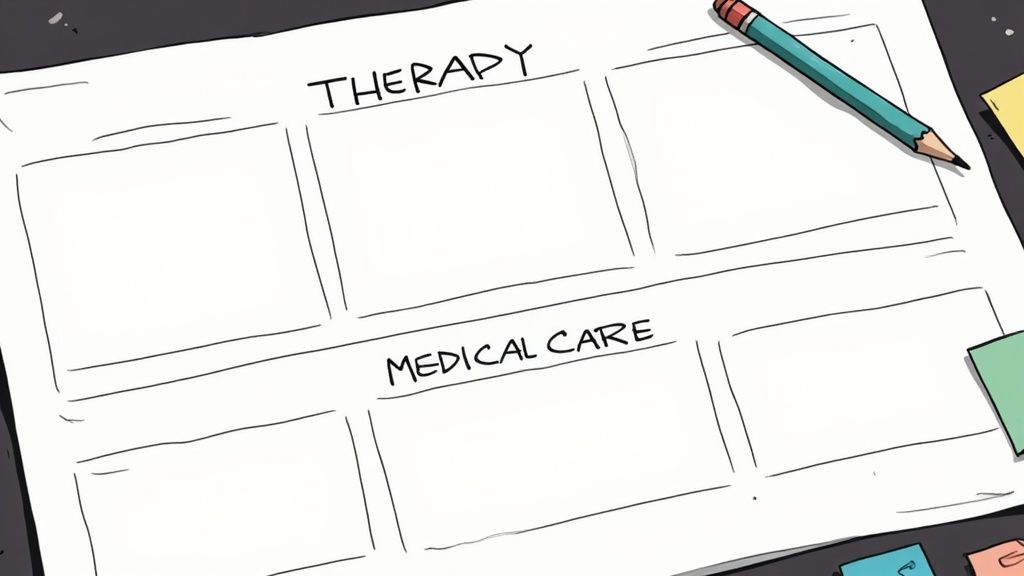
You can expect your plan to include elements like:
- Individual Therapy: One-on-one sessions with a therapist to explore the root causes of addiction and develop healthy coping skills, often using methods like Cognitive Behavioral Therapy (CBT).
- Group Sessions: Connecting with peers in a safe, moderated environment where you can share experiences, feel less alone, and build a real support network.
- Medical Care: This might involve medication management for co-occurring mental health conditions or medication-assisted treatment (MAT) to safely manage withdrawal and cravings.
- Life Skills Training: Practical workshops focused on everything from stress management and emotional regulation to career planning and rebuilding healthy relationships.
This structure provides a clear path forward, breaking down what can feel like an overwhelming journey into manageable steps.
Your recovery plan is not a rigid set of rules etched in stone. It's a living document—a flexible guide that is meant to be adjusted as you grow, heal, and your needs change over time.
A Plan Built for Real Life
The most effective treatment plans are designed to evolve right along with you. As you progress, you and your team will revisit the blueprint together. You might find you need more support in one area or that you’ve outgrown another part of the plan.
This flexibility is crucial. Life doesn’t stop just because you're in recovery, so your plan has to be adaptable enough to handle new challenges and celebrate new successes. The goal is to create a sustainable foundation for long-term sobriety that fits into your actual life, empowering you to move forward with confidence and a clear direction.
Common Questions About Starting Recovery
Making the call for help is the single most important part of the first step of recovery, but it almost always comes with a tidal wave of questions and fears. The "what ifs" can feel paralyzing, making it incredibly hard to actually pick up the phone.
Let's be clear: the worries you’re feeling are completely normal. Just about everyone who has stood where you are now has felt them. Getting solid answers is the best way to quiet that anxiety and move forward with a little more confidence.
Is My Problem "Bad Enough" for Treatment?
This is probably the most common question we hear, and it’s a sneaky form of denial that keeps people stuck until a crisis forces their hand. We convince ourselves we haven't hit "rock bottom," so we don't really need help yet.
The reality is, you don’t have to lose your job, your family, or your health to deserve support. If a substance or behavior is costing you your peace, hurting your relationships, or just making you feel stuck, that’s more than enough reason to see what your options are.
Think of it like a persistent cough. You wouldn’t wait until it becomes full-blown pneumonia to see a doctor. Getting help early is a sign of self-respect, and it can prevent much bigger problems down the road.
Will I Be Judged for Asking for Help?
The fear of being judged, shamed, or misunderstood is a massive barrier. It keeps so many people suffering in silence. This worry is completely valid, which is why deciding who to tell first is such a critical move.
If you have a friend or family member you trust completely, starting there can be a huge relief. But if you’re unsure how people will react, reaching out to a professional is always the safest, most confidential first step. Therapists, doctors, and intake specialists are trained to listen without judgment—their only goal is to help you.
Your well-being is what matters here. Someone else's opinion doesn't change your reality or your need for support.
Will They Force Me to Stop on Day One?
Many people put off getting help because they picture being forced into immediate, dramatic changes they don't feel ready for. But any quality treatment program knows that the first priority is always safety and stability—not overnight perfection.
While abstinence is usually the long-term goal, the first few days are all about creating a safe, personalized plan. For substances like alcohol or benzodiazepines, a medically supervised detox is non-negotiable to manage withdrawal safely. For others, the initial focus might be on harm reduction.
This is a process, not a flip of a switch. The best thing you can do is be completely honest with your care team so they can build a plan that is both safe and genuinely effective for you.
At Altura Recovery, we get it. We’ve heard these questions thousands of times, and we're here to give you straight answers in a place where you won’t be judged. If you're ready to just talk, contact us today for a completely confidential conversation about what comes next.