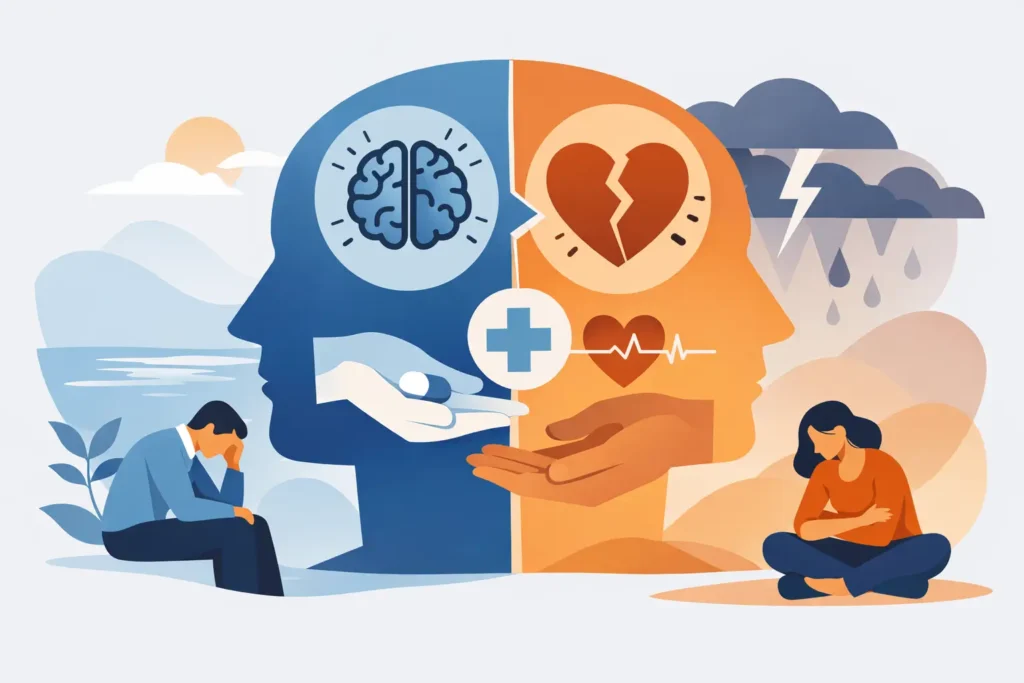
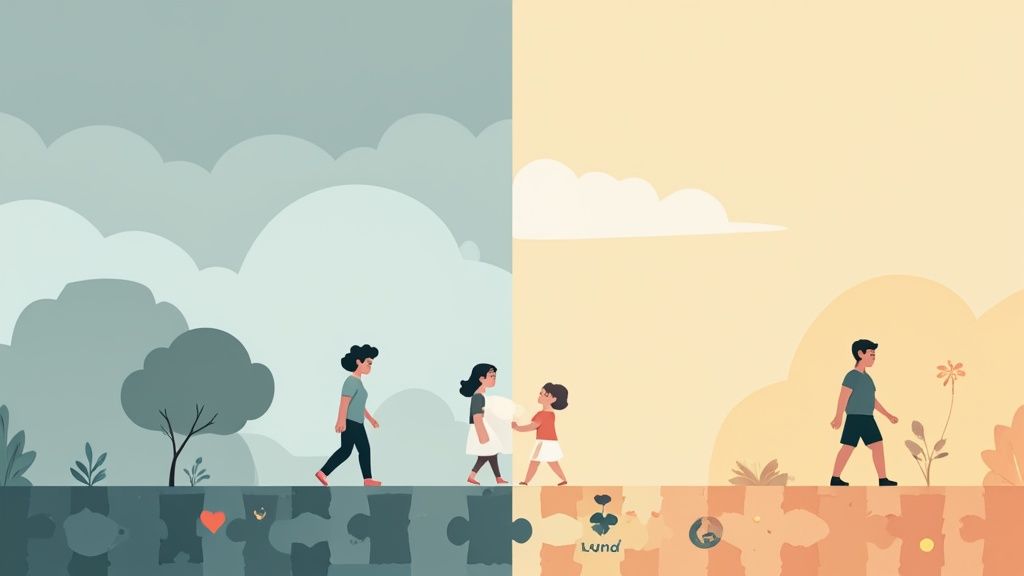
Struggling with both a mental health issue and an addiction can feel like being caught in a riptide, where two powerful currents are pulling you in opposite directions. Trying to fight just one is a losing battle, because these conditions are almost always tangled together. That's why effective mental health and addiction services don’t treat them as separate problems—they offer integrated care that tackles both at the same time, clearing the path for a real, sustainable recovery.
The Tangled Link Between Mental Health and Addiction
Ever tried to unravel a hopelessly knotted pair of shoelaces? If you just pull on one lace, the knot only gets tighter. That’s the perfect way to think about the relationship between mental health disorders and substance use. They're often so deeply intertwined that focusing on one in isolation can accidentally make the other one worse. Clinically, this is known as a co-occurring disorder, or a dual diagnosis.
And this isn't some rare exception. A huge number of people with a substance use disorder also have a mental health condition, and the reverse is true as well. It’s a two-way street that creates a vicious cycle, one that feels impossible to escape without the right kind of help.
How One Condition Fuels the Other
So how does this cycle get started? Often, it begins as a form of self-medication. Someone battling crippling anxiety, for instance, might discover that a few drinks can quiet their racing thoughts and offer a moment of peace. It seems to work, but only for a little while. That coping mechanism just isn't built to last.
Before long, the substance use starts making the original anxiety even worse. The brain adapts, and soon it needs the substance just to feel normal. When the effects wear off, the anxiety comes roaring back, stronger than before. This creates a feedback loop: the anxiety drives the drinking, and the drinking intensifies the anxiety.
This destructive pattern shows up with all sorts of conditions:
- Depression and Opioids: A person might use opioids to numb the deep emotional pain of depression. But this can quickly lead to a physical dependency that drags them into an even deeper state of hopelessness.
- Trauma and Stimulants: Someone dealing with the fallout of PTSD might use stimulants to stay hyper-vigilant or escape intrusive memories, only to end up with heightened agitation and paranoia.
- Bipolar Disorder and Alcohol: The intense highs and lows of bipolar disorder are exhausting. Some people turn to alcohol to try and level out their moods, but it ultimately throws their brain chemistry further out of balance.
At the heart of recovery is a simple truth: you can't fix one problem while ignoring the other. It’s like trying to patch a hole in a boat without noticing a second, bigger one right beside it. Real healing demands an approach that sees the whole picture.
This is precisely why specialized mental health and addiction services are so essential. These integrated programs are designed to untangle the knot by working on both laces at once. By treating the whole person—not just a collection of symptoms—they provide the tools needed to build a solid foundation for lasting wellness. For a deeper look into the complexities of well-being, you can explore more on mental health topics. Understanding this connection is the first real step toward finding a path to recovery that actually works.
Understanding Dual Diagnosis in the Real World
The term “dual diagnosis” might sound a little clinical, but it describes a deeply human experience that millions of people navigate every single day. It’s not just a label; it’s the lived reality of trying to manage two complex health conditions at the same time. These challenges aren’t separate—they’re woven together, creating a unique and often confusing struggle.
Think of a high-performing professional who consistently gets praise at work but secretly battles a heavy fog of depression. To power through presentations and meet deadlines, they start relying on a few glasses of wine in the evening to quiet their racing thoughts. Before they know it, that nightly ritual becomes the only way they can find relief, and the line between coping and dependency starts to blur.
Or, picture a college student whose panic attacks make attending lectures feel like an impossible task. Their doctor prescribes medication to manage the anxiety, but they start taking more than the recommended dose to handle the mounting academic pressure. What began as a solution slowly becomes a new problem, and now they're trapped between their anxiety and a growing dependence on their prescription.
The Challenge of an Accurate Diagnosis
One of the biggest hurdles in these situations is just getting a clear and accurate diagnosis. The symptoms of a mental health condition and a substance use disorder often overlap, creating a chicken-or-egg scenario that can confuse both the person struggling and even some healthcare providers.
For example, is someone’s social withdrawal a symptom of their depression, or is it a result of heavy alcohol use? Are their erratic mood swings caused by bipolar disorder or stimulant abuse? This overlap can act like a smokescreen, making it tough to see the full picture.
This is precisely why a comprehensive assessment from specialized mental health and addiction services is so critical. A trained clinician knows how to look beyond the surface-level symptoms to identify the underlying patterns and connections.
A dual diagnosis isn't about having two separate problems. It's about having one complex condition where mental health and substance use are two sides of the same coin. Addressing them together isn't just a best practice—it's the only path to sustainable healing.
Recognizing the Interconnected Signs
Empowering yourself and your loved ones starts with understanding how these conditions can mask each other. Recognizing the signs is the first step toward seeking help. While every person’s experience is unique, certain patterns often emerge when someone is dealing with a co-occurring disorder.
Here are some interconnected signs to watch for:
- Using Substances to Manage Moods: A consistent pattern of turning to alcohol or drugs to cope with feelings of sadness, anxiety, anger, or stress.
- Worsening Mental Health with Substance Use: Noticing that depression, anxiety, or mood swings become more intense after the effects of a substance wear off.
- Neglecting Responsibilities: Both mental health struggles and addiction can make it difficult to keep up with work, school, or family obligations.
- Social Isolation: Withdrawing from friends, family, and activities that were once enjoyable, often due to either the mental health condition or the substance use.
These scenarios show why an integrated approach is non-negotiable. Trying to treat a mental health issue without addressing the substance use is like trying to fix a car’s engine without checking the fuel line—you might solve one part of the problem, but you won't get the car running properly. To learn more about how specialized care addresses both issues at the same time, you can explore in-depth information on dual diagnosis treatment programs. This integrated method ensures that both the root causes and the symptoms are treated as part of a single, cohesive recovery plan.
The Scale of the Mental Health and Addiction Crisis
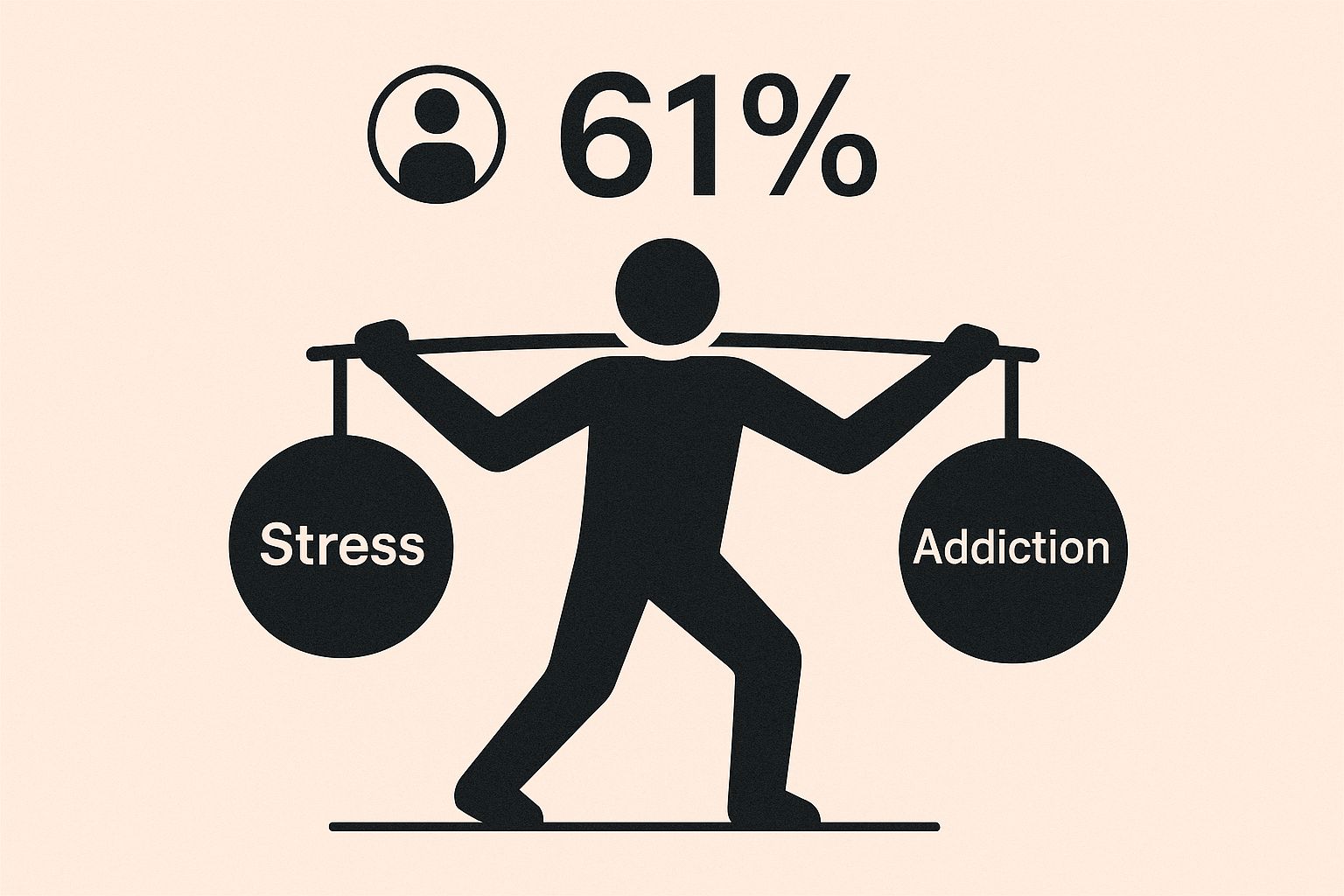
When you’re caught in the grip of a mental health condition or an addiction, it’s all too easy to feel completely alone—like you're the only one fighting this battle. But the truth is, this struggle is a massive societal issue, not some personal failing.
Grasping the sheer scale of the problem helps shift our perspective. This isn’t about individual weakness; it’s a collective health crisis that calls for a compassionate, unified response. The numbers are staggering, and they paint a picture of a global challenge. Behind every statistic is a person searching for support, a family in distress, and a community feeling the strain.
This isn’t just an abstract problem happening "out there"—it’s affecting our neighbors, our colleagues, and the people we love.
Global Impact of Mental Health and Substance Use Disorders
The statistics below offer a sobering look at how widespread these challenges have become, impacting communities and economies across the globe.
| Statistic Category | Key Figure | Source/Year |
|---|---|---|
| Global Prevalence | Over 1 billion people | WHO, 2022 |
| Leading Cause of Disability | Second leading cause globally | WHO, 2022 |
| Treatment Gap | >70% of people receive no treatment | The Lancet, 2018 |
| Youth Mental Health | 1 in 7 adolescents (10-19) | WHO, 2021 |
| Economic Cost (U.S.) | Over $420 billion annually | NIDA, 2020 |
These figures underscore a critical reality: millions are struggling, but only a fraction ever receive the specialized, integrated care they need to truly recover.
The ripple effects extend far beyond the individual, placing immense pressure on healthcare systems that are often unprepared to handle the demand for integrated mental health and addiction services.
The real crisis isn't just the prevalence of these conditions; it's the gap in care. We have a system that leaves far too many people behind.
A Closer Look at Who Is Affected
While this is a universal problem, certain groups face unique pressures that make them more vulnerable. Adolescents and young adults, for example, are trying to navigate critical life stages while dealing with unprecedented social and academic stress. Articles digging into the mental health crisis among teen boys show just how vital targeted, specific interventions can be for at-risk populations.
The economic fallout is just as alarming. When mental health and substance use disorders go untreated, the costs mount for businesses and the entire economy.
- Lost Productivity: Employees struggling with these conditions often face absenteeism. Even when they are at work—a phenomenon called "presenteeism"—they can't function at their full capacity.
- Skyrocketing Healthcare Costs: The expense of ER visits, hospitalizations, and managing related physical health problems puts a heavy burden on the whole system.
- Strain on Families: Loved ones frequently step into caregiving roles, leading to their own financial stress and mental health challenges.
This data makes a powerful case for the urgent need for accessible, high-quality care. Acknowledging the true scope of this crisis is the first step toward building a system that offers real healing and a sustainable path to recovery for everyone who needs it.
What Effective Integrated Treatment Looks Like
When you’re looking for mental health and addiction services, it’s easy to get lost in a sea of therapy names and program descriptions. But what actually works? An effective, integrated program isn’t just a menu of services; it’s a coordinated system where every piece works together to treat the whole person, not just a list of symptoms.
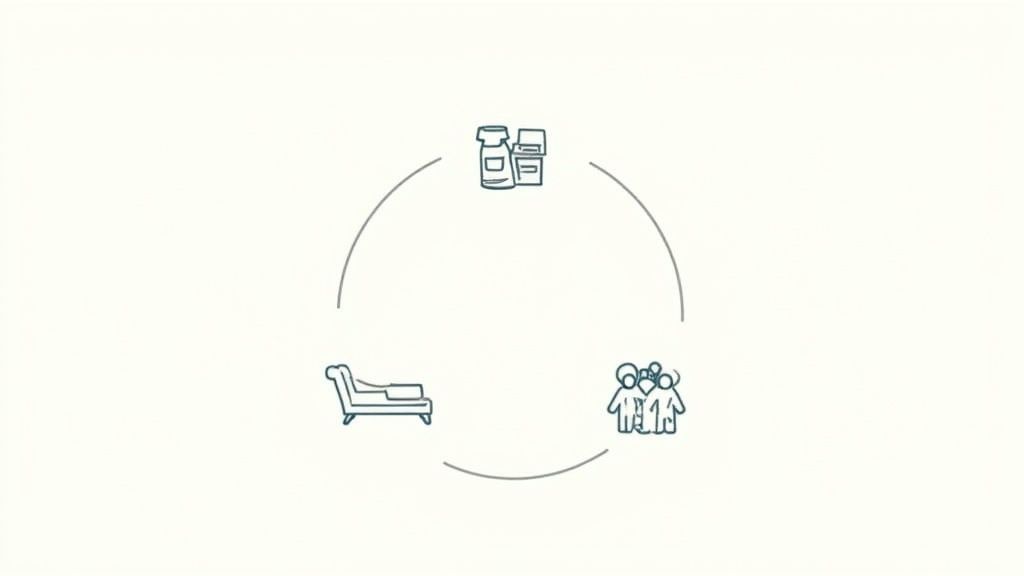
Think of it like a skilled mechanic fixing a complex engine. You wouldn't just replace one part and hope for the best. You need a team that understands how the electrical system, the fuel line, and the computer all interact. In the same way, quality treatment combines several core elements, each playing a vital role in building a strong, lasting recovery.
The goal here is to move past crisis management. Instead, the focus shifts to developing new skills, getting to the root of the struggle, and creating a supportive environment where real healing can finally take hold. This comprehensive approach is what separates a temporary fix from a genuine chance at a new life.
The Foundation of Evidence-Based Therapies
At the heart of any program worth its salt are proven therapeutic methods designed to address the tangled thoughts and behaviors that fuel both addiction and mental health struggles. These aren't just unstructured talk sessions. They are goal-oriented approaches that teach practical, real-world skills.
Two of the heavy hitters are Cognitive Behavioral Therapy (CBT) and Dialectical Behavior Therapy (DBT).
- Cognitive Behavioral Therapy (CBT) helps you spot and challenge the negative thought patterns that keep you stuck. For instance, a thought like, "I'll never get better," can trigger feelings of hopelessness that lead straight to substance use. CBT teaches you to reframe that into something more grounded, like, "Recovery is tough, but I can take it one day at a time." It effectively breaks the toxic cycle where your thoughts, feelings, and actions feed off each other.
- Dialectical Behavior Therapy (DBT) is a game-changer for managing intense emotions and navigating tricky relationships. It gives you a toolkit of skills in four key areas: mindfulness (staying in the present), distress tolerance (getting through a crisis without making it worse), emotion regulation (understanding and managing your feelings), and interpersonal effectiveness (asking for what you need respectfully).
These therapies provide the essential tools for rebuilding your life from the ground up. You can learn more about how these methods fit together by exploring what goes into an integrated dual diagnosis treatment plan. Knowing this structure helps you ask the right questions when you’re checking out potential providers.
The Role of Medication Management
For many people, medication is an absolutely vital part of building a stable recovery. Just like someone with diabetes might need insulin to manage their physical health, a person with a co-occurring disorder often benefits from medications that help regulate their brain chemistry. This isn't about trading one substance for another; it's a strategic medical intervention.
A psychiatrist who specializes in addiction medicine will do a full evaluation to see if medications can help manage withdrawal, dial down cravings, or stabilize a mood disorder like depression or anxiety. This medical support creates a crucial foundation, allowing you to engage more deeply in the therapeutic work. It helps quiet the internal noise so you can focus on healing.
Effective treatment recognizes that mental health and addiction are medical conditions. Integrating psychiatric care and medication management is not just a bonus—it's a core standard of comprehensive care.
Building a Support System Through Group and Family Therapy
Recovery is not a journey you should ever have to walk alone. That’s why integrated treatment puts a huge emphasis on building a strong community through both group and family therapy.
In group therapy, you connect with others who truly get what you’re going through. This shared experience melts away feelings of isolation and shame, creating a safe space to practice new communication skills and see things from a different perspective. It’s a powerful, living reminder that you are not the only one in this fight.
Family therapy is just as critical. Addiction and mental health issues ripple out and affect the entire family, often creating unhealthy patterns of codependency and mistrust. Bringing loved ones into the process helps educate them, heal damaged relationships, and set healthy boundaries that support everyone’s well-being.
Holistic Practices for Complete Wellness
Finally, top-tier mental health and addiction services look beyond the clinical side to support your entire well-being—mind, body, and spirit. These holistic practices aren’t fluffy add-ons; they are essential for building resilience and learning to manage stress in healthy, sustainable ways.
These practices often include:
- Mindfulness and Meditation to help you stay grounded in the present and handle stress without turning to substances.
- Nutritional Guidance to help repair the physical damage from substance use and boost your mood through a balanced diet.
- Physical Activity to release natural endorphins, reduce anxiety, and improve your overall physical health.
Good programs often weave in holistic approaches like gentle yoga practices and other self-care strategies that support both mental and physical health. By pulling together these evidence-based, medical, and holistic elements, a truly integrated program gives you a robust framework for building a new life—one defined not by struggle, but by strength, resilience, and genuine hope.
How to Find the Right Mental health and Addiction Services
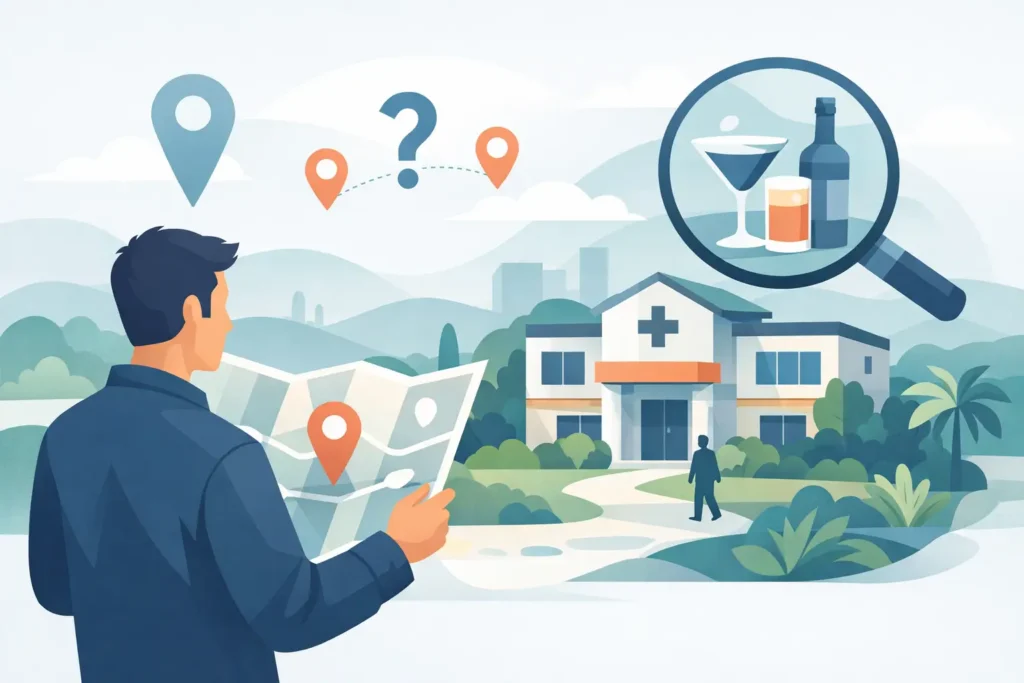
Making the call for help is a huge step. But once you've made that decision, the process of actually finding the right care can feel overwhelming and confusing. With so many programs out there, how do you sort through them all to find the one that truly fits?
This guide is designed to give you a clear roadmap, arming you with the right questions and knowledge to confidently find high-quality mental health and addiction services.
The search often feels urgent, especially when you learn that a staggering 93% of people around the world who need help for mental health or substance use aren't getting it. That massive treatment gap, detailed in insights on the global mental health treatment gap on unitedwecare.com, highlights just how critical it is to find a program that actually meets your specific needs.
Understanding the Different Levels of Care
Not all treatment is created equal. The "level of care" is just a simple way of describing the intensity of a program and how much time it requires. Think of it like physical therapy—someone recovering from a minor sprain needs a lot less support than someone learning to walk again after a major accident.
- Outpatient Programs (OP/IOP/PHP): This is the most flexible route. You live at home and attend therapy sessions a few times a week, which means you can keep up with work, school, and family life. It's a great fit for people who have a solid support system at home but need structured, professional guidance.
- Residential Treatment: In this scenario, you live at the treatment facility for a set period, usually between 30 to 90 days. This creates a highly structured and immersive environment, removing you from daily triggers so you can focus entirely on getting better.
- Inpatient Hospitalization: This is the most intensive level of care, designed for short-term stabilization during a crisis. It provides 24/7 medical and psychiatric supervision to ensure your safety before you "step down" to a less intensive program like residential or outpatient.
Getting a handle on these differences is the first real step in narrowing down your search to programs that make sense for your life right now.
Key Questions to Ask Potential Providers
Once you have an idea of the level of care you might need, it’s time to start talking to different programs. Don't ever feel shy about asking direct questions—a good provider will be completely transparent and happy to answer anything you throw at them.
Your main goal is to find a place whose approach not only makes sense to you but also has the credentials to back it up. A great way to prepare is by getting a clearer picture of how rehab works by reading our detailed guide, which can help you come up with even more specific questions.
Here's a checklist to use during your conversations:
- What is your treatment philosophy? Do they stick to one model, like the 12-steps, or do they pull from a range of evidence-based therapies like CBT and DBT?
- Are you licensed and accredited? This is non-negotiable. Look for state licensure and accreditation from respected organizations like The Joint Commission or CARF. It’s a crucial sign of safety and quality.
- How do you handle co-occurring disorders? Ask them to walk you through their process for treating mental health and substance use at the same time. A truly integrated program won't treat them as separate issues but as parts of one unified plan.
- What are the credentials of your clinical staff? The team should include licensed therapists, counselors, and medical staff who have specific training in both addiction and mental health.
- What does a typical day or week look like? This gives you a real feel for the program's structure and the balance between individual therapy, group sessions, and other healing activities.
Finding the right fit is about more than a checklist of services. It's about finding a place where you feel safe, respected, and truly understood. Trust your gut during this process.
By arming yourself with this knowledge, you can shift from feeling overwhelmed to feeling empowered. You’re not just looking for any help; you’re looking for the right help. Taking the time to research your options and ask these important questions is a powerful investment in your long-term health and the first solid step toward building a recovery that lasts.
A Closer Look at Substance Use Disorders Today
To really see why integrated treatment is so vital, we have to look at the addiction side of the dual diagnosis equation. Substance use disorder (SUD) isn't a sign of weakness or a moral lapse; it’s a complex, treatable medical condition that touches millions of people from every single walk of life. Understanding just how common it is helps us shift the conversation from judgment to one of compassion and real support.
The scale of the challenge is massive. In the United States alone, 48.5 million people aged 12 or older had a substance use disorder in 2023. That number represents 17.1% of the population. Digging a bit deeper, 28.9 million of those individuals had an alcohol use disorder, while 27.2 million had a drug use disorder. An additional 7.5 million people were facing both at the same time.
From Coping Mechanism to Clinical Condition
So how does it start? More often than not, an SUD begins as an attempt to manage pain, whether that pain is physical or emotional. A substance becomes a tool—something to quiet anxiety, numb the ache of depression, or escape the weight of trauma.
Over time, though, the brain’s chemistry actually changes. It builds a tolerance that demands more and more of the substance just to feel "normal." This creates a vicious cycle where the very thing someone used for relief starts causing even more harm, damaging their health, relationships, and well-being. Recognizing this pattern is the first real step toward seeking effective mental health and addiction services.
Substance use disorder is a health crisis rooted in a search for relief. Effective treatment honors this by providing healthier, sustainable ways to find peace and manage life’s challenges without relying on a substance.
This perspective changes everything. It moves the focus from blaming the person to addressing the underlying reasons for their pain. When we see SUD as a response to deep distress, it becomes crystal clear that compassionate, evidence-based care is the only path forward. For anyone looking to manage the feelings that often drive substance use, exploring some effective coping strategies for anxiety and depression can be a powerful starting point.
Understanding this context is key to seeing why addiction services are a non-negotiable part of any complete mental health strategy. Breaking the stigma starts by seeing the human story behind the statistics and providing the integrated care needed for real, lasting recovery.
Got Questions About Starting Treatment?
Deciding to get help is a huge step, and it’s usually the toughest one. It's completely normal to feel a little lost or have a dozen questions running through your mind about what happens next. We get it.
Our goal here is to cut through the confusion and give you straight, clear answers to the questions we hear most often from people considering mental health and addiction services. Think of this as a practical guide to demystify the process and help you move forward with confidence.
What Is the First Step if I Need Help?
The single most important first step is to get a professional assessment. This isn’t a commitment to a program—it’s just a confidential conversation with an expert who can help you make sense of what’s going on and map out your options.
You can get the ball rolling in a few different ways:
- Talk to your primary care doctor. They're a great starting point for a preliminary screening and can refer you to a trusted specialist.
- Connect with a licensed therapist. A mental health professional can provide a much more detailed and nuanced evaluation.
- Call a treatment center directly. Admissions teams are specifically trained to walk you through this initial phase with zero judgment.
An assessment gives you two critical things: an accurate diagnosis and a professional recommendation for the right level of care. This ensures the support you get is actually built for your specific needs, not a one-size-fits-all solution.
How Do I Know if a Program Is Truly Integrated?
This is a fantastic question. A truly integrated program doesn’t just acknowledge mental health and substance use—it treats them at the same time, with one cohesive plan. It operates on the core principle that these conditions are tangled together and trying to fix one without addressing the other just doesn't work.
When you're vetting a provider, ask them this point-blank: "How does your team treat co-occurring disorders simultaneously?" A high-quality program will have clinicians cross-trained in both mental health and addiction. They won't treat one issue and then the other; the entire team works together on your recovery from day one.
Look for a program where therapists, medical staff, and recovery coaches are all on the same page, collaborating on a unified strategy. That’s the real sign that every part of your well-being is being addressed as part of a single, comprehensive approach.
How Can I Support a Resistant Family Member?
This is incredibly tough, and your heart is in the right place. The key is to approach the conversation with compassion, not confrontation. Lead with your love and worry for them.
Using "I" statements is a game-changer. Instead of saying, "You need to stop," try something like, "I'm worried about you, and it's been hard for me to see you struggling." It shifts the tone from accusation to genuine concern.
Offer to help them look up options or even go with them to that first appointment. Most importantly, make sure you're getting support for yourself through family therapy or groups like Al-Anon. This journey affects you, too, and protecting your own well-being is non-negotiable.
At Altura Recovery, we know that taking this first step is a big deal. Our team is here to answer every question you have and guide you toward personalized outpatient care that actually fits your life. When you're ready to see what your options are, visit our website or give us a call for a completely confidential chat.