A lot of people start looking for the best outpatient addiction treatment programs after one hard moment – a relapse scare, a DUI, a conversation with family, or the realization that work, school, or parenting can’t keep absorbing the fallout. The challenge is that many programs sound similar on the surface. What actually helps is knowing what quality outpatient care looks like when real life is still happening around you.
Outpatient treatment is not a lesser version of rehab. At its best, it is structured, clinically grounded care designed to help people recover while staying connected to daily responsibilities. That can make it a strong fit for adults balancing work and family, college students trying to protect momentum, teens who need support without leaving home, and people stepping down from detox or inpatient treatment.
What makes the best outpatient addiction treatment programs different
The best outpatient addiction treatment programs do more than offer a few therapy sessions each week. They create a treatment plan that matches the severity of substance use, the person’s mental health needs, and the practical demands of daily life.
That starts with proper assessment. A strong program looks at substance use history, relapse patterns, trauma, family dynamics, psychiatric symptoms, physical health, motivation for change, and the stability of the home environment. If a program rushes past evaluation and pushes everyone into the same schedule, that is usually a sign of limited clinical depth.
Quality outpatient care also includes levels of support. Some people need a Partial Hospitalization Program with several hours of treatment across multiple days. Others do well in an Intensive Outpatient Program that provides meaningful structure while allowing them to keep working or attending class. Some are ready for general outpatient therapy and recovery maintenance. The point is not choosing the most intense option by default. The point is choosing the right level of care for right now.
Why fit matters more than marketing
A program can have polished language and still be a poor match. The real question is whether the treatment model fits the person’s life, risks, and recovery stage.
For example, someone returning home after inpatient rehab may need daily structure, relapse prevention planning, psychiatric support, and close accountability. A person in the early stages of recognizing an alcohol problem may need intensive therapy, but with evening scheduling that protects employment. A college student may need treatment that understands academic pressure, social drinking culture, and family involvement. A teen may need a different clinical approach entirely, one that includes age-appropriate therapy and family participation.
This is where nuance matters. Not every outpatient setting is right for every person. If withdrawal risks are high, or if a home environment is unsafe and actively undermining recovery, outpatient treatment may not be enough at first. The best providers are honest about that. They do not oversell flexibility when a higher level of care is needed.
Core features to look for in outpatient addiction treatment
Evidence-based therapy should be standard, not optional. That includes approaches such as cognitive behavioral therapy, relapse prevention work, motivational interviewing, and trauma-informed care. Programs should help clients understand triggers, change patterns of thinking, regulate emotion, and build practical coping skills they can actually use outside the therapy room.
Dual diagnosis treatment is another major marker of quality. Many people seeking addiction treatment are also living with anxiety, depression, PTSD, bipolar disorder, or other mental health conditions. If those issues are ignored, substance use often returns because the underlying pain has not been addressed. The best programs treat addiction and mental health together rather than asking clients to separate them.
Medication support can also be important. Some clients benefit from psychiatric care for co-occurring mental health symptoms. Others may need medication-assisted support depending on the substance involved and their recovery history. Good outpatient care does not treat medication as a shortcut or a failure. It treats it as one possible tool within a broader recovery plan.
Family involvement matters too, especially when trust has been strained or communication has broken down. Family therapy, education, and support can reduce chaos at home and help loved ones respond in ways that support recovery instead of unintentionally reinforcing old patterns.
The role of structure in real-world recovery
One reason outpatient treatment can be so effective is that it allows people to practice recovery in the environments where they actually live. That is also what makes it hard.
In inpatient care, the environment is controlled. In outpatient care, stressors are still present. There may be relationship conflict, job pressure, social triggers, cravings on the drive home, or the temptation to isolate after a difficult day. This is why structure matters so much.
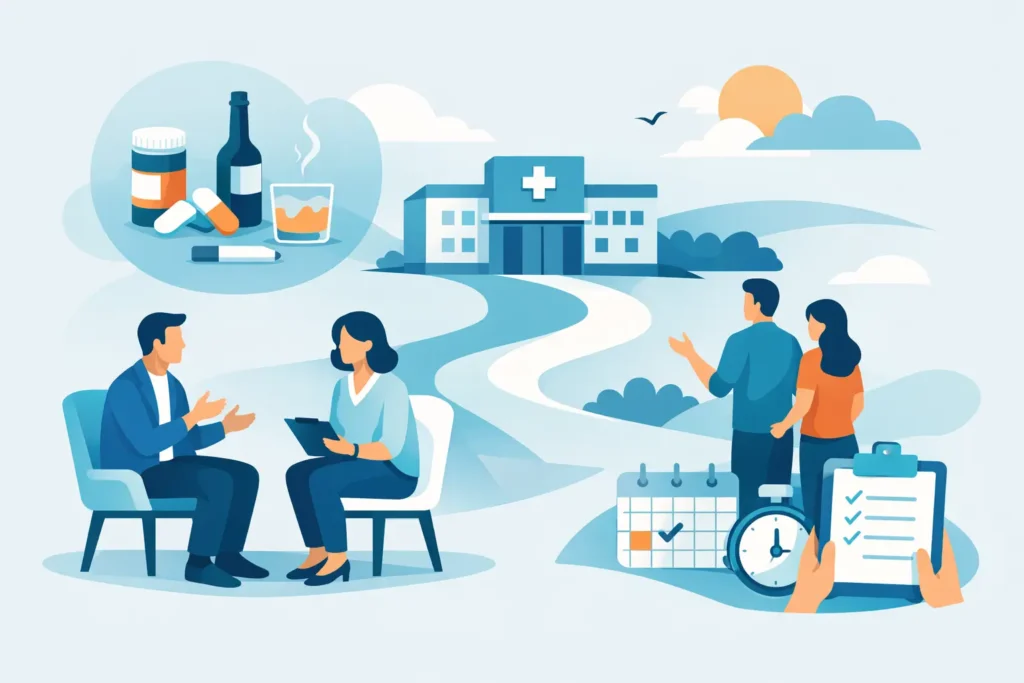
The strongest outpatient programs build that structure intentionally. They use consistent scheduling, individual therapy, group therapy, progress monitoring, skill building, and relapse prevention planning to create momentum. They do not just ask clients to stop using substances. They help them rebuild routines, accountability, emotional stability, and a sense of purpose.
That practical side of recovery is often underestimated. Sobriety is not sustained by motivation alone. It is supported by better habits, healthier boundaries, stronger coping tools, and ongoing connection.
How to evaluate the best outpatient addiction treatment programs
If you are comparing options, ask simple but revealing questions. How is level of care determined? What therapies are used? Is treatment trauma-informed? Can the program treat co-occurring mental health conditions? How often will the client meet individually with a clinician? What does relapse prevention look like in practice? Is there family support? Are there options for young adults, teens, or working professionals with scheduling needs?
You should also pay attention to whether the program talks only about abstinence or also about life change. Lasting recovery usually involves both. People need help managing cravings and staying accountable, but they also need support rebuilding confidence, relationships, daily routines, and emotional health.
A good program should be able to explain how treatment evolves over time. Recovery is rarely linear. Someone may begin in PHP, transition into IOP, and later move into supportive outpatient care as stability improves. That kind of continuum matters because people often need different kinds of support at different stages.
Outpatient treatment in Houston: what local access can change
For people in Houston, convenience is not a minor detail. Long commutes, unpredictable schedules, school demands, and family obligations can all become barriers to care. Access to a program that is realistically reachable can make the difference between consistent participation and dropping off after a few weeks.
That does not mean the closest option is automatically the best one. It means the best fit is one that combines clinical quality with a schedule and location that support follow-through. For many clients, especially those in early recovery, removing friction matters. When treatment can work with real life instead of competing with it, people are more likely to stay engaged.
This is one reason outpatient care resonates with so many individuals and families. It offers a path toward healing that respects privacy, daily responsibilities, and the need for gradual but meaningful change.
Recovery should feel challenging, not impossible
The best outpatient addiction treatment programs are not defined by slogans or promises of quick transformation. They are defined by thoughtful assessment, the right level of structure, evidence-based care, dual diagnosis support, and a treatment plan that holds up in the real world.
That kind of care can be life-changing because it meets people where they are while helping them move forward with clarity and accountability. For those looking for outpatient support in Houston, providers like Altura Recovery reflect this model by combining flexible programming with trauma-informed, comprehensive care designed for real healing, real growth, and a return to daily life with stronger footing.
If you are weighing options for yourself or someone you love, trust the program that takes the whole person seriously – not just the substance use, but the stress, the history, the mental health, and the life that recovery is meant to restore.