If you have ever wondered why one person does well in treatment while another keeps cycling through relapse, the answer is usually not motivation alone. The most effective addiction treatment methods work because they address the full picture – substance use, mental health, trauma, daily routines, relationships, and the pressure of real life. Recovery is rarely about one breakthrough moment. It is usually built through the right level of care, the right clinical support, and a treatment plan that actually fits the person.
That matters for people who cannot put life on pause. Many adults are balancing work, parenting, school, or caregiving. Many teens and young adults are trying to stay connected to education and family while getting help. In those situations, treatment needs to be structured enough to create change but flexible enough to support real-world recovery.
What makes addiction treatment effective?
The best treatment methods are not defined by intensity alone. They are defined by fit. An approach is effective when it matches the severity of substance use, the presence of co-occurring mental health conditions, the person’s stage of change, and the level of support available at home.
Evidence-based care is the foundation. That means treatment is built around approaches that have been studied and shown to improve outcomes. But good care is also trauma-informed, individualized, and practical. Someone with alcohol addiction and untreated depression will need something different from a college student misusing stimulants under intense academic stress. A person stepping down from detox has different needs than someone seeking outpatient help for the first time.
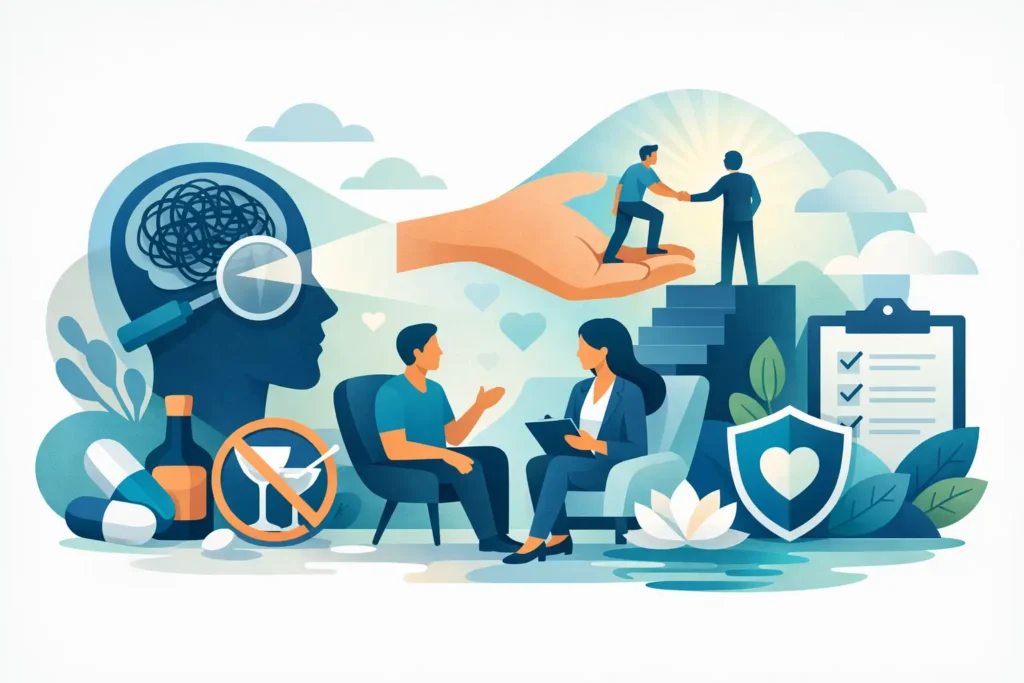
The most effective plans usually combine several methods rather than relying on one. Therapy helps people understand patterns. Psychiatry can help stabilize mood or reduce cravings when appropriate. Group work builds accountability. Family support repairs communication. Relapse prevention teaches what to do when life gets messy again, not if.
Most effective addiction treatment methods in practice
Comprehensive assessment and personalized care planning
Effective treatment starts before the first therapy session. A strong clinical assessment looks at substance use history, mental health symptoms, trauma exposure, medical needs, relapse history, family dynamics, and daily functioning. Without that kind of assessment, treatment can become too generic to help.
Personalized care planning is what turns assessment into action. It determines whether someone needs a Partial Hospitalization Program, an Intensive Outpatient Program, supportive outpatient treatment, psychiatric care, or a combination of services. This step may sound basic, but it is one of the biggest reasons treatment succeeds or fails. People do better when the plan is built for them rather than copied from someone else’s recovery story.
Cognitive behavioral therapy and other evidence-based therapies
Cognitive behavioral therapy, often called CBT, remains one of the most effective addiction treatment methods because it helps people identify the thoughts, beliefs, and behaviors that keep substance use going. That might mean learning how stress triggers drinking, how shame fuels isolation, or how all-or-nothing thinking turns one setback into a full relapse.
Other therapies can be just as important depending on the person. Dialectical behavior therapy can help with emotional regulation, distress tolerance, and impulsivity. Motivational interviewing is especially useful for people who feel ambivalent about change. Trauma-informed therapies matter when substance use has become a coping strategy for unresolved pain.
No single modality works for everyone. The goal is not to force people into one style of therapy. It is to use the approach that helps them build insight, stability, and healthier coping skills.
Dual diagnosis treatment for co-occurring conditions
Addiction and mental health conditions often overlap. Anxiety, depression, PTSD, bipolar disorder, and ADHD can all complicate recovery. When these issues are ignored, relapse risk usually rises.
That is why dual diagnosis treatment is one of the most effective approaches available. Instead of treating substance use in isolation, it addresses both conditions at the same time. If someone drinks to manage panic symptoms or uses drugs to numb trauma-related distress, treating the addiction without treating the underlying mental health issue leaves a major driver untouched.
Integrated care also reduces confusion for clients and families. Rather than bouncing between disconnected providers, treatment becomes more coordinated, more realistic, and often more sustainable.
Medication support when clinically appropriate
Medication is sometimes misunderstood in addiction care. For some people, it is not needed. For others, it can be a critical part of recovery. Medication-assisted treatment and psychiatric medication support can reduce cravings, ease withdrawal-related symptoms, stabilize mood, and improve engagement in therapy.
This is not about replacing one substance with another. It is about using medical tools responsibly when they improve safety and long-term outcomes. The key phrase is clinically appropriate. A thoughtful treatment team considers the person’s substance history, psychiatric symptoms, medical profile, and recovery goals before recommending medication support.
Used well, medication can create enough stability for deeper therapeutic work to begin.
Group therapy and peer connection
Addiction thrives in isolation. Group therapy helps break that pattern. In a well-run clinical group, people learn they are not uniquely broken, and they get honest feedback from others who understand the work of recovery.
Group therapy also builds skills in real time. Clients practice communication, boundaries, emotional honesty, and accountability. They hear how others manage cravings, handle family conflict, or return to work without slipping back into old habits. That kind of shared learning can be powerful.
The trade-off is that group is not always easy at first. Some people feel guarded, especially if privacy matters deeply to them. But when the environment is professionally guided and respectful, group often becomes one of the places where real change starts to feel possible.
Family involvement and relationship repair
Addiction affects more than the person using substances. It changes family roles, trust, communication, and emotional safety. Treatment is often more effective when loved ones are part of the process.
That does not mean family involvement looks the same in every case. Some clients benefit from family therapy sessions. Others need education for loved ones about boundaries, enabling, relapse warning signs, and how to support recovery without controlling it. For teens and young adults, family engagement is often especially important because home dynamics can strongly influence progress.
Healthy support systems do not remove all struggle. They do make it easier to sustain change when treatment is over.
Why outpatient care can be one of the most effective options
People sometimes assume that more restrictive care is always better. Sometimes it is necessary. But outpatient treatment can be highly effective when it matches a person’s needs and offers enough structure.
Programs such as PHP and IOP allow clients to receive intensive therapy, group support, psychiatric services, and relapse prevention work while staying connected to daily life. That matters because recovery does not happen in a vacuum. It happens while managing schedules, relationships, stress, and responsibilities.
For many people in Houston, flexible outpatient care makes treatment more accessible and more relevant. Clients can practice new coping skills in real situations, then bring those successes and struggles back into treatment for support. That feedback loop is one reason outpatient care can produce meaningful, lasting growth.
At the same time, outpatient care is not ideal for everyone. If someone is medically unstable, actively withdrawing, or in an unsafe living environment, a higher level of care may be the better starting point. Effective treatment is always about matching intensity to need.
How to recognize the most effective treatment for you or your loved one
The right program usually has a few clear signs. It offers evidence-based therapy, not just general support. It screens for co-occurring mental health conditions. It provides a clear structure for relapse prevention. It adjusts care as progress changes. And it treats clients with dignity rather than shame.
It should also feel both supportive and accountable. Good treatment is warm, but it is not passive. It helps people understand what is happening, what needs to change, and how to keep moving when recovery feels uncomfortable.
If you are comparing options, ask whether the program can address trauma, mental health, medication needs, family dynamics, and life reintegration. Ask how progress is measured. Ask what happens after the initial phase of treatment. These questions matter because addiction recovery is not just about stopping use. It is about building a life that supports staying well.
At Altura Recovery, that philosophy shapes comprehensive outpatient recovery services designed for people who need real clinical support without stepping away from work, school, or family life.
The most effective addiction treatment methods are the ones that help a person become more stable, more honest, more connected, and more capable of living without relying on substances to get through the day. Real healing often looks less dramatic than people expect. It looks like showing up, practicing new skills, rebuilding trust, and choosing support before the next crisis hits. That is where lasting freedom usually begins.