Group therapy is a vital component of addiction recovery, offering a unique space for shared experience, mutual support, and profound healing. The effectiveness of these sessions, however, hinges directly on the depth and relevance of the discussion. Stale, repetitive conversations can lead to disengagement, while powerful, well-facilitated substance abuse treatment group topics can ignite personal breakthroughs and strengthen peer connections. A dynamic group environment moves beyond simply fulfilling a requirement; it becomes a cornerstone of the recovery journey.
This guide provides eight essential group topics designed to foster self-awareness, build practical skills, and create a resilient foundation for long-term sobriety. Each topic is structured to be actionable and impactful, offering facilitators the tools to guide meaningful conversations that address the core challenges of recovery head-on. From relapse prevention and emotional regulation to building healthy relationships and life skills, you will find a blueprint for transformative group work. These concepts are designed to empower participants, helping them navigate the complexities of addiction and build a purposeful life free from substance dependence.
1. Triggers and Coping Mechanisms
Exploring triggers and developing effective coping mechanisms is a cornerstone of any successful recovery journey. This foundational topic is one of the most essential substance abuse treatment group topics because it directly addresses the cycle of use. A trigger is any internal or external cue, such as a person, place, feeling, or memory, that prompts a craving or urge to use a substance. By identifying these personal triggers, group members can begin to break the automatic link between the cue and the response.
The goal is to replace the reactive, substance-using behavior with a proactive, healthy coping strategy. This involves not only recognizing what sparks the urge but also building a personalized toolkit of responses. For example, a group might use Cognitive Behavioral Therapy (CBT) principles to help members challenge the automatic thoughts that follow a trigger, or Dialectical Behavior Therapy (DBT) skills to manage overwhelming emotions in the moment.
How It Works in a Group Setting
In a group setting, a facilitator guides participants through a structured process of self-discovery and skill-building. The shared environment allows members to learn from one another's experiences and realize they are not alone in their struggles.
- Identification: Members start by identifying their unique triggers, often beginning with more obvious external cues (like driving past a specific bar) before moving to complex internal ones (like feelings of loneliness or failure).
- Strategy Development: The group collaboratively brainstorms and practices healthy coping strategies. This could involve role-playing how to decline an offer of a drink or practicing mindfulness exercises to manage anxiety.
- Action Planning: Each participant develops a concrete, actionable plan for what they will do the next time they encounter a specific trigger. This builds confidence and provides a clear path forward.
The following infographic illustrates a simple yet powerful three-step process for responding to a trigger in real-time.
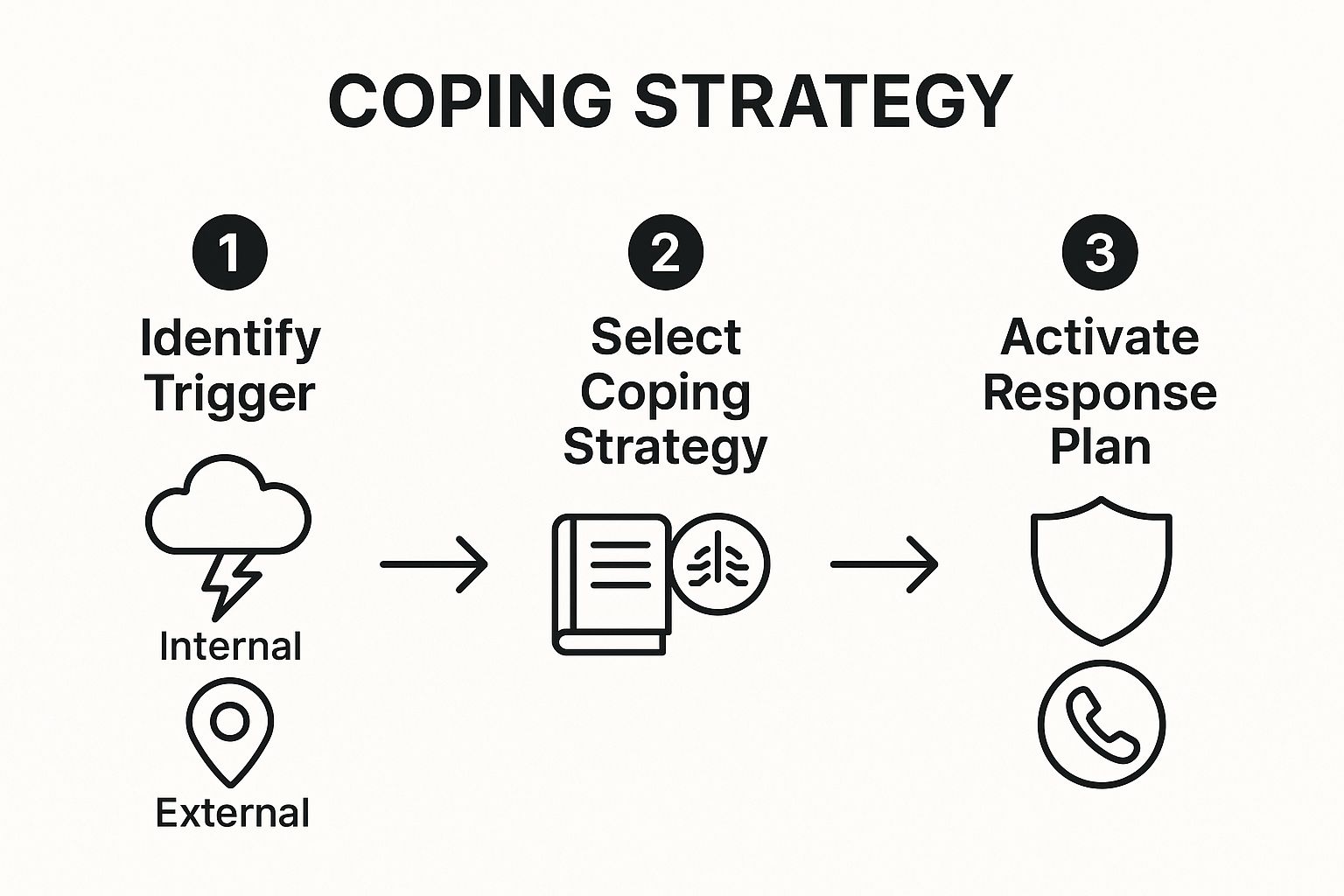
This visual process emphasizes that a trigger does not have to lead directly to substance use; there is a critical moment to pause and choose a different, healthier path. Mastering a variety of these responses is key, and you can explore more coping skills for substance abuse to expand your personal toolkit.
2. Relapse Prevention Planning
Developing a comprehensive relapse prevention plan is a proactive and empowering step in securing long-term sobriety. This critical topic shifts the perspective on relapse from an isolated event to a predictable process with identifiable warning signs. The focus is on equipping group members with the tools to recognize and interrupt this process long before a return to substance use occurs. By creating a detailed, personalized plan, individuals can transform potential crises into manageable challenges and view setbacks as learning opportunities rather than failures.
The goal is to build a structured, written guide that serves as a roadmap during moments of high risk or emotional distress. It goes beyond simply avoiding triggers by incorporating strategies for managing post-acute withdrawal symptoms (PAWS), addressing underlying emotional issues, and building a supportive recovery environment. Dr. Terence Gorski’s CENAPS Model is a widely used framework that helps individuals identify patterns and create specific interventions for each stage of the relapse process.
How It Works in a Group Setting
A group setting provides a collaborative space where members can build robust and realistic relapse prevention plans. The facilitator guides participants in creating a living document that they can rely on, while peers offer feedback, support, and accountability.
- Identifying Warning Signs: Members work together to list and categorize the subtle emotional, cognitive, and behavioral signs that signal a return to old patterns. One person's experience can help another recognize a previously unnoticed warning sign in themselves.
- Developing Intervention Strategies: The group brainstorms specific, actionable responses for each identified warning sign. For instance, if a member identifies "isolating from others" as a warning sign, the group can help them create a strategy like, "I will call my sponsor and one other person from this group immediately."
- Creating a Crisis Plan: Each participant outlines a step-by-step plan for an immediate crisis, including a list of emergency contacts, safe places to go, and immediate actions to take. Sharing these plans reinforces commitment and provides a network of support.
This structured approach makes relapse prevention a tangible skill rather than an abstract concept. Encouraging members to share their plans with accountability partners or family members further strengthens their commitment to recovery. You can find more structured guidance by exploring resources from organizations like the Hazelden Betty Ford Foundation, which often provides workshops on this essential topic.
3. Building and Maintaining Healthy Relationships
Substance abuse often damages the most important connections in a person's life, creating a cycle of isolation and mistrust. Addressing this damage is a critical component of lasting recovery, making healthy relationships one of the most vital substance abuse treatment group topics. This topic focuses on rebuilding trust, setting healthy boundaries, communicating effectively, and discerning which relationships support sobriety. It acknowledges that recovery does not happen in a vacuum; a strong, supportive social network is a powerful predictor of long-term success.
The goal is to equip individuals with the interpersonal skills needed to repair valuable connections and build new, healthy ones. This involves moving away from patterns of codependency, enabling, or conflict that may have characterized relationships during active addiction. The group setting provides a safe space to learn and practice these new skills before applying them in the real world.

How It Works in a Group Setting
A facilitator leads discussions and activities designed to improve relational health. The group dynamic is particularly powerful here, as members can practice communication skills with one another in a controlled and supportive environment. This shared learning process helps participants feel understood and less alone in their relational struggles.
- Skill Development: Members learn and practice specific communication techniques, such as using "I statements" to express feelings without blame. The group also explores the crucial difference between supporting a loved one and enabling their destructive behavior.
- Relationship Assessment: Participants may create a "relationship inventory" to evaluate which connections in their lives are supportive of recovery and which may be toxic or triggering. This helps them make conscious decisions about where to invest their energy.
- Role-Playing Scenarios: The group can role-play difficult conversations, like setting a boundary with a family member or reconnecting with a friend after a long absence. This practice builds confidence and prepares them for real-life interactions.
By focusing on these skills, members not only repair past harm but also build a foundation for a future filled with meaningful, sober connections. You can explore more about navigating the complexities of recovery and relationships to better understand this dynamic process.
4. Emotional Regulation and Mental Health
Understanding the deep connection between emotional health and substance use is a pivotal step toward lasting recovery. This essential topic explores the bidirectional relationship where substance use can worsen mental health symptoms, and unmanaged emotions often lead to substance use as a coping mechanism. The core focus is on helping group members identify, understand, and regulate their feelings without relying on substances, directly addressing the frequent presence of co-occurring disorders.
This approach provides the skills to manage emotional distress effectively, building a foundation of resilience. It moves beyond just stopping substance use to healing the underlying emotional pain that often drives it. By using integrated models like Dialectical Behavior Therapy (DBT), which was pioneered by Dr. Marsha Linehan, or the Seeking Safety model developed by Dr. Lisa Najavits for trauma and addiction, groups can empower individuals to build emotional literacy and find healthier ways to navigate life's challenges.

How It Works in a Group Setting
A group facilitator guides participants in learning to tolerate distress and manage mood swings through evidence-based techniques. The group provides a safe space to practice new skills and receive validation, which is crucial for individuals who may have felt isolated by their mental health struggles.
- Building Vocabulary: The group starts by building emotional literacy, often using tools like an emotion wheel to help members accurately name their feelings instead of just saying "bad" or "stressed."
- Skill Development: Members learn and practice practical skills for managing difficult emotions. To help individuals manage intense emotions and reduce stress, practical tools like focused breathing techniques can be highly beneficial, and you can explore various breathing exercises for anxiety to build this skill.
- Creating a Plan: Each person develops a personalized "emotional first aid kit" containing their go-to strategies, such as grounding techniques, mindfulness exercises, or healthy distractions, to use when emotions feel overwhelming.
This process helps destigmatize mental health issues and equips individuals with the tools for long-term emotional stability. Understanding the link between these two areas is a key part of successful recovery, and you can learn more about integrated mental health and addiction services to see how comprehensive care works.
5. Life Skills and Recovery Management
Active addiction often disrupts or destroys the fundamental skills needed for a stable, fulfilling life. This topic focuses on rebuilding those practical abilities, making it one of the most vital substance abuse treatment group topics for long-term success. It addresses the real-world challenges of creating a new life in recovery by teaching tangible skills like financial management, job readiness, and effective time management.
The primary goal is to empower individuals with the competence and confidence to navigate daily responsibilities without relying on substances. By developing a structured routine and learning to manage practical stressors, group members can build a life that feels purposeful and secure, which in turn reinforces their commitment to sobriety. This topic bridges the gap between the therapeutic work of early recovery and the practical demands of independent living.
How It Works in a Group Setting
A facilitator leads a workshop-style session where members learn and practice essential life skills in a supportive environment. The group setting allows for shared problem-solving and encouragement as members tackle challenges like budgeting or creating a resume, often for the first time in years.
- Skill Assessment: The group begins by discussing which life skills feel most challenging. This could range from creating a weekly schedule and meal plan to managing debt or preparing for a job interview.
- Practical Training: Sessions are hands-on and action-oriented. For example, a facilitator might provide templates for creating a personal budget or guide members through role-playing a job interview. For those navigating re-entry into the workforce, learning to organize and manage the job search process can be incredibly beneficial. Consider tools that help you to build a job application tracker to stay on top of opportunities and follow-ups.
- Goal Setting: Each member sets small, achievable life skill goals for the week, such as opening a savings account or updating their resume. The group provides accountability and celebrates these small victories, building momentum and self-efficacy.
6. Understanding Addiction as a Disease
Framing addiction as a chronic disease rather than a moral failing is a transformative step for many in recovery. This psychoeducational topic is one of the most powerful substance abuse treatment group topics because it shifts the conversation from shame and guilt to science and management. It provides a medical framework, explaining the neurobiological changes that occur in the brain with prolonged substance use. By understanding how drugs and alcohol hijack the brain's reward, motivation, and memory circuits, members can view their condition objectively, much like diabetes or hypertension.
This approach helps de-stigmatize the experience of addiction, allowing individuals to focus on treatment and long-term management strategies instead of being burdened by self-blame. It explains the development of tolerance, dependence, and cravings through the lens of brain science, making the recovery process more understandable. Using resources from the National Institute on Drug Abuse (NIDA) or insights from Dr. Nora Volkow's research, facilitators can demonstrate the tangible, physical impact of addiction on the brain.
How It Works in a Group Setting
A group discussion centered on the disease model of addiction is primarily educational, aiming to empower members with knowledge. The facilitator acts as an educator, presenting complex scientific information in an accessible way while encouraging personal reflection and connection.
- Psychoeducation: The session begins with a clear presentation on the neurobiology of addiction, often using visual aids like brain diagrams or short video clips to illustrate key concepts.
- Myth Busting: The group collectively addresses and debunks common myths about addiction, such as the idea that it is simply a lack of willpower. This helps dismantle internalized stigma.
- Analogy and Comparison: Facilitators often compare addiction to other chronic illnesses that require ongoing management, lifestyle changes, and professional support. This reframes recovery as a proactive health journey.
The video below, featuring Dr. Kevin McCauley, provides a compelling overview of how addiction functions as a disease of the brain, a common educational tool used in treatment settings.
By grounding the conversation in medical science, this topic empowers participants to engage with their recovery as a manageable health condition, fostering a sense of hope and personal agency. It provides a solid foundation for understanding why certain recovery strategies are necessary and effective.
7. Mindfulness, Spirituality, and Meaning-Making
Moving beyond simple abstinence, exploring mindfulness, spirituality, and meaning-making helps individuals in recovery build a rich, fulfilling life. This topic is a crucial part of a comprehensive list of substance abuse treatment group topics because it addresses the existential void that substance use often attempts to fill. It guides participants toward discovering a deeper sense of purpose, connection, and inner peace, which serves as a powerful anchor against relapse.
The goal is to shift focus from what a person is avoiding (substances) to what they are building (a meaningful life). This can involve secular mindfulness practices that ground individuals in the present moment, spiritual exploration that connects them to something larger than themselves, or creative expression that uncovers personal values. Programs like Mindfulness-Based Relapse Prevention (MBRP) have demonstrated significant reductions in relapse rates by teaching these exact skills.
How It Works in a Group Setting
A facilitator creates a safe and open environment for participants to explore these deeply personal concepts without judgment. The group setting allows for the sharing of diverse perspectives, showing that there are many valid paths to finding meaning and spiritual connection, whether secular or religious.
- Mindfulness Practice: Sessions often begin with short, guided mindfulness exercises, such as a 3-minute breathing space, to help members become present and reduce internal noise. This builds a foundational skill for managing cravings and emotional distress.
- Values Exploration: The group engages in activities like values card sorts or guided journaling to identify what truly matters to them. They discuss how aligning their daily actions with these core values can bring a profound sense of purpose.
- Shared Meaning: Participants are invited to share their own sources of meaning, spirituality, or connection. This could range from nature and art to family and community service, fostering mutual respect and offering new ideas for others to explore.
By integrating these practices, members learn to cultivate an inner resilience that makes recovery not just sustainable, but also deeply rewarding. This focus on building a life worth living is a powerful motivator that extends far beyond the therapy room.
8. Addressing Shame, Guilt, and Building Self-Esteem
Confronting the powerful emotions of shame and guilt is a critical component of lasting recovery. This essential topic is one of the most transformative substance abuse treatment group topics because it addresses the core feelings of worthlessness that often fuel addiction. Guilt relates to a specific action ("I did a bad thing"), while toxic shame is a pervasive feeling about the self ("I am bad"). By learning to differentiate between the two, individuals can begin to heal.
The primary goal is to help group members dismantle shame-based identities and cultivate self-compassion. This process involves acknowledging past harms without letting them define one's entire being. It moves participants from a state of self-criticism to one of self-acceptance and forgiveness, creating a solid foundation of self-esteem upon which a healthy, sober life can be built. Therapeutic approaches like Compassion-Focused Therapy (CFT) and the work of researchers like Brené Brown provide a framework for this healing.
How It Works in a Group Setting
A group setting offers a unique environment to combat shame, as sharing vulnerable experiences with others often reveals a sense of common humanity, which is a powerful antidote to shame's isolating nature. A facilitator ensures the space is safe, non-judgmental, and confidential, allowing for deep, honest exploration.
- Distinguishing Emotions: The group learns the crucial difference between healthy guilt, which can motivate positive change (like making amends), and toxic shame, which keeps individuals stuck in a cycle of self-loathing and relapse.
- Practicing Self-Compassion: Members engage in exercises designed to foster self-kindness. This might include guided meditations, journaling prompts focused on self-forgiveness, or practicing positive affirmations to challenge and reframe negative self-talk.
- Rebuilding Self-Worth: The focus shifts to building a new identity based on recovery achievements and inherent value. This involves celebrating small wins, recognizing personal strengths, and understanding that one's worth is not tied to past mistakes. This process is often connected to developing healthier interpersonal dynamics, and you can learn more about setting boundaries in recovery to protect this newfound self-esteem.
Key Topic Comparison of 8 Treatment Areas
| Topic | Implementation Complexity 🔄 | Resource Requirements ⚡ | Expected Outcomes 📊 | Ideal Use Cases 💡 | Key Advantages ⭐ |
|---|---|---|---|---|---|
| Triggers and Coping Mechanisms | Moderate: involves exercises, role-play | Moderate: skilled facilitation, practice | Improved self-awareness, reduced relapse risk | Early recovery, building trigger recognition | Practical skills for daily use, proactive relapse prevention |
| Relapse Prevention Planning | High: detailed planning and ongoing updates | Moderate to High: requires planning tools | Long-term recovery maintenance, relapse reduction | Early recovery through long-term maintenance | Normalizes relapse, structured framework for accountability |
| Building and Maintaining Healthy Relationships | Moderate: communication & boundary skills | Moderate: group facilitation, role-play | Strengthened support systems, improved relationships | All recovery stages, social context focus | Addresses social relapse risks, improves quality of life |
| Emotional Regulation and Mental Health | High: requires mental health expertise | High: skilled facilitators, possible referrals | Better emotional management, co-occurring disorder support | Participants with co-occurring disorders or emotional needs | Tackles root causes, reduces relapse driven by emotions |
| Life Skills and Recovery Management | Moderate: practical skill-building | Moderate: materials, community resources | Increased independence, financial/employment stability | Early to middle recovery focusing on functional rebuild | Builds confidence, supports structure and purpose |
| Understanding Addiction as a Disease | Low to Moderate: mostly educational | Low: educational materials, videos | Reduced shame, increased treatment motivation | Early recovery, family education groups | Empowers with scientific understanding, reduces stigma |
| Mindfulness, Spirituality, and Meaning-Making | Moderate: practice-based with abstract elements | Low to Moderate: facilitator training | Improved emotion regulation, increased life satisfaction | All stages, especially sustained recovery | Reduces cravings, enhances hope and purpose |
| Addressing Shame, Guilt, and Building Self-Esteem | High: emotionally intensive, skilled facilitation | Moderate: trained therapists, support | Enhanced self-compassion, reduced relapse risk | Middle to long-term recovery, requires emotional stability | Addresses core emotional drivers, builds authentic connection |
Putting Knowledge into Action: Your Path Forward in Recovery
Navigating the landscape of recovery requires more than just the desire to change; it demands a practical toolkit of strategies, insights, and support systems. The collection of substance abuse treatment group topics detailed in this article serves as a comprehensive blueprint for building that toolkit. From the foundational work of identifying triggers and crafting a relapse prevention plan to the nuanced exploration of emotional regulation and mending relationships, each topic is a vital building block for a strong, sustainable recovery.
The real transformation occurs when these discussions move from theoretical concepts to lived experiences. Understanding addiction as a disease helps dismantle shame, while cultivating mindfulness and meaning provides a North Star to guide you through difficult moments. These are not just items on a checklist; they are interconnected pillars that support your entire well-being.
From Understanding to Application
The true value of these group therapy discussions is realized through consistent practice and integration. Engaging with these themes in a structured, supportive group setting allows you to not only learn but also to practice new behaviors in real-time. You gain perspective from others who share similar struggles, receive constructive feedback, and build the confidence needed to apply these skills outside the therapy room.
Key takeaways to carry forward include:
- Recovery is proactive, not passive. It involves actively creating plans, developing coping skills, and building a supportive network before a crisis hits.
- Emotional health is central. Addressing underlying mental health challenges, learning to regulate emotions, and healing from shame are not secondary to sobriety; they are essential for it.
- Connection is the antidote to isolation. Meaningful, healthy relationships provide the strength and accountability necessary to navigate the complexities of life without substances.
Your Next Steps on the Journey
As you move forward, consider which of these topics resonates most with your current needs. Is it time to strengthen your life skills, or do you need to focus on building self-esteem? Use this guide to start meaningful conversations with your support system, therapist, or recovery group. Challenge yourself to dig deeper into areas you may have previously avoided.
Remember that every group session, every difficult conversation, and every new coping skill you practice is an investment in your future. The journey of recovery is one of continuous growth, and these substance abuse treatment group topics provide a reliable map to guide you. By embracing this process of learning and application, you are not just abstaining from substances; you are actively building a more resilient, authentic, and fulfilling life.
At Altura Recovery, we transform these essential discussions into dynamic, healing experiences. Our expert clinicians facilitate evidence-based group sessions that explore these critical substance abuse treatment group topics in a compassionate, trauma-informed environment. If you are ready to put these concepts into practice and build a lasting foundation for recovery, explore our programs at Altura Recovery or contact our team today.