
Intensive Outpatient Therapy, or IOP, is a structured treatment program built to deliver serious support for mental health and addiction without asking you to put your life on hold. Think of it as a middle ground—far more involved than a weekly therapy session but less restrictive than a 24/7 residential facility. It allows you to get several hours of focused therapy on multiple days of the week while still living at home, going to work, and managing your daily responsibilities.
Bridging The Gap In Mental Health Care
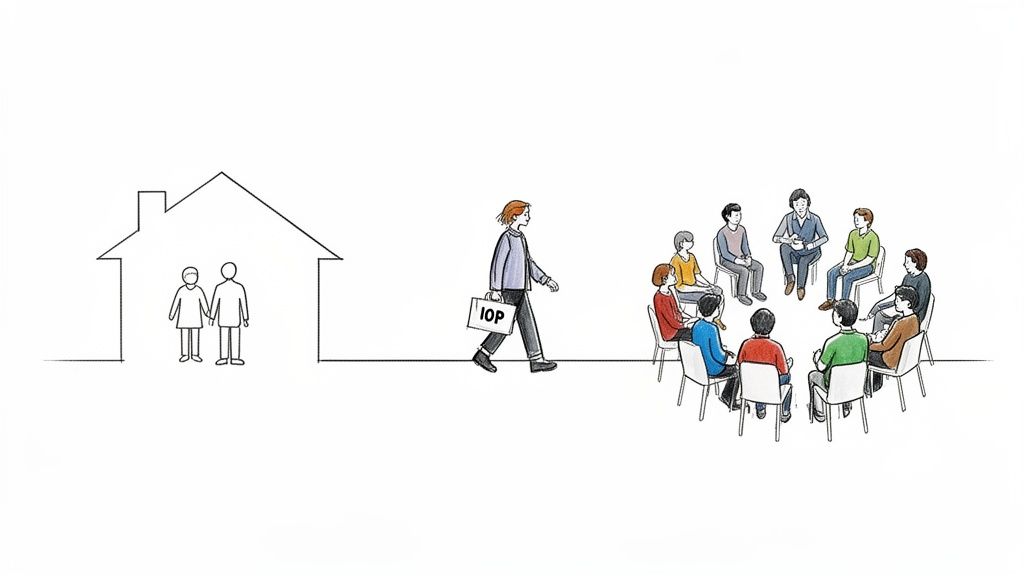
Picture the recovery journey as crossing a bridge. On one side, you have the highly controlled, round-the-clock environment of an inpatient or residential program. On the other, the total independence of standard weekly therapy. An intensive outpatient program is the strong, supportive middle of that bridge, providing a crucial transition that keeps people from falling through the cracks.
IOP is designed for individuals who need a substantial level of care but have a stable and safe home life. It’s like a specialized, part-time training camp for your mental well-being. You show up for rigorous sessions to build vital skills, then go home each day to put them into practice in the real world. This model fills a critical gap, offering a powerful and practical path to lasting healing.
Foundational Elements Of An IOP
A good IOP isn't just one type of therapy; it’s a thoughtfully constructed program that blends several core components into a cohesive whole. This structure ensures you get well-rounded care that hits every angle of recovery. The value of effective programs like these is often highlighted by ongoing mental health awareness initiatives.
Here’s a quick look at the core features of a typical IOP.
Intensive Outpatient Therapy at a Glance
| Feature | Description |
|---|---|
| Time Commitment | Typically 9-15 hours per week, spread over 3-5 days. |
| Living Situation | Clients live at home or in a sober living environment. |
| Core Therapies | A mix of group sessions, individual counseling, and skill-building. |
| Ideal Candidate | Someone stepping down from residential care or needing more than weekly therapy. |
| Goal | Build practical coping skills and a strong support network for long-term recovery. |
Let's break down what those therapy components actually look like in practice.
Typically, you can expect an IOP to include:
- Group Therapy: This is the heart and soul of most programs. It creates a community of peers who understand the struggle because they’re in it, too. It’s a place for mutual support, shared insights, and accountability.
- Individual Counseling: Your one-on-one time with a dedicated therapist. These sessions are for digging deep into personal triggers, underlying issues, and crafting a recovery plan tailored just for you.
- Skill-Building Workshops: These are practical, educational sessions focused on giving you real tools for the real world. You’ll learn how to manage emotions, prevent relapse, communicate better, and handle stress without turning to old habits.
By weaving these elements together, an IOP creates a dynamic and supportive environment where you can practice new behaviors and coping skills with professional guidance before you have to face challenges on your own.
This integrated model is what makes it one of the most effective forms of an outpatient substance abuse program. Instead of just talking about your problems, you are actively learning and applying solutions in a safe, structured setting. It’s all about building a solid foundation you can stand on for the long haul.
A Look Inside a Typical IOP Week
If you're considering an intensive outpatient program, you're probably wondering what it actually looks like day-to-day. It’s not as overwhelming as it might sound. A typical IOP week involves a commitment of 9 to 15 hours, spread across three to five days.
This schedule is designed to be substantial enough to create real change but flexible enough that you don't have to put your entire life on pause. Think of it as anchoring your week with powerful, focused blocks of therapy while leaving room for work, school, or family. You can immediately practice the skills you learn in therapy out in the real world.
Core Therapeutic Activities
While every treatment plan is built around you, most IOP weeks revolve around a few core, evidence-based activities. Each session is a blend of structured work designed to build resilience and self-awareness.
- Group Therapy: This is the heart of the IOP experience. You’ll connect with others who just get it. It’s a safe, professionally guided space to share what you're going through, practice healthier ways of communicating, and build a genuine support system.
- Individual Counseling: This is your one-on-one time to go deeper. With a dedicated therapist, you can work through personal triggers, process trauma, and set clear, practical goals for your recovery.
- Skill-Building Workshops: These are practical, hands-on sessions focused on giving you tools for life. You might learn Cognitive Behavioral Therapy (CBT) to challenge and change negative thought patterns or use Dialectical Behavior Therapy (DBT) to get better at managing tough emotions and tolerating distress.
This combination ensures you're not just talking about your problems—you're actively building the skills to solve them.
The Power of Flexibility and Community
The need for this kind of adaptable care is growing fast. In fact, searches for intensive outpatient care have jumped by an incredible 112% as more people look for effective options that don't require checking into a residential facility. You can dive deeper into these trends in the 2025 State of Recovery report.
The true power of an IOP week lies in its rhythm of learning and application. You gain insights in a supportive group, then immediately test those new skills at your job or with your family, bringing real-world feedback to your next session.
This model is built to foster independence and confidence. At Altura Recovery, we make it even more accessible with flexible scheduling, including both daytime and evening sessions. For those who need care to fit around complex schedules, our virtual recovery IOP program delivers the exact same high-quality therapy from the comfort of your own home. Our goal is to make sure a path to healing is open to you, no matter what your life looks like.
Is An Intensive Outpatient Program Right for You?
Choosing the right level of care is one of the most critical decisions you'll make on the road to recovery. An intensive outpatient program isn't a silver bullet for everyone, but for the right person, it strikes a powerful balance between structure and freedom.
So, who is the ideal candidate? It's someone who needs more support and accountability than a once-a-week therapy session can offer, yet doesn't require the 24/7 medical supervision of an inpatient facility.
Think of it like building a house. A strong foundation is non-negotiable. IOP works best for individuals who already have a stable, supportive home environment to return to each evening. It's a perfect next step for someone transitioning out of a residential program, giving them a chance to slowly reintegrate into daily life while still having a safety net. It can also be an excellent starting point if your condition is serious but doesn't present an immediate medical risk.
Finding the Right Fit for Your Life
Sometimes, seeing real-world examples makes it click. Picture the working professional who needs to tackle their mental health or substance use but can't just drop their career. Evening IOP sessions let them get the help they need without giving up their job. Or think about a parent who has to be home for their kids but still needs dedicated, structured time to focus on their own healing.
This decision tree can help you visualize whether an IOP aligns with where you are right now.
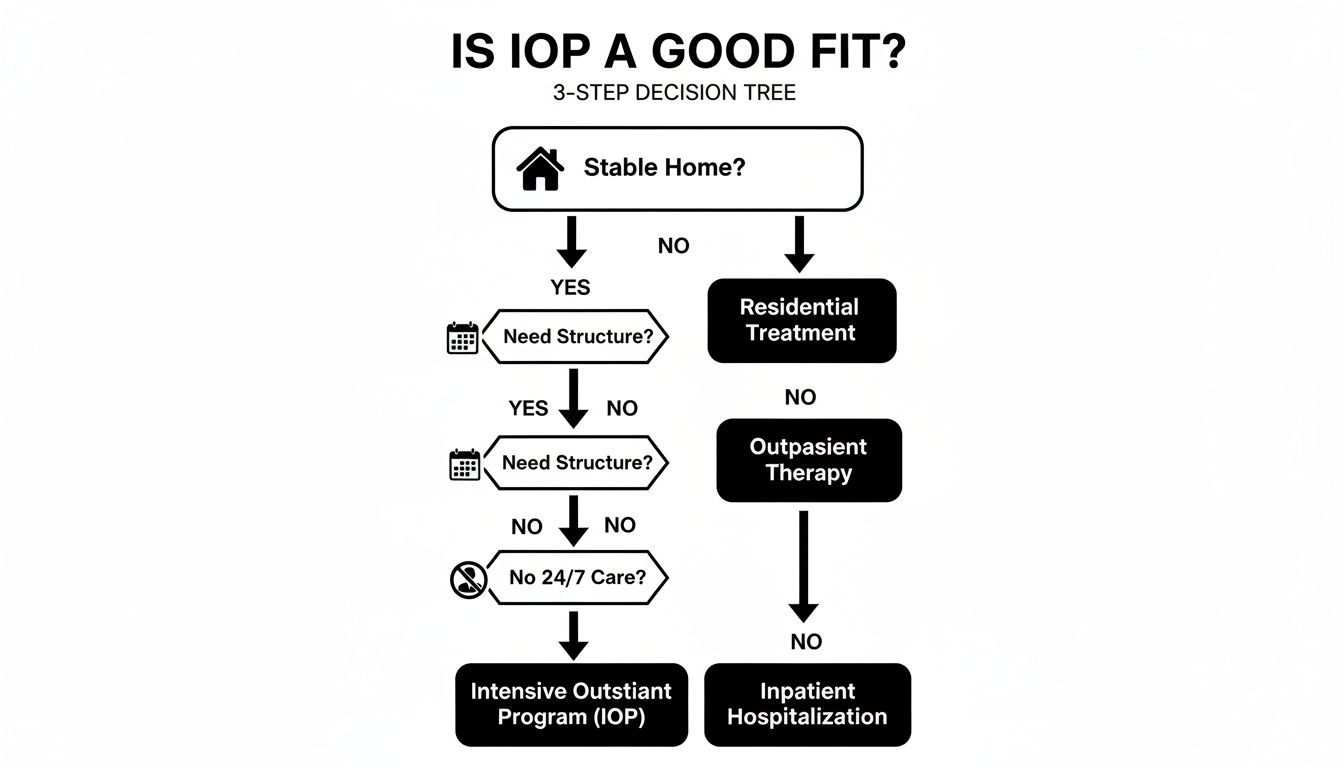
As you can see, if you have a safe place to live, need consistent structure to stay on track, and can manage your nights and weekends without round-the-clock care, an IOP could be a fantastic choice.
When an IOP Might Not Be the Best Option
It's just as important to recognize when an IOP isn't enough. This level of care is not designed for someone who needs medical detoxification. Safely managing withdrawal often requires constant medical monitoring, which an outpatient program simply can't provide.
Likewise, if your home environment is highly unstable, unsafe, or full of triggers, jumping into an IOP can be setting yourself up for failure. In those cases, the secure, controlled setting of a residential facility is a much better place to begin recovery.
An honest assessment of your immediate needs is key. The goal is to match you with a level of care that provides the right amount of support to ensure your safety and set you up for long-term success.
This kind of clear-eyed assessment helps you make an informed choice. To get even more clarity, it’s worth exploring the nuances between different types of outpatient care. Understanding the difference between IOP and a Partial Hospitalization Program (PHP) can help you pinpoint the perfect fit.
While an Intensive Outpatient Program is a powerful tool for many conditions, including PTSD, it's always smart to know all your options. Those looking into comprehensive care might also want to investigate other best PTSD treatments. Ultimately, finding the right program is all about aligning its services with where you are in your journey, right now.
The Real-World Benefits of Choosing IOP
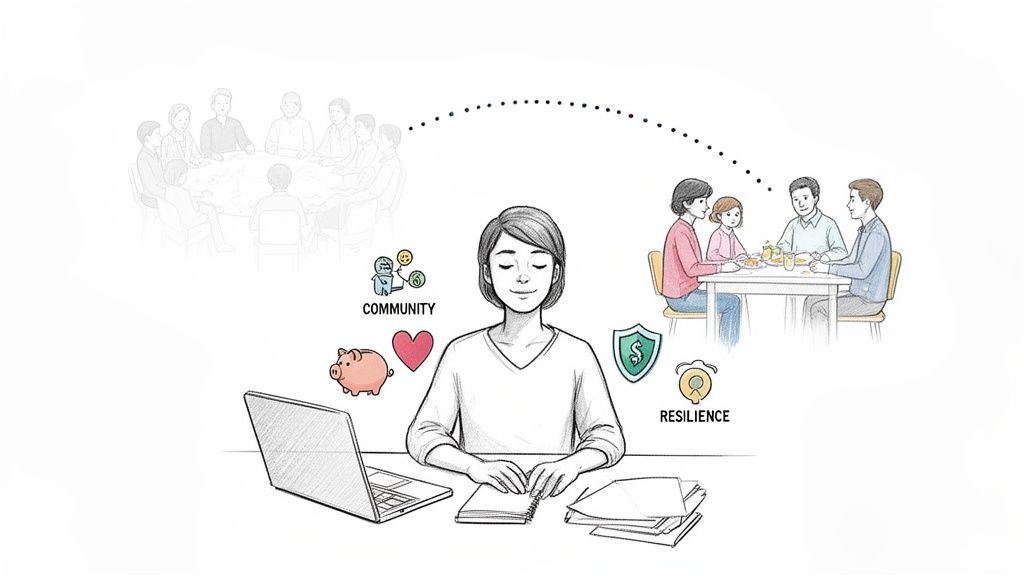
Perhaps the biggest advantage of an intensive outpatient program is the chance to heal while still living your life. Unlike residential treatment, which asks you to hit pause on everything, IOP weaves recovery directly into your day-to-day routine. This structure isn’t just convenient; it’s a powerful, practical benefit.
Instead of learning new coping skills in a controlled bubble, you get to test them out in real time. After a therapy session, you might head back to work, navigate a family dinner, or meet up with friends. This setup forces you to face real-world triggers with the immediate backup of your counselors and therapy group, turning daily challenges into genuine opportunities for growth.
Building Resilience and Community
Another core benefit is the way IOP helps you build a strong, local support system from the ground up. Group therapy sessions are the heart of the IOP model, connecting you with peers who truly understand your journey because they’re walking a similar path.
This shared experience creates a sense of community and accountability that lasts long after the session ends. Many people forge lasting friendships that become a critical part of their long-term recovery network. This immediate, relatable support is a key reason why an intensive outpatient program for substance abuse is so effective.
IOP empowers you to build a foundation for sustainable recovery right where you live. It cultivates independence and resilience by helping you develop healthy routines and support systems in your own environment, not one you have to leave behind.
This approach makes sure the skills you learn and the connections you make are directly relevant to your everyday life. The whole transition to long-term wellness just feels more natural and secure.
Financial and Practical Advantages
Beyond the therapeutic gains, IOP offers some serious practical advantages—especially when it comes to cost. Because it doesn’t include the overhead of housing and 24/7 staffing, it’s a much more affordable option than residential care.
This financial accessibility is a big reason why insurance providers are increasingly getting behind this model. Payers see IOP as a cost-effective alternative to inpatient treatment, and favorable reimbursements are driving its expansion. Plus, federal laws that mandate equal coverage for behavioral health have also helped fuel this growth. You can get a deeper dive into the changing behavioral health landscape to see these trends for yourself.
When you combine the real-world application, community building, and financial accessibility, IOP becomes a powerful and practical choice for lasting change. It gives you the structure you need for deep healing without forcing you to put your entire life on hold.
Here is the rewritten section, designed to sound completely human-written and natural, following all the provided instructions and examples.
What to Expect From IOP at Altura Recovery
At Altura Recovery, we see an intensive outpatient program as more than just a clinical definition. We’ve built our approach on a foundation of compassionate, evidence-based care that treats the whole person—not just the symptoms on the surface. We believe in creating a path to recovery that actually fits into your life, blending expert support with the flexibility you need to keep up with work, family, and other responsibilities.
Our program is grounded in a trauma-informed model. We know from experience that past events often fuel present-day struggles. That’s why we focus on creating a safe, supportive environment where you can start to heal without fear of judgment. This philosophy isn't just a talking point; it shapes everything we do, from your first phone call to your final session.
A Personalized Path to Healing
One-size-fits-all just doesn’t work in recovery. Your journey with us starts with a personalized treatment plan, crafted by our experienced clinicians who take the time to truly understand your history, challenges, and goals. This isn't a template; it's a roadmap built specifically for you.
This tailored care is especially critical for those facing multiple challenges at once. Our dual diagnosis treatment is designed for individuals navigating both a substance use disorder and a co-occurring mental health condition like anxiety or depression. With nearly 50% of people with an SUD also having a mental health diagnosis, treating both simultaneously isn't a luxury—it's essential for any real, lasting wellness.
We also provide comprehensive medication management to ensure your treatment plan is fully supported from every angle. By addressing your physical, mental, and emotional needs all at once, we give you the best possible shot at success.
Building Skills for a Resilient Future
Our goal isn’t just to help you stop a behavior; it’s to equip you with practical tools for relapse prevention and long-term growth. To do that, we use a blend of powerful therapeutic techniques that have been proven to create real, lasting change.
During your time at Altura, you'll engage with methods such as:
- Cognitive Behavioral Therapy (CBT), which helps you identify and rewire the destructive thought patterns that keep you stuck.
- Dialectical Behavior Therapy (DBT), where you'll build concrete skills for regulating emotions and tolerating distress without turning to old habits.
- Mindfulness Practices to help you stay grounded in the present moment and manage the daily stressors that life throws your way.
At Altura Recovery, our mission is to guide you toward "Real Healing, Real Growth, and Real Freedom." We don't just offer treatment; we provide a continuum of care that supports you at every stage, empowering you to build a life you are proud of.
This comprehensive approach ensures that an effective, compassionate path to recovery is not only possible but well within your reach. We're here to walk alongside you, every step of the way.
Still Have Questions About Intensive Outpatient Therapy?
It’s completely normal to have questions when you’re considering a commitment like an intensive outpatient program. This is a big step, and you deserve straightforward answers to feel confident moving forward. We’ve gathered some of the most common questions we hear to give you the clarity you need.
Our goal is to pull back the curtain on the process, replacing any uncertainty you might feel with a solid, real-world understanding of how IOP actually works. Getting the details sorted out, from scheduling to insurance, is a critical part of making the right decision for your health.
How Long Does an Intensive Outpatient Program Usually Take?
This is often the very first question people ask, and the honest answer is: it depends. There’s no universal timeline for healing, so the length of an IOP is always based on your individual progress and clinical needs.
That said, most intensive outpatient programs typically run for about 8 to 12 weeks. This timeframe is long enough to help you build new, healthy habits, sharpen your coping skills, and create a strong foundation for a life in recovery. After finishing an IOP, many people step down to a less structured supportive outpatient program (SOP) to keep the momentum going.
Can I Still Work or Go to School During IOP?
Absolutely. In fact, that’s one of the biggest benefits of an IOP. The whole model is designed to integrate recovery into your life, not put your life on hold.
The schedules are intentionally flexible to fit around your existing responsibilities. Here at Altura Recovery, we offer both daytime and evening sessions so you can keep your commitments to your job, your education, or your family. You get to build powerful recovery skills without sacrificing your career or personal goals.
And this model isn't just convenient—it's effective. Research consistently shows that Intensive Outpatient Therapy is a cornerstone of modern treatment for addiction and dual diagnosis, with success rates that often rival more restrictive inpatient programs. You can learn more about the evidence backing IOP's effectiveness to see why it's such a trusted level of care.
Does Insurance Cover Intensive Outpatient Therapy?
Yes, the vast majority of insurance plans do. IOP is widely recognized by providers as a medically necessary and cost-effective level of care for both mental health and substance use disorders. Because of this, most major insurance plans provide coverage for these services.
Navigating your insurance policy can feel like a job in itself, but you shouldn't have to do it alone. A good treatment center will have a team that specializes in helping you understand and make the most of your benefits.
At Altura Recovery, our admissions team is excellent at this. We can verify your insurance benefits quickly, explain what’s covered in simple terms, and handle all the back-and-forth with your provider. We aim to make the financial side of things as clear and stress-free as possible, so your focus can stay where it belongs: on your healing.
How Is IOP Different From a Partial Hospitalization Program?
It’s helpful to think of treatment levels like steps on a staircase—each one offers a different amount of support. A Partial Hospitalization Program (PHP) and an Intensive Outpatient Program (IOP) are two separate steps, each designed for a different point in the recovery journey.
A PHP is the more intensive of the two. It's often considered a direct step-down from 24/7 residential care and typically requires a time commitment of 20 to 30 hours per week. It provides a highly structured, therapeutic environment during the day while you continue to live at home.
An IOP is the next step down from a PHP. It offers more flexibility and independence while still delivering a strong clinical framework. Requiring about 9 to 15 hours per week, an IOP is built for people who are stable enough to start applying their recovery skills more autonomously in their daily lives.
At Altura Recovery, we’re here to help you find the right step on your personal staircase to recovery. If you’re looking for a flexible, evidence-based path to healing that truly fits your life, our team is ready to answer any other questions you have. Find out more about our compassionate programs by visiting us at https://www.alturarecovery.com.