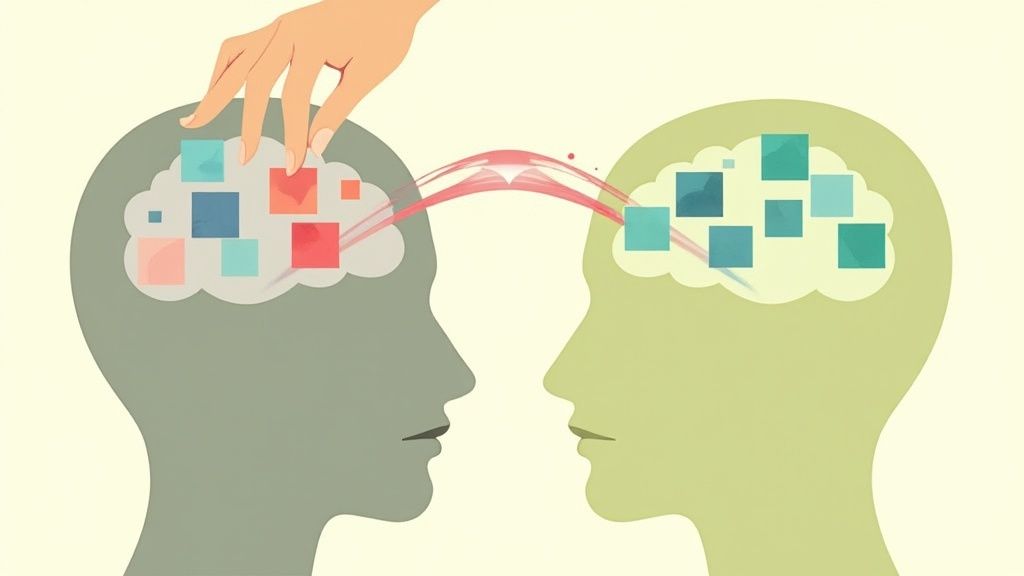
EMDR, or Eye Movement Desensitization and Reprocessing, is a powerful form of therapy designed to help people heal from traumatic events and other deeply distressing life experiences. It works by jumpstarting the brain's natural healing process, dialing down the intensity and emotional pain tied to upsetting memories.
Think of it as a guided mental reset, helping your brain properly file away painful memories so they stop derailing your present.
Understanding EMDR and How It Works
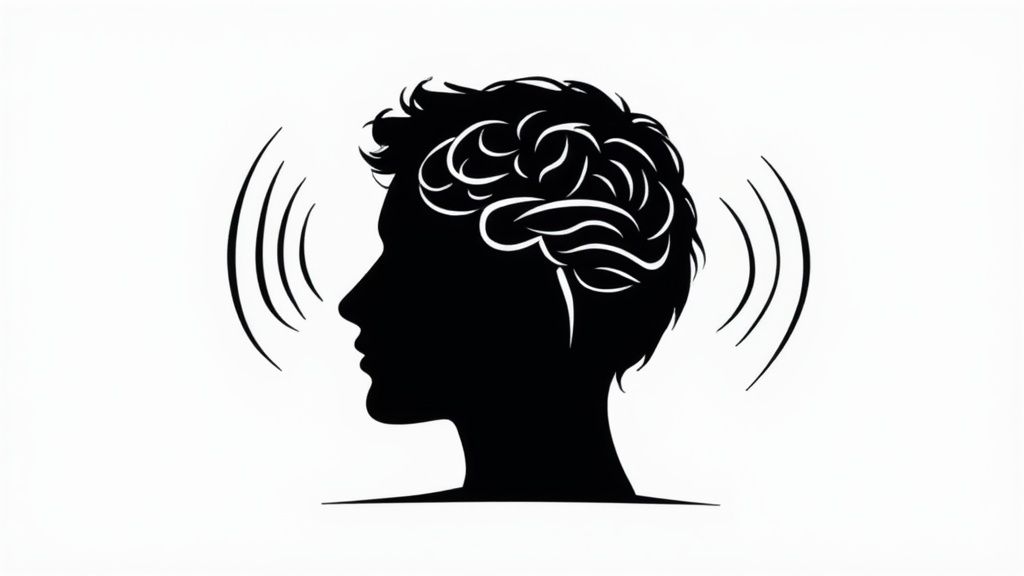
Let’s break down how EMDR therapy works with a simple analogy. Imagine your brain is a meticulous librarian, carefully organizing and shelving every experience you have. But when a traumatic event happens, it’s like a chaotic, unsorted delivery of books gets shoved into the "immediate danger" section without being properly cataloged.
These memories remain "stuck." So, whenever a sight, sound, or feeling in your daily life reminds you of the event, your brain yanks that file off the shelf, triggering the same fight-or-flight response you felt during the original experience. This is why certain things can feel so overwhelming, even years later.
Reprocessing a Stuck Memory
EMDR therapy doesn't erase what happened. Instead, it provides a structured system to help the librarian find that misfiled memory and process it correctly. Using bilateral stimulation—like guided eye movements, tapping, or sounds—the therapy helps your brain re-examine the memory from a safe distance. This technique gently taxes your working memory, which in turn makes the distressing memory less vivid and emotionally charged.
The goal of EMDR is not to forget what happened, but to change the way the memory is stored. By doing so, it allows you to remember the event without reliving the intense emotional and physical sensations associated with it.
The process transforms the memory from an active source of distress into a neutral part of your history. It becomes something that happened to you, rather than something that defines you now. This approach is a cornerstone of effective trauma treatment and aligns perfectly with the principles of a trauma-informed therapy framework. It empowers you to heal from within by tapping into your brain's own capacity for recovery.
The Core Components of EMDR
To give you a clearer picture, here’s a quick rundown of EMDR's key components and what makes it such a unique and effective approach.
| Component | Description |
|---|---|
| Adaptive Information Processing (AIP) | This is the core theory. It suggests our brains have a natural system for processing experiences, but trauma can block it, leaving memories stuck and unprocessed. |
| Eight-Phase Approach | EMDR isn't just one technique; it’s a comprehensive protocol. It follows eight specific phases, from history-taking to future planning, to ensure safety and effectiveness. |
| Bilateral Stimulation (BLS) | This is the most famous part—rhythmic, left-right stimulation of the brain (via eye movements, taps, or tones) while you focus on the traumatic memory. |
These elements work together to create a therapy that is structured, safe, and profoundly effective for many people looking to move past trauma.
The Accidental Discovery That Changed Trauma Therapy
Some of the biggest breakthroughs in medicine don’t come from a grand strategic plan. They start with a simple, keen observation—a moment when someone notices something everyone else has missed. The story of Eye Movement Desensitization and Reprocessing (EMDR) therapy is a perfect example, born not in a lab but during a walk in the park.
It was 1987, and psychologist Dr. Francine Shapiro was strolling through a park, wrestling with some of her own distressing thoughts. She noticed something odd. As her eyes darted back and forth naturally, the emotional sting of her thoughts started to fade. The distress just…eased up.
From Personal Insight to Proven Therapy
This wasn't just a passing curiosity for Shapiro; it was a profound "what if?" moment. What if this simple physical act—rapid, side-to-side eye movements—could unlock the brain’s ability to process painful memories? Driven by that question, she began to study the phenomenon systematically, first on herself and then with volunteers.
She found that when someone held a disturbing memory in mind while engaging in these guided eye movements, the emotional charge of that memory often began to shrink. This initial insight became the bedrock for a structured, evidence-based psychotherapy that has since helped millions of people. This was the birth of EMDR therapy.
From that single moment of awareness, an entire therapeutic model emerged. It proved that healing isn’t always about talking through a problem for years on end. Sometimes, it’s about activating the brain’s own incredible, built-in system for filing away difficult experiences so they no longer run the show.
Of course, the journey from a walk in the park to a formalized treatment wasn’t quick. It took years of rigorous scientific testing, refinement, and clinical trials. Over the decades, study after study validated its effectiveness, cementing its place as a trusted, frontline method for trauma recovery.
Global Recognition and Validation
Shapiro’s initial hunch has since been overwhelmingly supported by research. Today, more than 30 randomized controlled trials have empirically proven EMDR’s effectiveness for treating post-traumatic stress disorder (PTSD) and a host of other psychological conditions.
This powerful evidence base has earned it recognition from major global health organizations. The World Health Organization (WHO), for instance, officially recommends EMDR as a primary treatment for PTSD in both adults and children. This isn't just a niche therapy; it's a globally endorsed standard of care. You can dive deeper into the science in this comprehensive review of EMDR's efficacy on PMC.
What started as a personal observation has become a vital tool in modern mental health, offering a structured path to healing for people who once felt hopelessly stuck in the past.
How EMDR Helps Your Brain Reprocess Memories

To really get what EMDR therapy is, we have to look at what it does inside the brain. At its heart, EMDR is designed to get your brain’s natural information processing system “unstuck.” When something traumatic happens, it can overwhelm this system, leaving the memory frozen in time—complete with the original images, sounds, feelings, and body sensations.
Think of a traumatic memory like a corrupted file on a computer. Every time your brain tries to open it, the system crashes, triggering a flood of intense reactions like panic, anger, or dread. The memory isn't filed away neatly with your other long-term memories. Instead, it’s stuck in a raw, unprocessed state that makes it feel like the event is happening all over again, right now.
EMDR acts like a specialized repair tool for this exact problem. It doesn’t delete the memory, but it helps your brain fix the file so it can be opened safely and stored correctly.
Activating the Brain’s Healing System
The key to this whole repair process is something called bilateral stimulation (BLS). This is the rhythmic, side-to-side input—most famously guided eye movements, but it can also be sounds in headphones or gentle taps on your hands—that is the signature of an EMDR session. While you briefly hold a piece of the distressing memory in your mind, the therapist guides you through sets of this stimulation.
This simple back-and-forth action does something remarkable: it gently taxes your working memory. Your brain is essentially asked to do two things at once—focus on the memory from the past while also tracking the stimulation happening in the present moment. This dual-attention task creates just enough distance from the memory, making it feel less vivid and emotionally overwhelming.
It's a bit like trying to watch a scary movie on a tiny phone screen while simultaneously having a conversation. The movie is still playing, but its power to totally suck you in is diminished because your attention is divided. This gives your brain the breathing room it needs to re-examine the memory without getting hijacked by it.
EMDR helps your brain finally understand that the danger is over. By accessing the memory in a safe, grounded state, you are essentially teaching your nervous system that what was a threat is no longer a threat now.
This process allows new, healthier connections and insights to form. You might start to realize things like, "I survived," "I did the best I could with what I knew," or "I am safe now." These new, adaptive thoughts get linked to the old memory, effectively updating that corrupted file with new information that is true today.
Changing Your Relationship with the Past
It’s a huge misconception that EMDR erases memories. The goal isn't to forget what happened to you. It's to change your relationship with what happened. After successful EMDR therapy, you’ll still remember the event, but it will no longer carry the same emotional charge or physical distress.
The process helps transform the memory from a source of constant pain into a neutral part of your life story.
- Before EMDR: The memory feels like an open wound. The slightest touch triggers immediate, sharp pain.
- After EMDR: The memory becomes more like a scar. It’s a reminder of something that happened, but you can touch it without it hurting anymore.
This shift is profound. It means you can think about the past without being forced to relive it. The memory gets integrated into the larger narrative of your life, losing its power to control your present-day emotions and reactions. This is the essence of how EMDR creates lasting healing, freeing you up to move forward with resilience.
Your Guide to the 8 Phases of EMDR Treatment
Stepping into therapy can feel like a leap into the unknown, but EMDR therapy is different. It follows a predictable and highly structured path, moving through eight distinct phases designed for your safety and success. This isn’t an improvised process; it’s a clear, methodical journey that takes the guesswork out of healing.
Think of it like a carefully planned expedition. You wouldn’t venture into challenging terrain without a map, a guide, and the right gear. In the same way, the eight phases of EMDR provide a reliable roadmap, making sure every step is intentional, safe, and focused on your long-term well-being. This structure helps build confidence and eases any anxiety about what comes next.
The entire process can be broken down into three main stages: getting you ready, reprocessing the memory, and making sure the changes stick.
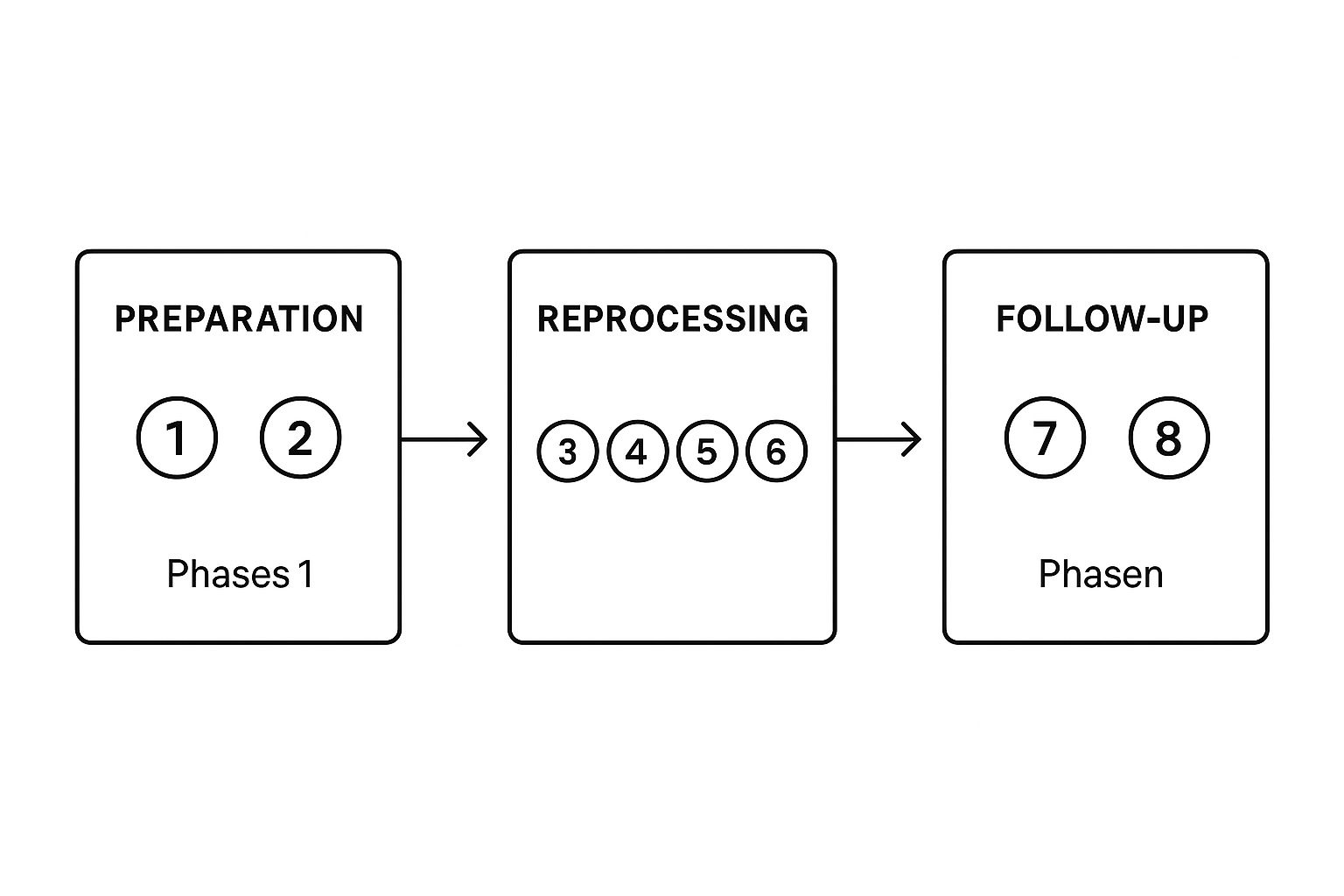
This flow shows how the first few phases establish a foundation of safety before you ever touch on difficult memories. From there, the core reprocessing work begins, followed by steps to solidify your progress for the future.
EMDR therapy is a step-by-step process where your therapist guides you through each stage at a pace that feels right for you. Here’s a closer look at what to expect in each of the eight phases.
The Eight Phases of EMDR Therapy Explained
| Phase | Primary Goal | What to Expect |
|---|---|---|
| 1. History & Planning | Build a trusting relationship and create a clear treatment roadmap. | Your therapist will get to know your story and collaborate with you to identify the specific memories or beliefs you want to work on. |
| 2. Preparation | Equip you with coping skills to manage emotional distress. | You'll learn grounding techniques, like creating a "calm place" in your mind, to ensure you feel in control throughout the process. |
| 3. Assessment | Activate the specific memory you've chosen to target. | You'll identify the image, negative belief, emotions, and physical sensations connected to the memory, setting a baseline for reprocessing. |
| 4. Desensitization | Reduce the emotional charge of the targeted memory. | While holding the memory in mind, your therapist guides you through sets of eye movements or other bilateral stimulation. The distress level drops. |
| 5. Installation | Strengthen your new, positive belief about yourself. | The focus shifts to reinforcing the positive belief you want to replace the old negative one with, using more bilateral stimulation. |
| 6. Body Scan | Clear any lingering physical tension tied to the memory. | You’ll check in with your body to notice and process any residual discomfort, ensuring the memory is fully resolved. |
| 7. Closure | Ensure you feel grounded and stable before ending the session. | Your therapist will guide you through relaxation exercises, making sure you always leave the session feeling calm and contained. |
| 8. Reevaluation | Confirm that the positive changes are lasting. | At the start of the next session, you and your therapist will review your progress to make sure the targeted memory remains neutral. |
Now, let's explore each phase in more detail so you know exactly what to expect on your journey.
Phase 1: Client History and Treatment Planning
The journey begins by building a strong foundation. In this initial phase, your therapist takes a thorough history to understand your background, your current struggles, and what you hope to achieve. This is a collaborative conversation where you work together to pinpoint the specific memories, beliefs, or symptoms you want to address.
This isn’t just about gathering data; it’s about building a trusting relationship that makes you feel safe. You and your therapist will create a treatment plan that targets the memories fueling your current difficulties, ensuring the process is tailored specifically to you. The dynamic of this one-on-one planning is a key part of the process, and you can learn more about its benefits in our guide comparing individual therapy vs group therapy.
Phase 2: Preparation
Before any deep processing begins, your therapist will equip you with the tools needed to manage emotional distress. This phase is all about building your internal resources and making sure you feel grounded and in control.
You’ll learn various self-soothing and relaxation techniques, like visualizing a "calm place" or using specific breathing exercises. These tools become your emotional safety net, empowering you to navigate any difficult feelings that might come up during or between sessions. This preparation is non-negotiable, as it establishes the sense of safety required for the deeper work ahead.
Phase 3: Assessment
Once you feel prepared and ready, it's time to activate the specific memory you’ve chosen to work on. Your therapist will ask you to identify several key components tied to this target memory:
- The Image: A mental snapshot that represents the worst part of the event.
- The Negative Belief: The negative thought you have about yourself connected to the memory (e.g., "I am not safe" or "I am worthless").
- The Positive Belief: What you would rather believe about yourself instead (e.g., "I am safe now" or "I am worthy").
- Emotions and Body Sensations: The feelings and physical sensations that arise when you think about the memory.
This assessment sets the stage for reprocessing by clearly defining the starting point for your healing.
Phase 4: Desensitization
This is the phase most people associate with EMDR. While holding the target memory in mind, your therapist will guide you through sets of bilateral stimulation (BLS), such as side-to-side eye movements or alternating taps. You aren't asked to talk through the memory; you simply notice what comes up as your brain begins to make new, healthier connections.
After each set of BLS, your therapist will check in with a simple question like, "What do you notice now?" The process continues until the memory no longer triggers significant distress. The goal here is to turn down the emotional "volume" until the memory feels neutral.
Phase 5: Installation
With the memory's distress level lowered, the focus now shifts to strengthening your desired positive belief. You will hold the original memory in your mind while also focusing on the positive self-statement you identified back in Phase 3 (like "I am in control").
Your therapist will again use sets of bilateral stimulation to help "install" and reinforce this new, adaptive belief until it feels strong and true. This step is all about replacing the old, negative programming with a healthier, more empowering perspective.
Phase 6: Body Scan
To ensure the healing is complete, this phase checks for any lingering physical tension or discomfort. You'll bring the original memory to mind one last time and scan your body for any residual sensations. If anything comes up, your therapist will use more BLS to help you process and release it.
Phase 7: Closure
Every single EMDR session ends with you feeling better than when you started. Your therapist makes sure you are grounded and stable before you leave, often using the relaxation techniques you learned back in Phase 2. You will never be left in a state of distress.
Phase 8: Reevaluation
The next session always begins here. You and your therapist will check in on the progress made in the previous session, ensuring that the positive results have held and the changes are lasting. This confirms that the old disturbance is gone for good before moving on to the next target.
EMDR Applications Beyond PTSD
While EMDR is famous for its incredible success with Post-Traumatic Stress Disorder, its healing power doesn’t stop there. The same principles that help the brain reprocess major traumatic events are just as effective for a whole host of other mental health challenges. Why? Because many of these conditions are fueled by the exact same root cause: a distressing memory that’s still “stuck.”
Think of it this way: if a single, overwhelming event can throw your emotional well-being off track, so can a series of smaller, painful experiences. EMDR is a versatile tool designed to address any past event that continues to poison your present, whether you have an official PTSD diagnosis or not. It helps process the old memories that whisper negative beliefs, driving everything from anxiety to depression.
Treating Anxiety Disorders and Phobias
Anxiety often grows from past experiences that taught our nervous system to be on constant high alert. A mortifying public speaking experience in middle school can blossom into social anxiety disorder. One turbulent flight can morph into a debilitating fear of flying. These aren't just abstract fears—they're rooted in specific, unprocessed memories.
EMDR therapy goes straight to these origin points. By helping your brain finally file away the memory of that initial event, it essentially recalibrates your internal threat response. The therapy teaches your nervous system that the original danger is over, allowing you to face similar situations today without being hijacked by a ghost of the past.
For instance, someone with a severe phobia of dogs after being bitten as a child can use EMDR to neutralize the memory of the bite. The memory itself doesn't disappear, but the automatic, white-knuckle panic response gets disconnected.
Alleviating Depression and Complex Grief
Depression is often tangled up with past events that left us feeling helpless, worthless, or hollowed out by loss. A memory of being harshly criticized, for example, can plant a negative core belief like, “I am not good enough.” That belief then colors every future experience and feeds a depressive state.
EMDR targets these foundational memories, helping to dismantle the negative beliefs they created. The therapy has shown powerful results here. A recent meta-analysis of nine controlled studies found a large overall effect size of EMDR in reducing depressive symptoms, showing just how significant the clinical improvement can be. You can explore the full findings of this depression study to see the data for yourself.
By processing the memories that anchor feelings of hopelessness, EMDR can lift the weight of the past, creating space for a more positive self-concept and a brighter outlook on the future.
This approach is also incredibly helpful for complex grief, where a person is stuck in the raw, intense pain of a loss. EMDR can help process traumatic aspects of the death or the relationship, allowing the natural grieving process to finally move forward in a healthier way.
Addressing Substance Use and Co-occurring Disorders
The link between unresolved trauma and substance use is undeniable. Many people turn to drugs or alcohol to numb the pain of distressing memories or quiet the intrusive thoughts that stem from old wounds. This is exactly why getting to the underlying trauma is so critical for any lasting recovery.
EMDR therapy is a game-changing tool in an integrated treatment plan because it tackles the “why” behind the substance use.
- It reduces cravings by processing the memories and triggers tied to using.
- It builds resilience by resolving the emotional pain that substances were used to mask.
- It supports sobriety by helping people develop healthier coping skills based on new, positive self-beliefs.
By healing the original wounds, EMDR helps cut off the fuel supply for the addiction, making it a vital component in treating co-occurring disorders. Our guide on addiction and mental health treatment explores this dual-diagnosis approach in much greater detail. Ultimately, by addressing these core issues, EMDR empowers people to build a foundation for genuine, sustainable recovery.
Finding the Right Support for Your Healing Journey

Understanding what EMDR is and how it works is a huge first step. But the next move is just as critical: finding the right therapeutic environment to start your healing. While EMDR is a powerhouse on its own, its effects are often amplified when it’s part of a bigger, more complete treatment plan.
Deep trauma work demands a foundation of safety, structure, and professional guidance. This is exactly why EMDR is so often woven into comprehensive outpatient programs that support your whole self—not just a single symptom or memory. True recovery isn’t about patching a hole; it's about addressing the mind, body, and spirit together.
Why an Integrated Approach Matters
Imagine trying to repair the foundation of a house while ignoring a leaky roof and faulty wiring. You might fix one problem, but the whole structure is still at risk. The same is true for healing from trauma. EMDR is brilliant at repairing those foundational wounds, but it works best when paired with other supportive practices.
An integrated plan makes sure all the different parts of your recovery are getting attention at the same time.
- Talk Therapy (CBT/DBT): These therapies give you practical, everyday skills for managing thoughts, emotions, and behaviors. They provide stability while you do the deeper, more intense work of EMDR.
- Holistic Practices: Things like mindfulness, meditation, and yoga are fantastic for regulating your nervous system. This makes it much easier to stay grounded and present during and after your reprocessing sessions.
- Group Support: There is incredible power in connecting with others who get it. Group therapy reduces feelings of isolation and helps you build a strong community, which is absolutely essential for long-term success.
This combination creates a powerful safety net, giving you multiple streams of support as you navigate the tough but rewarding work of healing. It constantly reinforces the fact that you are not in this alone.
What to Look For in an EMDR Provider
Choosing the right therapist is everything. That connection you build with your provider is the container that holds the entire process, making you feel safe enough to do the work. When you're looking for a professional, it’s important to look beyond basic credentials and find someone who creates a genuine environment of trust and compassion.
A skilled EMDR therapist will never rush you. They will dedicate plenty of time to the preparation and resourcing phases, making sure you feel fully equipped with coping tools before you ever approach a difficult memory. Your sense of safety and control is always their number one priority.
A great therapist acts as a skilled and compassionate guide. They don't pull you through the healing process; they walk alongside you, helping you access your own innate capacity to heal while ensuring you feel secure every step of the way.
When you feel ready to start your search, finding the right substance abuse therapy near me can connect you with programs offering this exact kind of integrated, expert-led care. Many people also find that learning how to start journaling for self-discovery and mental clarity is a powerful tool to use alongside therapy, giving them another outlet for processing thoughts and feelings between sessions. Ultimately, putting the right support system in place is the key that unlocks lasting recovery.
Of course. Here is the rewritten section, crafted to sound completely human-written and natural, following the provided style guide and examples.
Common Questions About EMDR Therapy
It’s smart to have questions before diving into any new kind of therapy. Getting clear on the process can make all the difference, helping you walk into your first session feeling prepared and confident. Let’s tackle a few of the most common questions people have about what EMDR is really like.
Does EMDR Force You to Relive Trauma?
This is the biggest concern for most people, and the answer is a firm no. While you do bring the memory to mind, you are not thrown back into it uncontrollably. The bilateral stimulation—the back-and-forth eye movements or taps—actually helps keep one foot firmly planted in the present moment.
Think of it like watching an old movie on a screen from the safety of your chair, rather than being dropped into the scene itself. Your therapist is right there with you, making sure you feel grounded and in control the entire time. The goal is to make the memory manageable, not overwhelming.
How Long Does EMDR Therapy Take to Work?
Everyone’s timeline is a bit different, but one of the standout features of EMDR is that it’s often much quicker than traditional talk therapy, especially for trauma. For a single, specific event, some people see a major shift in just 3-6 sessions. If the trauma was more complex or happened over a long period, it might take 12 or more sessions to get the lasting results you’re looking for.
The clinical data is pretty compelling. In one major review, researchers found that after about eight EMDR sessions, roughly 60% of participants no longer met the criteria for a PTSD diagnosis. This highlights just how effective and durable the results can be.
These aren't just temporary fixes; the research points to real, long-term symptom relief. You can dig into more of the numbers and studies in these EMDR therapy statistics and findings.
Is EMDR Only for “Big T” Traumas?
Not at all. It’s a common myth that EMDR is reserved for "Big T" traumas like combat, a natural disaster, or a serious accident. The reality is that it’s just as powerful for "small t" traumas—those deeply distressing life events that might not have been life-threatening but still left a lasting negative mark.
These experiences can include things like:
- Childhood bullying or persistent neglect
- A painful divorce or betrayal
- Public humiliation or an unexpected job loss
- Growing up in a home where your feelings were constantly dismissed
If a past event is still hijacking your emotions, shaping negative beliefs about yourself, or getting in the way of your daily life, it’s a valid target for EMDR. The therapy focuses on the impact the memory has on you today, not on what you label it.
At Altura Recovery, we know that taking the first step is often the hardest part. Our compassionate, licensed clinicians are trained in EMDR and are here to answer all your questions, creating a safe and supportive environment for your healing. Learn more about our outpatient programs and begin your journey toward real freedom. https://www.alturarecovery.com