When people hear the word “rehab,” their first thought is often a sterile, hospital-like lockdown. But it’s much more helpful to think of it as a dedicated training ground—a place to pause your life, step away from the daily chaos, and learn a new way of living. Rehab’s real purpose is to create a safe, structured space where you can get to the root of your substance use and build powerful strategies for a life without it.
Rehab isn’t a punishment or a consequence for bad behavior. It's a courageous and proactive choice to take back control of your life. It functions as a necessary time-out from the people, places, and stressors that trigger substance use, giving you the breathing room to focus completely on healing and rebuilding.
The Core Components of Effective Treatment
A quality rehab program isn't built on just one thing; it's an ecosystem of support designed to address addiction from every angle—mind, body, and spirit.
- Personalized Therapy: This is the heart of the work. Through both one-on-one and group counseling, you’ll dig into the personal history, thought patterns, and emotional wounds that have been driving substance use.
- Medical Oversight: For many, getting through withdrawal is physically and mentally grueling. Having medical professionals on your side provides compassionate care to manage symptoms safely and make the process as comfortable as possible.
- Peer Support: There is incredible power in connecting with people who just get it. Group sessions build a true sense of community, chip away at the feelings of isolation, and create a support network that often lasts long after treatment ends.
This integrated approach is critical because addiction is a complex and widespread issue. Millions of people struggle, often in silence. In the U.S. alone, an estimated 48.5 million people faced a substance use disorder in 2023. Shockingly, only about 23.6% of those who needed help actually got it, which shows just how big the treatment gap is. You can explore more data on addiction treatment trends and see why closing this gap is so important.
Rehab provides a critical pause button on life, offering the time, tools, and professional guidance needed to rewire old habits and build a new foundation for lasting recovery. It’s not about erasing the past but about constructing a stronger future.
Let’s take a moment to boil down what a rehabilitation program is truly designed to do.
Core Functions of a Rehabilitation Program
This table provides a quick summary of what rehab programs are designed to achieve for individuals seeking recovery.
| Core Function | What It Means for You |
|---|---|
| Stabilization | Safely managing withdrawal symptoms under medical care. |
| Education | Understanding the science of addiction and how it affects your brain. |
| Skill-Building | Learning practical coping skills to handle stress, triggers, and cravings. |
| Healing | Addressing underlying trauma, anxiety, or depression in therapy. |
| Connection | Building a sober support network with peers and professionals. |
| Planning | Creating a concrete relapse prevention and aftercare plan for long-term success. |
Ultimately, these functions come together to create a flexible, multi-faceted system designed to meet you exactly where you are. Whether you need intensive, around-the-clock care or a program that fits around your job and family, there is a pathway to support your journey toward real, sustainable freedom from addiction.
Navigating the Different Levels of Rehab Care
The first thing to understand about what rehab is, is what it isn't: a single, rigid program that fits everyone. A better way to think about it is as a flexible spectrum of care. Just like a doctor prescribes different doses of medicine for different needs, addiction treatment offers various "levels" of support tailored to a person’s life, the severity of their substance use, and any co-occurring mental health needs.
The journey often begins with the most intensive level of care, then gradually "steps down" to more independent models as you get stronger. This approach ensures you get the right amount of support at each stage of your recovery, helping you build a solid foundation before facing the challenges of daily life on your own.
The Highest Level of Support Inpatient or Residential Treatment
Think of inpatient or residential treatment as a total immersion experience. In this setting, you live at the treatment facility 24/7, completely removed from the people, places, and stressors that might trigger substance use. It's an ideal starting point for individuals with severe addiction, those who haven't found success in less structured programs, or anyone with significant medical or psychiatric needs that require round-the-clock attention.
By providing constant medical and clinical supervision in a highly structured environment, inpatient rehab allows you to focus 100% on recovery. The days are full and scheduled, packed with everything from individual and group therapy to educational workshops and wellness practices. This intense support is designed to build a strong initial foundation for sobriety.
Stepping Down Partial Hospitalization and Intensive Outpatient Programs
Once a person has built some initial stability, they can transition to less intensive—but still incredibly robust—levels of care. These "step-down" programs are the bridge between the sheltered environment of residential treatment and the full independence of daily life.
- Partial Hospitalization Program (PHP): This is the most structured form of outpatient care. It’s like having a full-time job focused on recovery, typically requiring you to attend treatment for five to eight hours a day, five days a week, while living at home or in a sober living environment.
- Intensive Outpatient Program (IOP): An IOP offers more flexibility, making it more like a part-time commitment. It usually involves attending treatment for three to five days a week for just a few hours each day. This structure allows you to maintain work, school, or family responsibilities while still getting a high level of clinical support.
- Supportive Outpatient Program (SOP): Often the final step in the formal treatment process, an SOP involves less frequent meetings—maybe just once or twice a week. The goal here is to reinforce coping skills and provide ongoing support as you navigate long-term recovery.
The flowchart below shows how a good rehab program integrates therapy, medical oversight, and peer support to create a complete healing experience.
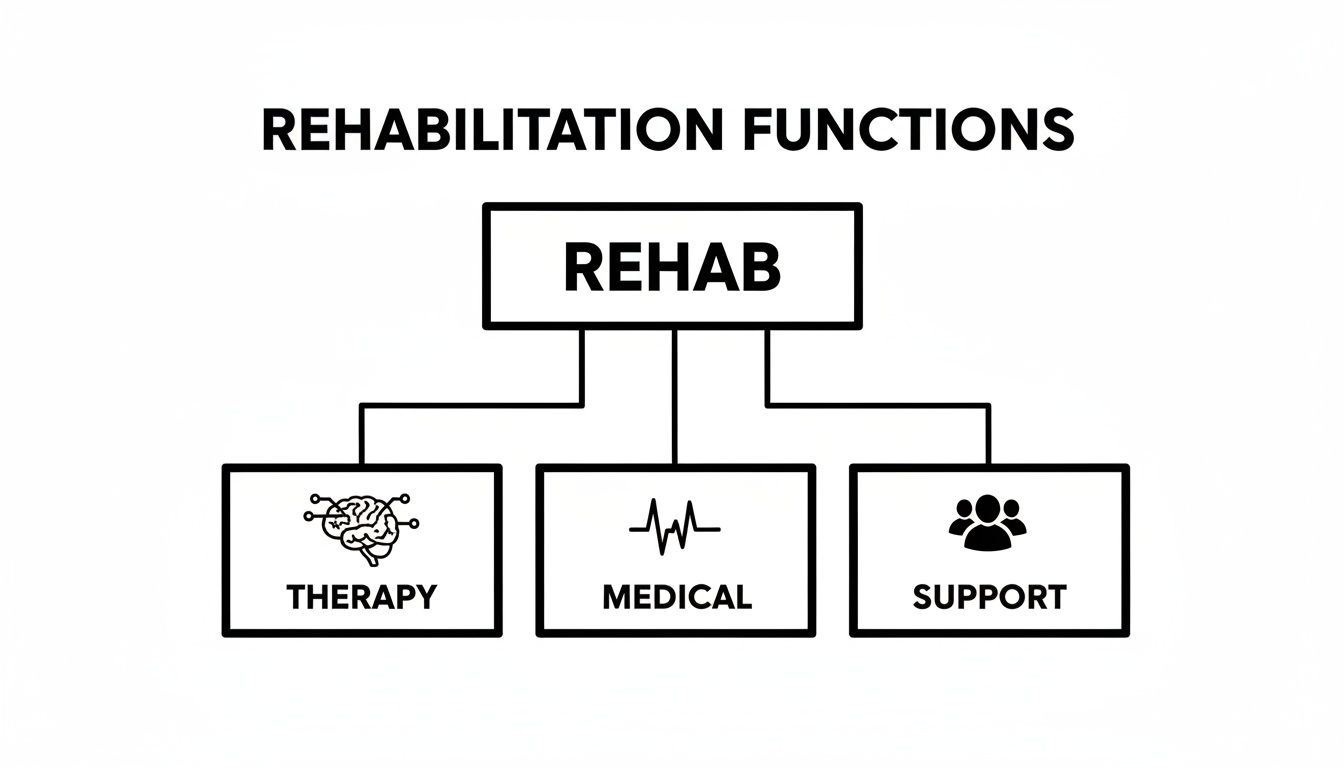
This visual highlights a key truth: real rehabilitation addresses the whole person by combining therapeutic healing, medical stability, and the strength found in community.
Why Outpatient Care is a Vital Bridge
Outpatient programs like those we offer at Altura Recovery are essential because they provide a safe space to practice recovery skills in the real world. You can go to therapy in the evening and then apply the communication skills you just learned with your family that same night. This immediate application is what helps turn theoretical knowledge into lived experience.
Outpatient treatment empowers you to build a life in recovery while living it. It's not about being 'cured' in isolation but about learning to thrive amidst real-world challenges with consistent, professional guidance.
This continuum of care ensures you never feel like you're jumping off a cliff when you leave a higher level of treatment. Instead, it’s a gradual release of support, making sure you feel confident and equipped to handle life's ups and downs without returning to substance use. Each step down is truly a step forward on your journey toward lasting freedom.
Exploring Common Therapies Inside a Rehab Program
Therapy is the real engine of change in any rehab program. It’s where you finally get to roll up your sleeves and figure out the why behind the substance use. Instead of just focusing on stopping a behavior, therapy helps you build an entirely new internal toolkit—one filled with practical skills for navigating stress, managing emotions, and creating a life where substances just aren't necessary anymore.
This process isn't about a single magic-bullet method. It’s a thoughtful combination of proven strategies designed to address your unique story. By blending different approaches, a quality rehab program helps you heal old wounds, rewire those automatic negative thought patterns, and forge a truly resilient path forward.
Foundational Therapeutic Approaches
At the heart of modern addiction treatment are several evidence-based therapies. These aren't just trendy ideas; they're methods backed by years of research that have helped countless people find lasting recovery.
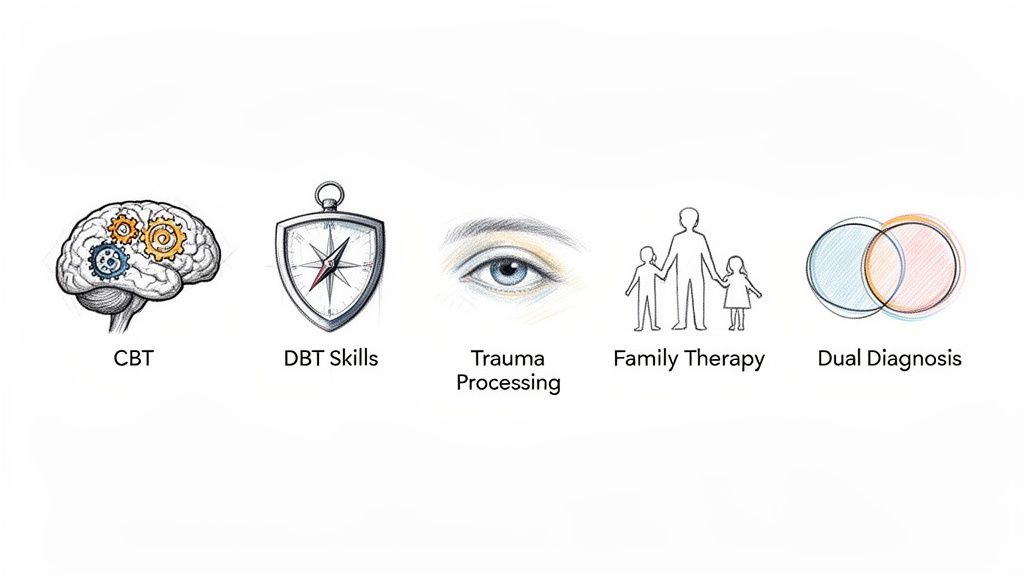
For example, many programs rely on Cognitive Behavioral Therapy (CBT), which is incredibly effective for tackling the thought patterns that fuel both addiction and co-occurring anxiety. CBT works on a simple but powerful principle: our thoughts, feelings, and behaviors are all linked. By learning to spot and challenge those destructive thought cycles, you can actually change how you respond to triggers, breaking that knee-jerk connection between a tough moment and the urge to use.
Another cornerstone is Dialectical Behavior Therapy (DBT). While CBT hones in on changing thoughts, DBT gives you concrete skills to manage overwhelming emotions and improve your relationships. It’s a game-changer for people who feel like their emotions are always running the show, teaching practical techniques in four key areas:
- Mindfulness: Learning how to stay present and grounded, even when things get chaotic.
- Distress Tolerance: Building healthy ways to get through painful emotions without reaching for a substance.
- Emotion Regulation: Gaining control over intense feelings before they hijack your actions.
- Interpersonal Effectiveness: Learning how to communicate your needs and set boundaries in a healthy, respectful way.
Addressing Deeper Wounds and Family Systems
Addiction rarely shows up in a vacuum. More often than not, it's deeply tangled up with past trauma and other mental health conditions like depression or anxiety. That’s why a complete treatment plan has to include specialized therapies that go deeper.
True recovery isn't just about removing a substance; it's about adding new skills, healing old wounds, and building a life that feels too valuable to lose.
Trauma-informed care is built on the understanding that past traumatic experiences can be a major driver of substance use. Therapies like Eye Movement Desensitization and Reprocessing (EMDR) help people process traumatic memories in a safe, guided environment, which can reduce their emotional charge and free you from being controlled by the past.
On top of that, family therapy plays a huge role because addiction affects the entire family. These sessions are designed to repair broken trust, improve communication, and teach loved ones how to best support the recovery journey. When the whole family system starts to heal, everyone can move forward together.
The Importance of Dual Diagnosis Treatment
One of the biggest breakthroughs in understanding what rehab is has been the focus on treating co-occurring disorders. A dual diagnosis simply means someone is struggling with both a substance use disorder and a mental health condition at the same time. This is incredibly common, as many people start using substances to self-medicate the symptoms of anxiety, depression, or PTSD.
Effective rehab programs know they have to treat both conditions simultaneously. Trying to fix an addiction without addressing the underlying mental health issue is like bailing water out of a boat without patching the hole—it’s just not going to work long-term. An integrated approach ensures you get comprehensive care for your whole self, creating a much stronger foundation for a stable, sober life.
Understanding the Journey From Admission to Aftercare
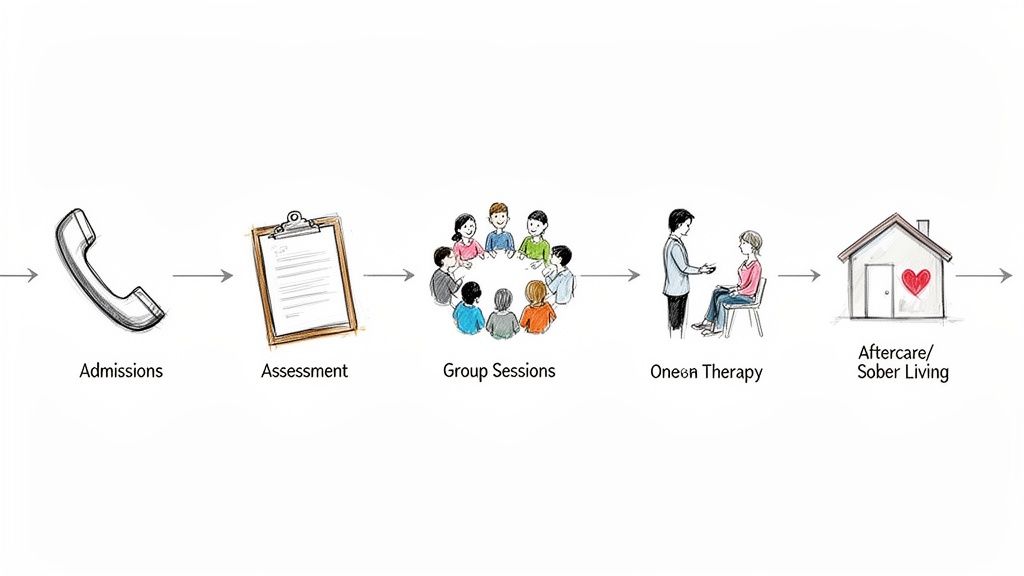
Walking into recovery for the first time can feel like stepping into the unknown, but the process is more straightforward than you might think. From your first call to your final aftercare session, every step is designed to guide you from where you are to where you want to be—living a full life, free from substance dependence. It's a structured path, but one that's flexible enough to meet you exactly where you're at.
The entire experience is a carefully guided path. To get a better sense of how each stage connects, you can even look into resources on patient journey mapping, which helps visualize how one phase flows logically into the next.
The First Steps: Admissions and Assessment
It all starts with a simple phone call. You’ll speak with an admissions counselor in a completely confidential, no-pressure conversation. This isn't a sales pitch; it's a fact-finding mission to see if the program is the right fit. The focus is on understanding your story and explaining how treatment works.
Next comes a clinical assessment with a licensed therapist. This is where the real planning begins. A professional will talk with you about your history with substance use, your mental health, and your current life situation. Think of it as creating a personalized blueprint for your recovery—the results are used to build a treatment plan that addresses your specific needs and goals.
Life Inside the Treatment Program
A typical day in rehab is structured and purposeful. The goal is to replace old, destructive habits with new, healthy routines and coping skills. While every program has its own rhythm, most schedules are built around a blend of therapies that tackle addiction from different angles.
Your day might look something like this:
- Group Therapy Sessions: These are the heart of the program. It's where you connect with peers, realize you're not alone, and learn from the experiences of others who just get it.
- Individual Counseling: This is your one-on-one time to dig deep with a therapist. You can work through personal trauma, address specific anxieties, and set private goals in a safe, confidential space.
- Educational Workshops: These are practical classes that teach you the science behind addiction, how to communicate better, and new ways to manage stress without turning to a substance.
This mix of activities doesn't just help you stop using; it helps you build a life that feels worth living sober. The routine itself provides the stability and predictability that active addiction often takes away.
Transitioning Back to Daily Life: Aftercare and Relapse Prevention
Finishing a program isn't the finish line—it's the starting line for the rest of your life in recovery. That's why aftercare planning is one of the most important parts of any good rehab program. It’s a roadmap you build with your therapist before you leave, designed to help you navigate the real world with confidence.
True recovery isn’t about a 30-day fix. It’s about building a sustainable support system that empowers you to navigate the challenges of daily life with confidence and resilience.
A solid aftercare plan creates a strong safety net for you. This often means continuing with therapy, getting involved in alumni programs, and connecting with support groups like AA or NA. For some, moving into a sober living environment provides an extra layer of structure and accountability. The goal is simple: to make sure you have a solid foundation for lasting success long after you walk out the door.
How to Choose the Right Rehab Program for You
Choosing a rehab program can feel like an impossible task, especially when you’re already buried under the stress of addiction. With so many options out there, how do you know you're making the right call?
The secret is to look past the glossy websites and zero in on the real markers of quality care—the things that will genuinely support you on your road to recovery.
Making a smart decision means digging into a facility's credentials, understanding its treatment philosophy, and making sure it can handle your specific needs. This isn’t just about finding a place to go; it's about finding the right place, where you feel safe, understood, and empowered to heal. The rehab industry has exploded, fueled by a staggering need. In 2023 alone, 316 million people used drugs around the world, a huge jump from a decade ago. This makes finding a trustworthy provider more critical than ever. You can read more about drug use trends to get a sense of the scale of the problem.
Verify Credentials and Licensing
Your first move when checking out any rehab facility is to confirm it’s properly licensed and accredited. Think of state licensing as the absolute bare minimum—it means the program meets basic safety and operational standards.
But accreditation from recognized bodies like The Joint Commission or CARF (Commission on Accreditation of Rehabilitation Facilities) is where you find the real commitment to quality. These organizations put facilities through the wringer, conducting tough evaluations to ensure they provide top-tier, evidence-based care. Accreditation is a powerful signal that a program is serious about excellence and getting good results for its clients.
You’ll also want to ask about the credentials of the clinical team. Look for programs run by licensed professionals—therapists, counselors, and medical doctors who specialize in addiction medicine. Their expertise is the engine of your treatment.
Ask the Right Questions During Admissions
The admissions process isn't just for them—it's your chance to interview a potential rehab program. Don't hold back. Ask detailed questions to make sure the program is the right fit for you. A good admissions counselor will be transparent, patient, and ready with clear answers.
Before you commit, it's wise to have a checklist of questions ready. This helps you compare different programs objectively and ensures you cover all the critical bases, from clinical methods to aftercare planning.
Key Questions to Ask a Rehab Admissions Team
Use this checklist to ensure a potential rehab program meets your specific recovery needs.
| Category | Question to Ask |
|---|---|
| Treatment Approach | What is your core treatment philosophy? Do you use evidence-based methods like CBT or DBT? |
| Dual Diagnosis | Do you treat co-occurring mental health disorders like anxiety, depression, or PTSD? |
| Daily Structure | What does a typical day look like? What's the balance between group and individual therapy? |
| Staff Qualifications | What are the credentials and specializations of your clinical staff? |
| Family Involvement | How do you involve family in the treatment and healing process? |
| Aftercare Planning | What does your aftercare planning process involve? How do you support clients after they leave? |
| Medication Policy | What is your approach to Medication-Assisted Treatment (MAT)? |
| Success Metrics | How do you measure and track patient success and long-term outcomes? |
Having these answers helps you look beyond the marketing and focus on what truly matters for your recovery. It’s about finding a program that offers the professional, genuine support you need to build a new life.
Finding the right rehab is less about the amenities and more about the alignment. The best program for you is one where the clinical approach, the staff's expertise, and the overall environment match your personal path to healing.
By asking these tough questions, you can cut through the noise and find a program genuinely equipped to guide you toward lasting freedom.
Common Questions About Rehab and Addiction Treatment
Deciding to get help is a huge step, but it’s natural for a million questions to start swirling. Concerns about time, money, whether it will actually work, and what happens to the rest of your life are completely normal. Getting clear, straightforward answers can cut through the uncertainty that holds so many people back, giving you the confidence to move forward.
This section tackles some of the most common questions people ask when they’re trying to figure out what rehab is and if it’s the right move for them. Our goal is to give you honest answers, demystify the process, and show you the practical, achievable steps toward getting your life back.
How Long Does Rehab Usually Last?
There's no magic number here because everyone's recovery journey is different. While you’ll often hear about 30, 60, or 90-day programs, modern treatment has moved away from rigid deadlines and toward a flexible continuum of care. The length of your treatment is driven by your clinical needs, not a calendar date.
A more effective and realistic treatment path might look something like this:
- Starting Point: Kicking things off with an intensive program like PHP to build a strong foundation.
- Transition Phase: Stepping down to an IOP to start weaving recovery skills into your daily life.
- Ongoing Support: Eventually moving to a less frequent supportive outpatient program for long-term maintenance.
The goal isn't to race through a program. It's about making sure you have the right level of support for as long as you need to feel stable and confident in your sobriety.
What Is the Success Rate of Rehab?
Success in recovery is about so much more than just not using. It's measured by a better quality of life, healthier relationships, improved mental health, and the ability to handle life's curveballs without turning back to old habits. Be wary of any program that promises a specific "cure" rate—that’s a huge oversimplification of a deeply personal journey.
The true measure of success isn’t a statistic; it's a transformed life. It’s the ability to find joy, build healthy connections, and navigate the world with a new set of coping skills and a strong support system.
National data shows that the vast majority of people who fully commit to their treatment program go on to live in recovery. The key factors that point toward long-term success are a person's motivation, the quality of the evidence-based care they get, and how solid their aftercare plan is.
Can I Keep My Job While Attending Rehab?
Yes, absolutely. This is one of the main reasons outpatient treatment was created. Programs like an Intensive Outpatient Program (IOP) or a Supportive Outpatient Program (SOP) are specifically designed for people who need to balance their recovery with real-world responsibilities.
Flexible scheduling, including evening sessions and virtual options, lets you keep your career on track, continue your education, and take care of your family. This setup is incredibly powerful because it lets you immediately apply the skills you learn in therapy to the challenges you face at work or home, reinforcing your recovery in real time.
How Much Does Rehab Cost and Does Insurance Cover It?
The cost of rehab can vary a lot, depending on the level of care, the services you need, and how long you're in the program. While that might sound intimidating, the financial side is often much more manageable than people think.
Fortunately, federal laws like the Affordable Care Act (ACA) and the Mental Health Parity and Addiction Equity Act (MHPAEA) require most major health insurance plans to cover treatment for substance use and mental health. How much is covered depends on your specific policy. Good rehab centers have dedicated admissions teams that will verify your insurance benefits for you, giving you a clear, transparent breakdown of any potential out-of-pocket costs. This support makes dealing with the financial side way less stressful, so you can focus on what really matters: your healing.
At Altura Recovery, we know that taking the first step is often the hardest part. Our compassionate team is here to answer all your questions and help you find your way to outpatient treatment in Houston. We offer flexible programs that fit into your life, allowing you to build a strong foundation for recovery without having to put your responsibilities on hold. Visit us at https://www.alturarecovery.com to learn how we can support your journey to real, lasting freedom.