A halfway house is a structured, supportive place to live, designed to help people safely find their footing in society again. It acts as a vital bridge between highly controlled settings—like an inpatient rehab center or a correctional facility—and a fully independent life.
Think of it as a guided practice run for the real world.
Bridging the Gap to Independent Living
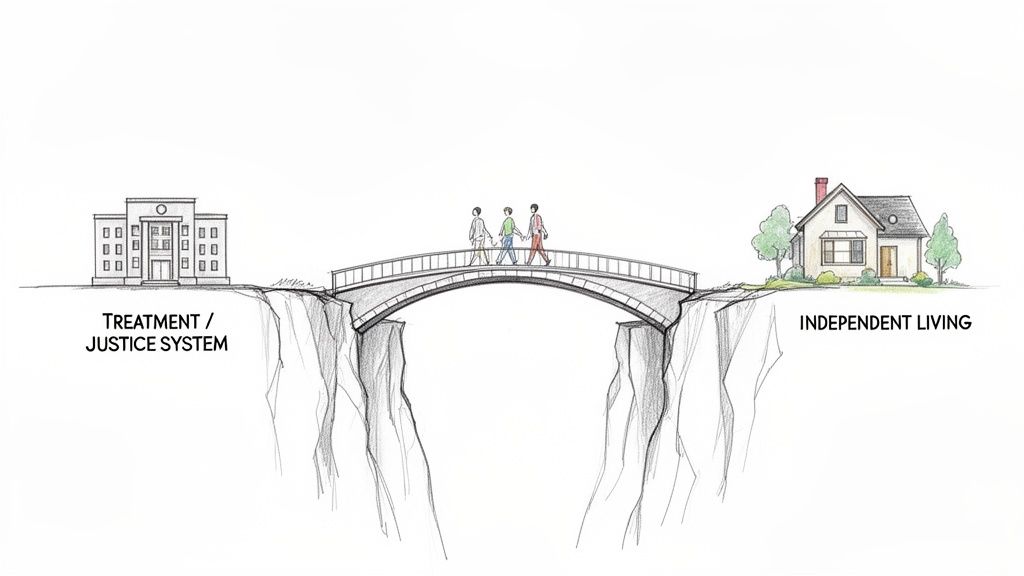
Imagine being dropped into a complex, unfamiliar city and told to find your way without a map. That's what reintegration can feel like after leaving a place where every minute of your day was scheduled for you. A halfway house provides that essential map and a stable home base, giving you the space to relearn and practice the skills needed for long-term success.
The whole point is to create a controlled environment that balances freedom with accountability. Residents aren’t cut off from the world. In fact, they’re pushed to engage with it—by finding jobs, going to school, or mending family ties. They just do it all within a framework of rules meant to prevent relapse or reoffending. This structure is key to rebuilding healthy routines and a strong sense of personal responsibility.
To give you a clearer picture, here’s a quick rundown of what a halfway house offers.
Halfway House at a Glance
| Key Feature | Description |
|---|---|
| Structured Environment | Provides daily schedules, curfews, and mandatory meetings to build routine. |
| Supervision & Accountability | Staff monitor progress, conduct drug testing, and enforce house rules. |
| Peer Support | Residents live with others who share similar goals, creating a built-in support network. |
| Life Skills Development | Offers support for finding employment, managing finances, and securing stable housing. |
| Gradual Reintegration | Balances increasing freedoms with responsibilities to ease the transition to full independence. |
This blend of structure and support is designed to build a solid foundation for a new chapter in life.
The Two Main Pathways to a Halfway House
While the end goal is always successful reintegration, people usually land in a halfway house from one of two very different places. Each path shapes the specific focus of the support they receive.
Stepping Down from Addiction Treatment: For someone finishing an inpatient drug or alcohol program, a halfway house is a crucial next step. It offers a sober environment that reinforces recovery skills while gradually reintroducing the pressures of daily life.
Reentering Society from the Justice System: For those leaving prison, these facilities are often a condition of release. Sometimes called Residential Reentry Centers (RRCs), the focus here is on reducing recidivism by providing stable housing, job support, and a monitored transition back into the community.
A halfway house is more than just a place to live; it's a structured environment where residents can apply new coping mechanisms, build a support network, and gain the confidence needed to thrive independently. It’s the difference between being dropped into deep water and learning to swim in a supervised pool.
No matter how someone arrives, the mission is the same: to equip them with the tools, habits, and stability needed to build a healthy, self-sufficient life. This controlled transition dramatically improves the odds of lasting success by providing a much-needed buffer against the immediate shock of total independence.
A Look Inside Daily Life at a Halfway House
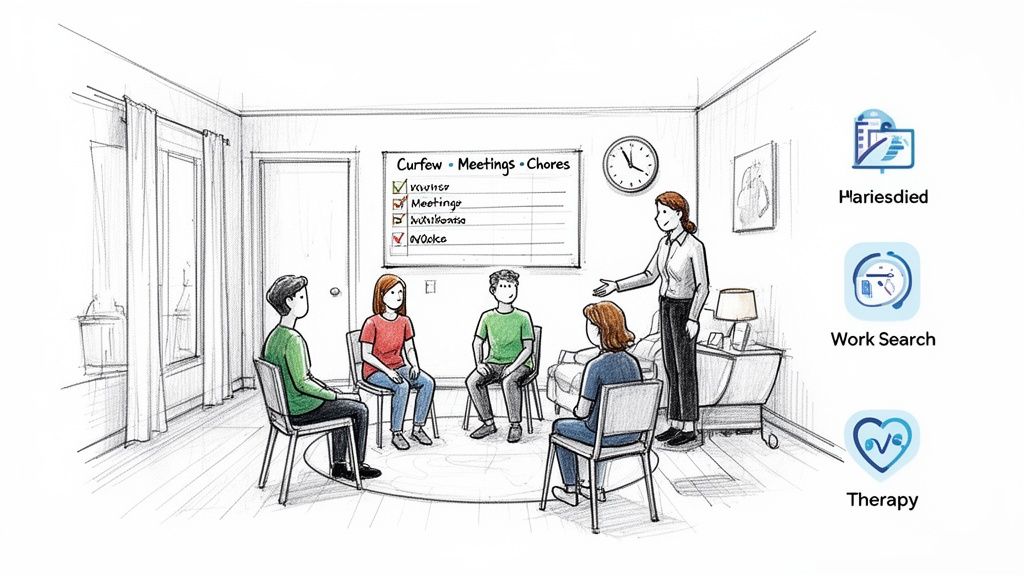
So, we've defined what a halfway house is, but what does it actually feel like to live there day-to-day? Life inside is a carefully balanced blend of structure, support, and growing independence. It’s all designed to methodically replace old, destructive habits with new, productive routines that can sustain a healthy life long after you move out.
The entire experience is centered on building accountability—both to yourself and to the community within the house. This isn't just about following rules for the sake of it; it's about learning to live in a way that respects shared goals and mutual recovery. Think of it less like a facility and more like a training ground for real-world responsibility.
At the heart of this environment is a clear set of expectations. These rules aren't meant to be punishments. They exist to create the predictability and safety needed for genuine personal growth to take root.
The Foundation of Rules and Routine
A typical day in a halfway house is guided by a schedule that breeds consistency. This structure is the backbone of daily life, helping residents develop the discipline needed to manage their time effectively once they are fully on their own.
For someone coming from the chaos of addiction or incarceration, this structured approach provides a stable platform from which to rebuild.
Here are some of the key rules you can expect:
- Strict Curfews: Residents must be back in the house by a set time each evening. This simple rule helps establish a healthy sleep schedule and ensures everyone is accounted for and safe.
- Mandatory Abstinence: There is a zero-tolerance policy for drug and alcohol use. Regular and random drug testing is standard practice to keep the home a safe, sober environment for everyone.
- Shared Responsibilities: Everyone pitches in with household chores. This builds a sense of ownership and community, teaching practical life skills and mutual respect along the way.
- Required Meetings: Residents must attend house meetings, group therapy sessions, and often 12-step meetings like AA or NA. These gatherings are crucial for building peer support and working through challenges together.
This framework is upheld by dedicated staff who are absolutely central to the house's success.
Guidance from House Managers and Staff
House managers and support staff are the anchors of a halfway house. They are part guide, part mentor, and part rule-enforcer, making sure the environment stays safe and productive. Their job is to offer support while holding residents accountable to the program's standards.
These professionals provide on-site guidance, help mediate conflicts, and connect residents with the resources they need. They are often the first point of contact for someone who is struggling or, just as importantly, celebrating a small victory.
The role of staff isn't just to watch over residents, but to actively empower them. They help individuals navigate the complex process of finding a job, opening a bank account, and rebuilding relationships—all essential steps toward true independence.
This hands-on support is what makes a halfway house more than just a place to sleep; it’s an active environment for change.
Building Skills for a New Life
Beyond the daily rules and supervision, the core purpose of a halfway house is to equip residents with tangible skills for long-term success. This is done through a variety of required programs and support services designed to address the whole person.
These services aren't optional add-ons; they are integrated directly into the weekly schedule. Participation is mandatory because each element is a building block for a self-sufficient future.
Common support services include:
- Employment Assistance: Help with resume writing, interview skills, and job searching is a top priority. Securing stable employment is a critical milestone for financial independence and self-esteem.
- Group and Individual Therapy: Clinical support helps residents address the root causes of their addiction or past behaviors in a structured, professional setting.
- Financial Literacy Workshops: Many residents need to learn the basics of budgeting, managing debt, and how to use a bank account responsibly.
- Life Skills Training: This can cover everything from cooking and nutrition to conflict resolution and healthy communication.
Ultimately, every rule, meeting, and workshop is designed to rebuild a person’s confidence and competence. Daily life in a halfway house is a deliberate, structured process of rediscovering personal responsibility and proving to yourself that a different future is possible.
Halfway House vs. Sober Living Home: What’s the Real Difference?
It’s easy to hear the terms “halfway house” and “sober living home” and use them interchangeably. On the surface, they seem similar—both offer a structured, substance-free place to live. But dig a little deeper, and you’ll find they serve very different purposes, operate under different rules, and are meant for people at different stages of their journey.
Getting this distinction right is more than just semantics; it’s about finding the right environment to support your recovery. Confusing the two can lead to mismatched expectations at a time when clarity is crucial.
Think of it like this: a halfway house is a highly structured, often mandatory bridge back to society, usually from an institution like a prison or an inpatient rehab facility. A sober living home, on the other hand, is a voluntary, peer-driven community you choose to join to strengthen your sobriety before stepping back into complete independence.
One is a formal step in a government or clinical system. The other is a chosen path toward self-sufficiency.
Structure and Oversight
The biggest divide between these two models comes down to who is in charge and how the house is run. Halfway houses are typically state-funded or government-contracted, which means they come with a high degree of regulation and official oversight. They have a clear chain of command.
Living in a halfway house usually involves:
- On-Site Staff: Paid house managers, counselors, and case workers are present to enforce rules, run programs, and provide structured support.
- Mandatory Programming: Residents are often required to participate in therapy, vocational training, or other specific activities as a condition of their stay.
- Strict Rules: Things like curfews, visitor policies, and daily chores are non-negotiable and enforced by the staff.
Sober living homes, in contrast, are almost always privately owned and operate on a peer-support model. The philosophy isn’t about top-down management but about mutual accountability among residents who are all committed to staying clean and sober.
The core idea behind a sober living home is that residents, working together, are capable of governing themselves. While rules absolutely exist, they are often created and enforced by the residents as a group, which builds a powerful sense of personal responsibility and community.
This difference in oversight directly shapes how much freedom and autonomy a resident has from day one.
Resident Profiles and Entry Paths
Who lives in these homes and how they get there are also worlds apart. Halfway houses primarily serve individuals transitioning out of one of two places: jail or prison, or a residential addiction treatment center. Their placement is frequently court-mandated or a required part of their parole, probation, or clinical treatment plan.
By contrast, moving into a sober living home is almost always a voluntary decision. Residents are people who have already completed a formal program like inpatient rehab and are looking for a supportive, real-world environment to practice their recovery skills. They aren’t there because a judge ordered them to be; they are there because they want every possible advantage in building a new life.
Comparing Key Features
To really sharpen the focus, let’s lay out the differences side-by-side. The table below breaks down how each type of housing fits into the recovery and reintegration landscape.
Halfway House vs. Sober Living Home
| Feature | Halfway House | Sober Living Home |
|---|---|---|
| Primary Population | Individuals from incarceration or inpatient treatment | Individuals who have voluntarily completed treatment |
| Oversight Model | Staff-supervised and government-regulated | Peer-supported and privately owned |
| Rules & Structure | Very high structure with strict, staff-enforced rules | Moderate structure with democratically-run rules |
| Entry Requirements | Often court-ordered or a condition of release/treatment | Voluntary; typically requires prior treatment completion |
| Cost & Funding | Often state-funded, subsidized, or covered by grants | Privately funded through resident rent payments |
| Autonomy Level | Low; residents follow a mandated, supervised schedule | High; residents manage their own schedules and lives |
Ultimately, a halfway house is a formal, supervised program designed to guide a person’s initial reentry into the community. A sober living home is a peer-driven community meant to support and sustain long-term recovery for those who have already built a solid foundation. Both are incredibly valuable resources, but they meet different needs at very different points in the journey.
The Dual Role in Justice Reentry and Addiction Recovery
You might hear the term “halfway house” and picture one specific thing, but the reality is they serve two very different, yet sometimes overlapping, groups. One person might be there as a condition of their release from prison, while the person in the next room checked in voluntarily after finishing rehab.
Grasping this dual purpose is the key to understanding what these facilities are all about. The common thread is reintegration. Whether someone is learning to navigate sobriety or re-enter society after incarceration, they need a safe, structured place to get their footing. A halfway house provides that stable launchpad.
A Pathway Home from Incarceration
For the justice system, halfway houses—officially called Residential Reentry Centers (RRCs)—are a critical tool for breaking the cycle of recidivism. Going straight from a highly controlled prison environment to total freedom is a shock to the system, one that too often leads people right back to old habits and, eventually, back inside.
These centers act as a crucial buffer. They provide a supervised setting where individuals can slowly ease back into the rhythms of daily life. This helps them tackle the biggest hurdles to reentry, like finding a job with a criminal record or securing an apartment. The government's investment in these programs shows just how vital they are to public safety.
The whole point is to dismantle the revolving door of incarceration. By offering a structured transition, these facilities give people a real shot at becoming self-sufficient members of the community instead of just another statistic.
The Federal Bureau of Prisons (BOP) gets over $400 million each year to fund programs under the First Step Act, much of which supports halfway house placements. In late 2023, the BOP had contracts for 10,553 residential beds across the country to support this essential work.
A Bridge in Addiction Recovery
For someone fighting for their sobriety, a halfway house plays a different but equally vital role. Think of it as a step-down from the protective bubble of an inpatient rehab center. After weeks in a facility shielded from the outside world, going straight home can feel like walking into a minefield of old triggers and stressors.
This is where a halfway house comes in, offering a safe, sober environment with accountability and peer support baked right in. It’s a place to put recovery skills to the test in the real world, but with a safety net still firmly in place. This visual helps clarify the key differences between a halfway house and the less-structured sober living model.
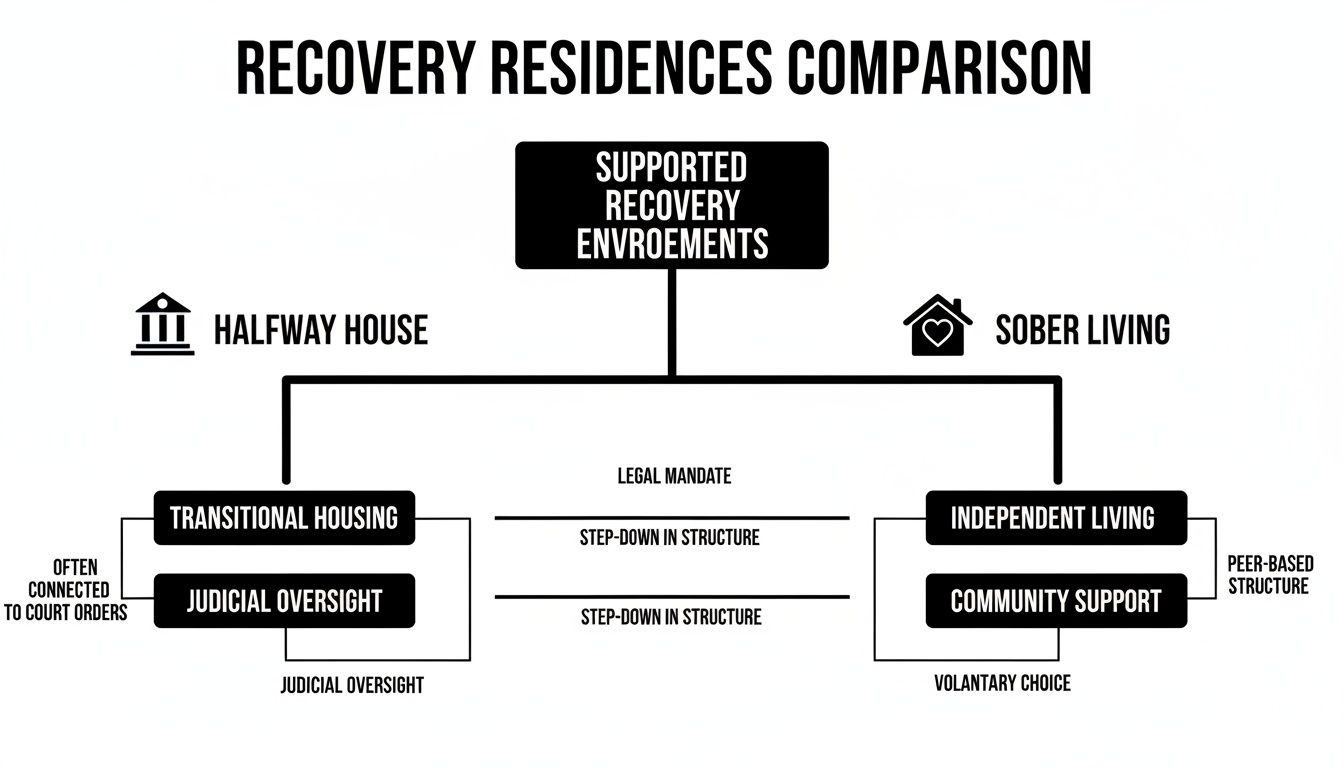
As the chart shows, the higher level of structure and supervision in a halfway house often makes it the right choice for those who need more guidance in early recovery.
It's also common for residents to be dealing with co-occurring conditions; for example, understanding the connection between ADHD and substance abuse is often a key piece of the recovery puzzle. Ultimately, whether a person arrives from a prison cell or a treatment center, the mission is the same: to provide the time, tools, and support needed to build a stable, sober, and productive life.
Understanding the Costs and Financial Realities
Let’s be honest: money is often the biggest hurdle when someone is considering a halfway house. Figuring out how to pay for it is a critical first step, and the answer depends entirely on the type of facility you’re looking at.
Many halfway houses, especially those helping people transition out of the justice system, are funded by the government or mandated by the courts. For residents, this is a huge relief because it means their stay is often free or extremely low-cost. The whole point of these programs is to give someone a fair shot at rebuilding their life, and that means removing the financial stress that could send them backward.
On the flip side, you have privately-run halfway houses. These are typically designed for individuals stepping down from an addiction treatment program, and they rely on fees from residents to keep the lights on and provide services.
Breaking Down the Price Tag
When you do have to pay, the costs can swing wildly depending on the house’s location, what kind of amenities it has, and how intensive the support services are. You can generally expect monthly fees to land somewhere between $450 and $2,500, though some high-end programs will cost more.
It’s important to remember this isn't just rent. The fee is usually an all-inclusive package that bundles the essentials together.
What your payment typically covers:
- Housing and Utilities: A safe, furnished spot to live without worrying about separate electric or water bills.
- Program Services: Built-in access to things like group therapy, one-on-one counseling, and workshops on life skills.
- Drug Testing: Regular and random screenings are part of the deal to keep the environment safe and sober for everyone.
- Staff Support: Guidance and accountability from on-site house managers and case workers.
The idea is to provide a stable, predictable foundation. This structure lets residents pour all their energy into recovery and getting back on their feet, not juggling a dozen different bills. Still, even with everything bundled, that monthly fee can be a real challenge.
The Hidden Burden of Reentry Debt
Here’s where things can get complicated. The cost of transitional living, even when it seems affordable, can create a tough financial bind for people who are just starting over. In some systems, residents are expected to pay rent out of the wages they earn from their new jobs, which can ironically lead to them racking up debt while they’re doing everything right.
A review of one state's system, for example, exposed a pretty significant financial strain. Even though the halfway houses received nearly $90 million in state funding, they still collected around $15 million in rent directly from residents each year. In fiscal year 2021, the 2,521 residents who successfully graduated from their programs walked out the door owing an average of $1,076 each. This really shows how user fees can accidentally sabotage the goal of a stable, successful reentry. You can dig deeper into the complex financial landscape of transitional housing on Pathwaystreatmentcenter.com.
"The financial reality of a halfway house highlights a critical tension: the need to keep programs accessible for vulnerable individuals versus the need to fund high-quality, effective rehabilitation services."
Thankfully, this problem is getting more attention. Some states are starting to make policy changes to ease this burden. Colorado, for instance, recently boosted its funding per resident and flat-out mandated that its state-funded facilities stop charging rent. It’s a move that acknowledges a simple truth: a genuinely successful transition requires more than just emotional support—it demands a solid financial start, too.
Weighing the Benefits and Potential Challenges
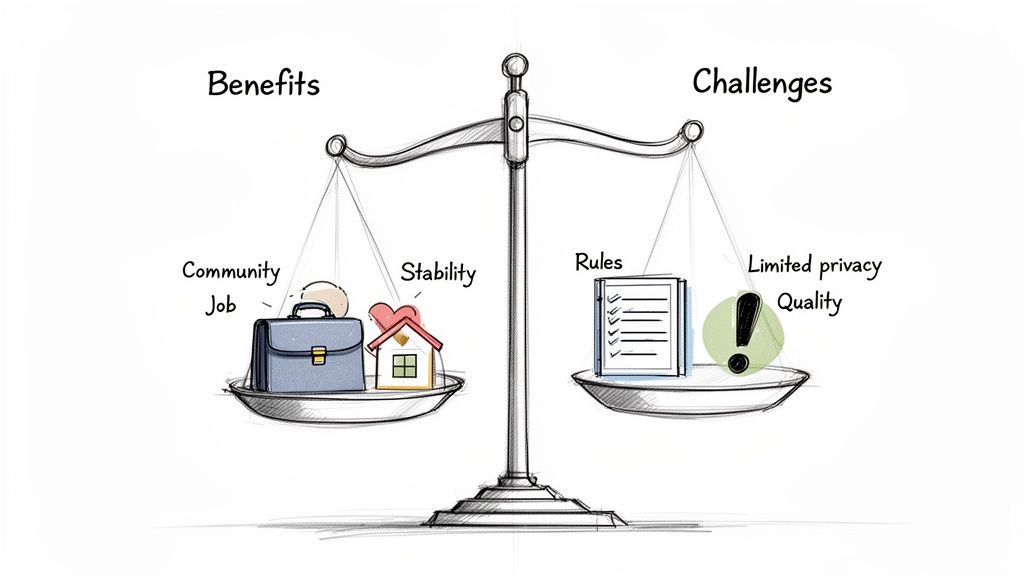
No recovery path is perfect, and the halfway house experience is no different. While these homes can be a critical lifeline for many, it’s vital to have a clear-eyed view of both the powerful benefits and the real-world challenges involved. Getting a handle on this dynamic is the key to making an informed choice and setting realistic expectations for the road ahead.
On one hand, a good halfway house provides a much-needed buffer against the triggers and stressors that often lead to relapse or reoffending. It offers a structured, sober environment where residents can build healthy habits, find a supportive community, and practice new life skills with a safety net. But on the other hand, navigating strict rules, limited personal freedom, and the wildly varying quality between programs can be tough hurdles.
Key Benefits of a Halfway House
The biggest advantage of a halfway house is the structure it provides. For anyone leaving a highly controlled setting like rehab or prison, this routine is the bedrock they can build a new life on. This structured support system helps people grow in several crucial areas.
- A Crucial Buffer Zone: It acts as a shield, preventing immediate exposure to old environments and negative influences that can derail recovery right out of the gate.
- Built-In Peer Support: Living with others who get it—because they’re walking the same path—creates a powerful sense of community and accountability. This shared experience is a powerful antidote to the isolation that can be so damaging to recovery.
- Development of Healthy Habits: Mandatory schedules, curfews, and chores instill the discipline and routine needed for long-term stability and personal responsibility.
- Access to Essential Resources: Most programs connect residents with job placement services, therapy, and financial literacy training, tackling the practical barriers that stand in the way of successful reintegration.
For many, this blend of support and structure is the missing piece of the puzzle. It’s the guided practice needed before stepping fully into independent living.
A halfway house provides a controlled environment to test recovery and life skills in the real world. It's the difference between being tossed into the deep end and learning to swim in a supervised pool with a lifeguard on duty.
However, these potential benefits are just one side of the coin. The effectiveness of any program is far from guaranteed and depends heavily on a lot of different factors.
Real-World Challenges and Considerations
While the concept is solid, the reality on the ground can vary dramatically. Not all halfway houses are created equal, and this inconsistency is one of the biggest challenges you’ll face. A poorly managed facility can honestly do more harm than good.
Some potential obstacles include:
- Varying Quality of Facilities: Standards for staffing, safety, and support can differ wildly from one house to the next. Doing your homework and vetting programs is non-negotiable.
- Navigating Strict Rules: While structure is a benefit, the rigid rules and lack of privacy can feel restrictive and be difficult for some people to adapt to.
- Negative Peer Influences: In less-regulated homes, living with unmotivated or disruptive peers can sabotage personal progress and create a toxic environment.
The success of a halfway house ultimately comes down to its commitment to evidence-based practices over purely punitive rules. Data from some regions shows this gap clearly. For instance, an analysis in Colorado revealed that only 35 percent of residents complete their program and stay out of the justice system for at least two years. These outcomes are heavily tied to program quality, as facilities with better resources see much greater success; 70% of residents who finish their programs find jobs, a factor proven to reduce both relapse and reoffending. You can dig into more insights on how facility quality makes a difference at FinesandFeesJusticeCenter.org.
Building on Your Progress After a Halfway House
Leaving a halfway house is a huge milestone. It’s proof that you successfully moved from a highly structured environment back into the community, armed with new skills, routines, and a much stronger foundation for your future. But the work doesn’t just stop at the front door; it simply shifts into a new gear.
Think of it like learning to ride a bike with training wheels. Your time in transitional living helped you find your balance, build confidence, and develop muscle memory in a safe, controlled setting. Now, it’s time to take those training wheels off. Continued support through outpatient services is what keeps you steady as you start navigating the real-world bumps and hills on your own.
This next phase is all about building on the momentum you’ve already created, not starting from scratch. It's about weaving recovery into the fabric of your daily life in a way that feels both sustainable and empowering.
The Seamless Transition to Outpatient Care
The skills you sharpened in a halfway house—things like time management, accountability, and sober social skills—are the exact tools that make outpatient treatment so effective. You’ve already shown you can handle more freedom while staying focused on your recovery goals.
Outpatient programs are designed to fit into your life, not pull you out of it. They give you the flexibility to keep working, go to school, and be there for your family, all while getting consistent, professional support. This model reinforces the independence you’ve earned and helps you apply recovery principles to challenges as they pop up in real time.
Continuing care after a halfway house isn't a sign of weakness; it's a strategic move to protect your investment in yourself. It gives you a dedicated space to process challenges, celebrate wins, and fine-tune the coping skills you need for the long haul.
Instead of living at a facility, you’ll attend therapy sessions a few times a week, keeping that vital connection to a clinical team that has your back.
Finding the Right Level of Continued Support
Just like a halfway house was the right fit for a specific stage of your journey, different outpatient programs are built to meet different needs. They offer a step-down approach where the intensity gradually decreases as your confidence in recovery grows.
The most common options you’ll see are:
- Intensive Outpatient Program (IOP): This level of care usually involves nine or more hours of therapy per week, spread out over several days. It’s a fantastic first step after a halfway house because it offers a ton of support and structure while you live at home.
- Supportive Outpatient Program (SOP): As a less intensive option, SOP typically requires just a few hours of therapy each week. It’s the perfect fit for people who have a solid recovery foundation and need ongoing support to maintain their progress and handle life’s curveballs.
These programs offer a blend of individual therapy, group counseling, and family support, all designed to reinforce the hard work you’ve already put in. By staying connected to professional care, you’re making a powerful commitment to your long-term health and turning the progress you made into the start of a new, fulfilling life.
At Altura Recovery, we know that recovery is a continuous journey. Our outpatient programs are designed to build on the progress you've made, providing the flexible, expert support you need to thrive in your daily life. If you’re ready to take the next step toward lasting freedom, connect with our compassionate team to learn more about our IOP and SOP options.