A sponsor is much more than just a financial backer. Think of them as a strategic partner who provides resources—like funding, products, or services—in exchange for valuable marketing opportunities and brand exposure.
It's a two-way street. Sponsorship fuels an event or an individual's success while boosting the sponsor's own visibility and reputation.
The Dual Role of a Sponsor
When people ask, "what does a sponsor do?" the answer really depends on the context. In the business world, a sponsor acts as a strategic investor. But in personal development and recovery, the role is completely different.
Both roles, however, are foundational to growth and success.
Sponsor vs Donor Key Differences
People often confuse sponsors with donors, but their motivations and expectations are worlds apart. A donor gives out of generosity with little expectation of return, while a sponsor invests strategically, looking for a clear and measurable benefit. Understanding this distinction is key.
| Aspect | Sponsor | Donor |
|---|---|---|
| Primary Motivation | Commercial gain, brand awareness, ROI | Altruism, social responsibility, philanthropy |
| Relationship Type | Business partnership, contractual | Charitable contribution, often anonymous |
| Expected Return | Tangible marketing benefits, lead generation | Intangible goodwill, tax deduction |
| Agreement | Formal contract with specified deliverables | Simple acknowledgment or receipt |
This table makes it clear: sponsorship is a business transaction designed for mutual benefit, not just a one-way gift.
The Sponsor in a Commercial Context
In a commercial sense, a sponsor provides the necessary resources to make things happen. This could be a corporation funding a major sporting event or a local business supporting a community festival. The goal is always a mutual win where the sponsored entity gets essential support, and the sponsor achieves its marketing goals.
The Sponsor in a Personal Context
On the flip side, in a personal context like a 12-step program, a sponsor offers guidance, experience, and emotional support without any money changing hands. This person is a mentor who has walked a similar path and helps another individual navigate the challenges of recovery.
Understanding how these roles differ is critical. This structure of mentorship and accountability is a cornerstone of many treatment models. You can learn more about this by exploring how rehab works.
Key Functions of Sponsorship
Whether commercial or personal, the core function of a sponsor is to provide something the other party lacks. This infographic breaks down the primary roles a sponsor typically fulfills in a recovery setting.
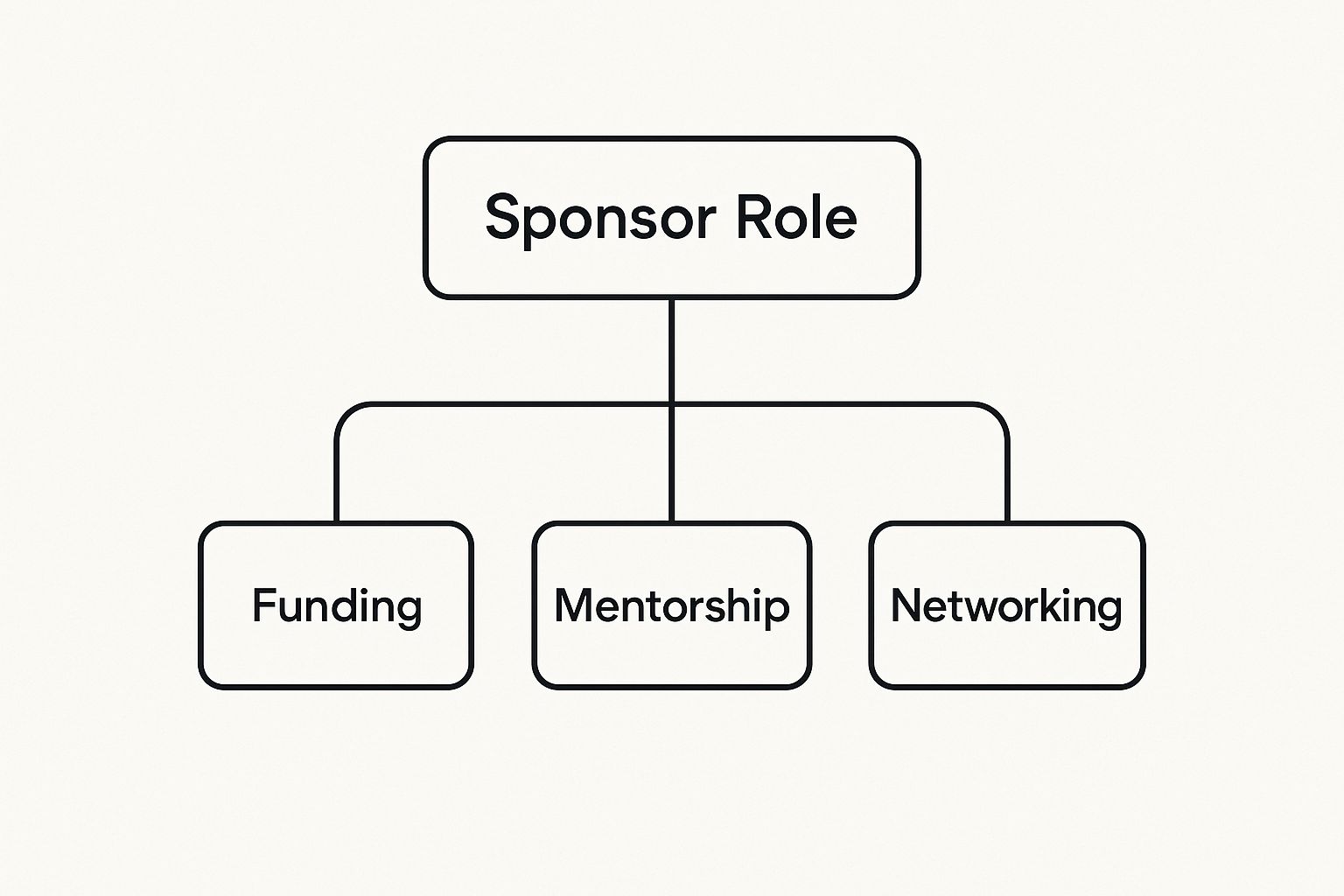
As the diagram shows, a sponsor's contributions branch into three essential areas: funding, mentorship, and networking. These pillars highlight that a sponsor’s value extends far beyond just writing a check, often providing the guidance and connections needed for long-term success.
What Does a Sponsor Actually Do? A Look at Their Key Responsibilities
When you hear the word "sponsor," it's easy to picture someone just writing a check. But that's a seriously outdated view. While financial backing is definitely part of the deal, a modern sponsor's role is much more hands-on and strategic. They're not just funders; they're active partners.
A huge piece of their job is ensuring smooth brand integration. This is all about working together to make sure the sponsor's message and values line up with the event or project they're backing. A sponsor doesn't just want their logo slapped on a banner; they want to be woven into the story in a way that feels genuine and connects with the audience.
This often means they bring more than just money to the table. For example, a tech company sponsoring a conference might provide the Wi-Fi network for the whole venue, run a workshop teaching people how to use their latest product, or build an interactive demo station that gets attendees buzzing. These kinds of contributions add real, tangible value while showing off what the sponsor does best.
Key Areas of Sponsor Involvement
When you break it down, a sponsor contributes in a few key areas that transform them from a passive bank account into a deeply engaged collaborator.
- Financial and Resource Provision: This is the most obvious one. They provide the funding or in-kind services—like products, technology, or even venue space—that make the whole thing possible.
- Promotional Activities: Sponsors are marketing powerhouses. They'll actively push the partnership through their own channels, whether that’s social media campaigns, email blasts to their customer lists, or press releases. This massively expands the reach for everyone involved.
- On-Site Activation: At a live event, this is where sponsors really shine. They create experiences that stick with people, like a branded photo booth, a comfortable lounge where attendees can recharge, or interactive games that tie back to their product.
- Strategic Collaboration: The best sponsorships are built on conversation. Sponsors often bring a ton of industry knowledge to the table, offering feedback that can help shape the event for bigger impact and ensure their investment pays off.
The most successful sponsorships are true collaborations. The sponsor invests not just money, but also their brand's equity, expertise, and marketing power to create a mutually beneficial outcome that resonates with the target audience.
Ultimately, a sponsor's responsibilities boil down to building a powerful, symbiotic relationship. They're active players who are invested in making sure the project, team, or event they support is a massive success.
The Strategic Value of Modern Sponsorship

Sponsorship has come a long way from just being a nice thing to do or getting a logo slapped on a jersey. It’s now a serious marketing discipline—a calculated investment that’s expected to deliver a clear, measurable return. Companies aren’t asking if sponsorship works anymore. They’re asking how to make it work harder.
So, what does a sponsor actually do? From a business standpoint, a sponsor strategically links its brand with another entity—an event, a team, a cause—to hit very specific business goals. It's a sophisticated give-and-take.
Driving Tangible Business Outcomes
A smart sponsorship is one of the most versatile tools in a marketer’s kit, capable of hitting multiple targets at once. That makes it an incredibly efficient way to spend a marketing budget. Its real value shines through in a few key areas.
- Enhanced Brand Image: By partnering with a respected event or cause, a sponsor can shape how the public sees them, building trust and credibility much faster than traditional ads ever could.
- Targeted Audience Reach: Sponsorship lets brands get in front of niche, passionate communities. A company selling hiking boots, for example, gets far more bang for its buck sponsoring a mountain biking race than buying a generic billboard.
- Increased Sales and Lead Generation: When you directly tie promotions and on-site activations to a sponsorship, you create a straight line from brand awareness right to a customer's wallet.
The scale of this strategy is massive. Just look at the global sports sponsorship market for a clear picture of what a sponsor does: it provides essential funding in exchange for massive exposure. This market was valued at around USD 60.17 billion and is on track to hit USD 132.86 billion by 2033. You can dig into more of this data on the growth of sports sponsorship on Straits Research.
By investing in the passions of their target audience, sponsors create an emotional connection that advertising alone cannot replicate. This connection is the foundation for lasting brand loyalty and tangible business growth.
How Sponsorship Strategies Are Evolving

Sponsorship used to be pretty straightforward: slap a logo on a jersey or a billboard and call it a day. That old playbook is gathering dust. Why? Because the audience isn't playing the same game anymore.
Today, connecting with people means creating genuine, engaging experiences, not just interrupting them. Modern sponsors have become content creators, community builders, and even experience designers. They're leveraging social media, teaming up with influencers, and creating interactive content that actually adds something valuable to the fan experience.
Adapting to New Audiences and Platforms
The new name of the game is agility. Successful brand partnerships are now built on data-driven insights and a real grasp of how people consume media today. This means finding and connecting with diverse, growing demographics in a way that feels natural.
Take global sports, for instance. A recent report noted that a staggering 51% of the world's population are football fans, which opens up massive opportunities during big tournaments. That same report found that 47% of fans of women's sports are female—a powerful demographic shift that's pushing sponsors to get creative and find more meaningful ways to connect. You can dig into more of this data by exploring the latest trends in global sports fandom on Nielsen.com.
The future of sponsorship lies not in interruption, but in integration. Successful brands will be those that become a natural and welcome part of the fan's experience, enhancing their passion rather than distracting from it.
Building Authentic Connections
Authenticity is the currency of modern sponsorship. Consumers, especially younger ones, have a built-in radar for partnerships that feel forced or purely transactional. They're drawn to brands that share their values and speak their language.
This requires sponsors to think more like storytellers. A gaming hardware company, for example, might sponsor a popular streamer not just to get their logo on screen, but to co-create content that genuinely helps the streamer's audience get better at their favorite game.
Sometimes, these partnerships go deeper, touching on complex personal issues. In these cases, understanding concepts like what is trauma-informed therapy can help brands create campaigns that are sensitive, impactful, and truly resonate. This approach transforms a simple sponsorship into a real relationship, building a kind of loyalty that a 30-second ad could never hope to achieve.
Sponsorship as a Force for Social Impact
Sponsorship is no longer just about slapping a logo on a jersey. It's evolving into a powerful way for companies to make a real-world difference and show people what they stand for. Brands are quickly learning that who they sponsor says a lot about their values.
By teaming up with causes they genuinely believe in, companies are using their influence to drive meaningful conversations and connect with customers on a much deeper level.
Aligning Values with Action
This isn't just about feeling good—it's smart business. Today’s consumers, especially younger ones, are far more likely to throw their support behind brands that are actively committed to solving important social issues. That means championing diversity, equity, and inclusion (DEIB) and standing by strong environmental, social, and governance (ESG) principles.
A perfect example of this shift is the explosion of investment in women's sports. Sponsors aren't just jumping on a hot market; they're actively helping reshape how society views equality.
When a major brand backs female athletes and their leagues, it sends a clear message: we believe in a level playing field. That kind of action doesn't just build brand loyalty; it builds a rock-solid public image.
Interest in women's sports has skyrocketed, jumping from 45% of the global population in 2022 to 50% in just the last couple of years. Major sponsors have taken notice, investing strategically to get both a commercial return and a social one. You can dive deeper into these evolving sponsorship trends on Sponsorize.ch.
When done right, sponsorship becomes a genuine tool for making things better. It’s a lot like how structured support can create lasting positive change in someone's personal life. Exploring the benefits of getting sober shows how guidance and commitment can transform an individual's future. That same powerful principle is now reshaping the corporate world, one partnership at a time.
Sponsorship in Personal Recovery and Mentorship
When we talk about sponsorship, most people think of corporate logos on a race car. But in the world of recovery, sponsorship shifts from a business deal to a deeply personal connection. A sponsor here isn’t a financial backer—they’re a trusted guide.
This is someone with solid, long-term recovery who volunteers to help another person navigate the same rocky path they once walked. It’s a relationship built entirely on shared experience, not a contract. They’ve been there. They get it. This kind of mentorship is a powerful blend of guidance, support, and friendship, and understanding the nuanced roles of mentors and business leaders can highlight just how unique and vital this personal dynamic is.
What a Recovery Sponsor Does
So, what does a sponsor actually do? Their job is centered on guidance and emotional support, not therapy. Think of them as a seasoned trail guide for the journey ahead. Their main functions include:
- Sharing Lived Experience: They offer practical wisdom from their own recovery, which does more than just provide tips—it provides hope. They are living proof that long-term sobriety isn't just possible, it's a reality.
- Providing Accountability: A good sponsor helps you stay on track. They’re the person you can call when you’re struggling, offering gentle but firm encouragement to stick with your recovery plan.
- Offering a Listening Ear: Recovery can feel isolating. A sponsor creates a safe, non-judgmental space to talk through fears, challenges, and even the small wins. This support is absolutely critical, especially on the tough days.
- Guiding Through Program Steps: In 12-step fellowships, sponsors are indispensable. They help their sponsee work through the steps, sharing how they personally approached each one and what it meant for their own healing.
The core of personal sponsorship is connection. It's about having someone in your corner who truly understands what you’re going through because they have been there themselves.
This relationship becomes a cornerstone of many recovery models. The candid, meaningful conversations you have with a sponsor perfectly complement more structured sessions, much like the honest discussions that come from exploring various group topics for addiction recovery.
Common Questions About Sponsorship
Whether you’re talking about a corporate deal or a personal recovery journey, the word “sponsorship” can mean different things. Let’s clear up a few of the most common questions that come up.
What Is the Difference Between a Sponsor and a Partner?
While people often use these terms interchangeably, they usually point to two very different kinds of relationships.
Think of a sponsor in the business sense: it’s typically a transactional arrangement. A company provides resources—money, gear, you name it—and in return, they get brand visibility and marketing perks. It’s all about exposure.
A partner, on the other hand, implies something much deeper and more collaborative. Here, both sides are rolling up their sleeves to work on shared goals that go way beyond just slapping a logo on something.
How Do Businesses Measure Sponsorship Success?
When a business sponsors an event or a person, they aren't just doing it out of goodwill—they're looking for a return on their investment (ROI). They track this using a few key metrics:
- Brand Mentions: How often is the company’s name popping up online and in the media because of the sponsorship?
- Website Traffic: Are people clicking over to their website from the event’s page or the sponsored person’s social media?
- Lead Generation: Did that special promo code or the booth they set up at the event actually bring in new customers?
- Social Media Engagement: Are the likes, shares, comments, and new followers directly tied to the sponsorship campaign?
But in recovery, a sponsor is something else entirely. A good personal sponsor is defined by their experience, empathy, and availability. They don't give professional advice; they offer guidance rooted in their own journey, providing hope and a non-judgmental ear when it’s needed most. Their primary role is to support you, not to fix you.
At Altura Recovery, we know that a strong support system is the bedrock of lasting recovery. If you or someone you care about is ready to take that next step, our compassionate team is here to guide you with evidence-based outpatient care. You can begin your journey toward real healing by visiting us at https://www.alturarecovery.com.