Telehealth mental health services are just what they sound like: professional therapy and psychiatric care delivered remotely, using everyday technology like video calls and secure messaging. Think of it as connecting with a licensed mental health professional from the space where you feel safest and most comfortable—your own home. This modern approach makes getting consistent support more convenient and flexible than ever before.
What Are Telehealth Mental Health Services
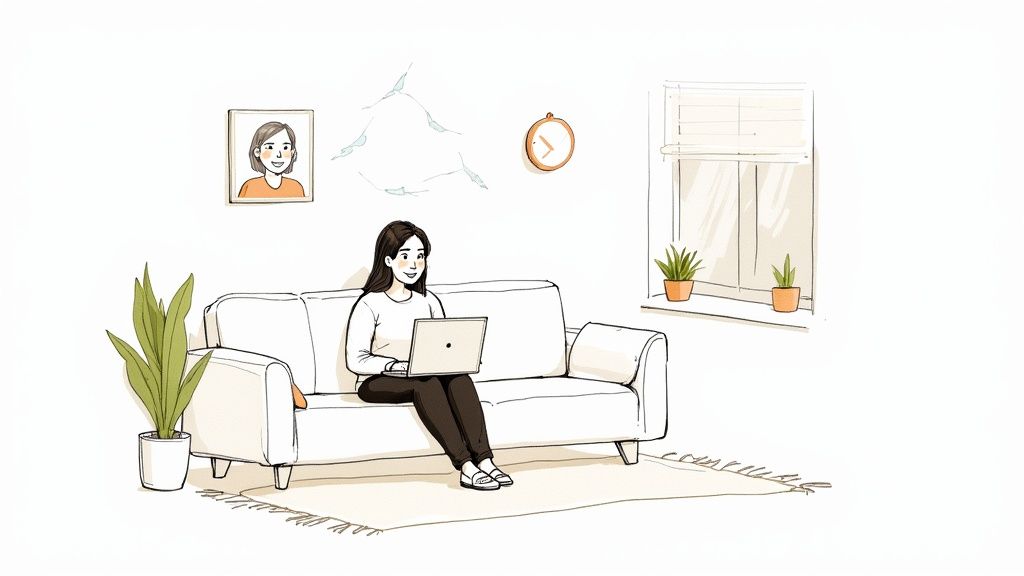
At its heart, telehealth is a bridge. It uses technology to close the distance between you and the mental health support you need. Instead of fighting traffic and rearranging your schedule for an office visit, you can have a meaningful, confidential session with a therapist or psychiatrist from your living room, your office, or any private space with an internet connection.
This isn’t just a casual video chat. It’s a secure, structured form of healthcare. Reputable providers use HIPAA-compliant platforms, ensuring your conversations are just as private as they would be behind a closed office door. The whole point is to knock down the common barriers to care—like transportation hassles, packed schedules, or living in a remote area—that keep people from getting help.
The Rise of Virtual Care
The demand for more flexible mental wellness options has fueled massive growth in this field. This isn't just a temporary trend; it's a fundamental shift in how people access care. The global telepsychiatry market is on track to jump from roughly USD 11.47 billion to USD 42.32 billion by 2032, a clear sign that people need and want these remote services. You can find more details on this growth in the latest telepsychiatry market analysis.
This rapid adoption shows just how well telehealth mental health services fit into the realities of our modern lives. People from all walks of life are finding that this evolution in healthcare is exactly what they needed.
Who Can Benefit from Online Mental Health Services
Virtual care is designed to work for a huge range of people. While it isn’t the right fit for every single situation (especially severe crises that require in-person intervention), it provides a vital lifeline for many.
You might find it especially helpful if you are:
- A Busy Professional: When you’re juggling a demanding career and personal life, there’s little time left for a commute to a therapist's office. Telehealth lets you schedule a session during your lunch break without ever leaving your desk.
- A Parent or Caregiver: Finding childcare or arranging time away from family duties can be a huge hurdle. Virtual sessions wipe that logistical challenge right off the table.
- Living in a Rural Area: Access to specialized mental health professionals can be almost non-existent outside of major cities. Telehealth instantly connects you to a wide network of licensed providers, no matter your zip code.
- Someone with Mobility Challenges: For anyone with a physical disability or chronic illness, just getting to an appointment can be draining or even impossible. Online therapy brings the care directly to you.
Basically, if convenience, privacy, and accessibility are priorities for you, telehealth offers a powerful and effective path to getting the support you deserve.
Does Virtual Therapy Actually Work?
Convenience is nice, but it doesn't mean much if the treatment isn't effective. So, let’s get straight to the most important question you should be asking about telehealth mental health services: Does this stuff actually work?
The answer, backed by a fast-growing pile of research, is a clear yes.
Think of the therapeutic relationship—that bond of trust and connection with your therapist—as the foundation of a house. It doesn't really matter if you review the blueprints together in an office or over a video call. The principles of a strong foundation don't change. Core elements like empathy, active listening, and proven clinical techniques translate perfectly well to a virtual setting.
For many common conditions like anxiety, depression, and PTSD, the outcomes are just as good as traditional, in-person care. This isn't just wishful thinking; it's a finding that shows up again and again in clinical studies.
Evidence Supporting Virtual Care Effectiveness
When you start online therapy, you’re not signing up for "therapy-lite." You're engaging in a legitimate, powerful, and clinically validated form of healthcare. The delivery method is different, but the potential for healing is absolutely the same.
This is especially true for younger people, who are often more at ease with digital communication to begin with. One peer-reviewed study noted a huge jump in telehealth sessions for youth, going from an average of 2.3 sessions per year to 8.7 in 2022. The researchers found that telehealth delivered comparable results to in-person care for depression and, interestingly, even better outcomes for anxiety disorders. Read the full research about these telehealth findings.
And this success isn't just for general mental health. We're seeing the same positive results in more specialized areas, including the treatment of substance use disorders and co-occurring conditions.
Is Telehealth Effective for Addiction and Co-Occurring Disorders?
For anyone navigating the tough terrain of addiction recovery, consistent support is everything. Telehealth knocks down some of the biggest barriers that can throw people off track.
Imagine someone in an outpatient program who also has a demanding job. In the past, missing an in-person group session might mean going a whole week without that vital support. With telehealth, they can join securely from a private office during a lunch break, ensuring they never lose that connection. That continuous engagement is a game-changer for long-term sobriety.
The ability to maintain a consistent connection with therapists and support groups, regardless of physical location or scheduling conflicts, is one of the most significant advantages of telehealth in addiction treatment. It creates a safety net that is always within reach.
Telehealth has proven highly effective for delivering the core components of addiction treatment, including:
- Individual Therapy: Sessions using powerful methods like Cognitive Behavioral Therapy (CBT) or Dialectical Behavior Therapy (DBT) are just as impactful over a secure video connection.
- Group Therapy: Virtual groups build a strong sense of community and shared experience, cutting through the feelings of isolation that are often a major trigger for relapse.
- Medication Management: Regular, quick check-ins with a psychiatrist to manage medications for co-occurring conditions like anxiety or depression are handled easily and efficiently.
- Family Counseling: Telehealth makes it far easier to coordinate sessions with family members who might live in different cities or states, helping to heal the entire family system.
At the end of the day, the effectiveness of telehealth mental health services boils down to the quality of the provider and your own engagement. The technology is just the tool making the connection possible. For millions, it's already proven to be a reliable, effective, and life-changing path to recovery.
Finding the Right Type of Online Mental Health Support
The world of telehealth mental health isn't a one-size-fits-all solution. It’s more like a versatile toolkit, with different tools designed for different needs. Figuring out which service lines up with your personal goals is the first step toward getting support that actually works.
Think of it this way: a primary care doctor might refer you to a cardiologist for a heart issue or an orthopedist for a knee problem. Mental healthcare has its own specialists, too. The key is to match your current situation with the right kind of care.
Individual Therapy and Psychotherapy
When most people picture mental health support, this is often what comes to mind. Individual therapy—also known as psychotherapy or "talk therapy"—involves confidential, one-on-one sessions with a licensed professional, like a psychologist, licensed clinical social worker (LCSW), or licensed professional counselor (LPC).
These sessions are your dedicated space to unpack thoughts, feelings, and behaviors. The goal is to build healthier coping skills, work through past trauma, manage symptoms of conditions like anxiety or depression, and just generally improve your well-being. Telehealth makes these meetings incredibly accessible, letting you connect with a therapist from the privacy of your own home.
Psychiatry for Medication Management
While therapy zeroes in on behavioral and emotional strategies, psychiatry handles the biological side of mental health. A psychiatrist is a medical doctor who specializes in diagnosing and treating mental health conditions, often with medication.
This is where telepsychiatry is a complete game-changer. Imagine you’re on medication for anxiety but feel the dosage isn't quite right. Instead of taking a half-day off work for a 15-minute in-person appointment, you can have a quick, efficient video call with your psychiatrist, discuss your symptoms, and get an updated prescription sent electronically to your pharmacy. This service is perfect for:
- Initial psychiatric evaluations to see if medication is a good fit for you.
- Ongoing medication management to track effectiveness and side effects.
- Adjusting prescriptions as your needs change over time.
Group Therapy Sessions
There is immense power in knowing you aren't alone. Virtual group therapy connects you with a small group of people who are navigating similar challenges, all guided by a licensed therapist. These sessions offer a unique mix of professional guidance and genuine peer support.
You get to share your own experiences, hear from others, and learn from their perspectives in a structured, safe setting. For many, this shared journey cuts through feelings of isolation and builds a powerful sense of community. It's a highly effective format for everything from social anxiety to substance use recovery.
Connecting with a virtual support group of people who truly understand your experience, even if they live hundreds of miles away, can be one of the most validating and healing aspects of telehealth. It breaks down geographical barriers to create powerful human connections.
Specialized Counseling and Family Support
Beyond these core services, many telehealth platforms offer specialized counseling for specific needs. This might include couples counseling, grief counseling, or career coaching. One of the most impactful forms is family therapy, especially when tackling issues like addiction that often require healing the entire family system.
Getting everyone in the same room can be a logistical nightmare, especially when family members live far apart. Telehealth makes it much easier to bring everyone together for a session. It helps improve communication, establish healthy boundaries, and build a stronger support network for everyone involved. For families dealing with a loved one's recovery, exploring the benefits of family therapy for substance abuse can provide essential tools and a path forward.
By understanding these different telehealth services, you can make an informed choice that truly fits your needs, creating a clear and effective path toward healing and growth.
The Real-World Benefits and Challenges of Virtual Care
Making the right choice about mental health care means looking at the whole picture. Telehealth is a powerful tool with some incredible upsides, but like anything, it has its trade-offs. Getting clear on both the pros and cons helps you decide if this modern approach is the right fit for your recovery.
For many people, the advantages are a game-changer, breaking down old barriers that once made getting help feel impossible. At the same time, it’s just as important to be realistic about the hurdles that can pop up when therapy moves from a therapist’s office to your laptop screen.
A Balanced Look at Telehealth Mental Health Services
To help you weigh your options, let’s put the key benefits and potential challenges side-by-side. No approach is perfect for everyone, but seeing the comparison clearly can make your decision much easier.
| Key Benefits | Potential Challenges |
|---|---|
| Unmatched Accessibility: Connect with specialists anywhere, breaking down geographic barriers. | Technology Dependent: Requires a stable, high-speed internet connection to be effective. |
| Flexible Scheduling: Fit sessions into busy work, school, or family schedules without a commute. | Rapport Building: Some find it harder to build a strong connection without in-person cues. |
| Reduced Stigma: Accessing care from the privacy of home can feel safer and more comfortable. | Privacy Concerns: Finding a truly confidential space can be difficult in a busy household. |
| Greater Choice of Specialists: Find an expert in your specific need, not just who is available locally. | Not for Acute Crises: Ill-suited for severe mental health emergencies requiring immediate intervention. |
| Continuity of Care: Maintain momentum with your therapist even when traveling or moving. | Digital Fatigue: Screen time can be draining for some, making it harder to engage fully. |
Ultimately, the best choice depends on your personal circumstances, comfort with technology, and the level of care you need.
The Clear Advantages of Telehealth
The single biggest win for virtual care is unmatched accessibility. If you live in a rural town with only a handful of general therapists, telehealth suddenly gives you access to a nationwide network of licensed professionals. Geography is no longer a roadblock.
That convenience extends to your calendar, too. A college student can squeeze in a session between classes without trekking across town. A parent can talk to their therapist during a lunch break without arranging childcare. This kind of flexibility is huge for staying consistent with treatment—and consistency is what drives real, lasting progress.
Beyond the logistics, telehealth offers other powerful benefits:
- Reduced Stigma: The thought of walking into a mental health clinic can be intimidating. Getting support from the comfort and privacy of your own space often makes taking that first step much easier.
- Continuity of Care: Life happens. Whether you’re on a business trip, moving to a new state, or just home with the flu, telehealth means you don’t have to skip appointments and lose your momentum.
- Greater Selection of Specialists: Your local area might not have anyone who specializes in what you’re dealing with, like complex trauma or OCD. Telehealth opens up a much deeper pool of experts to choose from.
These advantages all work together to create a system that fits into the realities of modern life, removing obstacles that used to keep people from getting help.
Potential Challenges and How to Navigate Them
While the benefits are compelling, it’s just as important to be honest about the potential snags. A great telehealth experience often hinges on a few key factors that aren’t always in your control. The most common one? Technology dependency.
A dropped call or a frozen video feed is annoying anytime, but it’s especially disruptive when you’re in the middle of a tough therapy session. A stable, high-speed internet connection isn't just nice to have; it's essential.
Other potential challenges include:
- Building Rapport: While many people connect deeply with their therapists online, some find it harder to build that strong therapeutic bond without the subtle cues of in-person body language.
- Privacy Concerns: Finding a truly private, quiet spot for your session can be a real challenge if you live with roommates, family, or young kids.
- Not Ideal for Crisis Situations: Telehealth is not built for severe mental health crises, like active suicidal thoughts, where immediate, in-person intervention is critical for safety.
The image below breaks down the core services—therapy, psychiatry, and group support—that form the backbone of most online mental health platforms.
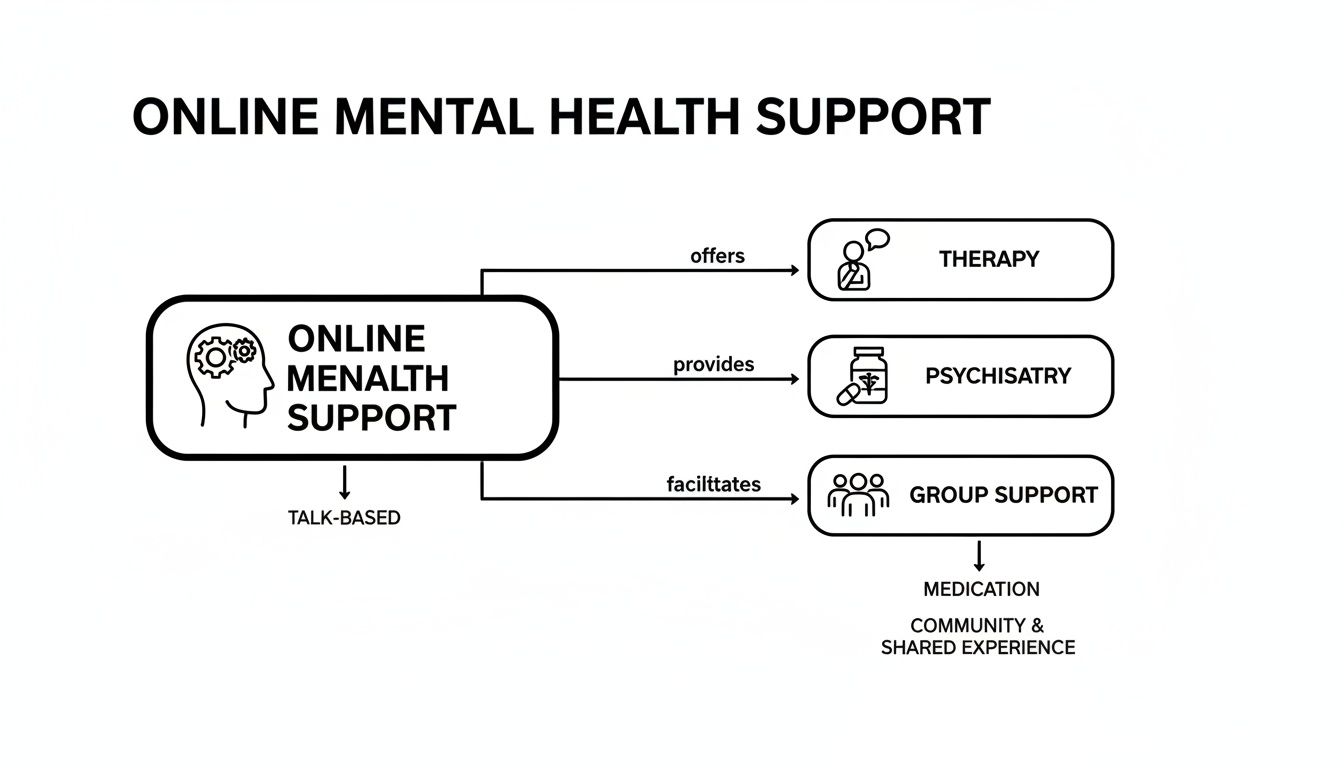
This shows how different types of care can be woven together virtually for a comprehensive treatment plan. Many people, for instance, find that combining one-on-one therapy with group sessions gives them both personal insight and invaluable peer connection. You can learn more about the kinds of addiction topics for groups that work incredibly well in a virtual format. Behind the scenes, providers rely on secure payment solutions for the healthcare industry to keep operations running smoothly and protect patient information. By carefully weighing these pros and cons, you can make a confident choice about whether telehealth is the right path for you.
How to Prepare for Your First Online Therapy Session
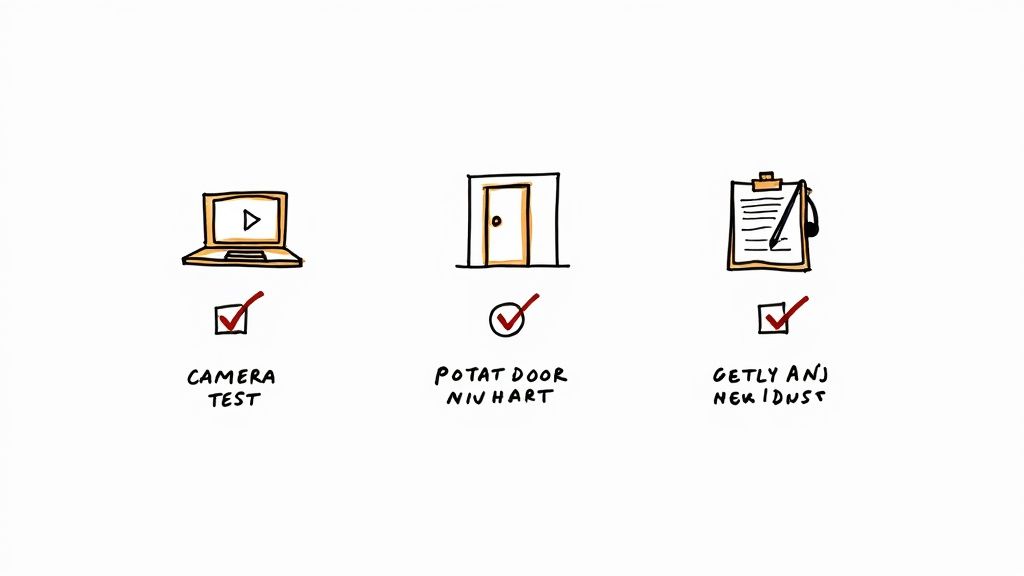
Starting anything new can bring on a few jitters, and your first online therapy session is no different. It’s completely normal to feel a mix of excitement and nerves. The good news is that a few simple preparations can clear away any logistical stress, letting you focus on what really matters—getting the support you came for.
Think of it like getting ready for an important conversation. You’d want a quiet space and a clear head. The same logic applies here. By setting the stage for a smooth, comfortable experience, you put yourself in the best position to get the most out of your time.
Test Your Technology First
The last thing you want is a frozen screen or a dropped call right when you're in the middle of a meaningful moment. A quick tech check beforehand prevents these frustrating hiccups and helps you feel more at ease going in.
Before your session, just take a few minutes to:
- Check Your Connection: Make sure you have a stable internet connection. If you’re on Wi-Fi, try to be close to your router to get the strongest signal.
- Test the Platform: Your provider will send a link to their secure video platform. Click it ahead of time to make sure it loads correctly and to get familiar with the layout.
- Charge Your Device: Ensure your laptop, tablet, or phone is fully charged or plugged in. A low battery warning is a distraction you just don’t need.
Create a Private and Comfortable Space
Your environment plays a huge role in how open and focused you can be. The goal is to carve out a personal sanctuary for your session, free from interruptions and distractions.
Find a spot where you can speak freely without worrying about being overheard. This could be a bedroom, a home office with the door closed, or even your car parked in a quiet place. Using headphones can make a world of difference, enhancing privacy and helping you tune out background noise so the conversation feels more direct and intimate.
The need for accessible care is immense. Over one billion people globally live with mental-health conditions, yet median government spending on mental health is just 2% of national health budgets. Telehealth aims to bridge this gap, but significant disparities remain. Learn more insights about global mental health spending from the World Health Organization.
Prepare Your Mindset
Getting ready for your first session isn't just about tech and location; it's also about getting into the right headspace. You don't need a detailed script, but having a few ideas in mind can help kickstart the conversation and ease you into it.
Consider jotting down a few notes about what prompted you to seek telehealth mental health services. What have you been feeling lately? What challenges are you facing? This can be a helpful starting point.
At the same time, be open to wherever the conversation naturally flows. Your therapist is skilled at guiding the session. If you're exploring group therapy, it can also be useful to review common substance abuse treatment group topics to get a feel for potential discussions. Your main job is just to show up as you are—that’s more than enough.
How Altura Recovery Uses Telehealth for Modern Care
At Altura Recovery, we don’t see telehealth as a second-best option. We see it as a powerful tool that makes high-quality outpatient care more flexible, resilient, and accessible for the people we serve. We weave telehealth mental health services directly into our treatment plans so that real-life challenges—a demanding job, travel, or family duties—never have to derail your progress.
Recovery isn’t a straight line, and staying connected to support is what gets you through the tough spots. Telehealth acts as that bridge, keeping you in close contact with your therapist, psychiatrist, and peer group, no matter where life takes you. It’s about ensuring you always have a lifeline to reinforce new coping skills, especially when you feel vulnerable.
Blending In-Person and Virtual Support
We specialize in hybrid programs that give you the best of both worlds. Imagine this: you might come to an in-person group therapy session on Monday, building those deep, face-to-face connections with your peers. Then, on Thursday, you can have a private individual session from your office over a secure video link.
This blend of in-person and online care is designed to fit into your life, not blow it up. Our outpatient programs are built for people balancing recovery with the real world of work, school, and family. A quick virtual check-in can be the one thing that keeps you on track during a stressful week.
Our hybrid approach includes:
- Individual Therapy: Secure video sessions with a licensed therapist to dig into personal goals and challenges.
- Group Therapy: Virtual group meetings that build a real sense of community and shared experience with others who get it.
- Medication Management: Convenient telepsychiatry appointments for evaluations, check-ins, and prescription adjustments without the hassle.
- Family Sessions: Bringing loved ones into counseling sessions, no matter where they live, to help heal the entire family system.
Making Consistent Care a Reality
The real magic of this integrated model is how it removes the friction between wanting help and actually getting it. When attending a session is as simple as opening your laptop, you’re far more likely to build the consistent habits that lead to lasting change. We’re tearing down the logistical walls that so often stand in the way of recovery.
At Altura Recovery, our goal is to make high-quality care as accessible as possible. By weaving telehealth into our outpatient framework, we ensure that every client has the tools and consistent support needed to build a strong foundation for real, sustainable recovery.
This isn't about replacing the power of human connection; it's about extending its reach. By thoughtfully integrating telehealth mental health services, we make our care stronger, more adaptable, and better aligned with the realities of modern life. It’s one more way we help you achieve real healing and find your footing again.
Common Questions About Telehealth Mental Health Services
As you think through your options, a few last questions usually pop up. Making a smart decision about your mental health care is a big deal, and clear, honest answers are part of that. Here, we tackle some of the most common things people ask about telehealth mental health services to give you the final pieces of the puzzle.
Is My Information Kept Private and Secure?
Yes, absolutely. Any reputable provider uses HIPAA-compliant platforms that feature end-to-end encryption. Think of it like online banking—the technology creates a secure, private tunnel between you and your therapist, ensuring your conversations are just as confidential as they would be in a physical office.
Before your first session, just double-check that your provider uses a secure platform. Taking that one simple step lets you relax and focus completely on your session, knowing your privacy is protected.
What if I Do Not Connect With My Online Therapist?
That’s a real and valid concern, whether you’re meeting online or in person. The relationship you build with your therapist is the engine that drives progress. If it doesn’t feel like the right fit after a couple of sessions, you should feel completely empowered to ask for a change.
Most clinics and platforms make it easy to switch providers. Their goal is to find someone you feel comfortable and safe with. A good organization will fully support you in finding that right match.
The therapeutic relationship is the engine of progress. Feeling understood and supported is not a luxury—it's a requirement for effective therapy, and you have every right to find a clinician who is the right match for you.
Does Insurance Cover Telehealth Mental Health Services?
For most people, the answer is a resounding yes. Recent policy shifts have pushed the vast majority of insurance plans, including Medicare and Medicaid, to cover telehealth services just as they would in-person appointments. This change has opened the door to virtual care for millions.
Still, every plan is a little different. The best move is to call the member services number on the back of your insurance card. Just ask them to verify your specific coverage for telehealth, including any co-pays or deductibles you might have.
Can I Get Prescriptions Through a Telehealth Appointment?
Yes, you can. Licensed psychiatrists and psychiatric nurse practitioners are able to prescribe and manage medications through telehealth appointments. The process includes everything from initial evaluations to follow-ups for managing dosage, and they can send prescriptions electronically right to your preferred pharmacy.
It’s worth noting that state regulations for certain controlled substances can vary, so it’s always smart to check the laws where you live. For most medication needs, the process is designed to be just as smooth and effective as an in-person visit.
Thinking about the structure of remote care often leads to questions about how long different programs run. To get a better sense of that, you can learn about how long outpatient rehab typically lasts in our detailed guide.
At Altura Recovery, we weave telehealth into our outpatient programs to offer flexible, ongoing care that fits into your actual life. If you’re ready to take that next step toward healing with a team that truly gets it, we’re here for you. Explore our services at https://www.alturarecovery.com.