
Facilitating effective group therapy is a cornerstone of successful substance abuse treatment. Group sessions provide a unique environment for shared experience, peer support, and skill development that individual therapy cannot replicate. However, keeping group content fresh, engaging, and therapeutically potent can be a significant challenge for clinicians. Stagnant or repetitive sessions can lead to disengagement, hindering the recovery process for clients who depend on this structured support. The right activities can transform a standard meeting into a powerful catalyst for change, fostering connection and insight among participants.
This guide offers a comprehensive roundup of practical, evidence-based substance abuse group ideas designed for various outpatient settings, including IOP, PHP, and family therapy. We move beyond generic concepts to provide actionable frameworks for clinicians. Each entry details the therapeutic purpose, step-by-step instructions, recommended timing, and necessary materials. To ensure inclusive and effective care, we also include specific trauma-informed adaptations and suggested outcome measures to track progress.
Integrating these diverse modalities into a cohesive recovery journey is crucial. When developing comprehensive group strategies, referring to practical substance abuse treatment plan templates is essential for guiding patient recovery. From Cognitive Behavioral Therapy (CBT) and Dialectical Behavior Therapy (DBT) skills groups to experiential art therapy and psychoeducational workshops, the following ideas are structured to help you build a dynamic and impactful group curriculum. Our goal is to equip you with the tools needed to foster a safe, supportive, and transformative environment for every individual on their path to recovery.
1. 12-Step Program Group Meetings
A foundational element of many recovery journeys, 12-Step programs offer structured, peer-led support for individuals seeking sobriety. Groups like Alcoholics Anonymous (AA) and Narcotics Anonymous (NA) utilize a set of guiding principles, the "Twelve Steps," to foster abstinence through personal accountability, spiritual growth, and mutual support. This approach is one of the most recognized and accessible substance abuse group ideas available.
The core of the 12-Step model is the group meeting itself. Here, members share their experiences, struggles, and successes with addiction in a non-judgmental environment. This shared vulnerability builds a powerful sense of community and reduces the isolation that often accompanies substance use disorder.

Why It's a Staple in Recovery
These meetings are effective because they provide a clear, time-tested roadmap for recovery. The steps guide individuals from admitting powerlessness over their addiction to making amends and helping others, creating a comprehensive framework for lasting change. The peer support model is particularly powerful, as members learn from others who have successfully navigated similar challenges.
How to Implement This Idea
- Find a Local Meeting: Use online directories for AA, NA, Cocaine Anonymous (CA), or Marijuana Anonymous (MA) to find meetings nearby. Many are held in accessible community spaces like churches or treatment centers.
- Embrace the "90 in 90" Guideline: Newcomers are often encouraged to attend 90 meetings in 90 days. This immersive approach helps build a strong foundation and integrates the individual into the recovery community quickly.
- Secure a Sponsor: A sponsor is an experienced member who guides a newer member through the Twelve Steps. This one-on-one mentorship is a critical component of the program, providing personalized support and accountability.
The consistency and widespread availability of 12-Step groups make them an invaluable resource for long-term recovery maintenance. Exploring the power of community in recovery is essential; you can learn more about finding your people in 12-step and alternative recovery programs.
2. Cognitive Behavioral Therapy (CBT) Group Sessions
A cornerstone of evidence-based addiction treatment, Cognitive Behavioral Therapy (CBT) offers a structured, skills-based approach to recovery. CBT groups help participants identify and change the destructive thought patterns and behaviors that fuel substance use. Unlike less structured formats, these sessions are goal-oriented, providing practical tools to manage cravings and prevent relapse, making them one of the most effective substance abuse group ideas for clinicians and clients alike.
The central premise of CBT is that our thoughts, feelings, and behaviors are interconnected. In a group setting, a trained therapist guides members through exercises designed to challenge irrational beliefs and develop healthier coping mechanisms. This collaborative process empowers individuals to become their own therapists by mastering new ways to respond to triggers and high-risk situations.
Why It's a Staple in Recovery
CBT groups are highly effective because they are action-oriented and provide measurable outcomes. Rather than focusing solely on past experiences, the therapy equips individuals with tangible skills they can apply immediately to their daily lives. The group format adds a layer of support, as members practice these new skills together and learn from one another's real-world applications and challenges, reinforcing a sense of shared progress.
How to Implement This Idea
- Keep a Thought Record: Encourage members to use a journal to track activating events, automatic negative thoughts, and the resulting emotional and behavioral consequences. This is a foundational CBT exercise for building self-awareness.
- Practice Skills in Real-Time: Use role-playing exercises within the group to practice refusal skills, communication, and craving management techniques in a safe, supportive environment before applying them to real-world situations.
- Assign Action-Oriented Homework: Provide worksheets or behavioral "experiments" for members to complete between sessions. This homework is crucial for integrating CBT skills into daily routines and ensuring the concepts move from theory to practice.
The structured nature of CBT provides a clear path toward changing the core drivers of addiction. You can learn more about the goals of cognitive behavioral therapy to understand how it systematically builds resilience against substance use.
3. Motivational Interviewing (MI) Group Sessions
Motivational Interviewing (MI) is a collaborative, conversation-based approach designed to strengthen a person’s own motivation for and commitment to change. In a group setting, facilitators use core MI techniques to explore and resolve the ambivalence that many individuals feel about altering their substance use habits. This method is one of the most effective, client-centered substance abuse group ideas for fostering genuine, internal drive.
The essence of an MI group is creating a partnership between the facilitator and the participants. Instead of the facilitator acting as an expert telling members what to do, they guide a discussion where individuals discover their own reasons for change. This is achieved through open-ended questions, affirmations, reflective listening, and summarizing, which helps members voice and reinforce their own arguments for recovery.
Why It's a Staple in Recovery
MI is highly effective because it respects client autonomy and skillfully navigates resistance, which is often a natural part of the recovery process. By focusing on "change talk" and gently steering away from "sustain talk," the group environment empowers individuals to take ownership of their journey. This approach is particularly powerful for those who are unsure about or resistant to treatment, as it avoids confrontation and promotes self-discovery.
How to Implement This Idea
- Ask Open-Ended Questions: Instead of asking "Do you want to stop using?", try "What might be some of the good things about making a change?" This encourages exploration rather than a simple yes or no answer.
- Avoid the "Righting Reflex": Resist the urge to fix problems or argue for change. The goal is to let the client be the one to voice the arguments for changing their behavior.
- Listen for and Reflect Change Talk: When a member expresses any desire, ability, reason, or need to change, reflect it back to them. For example, "So, you're starting to feel that your substance use is getting in the way of being the parent you want to be."
- Explore Values and Goals: Connect discussions about change to the individual's core values. A conversation might explore how continued substance use aligns or conflicts with their long-term goals for their career, family, or health.
MI groups transform the dynamic of therapy from a lecture into a guided collaboration, making it a cornerstone of modern, evidence-based addiction treatment.
4. Dialectical Behavior Therapy (DBT) Skills Groups
Dialectical Behavior Therapy (DBT) offers a skills-based approach originally developed for borderline personality disorder but now widely adapted for substance use disorders. These groups teach concrete skills to manage overwhelming emotions, tolerate distress, and improve relationships, addressing substance use as a maladaptive coping mechanism for emotional pain. This makes DBT skills training one of the most effective substance abuse group ideas for individuals with co-occurring disorders.
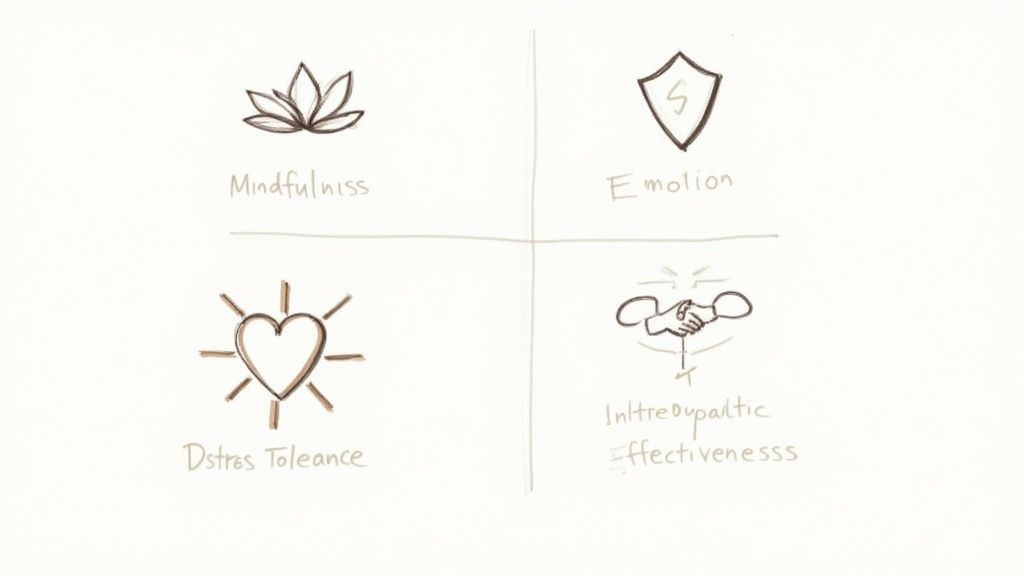
The therapy is structured around four core modules: Mindfulness, Distress Tolerance, Emotion Regulation, and Interpersonal Effectiveness. In a group setting, a facilitator teaches these skills, and members discuss how to apply them to real-life situations, particularly those involving substance use triggers. The group provides a supportive environment for practicing new behaviors.
Why It's a Staple in Recovery
DBT is highly effective because it directly addresses the underlying reasons many people turn to substances: an inability to cope with intense emotions and stressful life events. Instead of just focusing on abstinence, it equips individuals with a practical toolkit of healthy coping strategies. This focus on skill-building empowers participants to handle life's challenges without resorting to substance use, leading to more resilient and lasting recovery.
How to Implement This Idea
- Commit to the Full Program: DBT skills are typically taught over a period of six months to a year. Committing to the entire curriculum is crucial for learning and integrating all four skill modules effectively.
- Utilize Diary Cards: Participants often use diary cards to track their emotions, urges, and use of DBT skills between sessions. This practice increases self-awareness and provides valuable information for group discussions.
- Apply Skills to Triggers: Identify specific triggers for substance use and intentionally apply a skill from each module. For example, use a mindfulness technique to notice an urge without acting on it, or an interpersonal effectiveness skill to refuse a drink.
- Practice Daily Mindfulness: Even five minutes of daily mindfulness practice can significantly improve one's ability to stay present and manage reactive emotions, which is a cornerstone of preventing relapse.
The structured, skills-based nature of DBT makes it a powerful component of an integrated treatment plan, especially for those navigating both addiction and mental health challenges.
5. Peer Recovery Support Groups (Non-12-Step)
For individuals seeking a secular or alternative framework for sobriety, non-12-Step peer recovery support groups offer a powerful community-based solution. Programs like SMART Recovery and LifeRing provide structured, evidence-based approaches to recovery that emphasize self-empowerment, cognitive skills, and personal choice, making them excellent substance abuse group ideas for those who prefer a non-spiritual path.
These groups focus on practical tools and mutual support to manage addictive behaviors. Instead of admitting powerlessness, members are encouraged to find their own inner strength and develop self-reliance. Meetings are typically discussion-based, focusing on applying program principles to real-life challenges in a supportive, non-judgmental atmosphere.
Why It's a Staple in Recovery
Non-12-Step groups are effective because they offer a different philosophy that resonates with many people. They are grounded in scientific principles, such as Cognitive Behavioral Therapy (CBT) and Rational Emotive Behavior Therapy (REBT), providing concrete strategies for managing thoughts, feelings, and actions. This focus on practical skills empowers individuals to take control of their recovery journey, whether their goal is abstinence or moderation.
How to Implement This Idea
- Explore Different Models: Research various non-12-Step options like SMART Recovery (Self-Management and Recovery Training), LifeRing Secular Recovery, or Refuge Recovery (a Buddhist-inspired approach) to find the one whose philosophy aligns with your beliefs.
- Utilize Program-Specific Tools: Engage with the specific frameworks offered, such as SMART Recovery’s 4-Point Program or the tools available in their handbooks. These resources are designed to help you build motivation, cope with urges, and create a balanced life.
- Engage in Online and In-Person Meetings: Many non-12-Step programs have a strong online presence, offering accessible meetings at any time. Participating in both formats can help build a robust support network.
The growth of these alternative programs has been crucial in breaking the stigma of addiction and showing that recovery is not a one-size-fits-all process. You can learn more about building support systems that fit your individual needs and help dismantle common misconceptions.
6. Contingency Management (CM) Group Reinforcement
Contingency Management (CM) is a behavioral therapy approach that uses tangible rewards to reinforce positive behaviors, such as abstinence from substance use. Within a group setting, CM leverages peer accountability and shared goals to motivate individuals. Participants earn vouchers, prizes, or privileges for meeting predetermined targets, like negative drug tests, creating a powerful incentive-based system. This method is a highly structured and effective example of substance abuse group ideas.
The core of CM is the direct and immediate link between a desired behavior and a positive consequence. In a group context, this can involve both individual rewards for personal achievements and group-level rewards when the collective meets a specific goal. This dual-reinforcement model fosters a supportive environment where members encourage one another to succeed.
Why It's a Staple in Recovery
CM is effective because it provides clear, immediate, and positive reinforcement for abstinence, directly counteracting the immediate gratification of substance use. It systematically builds momentum for recovery by making sobriety more rewarding than using. Research, much of it funded by the National Institute on Drug Abuse (NIDA), has consistently shown CM to be highly effective in reducing substance use for various populations.
How to Implement This Idea
- Establish Clear Behavioral Targets: Define specific, measurable, and achievable goals from the outset. This is most often verified abstinence through regular drug testing, but can also include session attendance or participation.
- Make Reinforcement Immediate: Deliver rewards as soon as the target behavior is verified. This immediacy strengthens the connection between the positive action and the reward, maximizing its motivational impact.
- Use Escalating Rewards: To maintain engagement over time, design a reward system where the value of the incentives increases with sustained success. This encourages long-term commitment to the program.
- Incorporate Group Incentives: Alongside individual prizes, set collective goals. For example, if the entire group achieves abstinence for a week, everyone receives an additional reward. This builds group cohesion and mutual support.
7. Experiential/Art Therapy Groups
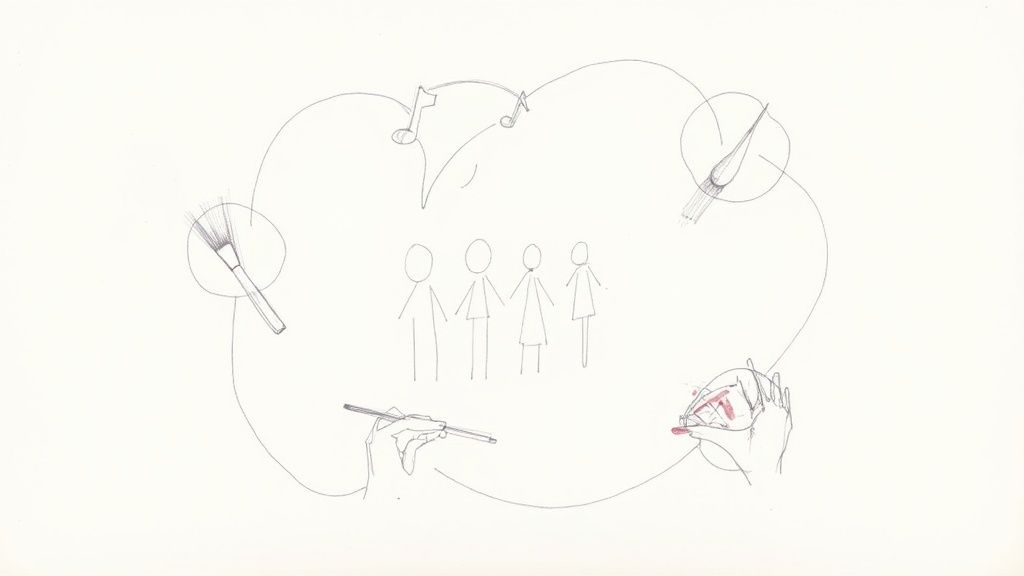
For individuals who find it difficult to verbalize their emotions, experiential and art therapy groups provide a powerful alternative pathway to healing. These sessions use creative expression such as painting, music, drama, or dance to help participants process trauma and emotions tied to substance abuse. This creative approach offers a unique and effective addition to traditional substance abuse group ideas.
The focus is not on artistic skill but on the process of creation itself. By engaging in non-verbal expression, members can bypass cognitive defenses and access deeper feelings that words may fail to capture. This can be especially helpful in addressing the complex emotions and underlying issues that often fuel addiction.
Why It's a Staple in Recovery
Experiential therapy is effective because it engages the whole person: body, mind, and spirit. It provides a tangible, symbolic language for experiences that are often too painful or confusing to discuss directly. The resulting artwork or performance becomes a concrete object for reflection, allowing the group to explore themes of loss, hope, and identity in a safe, contained manner.
How to Implement This Idea
- Offer Diverse Mediums: Provide a variety of materials like clay, paints, musical instruments, or journaling supplies to cater to different preferences and comfort levels.
- Create a Non-Judgmental Space: Emphasize that there is no right or wrong way to create. The goal is self-expression, not a perfect final product, fostering safety and encouraging vulnerability.
- Use Art as a Springboard: Facilitate discussions centered around the creative work. Ask open-ended questions like, "What was it like to create this?" or "What does this piece say about your recovery journey?" to spark therapeutic conversation.
By integrating creative modalities, treatment programs can offer a more holistic and deeply personal recovery experience. These groups are particularly valuable in IOP, PHP, and residential settings, where they can be combined with other evidence-based practices to support profound healing.
8. Psychoeducational Group Workshops
Psychoeducational groups serve as structured, curriculum-based sessions designed to educate participants on the multifaceted nature of addiction. These workshops combine didactic teaching with interactive group discussion, covering critical topics like addiction neurobiology, the recovery process, relapse prevention strategies, and the physical and mental health consequences of substance use. This knowledge-first approach is a powerful tool among substance abuse group ideas, empowering individuals with the information they need to understand their condition.
The core of this model is to demystify addiction, moving it from a perceived moral failing to a treatable, chronic brain disease. By presenting scientific evidence, such as brain imaging that shows how drugs alter neural pathways, facilitators help participants grasp the biological underpinnings of their cravings and behaviors. This understanding reduces shame and increases self-efficacy, providing a solid foundation for building recovery skills.
Why It's a Staple in Recovery
These workshops are effective because knowledge is power. Understanding the "why" behind addiction gives individuals concrete reasons for their recovery choices and equips them to anticipate challenges. Learning about post-acute withdrawal syndrome (PAWS), for instance, helps a person normalize and cope with protracted symptoms instead of viewing them as a personal failure. This educational framework builds a logical, defensible structure for one's sobriety.
How to Implement This Idea
- Select a Relevant Curriculum: Utilize evidence-based curricula, such as those approved by SAMHSA, or develop modules focused on the specific needs of your group (e.g., opioid-specific neurobiology, stimulant-related health risks).
- Make it Interactive and Visual: Incorporate visuals like diagrams of the brain's reward system, videos, and charts. Encourage questions and facilitate discussions where members can apply concepts to their own real-world experiences.
- Provide Tangible Takeaways: Offer handouts, worksheets, and summary sheets for each topic. These materials reinforce learning and serve as valuable resources for participants to review between sessions, helping to solidify their understanding and commitment.
9. Family/Couple Therapy Groups
Substance use disorder rarely exists in a vacuum; it deeply impacts family systems and romantic relationships. Family and couple therapy groups address this by bringing loved ones into the recovery process, creating a supportive environment for healing systemic issues that contribute to addiction. These sessions focus on improving communication, rebuilding trust, and rebalancing dysfunctional family dynamics. Including loved ones makes this one of the most transformative substance abuse group ideas.
The core of this approach is treating the family unit, not just the individual. Facilitators guide conversations around codependency, enabling behaviors, and shared trauma. By providing a structured, safe space for these difficult conversations, the group helps all members understand their roles in the addiction cycle and learn new, healthier ways of interacting.
Why It's a Staple in Recovery
This approach is highly effective because it heals the environment to which the individual will return. Addressing underlying family conflict, poor communication, and enabling behaviors reduces major relapse triggers and builds a strong, informed support network. It empowers family members with tools like those found in CRAFT (Community Reinforcement and Family Training) to positively influence their loved one's recovery journey.
How to Implement This Idea
- Establish Clear Ground Rules: Begin by setting firm rules for respectful, non-blaming communication. The use of "I" statements is critical to prevent sessions from devolving into arguments and ensure everyone feels heard and validated.
- Provide Psychoeducation: Dedicate time to educating families on the neurobiology of addiction, codependency, and the recovery process. This normalizes their experience and shifts the focus from blame to a shared, solvable problem.
- Set Specific Family Goals: Work with the group to create clear, measurable goals. These might include holding a weekly family check-in, attending a support group like Al-Anon together, or establishing healthy boundaries around finances and responsibilities.
By integrating the family, these groups create a foundation for relational healing that supports long-term, sustainable recovery for everyone involved.
10. Peer Mentorship and Sponsor Groups
Structured programs that pair individuals early in recovery with experienced peers offer a powerful blend of guidance, accountability, and lived experience. These mentorship or sponsorship relationships provide a vital one-on-one connection, modeling a healthy recovery lifestyle and creating a strong social support foundation. This approach is a cornerstone of many successful substance abuse group ideas.
The essence of this model lies in the relationship between the mentor (or sponsor) and the mentee. The mentor, who has achieved sustained recovery, offers practical advice, emotional support, and a compassionate ear. This connection helps the mentee navigate challenges, celebrate milestones, and feel understood by someone who has walked a similar path, significantly reducing feelings of isolation.
Why It's a Staple in Recovery
Peer mentorship is effective because it humanizes the recovery process. It provides a tangible example that long-term sobriety is achievable. The relationship fosters accountability and trust, giving the person in early recovery a reliable point of contact for support during moments of crisis or uncertainty. This personalized guidance complements formal group therapy by addressing individual-specific hurdles.
How to Implement This Idea
- Screen and Train Mentors: Before pairing, thoroughly vet potential mentors for their stability in recovery, communication skills, and understanding of boundaries. Provide them with ongoing training and support.
- Establish Clear Expectations: Create a written agreement outlining the roles, responsibilities, and boundaries for both mentor and mentee. Define the expected frequency of contact, such as a weekly minimum.
- Match Mentees Thoughtfully: Whenever possible, pair individuals based on shared experiences, such as substance of choice or similar life circumstances, to foster a stronger initial connection.
- Celebrate Progress: Use group settings to acknowledge and celebrate milestones achieved by mentees. This reinforces positive behavior and strengthens the sense of community.
This model provides a crucial layer of individualized support. For those in 12-Step programs, understanding the specific role of a sponsor is key; you can discover more about what a sponsor does and how they contribute to recovery.
Comparison of 10 Substance Abuse Group Approaches
| Program / Model | Implementation complexity 🔄 | Resource requirements ⚡ | Expected outcomes 📊 | Ideal use cases 💡 | Key advantages ⭐ |
|---|---|---|---|---|---|
| 12-Step Program Group Meetings | Low — peer-led; minimal formal training; requires ongoing commitment | Very low cost; volunteer facilitators; community spaces | ⭐⭐ — variable long-term (≈10–30%); strong social support impact | Individuals seeking low-cost, sustained peer support and accountability | Widely available; strong sense of community; no cost |
| Cognitive Behavioral Therapy (CBT) Group Sessions | Medium — manualized, clinician-led groups with homework | Moderate — trained clinicians, materials, session time | ⭐⭐⭐⭐ — strong empirical support for SUDs and comorbid mood/anxiety | Clients needing concrete coping skills and evidence-based interventions | Skill-based, measurable, time-limited outcomes |
| Motivational Interviewing (MI) Group Sessions | Medium — facilitator skill-intensive; flexible structure | Moderate — trained facilitators; small-group format | ⭐⭐⭐ — improves engagement and readiness; evidence across populations | Ambivalent or reluctant clients; pre-treatment engagement | Reduces resistance; respects autonomy; integrates with other treatments |
| Dialectical Behavior Therapy (DBT) Skills Groups | High — multi-component (group + individual + coaching); certified training | High — clinicians, phone coaching, year-long commitment | ⭐⭐⭐⭐ — strong for dual-diagnosis, emotion dysregulation, relapse reduction | Chronic relapse, emotion regulation difficulties, personality disorders | Comprehensive skills, strong structure, proven for complex cases |
| Peer Recovery Support Groups (Non-12-Step) | Low–Medium — peer-led secular models; structured frameworks like SMART | Low — volunteer leaders; online and in-person options | ⭐⭐⭐ — growing evidence; effective for those seeking secular options | Non-religious individuals; preference for self-empowerment or moderation | Secular, flexible goals, neuroscience-informed approaches |
| Contingency Management (CM) Group Reinforcement | Medium — requires protocols for testing and reinforcement schedules | High — funding for incentives, reliable drug testing infrastructure | ⭐⭐⭐⭐ — strong evidence (especially stimulants); high short-term adherence | Clients with low internal motivation; stimulant use disorders; justice settings | Immediate tangible reinforcement; high engagement/compliance |
| Experiential / Art Therapy Groups | Medium — requires creative facilitation and trauma-sensitive skills | Moderate — materials, specialized facilitators, dedicated space | ⭐⭐⭐ — effective for trauma processing and emotional access | Trauma survivors; those who struggle with talk therapy | Accesses nonverbal processing, reduces shame, supports identity work |
| Psychoeducational Group Workshops | Low — didactic curriculum delivery; scalable | Low — facilitator, handouts, audiovisual materials | ⭐⭐ — improves knowledge and self-efficacy; limited behavior change alone | Large groups, prevention, orientation, early-stage recovery education | Cost-effective, scalable, demystifies addiction science |
| Family / Couple Therapy Groups | High — systemic approach; specialized family-systems training | Moderate–High — clinician time, multiple participants, coordination | ⭐⭐⭐ — improves family engagement and reduces relapse risk | Families with enabling dynamics; adolescent substance use; relational repair | Addresses systemic drivers, rebuilds support, reduces enabling |
| Peer Mentorship & Sponsor Groups | Low–Medium — structured matching and mentor training required | Low–Moderate — training, supervision, matching logistics | ⭐⭐⭐ — improves retention, engagement, and long-term recovery | Transition from formal treatment; need for ongoing accountability | Lived-experience credibility, cost-effective, bridges services |
Final Thoughts
Navigating the landscape of recovery requires a diverse and adaptable toolkit. As we've explored, the power of group therapy lies not in a single, one-size-fits-all solution, but in the rich variety of approaches available. From the structured, step-by-step guidance of 12-Step programs to the creative expression found in Art Therapy, each modality offers a unique pathway toward healing and self-discovery. The substance abuse group ideas presented in this guide are designed to be more than just activities; they are frameworks for connection, insight, and lasting change.
The true strength of these sessions is their ability to address the multifaceted nature of addiction. A well-rounded treatment plan recognizes that recovery involves cognitive restructuring, emotional regulation, behavioral change, and interpersonal healing. By integrating Cognitive Behavioral Therapy (CBT) to challenge distorted thinking, Dialectical Behavior Therapy (DBT) to build coping skills, and Family Therapy to mend crucial relationships, clinicians can create a comprehensive support system that addresses the whole person, not just the symptoms of their substance use disorder.
Key Takeaways for Effective Group Facilitation
To truly bring these substance abuse group ideas to life, remember these core principles:
- Flexibility is Crucial: The most effective groups are those that can adapt to the specific needs and dynamics of their members. Be prepared to modify activities, adjust timing, and pivot based on the group's energy and progress.
- Safety Creates Vulnerability: A trauma-informed approach is non-negotiable. Establishing a foundation of emotional and psychological safety is the only way to encourage the vulnerability necessary for genuine therapeutic work.
- Purpose Drives Engagement: Every activity should have a clear, stated purpose. When participants understand the "why" behind an exercise, their engagement and buy-in increase dramatically.
- Integration Amplifies Impact: Don't view these ideas in isolation. Consider how a skill learned in a DBT group can be reinforced in a Peer Support session, or how an insight from a Psychoeducational workshop can be explored more deeply in a CBT group.
Actionable Next Steps for Clinicians and Participants
Moving from theory to practice is the most critical step. For clinicians and facilitators, the goal is to thoughtfully curate a group curriculum that is both evidence-based and deeply human. Start by selecting two or three new ideas from this list that resonate with your clinical style and your clients' needs. Develop a plan to introduce them, gather the necessary materials, and define how you will measure their impact.
For individuals in recovery and their families, this guide serves as a map of possibilities. Use this knowledge to become an active, informed participant in your treatment. If a particular approach like Motivational Interviewing or Experiential Therapy seems like a good fit, don't hesitate to ask your provider about incorporating it into your plan. Advocating for your own recovery journey is an empowering and vital part of the healing process.
Ultimately, the journey of recovery is a collaborative one. It is built on shared experiences, mutual support, and the collective wisdom that emerges when people come together with a common goal. The substance abuse group ideas detailed here are the catalysts for that process, providing the structure and focus needed to turn intention into action. By embracing this diverse range of therapeutic tools, we can create more dynamic, responsive, and effective environments for healing, empowering individuals to not only overcome addiction but to build fulfilling, resilient lives.
Ready to experience a program that masterfully integrates these diverse therapeutic approaches? The clinical team at Altura Recovery specializes in creating personalized treatment plans that utilize a rich variety of evidence-based group therapies to foster deep, lasting recovery. Explore our programs and see how our dynamic group sessions can support your journey at Altura Recovery.