To effectively stop alcohol cravings, you need a mix of immediate coping skills and long-term lifestyle changes. The real key, though, is understanding that cravings are just temporary signals from your brain—not commands you have to obey. Most urges actually pass within 5 to 15 minutes. Learning to ride out these waves with mindfulness, distraction, and a solid support system is the bedrock of a lasting recovery.
Why Alcohol Cravings Happen and How to Face Them
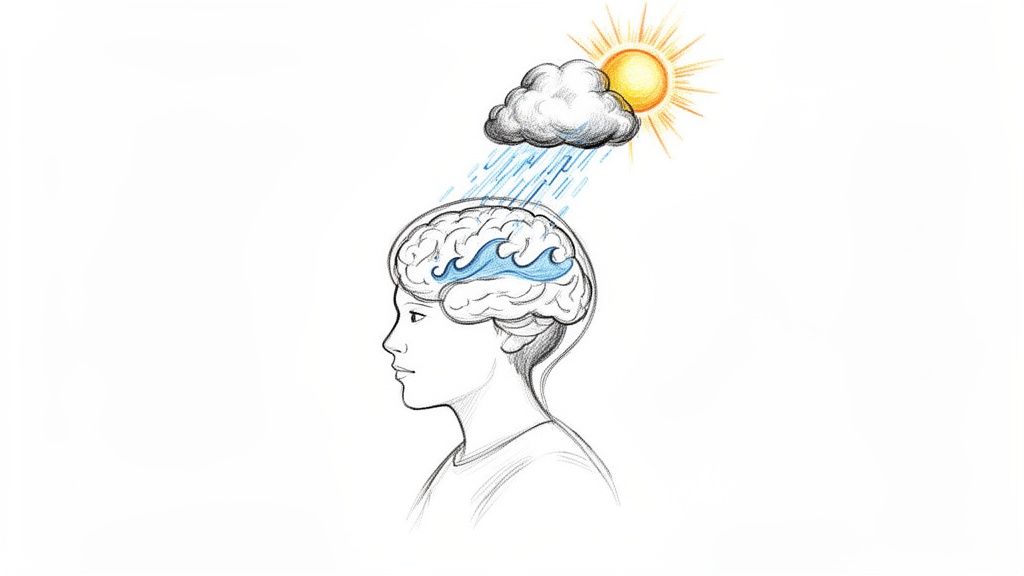
It’s completely normal to feel steamrolled by alcohol cravings, especially in the early days of recovery. These intense urges aren’t a sign of weakness; they're a predictable biological and psychological response from a brain that’s readjusting. Grasping what’s happening under the hood is the first real step toward taking back the controls.
When you stop drinking, your brain, which adapted to the constant presence of alcohol, is thrown into a state of flux. This readjustment process can feel chaotic. Alcohol and sugar both trigger a release of dopamine, the “feel-good” chemical in your brain’s reward center. So, when you take alcohol away, your brain starts scrambling for other ways to get that same reward. This is exactly why intense sugar cravings are so common in early sobriety.
The Brain and Body Connection
Cravings aren't just a fleeting thought; they show up physically and emotionally. You might feel restless, on edge, tense, or irritable. These feelings are driven by two main forces working together:
- Brain Chemistry: Your brain is desperately trying to rebalance neurotransmitters like dopamine and serotonin, which alcohol used to manipulate. This chemical recalibration creates a powerful, almost magnetic pull toward the substance it learned to depend on.
- Psychological Triggers: Cues in your environment can spark a conditioned response almost instantly. It could be the time of day, a stressful meeting at work, or seeing friends drink. Your brain has built strong associations between these triggers and the perceived relief that alcohol brings.
Instead of trying to fight these urges head-on—which is exhausting and often futile—the goal is to reframe them. A craving is just a message, a temporary wave of discomfort that will pass. Acknowledging it without judging yourself allows you to observe it, figure out where it’s coming from, and choose a healthier response.
Viewing a craving as a temporary wave you can "surf" rather than a command you must follow is a powerful shift in perspective. It puts you back in control, reminding you that feelings are not facts, and urges do not require action.
Building a Foundation for Change
Lasting change isn’t built on willpower alone; it’s built on a foundation of support and structure. While personal coping skills are vital, professional guidance provides the evidence-based tools and accountability needed to navigate this journey successfully.
This is where outpatient programs like an Intensive Outpatient Program (IOP) offer a huge advantage. They give you a structured path to recovery while still allowing you to manage your daily life at home and work. These programs equip you with actionable strategies to handle triggers, build resilience, and create a new, healthier lifestyle that supports long-term sobriety. You learn to stop cravings for alcohol not by gritting your teeth, but by developing a deeper understanding of your own patterns. You are not alone in this, and with the right approach, lasting change is entirely possible.
Immediate Tactics for Managing Intense Cravings
When a powerful alcohol craving hits, it can feel like a tidal wave—overwhelming and urgent. In those moments, having a plan isn’t just helpful; it’s essential. You need real-world techniques you can pull out of your back pocket right away to get back in the driver's seat. The goal isn't to wrestle the craving into submission, which is exhausting, but to skillfully ride it out until it loses steam.
Think of an intense craving like a wave in the ocean. It builds, it crests, and then it naturally breaks and fades away. Most of these urges will peak within 5 to 15 minutes. Your only job is to stay afloat until the wave passes.
Ride the Wave with Urge Surfing
One of the most powerful mindfulness techniques for this is called urge surfing. Instead of fighting the feeling or giving in, you simply observe it like a curious scientist, without judgment. You acknowledge the feeling, notice how it shows up in your body, and ride it out.
Picture yourself on a surfboard. You see the wave of craving coming. Instead of panicking and trying to paddle against it, you turn your board and ride with it. You notice the physical sensations—maybe a knot in your stomach, restlessness in your legs, or racing thoughts. You don't have to act on them. You just watch them come and go as you ride the wave until it gently sets you back down on a calmer shore. This simple practice creates a gap between the urge and the action, handing the power of choice back to you.
Jolt Your Senses with Grounding Exercises
Sometimes, the fastest way to stop cravings for alcohol is to interrupt the obsessive thought loop with a sharp sensory experience. This is where grounding techniques come in. The whole point is to yank your focus out of your head and anchor it firmly in the physical world, right here and now.
Here are a few grounding exercises you can use absolutely anywhere:
- Temperature Shock: Grab a piece of ice and hold it in your palm until it gets uncomfortable. That intense cold sensation demands your brain's full attention, effectively elbowing the craving out of the spotlight.
- Taste Intensity: Bite into a wedge of lemon or pop an intensely sour candy. The powerful, sharp taste acts like a reset button for your focus.
- The 5-4-3-2-1 Method: This is a classic for a reason. Look around and name five things you can see. Then, name four things you can physically feel, three things you can hear, two things you can smell, and one thing you can taste. This simple inventory forces your brain to engage with your immediate surroundings.
When intense cravings strike, managing the anxiety underneath them can be a game-changer. Natural methods like using essential oils for anxiety relief can offer a quick sense of calm to help you through. A grounding scent like lavender can be a fast and effective tool to have on hand.
The point of grounding isn't to make the craving magically vanish. It’s to create just enough mental breathing room so you can choose a different response, breaking that automatic link between a trigger and the compulsion to drink.
Create Distance with Smart Distractions
Distraction often gets a bad rap, but in recovery, it's a strategic move. You're consciously redirecting your mental energy until the craving loses its grip. The trick is to pick something that actually requires your attention.
Mindlessly scrolling through social media? That probably won’t cut it. You need an activity that pulls you in.
- Connect with Someone: Call or text a trusted friend, a family member, or someone in your support network. Just a five-minute conversation can be enough to shift your perspective and break the craving's spell.
- Change Your Environment: If you’re at home feeling the pull, get up and get out. Take a brisk walk around the block, head to a coffee shop, or even just move to a different room. A simple change of scenery can disrupt the trigger-craving cycle.
- Engage Your Brain: Dive into something that demands focus. This could be a puzzle on your phone, playing an instrument, journaling about what you're feeling, or even tackling that cluttered junk drawer you've been avoiding.
- Get Moving: Exercise is a fantastic way to generate natural endorphins and dopamine, which directly counter the brain chemistry that fuels cravings. Even a quick set of push-ups or jumping jacks can make a real difference.
Building a personal "emergency response kit" is a powerful step. Sit down right now and make a list of three to five go-to strategies you can use the moment a craving strikes. When you have a plan ready, you replace panic and uncertainty with decisive, healthy action.
Building Long-Term Resilience with Clinical Support
While those immediate coping skills are your first line of defense, they're really about managing a crisis in the moment. To truly stop cravings for alcohol for good, you have to dig deeper and get at the root of why they happen in the first place.
Sustainable recovery is built on resilience—rewiring the thought patterns, emotional responses, and behaviors that fuel the desire to drink. This is where structured clinical support becomes absolutely essential. Outpatient programs give you a dedicated space to do this deep work with professional guidance. Instead of just surviving cravings, you learn how to dismantle them at their source.
Rewiring Your Thoughts with Cognitive Behavioral Therapy
Cognitive Behavioral Therapy (CBT) works on a simple but powerful idea: your thoughts, feelings, and actions are all linked. An alcohol craving rarely just pops up out of nowhere. It's almost always kicked off by a specific, automatic, and often negative thought.
Think about it. A brutal day at work might trigger the thought, "I can't handle this stress; I need a drink to relax." This thought sparks feelings of being overwhelmed, which then triggers the physical urge. CBT teaches you to catch that initial thought, challenge whether it's actually true, and replace it with something more realistic. You learn to question the automatic assumption that alcohol is the only fix for stress, cutting the craving off before it ever gains momentum.
Developing Skills for Emotional Regulation with DBT
Dialectical Behavior Therapy (DBT) is another cornerstone of modern recovery. It equips you with practical skills to manage painful emotions and navigate tough situations without turning to alcohol. DBT is built on four key skill sets that directly fight the drivers of cravings:
- Mindfulness: Learning to stay present and just observe your thoughts and feelings without judging them. This is the foundation for techniques like urge surfing.
- Distress Tolerance: Building your capacity to sit with discomfort without having to immediately run from it. This is crucial for riding out those intense craving waves.
- Emotion Regulation: Understanding your emotions and learning healthy ways to manage them, which dials down the emotional chaos that often triggers drinking.
- Interpersonal Effectiveness: Improving how you communicate your needs and set boundaries in relationships, reducing a huge source of stress for many people.
DBT teaches you that you can feel a powerful emotion and a strong craving at the same time, without having to act on either one. It’s about accepting the reality of the moment while empowering yourself to make a different choice.
This flowchart gives you a simple visual for those in-the-moment tactics like urge surfing, grounding, and distraction.
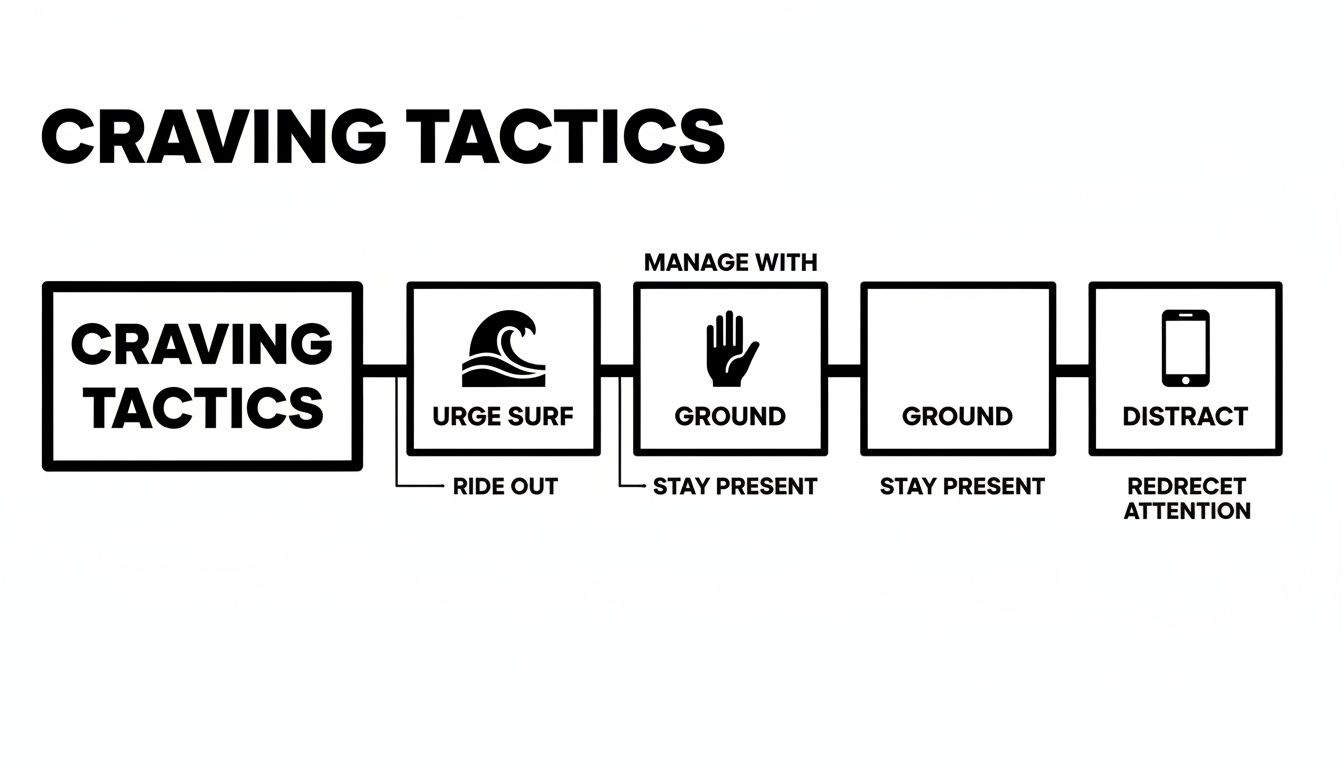
These are fantastic first-aid tools, but they become so much more powerful when you back them up with the long-term emotional regulation skills you build in therapy.
Healing from the Past with Trauma-Informed Care
For so many people, substance use is tangled up with past trauma. In these cases, alcohol isn't just a habit—it's a way to self-medicate and numb painful memories and feelings. This is where therapies like Eye Movement Desensitization and Reprocessing (EMDR) come in, specifically designed to help the brain process and heal from these past events.
EMDR works by desensitizing you to the emotional gut-punch of traumatic memories. By doing that, it reduces the underlying distress that so often fuels the urge to drink. As those old wounds finally start to heal, the need to numb them with alcohol naturally fades.
Comparing Therapeutic Approaches for Alcohol Cravings
Navigating the different types of therapy can be confusing. This table breaks down how the most common evidence-based approaches tackle alcohol cravings from different angles.
| Therapy | Primary Focus | How It Helps Stop Cravings |
|---|---|---|
| Cognitive Behavioral (CBT) | Identifying and changing negative thought patterns and behaviors. | Helps you challenge the automatic thoughts ("I need a drink") that lead to cravings and replace them with healthier responses. |
| Dialectical Behavior (DBT) | Building skills in mindfulness, distress tolerance, and emotion regulation. | Equips you with tools to ride out intense urges without acting on them and manage the emotional triggers that cause cravings. |
| EMDR | Processing and healing from past traumatic memories. | Reduces the underlying pain and distress that you might be self-medicating with alcohol, thereby decreasing the need to drink. |
Each of these therapies offers a unique pathway to resilience. In a quality outpatient program, a therapist will help determine which approach—or combination of approaches—is the best fit for your personal history and recovery goals.
The Role of Medication in Reducing Cravings
Sometimes, therapy is paired with medication-assisted treatment (MAT). Certain FDA-approved medications can help dial down the intensity and frequency of alcohol cravings by working directly on your brain chemistry. These medications don't "cure" addiction, but they can create a stable foundation, quieting the biological noise of cravings so you can focus more effectively on the psychological work of recovery.
This combined approach is incredibly effective.
In fact, managing cravings well with these evidence-based therapies can dramatically slash relapse rates. Studies show up to a 50-60% improvement in maintaining sobriety for people in structured outpatient programs. In the U.S., where nearly 10% of Americans over 12 have an alcohol use disorder, programs that integrate mindfulness and relapse prevention have shown that participants see a 40% lower risk of heavy drinking episodes in their first year. You can read more about these encouraging statistics and the impact of structured support at Harmony Ridge Recovery.
Creating a Sober Lifestyle and Support System
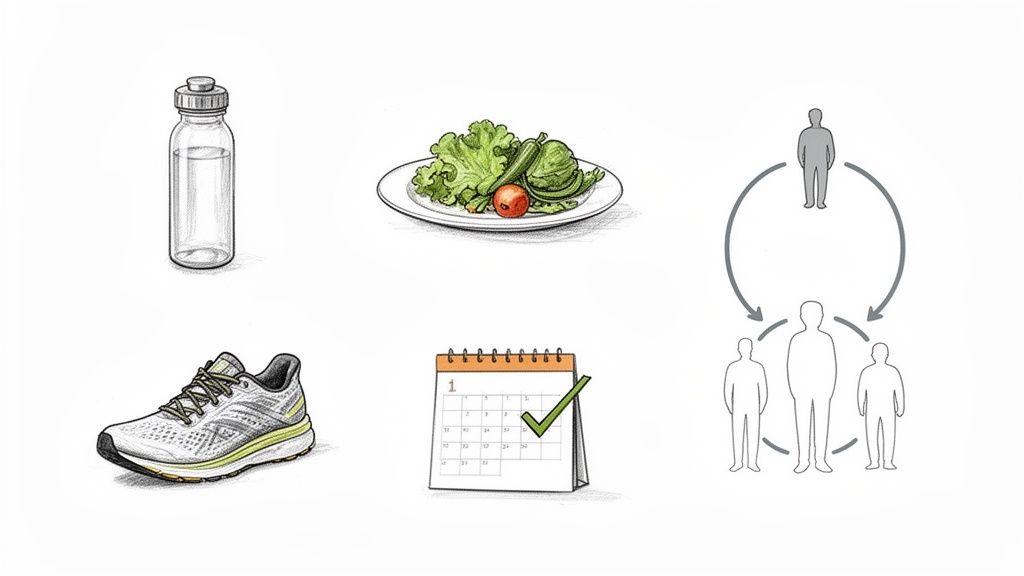
Real, lasting recovery isn’t just about what you don’t do anymore. It’s about what you actively build in its place. Creating a sober lifestyle means redesigning your daily routines to truly support your well-being, moving beyond just white-knuckling it through the day.
These everyday changes become the foundation that makes it easier to head off cravings before they even gather steam. Don't think of it as a massive, overnight overhaul. It all starts with simple, intentional choices that stabilize your body and mind, making you far less vulnerable to the emotional and physical triggers that used to send you straight to a drink.
Fuel Your Body to Stabilize Your Mind
What you eat plays a surprisingly powerful role in managing cravings for alcohol. When you first stop drinking, your body is often dealing with unstable blood sugar, which can trigger irritability and intense urges. It's a common trap: since both alcohol and sugar release dopamine in the brain's reward center, many people swap one for the other.
But replacing alcohol with sugary, processed junk food usually backfires. The inevitable sugar crash can spike your irritability and, ironically, amplify the urge to drink. A much smarter strategy is to stabilize your blood sugar with a balanced, thoughtful diet.
- Prioritize Protein and Whole Grains: These foods digest slowly, giving you a steady stream of energy that prevents the sharp spikes and crashes in blood sugar. This keeps your mood more even and cravings on the back burner.
- Stay Hydrated: It’s easy to mistake dehydration for hunger or a craving. Drinking plenty of water helps your body function at its best and can seriously dial down the intensity of an urge.
- Plan Your Meals: When you're hungry and unprepared, decision fatigue sets in. That’s when it’s easiest to grab something quick and sugary or fall back into old, comfortable patterns. A simple meal plan removes that risk.
A healthy diet isn’t about perfection. It’s about giving your body the consistent fuel it needs to heal. When you feel physically stable, your emotional resilience gets a natural boost, making the mental side of recovery much more manageable.
Harness the Power of Movement
Exercise is one of the best and most accessible tools you have for fighting cravings. It works by directly addressing the brain chemistry that drives the urge to drink. Getting active gives you a natural shot of dopamine and endorphins, lighting up the brain’s reward system in a healthy, constructive way.
This doesn't mean you need to start training for a marathon tomorrow. The trick is to find a type of movement you actually enjoy so it becomes a sustainable habit, not just another chore on your to-do list.
Even a brisk 15-minute walk can be enough to completely shift your mental state, lower stress, and interrupt a craving before it takes hold. Study after study confirms that regular exercise helps people manage urges and improves their overall mood, giving them a powerful, healthy alternative for stress relief.
Build Your Personal Support Network
Recovery isn't a journey you should ever have to take alone. A strong support system is your safety net, your sounding board, and your backup when things get tough. Building this network means being intentional about who you surround yourself with.
Start by identifying the people in your life who genuinely support your sobriety. This might require having some honest, direct conversations with friends and family about what you need from them. Maybe you need to ask them not to drink around you for a while, or suggest new, sober activities you can do together.
Connecting with sober peers is also invaluable. Support groups like AA or SMART Recovery create a community of people who get exactly what you’re going through. Hearing their stories and sharing your own makes the experience feel less isolating and provides practical, real-world advice. For a deeper dive into tools and daily inspiration for your journey, check out the Sobriety Recovery collection for resources that can keep you motivated.
This network becomes your first line of defense. When a craving hits, you have a list of people you can call or text instead of isolating yourself. Sometimes, just a five-minute conversation is enough to break the spell of a craving and remind you that you're not in this fight alone.
How Outpatient Programs Support Your Recovery Journey
For a lot of people, the idea of hitting pause on life to enter treatment just isn't realistic. Work, school, and family responsibilities don’t magically disappear. This is exactly where outpatient programs build a powerful bridge, offering structured, evidence-based care that weaves directly into your day-to-day life.
This model is built on a simple truth: recovery happens in the real world, not in a bubble. It gives you the perfect mix of intensive clinical support and the daily chance to use what you’re learning right away. You can go to a therapy session in the morning and practice new communication skills with your family that same night.
Understanding Different Levels of Outpatient Care
Outpatient treatment isn’t a one-size-fits-all deal. It's a flexible system with different levels of intensity, designed to adapt to your needs as you make progress. The two most common options you’ll come across are Partial Hospitalization Programs (PHP) and Intensive Outpatient Programs (IOP).
Partial Hospitalization Program (PHP): This is the most structured type of outpatient care. It often works as a "step-down" from inpatient or residential treatment. A PHP usually involves treatment for several hours a day, five days a week, giving you a high level of support while you still get to live at home.
Intensive Outpatient Program (IOP): An IOP offers a bit more flexibility, typically requiring 9 to 12 hours of treatment each week, spread out over three or four days. This setup is perfect for people who need to balance their recovery with a job, classes, or family commitments.
As your confidence grows and your coping skills get stronger, you can smoothly transition from a higher level of care like a PHP to a more flexible IOP. This step-down approach makes sure you always have the right amount of support without feeling overwhelmed. It’s all about empowering you, one manageable step at a time.
The Real-World Advantage of Outpatient Treatment
The biggest benefit of outpatient care is how immediate it is. The skills you pick up in a morning group session can be put to the test that same afternoon when you run into a real-life trigger. This constant cycle of learning and applying is where true, lasting change is built.
Instead of just talking about how to handle stress at work, you can actually use a new grounding technique before a big meeting. Rather than just theorizing about setting boundaries, you can practice it at the dinner table and talk through how it went with your therapist the next day.
Outpatient treatment closes the gap between theory and practice. It lets you build your recovery muscles in the very environment where you'll need them most, making your new skills a natural, integrated part of your daily life.
This model is especially helpful for busy people who need to keep their daily lives on track.
- Working Professionals can often find evening or weekend programs that fit their work schedules, letting them get help without having to put their careers on hold.
- Students can keep up with their classes, using the skills they learn in therapy to manage academic stress and social pressures in a healthier way.
- Parents can attend treatment while their kids are at school, making sure they can be there for their families while still putting their own well-being first.
Building a Foundation for Sustainable Sobriety
Ultimately, outpatient programs are designed to help you stop alcohol cravings by building a life that is more fulfilling and resilient than the one you had before. By combining professional therapy, peer support, and real-world practice, you create a solid foundation for long-term sobriety.
The goal isn't just to stop drinking; it's to build a life where you no longer feel the need to drink. This journey involves healing relationships, developing self-awareness, and finding healthy ways to experience joy and manage stress. Outpatient care gives you the structure, tools, and compassionate guidance to make that transformation happen—all while you continue to move forward with your life.
Common Questions About Managing Alcohol Cravings
When you’re trying to stop drinking, cravings can feel like the biggest, most mysterious obstacle. It's completely normal to have a lot of questions about what to expect and how to handle them. Getting clear, practical answers can make all the difference, building your confidence and strengthening your resolve.
Let’s tackle some of the most common questions people ask when they're navigating this path.
How Long Do Alcohol Cravings Last?
This is usually the first question on everyone's mind, and the answer is often a relief. An individual, intense craving is surprisingly short. Most urges will peak and then start to fade on their own within about 5 to 15 minutes.
In the heat of the moment, that can feel like an eternity, but just knowing there's a finish line makes it much easier to manage. The trick is to have a few go-to coping skills ready to deploy the second you feel an urge building. Things like grounding exercises, a quick walk around the block, or even just splashing cold water on your face can help you ride out that short, intense wave without giving in.
Over the long haul, things get even better. As your brain and body heal from alcohol, both the frequency and the intensity of cravings will drop off significantly. They might not vanish completely, but they become much quieter and far easier to manage with the skills you build in recovery.
Is It Normal to Crave Sugar When I Quit Drinking?
Yes, absolutely. Trading alcohol cravings for a powerful sweet tooth is incredibly common, and there’s a solid biological reason for it. Both alcohol and sugar trigger a release of dopamine—the "feel-good" neurotransmitter—in your brain's reward center. When you take away the alcohol, your brain starts looking for a quick substitute to get that same pleasurable hit.
While this is a normal part of the process, it's something to handle with care. Leaning too heavily on sugar can send your blood sugar on a rollercoaster, leading to energy crashes and irritability, which can actually wind up triggering an urge to drink.
A much better strategy is to focus on stabilizing your blood sugar. A diet rich in protein and whole grains can help keep your mood and energy levels steady. This doesn't mean you can never have a treat, but it does mean that a balanced diet will make your emotional state far more stable, reducing cravings for both substances.
What’s the Difference Between a Trigger and a Craving?
Nailing this distinction is a cornerstone of effective relapse prevention. They're connected, but they are not the same thing at all.
- A trigger is the cue. It’s the specific person, place, feeling, or situation that sparks the initial thought of drinking. Think of it as the event before the urge. For example, getting off a stressful Friday afternoon Zoom call could be a trigger.
- A craving is the powerful emotional and physical reaction that follows the trigger. It’s that intense, almost overwhelming desire or compulsion to drink.
When you can identify your specific triggers, you can get ahead of the game. Early in recovery, you might choose to avoid them altogether. Later on, you'll have a solid plan in place to cope with them when they're unavoidable. This strategy helps you disarm the craving before it has a chance to build any real momentum. Knowing your triggers gives you the power to choose your response.
At Altura Recovery, we provide the tools and support you need to navigate these challenges with confidence. Our outpatient programs are designed to fit your life, helping you build a strong foundation for lasting sobriety. Learn more about our approach at https://www.alturarecovery.com.