Figuring out the path to recovery can feel like navigating a maze, but the best rehab programs for young adults are built specifically to guide them through their unique challenges. These programs don't just focus on stopping substance use; they blend proven therapy with peer connection and the life skills they'll actually need. This approach builds a real foundation for lasting sobriety and personal growth.
Starting the Path to Recovery for Young Adults
Finding the right support system is the first and most important step in a young adult's recovery. Unlike older adults, this group is dealing with a totally different set of pressures—from the weight of school and social life to the simple fact that their brains are still developing. A one-size-fits-all program just won't cut it. Real healing demands a program that gets their world and speaks their language.
Recovery is about much more than just quitting a substance. It's about building a life that feels genuinely good and meaningful without it. That means getting to the root of issues like anxiety, depression, or trauma while also handing them practical tools for the future. The most effective programs understand that young adulthood is a time of figuring out who you are, and they weave that reality into every single part of the treatment.
The Core Pillars of Effective Treatment
Substance use among young adults is a massive public health issue. In 2022, the data showed that roughly 2.2 million people aged 12 to 17 had a substance use disorder in the past year alone. Even with such a clear need, specialized residential options are still hard to come by, which makes high-quality, accessible programs more critical than ever. You can read the full research about these behavioral rehabilitation trends to really grasp the scope of the problem.
The infographic below breaks down the key ingredients that make up the backbone of a successful rehab program for this age group.
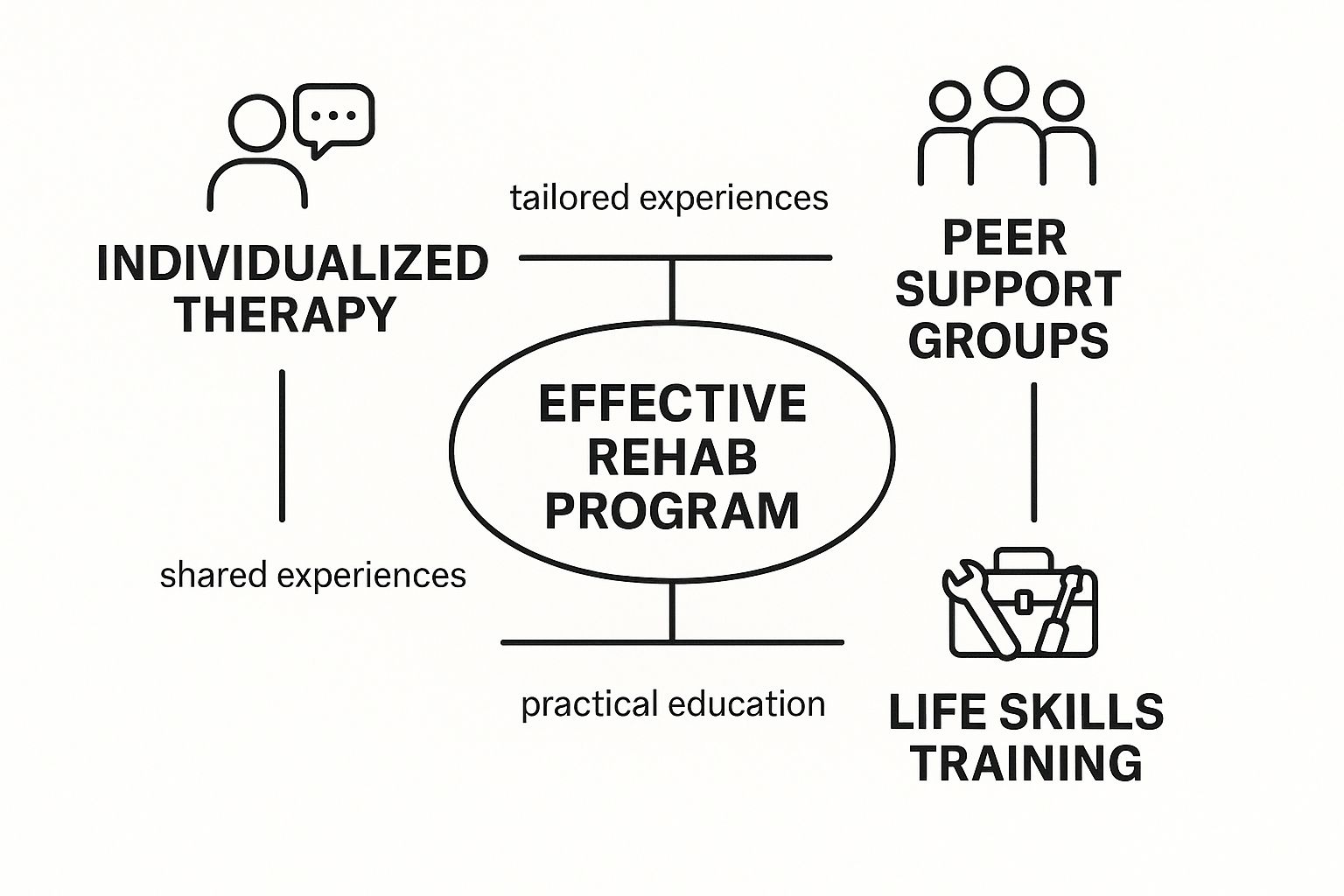
This visual shows how individualized therapy, connecting with peers, and building practical skills all lock together to create a solid support system for recovery.
Choosing a rehab program is like building a support structure for a young tree. It needs more than just good soil; it needs stakes for stability (therapy), sunlight from others growing alongside it (peer support), and strong roots (life skills) to withstand future storms.
Success really does hinge on this integrated approach. By focusing on the entire person—not just the addiction—these programs help young adults build the resilience and confidence they need to navigate their early twenties and create a healthy, independent future.
When you're evaluating different options, it helps to have a clear checklist of what to look for. The table below summarizes the must-have components of any effective program designed for young adults.
Core Components of Effective Young Adult Rehab Programs
| Component | Why It's Important for Young Adults |
|---|---|
| Dual-Diagnosis Care | Many young adults struggle with co-occurring mental health issues like anxiety or depression. Treating both at once is essential. |
| Peer Support Groups | Connecting with others their age reduces feelings of isolation and helps them build a sober social network. |
| Family Involvement | Healing family dynamics and improving communication are crucial for creating a supportive home environment. |
| Life Skills Training | They need practical skills for adulthood—like budgeting, job searching, and healthy communication—to build an independent life. |
| Academic/Vocation Support | Helping them stay on track with school or find a meaningful job gives their recovery a clear purpose and structure. |
| Holistic Therapies | Activities like yoga, art, or mindfulness can help them manage stress and connect with themselves in healthier ways. |
Looking for these elements ensures the program is equipped to handle the complex reality of a young person's life, not just the surface-level symptoms of their substance use.
Understanding the Different Levels of Care
Not all rehab programs are built the same, and that’s a good thing. Choosing the right one isn't about finding the "best" program out there, but about finding the right intensity of support for a specific person at a specific time.
Think of it like academic help for a student. Some need the immersive, full-time structure of a boarding school to really focus. Others do just fine with flexible after-school tutoring a few times a week. The world of addiction treatment offers a similar spectrum.
This range of options, often called a continuum of care, ensures a young adult can step into a level of support that truly matches their needs—whether they require 24/7 medical supervision or a flexible schedule that works around school or a job.
Inpatient and Residential Programs
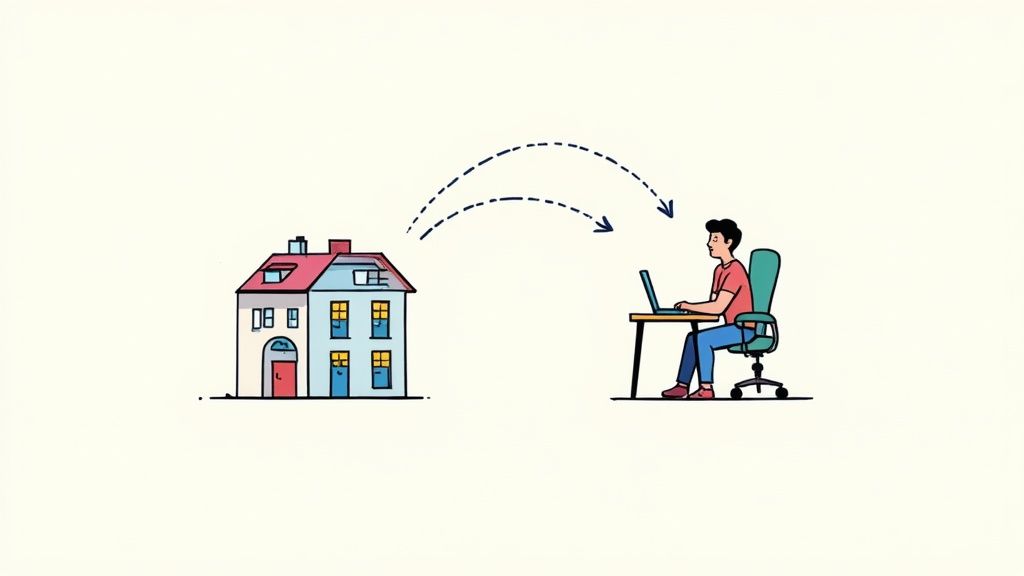
This is the highest and most structured level of care, just like that full-time boarding school. In an inpatient or residential program, the young adult lives at the facility 24/7. This immersive environment is designed to remove them from triggers and distractions, letting them focus entirely on recovery.
This approach is often the best fit for individuals who:
- Face a high risk of relapse in their current home environment.
- Need medical detoxification or have a severe substance use disorder.
- Struggle with co-occurring mental health conditions that require constant support.
By providing a safe, controlled setting, residential care builds a powerful foundation for the critical early stages of sobriety.
Partial Hospitalization Programs (PHP)
A Partial Hospitalization Program, or PHP, is a step down in intensity but still offers a huge amount of structure. Think of this as a demanding, full-day academic program where the student goes home at night. Participants attend treatment for several hours a day, five to seven days a week, but live at home or in a sober living environment.
PHP acts as a bridge between the total immersion of inpatient care and the greater independence of outpatient services. It's built for young adults who no longer need around-the-clock supervision but still benefit from a rigorous, structured schedule to build new coping skills and daily routines.
Recovery is not a one-time event but a process of gradually taking back control. Each level of care is like a set of training wheels, progressively removed as the individual gains more balance and confidence to navigate life on their own terms.
Intensive Outpatient Programs (IOP)
An Intensive Outpatient Program (IOP) offers even more flexibility. This is your after-school tutoring model. These rehab programs for young adults typically involve therapy and group sessions for a few hours at a time, three to five days a week. This structure allows participants to keep up with work, school, or family life while still receiving robust, consistent support.
To get a clearer picture of how this works, you can dive into our detailed guide on https://alturarecovery.com/blog/what-is-intensive-outpatient-program and who it helps most.
IOP is an excellent fit for young adults who have a stable, supportive home life and are motivated to engage in their recovery without needing constant oversight. The focus shifts heavily toward integrating recovery skills into real-world situations.
Recent data shows a clear shift in how different age groups are accessing care. Between 2009 and 2019, admissions for young adults aged 25-34 rose from 27% to 34%. This trend reflects evolving needs and the growing availability of flexible, effective options like IOP. You can discover more insights in these rehab admission statistics.
Therapies That Build Resilience in Young Adults
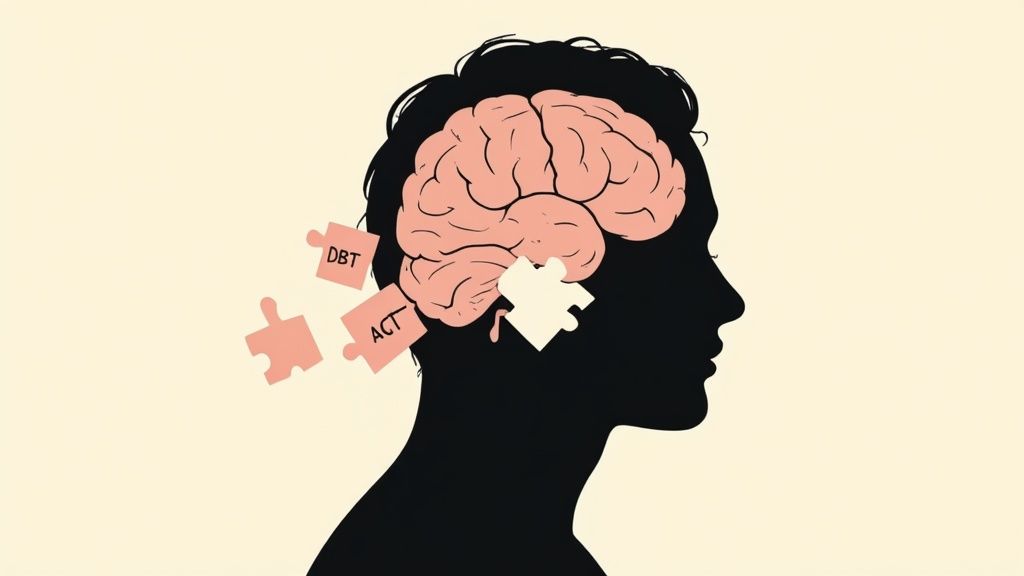
Truly effective rehab programs for young adults go way beyond just telling someone to stop using. They get into the trenches, teaching the practical, emotional, and psychological skills needed to build a life that’s genuinely resilient. This is where evidence-based therapies come in, serving as a structured roadmap to help young people understand themselves and build healthier habits.
These therapies aren't just about passively talking through problems; they are active, hands-on processes. Think of it less like a lecture and more like a personal training program for your mind. The real goal is to build mental and emotional muscle, giving you the strength to handle life’s curveballs without turning back to substances.
The best programs know that a one-size-fits-all approach just doesn't work. By weaving together a few different therapeutic models, clinicians can create a deeply personalized plan that hits all the right notes for each person—from their automatic thought patterns to their emotional reactions.
Rewiring Thoughts with Cognitive Behavioral Therapy
Cognitive Behavioral Therapy, or CBT, is a cornerstone of modern addiction treatment. It’s built on a simple yet profound idea: our thoughts, feelings, and actions are all linked. When negative thought patterns run on a loop, they often trigger self-destructive behaviors, creating a cycle that can feel impossible to escape.
Think of CBT as a software update for your brain. A therapist helps a young adult spot the distorted or harmful thoughts—the "bugs" in their mental code—that kick off cravings or negative feelings. To get a better handle on this, you can explore what Cognitive Behavioral Therapy is and how it helps reshape perspectives.
For instance, a young person might instantly think, "I bombed that exam, so I'm a total failure." This thought fuels feelings of shame and a powerful urge to use. CBT provides the tools to challenge and reframe that thought into something more balanced, like, "I'm bummed about this grade, but it doesn't define my worth. I can figure out a different way to study next time."
Building an Emotional Toolkit with DBT
Dialectical Behavior Therapy (DBT) is another powerhouse, especially for young adults who feel like their emotions are constantly on high alert. If CBT is about rewiring thoughts, DBT is about building an entire toolkit for managing stress and navigating relationships.
Recovery isn't about getting rid of all the stress in your life—that’s just not possible. It's about developing the skills to handle that stress with confidence, turning what used to be a trigger into a chance to grow.
DBT hones in on four key skill areas that give young people the power to regulate their emotions and get through tough moments without making things worse:
- Mindfulness: This teaches you how to stay grounded in the present moment without judging yourself, which is huge for cutting down on impulsive reactions.
- Distress Tolerance: You learn concrete strategies for surviving a crisis without turning to old habits, like using self-soothing techniques instead of substances.
- Emotion Regulation: This helps you understand your own emotions, become less vulnerable to negative ones, and intentionally create more positive feelings.
- Interpersonal Effectiveness: This skill set equips you with the communication tools to state your needs clearly and build stronger, healthier relationships with family and friends.
Taken together, these therapies don't just put a bandage on the symptoms of addiction. They build a solid foundation of resilience that will serve a young adult for the rest of their life.
How Family Involvement Transforms Recovery
Recovery from substance use is rarely a solo journey, especially for a young adult. Think of it as rebuilding a house after a storm—you need a solid foundation before you can even think about putting up walls. In this scenario, the family is that foundation. When parents and siblings get actively involved in the recovery process, the chances of long-term success skyrocket.
This isn't just about offering a few words of encouragement. Real involvement means showing up for structured family therapy sessions, learning the science behind addiction, and digging into how family dynamics can either help or seriously hinder the healing process. The most effective rehab programs for young adults don't treat family participation as an optional add-on; it’s a core, non-negotiable part of the treatment model.
Creating a Supportive Home Environment
One of the first goals in family therapy is to rebuild communication and trust, which are almost always the first casualties of addiction. These sessions offer a safe, mediated space where everyone gets a chance to share their feelings and learn healthier ways to interact with one another. It’s all about swapping out old, tired patterns of blame, anger, or enabling with open dialogue and mutual respect.
This process gives parents and siblings the tools they need to create a home that genuinely supports sobriety. It’s a practical education in how to:
- Set healthy boundaries that protect both the young adult and the rest of the family.
- Communicate needs and feelings clearly, without letting things escalate into a fight.
- Recognize triggers and the subtle warning signs of a potential relapse.
- Offer genuine support without unintentionally enabling old, destructive behaviors.
Building this kind of structured, supportive home life is one of the most powerful things a family can do. If you're looking for practical ways to start, our guide on how to support someone in recovery is packed with actionable advice.
The Power of a United Front
When a family learns and grows together, they become a united front against addiction. Simply educating everyone on the nature of the disease helps demystify it, cutting through the stigma and fostering empathy. The whole dynamic shifts from "us versus them" to "us versus the problem."
Addiction can make a family feel fractured and isolated. Family therapy works to reconnect those pieces, helping everyone understand they are on the same team, working toward the shared goal of healing.
This unified approach provides the young adult with an unshakable support system as they navigate the bumpy road of early recovery. Knowing their family truly understands the fight and has their back makes all the difference, turning the home from a place of potential conflict into a true sanctuary for healing and growth.
Building Life Skills for a Future Beyond Rehab
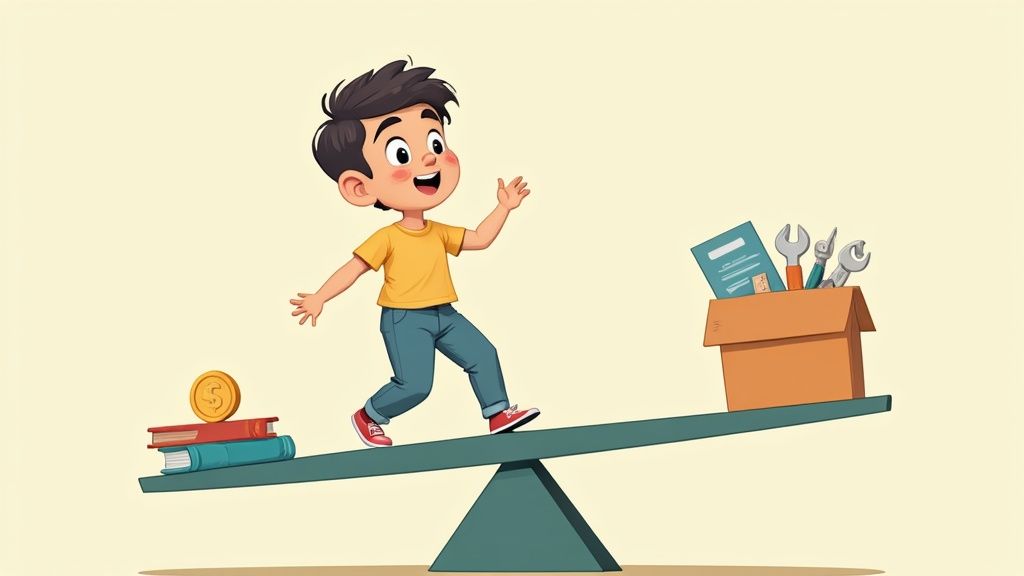
Lasting recovery isn't built on what you stop doing; it’s built on what you start creating in its place. The best rehab programs for young adults know that therapy alone just doesn’t cut it. To truly prepare someone for a fulfilling, independent life, you have to give them the confidence and practical tools to handle the real world.
This is why top-tier programs weave life skills training directly into their treatment. It's about constructing a future that feels more compelling than a past defined by substance use.
Think of it this way: therapy helps clear the fog, but life skills give you the map and compass for the journey ahead. Without them, the transition back to daily life can feel like a tidal wave, making relapse a serious risk.
From Therapy to Real-World Application
So, what does this actually look like? Imagine a young adult’s day in one of these programs. The morning might involve a group therapy session focused on managing tough emotions. By the afternoon, that lesson gets put to the test in a hands-on workshop about creating a personal budget or navigating a tricky job interview.
This approach connects the dots between abstract therapeutic ideas and concrete, everyday actions. It’s critical to equip young adults with the tools for setting and achieving professional and personal goals, transforming recovery from a passive experience into an active process of building a life.
Key areas of focus often include:
- Financial Literacy: This is huge. Young adults learn to create budgets, manage bank accounts, and understand credit—giving them real control over their financial future.
- Vocational and Educational Support: This can be anything from helping with college applications and GED prep to building a resume and practicing for interviews.
- Independent Living Skills: We’re talking about the essentials, like grocery shopping, meal planning, and maintaining a healthy daily routine that supports sobriety.
- Healthy Relationship Building: Workshops teach practical communication skills, how to set boundaries, and ways to resolve conflict so they can build a strong, sober support network.
Modern, holistic programs understand that recovery involves the whole person—not just their relationship with a substance. They focus on building competence and self-sufficiency, which are the bedrock of lasting change. A more traditional model, on the other hand, might stop at the therapy door.
Holistic Support vs Traditional Treatment
| Feature | Traditional Model Focus | Holistic Model Focus |
|---|---|---|
| Primary Goal | Abstinence from substances | Abstinence + overall well-being and life satisfaction |
| Skills Taught | Primarily coping skills for cravings and triggers | Coping skills + practical life skills (budgeting, job hunting) |
| Family Role | Often limited to periodic updates or family therapy sessions | Integrated into the process with communication coaching |
| Success Metric | Days of sobriety | Sobriety + progress in education, career, and relationships |
The difference is stark. A holistic approach recognizes that you can't just remove the substance; you have to fill that space with purpose, skill, and confidence.
Lasting sobriety is built on a foundation of self-worth and purpose. Life skills training isn't just a bonus feature; it's the component that helps a young person construct a life they are genuinely excited to live.
By weaving these practical elements into the core treatment plan, these programs do more than just address addiction. They prepare young adults to step confidently into adulthood, armed with the resilience and competence they need to thrive.
Making the Right Choice for a Rehab Program
Choosing a rehab program for a young adult is one of the most important decisions a family can make, but you don’t have to go into it flying blind. The best way to approach it is like you're hiring someone for a critical job—you need to ask the right questions to make sure it’s a perfect fit. Getting the right information is the very first step toward feeling confident in your choice.
Think of the admissions process as a two-way interview. You're vetting them just as much as they're assessing your loved one's needs. Any high-quality program will be an open book, ready to answer questions about their treatment philosophy, staff credentials, and how they measure success. If you're just starting to wrap your head around the whole process, our guide on how does rehab work is a great place to build a foundational understanding.
Key Questions to Ask Any Program
Before you even think about committing, have a list of essential questions ready for the admissions team. Your goal is to get a crystal-clear picture of what a typical day looks like and what kind of support is actually available.
Here are a few non-negotiables to get you started:
- Accreditation and Licensing: Is the facility licensed by the state? Are they accredited by a respected organization like The Joint Commission or CARF? This is baseline quality control.
- Staff Qualifications: What are the credentials of the clinical team? Are the therapists fully licensed, and more importantly, do they have specific experience working with young adults?
- Treatment Modalities: What evidence-based therapies do you actually use? Don't settle for vague answers. Ask about specific models like CBT, DBT, or EMDR and how they tailor treatment plans to the individual.
- Aftercare Planning: What happens when the program ends? A great program starts planning for discharge on day one. Ask what their aftercare and step-down support look like to help clients transition back to real life.
The behavioral health market is booming, expected to hit USD 235.89 billion by 2034. This growth is driving new treatment methods and technologies, especially for long-term recovery. A modern program should have a clear strategy for aftercare that reflects these innovations in behavioral healthcare.
A program’s culture is just as vital as its clinical services. You’re looking for an environment that feels supportive, respectful, and genuinely aligned with your loved one’s personality. This is the soil where real healing takes root.
Ultimately, finding the right cultural fit can be the deciding factor. Trust your gut during tours and conversations. A program that fosters authentic connection and a sense of community will provide a much stronger foundation for a successful recovery.
Common Questions About Young Adult Rehab
Navigating the logistics of rehab can feel just as overwhelming as the emotional side of things. Families often have urgent, practical questions about the cost, insurance coverage, and exactly what to expect. Getting clear on these details is a crucial first step toward moving forward with confidence.
Most private insurance plans do offer some level of coverage for substance use treatment, but the specifics can vary dramatically. It's essential to call your provider directly to verify what your benefits cover for different levels of care, like PHP or IOP. Many rehab programs for young adults have admissions coordinators who can help you with this process.
How Long Does Treatment Last?
There’s no single right answer here. A typical stay might range from 30 to 90 days, but the ideal length of treatment is always based on an individual’s clinical needs and progress.
The real goal isn't to hit a specific date on the calendar; it's to build a stable foundation for long-term recovery. Rushing the process rarely works.
What if They Don't Want to Go?
This is an incredibly common—and painful—situation for families. The key is to approach the conversation from a place of compassion, not confrontation. You're not there to win an argument; you're there to open a door.
"Focus on expressing your concern for their well-being and the specific, observable behaviors that worry you. Frame treatment not as a punishment, but as an opportunity for them to build a healthier, happier future for themselves."
Try to avoid ultimatums if you can. It might also be worth consulting a professional interventionist, who is trained to facilitate these tough conversations and help a resistant young adult see the need for change.
At Altura Recovery, we understand these challenges intimately. We're here to provide clear answers and compassionate guidance for your family. Learn more about our approach by visiting us at https://www.alturarecovery.com.