When people talk about dependence on a substance, they're often lumping two very different experiences into one. The distinction between psychological vs physical dependence is simple on the surface but crucial to grasp: psychological dependence is the mind’s emotional obsession with a substance, while physical dependence is the body’s revolt when that substance is taken away.
One is a powerful mental craving, the other is a full-blown physical crisis. While they almost always overlap in substance use disorders, knowing how to spot the differences is the first real step toward finding the right kind of help.
Understanding The Core Differences
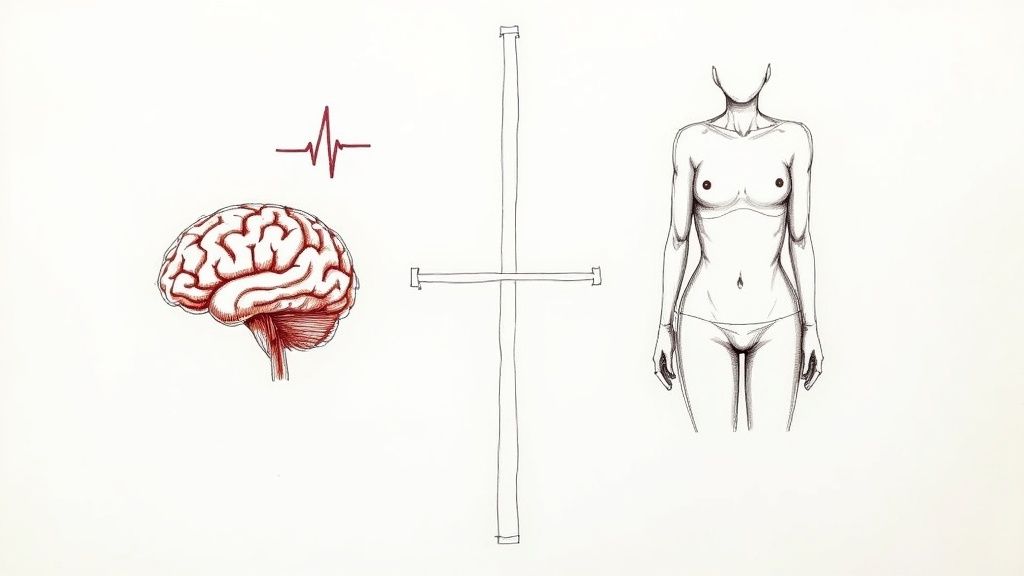
Consistent substance use rewires both the brain and the body, leading to two distinct—but deeply intertwined—conditions. Untangling them is key, because each requires a different approach to treatment and recovery.
The Nature of Physical Dependence
Physical dependence happens when your body literally adapts to having a drug in its system. Over time, the central nervous system gets so used to the substance that it adjusts its own chemistry, creating a new sense of "normal" that includes the drug to function.
When you try to cut back or stop, that fragile balance shatters. The body protests, triggering a wave of physical withdrawal symptoms that can range from merely uncomfortable to downright dangerous, depending on what you were using.
The Power of Psychological Dependence
Psychological dependence, on the other hand, lives in the brain’s reward circuits. It’s the intense emotional and mental pull that convinces you that you need the substance to cope, to feel happy, or just to get through the day.
This is where the obsessive thoughts and overwhelming cravings come from. It's the feeling of being incomplete or unbearably anxious without the substance, even when your body isn't in physical distress. To really dig into these nuances, it helps to understand the difference between addiction and dependence.
Key Takeaway: Physical dependence is your body's cellular demand, creating physical withdrawal. Psychological dependence is your mind’s perceived need, driven by cravings and emotional triggers.
A side-by-side comparison can make these distinctions crystal clear.
Quick Comparison Psychological Vs Physical Dependence
This table breaks down the core differences at a glance, helping you identify which aspect of dependence might be more prominent.
| Characteristic | Psychological Dependence | Physical Dependence |
|---|---|---|
| Primary Driver | Emotional and mental compulsion; intense cravings. | Bodily adaptation to a substance; avoidance of withdrawal. |
| Core Symptoms | Anxiety, irritability, depression, restlessness, obsessive thoughts. | Tremors, sweating, nausea, headaches, muscle aches. |
| Manifestation | A perceived need to use for emotional coping or pleasure. | A physiological requirement to function without distress. |
| Example Scenario | Feeling unable to socialize or relax at the end of the day without a drink. | Waking up with shakes and nausea that only subside after a drink. |
Recognizing which of these is at play—or more often, how both are working together—is vital for building an effective treatment plan. Underlying conditions can also shape how dependence takes root; for more on this, you can explore the interplay between ADHD and addiction.
The Science Behind How Dependence Develops
To really understand the difference between psychological and physical dependence, you have to look at how they take root in our biology. These conditions aren’t about a lack of willpower or a moral failing; they’re the direct result of profound chemical and structural changes in the brain and body.
Seeing dependence as a physiological condition that requires strategic, compassionate care is much easier once you understand these mechanisms. It all starts with how a substance interacts with our natural systems.
The Brain's Reward System and Psychological Dependence
Our brains come hardwired with a reward system designed to encourage life-sustaining behaviors like eating, connecting with others, and exercising. This system runs on a neurotransmitter called dopamine, which produces feelings of pleasure and reinforces the idea that we should repeat whatever we just did.
When you do something rewarding, your brain releases a small surge of dopamine, teaching you to do it again. But many substances hijack this delicate process, flooding the brain with an overwhelming amount of dopamine—far more than any natural activity could ever produce.
This intense flood forges a powerful neurological connection. The brain starts to link the substance with an immense reward, creating an intense, almost primal motivation to use it again. Over time, the brain begins to rely on the substance for its dopamine fix, dialing back its own natural production.
This chemical shift is the very bedrock of psychological dependence. The brain no longer just wants the drug; it believes it needs it to feel pleasure or even just to feel normal.
This learned association quickly expands beyond the substance itself. Environmental cues—a specific place, a certain friend, or even a particular emotion—become linked to substance use. When encountered, these triggers can provoke powerful cravings, kicking off a cycle that feels impossible to break.
The Body's Quest for Balance and Physical Dependence
While the brain’s reward system fuels psychological cravings, a different biological principle drives physical dependence: homeostasis. This is the body's constant, automatic effort to maintain a stable and balanced internal environment.
When a substance is introduced regularly, the central nervous system views it as a new, permanent part of the environment it must adapt to. It begins to adjust its own chemical production and receptor sensitivity to counteract the drug's effects and restore that internal balance.
For example, if a drug slows down the central nervous system (like an opioid or a benzodiazepine), the body will ramp up its own stimulating processes to compensate. This adaptation leads to tolerance, where you need more of the substance to achieve the same effect because your body has become so efficient at counteracting it.
Understanding Withdrawal and Tolerance
Tolerance is the first clear signal of physical dependence. The body has successfully recalibrated its "normal" state to include the drug's presence. The real trouble starts when the substance is suddenly taken away.
- Withdrawal: The body’s hyper-compensatory state is suddenly unopposed. If it was working overtime to counteract a depressant, it now goes into overdrive, causing symptoms like tremors, anxiety, and high blood pressure.
- Rebalancing: This state of distress is known as withdrawal. It's the body’s difficult, and sometimes dangerous, process of trying to find its original state of homeostasis without the drug.
This entire process highlights why physical dependence is a medical issue, plain and simple. The body isn't "acting out"; it's reacting predictably to a dramatic chemical imbalance. These complex biological changes are central to what defines a substance use disorder, a clinical condition that often encompasses both types of dependence.
Ultimately, the science reveals two distinct but deeply interconnected pathways. Psychological dependence hijacks the brain’s motivational circuits, while physical dependence is the body’s all-out effort to maintain equilibrium. Together, they create a complex challenge that requires a multifaceted approach to heal.
Comparing Symptoms and Recovery Timelines

While psychological and physical dependence often show up together, they play out on completely different stages with unique symptoms and timelines. Getting a handle on these differences is key to understanding the full arc of recovery. Think of it this way: the initial, intense battle might be physical, but the long, grinding war is almost always fought in the mind.
This isn't just a clinical distinction; it has massive global implications. Both types of dependence fuel worldwide substance use patterns. Opioids, for example—a primary driver of severe physical dependence—contributed to a situation where approximately 39.5 million people globally had a drug use disorder in 2021. The most staggering part? A UNODC report revealed that four out of five of those individuals weren't getting the help they desperately needed.
Contrasting The Symptom Profiles
The immediate signs of distress usually make it clear whether someone is fighting physical withdrawal, psychological cravings, or both. The body’s rebellion is visceral and acute. The mind’s struggle, on the other hand, is a pervasive state of emotional and cognitive turmoil.
Common Physical Dependence Symptoms:
- Autonomic Nervous System Distress: This is your body's alarm system going haywire—think racing heart, profuse sweating, chills, and spiking blood pressure as it screams for a substance it has learned to function with.
- Gastrointestinal Upheaval: Nausea, vomiting, and diarrhea are hallmark signs, particularly when withdrawing from opioids and alcohol.
- Musculoskeletal Pain: Deep, aching muscles and severe cramps are common as the body's pain signals recalibrate without the substance's dampening effect.
- Neurological Reactions: In severe cases, especially with alcohol or benzodiazepines, this can escalate to tremors, seizures, and delirium.
Common Psychological Dependence Symptoms:
- Intense Cravings: This isn't just "wanting" it. It's an overwhelming, obsessive urge to use that can feel all-consuming and hijack your thoughts.
- Emotional Volatility: Expect sharp mood swings, including severe anxiety, irritability, agitation, and crushing waves of depression.
- Cognitive Impairment: Difficulty concentrating, poor memory, and a persistent mental "fog" are classic signs.
- Anhedonia: This is a profound inability to feel pleasure from things that used to bring joy, leaving behind a deep sense of emptiness.
The key distinction lies in the nature of the suffering. Physical withdrawal is an acute state of bodily sickness. Psychological withdrawal is a persistent state of mental and emotional anguish.
Understanding The Divergent Recovery Timelines
One of the most critical differences between psychological vs. physical dependence is how long each lasts. The timeline for physical healing is often much shorter and more predictable. The path to mental and emotional recovery? Far longer and much less linear.
A person’s body can typically push through the worst physical withdrawal symptoms in a week or two. This acute phase is intense and can be medically dangerous, but it has a relatively clear endpoint. Once detox is over, the body starts to find its footing again.
In sharp contrast, psychological dependence works on a much longer, more frustrating timeline. The cravings, emotional triggers, and deeply ingrained habits don't just disappear after detox. These symptoms can linger for months or even years, creating a prolonged window of vulnerability to relapse.
This extended phase is where the real work of recovery truly begins. While the physical storm has passed, many people continue to grapple with a condition known as Post-Acute Withdrawal Syndrome (PAWS). Understanding the symptoms and management of PAWS is a critical piece of any solid long-term recovery plan.
Here’s a clear breakdown of how these two experiences compare over time.
Symptom and Timeline Comparison by Dependence Type
This table highlights a crucial truth: detox is just the start of the journey. Safely managing the body's withdrawal is the necessary first step, but lasting sobriety hinges on addressing the deep psychological drivers of substance use.
| Aspect | Physical Dependence | Psychological Dependence |
|---|---|---|
| Onset of Symptoms | Typically begins within hours to a day after the last use. | Can emerge during acute withdrawal but intensifies and persists long after. |
| Peak Intensity | Usually peaks within 72 hours for most substances. | Intensity can fluctuate for months, often triggered by stress or environmental cues. |
| Typical Duration | Acute symptoms often resolve within 5-14 days. | Can last for 6 months to several years, requiring ongoing management. |
| Nature of Recovery | Focused on medical stabilization and managing acute physical distress. | Focused on therapy, coping skills, trigger management, and behavioral change. |
Without developing new coping mechanisms and healing the emotional wounds, the risk of returning to the substance remains incredibly high long after the physical symptoms have faded.
How Different Substances Hijack Your Brain and Body
The line between psychological and physical dependence gets crystal clear when you see how different drugs work. Not every substance creates dependence the same way; some wage war on the body, while others capture the mind.
Understanding these unique profiles is the key to building a recovery plan that actually works. A one-size-fits-all approach is doomed to fail because the nature of the dependence itself is so incredibly different from drug to drug.
Substances Known for Severe Physical Dependence
Some substances are notorious for creating a powerful physical dependence. The body adapts so completely to their presence that when they're taken away, it triggers a brutal and sometimes dangerous withdrawal. For these drugs, the first step in recovery is always medical safety and stabilization.
Opioids (Heroin, Fentanyl, Prescription Painkillers)
Opioids work by binding to the very receptors in our brain that manage pain and pleasure. When used consistently, the body gets lazy and stops making its own natural painkillers (endorphins), essentially outsourcing the job to the drug.
When the opioids suddenly disappear, the body is left defenseless, unable to manage pain or regulate mood. This kicks off an agonizing withdrawal, marked by:
- Intense muscle aches and deep bone pain
- Violent nausea, vomiting, and diarrhea
- Uncontrollable tremors and profuse sweating
- Crushing anxiety and insomnia
The physical misery is so extreme that it creates a desperate urge to use again just to make it stop, which is why detoxing without medical help is nearly impossible.
Benzodiazepines (Xanax, Valium, Klonopin)
These drugs amplify the effects of GABA, the neurotransmitter that acts as the brain's brake pedal, calming the central nervous system. Over time, the body adapts by producing less GABA and making its receptors less sensitive.
Stopping benzodiazepines abruptly is like slamming on the gas after cutting the brake lines. The brain rockets into a hyper-excitable state, and withdrawal can be life-threatening, often including:
- Extreme anxiety and terrifying panic attacks
- Severe insomnia and restlessness
- Heart palpitations and dangerously high blood pressure
- Potentially fatal seizures
For anyone who has used benzodiazepines long-term, medically supervised detox isn't just a good idea—it's non-negotiable.
Substances Causing Intense Psychological Dependence
Other drugs forge their chains primarily in the mind’s reward pathways. While their physical withdrawal might seem milder, the psychological pull can be just as strong—or even stronger—making long-term sobriety a monumental challenge.
Stimulants (Cocaine, Methamphetamine, Adderall)
Stimulants trigger a massive flood of dopamine, the brain's "feel-good" chemical, creating an intense rush of euphoria, confidence, and energy. The brain quickly learns to associate the drug with this incredible reward, hardwiring a powerful psychological craving.
While the physical withdrawal is real—usually involving a crash with fatigue, depression, and a huge appetite—the real war is fought in the mind. The person faces:
- Overpowering cravings sparked by people, places, or even emotions.
- Anhedonia, a bleak state where nothing else brings joy.
- Severe depression and suicidal thoughts during the crash.
The memory of that euphoric high becomes a ghost that haunts them, driving a compulsive need to use again, no matter how devastating the consequences.
Key Insight: Psychological dependence is often the tougher, more persistent beast in recovery. The body can heal from physical withdrawal in weeks, but rewiring the brain's deeply ingrained habits and managing relentless cravings can take months or even years of dedicated therapy.
Substances Where Both Are Deeply Intertwined
Some substances are exceptionally difficult to quit because they create a vicious, two-front war, attacking both the body and the mind with equal intensity.
Alcohol
Like benzos, alcohol is a central nervous system depressant that messes with GABA. Chronic heavy drinking leads to a dangerous physical dependence, with withdrawal symptoms that can include tremors, hallucinations, and deadly seizures known as delirium tremens (DTs).
At the same time, alcohol weaves itself into the very fabric of a person's life. It becomes the go-to tool for managing stress, socializing with friends, or celebrating milestones, creating powerful habits and emotional triggers. This dual dependence is what makes alcohol use disorder so complex. The link between mental health and substance use is undeniable; an estimated 20.4 million American adults struggled with both in a single year. You can dig deeper into the numbers with these recent addiction statistics in the U.S..
Ultimately, every successful recovery plan is built on one foundational truth: you have to know what you’re fighting. Is it the body's physical revolt, the mind's obsessive cravings, or a brutal combination of both? Answering that question is the first real step toward getting better.
Tailoring Treatment to The Type of Dependence
Understanding the difference between psychological and physical dependence isn’t just a clinical exercise—it's the absolute foundation of an effective treatment plan. A successful recovery strategy has to target the specific nature of a person's dependence, creating a plan that respects both the body's physical demands and the mind's powerful compulsions.
You simply can't treat severe physical dependence with talk therapy alone, just as you can't expect deep-seated psychological patterns to disappear after a week of detox. Each side of the coin needs a distinct, evidence-based approach. The best strategies recognize that even if one type of dependence seems more prominent, both must be addressed for any hope of lasting recovery.
Addressing Physical Dependence First
When physical dependence is a major factor—especially with substances like alcohol, opioids, or benzodiazepines—the first and most critical priority is medical safety. The body has adapted its entire chemistry to the presence of a drug, and stopping abruptly can trigger a cascade of severe, and sometimes life-threatening, withdrawal symptoms.
This is where medically supervised detoxification is non-negotiable. It offers a safe, controlled environment where a clinical team can manage acute symptoms, prevent dangerous complications, and ensure the person is physically stable. But detox is only the first step; it just gets the body out of crisis mode.
For substances like opioids, Medication-Assisted Treatment (MAT) is often the gold standard of care. MAT utilizes specific, FDA-approved medications to calm withdrawal symptoms and reduce intense cravings, giving a person the stability needed to dive into the deeper psychological work of recovery. You can learn more about how MAT supports the recovery journey and why it’s such a vital tool for overcoming physical dependence.
This infographic breaks down how different substances carry different primary risks, which directly influences the first steps in a treatment plan.
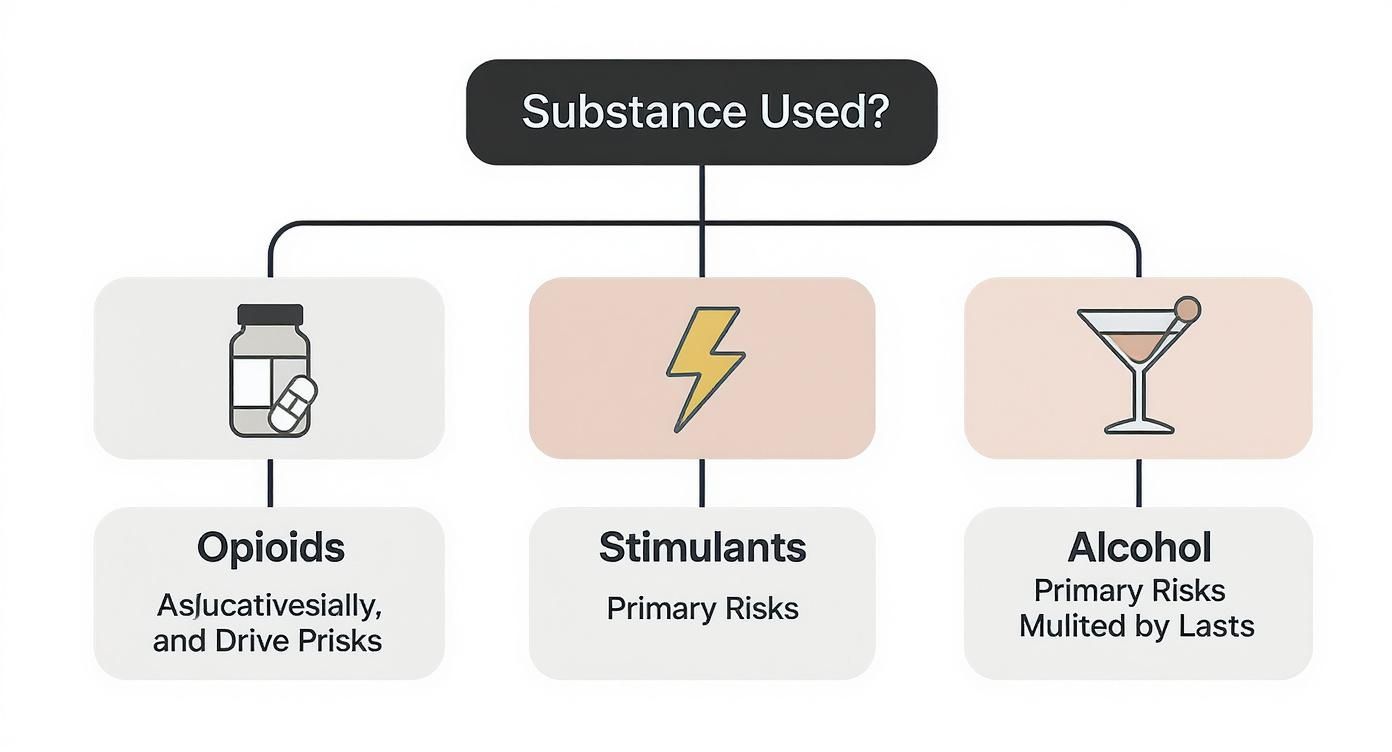
The visual makes it clear why treatment has to be substance-specific. The immediate dangers associated with opioids and alcohol, for instance, demand a medical-first approach to ensure safety before any other work can begin.
Healing The Psychological Drivers
Once the body is stable, the focus has to shift to the powerful psychological dependence that fuels the addiction cycle. This is the longer, more complex part of recovery, because it involves rewiring deeply ingrained thought patterns, emotional triggers, and automatic behaviors.
Evidence-based therapies are the primary tools for this essential work. These approaches give people the skills they need to manage triggers, cope with stress in healthy ways, and build a fulfilling life without turning back to substances.
Key Therapeutic Approaches:
- Cognitive Behavioral Therapy (CBT): This practical therapy helps people identify and challenge the destructive thought patterns that lead directly to substance use. It teaches real-world coping strategies to handle cravings and navigate high-risk situations.
- Motivational Interviewing (MI): MI is a collaborative, non-judgmental style of conversation that helps people find their own internal motivation to change. It's especially powerful for those who feel ambivalent or unsure about recovery.
- Family Systems Therapy: This approach recognizes that addiction impacts the entire family. It helps heal damaged relationships and rebuild a stronger, more informed support network for the person in recovery.
Lasting recovery is built on psychological resilience. While detox addresses the body's crisis, therapy resolves the mind's conflict, which is essential for preventing relapse.
The critical need for robust mental health support is underscored by some stark data. In a global comparison, the United States reported some of the most severe outcomes related to substance use, with drug use disorders contributing to nine out of every million deaths—a rate far higher than in most peer countries. For those navigating social situations or simply trying to find healthier habits in recovery, guides offering practical solutions and alternatives to alcohol can be incredibly valuable resources.
Answering Your Questions About Dependence
When you're trying to make sense of psychological versus physical dependence, a lot of tough questions come up. Getting clear, straightforward answers is a huge first step, whether you're trying to figure out your own situation or that of someone you care about. We've compiled the most common questions we hear to cut through the confusion and give you some practical clarity.
Can You Have Psychological Dependence Without Physical Dependence?
Yes, absolutely. This is not only possible but incredibly common. It happens most often with substances that don't cause severe physical withdrawal symptoms but still wire the brain for a powerful mental and emotional reliance.
Cannabis is a perfect example. Someone might not get the intense, flu-like sickness you see with opioid withdrawal, but the psychological battle to quit can be immense. It often looks like:
- Intense, persistent cravings that feel impossible to ignore.
- Severe irritability, restlessness, or a constant state of anxiety.
- A deep-seated belief that they can’t relax, have fun, or be creative without it.
This highlights a critical point: the absence of physical withdrawal symptoms doesn't mean dependence isn't real or severe. The psychological hooks can be just as strong—if not stronger—and require targeted therapy to untangle the underlying emotional triggers and behavioral habits.
Which Type of Dependence Is Harder to Overcome?
That’s a tricky question because "harder" means different things at different stages of recovery. Physical withdrawal is often an acute, intensely painful, and sometimes medically dangerous hurdle. For many, it's the most terrifying part of getting sober and represents a massive short-term barrier.
However, if you ask recovery experts or people with years of sobriety under their belt, many will tell you that psychological dependence is the more persistent, long-term challenge.
Physical withdrawal symptoms, for the most part, have a finish line. They typically resolve within a couple of weeks. But the psychological cravings, the emotional triggers, and the deeply ingrained habits? Those can linger for months or even years, becoming the primary drivers of relapse long after the body has physically healed.
Overcoming psychological dependence requires a fundamental rewiring of the brain’s reward system. It's about building entirely new coping skills and staying vigilant about managing emotional triggers. It’s a marathon, not a sprint.
How Does Integrated Treatment Address Both Types of Dependence?
The most effective modern treatment programs don't view psychological and physical dependence as separate problems to be solved one after the other. Instead, they use an integrated approach that tackles both at the same time, recognizing they're two sides of the same coin.
Here’s how that multi-layered process usually unfolds:
- Medical Detoxification: The journey has to start with safely managing physical dependence. A medical team provides 24/7 care to stabilize the person, ease withdrawal symptoms, and prevent dangerous complications like seizures. This step clears the physical fog so the deeper work can begin.
- Concurrent Therapeutic Intervention: Therapy doesn't wait for detox to be over. As soon as a person is physically able, they start engaging in individual and group therapy. This early intervention is key to untangling the psychological knots of addiction right from the start.
- Targeted Therapies: Clinicians use evidence-based methods like Cognitive Behavioral Therapy (CBT) to help people identify and change the destructive thought patterns that lead to using. This is where you build the mental toolkit needed to handle cravings and navigate high-risk situations.
- Ongoing Support and Relapse Prevention: As someone moves through different levels of care, the focus remains on strengthening psychological resilience. This means developing healthy coping skills, rebuilding supportive relationships, and creating a concrete plan to manage triggers in everyday life.
This dual-focus model ensures that as the body heals from its physical reliance, the mind is actively being retrained and fortified. It’s this powerful combination of medical care and deep psychological work that builds the strongest foundation for a lasting recovery.
At Altura Recovery, we know that real healing means addressing both the body's needs and the mind's struggles. Our integrated outpatient programs in Houston are designed to provide the medical support and therapeutic guidance you need to overcome both physical and psychological dependence, empowering you to build a life of freedom and resilience. To learn how we can support your journey, visit Altura Recovery.