A peer recovery specialist is a trained professional who uses their own lived experience with addiction and recovery to guide and support others walking a similar path. They serve as a mentor who has been there, offering genuine empathy, hope, and real-world guidance that complements traditional clinical treatment.
A Guide Who Has Walked the Path to Recovery

Imagine trying to climb a mountain with a guide who has only read maps but never actually made the ascent. Now, picture a guide who not only knows the map inside and out but has also navigated the treacherous terrain, weathered the storms, and celebrated reaching the summit. That second guide is the perfect way to understand a peer recovery specialist.
They aren't clinicians or therapists who diagnose conditions. Instead, they are mentors who have walked the same difficult road. Their expertise comes from personal experience, providing a unique form of support grounded in authentic understanding. This shared journey is their most powerful tool, allowing them to build trust and connection in ways that others simply can't.
The Power of Lived Experience
The core of their role is turning their past struggles into a source of strength for others. They offer more than just advice; they provide a living, breathing example that long-term recovery is achievable. This firsthand knowledge is invaluable.
A peer recovery specialist helps individuals navigate the complex emotional and practical challenges of sobriety because they get it. They are uniquely equipped to:
- Offer genuine empathy: They understand the daily struggles, the sudden cravings, and the moments of doubt because they’ve been through them.
- Inspire hope: Their own success story serves as a tangible beacon, showing others that a fulfilling life in recovery is not just a fantasy.
- Provide practical guidance: They assist with real-world tasks like finding sober housing, prepping for a job interview, or connecting with local support groups.
The role of a peer recovery specialist is built on a simple yet profound premise: the person most qualified to guide someone out of a dark place is someone who has found their own way out.
This powerful combination of empathy and practical support has made the peer recovery specialist an increasingly essential part of modern behavioral healthcare. The workforce has seen remarkable growth, with the U.S. Bureau of Labor Statistics describing job growth as 'much faster than average' back in 2020. You can learn more about the rise of the peer support workforce and its impact.
What Exactly Is a Peer Recovery Specialist?
A peer recovery specialist is so much more than a good listener. Think of them as a guide who’s walked the same trail you’re on now—someone who serves as a mentor, advocate, and motivator all rolled into one. They are your practical co-pilot for sobriety, helping you navigate the real-world challenges that pop up long after your therapy session ends. Their role is entirely non-clinical, focusing on tangible, experience-based support.
This means they won’t be diagnosing conditions or leading formal therapy groups. Instead, a peer specialist is the person who sits with you to practice that tough conversation you need to have with a family member. They’ll help you map out a realistic weekly budget, find sober social events in your area, or just celebrate a small win that only someone who’s been there can truly appreciate.
At their core, they are a bridge between the structured, safe environment of a treatment program and the often unpredictable reality of daily life. Their entire focus is on building your resilience and self-sufficiency, ensuring you have the confidence and tools to put everything you’ve learned into practice.
Core Responsibilities in Action
While everyone’s recovery journey looks different, the support from a peer recovery specialist usually focuses on a few key areas. They are trained to help clients build a rock-solid foundation for lasting sobriety by concentrating on practical, actionable steps. It’s a powerful blend of emotional support and strategic life planning.
Here’s a glimpse of what a specialist might help you with:
- Building a Relapse Prevention Plan: They work right alongside you to pinpoint your personal triggers and come up with concrete, in-the-moment coping strategies. This isn’t some theoretical worksheet; it’s a personalized roadmap for getting through high-risk situations.
- Connecting to Community Resources: A specialist helps you find and actually access vital resources like stable housing, employment services, or mutual-help groups. They don't just hand you a pamphlet—they’ll help you make the calls and figure out the paperwork.
- Advocating for Your Needs: They can help you communicate more effectively with clinicians, family members, or even in legal situations, making sure your voice is heard and your needs are met. This kind of support empowers you to become your own best advocate over time.
A peer recovery specialist helps you rebuild your life, not just abstain from substances. Their focus is on developing the skills, resources, and supportive network necessary for you to thrive in long-term recovery.
The Tangible Value of Shared Experience
The real power of a peer recovery specialist comes from their ability to offer hope that’s grounded in reality. The evidence is clear: individuals who get peer support are more engaged in their recovery services and have better long-term outcomes. A peer specialist is living proof that change is not just possible—it’s happening.
This shared experience breaks down the walls of shame and isolation that so often come with addiction, creating an environment built on trust and raw honesty. When someone has a setback, a peer specialist can say, "I've been there, and here’s how I got through it." That kind of encouragement is both incredibly powerful and deeply credible. This hands-on, empathetic support is an indispensable part of any comprehensive care plan.
Comparing Peer Specialists, Recovery Coaches, and Therapists
Navigating the world of recovery support can feel like learning a new language, with a lot of similar-sounding titles. While therapists, recovery coaches, and peer specialists all play vital roles, they offer very different kinds of help. Getting clear on these differences is the key to building a well-rounded care plan that truly covers all your bases.
Think of a therapist as a medical expert for your emotional and mental health. They are licensed clinicians trained to diagnose and treat underlying conditions like depression, anxiety, trauma, and substance use disorder. Their work is clinical, rooted in evidence-based practices, and often involves digging into your past to understand the root causes of what’s happening today.
A recovery coach, on the other hand, is more like a personal trainer for your future. Their main job isn't diagnosing the past but helping you build a better tomorrow. They partner with you to set and achieve forward-looking goals—like finding a new career, mending relationships, or developing healthier habits. It’s all about action, strategy, and designing a new life.
The Unique Role of a Peer Recovery Specialist
The peer recovery specialist holds a unique and powerful space right between these two roles. They aren't clinicians who diagnose, and they aren't coaches who strategize about future goals. Instead, they are guides who walk beside you, using their own lived experience as a map.
This diagram shows how the core functions of a peer specialist—mentoring, advocating, and motivating—all flow from their central role of shared experience.
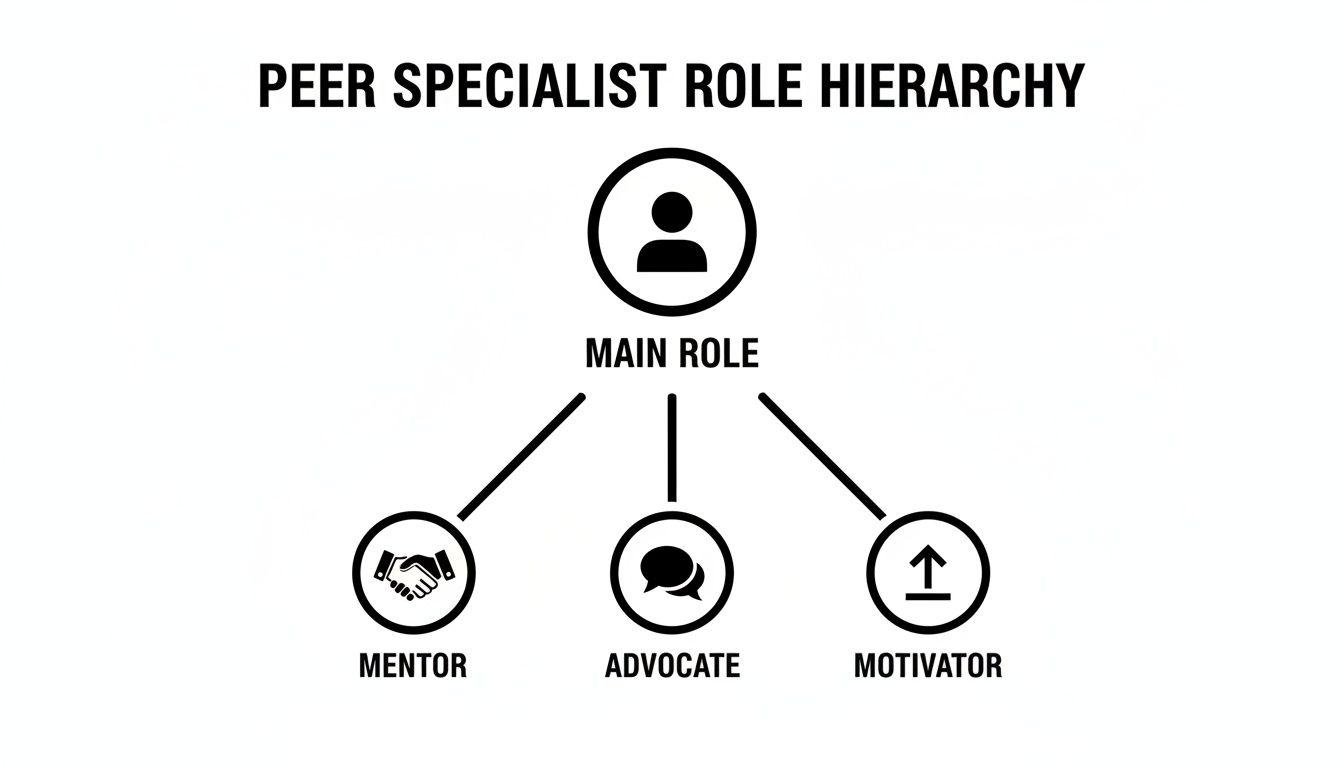
As you can see, their power comes from a blend of empathetic support, practical advocacy, and genuine encouragement. It’s a role built entirely on the credibility that comes from having been there themselves. This is what truly sets them apart.
A peer recovery specialist doesn’t just show you the map; they share stories of how they navigated the same terrain. Their role is built on the foundation of "me too," creating a powerful bond of trust and mutual respect.
This shared identity lets them offer a kind of support that is deeply empathetic and instantly believable. They provide present-focused, non-clinical help that bridges the often-intimidating gap between formal treatment and the realities of daily life.
Choosing the Right Support for Your Needs
It's important to remember that these roles aren't mutually exclusive. In fact, they work best when they work together. An ideal support system often includes all three, creating a robust safety net that addresses clinical needs, practical goals, and the essential human need for connection.
To make the distinctions even clearer, let's break down how these roles differ in their focus, qualifications, and scope.
Comparing Support Roles in Addiction Recovery
| Role | Primary Focus | Key Qualification | Scope of Practice |
|---|---|---|---|
| Therapist | Diagnosis and treatment of underlying clinical issues (e.g., trauma, SUD). | Master's or Doctoral degree; state licensure (LPC, LCSW, PhD). | Clinical, evidence-based psychotherapy; can diagnose and bill insurance. |
| Recovery Coach | Future-oriented goal setting and achievement. | Professional coaching certification; focus on skills and accountability. | Non-clinical; helps clients build new life skills and achieve personal goals. |
| Peer Specialist | Present-focused support, empathy, and practical guidance. | Certified Lived Experience; state-approved training and certification. | Non-clinical; offers mentorship, advocacy, and hope based on shared experience. |
By understanding these distinctions, you can assemble a team that provides truly holistic care. A therapist helps you heal from the past, a coach helps you build your future, and a peer recovery specialist walks with you through the present, reminding you that you're not alone.
The Proven Impact of Peer Support on Recovery
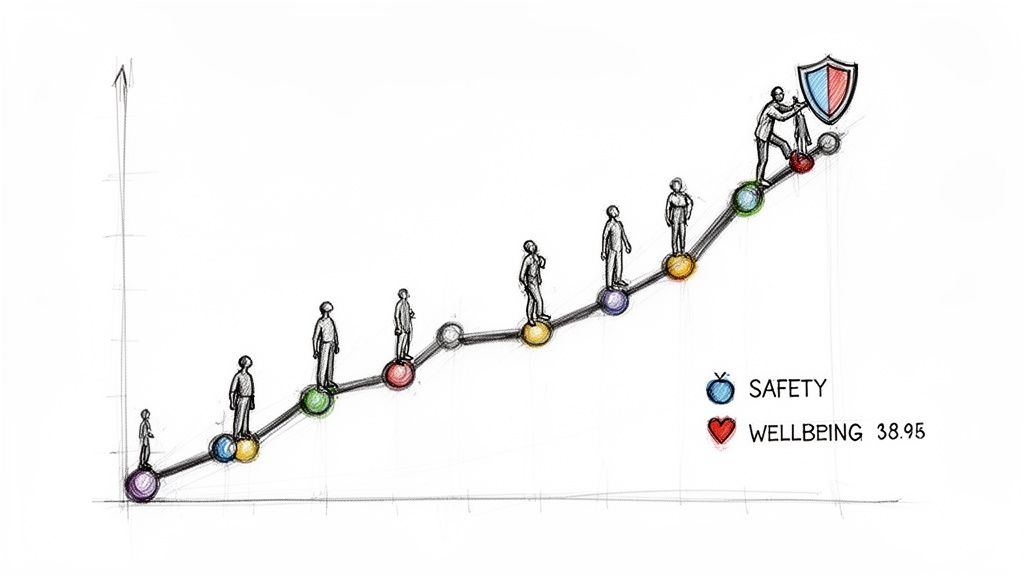
The powerful bond someone feels with a peer recovery specialist isn’t just a nice sentiment—it’s a measurable, evidence-based driver of successful recovery. The data is clear: weaving peer support into a treatment plan significantly improves outcomes, turning the hope of getting better into a sustainable reality. This isn't about feel-good stories; it's about a proven strategy that strengthens every single part of the recovery journey.
When you’re guided by someone who has walked the same path, you naturally become more invested in your own treatment. That increased engagement is the first critical step toward lasting change. It’s the difference between just showing up to sessions and actively building a new life.
Boosting Engagement and Reducing Crises
One of the biggest wins with peer support is its direct link to better treatment follow-through and a sharp drop in crisis situations. People working with a peer recovery specialist are far more likely to stick with their recovery plan, including medication-assisted treatment (MAT), which is often a lifeline for those healing from opioid use disorder.
This consistent engagement creates a ripple effect, improving overall stability. Systematic reviews of peer support programs show consistently positive results for people with substance use disorder. We’re talking about more than just decreased drug use and higher abstinence rates—it also leads to better housing stability, fewer hospital stays, and reduced emergency room visits. You can discover more about these positive SUD outcomes and the research behind them.
By providing practical, non-clinical support, a peer specialist helps bridge the gap between the therapy room and the real world. This effectively lowers the risk of relapse and re-hospitalization, acting as a crucial stabilizing force right when it matters most.
This hands-on support translates into fewer crises, less reliance on emergency care, and a much steadier path forward.
Key Measurable Outcomes of Peer Support
The positive impact of a peer recovery specialist shows up in several key areas, creating a strong foundation for long-term well-being. Their work is directly tied to tangible improvements that build momentum for a sober, fulfilling life.
These evidence-backed benefits include:
- Higher Rates of Sustained Abstinence: Getting steady support from a relatable mentor helps people navigate triggers and tough days, leading to longer periods of sobriety.
- Increased Treatment Retention: It’s simple—people are more likely to complete outpatient programs like IOP or PHP when they feel truly understood and supported by a peer.
- Improved Social Functioning: Specialists help clients rebuild healthy friendships and connect with community resources, chipping away at the isolation that so often fuels addiction.
Ultimately, peer support isn't just an add-on. It is a vital, evidence-based strategy that makes recovery more attainable and much more resilient.
How Peer Specialists Strengthen Outpatient Programs
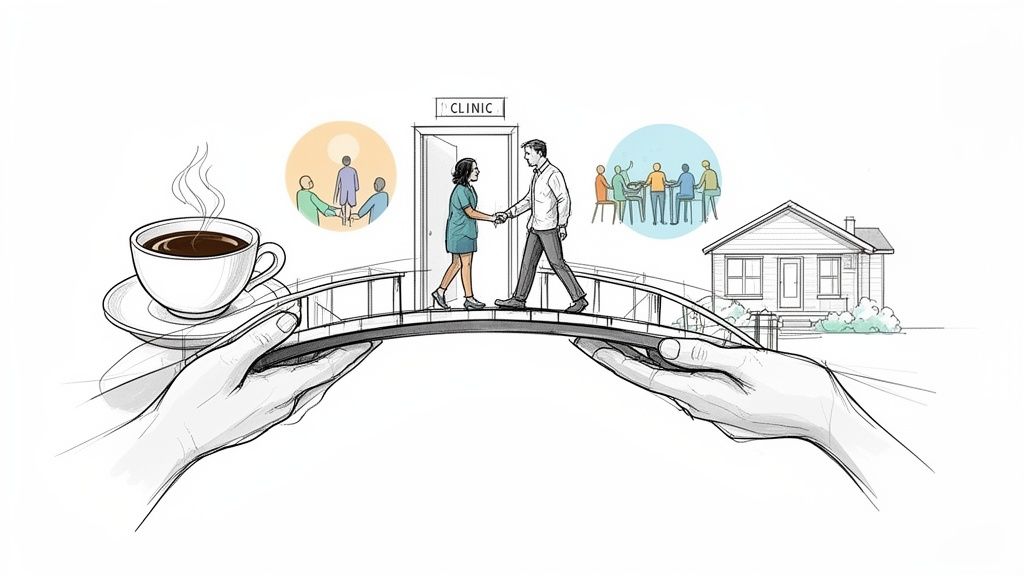
In outpatient programs like an IOP or PHP, the real work of recovery often happens in the hours between therapy sessions. This is where a peer recovery specialist becomes one of the most powerful allies on your team. They act as a living, breathing bridge between the structured safety of the clinic and the unpredictable reality of daily life.
Think of it this way: a therapist helps you understand why you feel a certain way. A peer specialist helps you figure out what to do when that exact feeling hits you on a random Tuesday afternoon. They translate the coping skills learned in a session into actionable, real-world strategies, making recovery something you live, not just talk about.
Turning Theory into Real-World Practice
A peer specialist’s entire role is to make recovery tangible. They don’t just discuss relapse prevention in the abstract; they help you build a life that actively guards against it. Their support is grounded in the messy, practical, everyday moments that clinical sessions might not have time to cover.
This is where their lived experience becomes so vital. They can help you game-plan for situations like:
- Navigating Social Events: You’ve got a friend’s birthday party coming up. A peer specialist can help you plan how to attend sober, rehearse what you’ll say if someone offers you a drink, and map out an exit strategy so you feel in control.
- Finding Safe Communities: Instead of just handing you a list of meetings, they might help you find a local group that actually fits your personality. They might even attend the first meeting with you to help ease the anxiety.
- Managing Daily Stressors: Had a brutal day at work? A quick text to your peer specialist can provide immediate encouragement and a reminder to use a coping skill right in the moment it’s needed most.
The true value of a peer specialist in an outpatient setting is their ability to provide in-the-moment support. They reinforce clinical lessons exactly when and where life happens, cementing new, healthy habits before old ones can creep back in.
A Stabilizing Force for Long-Term Success
This consistent, real-time reinforcement is incredibly powerful. It helps you build genuine confidence in your ability to handle life on life’s terms, without turning back to substance use. And the research backs this up—studies show that people receiving peer support are more likely to stay engaged in outpatient services and have fewer hospital readmissions.
A peer recovery specialist helps you troubleshoot challenges as they pop up, whether it’s managing a sudden craving or figuring out how to start rebuilding a damaged relationship. They are a constant, relatable reminder that you are not alone and that you already have the tools to succeed. This practical partnership transforms outpatient treatment from a series of appointments into a new way of living, creating a rock-solid foundation for lasting freedom.
Connecting with a Peer Recovery Specialist
Taking that first step toward recovery is often the hardest part. Figuring out who to trust and where to find the right support shouldn’t be another hurdle. The good news is, connecting with a qualified peer recovery specialist is surprisingly straightforward, especially when you partner with a treatment program that has this kind of support baked into its DNA.
At a place like Altura Recovery, the process of finding your peer specialist is woven directly into your care plan right from the start. During your initial intake, the clinical team really listens to your story—your background, your specific struggles, and what you hope to achieve. This isn't just paperwork; it’s the foundation for making the perfect match.
Armed with that deep understanding, they connect you with a peer recovery specialist whose own journey mirrors yours in meaningful ways. This isn't random. It's an intentional pairing designed to build a powerful foundation of trust and genuine empathy from day one.
Finding the Right Program
Honestly, the most reliable way to find a great peer specialist is to choose a treatment center that makes peer support a non-negotiable part of its program. As you explore your options, don’t be afraid to ask some direct questions about how they handle peer services.
Here are a few questions that will tell you what you need to know:
- How do you integrate peer specialists into treatment plans? You want to hear that they are a core part of the team, not just an occasional add-on.
- What’s your process for matching a client with a peer specialist? Look for programs that describe a thoughtful, personalized approach based on shared experience.
- Are your peer specialists certified, and do they get ongoing supervision? This is key. It confirms they meet professional standards and are committed to ethical, high-quality support.
The path to recovery is not meant to be walked alone. Connecting with someone who has successfully navigated the same challenges provides not just guidance, but also a living, breathing example that lasting change is possible.
Choosing a program that prioritizes this connection is a true investment in your long-term success. It means surrounding yourself with people who get it, who will lift you up, and who will empower you every single step of the way.
If you’re ready to see how a peer recovery specialist can make a difference in your own journey here in Houston, reach out to Altura Recovery today.
Still Have Questions? Here Are Some Common Ones
Even after understanding the role, it's natural to have a few practical questions about working with a peer recovery specialist. Let's clear up some of the most common ones so you can feel confident taking the next step.
What Kind of Training and Certification Do They Need?
A certified peer recovery specialist isn’t just someone with a good story. They’ve completed state-approved training that covers essential skills like professional ethics, motivational interviewing, wellness planning, and cultural humility.
Beyond the classroom, they must document their own lived recovery experience and pass a formal certification exam. This process ensures they have both the personal empathy and the professional framework to support others safely and effectively.
Is What I Say to a Peer Recovery Specialist Confidential?
Yes, absolutely. Your relationship with a peer specialist is protected by a strict ethical code of confidentiality, much like your conversations with a therapist or doctor. They are professionally bound to protect your privacy.
The only exception is if a situation arises where there's a risk of harm to you or someone else. In those specific cases, they are mandated reporters, meaning they have to share that information to ensure everyone's safety.
A peer specialist’s training heavily emphasizes professional ethics, especially confidentiality. This is the foundation for building a safe, trusting relationship where you can be open without fear. Your privacy is a top priority.
How Is a Peer Specialist Different From a Sponsor?
This is a great question, as both roles offer support based on shared experience. The main difference is structure and training. A peer recovery specialist is a formally trained and often paid professional who works within a clinical or organizational setting. They use specific, evidence-based techniques and operate under strict ethical guidelines.
A sponsor, on the other hand, is a volunteer within a 12-step fellowship (like AA or NA). They offer informal guidance based on their personal journey through the steps. The two roles are not mutually exclusive; in fact, they can complement each other beautifully.
For more perspectives and insights, exploring relevant peer recovery blog posts can offer additional guidance on connecting with support.
Can I Work With a Peer Specialist for a Co-Occurring Disorder?
Absolutely. Peer specialists are a fantastic part of an integrated treatment plan for co-occurring disorders, where someone is managing both a substance use disorder and a mental health challenge.
They bring that crucial real-world understanding of how both conditions can play off each other day-to-day. A peer specialist helps you put the strategies you learn in therapy into practice and navigate the daily stresses that can impact both your mental health and your recovery. Their role is designed to enhance clinical care, not replace it.
At Altura Recovery, we believe deeply in the power of shared experience. Our certified peer recovery specialists are a core part of our outpatient programs, providing the real-world guidance and empathetic support that helps create lasting change. If you're ready to add a powerful ally to your recovery team, contact us today to learn more about our approach. Find real healing and real freedom by visiting us at https://www.alturarecovery.com.