So, what does it take to get into a Partial Hospitalization Program (PHP)? It really boils down to two key things: a genuine clinical need and a stable home environment. Think of it this way: you need more structured support than a once-a-week therapy session can provide, but you don't require the 24/7 supervision of an inpatient facility. The journey always kicks off with a clinical assessment to make sure this specific level of care is the right match for your symptoms and what you hope to achieve in recovery.

What Is a Partial Hospitalization Program
A Partial Hospitalization Program (PHP) is best understood as a supportive, structured bridge. It connects the intensive, round-the-clock world of inpatient care with the less frequent appointments of standard outpatient therapy. A PHP is built for people who need daily therapeutic support but have a safe, stable place to go home to each night.
This unique setup lets you dive deep into treatment during the day while immediately putting your new coping skills to the test in your own environment in the evenings. It’s a powerful model that blends high-level care with real-world practice, all without the total life disruption of moving away from home for weeks on end. Many find this balance is the perfect next step after leaving a residential facility or when regular outpatient therapy just isn’t enough to get a handle on their symptoms.
The Therapeutic Day School Analogy
To really get a feel for the PHP model, picture it as a kind of "therapeutic day school" for adults. Just like students go to school for a full day of structured learning and then head home, PHP participants come to the treatment center for several hours a day, usually five to seven days a week.
The entire environment is immersive and geared toward healing. But instead of an academic curriculum, the focus is on personal growth, learning to manage emotions, and building a solid foundation for a life in recovery.
Daily Structure and Core Components
A typical day in a PHP is anything but random; it's carefully planned to deliver a comprehensive treatment experience. You're not just sitting in one long group session. Instead, you'll engage in a mix of different therapeutic approaches designed to work together. While every program has its own unique flavor, most are built on these core components:
- Individual Counseling: One-on-one time with your dedicated therapist to work through personal hurdles, trauma, and your specific recovery goals.
- Group Therapy: Guided group conversations that build a strong sense of community, letting you learn from the shared experiences of others who get what you're going through.
- Skill-Building Workshops: Practical, hands-on sessions focused on real-life skills like managing stress, preventing relapse, and communicating in healthier ways.
- Medication Management: Meetings with psychiatric staff to monitor any medications, making sure they're working effectively and adjusting them as needed.
This intense, multi-layered approach is what truly sets PHPs apart from other levels of care. By understanding what a PHP is, you can get a much clearer picture of the partial hospitalization program requirements and why they exist—to ensure it's the right fit for your journey. For those exploring all the options, it can also be useful to learn more about what is rehab in the broader sense.
Meeting the Clinical Requirements for PHP
Qualifying for a Partial Hospitalization Program (PHP) isn't as simple as checking a box next to a diagnosis. The real key is a clinical concept called medical necessity. This is where a treatment team looks beyond what condition you have and focuses on how severely its symptoms are derailing your life—at work, at school, or in your closest relationships.
Think of it like this: if weekly therapy is a gentle stream of support and full inpatient care is a powerful river, a PHP is like a strong, steady canal. It’s built for those times when the stream just isn’t enough to move you forward, but you don't need the overwhelming force of the river. The core idea is that you need intensive, structured care but don't require 24/7 medical supervision.
Defining Medical Necessity
Medical necessity is the term that unlocks PHP eligibility, and it's determined through a thorough clinical assessment. A professional evaluates whether your symptoms are severe enough that a lower level of care, like standard outpatient therapy, has already proven insufficient or would be unlikely to help you make progress.
This is especially true for people facing severe depression, debilitating anxiety, or a substance use disorder that’s getting worse. For instance, if someone's depression makes it impossible to get out of bed for work, or their anxiety is causing daily panic attacks, they very likely meet the criteria. The same applies when co-occurring conditions are in the mix; our guide on dual diagnosis outpatient treatment digs deeper into these complex situations.
A key takeaway here is that PHPs are for individuals who are medically stable but whose emotional or behavioral struggles are so intense that their life is significantly impaired. They need much more than a weekly check-in to build real momentum in their recovery.
Common Indicators for PHP Admission
So, what specific signs tell a treatment team that a PHP is the right fit? While every person's situation is different, clinicians look for clear indicators that this level of structured support is necessary.
Here’s a quick rundown of the common clinical requirements:
- Significant Functional Impairment: You're finding it hard to keep up with major responsibilities at home, school, or your job because of your symptoms.
- Risk of Worsening Symptoms: Without a serious intervention, there's a high chance your condition will get worse, possibly requiring hospitalization.
- Inadequate Response to Outpatient Care: You've already tried traditional therapy or an intensive outpatient program (IOP) without seeing the improvement you need.
- Transition from Inpatient Care: You're stepping down from a residential or inpatient facility and need strong, continued support to safely ease back into your daily life.
- A Safe and Supportive Home Environment: You must have a stable place to go each evening that won't jeopardize your recovery efforts.
The power of this model is particularly evident in younger groups. PHPs have been a game-changer for adolescents facing serious mental health issues, offering a safe, structured setting that has been shown to dramatically improve their ability to function after they leave. You can discover more about how these programs support youth recovery on embarkbh.com. Meeting these partial hospitalization program requirements ensures you land in exactly the right level of care to build real, lasting healing.
Navigating the PHP Admission Process
Deciding to start a Partial Hospitalization Program is a big step, and it’s natural to wonder what comes next. The good news is that the process follows a clear, structured path designed to make sure it’s the right level of support for you. It’s not a test you have to pass—think of it more like a conversation to map out the best route for your recovery, done in partnership with a clinical team.
The whole journey usually kicks off with a simple screening call. This is a confidential chat where you’ll share some basics about your current challenges, symptoms, and any past treatment history. It’s the first handshake, helping the admissions team get a quick sense of your situation to see if a PHP is a good potential fit before moving on.
The Comprehensive Clinical Assessment
If the initial call suggests PHP could be right, the next step is a comprehensive clinical assessment. This is a much deeper conversation, typically with a licensed therapist or clinician, and it becomes the foundation for your treatment plan. The goal here is to get a complete picture of your mental health, substance use history, and overall well-being.
The clinician will ask detailed questions to understand the severity of your symptoms and how they're affecting your day-to-day life. This isn't just about getting a diagnosis; it's about confirming the medical necessity for this specific level of care. You’ll also talk about your goals and what you hope to get out of treatment, which helps the team begin to shape a plan just for you. For a broader look at how this fits into the recovery journey, our guide on how rehab works offers some great context.
Reviewing Your History and Documents
The final phase of the admission process is all about reviewing your relevant history and paperwork. This step pulls everything together, confirming the clinical picture and giving the treatment team all the information they need to provide safe, effective care from your very first day.
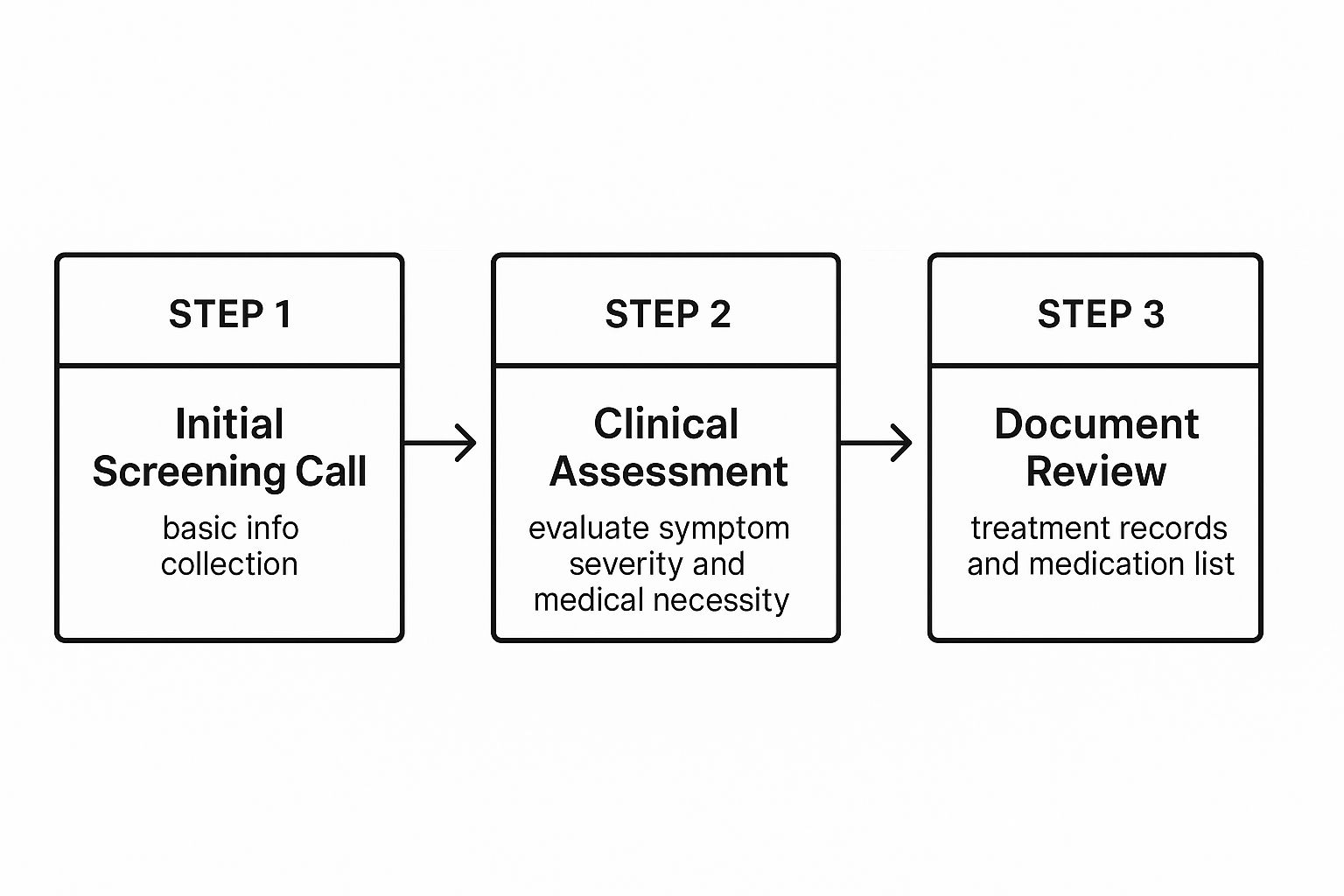
As the infographic shows, each stage builds on the last. By the end, both you and the clinical team will feel confident that PHP is the appropriate path forward.
To help you get ready, we've put together a checklist of the documents and information you'll likely need during the assessment process. Having these items handy can make everything go a lot smoother.
Your PHP Admission Process Checklist
| Step | What to Expect | Information to Prepare |
|---|---|---|
| 1. Initial Screening | A confidential phone call to discuss your current situation and needs. | A quiet, private space to talk for about 15-20 minutes. Be ready to share a brief overview of your challenges. |
| 2. Clinical Assessment | An in-depth interview with a clinician to explore your history, symptoms, and goals. | Your ID and insurance card. Be prepared to discuss your mental health and substance use history honestly. |
| 3. Medical History Review | The clinician will ask about your physical health and any medications you're taking. | A detailed list of all current medications (including dosages) and contact information for your primary doctor. |
| 4. Past Treatment Records | You may be asked to sign a release of information for previous treatment providers. | Names and contact information for any past therapists, psychiatrists, or treatment facilities. |
| 5. Final Confirmation | The clinical team reviews all information to confirm eligibility and schedule your start date. | Any remaining questions you have. This is your chance to get clarity on program schedules and expectations. |
This thorough approach ensures that when you walk in on day one, your treatment plan is already built on a solid foundation of understanding, setting you up for success.
Understanding the Commitment and Structure
Stepping into a Partial Hospitalization Program (PHP) is a serious investment in your well-being, and getting a clear picture of the day-to-day requirements is the first step to success. This isn't a passive process where you just show up. Think of it as an active, immersive experience that demands your full attention to really work.
You can almost picture it as a full-time job focused entirely on your recovery. The schedule is intentionally intense—providing far more support than weekly therapy ever could—but with the huge benefit of letting you return to your own home each night. It’s this unique mix of deep therapeutic work and real-world practice that makes the PHP model so effective.
The Weekly Schedule and Time Investment
One of the first things to wrap your head around is the time commitment, which is one of the most important partial hospitalization program requirements. A PHP isn’t built around occasional appointments; it runs on a structured daily schedule, much like a school or workday. You should expect to be at the facility for several hours each day, typically five to seven days a week.
This consistency creates the stability and routine that are so vital for healing. In fact, a core requirement for any certified PHP is to provide at least 20 hours of structured programming each week. This level of intensity is a major reason PHPs are increasingly the go-to for treating conditions like depression, offering a powerful middle ground between living at a facility and standard outpatient therapy. For a deeper dive, you can check out this article on why more people are choosing PHP for depression on improvinglivesnow.com.
The Non-Negotiable Role of Active Participation
Simply being present isn’t enough. Active participation is the real engine of progress here. Every part of the program is designed to connect with the others, creating a complete therapeutic web. Your engagement in each session is what makes it all click.
- Individual Therapy: This is your one-on-one time to dig deep with a therapist. Progress hinges on your willingness to be honest and explore tough topics.
- Group Therapy: Here, you’ll learn from the experiences of others and share your own. The community thrives on active listening and respectful contribution, which is where so much growth happens.
- Skill-Building Workshops: These are practical, hands-on sessions for learning new coping skills. The expectation is that you’ll practice them not just in the session, but at home, too.
The relationship between individual and group therapy is especially powerful. They serve different, equally critical roles in recovery. If you're curious about their distinct benefits, our guide comparing individual therapy vs group therapy is a great resource.
A critical requirement is your commitment to being present—not just physically, but mentally and emotionally—in every single session. The more you pour into this process, the more you will get out of it.
Finally, a stable and supportive home life is a must. Since you'll be heading home every evening, it's essential that your living environment doesn't undo the hard work you put in during the day. This foundation is what allows you to safely practice new skills and build a recovery that truly lasts.
How Insurance and Finances Work for PHP
Let's be honest: navigating the financial side of a Partial Hospitalization Program (PHP) can feel like the most intimidating part of the process. But understanding the costs and how your insurance works doesn't have to be a roadblock. It’s a crucial part of the partial hospitalization program requirements, and with the right information, you can manage the costs effectively and get back to focusing on recovery.
The very first step for most people is getting insurance pre-authorization. Think of it as getting a green light from your insurance company before you start treatment. The PHP admissions team will handle this for you, submitting clinical details that prove the program is medically necessary. It’s a critical checkpoint to make sure your provider is on board to cover the services.
Decoding Common Insurance Terms
To sidestep any financial surprises, it helps to get comfortable with a few key terms your insurance provider will use. These define what you’ll be expected to pay out of pocket.
- Deductible: This is a set amount you have to pay for healthcare before your insurance plan starts chipping in. For example, if your deductible is $1,000, you’ll pay that amount out of pocket first.
- Copayment (Copay): This is a fixed fee you pay for a covered service after your deductible is met. It might be something like $40 for each day you attend the program.
- Out-of-Pocket Maximum: This is the absolute ceiling on what you'll have to pay for covered services in a plan year. Once you hit this limit, your insurance pays 100% of the covered costs.
These three pieces work together to shape your financial responsibility. Knowing them upfront helps you budget and prevents those dreaded unexpected bills, making the whole journey feel much more predictable.
Taking Control of Your Financial Plan
Being proactive is your best strategy here. When you talk with the PHP’s admissions team and your insurance provider, you become your own best advocate. Don't be afraid to ask direct questions—clarity is your goal.
Start by asking the admissions team for a detailed cost breakdown and a verification of your benefits. They can often give you a solid estimate of what you'll owe. For those who need more support, learning about finding affordable health insurance plans can be a game-changer.
The most important conversation you can have is with your insurance company. Ask them directly: "What is my coverage for partial hospitalization services under code H0035?" This specific question cuts through the confusion and gets you the real answers you need.
If you find out there’s a gap in your coverage, don’t panic. Many treatment centers offer payment plans or can connect you with third-party financing options. Some facilities even have financial assistance programs or scholarships for those who qualify. The key is to be open with the admissions team about any financial concerns you have. They're there to help you find a solution that works so you can get the care you need.
Unpacking Common Questions About PHP Requirements

Even after learning about the admissions process, you probably still have a few questions about the nitty-gritty details of partial hospitalization program requirements. That’s completely normal. Making a commitment to a program is a big deal, and you deserve total clarity before taking the next step.
Let's walk through some of the most common questions we hear, so you can feel confident moving forward.
One of the first points of confusion is often the difference between a PHP and an Intensive Outpatient Program (IOP). Think of it as a matter of time and intensity. A PHP is the more immersive option, typically requiring 5-6 hours a day, 5 days a week. It’s designed as a direct step down from 24/7 inpatient care.
An IOP, on the other hand, offers more flexibility. With fewer hours and days each week, it’s built for individuals who still need significant support but have a bit more stability in their day-to-day lives.
Do I Need a Formal Diagnosis First?
This is a big one. Many people worry they need an official, pre-existing diagnosis just to pick up the phone and ask for help. That’s simply not true.
While a diagnosis is eventually needed for your treatment plan and for insurance, the clinical assessment is where that happens. The main requirement for an assessment is that you're struggling with symptoms severe enough to disrupt your life. The clinical team’s job is to meet you exactly where you are and work with you to understand your challenges, not to expect you to show up with everything already figured out.
What if I Don’t Meet the Clinical Criteria?
So, what happens if the assessment shows a PHP isn’t the right fit? This isn’t a failure—it’s a success. It means the process worked, pointing you toward the correct level of care for your specific needs. A quality treatment center will never try to shoehorn you into a program that isn’t a good match.
If your symptoms are less severe, the team might recommend an IOP or individual therapy. If you need more intensive, 24/7 supervision for your safety, they’ll likely refer you to an inpatient or residential facility. The whole point is to connect you with the most effective treatment possible.
The assessment process is a collaborative effort to pinpoint the exact level of support that will give you the best chance at a successful recovery. It ensures you don't end up in a program that's either overwhelming or insufficient.
Making these programs more accessible is a huge focus in the healthcare world, especially for younger adults. Historically, things like geography made it tough to get this level of care. But now, virtual options are changing the game. Recent data shows online PHPs can dramatically reduce psychiatric-related emergency visits, proving just how effective they are as a bridge between inpatient and outpatient services. You can read more about the impact of online PHPs for young adults via PMC.
Can I Still Work or Go to School?
Because of the major time commitment, holding down a full-time job or school schedule while in a PHP is usually not realistic. The program is designed to be your main focus—think of it as a full-time job dedicated to your recovery.
That said, some programs do offer evening schedules or other flexible options that might work with part-time obligations. The best thing to do is have an honest conversation with the admissions team about your responsibilities to see what’s possible.
At Altura Recovery, we know that finding the right level of care is the most critical first step. Our team is here to walk you through the requirements and help you figure out if our PHP, IOP, or other outpatient services are the right fit for your journey toward healing. Visit us online to learn more about our personalized treatment plans.