
Think of Mental Health First Aid (MHFA) training as CPR for mental health. It’s a program designed to give everyday people—those of us without clinical backgrounds—the skills to step in and provide immediate support to someone having a mental health challenge or crisis. The goal isn’t to fix the problem, but to offer a steady hand and guide them toward professional help.
What Is Mental Health First Aid, Really?
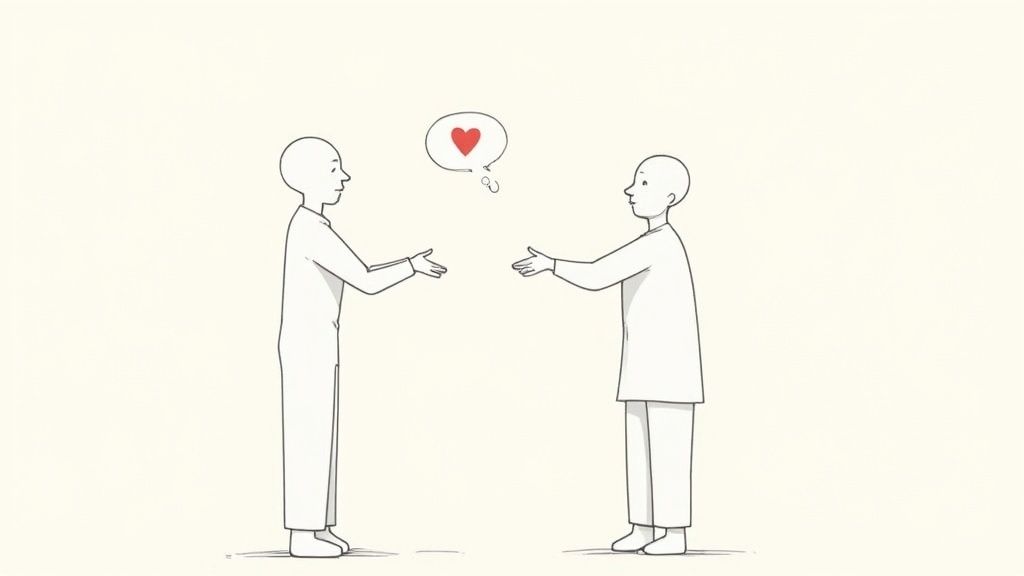
Imagine you see someone collapse. If you know CPR, you don't just stand there; you have a clear set of actions you can take to keep them stable until paramedics arrive. You aren’t expected to perform surgery on the sidewalk, but what you do in those first few minutes can literally save a life. Mental Health First Aid training works off that exact same, powerful principle.
It empowers you to be a first responder during a mental health crisis, whether that’s a panic attack, a suicidal episode, or the immediate aftermath of trauma. The training gives you a structured, easy-to-remember action plan so you can recognize the warning signs of mental health or substance use challenges. It’s not about diagnosing or treating. It’s about offering a safe, nonjudgmental presence and connecting someone to the care they desperately need.
This approach is all about bridging the gap between the moment someone is in distress and the moment they get professional help. It turns bystanders into confident, capable first responders.
To make this crystal clear, let's compare MHFA to the physical first aid training most of us are familiar with.
MHFA Compared to Physical First Aid
| Aspect | Physical First Aid | Mental Health First Aid (MHFA) |
|---|---|---|
| Goal | To provide immediate care for physical injuries or illnesses until medical professionals arrive. | To offer initial support for mental health challenges or crises until professional help is available. |
| Responder's Role | Assess the scene for safety, apply bandages, perform CPR, or use an AED. Not a doctor. | Listen nonjudgmentally, give reassurance, and encourage professional or self-help strategies. Not a therapist. |
| Conditions Addressed | Bleeding, choking, burns, cardiac arrest, fractures. | Panic attacks, suicidal thoughts, substance overdose, psychosis, severe depression. |
| Key Action | Stabilize the person's physical condition and prevent further harm. | De-escalate the situation, provide comfort, and connect the person to appropriate care. |
Seeing the parallels helps demystify the process. Both skill sets empower you to act decisively and compassionately when someone is vulnerable.
The Core Purpose of This Training
The main goal is to boost mental health literacy across our communities and chip away at the stigma that keeps so many people silent. When more of us have these skills, we build stronger, more resilient networks where people feel safe enough to ask for help.
The training is built around a few key objectives:
- Preserving life when a person might be a danger to themselves or others.
- Preventing a mental health issue from getting worse.
- Promoting recovery and a return to good mental health.
- Providing comfort to someone going through a tough time.
The program started in Australia way back in 2000 and has since grown into a global movement. By mid-2018, it had spread to 25 countries and trained over 2.7 million people worldwide to identify, approach, and assist someone in crisis until professional support can take over.
It Is Not a Replacement for Therapy
Let's clear up a common misunderstanding: getting certified in MHFA doesn't make you a therapist. Not even close. What it does do is equip you to be a compassionate and effective first point of contact. You learn how to listen without judgment, offer reassurance, and share practical information.
This distinction is crucial, especially when we consider the complex relationship between mental health and addiction services. A trained first aider can be the essential bridge that connects someone to formal treatment. Ultimately, the training gives you the confidence to act effectively, making sure no one has to face a mental health crisis all alone.
Your Practical Skills and the ALGEE Action Plan
Mental Health First Aid training isn’t about turning you into a therapist. It’s about giving you a concrete game plan so you know exactly what to do when someone is struggling. Instead of feeling frozen or helpless in a crisis, you learn a practical, five-step action plan that guides your response.
This isn't about having all the answers. It’s about knowing the right first steps to take.
At the heart of the training is the ALGEE action plan, a simple but powerful tool used worldwide. Think of it like CPR for mental health—each letter is a specific, crucial step you take to provide support safely and effectively. This structure gives you the confidence to step in when it matters most.
Breaking Down the ALGEE Framework
The ALGEE plan is designed to be straightforward and easy to remember, even under pressure. It provides a clear path from recognizing a problem to connecting someone with the right help.
Let's walk through what each step really means.
A – Assess for Risk of Suicide or Harm
This is always the first priority. You'll learn how to spot the warning signs of suicidal thoughts or self-harm and—more importantly—how to ask direct questions in a calm, non-judgmental way. The goal here is immediate safety before anything else.L – Listen Nonjudgmentally
This step is about creating a safe space for someone to actually share what’s going on. You’ll practice active listening: paying full attention, asking open-ended questions, and validating their feelings without trying to "fix" them. Just being truly heard can be incredibly powerful.G – Give Reassurance and Information
After listening, your role is to offer hope and some basic facts. You’ll learn how to reassure someone that challenges are treatable and that recovery is absolutely possible. This helps cut through the feelings of isolation and hopelessness that so often accompany mental health struggles.E – Encourage Appropriate Professional Help
You are the bridge, not the final destination. This step focuses on guiding the person toward the right resources, whether that’s their family doctor, a therapist, or a crisis line. The training gives you the know-how to offer relevant, practical suggestions.E – Encourage Self-Help and Other Support Strategies
Finally, you’ll learn to talk about coping strategies that can empower the individual. This could be as simple as suggesting exercise, mindfulness techniques, or connecting with support groups. It’s all about promoting their own agency and highlighting small actions they can take to support their recovery.
The ALGEE Plan in a Real-World Scenario
To see how this works, imagine a coworker, Alex, who has become withdrawn, is frequently missing deadlines, and just seems perpetually exhausted. You've noticed these changes and decide to check in, using your mental health first aid training.
You start with (A) Assess, asking in a private setting if they are thinking about harming themself. Alex says no but admits to feeling completely overwhelmed. You then shift to (L) Listen, letting Alex talk about immense stress at home without interrupting or jumping in with advice.
Next, you (G) Give Reassurance, saying something like, "That sounds incredibly difficult, and it makes sense why you're feeling this way. A lot of people go through this, and help is available." You follow up by (E) Encouraging Professional Help, suggesting they talk to a therapist through the company's EAP and even offering to help find the number.
This infographic shows how this training process leads to better outcomes by increasing knowledge, prompting earlier intervention, and ultimately reducing community stigma.
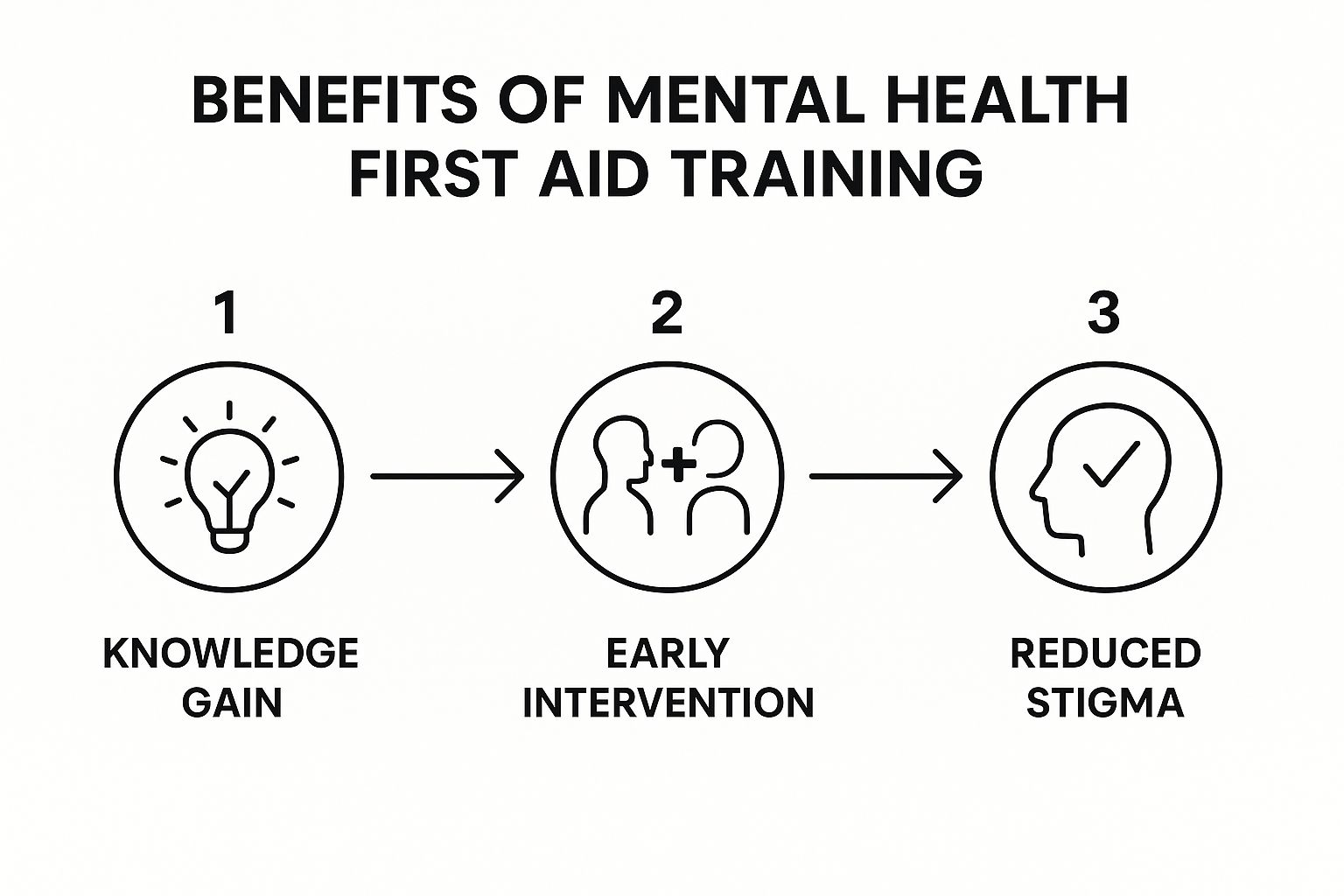
The image illustrates a clear pathway: when more people understand mental health, they can step in sooner, which in turn helps break down the societal barriers that keep people from seeking care.
Finally, you (E) Encourage Self-Help, mentioning that taking short walks during lunch helped you when you felt stressed. This structured, empathetic approach provides immediate support while respecting professional boundaries. It’s a core part of what makes this training so valuable, especially when you learn more about the principles of trauma-informed care.
By equipping you with the ALGEE framework, Mental Health First Aid training transforms you from a passive bystander into an active, helpful resource for your community, workplace, and family. It builds the confidence to step forward when it matters most.
How A Small Idea Grew Into a Global Movement
Mental Health First Aid (MHFA) isn't just another training program; it's a worldwide movement that has completely changed how we talk about and respond to mental health crises. What started as a revolutionary idea in Australia back in 2000 has exploded into a public health phenomenon, proving there's a universal hunger for better mental health literacy.
This isn't just some local initiative that did well. It’s a story about a massive shift in public consciousness. The core principles of MHFA have proven incredibly adaptable, spreading like wildfire across continents and connecting with diverse cultures from North America to Europe and Asia.
The Numbers Speak Volumes
You can really grasp the scale of this movement by looking at the numbers. MHFA has become a powerful global force, with over 8 million people trained across the world by a dedicated network of more than 67,000 accredited instructors.
This incredible growth isn't just a statistic; it's proof that the world is waking up to the fact that mental health is every bit as important as physical health. You can dig deeper into this global training initiative and its evidence-based curriculum on the official MHFA International website.
The program is built to be accessible, offering a range of training options to fit different needs and learning styles.
As you can see, the commitment to flexibility is clear, with everything from live instructor-led sessions to self-paced online courses available to a global audience.
Built to Fit Every Community
One of the biggest reasons MHFA has succeeded worldwide is its thoughtful approach to different cultures. This isn't a rigid, one-size-fits-all model parachuted into new countries. Instead, the program is carefully molded to reflect the unique social norms, languages, and mental health landscapes of every community it serves.
This cultural fine-tuning is what makes the training so effective and relevant. Here’s a peek at how it works:
- Cultural Nuances: Local experts step in to adjust scenarios and language, making sure everything feels appropriate and relatable.
- Local Resources: The training is updated to point people toward nearby mental health services and support systems that are actually available to them.
- Community-Specific Modules: Specialized versions of the course are often developed for distinct groups, like veterans, Indigenous populations, or even corporate teams.
This careful adaptation is what turns mental health first aid training into a truly global solution, giving people everywhere the confidence to respond with compassion.
When you join this movement, you're doing more than just learning a new skill. You are becoming part of a massive, supportive network of millions who are actively tearing down stigma and building healthier communities across the globe.
This training gives you practical tools to help others, much like learning specific coping strategies for anxiety and depression can build a personal toolkit for managing your own well-being. The key difference is that MHFA empowers you to create a ripple effect of support, strengthening entire communities one person at a time. By getting certified, you’re contributing to a worldwide effort to make sure no one has to face a mental health crisis alone.
Why This Training Is So Crucial in the United States
While Mental Health First Aid (MHFA) has made a global splash, its story in the United States is a powerful example of adapting a great idea to meet a specific, urgent need. The program was carefully tailored to America's unique mental health landscape, creating a vital safety net for communities from coast to coast. This isn't just another course; it's a nationwide strategy to build a healthier, more resilient public.
The challenges are staggering. In the U.S., 1 in 5 adults experience mental illness each year, but stigma and a simple lack of understanding often stop people from reaching out for help. This is exactly where mental health first aid training comes in, empowering everyday people to become the first line of support in their workplaces, schools, and neighborhoods.
A National Commitment to Mental Wellbeing
Recognizing this urgent need, the National Council for Mental Wellbeing brought MHFA to the United States back in 2008. Since then, the program has grown exponentially, training over 4.5 million Mental Health First Aiders across all 50 states and U.S. territories. This incredible milestone reflects a deep understanding of just how widespread these skills need to be. You can see the program's impressive growth and impact for yourself on the official MHFA website.
The ambition behind this movement is just as impressive as its current reach. The National Council has set a clear, strategic goal.
The ultimate aim is to train one out of every 15 Americans in Mental Health First Aid. This ambitious goal underscores a national dedication to making mental health literacy as common as knowing how to perform CPR.
Hitting this target would fundamentally change how we respond to mental health crises. It means that in almost any public space—an office, a grocery store, a library—there would likely be someone nearby with the skills to offer immediate, compassionate support. This proactive approach is essential for early intervention, especially when navigating the complexities of addiction and mental health treatment, where that initial support can be truly life-changing.
Empowering People Right Where They Are
The true power of MHFA in the U.S. lies in its accessibility. It brings essential skills directly into the environments where people live and work every single day. The training gives individuals from all walks of life the confidence to spot the signs of distress and offer help long before a situation escalates into a crisis.
Think about these common scenarios:
- In the Workplace: A manager notices an employee is consistently withdrawn and struggling. With MHFA training, they can check in confidently and guide that person toward the company's Employee Assistance Program (EAP).
- On a College Campus: A student sees their roommate showing signs of severe anxiety before exams. They can use the ALGEE action plan to listen without judgment and encourage them to visit the campus counseling center.
- Within the Community: A neighbor observes someone in clear distress at a community event. Instead of looking away, they can approach the person, offer reassurance, and help them find a quiet space or connect with a crisis line if needed.
By weaving these skills into the fabric of society, we build a culture where checking on someone’s mental wellbeing is a normal, accepted act of kindness. This creates a widespread support system that helps dismantle stigma, encouraging more people to seek the professional help they need without fear or shame.
The Real Benefits of Getting Certified
Getting your Mental Health First Aid training certificate is about so much more than a piece of paper. It's an investment in yourself that ripples out into every corner of your life, strengthening your relationships, boosting your professional value, and making your entire community safer.
Think of it this way: you’re moving from being a worried bystander to a confident first responder. You gain the clarity and the skills to step in when someone is vulnerable, transforming a moment of crisis into a moment of connection and support.
This change starts with you. The training gives you a new lens for understanding people, backed by practical tools for empathy and communication. You won't just learn how to help others; you'll gain a far deeper understanding of your own mental wellbeing, too.
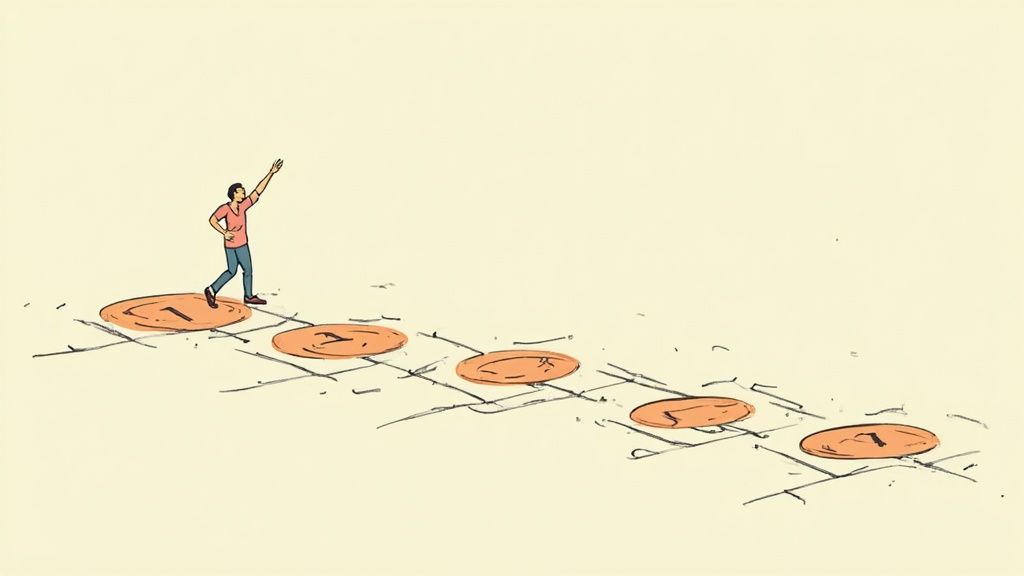
From there, the skills you build naturally flow into your workplace and your neighborhood, creating layers of positive change.
Personal Growth and Confidence
One of the first things people notice is a huge boost in confidence. Before the training, seeing someone in distress can leave you feeling frozen or helpless. Afterwards, you have a clear, simple action plan. It removes the guesswork and fear, empowering you to offer real, meaningful support.
This confidence isn’t just a feeling; it’s built on a solid foundation of knowledge. You’ll learn how to:
- Recognize Early Warning Signs: You'll start to spot the subtle signals of a developing mental health challenge in friends or family long before it becomes a crisis.
- Improve Your Communication: The course drills down on active, non-judgmental listening—a superpower that strengthens every relationship you have.
- Deepen Your Understanding: You’ll gain a much richer, more human view of mental health, helping you break down personal biases and chip away at stigma in your own social circles.
Professional and Workplace Advantages
In any career, being the person who can support a colleague in a tough moment is an invaluable asset. MHFA certification turns you into a key resource for building a psychologically safe and productive work environment. When people feel seen and supported, morale goes up, absenteeism goes down, and collaboration just works better.
A mentally healthy workplace is a productive workplace. By bringing these skills to your team, you're not just helping individuals; you're contributing to the overall success and resilience of your organization.
This certification is also a tangible skill you can add to your resume. It shows leadership, empathy, and a real commitment to wellbeing. Whether you’re a manager or part of a team, being trained in MHFA helps you de-escalate conflicts, support colleagues through high-stress periods, and guide them toward resources like an Employee Assistance Program (EAP).
Strengthening Your Entire Community
The impact of one certified Mental Health First Aider goes far beyond their immediate circle. Every single person who completes the training adds another strong link to a community-wide safety net. With an estimated 1 in 5 U.S. adults experiencing mental illness each year, the need for this kind of support system has never been more urgent.
When more of us are trained, the whole community gets stronger:
- Reduced Stigma: Widespread mental health literacy makes it normal to talk about these challenges, so people feel safer asking for help.
- Early Intervention: Trained individuals can step in sooner, often preventing a struggle from escalating into a severe crisis that needs intensive care.
- A Stronger Safety Net: A community full of Mental Health First Aiders is one where people are actively looking out for each other. No one has to suffer in silence.
To see how these benefits play out in different parts of life, take a look at the table below.
Key Benefits of MHFA Certification
| Benefit Category | Specific Advantage | Real-World Example |
|---|---|---|
| Personal | Increased Confidence | Instead of avoiding a friend who seems down, you know how to start a supportive conversation using the ALGEE action plan. |
| Personal | Improved Relationships | You use non-judgmental listening skills to better understand a family member's perspective during a disagreement, strengthening your bond. |
| Professional | Enhanced Leadership Skills | As a manager, you recognize signs of burnout in a team member and guide them to the company's EAP before their performance suffers. |
| Professional | Safer Work Environment | You notice a colleague having a panic attack and are able to help them ground themselves, de-escalating the situation calmly and effectively. |
| Community | Reduced Stigma | You openly discuss mental health with neighbors, making your community a place where seeking help is seen as a sign of strength. |
| Community | Earlier Intervention | You spot early signs of depression in a teammate on your local sports team and encourage them to talk to a professional, preventing a crisis. |
Ultimately, getting certified is an act of empowerment. You're not just learning information; you're gaining the skills to protect your loved ones, support your colleagues, and help build a healthier, more compassionate society for everyone.
So you’re ready to become a Mental Health First Aider. That’s a fantastic decision, and getting certified is a lot more straightforward than you might think. You don’t need any kind of background in healthcare or psychology to jump in—just a desire to help.
The first step is finding a legitimate course that fits your schedule and learning style. The best place to start is the official Mental Health First Aid USA website, run by the National Council for Mental Wellbeing. Their course finder is the gold standard for locating accredited, high-quality training sessions, ensuring you get the real, evidence-based program.
Choosing the Right Training Format
Gone are the days of one-size-fits-all training. MHFA now comes in a few different flavors to make certification more accessible than ever. Picking the right one is your first move.
You’ll generally find three main ways to take the course:
- In-Person Training: This is the classic classroom experience. You’ll spend a full day (typically 8 hours) learning with a group and a certified instructor. It’s perfect for people who learn best through face-to-face interaction and hands-on practice.
- Blended Learning: A popular and flexible option. You’ll do some self-paced online work on your own time, then join a shorter, instructor-led session either in person or on a video call. This gives you a great mix of convenience and real-time interaction.
- Fully Virtual Training: The entire course happens online. It starts with the same self-paced learning module, followed by a live session with an instructor over a platform like Zoom. This is the most flexible choice, especially if you have a packed schedule or live in a more remote area.
Understanding the Time and Cost Commitment
No matter which format you choose, plan on dedicating about 8 hours to complete the standard Adult or Youth MHFA course.
The cost can vary a bit depending on the instructor and location, but you can generally expect to invest between $100 and $300. Think of it less as a course fee and more as an investment in a life-saving skill. If cost is a barrier, don't let it stop you. Many community groups and organizations offer scholarships or financial aid, so it’s always worth looking into local opportunities.
Becoming a certified Mental Health First Aider is not just about earning a certificate; it’s about gaining the confidence and skills to be a vital first line of support in your community. You are equipping yourself to act when it matters most.
Finding a Specialized MHFA Course
Beyond the core curriculum, MHFA offers specialized courses designed for specific communities. This makes the training much more relevant and impactful by tailoring the scenarios and content to the unique challenges different groups face.
Some of the specialized courses you might find include:
- Youth MHFA: For adults who work with or support adolescents (ages 12-18).
- Teen MHFA: Specifically for high school students in grades 10-12 to learn how to help their peers.
- MHFA for Veterans and Military Families: Addresses the specific mental health challenges this community often encounters.
- MHFA for Higher Education: Tailored for the world of college students, faculty, and staff.
- Corporate and Workplace Modules: Focuses on mental health in a professional setting.
By choosing a course that aligns with your life and the people you want to support, you’ll ensure your mental health first aid training gives you the most practical and effective skills possible.
Your Top Questions About MHFA Training, Answered
As you get closer to signing up for mental health first aid training, it’s normal for a few practical questions to pop up. Getting clear on the details can help you feel confident that this is the right move for you.
Let's walk through some of the most common questions people ask before they jump in. This is about clearing up any last bit of confusion so you can move forward, fully informed and ready to go.
Do I Need a Background in Healthcare to Take This Course?
Absolutely not. This is probably the biggest and most important myth about this training. Mental Health First Aid is specifically designed for everyone, no matter what your job title is.
Think of it just like CPR—you don’t have to be a doctor to learn how to help someone who is choking, and you don’t need to be a therapist to learn how to offer initial support to someone in emotional distress. The entire program is built to empower everyday people. The goal is to make you a confident first responder, not a clinician.
You are the crucial first link in the chain of care. The training gives you the tools to be a bridge to professional help, not a replacement for it.
How Long Does My MHFA Certification Last?
Your Mental Health First Aid certification is good for three years from the day you finish your training. This timeframe is in place to make sure your knowledge stays fresh, since best practices in mental health support can evolve over time.
After the three years are up, you can renew your certification through a quick refresher course. It’s much shorter than the initial training and is designed to get you up to speed on any new information while reinforcing the core principles of the ALGEE action plan. Keeping your certification active means you stay prepared and effective.
Is This Training the Same as Being a Therapist?
No, and this is a critical distinction to understand. A Mental Health First Aider provides immediate support during a crisis or when a challenge first emerges—much like a physical first aider applies a bandage to a wound. Your role is to offer comfort, listen without judgment, and help guide someone toward the right professional resources.
Here’s a simple way to think about the different roles:
- A First Aider: You offer initial support, focus on keeping the person safe, and connect them to professional help. Your interaction is usually short-term and focused on the immediate situation.
- A Therapist or Counselor: This is a licensed professional who provides ongoing, in-depth treatment. They diagnose conditions and develop long-term care plans.
Your training prepares you to handle the moment and make sure the person isn't alone. It doesn't teach you how to diagnose or provide ongoing therapy, which takes years of specialized education and clinical practice. This clear boundary is what makes the program so safe and effective, empowering you to act within a defined and supportive role. Completing your mental health first aid training simply prepares you to be a vital asset to your community.
At Altura Recovery, we understand that the journey to wellness often begins with a single, supportive conversation. If you or a loved one is navigating the challenges of mental health and addiction, our compassionate team is here to provide the professional care needed for lasting recovery. Learn more about our evidence-based outpatient programs at https://www.alturarecovery.com.