Think of medical detox in Houston, TX as the essential first step in addiction recovery—a safe, medically supervised space designed to get your body stable before you can start healing your mind. It’s not a quick fix or a cure, but it’s the critical entry point to building a lasting recovery.
What Medical Detox Is and Why It Matters in Houston
Imagine you're trying to climb out of a deep hole, but every time you get a foothold, the walls crumble. That’s what trying to quit on your own can feel like. Medical detox provides the sturdy ladder and the expert guide to help you climb out safely, away from active addiction and into a place of physical stability.
This is the phase where substances like alcohol, opioids, or benzodiazepines are cleared from your system under the watchful eye of medical professionals.
This process is far more than just "getting sober." It’s a carefully managed clinical procedure that shields you from the severe, and sometimes life-threatening, symptoms of withdrawal. Without this professional oversight, people face serious risks like seizures, dangerous dehydration, and overwhelming psychological distress.
The Purpose of Supervised Detoxification
The number one goal of medical detox is safety and stabilization. During this time, a dedicated team of doctors and nurses works around the clock. They monitor your vitals, manage your discomfort with proven medications, and offer the emotional support you need to get through the toughest moments.
This controlled environment is what makes recovery possible for anyone with a significant physical dependence on a substance.
Medical detox isn't about willpower; it's about medical science. It creates a safe harbor where the body can heal from the physical toll of addiction, paving the way for the deeper psychological work of recovery to begin.
Why Houston Needs This Critical Service
Like many major cities, Houston is facing its own unique challenges with substance use. The rise of incredibly potent drugs like fentanyl has made detoxing without medical help more dangerous than ever. That’s why having access to a professional medical detox in Houston, TX, isn't just a good idea—it's a life-saving necessity.
This service is vital for our community for a few key reasons:
- Managing Severe Withdrawal: Substances like alcohol and benzodiazepines can trigger withdrawal symptoms so severe they become life-threatening. Medical intervention is required to manage these risks safely.
- Addressing Co-Occurring Disorders: Many people struggling with addiction also have underlying mental health conditions. Detox is often the first place these issues can be identified and prepared for treatment.
- Preventing Immediate Relapse: The intense physical cravings and emotional turmoil of withdrawal are huge drivers of relapse. Medical support dramatically increases the odds of making it through this crucial first stage.
Ultimately, medical detox provides the solid ground you need to build a real, lasting recovery. It’s the bridge from the chaos of addiction to the structured, healing path of therapy and self-discovery.
Comparing Inpatient and Outpatient Detox Options
Deciding where to start your recovery is a huge step, and there’s no single “right” answer for everyone. When it comes to medical detox, the two main paths are inpatient and outpatient care. Each is built to support different needs, lifestyles, and levels of dependency.
Figuring out the difference between them is the key to picking the setting that gives you the best shot at a safe, successful start.
Inpatient Detox: A Safe Harbor for Healing
Inpatient detox provides the highest, most intensive level of support. You can think of it like a protective bubble where your only job is to heal. In this setup, you live at a specialized medical facility 24/7 for the entire detox process, which usually lasts anywhere from five to ten days.
This is the non-negotiable choice for anyone with a severe dependency on substances like alcohol, benzodiazepines, or opioids. Why? Because withdrawal from these can be medically dangerous, even life-threatening. It's also the safest option for people dealing with co-occurring medical or mental health conditions that need constant, professional eyes on them.
This simple flowchart helps clarify when medically supervised detox is the only safe way to go.
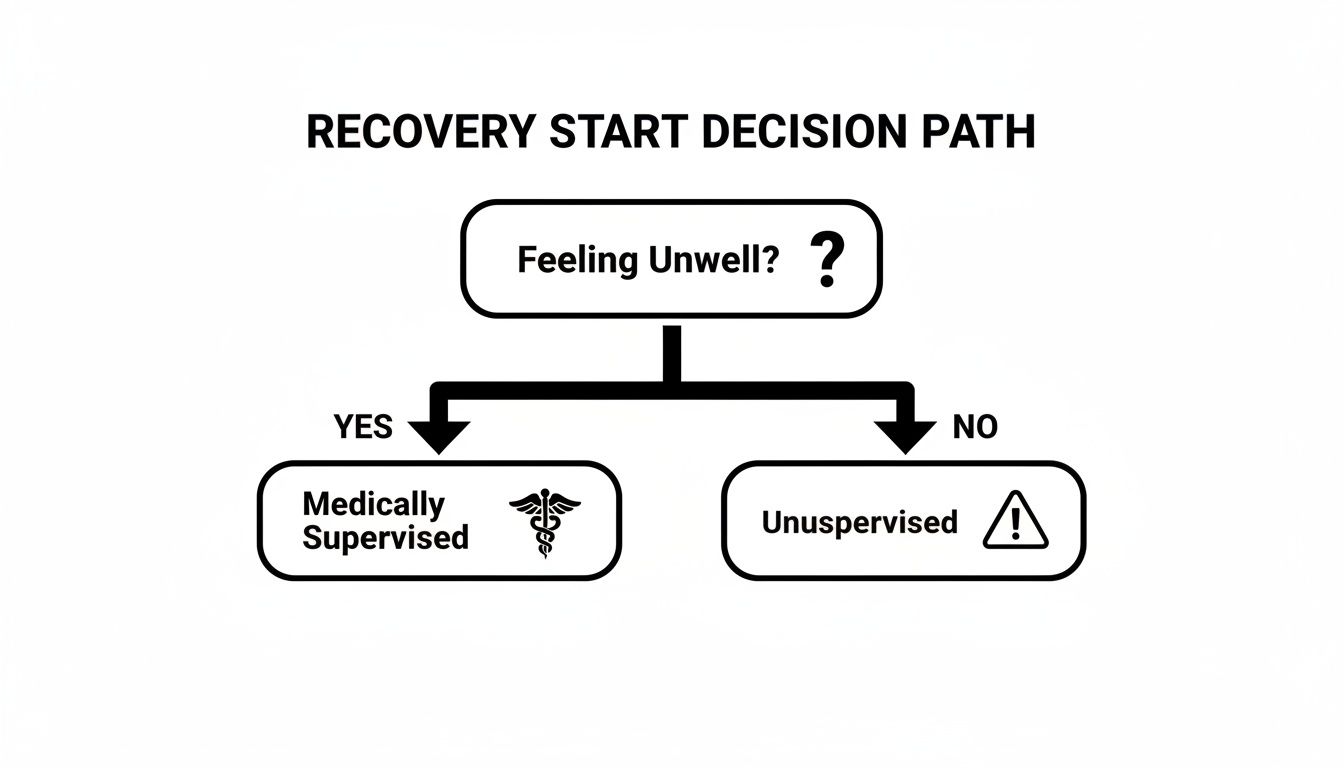
As the chart shows, if you’re feeling physically sick from withdrawal, your body is sending a clear signal: you need medical supervision to get through this safely.
Outpatient Detox: A Flexible Alternative
On the flip side, outpatient medical detox offers a way to get help while still managing your daily life. This model works well for people with milder withdrawal symptoms who have a rock-solid, stable support system at home. If you have work, school, or family duties you simply can’t step away from, outpatient care might be the right fit.
Here, you live at home but go to scheduled appointments at a clinic or treatment center. During these visits, you’ll meet with medical staff for check-ups, get any medications you need to manage symptoms, and take part in therapy. The structure allows you to immediately practice the coping skills you're learning in your actual day-to-day environment.
To make the choice clearer, here’s a straightforward comparison of the two main settings.
Comparing Inpatient vs Outpatient Medical Detox
| Feature | Inpatient Detox | Outpatient Detox |
|---|---|---|
| Supervision | 24/7 medical and clinical monitoring in a residential facility. | Scheduled appointments at a clinic a few times a week; you live at home. |
| Ideal Candidate | Someone with severe dependency, high risk of dangerous withdrawal (e.g., alcohol, benzos), unstable home environment, or co-occurring medical/mental health issues. | Someone with mild to moderate symptoms, a strong and stable support system at home, and the ability to manage work/school responsibilities. |
| General Cost | Higher due to round-the-clock care, lodging, and meals. | Lower because it does not include housing or 24/7 staffing. |
Ultimately, choosing between inpatient and outpatient care boils down to matching the intensity of the program with the intensity of your needs.
The key difference isn't about one being "better" than the other; it's about matching the intensity of care to the intensity of your needs. Inpatient care prioritizes total immersion and safety, while outpatient care focuses on integration and flexibility.
Choosing a medical detox in Houston, TX, means taking an honest look at your situation. You’ll want to consider a few key factors:
- Substance and Usage History: What have you been using, and for how long? Some substances have far more dangerous withdrawal profiles than others.
- Home Environment: Is your home a safe, stable, and supportive place to begin recovery? Or is it filled with triggers?
- Co-occurring Conditions: Are you managing other health issues, physical or mental, that require professional medical oversight?
- Previous Relapse History: If you’ve tried quitting on your own before, what were the biggest roadblocks you ran into?
Walking through these questions with a treatment professional is the best way to land on the right level of care. Both inpatient and outpatient programs are designed to give you the medical support you need to get through withdrawal safely, paving the way for the next phase of your recovery.
Navigating Withdrawal Timelines and Medications
The thought of withdrawal is often one of the biggest hurdles to seeking help. It’s easy to picture it as an unbearable, painful process. But in a professional medical detox setting, this experience is carefully managed from start to finish.
When you understand the general timelines and the science behind the medications we use, it demystifies the whole thing. It’s about replacing fear with confidence.
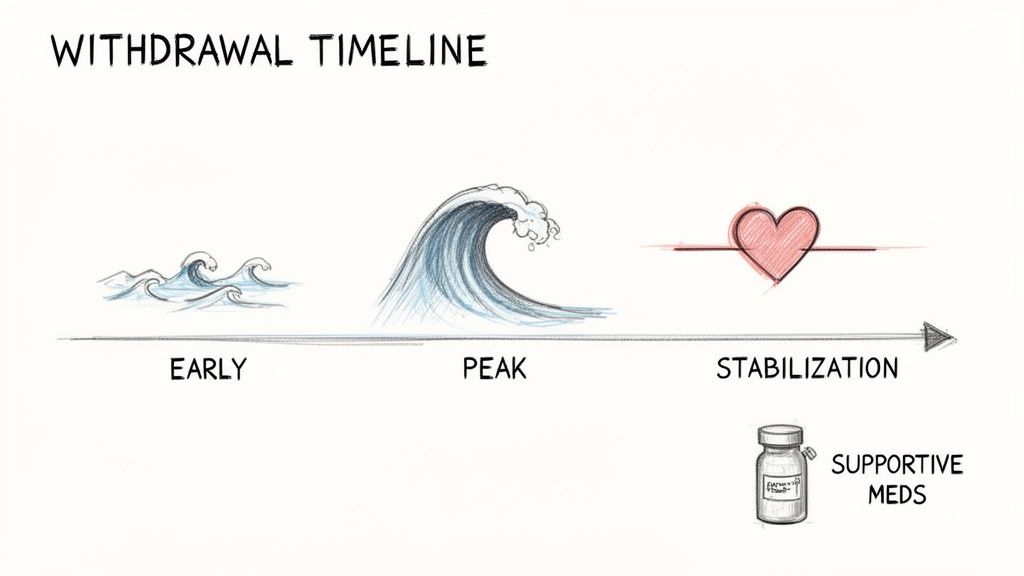
While every single person’s experience is unique, withdrawal symptoms generally follow a predictable pattern. They begin, intensify to a peak, and then gradually subside as your body finds its new balance.
Understanding Common Withdrawal Timelines
The type of substance you’ve been using has the biggest impact on the withdrawal timeline. Each category of drug affects the brain and body differently, which results in distinct symptom patterns and durations. Knowing what to expect is a key part of the care provided at a medical detox in Houston, TX.
Here’s a general look at what you might expect:
- Alcohol: Symptoms can start just 6-12 hours after the last drink, often peaking within 48-72 hours. Medically supervised detox is absolutely crucial here because of the risk of severe complications like delirium tremens (DTs).
- Opioids (Heroin, Fentanyl, Painkillers): For short-acting opioids like heroin, withdrawal usually begins within 8-12 hours and peaks around 72 hours. Longer-acting opioids like methadone can have a more delayed onset and a more prolonged withdrawal period.
- Stimulants (Cocaine, Methamphetamine): While not typically as physically dangerous as alcohol or opioid withdrawal, the psychological crash can be intense. Symptoms like severe depression, fatigue, and agitation often peak within the first few days and can linger for weeks.
The primary goal of medical detox is not to eliminate all discomfort but to manage it effectively, ensuring your safety and stability. It transforms an unpredictable and risky process into a structured, medically-supported start to recovery.
Medications That Support a Safer Detox
The medications used during detox aren't just about masking symptoms; they are scientifically chosen tools designed to rebalance your body's chemistry and keep you safe. They work by targeting specific receptors in the brain to reduce cravings, ease physical pain, and calm anxiety.
Think of it like having a support crew for your body. If withdrawal symptoms are a raging fire, these medications are targeted extinguishers that calm the flames, rather than letting them burn out of control.
Some commonly used medications and their functions include:
- Buprenorphine (Suboxone): This is often used for opioid withdrawal. It works by partially activating the same receptors as opioids, which helps to reduce cravings and withdrawal symptoms without producing the same intense high.
- Benzodiazepines (Valium, Ativan): These are frequently used for alcohol detox to prevent the most dangerous withdrawal symptoms, such as seizures and severe agitation. They help calm the central nervous system.
- Comfort Medications: Other medications may be used to target specific symptoms like nausea (Zofran), muscle aches (pain relievers), or sleep disturbances (trazodone), making the process much more manageable.
By combining medical expertise with these proven medications, a professional detox center provides a safe, controlled environment where your body can heal. This sets a solid foundation for the next steps in your recovery journey.
How to Choose the Right Houston Detox Center
Picking a provider for medical detox in Houston is one of the most critical decisions you'll make on the road to recovery. Not all centers are built the same, and finding a high-quality, trustworthy facility is non-negotiable for a safe and effective start. Your choice should hinge on clear signals of quality, compassionate care, and a real commitment to your long-term success.
Think of it like choosing the contractor who will pour the foundation for a new house. You wouldn't hire someone without checking their credentials, seeing their past work, and making sure they have a rock-solid plan. The same level of due diligence applies here—medical detox is the foundation your entire recovery will be built on.
Check for Accreditation and Licensing
First things first: verify their credentials. Look for facilities accredited by nationally recognized organizations like The Joint Commission (JCAHO) or the Commission on Accreditation of Rehabilitation Facilities (CARF). These aren't just fancy badges; they prove a center meets tough national standards for safety, quality of care, and patient outcomes.
Beyond that, make sure the facility is licensed by the State of Texas. This confirms they operate legally and stick to specific state-level health and safety rules. These credentials give you an essential layer of assurance that you're in a professional and accountable environment.
Evaluate the Clinical Team and Treatment Methods
A detox center is only as good as its people. You want to see a multidisciplinary team that includes:
- Medical Doctors (MDs): To oversee the medical side of your detox and handle any health complications that pop up.
- Registered Nurses (RNs): For 24/7 monitoring, medication administration, and immediate hands-on care.
- Licensed Therapists: To provide the crucial emotional and psychological support needed during the withdrawal process.
It’s not just about the degrees on the wall, though. Ask about their treatment approach. The facility should be using evidence-based treatments—clinical methods that are backed by solid scientific research. This shows they’re committed to using strategies that are proven to work, not just outdated or unverified practices.
A reputable detox center will be completely open about their accreditations, staff credentials, and the therapeutic methods they use. If a facility gets cagey when you ask for this information, consider it a major red flag.
Look Beyond Detox to the Full Continuum of Care
Detox is just the beginning. A make-or-break question to ask is, "What happens next?" The best detox centers don't just get you stable and then send you out the door; they have a clear, connected plan for your continued recovery. This is what we call a continuum of care.
The need for this next step is driven home by the challenges Houston is facing. Data from Harris County in 2016 showed that cocaine, methamphetamine, and heroin were behind hundreds of overdose deaths. This was part of a wider crisis where nearly 369,000 people in the area were classified with a substance use disorder. You can explore more about local substance use trends to grasp the full scope. These numbers show exactly why just detoxing isn't enough; you need sustained treatment to get at the root causes of addiction and prevent relapse.
A facility that offers a seamless handoff into outpatient programs—like a Partial Hospitalization Program (PHP) or an Intensive Outpatient Program (IOP)—shows a genuine investment in your long-term sobriety. This integrated approach ensures you move right from medical stabilization into the therapeutic work that leads to real, lasting healing.
The Critical Next Steps After Medical Detox
Finishing medical detox is a massive accomplishment. It’s the moment your body finally starts to heal, breaking free from the grip of physical dependence. But this is just the beginning of the road to recovery, not the finish line.
Think of it like clearing a shaky, cluttered foundation before you can build a house. Detox clears the ground, but without the next phase of construction—therapy and building new skills—that foundation is still vulnerable to collapse.
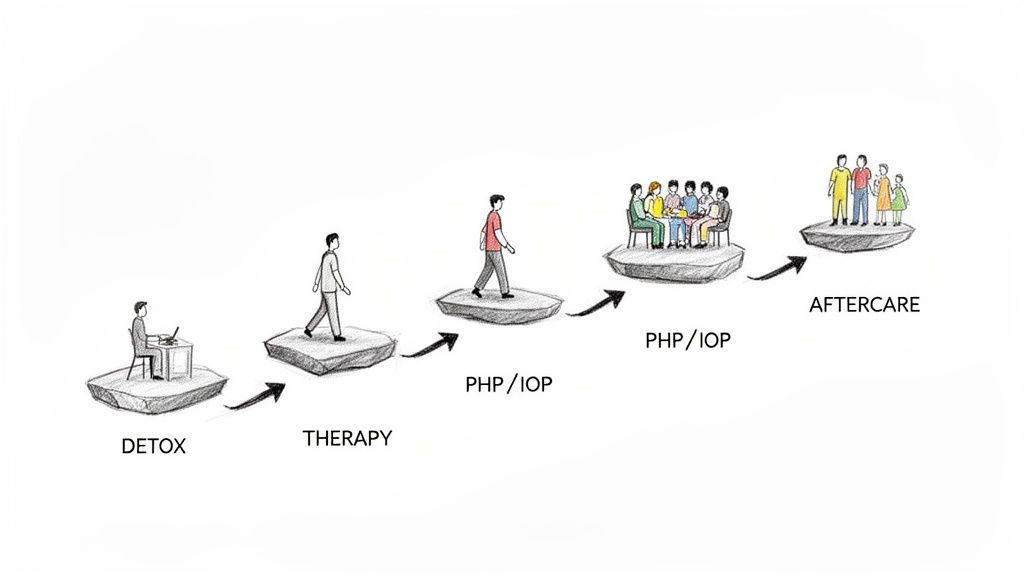
This is exactly why it’s so important to move directly from a medical detox in Houston, TX, into a structured therapy program. Detox handles the physical side of things, but addiction’s roots dig much deeper, twisting into our thoughts, behaviors, and emotions. Going straight into treatment keeps the momentum going and drastically cuts the risk of relapse, which is highest in the first few weeks after detox.
Understanding Step-Down Levels of Care
Once you’re stable, you don’t have to dive back into daily life without a safety net. Step-down programs like a Partial Hospitalization Program (PHP) and an Intensive Outpatient Program (IOP) serve as a bridge, giving you solid clinical care while you live at home. These programs are where you build the real-world skills for long-term sobriety.
- Partial Hospitalization Program (PHP): This is the most structured type of outpatient care. It usually involves treatment for several hours a day, five days a week, offering a support level similar to residential treatment but with more freedom.
- Intensive Outpatient Program (IOP): IOP offers more flexibility with fewer hours required each week. This lets you fit treatment around work, school, or family, allowing you to apply what you’re learning in therapy to your life in real-time.
These programs are the engine room of recovery. This is where the real work happens.
Building the Tools for Lasting Sobriety
Here in Houston, the need for effective, ongoing care is impossible to ignore. In the Houston-Sugar Land-Baytown area, 11.8% of people 12 and older reported using illicit drugs in the last year. Even more sobering, substance-involved deaths in Harris County jumped by a staggering 74.9% between 2018 and 2022.
This data from Houston's substance use statistics highlights why strong outpatient programs are not just helpful—they are essential to the health of our community.
Detox makes recovery possible, but continued therapy makes it stick. This is where you learn to handle life’s curveballs without falling back on old habits, building a future based on resilience, not just abstinence.
Therapeutic programs are where you get to the why behind the addiction. You’ll work with proven therapies to build a rock-solid psychological and emotional foundation for your new life.
Key therapeutic approaches include:
- Cognitive Behavioral Therapy (CBT): This approach helps you spot and change the negative thought patterns and behaviors that drive substance use.
- Trauma-Informed Care: For many people, substance use is tied to past trauma. This approach creates a safe space to process those experiences without causing more harm.
- Family Support and Therapy: Addiction doesn’t just affect one person; it impacts the whole family. Involving loved ones helps mend relationships and builds a stronger support network. A crucial part of this is learning what it means to make amends and begin rebuilding trust.
By stepping directly from detox into a program like PHP or IOP, you’re not just getting sober. You are actively building a life in recovery, one supported by new skills, a deeper understanding of yourself, and a community that wants to see you succeed.
Common Questions About Medical Detox in Houston
Deciding to get help is a massive first step. But right behind that decision comes a wave of practical, real-world questions. For anyone looking into medical detox in Houston, TX, figuring out the logistics of cost, work, and family can feel just as overwhelming as the addiction itself.
Let's clear the air. Getting straight answers to these common questions can turn a mountain of uncertainty into a clear, manageable path forward. It’s all about having the information you need to choose the best next step for yourself or someone you care about.
How Much Does Medical Detox Cost and Does Insurance Cover It?
The cost of detox really depends on the program. Inpatient care, where you have 24/7 medical supervision and a place to stay, is naturally a bigger investment than an outpatient program. The length of your stay and the specific medical support you need will also shape the final cost.
Here's the good news: The Affordable Care Act (ACA) lists addiction treatment as an essential health benefit. This means most major insurance plans are required to cover medical detox and the treatment that follows. A good admissions team can quickly verify your benefits, explain exactly what your plan covers, and spell out any out-of-pocket costs you might face.
The goal of any quality treatment center is to make care accessible. Don't ever let financial worries stop you from making that first call—there are often more options available than you realize.
Can I Still Work While Going Through Detox?
This is a huge concern for many people, and the answer comes down to the level of care you need.
If you need inpatient detox, you will have to take time off work. The focus needs to be entirely on getting you medically stable and healthy. Your job may be protected during this time under the Family and Medical Leave Act (FMLA), which gives eligible employees job-protected, unpaid leave for specific medical situations.
On the other hand, outpatient detox is built for people who need to keep up with work and family life. These programs have flexible schedules, with day and evening sessions that let you get critical medical support while still living at home and going to your job. This structure is great because you can immediately start applying what you learn in recovery to your everyday environment.
What Happens If I Stop Treatment After Detox?
Getting through detox is a massive win, but it’s just the first step on the field. Detox gets your body stable, but it doesn't touch the underlying psychological, emotional, and behavioral habits that drive addiction. Think of it like this: detox clears away the storm wreckage so you can finally start rebuilding the house.
People who don't continue with therapy or an outpatient program after detox have a much higher risk of relapse. Without building new coping skills, a solid support system, and a real understanding of your personal triggers, it's incredibly easy to slide back into old patterns when life gets stressful. Continued treatment is where you build the strong foundation needed for a recovery that actually lasts.
How Can I Help a Loved One Who Needs Detox?
Talking to a loved one about their substance use is delicate. It requires compassion, patience, and a bit of a game plan. Your goal isn't to force them into a decision but to open a door for a real conversation.
Here are a few practical steps you can take:
- Express Concern, Not Judgment: Stick to "I" statements to explain how their actions are affecting you. "I'm worried about your health when I see…" lands very differently than, "You have a problem and you need to fix it."
- Do Some Research First: Come to the conversation with information about accredited detox centers in Houston. Having a concrete, real-world solution to offer can make the idea of getting help feel less abstract and more achievable.
- Suggest a Professional Consultation: Frame it as just a conversation, no strings attached. Recommending they talk to an admissions specialist or a therapist can feel much less intimidating than demanding they commit to a full program on the spot.
- Bring in a Professional: If you're getting nowhere, consider organizing a formal intervention with the help of a licensed professional. They can guide the conversation safely and make sure it stays productive.
Supporting someone is a marathon, not a sprint. Just offering help and being a consistent, reliable source of support is one of the most powerful things you can do.
If you or someone you care about is ready to take the first step, the compassionate team at Altura Recovery is here to answer your questions and guide you through the process. We provide a clear path from medical stabilization to a thriving life in recovery. Visit us at https://www.alturarecovery.com to learn more.