Getting sober is the first monumental step, but staying sober requires building a life that feels more rewarding than substance use ever did. Lasting recovery isn't just about avoiding triggers; it's about actively developing a new toolkit of capabilities. These are practical, emotional, and social tools that empower you to navigate life's challenges with confidence and resilience.
This guide goes beyond theory, offering a deep dive into 10 essential life skills for addiction recovery that form the bedrock of a fulfilling, substance-free future. Each skill is a building block, creating a strong foundation that not only prevents relapse but also fosters personal growth, meaningful connections, and a profound sense of purpose.
We will explore specific, actionable strategies you can start implementing today to transform your recovery from a daily struggle into a journey of empowerment. From mastering emotional regulation and communication to discovering a renewed sense of meaning, these skills are the architecture of a stable, satisfying life. You will learn not just what to do, but how to do it, with practical examples for managing stress, building a robust support network, and handling conflict constructively. This article provides a comprehensive roadmap for anyone seeking to move beyond simply abstaining and toward truly thriving in recovery. We'll examine tangible techniques rooted in evidence-based practices like Cognitive Behavioral Therapy (CBT), mindfulness, and effective relapse prevention planning, providing you with the tools necessary for long-term success.
1. Cognitive Behavioral Therapy (CBT)
Cognitive Behavioral Therapy (CBT) is a structured, goal-oriented form of psychotherapy that serves as a cornerstone among life skills for addiction recovery. It operates on the fundamental principle that our thoughts, feelings, and behaviors are interconnected. By identifying and changing destructive thinking patterns, individuals can transform their behavioral responses to challenging situations, thereby reducing the reliance on substances as a coping mechanism.
CBT is particularly effective because it’s not just talk therapy; it’s a hands-on approach that equips you with a practical toolkit for navigating daily life without substance use. It teaches you to become an observer of your own mind, recognizing the automatic negative thoughts that often precede a craving or relapse.
How CBT Works in Practice
The process involves working with a therapist to deconstruct the cycle of addiction. You learn to spot the specific triggers, whether they are people, places, or emotional states, that initiate thoughts about using. From there, you challenge the validity of those thoughts and reframe them into more constructive, empowering beliefs.
For instance, a thought like, "I failed, so I might as well give up and use," can be systematically challenged and replaced with, "This is a setback, not a total failure. I can use my support system and get back on track." This mental shift is a powerful tool in preventing a lapse from turning into a full-blown relapse.
Actionable Tips for Implementing CBT
To integrate CBT into your recovery, consider these practical steps:
- Keep a Thought Record: Use a simple journal or a CBT app to log situations that trigger cravings. Note the automatic thought that arises, the feeling it creates, and your behavioral response. This practice builds crucial self-awareness.
- Develop Coping Cards: Write down rational, positive responses to your common negative thoughts on small cards. Keep them with you to read during moments of high stress or temptation.
- Practice Behavioral Experiments: Actively test your negative beliefs. If you believe you can't socialize without alcohol, attend a sober event and observe the outcome. This provides real-world evidence to counter distorted thinking.
- Engage in Role-Playing: Work with a therapist or a trusted friend to practice handling high-risk situations, such as declining a drink or setting boundaries with friends who still use.
CBT provides the framework to not only stop a behavior but to understand and rewire the thought processes that drive it. This makes it an indispensable skill for achieving long-term, sustainable recovery.
2. Mindfulness and Meditation
Mindfulness and meditation are powerful contemplative practices that have become essential life skills for addiction recovery. This approach centers on developing a non-judgmental awareness of the present moment, allowing you to observe your thoughts, feelings, and physical sensations without being controlled by them. Instead of automatically reacting to cravings or difficult emotions, mindfulness teaches you to sit with them as temporary experiences that will pass.

By fostering this inner calm and emotional regulation, mindfulness helps to dismantle the impulsive, stress-driven cycle of addiction. It creates a crucial pause between a trigger and a potential response, giving you the space to make a conscious choice that aligns with your recovery goals rather than falling back into old habits.
How Mindfulness Works in Practice
In recovery, mindfulness is not about emptying your mind but about changing your relationship with it. For example, when an intense craving arises, the typical reaction is to fight it, fear it, or immediately give in. A mindful approach, often called "urge surfing," involves observing the craving as a wave of sensation in your body. You notice its peak and how it eventually subsides on its own, without you having to act on it.
This practice is integrated into many treatment programs, such as Mindfulness-Based Stress Reduction (MBSR), to help individuals manage stress and prevent relapse. It empowers you to see that you are not your cravings; you are the observer of them.
Actionable Tips for Implementing Mindfulness
To build mindfulness into your daily recovery routine, try these practical steps:
- Start Small: Begin with just 5-10 minutes of guided meditation each day using apps like Insight Timer or Headspace. Consistency is more important than duration.
- Practice Body Scans: During stressful moments, lie down and mentally scan your body from your toes to your head, noticing any tension or sensation without judgment. This grounds you in the present.
- Mindful Moments: Integrate mindfulness into daily activities. Pay full attention to the taste and texture of your food, the feeling of water while washing dishes, or the sensation of your feet on the ground as you walk.
- Join a Group: Find a local or online meditation group. Practicing with others can provide accountability and a sense of community, strengthening your commitment.
Mindfulness gives you the power to respond to life's challenges with awareness and intention, rather than reacting with ingrained, destructive behaviors. It builds the resilience needed for lasting sobriety.
Peer-Led 12-Step Programs for Lasting Addiction Recovery
A 12-Step program is a peer-led support framework built on principles of mutual aid, spiritual growth, and personal accountability. These programs are among the most recognized life skills for addiction recovery, offering a structured pathway guided by a series of spiritual principles. Originating with Alcoholics Anonymous (AA), the model has been adapted for countless other addictions, from narcotics (NA) to gambling (GA).
The core strength of a 12-Step program lies in its community. It provides a safe, non-judgmental environment where individuals can share their experiences, strengths, and hopes with others who truly understand the struggle. This sense of fellowship combats the profound isolation that often accompanies addiction, fostering connection and shared purpose.
How 12-Step Programs Work in Practice
The process is centered around "working the steps" with the guidance of a sponsor, who is a more experienced member in recovery. These steps guide you from admitting powerlessness over the addiction to making amends for past wrongs and carrying the message of recovery to others. The program is not a quick fix but a design for living that promotes ongoing self-reflection and spiritual development.
For example, the Fourth Step involves making a "searching and fearless moral inventory." This isn't about self-criticism but about honestly identifying the character defects and patterns that fueled the addiction. By bringing these issues to light with a sponsor, you can begin to heal and change the underlying behaviors. For those interested, you can learn more about 4th Step inventory examples.
Actionable Tips for Implementing a 12-Step Program
To effectively integrate a 12-Step program into your recovery, consider these practical steps:
- Find a Home Group: Attend various meetings to find one where you feel comfortable and connected. Establishing a "home group" provides consistency and a reliable support base.
- Get a Sponsor Quickly: A sponsor is a mentor who has worked the steps and can guide you through the process. Aim to find one within your first few weeks of attending meetings.
- Work the Steps Thoroughly: Avoid a superficial approach. Engage honestly and deeply with each step, using the program's literature and your sponsor's guidance to do the necessary internal work.
- Use the Literature: Keep program literature, like the AA "Big Book," handy. The slogans and readings offer daily wisdom and reinforcement for staying on the recovery path.
12-Step programs provide a time-tested roadmap for recovery, emphasizing that you don't have to walk the path alone. The combination of structured steps and peer support creates a powerful foundation for lasting change.
4. Stress Management and Coping Skills
Stress Management and Coping Skills are foundational components among the essential life skills for addiction recovery. This involves developing a robust set of techniques to handle life's inevitable pressures without resorting to substances. Since unmanaged stress is one of the most common relapse triggers, mastering healthy coping mechanisms is not just beneficial; it's a requirement for sustainable sobriety.
This skill set moves individuals from a reactive state, where stress leads directly to cravings, to a proactive one. It equips you with practical, healthy alternatives to manage emotional and physical tension. By learning to regulate your response to stressors, you reclaim control over your nervous system and your choices, building resilience against the triggers that once seemed insurmountable.
How Stress Management Works in Practice
The process begins with identifying personal stress triggers and recognizing the early warning signs, like irritability or physical tension. From there, you build a personalized "toolkit" of strategies to deploy when these signs appear. This isn't about eliminating stress entirely but changing how you respond to it, turning overwhelming situations into manageable challenges.
For example, when faced with an anxiety-provoking work deadline, instead of feeling an immediate urge to use, you might practice a box breathing exercise (inhaling for 4 seconds, holding for 4, exhaling for 4, and holding for 4) to calm your physiological response. This brief pause creates the mental space needed to approach the problem with a clear mind rather than an impulsive reaction.
Actionable Tips for Implementing Stress Management
To build effective stress management skills into your recovery, consider these steps:
- Build a Coping Toolkit: Create a list of 5-7 go-to techniques that work for you, such as progressive muscle relaxation, taking a walk, journaling, or listening to calming music. Having multiple options ensures you're prepared for different situations.
- Practice During Calm Moments: Don't wait for a crisis to try a new technique. Practice breathing exercises or relaxation when you are not stressed. This makes the skill feel natural and accessible when you truly need it.
- Use a Stress Journal: Track situations, people, or thoughts that cause you stress. Note your physical and emotional responses. This helps you identify patterns and anticipate potential triggers before they escalate. You can discover more powerful coping skills for substance abuse to add to your journal.
- Incorporate Physical Activity: Make regular exercise a non-negotiable part of your routine. Activities like walking, running, or yoga are proven to reduce stress hormones and improve mood, providing a powerful and healthy outlet.
Effective stress management dismantles the link between life's challenges and substance use. It empowers you to navigate difficulties with confidence, transforming stress from a threat to an opportunity for growth.
5. Building a Support Network
Building a support network is the intentional process of creating and nurturing healthy relationships that champion your sobriety. This vital component among life skills for addiction recovery moves beyond casual friendships to establish a reliable web of individuals who provide accountability, encouragement, and a sense of belonging. It operates on the principle that connection is a powerful antidote to the isolation that often fuels addiction.
This skill is crucial because recovery is not a journey meant to be walked alone. A strong support system acts as a buffer against stress, a source of guidance during uncertainty, and a celebration crew for your milestones. It involves identifying allies, setting boundaries with unsupportive influences, and actively engaging with communities centered on healing.
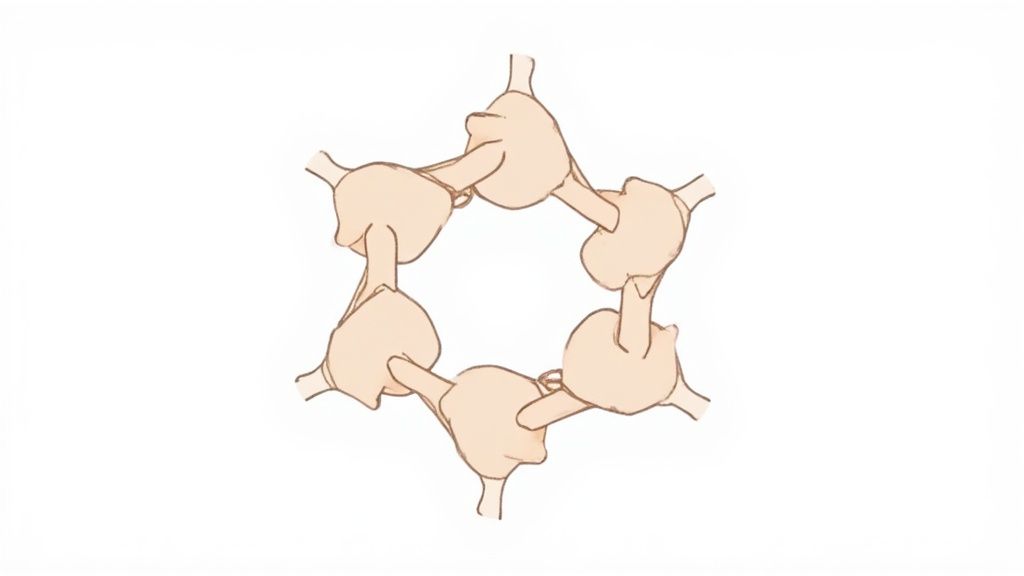
How Building a Support Network Works in Practice
The process begins with an honest assessment of your current relationships and then moves toward intentional connection. You learn to lean on others in healthy ways, whether it's calling a sponsor before acting on a craving, sharing vulnerabilities in a group therapy session, or rebuilding family trust through guided communication.
For example, instead of isolating after a difficult day, you might reach out to an accountability partner for a daily check-in. This simple act interrupts the cycle of solitude and shame. Likewise, attending a 12-step meeting provides a space where your experiences are understood and validated, reinforcing that you are part of a larger community that shares your goals. This network becomes your first line of defense in high-risk situations. Support for family members is also critical; you can learn more about support groups for spouses on alturarecovery.com.
Actionable Tips for Implementing This Skill
To actively build your support network, integrate these practices into your life:
- Be Specific About Your Needs: Clearly communicate what you need from others. Instead of saying, "I'm having a hard day," try, "I'm feeling triggered and could use a 10-minute phone call to talk it through."
- Give Support in Return: Healthy relationships are reciprocal. Offer encouragement to others in your network, as supporting them will strengthen your own recovery and build deeper connections.
- Schedule Regular Contact: Don't wait for a crisis to connect. Schedule weekly coffee with a sober friend or set a recurring time for family check-ins to maintain consistent and reliable support.
- Join Different Types of Groups: Explore various communities like 12-step programs, SMART Recovery, or faith-based groups. Having multiple sources of support provides diverse perspectives and a wider safety net.
Your network is your lifeline in recovery. Intentionally cultivating relationships built on trust, honesty, and mutual respect transforms recovery from a battle into a shared journey.
6. Relapse Prevention Planning
Relapse Prevention Planning is a structured, proactive strategy that stands as one of the most critical life skills for addiction recovery. It is not merely hoping for the best; it's about creating a detailed, personalized roadmap to navigate the challenges of sobriety. This skill operates on the principle that by identifying high-risk situations and early warning signs, you can implement specific coping mechanisms before a craving escalates into a return to substance use.
This approach is highly effective because it moves you from a reactive to a proactive stance. Instead of being caught off guard by a trigger, you have a well-rehearsed plan of action. It provides a sense of control and preparedness, empowering you to handle difficult moments with confidence rather than fear.
How Relapse Prevention Planning Works in Practice
The process involves creating a living document that outlines your personal recovery landscape. You work, often with a therapist or sponsor, to identify specific triggers, internal warning signs like irritability or isolation, and external high-risk situations such as holidays or encountering past associates. For each identified risk, you develop a concrete, actionable response.
For example, if an upcoming work event that serves alcohol is a known trigger, your plan might include arriving with a sober friend, having a non-alcoholic drink order ready, and setting a specific time to leave. To actively manage such triggers and find enjoyable alternatives in social settings, it can be beneficial to utilize tools that help you locate mocktail options. This strategic preparation defuses the power of the trigger.
Actionable Tips for Implementing a Relapse Prevention Plan
To integrate this crucial skill into your recovery, consider these practical steps:
- Create a Written Document: Work with a professional to detail your specific triggers, emotional and behavioral warning signs, and a list of coping strategies for each.
- Develop an Emergency Contact List: Keep a list of supportive people (sponsor, therapist, trusted friends) you can call in a moment of crisis, and have it easily accessible.
- Review and Update Regularly: Your recovery journey evolves. Review your plan monthly and update it with new insights, strategies, and changing life circumstances.
- Share Your Plan: Accountability is key. Share your plan with your support network so they know how to best help you and can recognize your warning signs.
Relapse Prevention Planning is your personal blueprint for sobriety. It transforms recovery from a series of reactions into a deliberate, well-managed journey toward lasting well-being.
7. Physical Health and Exercise
An intentional commitment to physical wellness is one of the most transformative life skills for addiction recovery. This involves establishing routines around regular exercise, balanced nutrition, and adequate sleep. Physical health directly impacts mental clarity, mood regulation, and stress resilience, which are all critical for preventing relapse and building a strong foundation for sobriety.
Substance use often devastates the body, and rebuilding physical strength can feel empowering and restorative. Exercise, in particular, stimulates the release of endorphins, which act as natural mood elevators and pain relievers, helping to counteract the brain chemistry imbalances left by addiction. It provides a healthy, constructive outlet for stress, anxiety, and frustration.
How Physical Wellness Works in Practice
Integrating physical health into recovery involves replacing destructive habits with life-affirming ones. Instead of turning to a substance to cope with a difficult day, you might go for a run, attend a yoga class, or prepare a nutritious meal. This re-wires the brain’s reward system, teaching it to associate positive feelings with healthy activities rather than substance use.
For example, scheduling a morning workout can provide structure and purpose to a day that might have otherwise been unstructured and high-risk. Similarly, learning to cook healthy meals can become a mindful practice that occupies time once spent acquiring or using substances, fostering a new sense of self-care and accomplishment.
Actionable Tips for Implementing Physical Wellness
To integrate physical health into your recovery journey, consider these practical steps:
- Start Small and Be Consistent: Aim for 20-30 minutes of moderate activity, like brisk walking or cycling, 3-4 times per week. Consistency is more important than intensity at the beginning.
- Find Activities You Genuinely Enjoy: Recovery is not about punishment. Choose activities that bring you joy, whether it’s hiking, dancing, joining a sports team, or swimming. This makes it a sustainable habit.
- Prioritize Sleep Hygiene: Establish a consistent bedtime and wake-up time. Create a relaxing pre-sleep routine, and avoid screens for at least an hour before bed to improve sleep quality and reduce anxiety.
- Make it Social: Join a group fitness class, find a workout buddy in your support network, or join a sober sports league. This combines the benefits of exercise with vital social connection.
Rebuilding your physical health is a tangible act of self-love and respect. It sends a powerful message to your mind and body that you are worthy of care and capable of profound healing.
8. Emotional Regulation and Self-Compassion
Emotional Regulation and Self-Compassion are two deeply intertwined and essential life skills for addiction recovery. Emotional regulation is the ability to manage and respond to emotional experiences in a healthy way, rather than being overwhelmed by them. Paired with self-compassion, which involves treating yourself with the same kindness you would offer a friend, it creates a powerful defense against shame and perfectionism, which are common drivers of relapse.
This skill set addresses the core issue of using substances to numb or escape difficult feelings. By learning to sit with, understand, and nurture your emotional state, you eliminate the perceived need for an external solution. It shifts the internal dialogue from self-criticism to one of understanding and support, fostering resilience when faced with inevitable setbacks.
How Emotional Regulation and Self-Compassion Work in Practice
The process begins with building emotional literacy, which is simply learning to identify and name what you are feeling with specificity. Instead of just "bad," you might identify feelings of disappointment, frustration, or loneliness. This act of naming an emotion reduces its power and is the first step toward managing it. Self-compassion then enters as the way you respond to that feeling.
For example, after a mistake at work, an old pattern might involve thoughts like, "I'm a failure, I can't do anything right," leading to intense shame and a craving to use. With these skills, you would instead recognize the feeling of disappointment and apply a self-compassion break: "This is a moment of suffering. Suffering is a part of life. May I be kind to myself in this moment." This compassionate response soothes the nervous system and creates space for a healthier choice.
Actionable Tips for Implementation
To build these skills into your daily recovery practice, focus on the following:
- Use an Emotion Wheel: Keep a visual tool like an emotion wheel handy to expand your emotional vocabulary and accurately identify what you're feeling.
- Practice the RAIN Method: When a difficult emotion arises, mindfully move through these steps: Recognize what is happening, Allow the experience to be there, Investigate with kindness, and Nurture yourself with self-compassion.
- Write a Self-Compassion Letter: Write a letter to yourself from the perspective of an unconditionally loving friend, offering kindness and perspective about a perceived failure or struggle.
- Journal Without Judgment: Allow yourself to write freely about your feelings without editing or censoring. This externalizes the emotions and helps you process them in a contained way.
By learning to regulate emotions with compassion, you dismantle the very foundation that addiction is built on: the intolerance of emotional pain. This skill provides an internal source of comfort and strength that no substance can replicate.
9. Communication and Conflict Resolution Skills
Developing effective communication and conflict resolution abilities is one of the most transformative life skills for addiction recovery. Active addiction often damages relationships through dishonesty, manipulation, and emotionally charged arguments. Learning healthier ways to interact helps rebuild trust, reduces interpersonal stress that can trigger a relapse, and fosters a supportive environment crucial for long-term sobriety.
These skills are not about avoiding disagreements, but about navigating them constructively. They provide the tools to express needs, listen with empathy, and find resolutions without resorting to old, destructive patterns. By improving how you connect with others, you repair the relational harm caused by addiction and build a foundation of mutual respect and understanding.
How Communication and Conflict Resolution Work in Practice
The process involves replacing reactive, defensive communication with mindful, intentional dialogue. Instead of blaming or shutting down during a conflict, you learn to identify your own feelings and express them clearly using "I" statements. This approach de-escalates tension and invites collaboration rather than confrontation.
For example, a statement like, "You never listen to me," which provokes defensiveness, can be reframed as, "I feel unheard when we discuss this, and I need to feel like my perspective matters." This shift opens the door for a productive conversation, allowing you to address underlying issues in relationships with family, partners, or friends that may have previously fueled substance use.
Actionable Tips for Implementation
To integrate these skills into your recovery, focus on these practical steps:
- Use "I" Statements: Frame your feelings and needs from your own perspective. For example, "I feel anxious when plans change suddenly," instead of, "You're so unreliable."
- Practice Active Listening: When someone is speaking, focus entirely on their words. Reflect back what you hear ("It sounds like you're saying…") to ensure you understand before you respond.
- Set Clear Boundaries: Politely and firmly state your limits without excessive justification. Learning more about setting boundaries in recovery is a critical step in protecting your sobriety and well-being.
- Choose the Right Time: Address sensitive topics when you are both calm. Trying to resolve a conflict in the heat of the moment is rarely effective and often makes things worse.
Healthy communication is the antidote to the isolation and misunderstanding that thrive in addiction. It rebuilds bridges that were burned and creates a network of genuine, reliable support.
10. Purpose, Values, and Life Meaning
Discovering and aligning with your purpose, values, and life meaning is one of the most transformative life skills for addiction recovery. This process moves beyond simply abstaining from substances and focuses on building a new life so fulfilling that returning to the old one becomes undesirable. It's about answering the question, "What am I living for?" and using that answer as a compass.
Addiction often fills a void, creating a false sense of purpose and identity. Cultivating genuine meaning provides a durable, internal source of motivation that can weather the challenges of long-term recovery. It involves consciously identifying what truly matters to you and structuring your life around those principles, creating an identity rooted in growth and contribution.
How Purpose Works in Practice
This skill involves introspective work to clarify your core values, such as honesty, compassion, creativity, or family. Once identified, you begin aligning your daily actions and long-term goals with these values. This alignment creates a profound sense of integrity and self-worth that substance use can never replicate.
For example, if you identify "service to others" as a core value, you might find purpose in volunteering at a local shelter or mentoring someone new to recovery. This not only fills your time constructively but also builds an identity as a helpful, reliable person, directly countering the often self-destructive identity associated with active addiction.
Actionable Tips for Implementation
To integrate purpose and meaning into your recovery, consider these practical steps:
- Complete a Values Clarification Exercise: Use a values card sort or a worksheet (often available from therapists) to identify your top 5-10 core values. This provides a concrete foundation to build upon.
- Write a Personal Mission Statement: Craft a short statement that defines who you want to be and what you want to contribute. Read it daily to keep your purpose at the forefront of your mind.
- Explore Meaningful Activities: Brainstorm and try activities that align with your values, such as taking an art class if you value creativity, or enrolling in a course if you value learning.
- Set Value-Driven Goals: Establish three to five meaningful goals for the next year that are directly connected to your core values. Track your progress to build momentum and self-esteem.
Finding your purpose provides a powerful "why" that helps you navigate the "how" of staying sober. It transforms recovery from a battle of resistance into a journey of creation and fulfillment.
Top 10 Life Skills for Addiction Recovery Comparison
| Approach | Implementation complexity 🔄 | Resource requirements & accessibility ⚡ | Expected effectiveness ⭐ | Typical outcomes / impact 📊 | Ideal use cases & tip 💡 |
|---|---|---|---|---|---|
| Cognitive Behavioral Therapy (CBT) | Medium — structured sessions; needs trained therapist 🔄🔄 | Moderate — clinician time, homework, clinic access ⚡⚡ | ⭐⭐⭐⭐ — strong evidence for many addictions | Reduced relapse risk; improved coping skills; cognitive restructuring 📊 | Best for motivated clients ready for active work; use thought records and homework 💡 |
| Mindfulness & Meditation | Low–Medium — learning curve for beginners 🔄🔄 | Low — apps, group classes, self-practice; widely accessible ⚡⚧⚡ (low cost) | ⭐⭐⭐ — good adjunct; consistent practice boosts benefit | Improved urge tolerance, reduced stress/anxiety, emotional regulation 📊 | Use as complement to therapy; start 5–10 min daily and progress gradually 💡 |
| 12-Step Programs | Low — peer-led, informal structure 🔄 | Very low — free, widely available; peer sponsorship ⚡⚡⚡ | ⭐⭐⭐ — strong community effects for many participants | Peer accountability; sustained abstinence for some; social support 📊 | Ideal for those seeking community/spiritual support; try multiple meetings and get a sponsor 💡 |
| Stress Management & Coping Skills | Low — teachable techniques, quick to learn 🔄🔄 | Low — brief training, self-practice, minimal cost ⚡⚡⚡ | ⭐⭐⭐ — immediate, practical benefits | Reduced relapse vulnerability; better daily functioning and resilience 📊 | Build a personalized toolkit (5–7 techniques); practice during low-stress times 💡 |
| Building a Support Network | Medium — time and relational work; vulnerability required 🔄🔄🔄 | Low–Moderate — time investment; may use groups or online platforms ⚡⚡ | ⭐⭐⭐⭐ — strong protective factor clinically | Reduced isolation; increased accountability; practical help during crises 📊 | Be specific about needed support; give reciprocity and schedule regular contact 💡 |
| Relapse Prevention Planning | Medium — assessment, writing, regular review 🔄🔄🔄 | Moderate — clinician support helpful; written plan and updates ⚡⚡ | ⭐⭐⭐⭐ — effective at preventing lapses escalating | Clear action steps in crises; early warning recognition; increased preparedness 📊 | Create a written plan, review monthly, and share with trusted supports 💡 |
| Physical Health & Exercise | Low–Medium — requires routine and consistency 🔄🔄 | Moderate — time, possible costs for equipment/classes ⚡⚡ | ⭐⭐⭐ — adjunctive benefits for mood and sleep | Improved mood, sleep, self-esteem; structure and identity beyond use 📊 | Start 20–30 min moderate activity 3–4x/week; choose enjoyable activities 💡 |
| Emotional Regulation & Self-Compassion | Medium — practice and often therapy-supported 🔄🔄🔄 | Moderate — self-practice plus possible therapy ⚡⚡ | ⭐⭐⭐⭐ — reduces shame and enhances resilience | Greater emotional flexibility; fewer shame-driven relapses; improved relationships 📊 | Use RAIN and self-compassion phrases; seek therapy for deep trauma work 💡 |
| Communication & Conflict Resolution Skills | Medium — skill-building and rehearsal needed 🔄🔄🔄 | Low–Moderate — skills training or family therapy ⚡⚡ | ⭐⭐⭐ — improves relational stability | Fewer conflicts, clearer boundaries, stronger repair skills in relationships 📊 | Practice "I" statements and scripts; consider family/couples therapy for support 💡 |
| Purpose, Values & Life Meaning | High — deep reflective work and identity change 🔄🔄🔄🔄 | Low–Moderate — time, possible therapy or mentoring ⚡⚟⚟⚡ (time-intensive) | ⭐⭐⭐⭐ — strong long-term motivator and relapse buffer | Increased life satisfaction, sustained motivation, reduced existential drivers of use 📊 | Do values card sort; write mission statement and set 3–5 meaningful goals 💡 |
Integrating Skills into Your Daily Recovery Practice
The journey of addiction recovery is not a sprint to a finish line; it is a marathon of transformation, built one day at a time through consistent, intentional effort. Throughout this article, we have explored a comprehensive toolkit of ten essential life skills for addiction recovery, from the cognitive reframing techniques of CBT to the grounding presence cultivated through mindfulness and the structured support found in 12-Step programs. Each skill represents a powerful tool designed to help you navigate the complex terrain of sobriety with greater confidence and resilience.
Mastering these skills is not about achieving perfection. It is about embracing progress. It’s about learning to regulate your emotions with compassion, communicate your needs effectively, and manage stress without resorting to old, destructive patterns. It is a process of gradually replacing the habits that fueled addiction with new, healthy behaviors that support a vibrant, meaningful life. The goal is to weave these practices into the very fabric of your daily existence, transforming them from abstract concepts into lived realities.
Making a Commitment to Consistent Practice
The true power of these life skills is unlocked through consistent application. Think of them like muscles: they grow stronger with regular exercise. A relapse prevention plan is only effective if it is reviewed and updated. A support network only provides strength if it is actively engaged. Physical exercise only improves well-being when it becomes a consistent part of your routine.
It can feel overwhelming to try and implement all ten skills at once. Instead, adopt a strategy of focused integration:
- Start Small: Choose one or two skills that address your most immediate challenges. If social anxiety is a major trigger, focus on communication skills. If you are constantly overwhelmed by negative thoughts, make CBT and mindfulness your initial priorities.
- Set Realistic Goals: Commit to a small, achievable action each day. This could be a five-minute meditation, writing down three things you are grateful for, or calling one person in your support network.
- Track Your Progress: Keep a journal to note your efforts and successes. Acknowledging small wins builds momentum and reinforces your commitment to the recovery process. This record also provides valuable insight during difficult moments, reminding you of how far you have come.
Turning Knowledge into Lifelong Habits
The ultimate objective is to internalize these life skills for addiction recovery so deeply that they become your default response to life’s challenges. This is where a structured, supportive environment becomes invaluable. While self-guided learning is a crucial first step, professional guidance helps ensure you are applying these techniques correctly and effectively, especially when dealing with co-occurring mental health conditions.
Lasting recovery is a dynamic process of healing and growth, not merely the absence of substance use. It is about building a life that is so fulfilling and resilient that the old coping mechanisms are no longer needed. By dedicating yourself to developing this toolkit, you are not just fighting against addiction; you are proactively building a future defined by purpose, connection, and profound well-being. This is the authentic, sustainable freedom that you deserve.
Ready to turn these skills into a solid foundation for your sobriety? The expert team at Altura Recovery specializes in integrating evidence-based therapies with practical life skills training in our flexible outpatient programs. Visit Altura Recovery to learn how we can create a personalized treatment plan that empowers you to build a resilient, lasting recovery.