Imagine you’re trying to fix a wilting plant. You could just snip off the brown leaves, but an experienced gardener knows the real problem might be in the soil, the sunlight, or the water. Holistic treatments for addiction work like that gardener—they look at the entire ecosystem of a person to restore health from the ground up.
What Are Holistic Treatments for Addiction?
This approach doesn’t see addiction as just a bad habit to break. Instead, it views it as a condition that tangles up a person’s mind, body, and spirit. It weaves complementary therapies together with proven clinical methods to heal the whole person, building a much stronger foundation for a life in recovery.
A holistic model understands that everything is connected. Chronic stress can ignite cravings. Poor nutrition can make depression feel heavier. A missing sense of purpose can make sobriety feel hollow and pointless. By getting to the root of these issues, holistic care gives you real tools to manage the messy, complicated, and beautiful business of getting well.
The Philosophy of Whole-Person Healing
The core idea is simple: you can’t heal one part of a person while ignoring the others. Think of your well-being as a three-legged stool, with each leg representing your mind, body, and spirit. If one leg is wobbly or broken, the whole stool becomes unstable. Holistic practices work to strengthen all three legs at the same time.
This means integrating therapies that support each dimension:
- Mind: Mindfulness and meditation to quiet anxious thoughts and get a handle on emotional swings.
- Body: Yoga, nutritional therapy, and acupuncture to help repair physical damage and lower stress.
- Spirit: Art therapy, music, or spiritual support to reconnect with a sense of meaning and self-worth.
By bringing these elements together, you gain a much deeper understanding of your personal triggers and learn healthy ways to cope that go far beyond just saying "no" to a substance. You can dive deeper into how these practices specifically fuel recovery by exploring the benefits of holistic therapy.
A Growing Shift in Addiction Care
This integrated model isn’t some niche idea anymore; it’s fast becoming the gold standard for effective treatment. In fact, by 2025, behavioral and counseling therapies—which now routinely include practices like mindfulness and nutrition—accounted for roughly 36–43% of the global substance use disorder treatment market.
This isn’t just a trend. It's a fundamental shift recognizing that to truly heal, we have to treat the whole person. To get a better sense of this wider perspective, it’s helpful to look at resources that detail general holistic care approaches.
Exploring Key Holistic Therapies in Recovery
Let's move beyond the idea of "whole-person" healing and look at the actual tools that make it happen. Holistic treatments aren’t just abstract concepts; they’re real, hands-on practices designed to help you build resilience, manage stress, and reconnect with the person you were before addiction took over. Each one offers a unique way to support the hard work you’re doing in clinical therapy, creating a much stronger foundation for a lasting recovery.
Think of these therapies like different instruments in an orchestra. Each has its own distinct sound, but they all work together to create a single, harmonious piece of music—your recovery. By engaging your mind, body, and spirit in different ways, you build a versatile toolkit for handling whatever challenges come your way.
This concept map shows exactly how holistic care connects the dots between mind, body, and spirit to support the whole person.
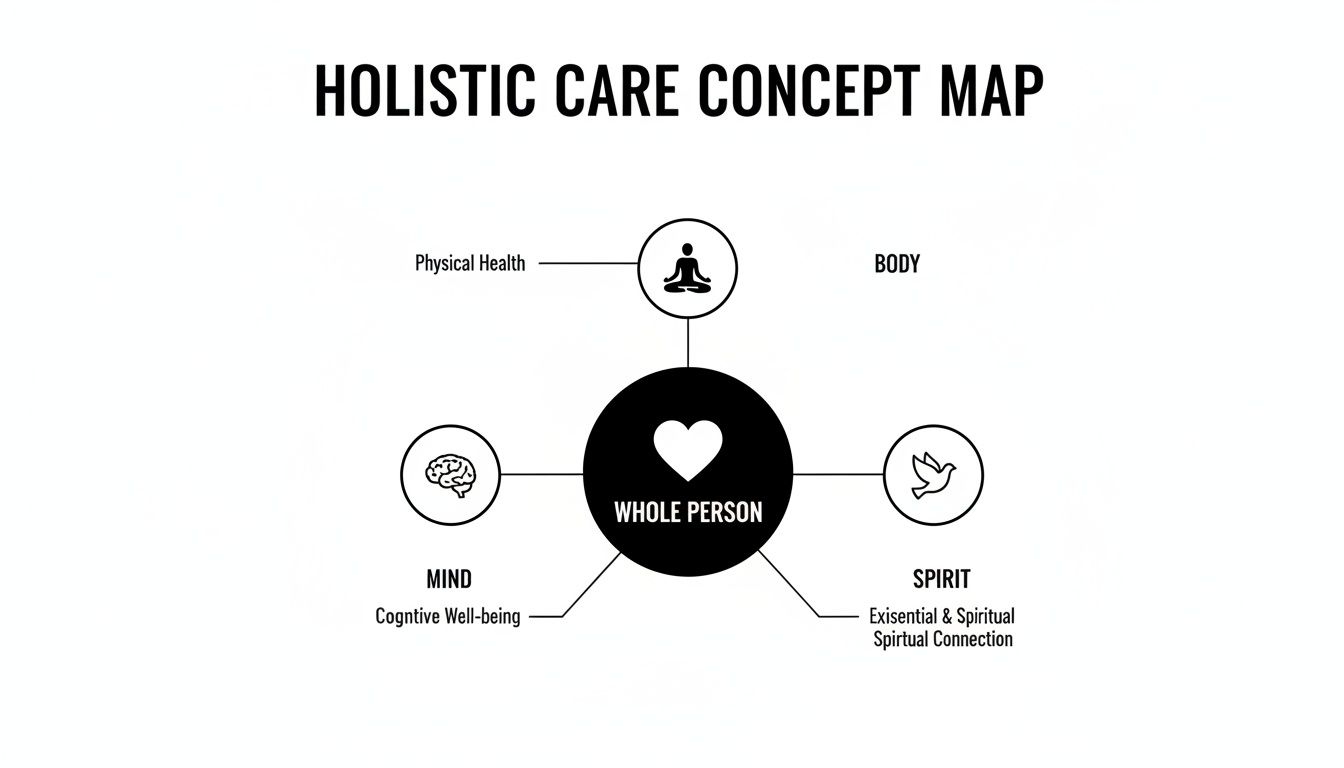
It’s a great visual reminder that true wellness isn't found in silos. It happens when mental clarity, physical health, and a sense of purpose are all addressed together.
Mindfulness And Meditation For a Calmer Mind
Active addiction often feels like being caught in an internal hurricane of cravings, anxiety, and obsessive thoughts. Mindfulness and meditation are the anchors in that storm. Instead of getting swept away by every feeling or impulse, you learn to simply observe them without judgment.
Imagine sitting on a riverbank watching leaves float by. Each leaf is a thought. You notice it, watch it drift past, and let it go—all without jumping into the river to chase it. This practice creates a critical pause between a trigger and your reaction, giving you the power to make a different choice. Over time, this builds the emotional regulation skills that are essential for preventing relapse. You can dive deeper with our guide to mindfulness exercises for stress relief.
Yoga For Mind-Body Reconnection
Substance use can create a massive disconnect between your mind and body, making you feel like a stranger in your own skin. Yoga helps rebuild that bridge. It’s a powerful combination of physical postures, breathing techniques, and meditation that fosters a sense of being present and grounded.
For someone in recovery, a yoga class is so much more than a workout. It’s a safe space to:
- Release physical tension: We hold stress and trauma in our bodies as knots, aches, and tightness. Yoga gently unwinds that.
- Improve self-awareness: By focusing on your breath and how your body feels in each pose, you get better at listening to its signals.
- Build resilience: Holding a challenging pose teaches you to breathe through discomfort instead of running from it—a perfect metaphor for handling a craving.
This practice helps you learn to trust your body again and see it as an ally on your recovery journey.
Nutritional Therapy To Heal From Within
Addiction takes a heavy toll on physical health. It often leads to major nutrient deficiencies, poor gut health, and wild blood sugar swings that fuel irritability and anxiety. Nutritional therapy is all about using food as medicine to repair that damage and support your mental well-being. A well-nourished brain is simply better at managing moods and fighting off cravings.
Proper nutrition is a cornerstone of recovery. Studies show that a balanced diet rich in amino acids, vitamins, and minerals can help restore neurotransmitter function damaged by substance use, leading to improved mood and cognitive function.
This isn’t about strict diets or deprivation. It’s about understanding how certain foods can either fuel your recovery or sabotage it. For example, simply stabilizing your blood sugar can make a world of difference in reducing mood swings. A key part of this is learning practical strategies for managing sugar cravings that often spike in early recovery.
Acupuncture For Cravings And Withdrawal
Acupuncture, a core practice in Traditional Chinese Medicine, involves placing ultra-thin needles at specific points on the body. When it comes to addiction treatment, it’s a game-changer for managing the intense physical and emotional discomfort of withdrawal.
Research suggests that acupuncture helps regulate the brain’s reward system, which gets completely thrown out of whack by substance use. It's especially effective for:
- Reducing cravings: By helping to balance key brain chemicals, it can take the edge off intense urges.
- Easing withdrawal symptoms: It helps manage everything from nausea and body aches to anxiety and insomnia.
- Promoting relaxation: The process itself is deeply calming and can lower stress hormones like cortisol.
Many people walk out of an acupuncture session feeling a profound sense of calm and relief, making those tough early days of recovery far more manageable.
Creative Therapies For Non-Verbal Expression
Let’s be honest: sometimes the biggest feelings are the hardest to talk about. That’s where creative therapies like art, music, or writing come in. They give you a way to process trauma, grief, and other complex emotions that often fuel addiction—without having to find the perfect words.
Whether you’re painting what an emotion feels like, writing a poem about a memory, or just getting lost in playing an instrument, the creative process is a powerful outlet. It allows you to release pent-up feelings, gain new insights, and find a healthy, constructive way to cope when things get tough.
How Holistic Care Enhances Clinical Treatment
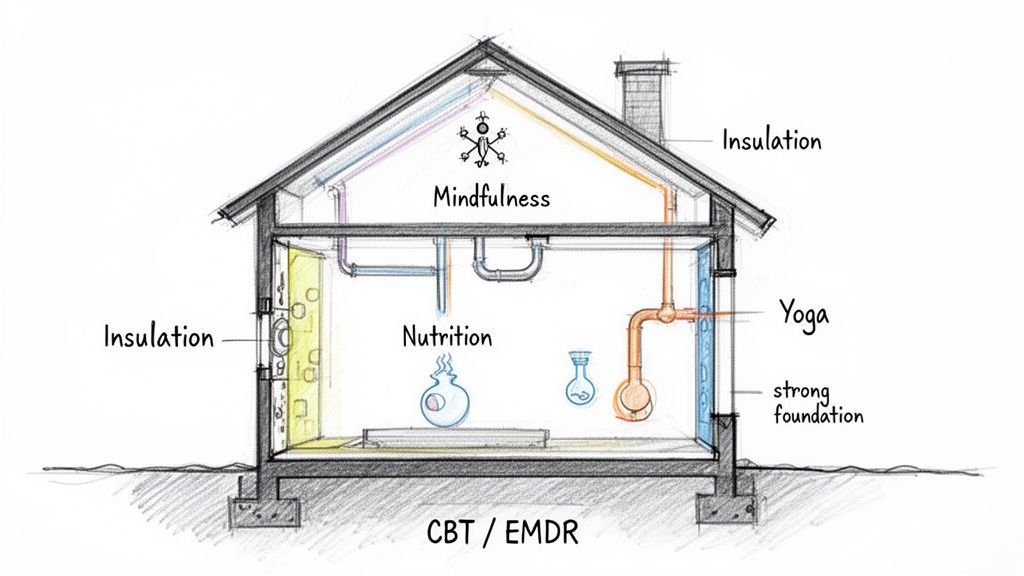
Think of recovery as building a house. Evidence-based clinical therapies like Cognitive Behavioral Therapy (CBT) and Eye Movement Desensitization and Reprocessing (EMDR) are the non-negotiable foundation and framework. They provide the essential structure needed for a stable, lasting recovery.
But a house is much more than just a frame. Holistic treatments are the crucial systems that turn it into a comfortable, functional home—the wiring, plumbing, and insulation. One is simply incomplete without the other.
This isn't an "either/or" situation. Holistic and clinical approaches aren't just compatible; they're powerfully synergistic. When integrated, they create a comprehensive strategy where each approach strengthens the other, addressing the whole person on every level.
Bridging the Gap Between Mind and Body
Traditional talk therapies are incredibly effective at helping you reframe negative thought patterns and process past trauma. But addiction and trauma don't just live in the mind; they leave deep imprints on the body, too. This is where holistic practices create a vital bridge.
For instance, yoga is a somatic (body-based) practice that helps release stored physical tension. During a therapy session, you might intellectually understand and talk through a traumatic memory. A yoga class, however, allows your body to physically let go of the stress it still holds from that same event. It creates a deeper, more complete form of healing.
This connection works both ways. A calm, regulated nervous system—fostered by practices like meditation—makes a person far more receptive to the challenging emotional work done in clinical therapy.
Sharpening the Tools for Clinical Success
Holistic modalities act as a force multiplier for evidence-based treatments. They prepare the mind and body to engage more fully and effectively with the entire therapeutic process.
Consider these powerful combinations:
- Mindfulness and CBT: CBT requires you to identify and challenge automatic negative thoughts. Mindfulness trains you to become a non-judgmental observer of your thoughts, making it much easier to catch them before they spiral. A mindful brain is simply better at CBT.
- Nutrition and EMDR: Trauma therapy like EMDR can be emotionally and mentally taxing. A brain fueled by proper nutrition, with stable blood sugar and restored neurotransmitters, has more resources to process difficult memories and emotions.
- Acupuncture and Relapse Prevention: Clinical relapse prevention teaches you to identify triggers and develop coping strategies. Acupuncture can physically reduce the intensity of cravings and withdrawal symptoms, giving you a much better chance to actually use those strategies when a trigger arises.
This integration of therapy and medication in recovery is central to building a robust support system. By combining modalities, we create a multi-layered defense against relapse that is much stronger than any single approach on its own.
The Evidence for an Integrated Approach
The value of this combined approach is backed by more than just anecdotal success. Clinical data shows measurable improvements when holistic treatments for addiction are integrated with standard care.
Combining methods like CBT with mindfulness, exercise, and nutrition counseling leads to better client engagement and higher retention rates in treatment programs—two of the biggest drivers of long-term abstinence. The market reflects this shift, too; counseling and behavioral therapies, which increasingly include holistic elements, were projected to make up about 42.7% of the $42.4 billion substance use disorder treatment market in 2025.
At Altura Recovery, this isn't an afterthought; it’s a unified strategy. We intentionally weave holistic practices into our clinical framework to ensure that your mind, body, and spirit are all moving toward healing in concert.
This combined strategy doesn't just treat the symptoms of addiction. It dismantles the underlying issues—the stress, trauma, and emotional dysregulation—from multiple angles at once. This creates a stronger, more sustainable foundation for a life of real growth and freedom.
Choosing the Right Holistic Treatment Program
Finding a program that genuinely weaves holistic care into its fabric requires looking past the glossy brochures. Lots of centers will list "holistic" services, but real healing happens when these practices are thoughtfully integrated into your core clinical treatment plan—not just sprinkled in as an occasional add-on.
Making an informed choice is everything. You want to find a place where holistic therapies are used with purpose and expertise, creating a supportive environment that actually deepens the work you’re doing in therapy. This means asking the right questions to tell the difference between authentic, high-quality programs and those just checking a box.
Key Questions to Vet Any Program
When you're looking at a treatment center, think like an investigative journalist. Your mission is to find out how deep their commitment to whole-person healing really goes. Having a few sharp questions in your back pocket will help you cut through the marketing fluff and see what their approach is really like.
Here are the essentials:
- Practitioner Qualifications: "Are your yoga instructors, acupuncturists, and nutritionists certified in their fields? More importantly, do they have experience working with people in addiction recovery?" You need guides who are not only experts in their craft but also understand the unique sensitivities of the recovery process.
- Integration with Clinical Care: "How do you make sure my primary therapist knows what’s happening in my holistic sessions? How are these practices actually folded into my overall treatment plan?" A solid answer will describe a system of collaboration, where an insight from a mindfulness session can directly inform the work you do in CBT.
- Purpose and Goals: "What's the therapeutic goal for each holistic service you offer? How will you track my progress?" A good program can explain why they use yoga for trauma release or nutrition to stabilize mood, not just that they have it on the menu.
- Client Customization: "How will you figure out which holistic therapies are a good fit for me? Is this stuff required, or is it based on my individual needs and interests?" Personalization is a must. A one-size-fits-all approach is a huge red flag, as effective care has to adapt to your specific challenges.
Asking these questions puts the power back in your hands, helping you find a path that is both safe and genuinely effective.
To help you keep these points organized during your search, we’ve put them into a simple checklist. Think of this as your guide to evaluating any potential provider.
Questions to Ask a Holistic Treatment Provider
| Category | Key Question to Ask | Why It Matters |
|---|---|---|
| Practitioner Expertise | "Are your holistic practitioners certified, and do they have specific training in addiction or trauma?" | Ensures that the care you receive is both professional and sensitive to the complexities of recovery. |
| Clinical Integration | "How do the clinical and holistic teams communicate about my progress and challenges?" | Reveals whether the program offers true integrated care or just a menu of disconnected services. |
| Therapeutic Goals | "Can you explain the specific therapeutic purpose of each holistic modality you offer?" | A quality program should be able to connect every service back to a clear recovery-oriented goal (e.g., stress reduction, emotional regulation). |
| Individualization | "How is my holistic treatment plan customized to my personal history, needs, and preferences?" | Effective care is never one-size-fits-all; your plan should reflect your unique journey. |
| Post-Treatment Skills | "How will I learn to continue these practices on my own after I leave the program?" | The goal is to build sustainable skills for lifelong recovery, not just provide temporary relief. |
Using this table as a script when you call or tour a facility can help you quickly gauge the substance behind their promises.
Understanding How Holistic Care Fits into Different Levels of Treatment
The way holistic therapies are delivered often shifts depending on the intensity of care you need. At Altura Recovery, our programs are designed to provide the right amount of support at each stage of the journey.
Partial Hospitalization Program (PHP): This is our most intensive level of outpatient care, with treatment running for several hours a day, five days a week. In a PHP, holistic practices are a daily part of your schedule. A typical day might start with group meditation, move into individual therapy and a nutritional counseling session, and wrap up with a trauma-informed yoga class.
Intensive Outpatient Program (IOP): An IOP offers a more flexible schedule, usually meeting for a few hours a day, three to five days a week. Here, holistic therapies are scheduled strategically to complement your clinical work. For example, you might have a dedicated day for acupuncture or participate in a weekly mindfulness-based relapse prevention group.
This tiered structure ensures you get a robust, integrated experience that lines up with the time and commitment needed at each phase of recovery.
The Rise of Accessible Holistic Care
The good news is that these valuable services have become more common, partly due to new ways of delivering care. The growth of telehealth and flexible outpatient programs has made holistic addiction treatments much more accessible. The post-pandemic world saw a major shift toward digital and community-based options, allowing for continuous services like virtual mindfulness groups and online recovery coaching.
This trend is a key reason the addiction treatment market is projected to grow at around 5-5.8% each year. You can learn more about the trends shaping the substance abuse treatment market and see how the industry is adapting.
What this evolution means for you is that high-quality, integrated care is closer and more attainable than ever. By doing your homework and asking thoughtful questions, you can confidently choose a program that will support your complete healing—mind, body, and spirit.
The Role of Community in Holistic Recovery
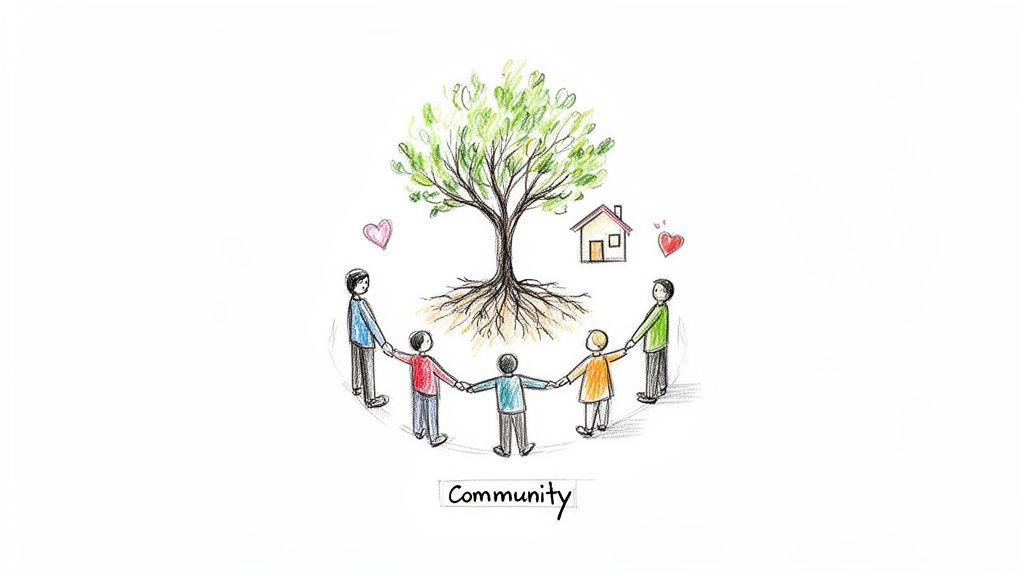
Lasting recovery isn't a journey you can—or should—take on your own. A truly holistic approach recognizes that deep healing has to extend beyond the individual. It's about mending relationships and building a strong, reliable support system. Lasting change happens when we feel seen, understood, and supported by the people around us.
For this reason, a core piece of holistic treatments for addiction involves nurturing your social and spiritual well-being. This goes far beyond just avoiding old triggers; it’s about intentionally building a new life filled with people and activities that line up with your recovery goals. It means healing the bonds that were broken and forging new ones that will sustain you for the long haul.
Mending Relationships with Family Systems Therapy
Addiction doesn't just impact one person. It sends ripples through the entire family, often shattering trust and creating unhealthy dynamics that can last for years. Family Systems Therapy is a vital tool that treats the family as a whole, not just the individual in recovery.
The core idea is that every member’s actions and emotions affect everyone else. Think of it like a mobile hanging over a crib—if you touch one piece, all the others shift and move in response. Families work the same way. This therapy helps everyone see these interconnected patterns, improve communication, and create a healthier home environment that actively supports sobriety instead of unintentionally undermining it. By healing these foundational relationships, everyone grows together.
By addressing the family unit, holistic recovery helps create a stable foundation at home. It’s about replacing old patterns of conflict and enabling with new ones built on mutual respect, healthy boundaries, and open communication.
This approach creates a powerful safety net, transforming the home from a source of stress into a true sanctuary for healing.
The Vital Importance of a Sober Community
Just as important as healing old relationships is building new ones. Finding your sober community means finding your tribe—people who get your journey because they're on it, too. This network becomes your new social anchor, providing encouragement, accountability, and a powerful sense of belonging that addiction often steals.
Building this community can happen in all sorts of ways:
- Shared Activities: Joining a group fitness class, a hiking club, or a volunteer organization connects you with people based on positive, shared interests.
- Support Groups: Engaging with others in recovery provides a space where you can be completely honest about your struggles and celebrate your victories without fear of judgment.
- New Hobbies: Taking a class in art, music, or cooking can introduce you to a new passion and a new circle of friends at the very same time.
This proactive approach to building connections is a powerful defense against the loneliness and isolation that so often trigger a relapse. As you explore the different paths to connection, understanding the power of community in recovery programs can provide valuable insight.
At Altura Recovery, our family programs and community-focused activities are designed to create this essential network. We know that connection is the opposite of addiction. By helping you mend family ties and build a strong sober fellowship, we provide the social and emotional support you need to sustain your growth and secure your long-term freedom.
Begin Your Healing Journey at Altura Recovery
Real freedom from addiction isn’t just about managing symptoms—it’s about healing the whole person. That’s the core belief that drives every decision we make at Altura Recovery. We see you as more than a diagnosis. We see your potential for a vibrant, meaningful life beyond substance use.
Our entire approach is built on that foundation. We carefully integrate proven clinical therapies like Dialectical Behavior Therapy (DBT) and EMDR with supportive holistic treatments to forge a path to wellness that is truly your own. This dual focus ensures that while you’re building critical coping skills, you’re also reconnecting with your body and spirit on a deeper level.
A Flexible Path to Lasting Growth
Life doesn’t stop for recovery. That’s why our flexible outpatient programs—including Partial Hospitalization (PHP), Intensive Outpatient (IOP), and Supportive Outpatient (SOP)—are designed to fit into your world.
This structure lets you build a rock-solid foundation for sobriety while staying connected to your job, family, and community. It’s about creating real, sustainable change right in the middle of your actual life.
At Altura Recovery, we don’t just offer services; we offer a partnership. Our goal is to empower you with the tools and support needed to heal from the inside out, fostering resilience that lasts a lifetime.
If you’re ready to move beyond just surviving and start building a future defined by purpose, we are here to guide you. Taking the first step is often the hardest part, but you don’t have to do it alone.
Connect with our compassionate team today to learn how we can support your journey toward real healing.
Common Questions About Holistic Treatment
When you start looking into addiction treatment, especially approaches that go beyond the purely clinical, a lot of questions pop up. It’s completely normal. Let’s clear up a few of the most common ones we hear about holistic care so you can feel confident in your path forward.
Are Holistic Treatments Covered by Insurance?
This is one of the first things people ask, and for good reason. The answer usually comes down to how the services are delivered. If things like yoga, mindfulness, or nutritional counseling are woven into a comprehensive clinical program at a licensed facility, insurance will often cover them as part of the overall treatment plan.
Standalone sessions with an independent yoga teacher or acupuncturist, however, probably won't be covered. At Altura Recovery, our team handles all of this for you. We’ll verify your benefits and give you a crystal-clear breakdown of what your specific plan covers, so there are no financial surprises along the way.
How Does This Approach Help with Co-occurring Disorders?
A holistic approach is a game-changer for co-occurring disorders like anxiety, depression, or PTSD because it gets right to the heart of the mind-body connection. It doesn't just treat symptoms in isolation; it opens up multiple pathways to healing at once.
A person isn't just an addiction; they are a whole system. Nutritional therapy can help stabilize mood, mindfulness can reduce anxiety, and yoga can alleviate depressive symptoms. When combined with targeted clinical therapies, this creates a powerful, multi-layered strategy for treating both addiction and underlying mental health conditions at the same time.
By addressing the whole person, we find that the clinical work—like CBT or EMDR—lands more effectively because the body and mind are better regulated and more receptive to change.
What if I Am Not a Spiritual Person?
That’s perfectly okay and something we hear all the time. In the world of holistic treatments for addiction, "spirit" isn't about religion. It’s simply about connecting with something bigger than yourself, and that can look different for everyone.
For you, it might mean:
- Finding a new sense of purpose in your life.
- Feeling connected to nature during a quiet walk.
- Expressing emotions through art or music.
- Building a strong, sober community you can count on.
Our programs are designed to respect your individual beliefs. The goal is personal growth and introspection, not pushing any specific doctrine. We want this journey to feel authentic to you.
At Altura Recovery, we believe in healing the whole person. If you're ready to explore a path that integrates clinical excellence with compassionate, holistic care, our team is here to help. Visit us at https://www.alturarecovery.com to take the first step.