
If you've ever tried to fix a complex problem, you know that patching up one symptom rarely solves the underlying issue. That's the core idea behind holistic therapy. It's an approach that sees you not as a collection of separate parts, but as a complete ecosystem where everything—mind, body, spirit, and emotions—is interconnected. Instead of just treating a symptom, this approach digs deeper, aiming for a more complete and lasting kind of healing.
What Exactly Is Holistic Therapy

Holistic therapy works from a simple but powerful premise: every part of you influences every other part. That nagging headache? It might not just be physical; it could be tied directly to chronic stress at work. Anxiety isn't just a mental state, either—it often shows up as digestive issues or constant muscle tension. This approach moves beyond simply managing symptoms to uncover the root causes of your distress.
A holistic therapist doesn’t just ask, "What symptom needs fixing?" They ask, "What imbalance in your life is causing this symptom?" This shift in perspective is everything. It treats symptoms as signals from your body and mind, pointing toward a deeper need for harmony.
This integrated philosophy is gaining serious momentum. The global market for complementary and alternative medicine (CAM), which covers many holistic practices, was valued at USD 181.39 billion in 2024 and is expected to grow significantly. This signals a major shift as more people seek out natural, whole-person solutions to manage stress and improve their overall well-being.
A Whole-Person Approach To Healing
A holistic framework doesn't throw out conventional therapy. Instead, it often integrates it to build a more comprehensive support system. While traditional talk therapy is great for addressing thought patterns, a holistic plan might also bring in:
- Mindfulness practices to help calm the nervous system.
- Nutritional guidance to support better brain health and mood stability.
- Body-based therapies like yoga or somatic experiencing to release stored physical tension.
- Creative outlets like art or music to process emotions that are hard to put into words.
To really get a feel for how these practices work, it helps to look at specific methods. For instance, learning what is art therapy can show you how creative expression becomes a powerful tool for healing and mental wellness.
How It Differs From Conventional Methods
The main difference comes down to scope. Conventional therapy often zooms in on a specific diagnosis, like depression or an anxiety disorder, using targeted interventions like Cognitive Behavioral Therapy (CBT). While these methods are highly effective, they can sometimes feel like they're only addressing one piece of the puzzle.
Holistic therapy zooms out to see the entire picture. It recognizes that your environment, relationships, spiritual life, and physical health are all critical pieces of your mental and emotional state. A deep dive into our guide on what is mindfulness-based stress reduction can show you how just one of these techniques contributes to this bigger picture.
To help clarify the differences, this table breaks down the core philosophies of each approach.
Holistic vs Conventional Therapy At a Glance
This table provides a clear, side-by-side comparison of the core philosophies and approaches of holistic therapy versus traditional medical models, helping you quickly grasp the fundamental differences.
| Aspect | Holistic Therapy Approach | Conventional Therapy Approach |
|---|---|---|
| Primary Focus | The whole person (mind, body, spirit, emotions). | Specific symptoms and diagnosed disorders. |
| Treatment Goal | Achieve overall balance and well-being. | Alleviate or manage specific symptoms. |
| Core Question | "What imbalance is causing this distress?" | "What diagnosis fits these symptoms?" |
| Therapist's Role | A guide or facilitator for the client's self-healing. | An expert who diagnoses and treats a condition. |
| Client's Role | Active participant in their healing journey. | Patient receiving treatment for a specific issue. |
| Methods Used | Integrates traditional talk therapy with body-based work, nutrition, mindfulness, etc. | Primarily uses evidence-based psychotherapies (e.g., CBT, DBT) and medication. |
Understanding these distinctions can help you decide which path feels right for you, or how you might combine elements of both for a richer, more supportive recovery.
By treating the individual as a unified whole, holistic therapy aims not just for the absence of symptoms but for the presence of genuine vitality and balance. It empowers you with tools to nurture every aspect of your being.
This comprehensive view builds self-awareness and encourages you to take an active role in your own healing. The goal isn't a temporary fix; it's about building resilience across your entire system, creating a strong foundation for lasting wellness.
The Science-Backed Benefits of Holistic Healing
While the idea of treating the "whole person" just feels right, the real power behind holistic therapy comes from its measurable, science-backed results. These aren't just vague promises of “feeling better.” We’re talking about tangible changes in brain function, emotional response, and overall health.
For anyone navigating the rough terrain of addiction recovery and co-occurring mental health issues, these benefits can be life-changing.
This approach builds resilience from the inside out. It gives you practical tools to manage stress, handle your emotions, and find a sense of inner balance, creating a solid foundation for a life that’s truly well.
Enhanced Emotional Regulation
One of the most powerful outcomes of holistic therapy is gaining a real handle on intense emotions. Think of your emotional responses like a thermostat. For someone dealing with trauma or addiction, that thermostat often feels broken—swinging wildly from one extreme to another with no sense of control.
Holistic practices like mindfulness meditation get to work directly on the brain’s “alarm system,” mainly a region called the amygdala. Research has shown that consistent mindfulness can actually dial down the reactivity in this area.
What does that mean for you? Instead of instantly spiraling into anxiety or anger when a trigger hits, you create a small but critical gap. It’s a moment to pause, breathe, and choose a more thoughtful response. This isn't just a mental trick; it's a real physiological shift that allows the logical part of your brain to get back in the driver's seat.
Powerful Relapse Prevention Strategies
In addiction recovery, preventing relapse is everything. Traditional methods often focus on avoiding external triggers—the people, places, and things associated with use. That’s important, but it’s only half the battle.
Holistic therapy adds a crucial layer by targeting the internal triggers: the stress, anxiety, and unresolved emotional pain that drive someone back to a substance.
Here’s how a few specific holistic methods build a stronger defense against relapse:
- Mindfulness and Yoga: These practices teach you to sit with uncomfortable feelings—like cravings or anxiety—without needing to numb them. You learn that these feelings are temporary and that you can survive them.
- Nutritional Counseling: It's easy to overlook, but poor nutrition can tank your mood and energy, making you vulnerable. A balanced diet helps stabilize your blood sugar and brain chemistry, smoothing out the highs and lows that can trigger a relapse.
- Somatic Therapies: These body-focused techniques help release the physical tension where trauma and stress get stored. This dials down the chronic "fight or flight" state that so often fuels substance use.
By getting to the root causes of distress, holistic therapies help shut down the internal engine of addiction. They offer healthier ways to cope, replacing the destructive cycle of numbing emotional pain with substances.
This proactive approach builds a recovery that’s much more robust and sustainable. You can discover more about why wellness activities matter in creating a fulfilling, sober life.
Integration of Traumatic Memories
Trauma isn't just a memory; it’s a physical state. It can keep your nervous system stuck on high alert, making it feel impossible to ever truly relax. Holistic therapies like Eye Movement Desensitization and Reprocessing (EMDR) offer a direct path to healing this.
EMDR helps the brain reprocess traumatic memories. It moves them from being emotionally charged events that feel like they're happening now to integrated memories that are part of your past. This can dramatically reduce PTSD symptoms like flashbacks, nightmares, and that constant feeling of being on edge.
Improved Family Functioning
Addiction and mental health issues don't happen in a vacuum—they send shockwaves through the entire family. Holistic approaches recognize this and often include family systems therapy, which treats the family as one interconnected unit.
Instead of only focusing on the person in treatment, this approach helps everyone understand their roles, communicate better, and heal together. By building empathy and establishing healthy boundaries, family therapy can turn a source of stress into a powerful support network, which is absolutely critical for long-term recovery.
The growing recognition of these benefits is fueling a major shift in public wellness priorities. Mental wellness, often supported by holistic practices, is the fastest-growing wellness sector, with a 12.4% annual growth rate from 2019-2024. The results are clear; meta-analyses show yoga can reduce symptoms of depression by 45%, while consistent meditation can cut anxiety by 38%. This trend is backed by a widening acceptance, with 20-40% of adults in the US and Europe now favoring holistic methods alongside conventional medicine. This shift highlights a collective desire for deeper, more integrated healing that addresses every part of the human experience.
Exploring Popular Holistic Therapy Modalities
The world of holistic therapy is brimming with different practices, each offering a unique angle on healing. Instead of a confusing menu of options, think of these modalities as a well-equipped toolbox. A skilled therapist doesn't just hand you a random tool; they help you select the right one for the right job, making sure the approach fits your specific needs and goals.
Let's demystify some of the most common and effective holistic practices out there. The point isn't just to define them, but to give you a real sense of what they feel like and how they actually work to create meaningful change. Understanding these methods is the first step toward finding the right fit for your personal healing journey.
Mindfulness: Training Your Attention Muscle
At its core, mindfulness is the simple (but not always easy) practice of paying attention to the present moment without judgment. Imagine your mind is like a restless puppy, constantly chasing after thoughts about the past or worries about the future. Mindfulness is the training that teaches this puppy to sit, stay, and focus.
Through guided meditations, breathing exercises, and body scan techniques, you learn to observe your thoughts and feelings from a distance. You start to realize you are not your thoughts; you are the one noticing them. This small shift creates profound control, helping you respond to life's stressors with clarity instead of reacting on autopilot.
EMDR: Reprocessing Difficult Memories
Some memories don't fade; they get stuck. Traumatic experiences can remain "frozen" in the brain, causing them to feel as raw and immediate as the day they happened. Eye Movement Desensitization and Reprocessing (EMDR) is a structured therapy designed to help the brain properly file away these distressing memories so they no longer hijack your present.
During an EMDR session, a therapist guides you to focus on a difficult memory while engaging in bilateral stimulation, like following their fingers with your eyes. This process seems to unlock the brain's natural information processing system, allowing the memory to be integrated into your past instead of being a constant, disruptive force. It doesn't erase the memory, but it removes its emotional charge.
EMDR helps transform a memory from a live wire that triggers a shock every time it's touched into an insulated cord that is simply part of your history. It lessens the memory's power over your present-day life.
This modality is a game-changer for people dealing with PTSD, anxiety, and other trauma-related conditions. You can learn more about how EMDR therapy works to see if this powerful technique might be a fit for you.
Integrating CBT and DBT for Greater Impact
Cognitive Behavioral Therapy (CBT) and Dialectical Behavior Therapy (DBT) are heavy hitters in the world of evidence-based psychotherapy. A holistic approach doesn't discard these powerful tools—it integrates them. It recognizes that while changing thoughts (CBT) and managing intense emotions (DBT) are critical, they become even more powerful when paired with body-based and mindfulness practices.
- CBT Integration: A therapist might use CBT to help you identify negative thought patterns about self-worth, then pair it with yoga or meditation to help you physically release the tension those thoughts create in your body.
- DBT Integration: DBT skills for distress tolerance can be turbocharged with mindfulness, teaching you not just to survive an intense emotion but to observe it with curiosity and compassion until it passes.
This combination ensures that healing happens on all levels—cognitive, emotional, and physical.
Motivational Coaching: Building Self-Belief
Lasting change requires more than just tools; it requires a deep-seated belief in your ability to use them. Motivational coaching is a collaborative, goal-oriented style of communication that strengthens your personal drive to change.
Rather than telling you what to do, a coach helps you discover your own reasons for wanting to change. This process builds self-efficacy—the rock-solid belief in your own capacity to succeed. For someone in recovery, this is a game-changer, transforming the journey from a list of rules to follow into an empowered path you choose for yourself.
Somatic and Sensory Modalities
Our senses offer a direct line to our emotional state. Practices like aromatherapy use essential oils from plants to trigger immediate physiological and psychological responses. The scent of lavender, for example, can quickly activate the parasympathetic nervous system, promoting a sense of calm.
Sensory tools are a cornerstone of a booming spa industry, with the global market valued at $2.4 billion in 2024 and projected to hit $5.4 billion by 2032. This growth is driven by high demand for natural ways to manage anxiety and insomnia, with users reporting 60-80% improvements in relaxation and sleep.
When exploring these approaches, you might also be interested in the best energy healing and body work techniques for deep relaxation. Alongside aromatherapy, these methods harness the body's innate wisdom to foster healing. By engaging multiple senses, these modalities provide accessible, in-the-moment tools for managing stress and enhancing well-being.
Which Holistic Modality Is Right For You?
With so many powerful options, it can be tough to know where to start. This table serves as a quick reference guide, matching common challenges with the holistic modalities best equipped to treat them, helping you identify potentially beneficial therapies for your specific needs.
| Challenge or Goal | Primary Modality | Secondary Modality |
|---|---|---|
| Feeling stuck in past trauma or PTSD | EMDR | Mindfulness, Somatic Therapy |
| Overwhelming anxiety or constant worry | Mindfulness | CBT Integration, Aromatherapy |
| Difficulty managing intense mood swings | DBT Integration | Motivational Coaching |
| Negative self-talk and low self-esteem | CBT Integration | Motivational Coaching |
| Lack of motivation or ambivalence to change | Motivational Coaching | Mindfulness |
| Chronic stress and physical tension | Somatic Therapy (Yoga, Bodywork) | Mindfulness |
| Frequent emotional reactivity or "triggers" | DBT Integration | EMDR |
| Trouble connecting with your body | Somatic Therapy | Mindfulness |
Remember, this is just a starting point. The most effective treatment plans often blend several of these approaches, tailored by a skilled clinician to fit your unique story and goals. The key is to find the combination of tools that helps you feel whole again.
How Holistic Therapy Works in Treatment Programs
It’s one thing to appreciate a single holistic practice, like mindfulness, on its own. It’s another to see how these therapies are woven together in a structured treatment program—that’s where the real power emerges. These aren’t just add-ons; they are intentionally layered into outpatient programs to create a powerful synergy, where each part strengthens the whole.
In settings like an Intensive Outpatient Program (IOP) or a Partial Hospitalization Program (PHP), the aim is to offer robust, healing support while letting you stay connected to your daily life. Holistic therapies are built right into the treatment schedule, working hand-in-hand with core clinical methods like individual and group counseling.
The Structure of Integrated Care
Think of a treatment plan less like a single road and more like a supportive web. A morning group session might focus on cognitive behavioral skills to manage cravings, while an afternoon yoga class helps release the physical tension that so often fuels those urges.
This integration is everything. One approach doesn’t cancel the other out; they work in tandem. You might explore deep-seated trauma in a one-on-one session with your therapist, then join a mindfulness meditation group to practice grounding techniques that help manage the intense emotions that come up. This creates a balanced, comprehensive healing experience.
This diagram shows how foundational modalities like mindfulness and EMDR become the hub of a holistic framework.
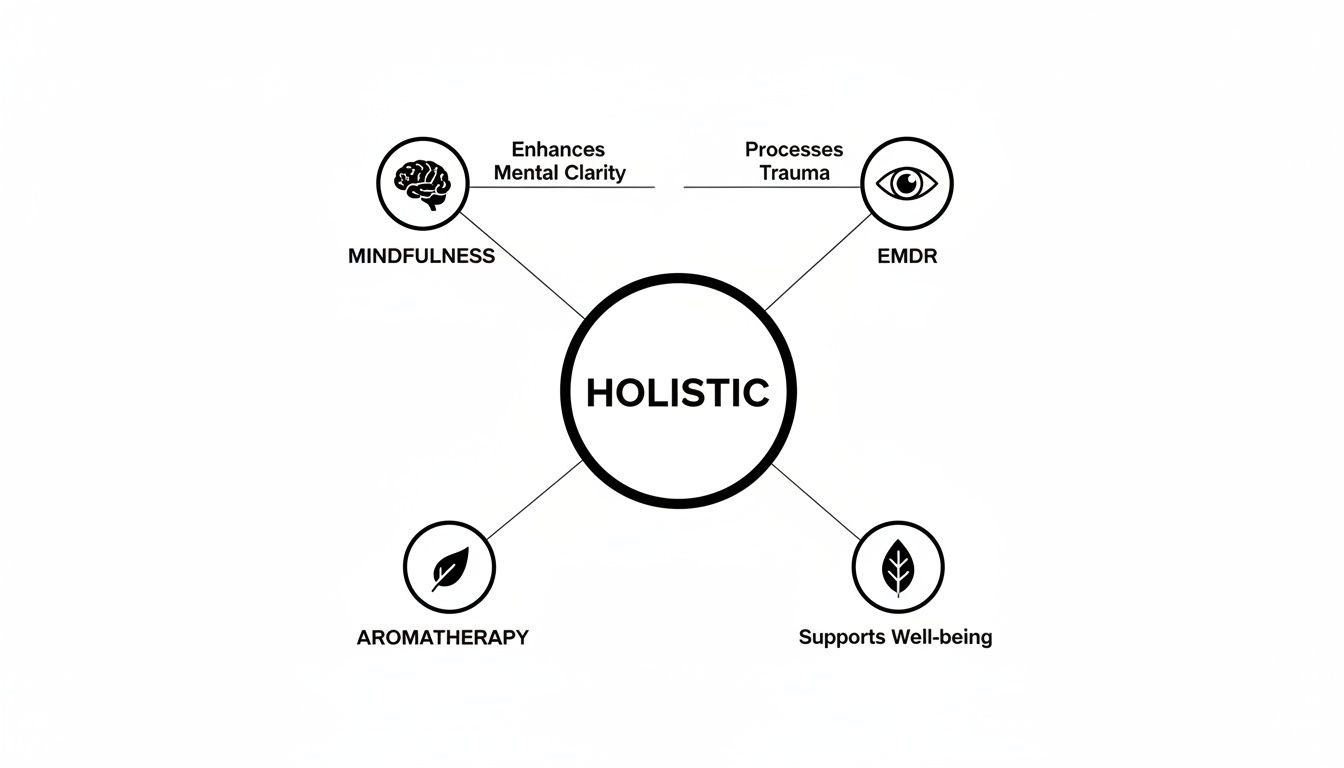
As you can see, a central commitment to holistic care branches out to support different facets of well-being, from mental processing to sensory calm.
A Typical Week in an Outpatient Program
To make this crystal clear, let's walk through what a typical week might look like in an IOP that embraces a holistic model. The schedule is intentionally designed to build skills, foster connection, and promote whole-person wellness.
- Monday: Kick off the week with a group therapy session on relapse prevention, followed by individual counseling and an evening mindfulness meditation class to set a calm, focused tone.
- Tuesday: Dive into a skills-based group using Dialectical Behavior Therapy (DBT) to sharpen emotional regulation, later complemented by a nutritional workshop on how food impacts mood.
- Wednesday: Participate in a family systems therapy session to begin healing key relationships, then join a creative arts therapy group to express feelings that words can't always capture.
- Thursday: Focus on trauma with an individual EMDR session, followed by a gentle yoga class designed to help reconnect the mind and body in a safe, supportive way.
- Friday: A motivational coaching session helps you solidify personal recovery goals, and the week wraps up with a group outing or sober social activity to build community.
This layered approach ensures you're supported from every angle. It simultaneously addresses the psychological, physical, emotional, and social dimensions of recovery—which is especially crucial for complex conditions. To dig deeper into how this works, check out our guide on dual diagnosis treatment in Houston and why a holistic approach matters.
Matching the Level of Care to Your Needs
Different levels of outpatient care—like PHP, IOP, or standard outpatient—offer varying intensities of support, allowing for a truly personalized treatment journey. The integration of holistic therapies is a constant across all levels, but the time commitment changes based on where you are in your recovery.
The essence of a holistic treatment program is synergy. It recognizes that a breakthrough in a yoga class can unlock progress in talk therapy, and a nutritional change can provide the stability needed to engage more deeply in trauma work.
By combining evidence-based clinical practices with therapies that nurture the body and spirit, treatment programs create a much stronger foundation for lasting well-being. This approach doesn't just give you tools to avoid relapse; it provides a blueprint for building a genuinely fulfilling life.
Deciding if Holistic Therapy Is Your Next Step
Choosing the right path to healing is a deeply personal call. As you learn more about holistic therapy, you might be wondering if this whole-person approach is the right fit for your story. The answer usually comes from getting clear on not just what it is, but who it helps most and when it's the wisest move.
A holistic framework can be a game-changer for people who feel like they've hit a wall with traditional talk therapy. If you've worked on your thought patterns but still carry a nagging unease, physical tension, or a sense of spiritual emptiness, this approach can connect the dots. It offers a much bigger toolkit to work with the parts of you that words alone can't always reach.
Who Benefits Most from a Holistic Approach?
While just about anyone can find value in an integrated perspective, some people find it exceptionally effective. A holistic model offers powerful support for those navigating the tangled realities of addiction recovery, especially when co-occurring issues like anxiety, depression, or PTSD are part of the picture.
This approach tends to resonate with people who:
- Seek Comprehensive Support: Recovery demands more than just relapse prevention skills. You need tools to manage stress, heal old wounds, and rebuild your physical health—all cornerstones of a holistic plan.
- Struggle with Co-Occurring Conditions: Holistic therapy gets that addiction and mental health are intertwined. A practice like mindfulness can lower anxiety and curb cravings at the same time, tackling both issues from the root.
- Feel Disconnected from Their Body: Trauma and chronic stress can make you feel like a stranger in your own skin. Somatic therapies help you safely reconnect with your physical self, release stored tension, and build a sense of inner safety.
- Are Looking for Deeper Meaning: For many, recovery is also a spiritual journey. Holistic practices can help you reconnect with your core values, your purpose, and your place in the world, creating a powerful anchor for lasting change.
A holistic approach isn't just about piling on more therapies. It's about creating a synergistic healing process where progress in one area—like physical wellness—fuels breakthroughs in your emotional and mental health.
This integrated support system builds a far more resilient foundation for recovery. It honors the fact that true wellness means nurturing every part of who you are.
Understanding Safety and When to Be Cautious
It’s just as important to understand that holistic therapy is a powerful complement to—not a replacement for—conventional medical care. For example, while 73% of breast cancer patients report using at least one complementary therapy, they use these methods alongside standard treatments to ease symptoms and improve their well-being.
That same principle is vital in mental health. For anyone dealing with severe conditions like schizophrenia, bipolar disorder, or acute suicidal thoughts, a stable foundation of psychiatric care and medication is non-negotiable. Holistic practices can be carefully woven into a treatment plan, but only with the guidance of a qualified clinical team.
Before jumping into any new therapy, always have a conversation with your primary doctor or psychiatrist. Open communication ensures that every part of your support system is working together safely and effectively. This collaborative approach lets you tap into the full benefits of holistic therapy while keeping the crucial safety net of evidence-based medical care firmly in place. Making an informed choice is what empowers you to step onto your healing path with confidence.
How To Find a Qualified Holistic Therapist
Taking the first step toward healing is huge, and it all starts with finding the right guide for your journey. Locating a qualified holistic therapist isn't just about checking a box for a license; it’s about finding a professional whose entire approach resonates with your goals and what you need to feel whole again.
Start by looking at credentials, but don't stop there. Of course, any therapist you see should be licensed (like an LCSW, LPC, or PhD). More importantly, you'll want to confirm they have specific, hands-on training in any holistic methods they advertise. For example, if you’re looking for EMDR, make sure they are certified by the EMDR International Association (EMDRIA).
Questions to Ask During a Consultation
Think of a consultation as an interview where you’re in the driver's seat. It’s a two-way street, so show up with questions that help you understand their philosophy and expertise. This first conversation is your best chance to see if their style lines up with the holistic therapy benefits you’re hoping for.
Here are a few essential questions to get the ball rolling:
- "How do you define holistic therapy in your practice?" This cuts right to the heart of their philosophy and helps you see if it matches what you're looking for.
- "What specific holistic modalities are you trained in, and what are your credentials for each?" This confirms they have specialized, verifiable expertise beyond basic talk therapy.
- "Can you describe how you blend these practices with traditional therapy?" Their answer will show you how they create a cohesive, integrated treatment plan instead of just tacking on disconnected techniques.
Your relationship with your therapist is the bedrock of your healing. It’s absolutely essential to find someone you trust and feel comfortable opening up to. This partnership is what empowers you to safely explore the most vulnerable parts of yourself.
Using Professional Directories
Reputable online directories can make your search so much easier. These websites let you filter therapists by specialty, location, and insurance, helping you quickly build a shortlist of qualified people.
Websites like the Psychology Today therapist finder, the Somatic Experiencing Trauma Institute, and the EMDRIA directory are fantastic places to start. They don't just list names; they provide detailed profiles that break down each therapist's approach, helping you find the perfect fit for your unique path to wellness.
Your Questions About Holistic Therapy, Answered
If you're thinking about adding a holistic approach to your wellness plan, you probably have some practical questions. That’s a good thing. Getting clear on the details is the best way to move forward with confidence. Here are some straightforward answers to the most common questions we hear.
How Long Does It Take to See Results?
This is one of the first things everyone wants to know, and the honest answer is: it varies. Unlike a quick fix, holistic therapy is focused on deep, sustainable change, not just masking symptoms.
Some people feel an immediate sense of relief after just one session, especially from stress-reducing practices like guided mindfulness or aromatherapy. For more deep-seated issues like trauma or a substance use disorder, tangible progress often shows up over several months of consistent work. The goal is lasting change, which requires patience and a real commitment to the process.
Is Holistic Therapy Covered by Insurance?
Navigating insurance can feel complicated, but here’s the breakdown. Coverage really depends on your specific plan and the credentials of the therapist providing the service. Many core clinical modalities—like CBT, DBT, and EMDR—are often covered when delivered by a licensed clinician.
However, practices like yoga, nutritional counseling, or acupuncture might be considered supplemental and not covered. It's crucial to do a little homework:
- Call your insurance provider directly and ask about your "behavioral health" or "mental health" benefits.
- Ask the treatment center if they are in-network with your plan.
- Inquire if they can provide a superbill, which is a detailed receipt you can submit to your insurance for potential out-of-pocket reimbursement.
Does This Replace Conventional Medical Treatment?
No, and this is a really important point to understand. Holistic therapy is designed to be complementary to—not a replacement for—conventional medical and psychiatric care.
Think of it as a powerful partnership. Your medical doctor or psychiatrist addresses critical biological needs and provides diagnoses, while your holistic therapist helps you heal the interconnected emotional, spiritual, and lifestyle factors that contribute to your overall well-being.
This integrated approach ensures you get comprehensive support from every possible angle. It creates a much stronger foundation for genuine, lasting recovery and a better quality of life. True wellness means addressing the whole picture, safely and effectively.
At Altura Recovery, we integrate evidence-based clinical care with proven holistic modalities to guide you toward lasting wellness. If you’re ready to experience real healing that addresses your whole self, learn more about our outpatient programs.
Find Real Healing and Real Growth at https://www.alturarecovery.com