The road to recovery is often paved with heavy emotions, and none feel more crushing than guilt and shame. Getting a handle on the critical difference between them is the first real step toward healing: guilt is about what you did, while shame is about who you think you are.
Once you see that distinction, these feelings stop being roadblocks and start becoming fuel for real, lasting growth.
The Weight of Guilt and Shame in Recovery

Getting sober means looking in the mirror and confronting some difficult truths about past actions. That reflection almost always unearths powerful, overwhelming feelings of guilt and shame. It’s a deeply human part of the healing process that nearly everyone in recovery faces.
These emotions, while painful, are actually a sign that you're becoming more aware and reconnecting with your core values. The real work is learning how to respond to them.
Guilt, when you know how to handle it, can actually be productive. It zeros in on a specific action, making you think, "I did a bad thing." This awareness can push you to make amends, change your behavior, and repair the harm you’ve caused. It’s like a compass pointing you toward personal growth.
Shame, on the other hand, is a direct attack on your identity. It’s the voice that whispers, "I am bad." This toxic belief breeds feelings of worthlessness and isolation, making it incredibly hard to believe you even deserve a better life.
Learning to manage guilt and shame isn’t just a helpful skill in recovery—it’s essential for building a sober future that lasts. These feelings often spill over and affect the people closest to you, which is why navigating recovery and relationships requires so much care and support.
Quick Guide to Guilt vs Shame in Recovery
To make this crystal clear, here’s a quick breakdown of how these two powerful emotions show up and what they mean for your recovery journey.
| Emotion | Core Belief | Impact on Recovery |
|---|---|---|
| Guilt | "I did something bad." | Motivates positive change, making amends, and avoiding repeat mistakes. |
| Shame | "I am bad." | Leads to isolation, hiding, and an increased risk of relapse to numb the pain. |
Seeing the difference laid out like this makes it easier to spot which emotion you're dealing with. One pulls you forward; the other holds you back.
Unpacking the Social Stigma
The stigma around addiction often pours fuel on this internal fire. When society frames substance use disorder as a moral failing instead of the disease it is, it only amplifies feelings of shame. This external judgment can make it that much harder to ask for help or be honest about what you're going through.
Recognizing that addiction is a medical condition is a powerful step in dismantling shame. It allows you to separate your identity from the disease, creating space for self-compassion and healing to begin.
This is why programs that tackle these feelings head-on, like the 12-Step Program, are so effective. They provide a structured way to process mistakes and make amends, which directly fights back against the isolating nature of shame.
With the right strategies for addressing guilt and shame, long-term healing isn't just a hope—it's a reality. Research shows that about 75% of people recover from addiction, which proves just how critical this emotional work truly is.
Guilt vs. Shame: The Critical Difference
To truly move forward, you have to stop using guilt and shame interchangeably. They might feel related, but their impact on recovery is worlds apart. Getting this right isn't just a word game; it's one of the most important steps you can take toward healing from guilt and shame in recovery.
Imagine you accidentally knock over a vase at a friend's house. That immediate knot in your stomach, the rush to apologize, the grab for a towel to clean up the mess—that's guilt. It’s your internal alarm bell, telling you that your action didn’t line up with your values.
Guilt says, "I did something bad." It’s focused on your behavior, it's specific, and it's often surprisingly constructive.
How Guilt Can Actually Help Your Recovery
Believe it or not, guilt—when you handle it right—can be a powerful force for good. It’s the emotion that nudges you toward positive change and reconnects you with your own moral compass. In recovery, it’s the engine that drives you to:
- Make meaningful amends: Guilt is what pushes you to own the harm you caused and take real steps to repair those relationships.
- Change future behavior: The discomfort of guilt is a potent reminder to not repeat the mistakes that got you here.
- Rebuild self-respect: By taking responsibility for what you did, you prove to yourself that you are capable of integrity and growth.
Looked at this way, guilt becomes a tool for accountability, not a weapon for self-punishment. It simply points to what needs healing.
The Destructive Nature of Shame
Now, let's rewind to that broken vase. Shame is a completely different beast. Shame isn't the feeling that you broke the vase; it's the crushing belief that you are the clumsy, destructive force in the room. It’s the voice whispering that you're inherently flawed, messy, and unworthy of being there in the first place.
Shame says, "I am bad." It attacks your core identity, making you feel worthless and fundamentally broken. Unlike guilt, which zooms in on a single action, shame generalizes that action into a judgment on your entire being.
This feeling is profoundly isolating. While guilt encourages you to connect and repair, shame convinces you to hide and disconnect. Studies consistently show that shame is directly linked to negative self-evaluations and a deep sense of powerlessness, making it a massive barrier to even asking for help.
It’s the voice that insists you don't deserve forgiveness, support, or even recovery itself. This is why learning to spot and challenge shame is absolutely essential. Recognizing that you are not your past actions is the first real step toward reclaiming your self-worth and building a solid foundation for your future.
How Shame Affects Your Mind and Body
Shame isn’t just some abstract idea; it's a powerful physical event that lands a serious blow to your well-being. When shame takes over, it’s not just in your head. Your brain and body react as if you’re facing a real, immediate threat, right here and now.
This intense emotional wave can kickstart the body’s sympathetic nervous system—what most of us know as the "fight, flight, or freeze" response. Your brain sounds the alarm, flooding your system with stress hormones like cortisol and adrenaline. While that’s incredibly useful for escaping a short-term danger, the persistent shame that often accompanies recovery keeps your body stuck in a state of high alert.
Living in that prolonged state of stress is physically exhausting. It can lead to very real health consequences that get in the way of healing, like a weakened immune system, chronic fatigue, digestive problems, and disrupted sleep. Over time, your body just gets worn down from being in a constant state of emergency.
The Neurological Impact of Shame
Digging a little deeper, we can see that shame activates specific regions in the brain. Brain imaging studies have shown that the emotional pain of shame lights up the exact same neural pathways as physical pain. That’s why social rejection or deep-seated shame can literally feel like a punch to the gut.
This brain activity creates a profound sense of isolation and disconnection. When you feel shame, your brain is processing social pain, reinforcing the toxic belief that you are fundamentally flawed and don't deserve to belong. This isn't just a feeling; it’s a measurable brain state.
Understanding this mind-body connection is a game-changer. Shame isn't a sign of weakness or a moral report card; it’s a serious health issue with physiological roots, and it demands compassionate, informed attention.
Breaking Down the Physical Symptoms
The physical toll of shame often shows up in subtle yet damaging ways, creating a vicious cycle that can make recovery feel impossible. Learning to spot these symptoms is the first real step toward breaking free.
Common physical signs include:
- Muscle Tension: That chronic tightness in your neck, shoulders, and back? It’s your body constantly bracing for the next emotional hit.
- Increased Heart Rate: A persistent feeling of anxiety or panic is often driven by those elevated stress hormones.
- Averted Gaze: It’s an unconscious physical reaction to feeling exposed, which only reinforces feelings of being alone and disconnected.
- Exhaustion: The sheer mental and physical energy it takes to manage constant feelings of shame can lead straight to burnout.
Addressing guilt and shame in recovery means treating both the emotional wounds and the physical fallout. By recognizing how these feelings land in your body, you can start using techniques like mindfulness and somatic therapies to calm your nervous system. This helps break the cycle, creating the space you need for genuine, lasting healing.
Breaking the Shame and Relapse Cycle
Shame is a powerful and destructive force in recovery, often acting as the primary fuel for relapse. It creates a dangerous, self-perpetuating cycle that can quietly undo months or even years of hard work. The entire process is isolating, convincing you that you are uniquely flawed and unworthy of the life you're trying to build.
This toxic loop kicks off with unresolved feelings of shame about things you’ve done in the past. This isn't just about regret; it's a gut-level belief that something is fundamentally wrong with you. That feeling creates an overwhelming urge to hide and pull away from the very people who form your support system—your family, friends, and recovery groups.
This secrecy and isolation cut you off from connection, which is the antidote to shame. As you retreat further inward, feelings of loneliness and hopelessness ramp up, making the emotional pain feel unbearable.
How Shame Drives a Return to Substance Use
At its peak, this emotional agony can make returning to substance use feel like the only way out. Your substance of choice once offered a way to numb these exact feelings, and your brain remembers that. In a moment of intense pain, the impulse to find that temporary relief can feel impossible to resist.
Shame is a significant risk factor for relapse, particularly among individuals recovering from alcohol dependence. Evidence suggests shame can lead to feelings of anger and depression, which may worsen substance use as a coping mechanism. Learn more about the research on shame and recovery on tandfonline.com.
This isn't a failure of willpower. It's a predictable response to overwhelming emotional distress. The cycle completes itself when the relapse inevitably triggers a fresh wave of intense shame, starting the entire painful process over again—often with even greater intensity.
Visualizing the Path to Relapse
Understanding how a simple trigger can escalate into a full-blown relapse is key to stopping it in its tracks. The visual below shows the common progression from an emotional trigger to stress and, finally, isolation.
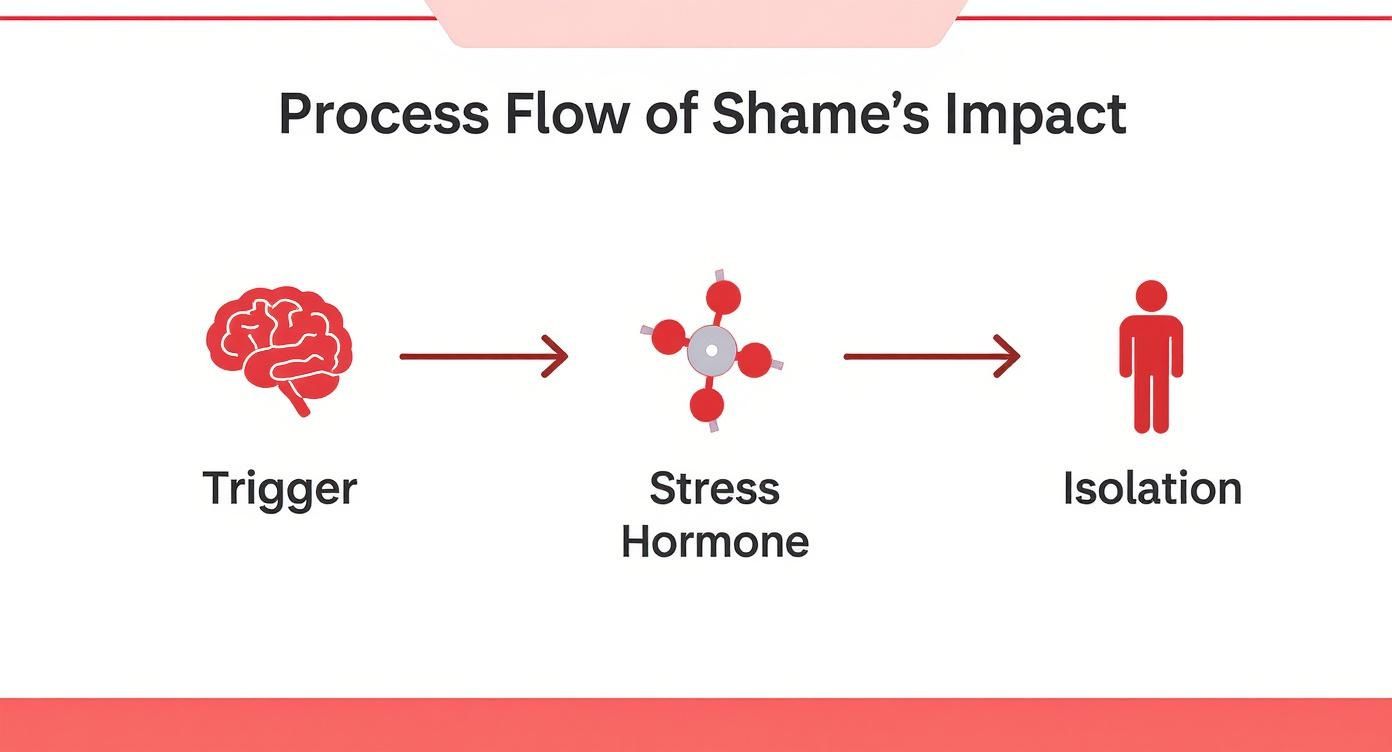
The infographic highlights how quickly an internal feeling can spiral into external behaviors that sabotage recovery. Recognizing these steps gives you the power to break the chain before it picks up speed.
Let's walk through a real-world scenario. Imagine you have a minor disagreement with a loved one about something from your past. The shame tied to that memory surfaces, and instead of talking it through, you retreat to your room, replaying every mistake you ever made. The isolation deepens the shame, and soon, the thought of using feels like a welcome silence.
Breaking this cycle means recognizing these patterns and arming yourself with healthier coping strategies. Techniques learned in therapy are essential for this. You can check out our guide on what is Cognitive Behavioral Therapy to see how you can learn to challenge and reframe these destructive, shame-based thoughts before they take control. This proactive approach is fundamental to building a strong and lasting recovery.
Turning Guilt Into a Tool for Growth
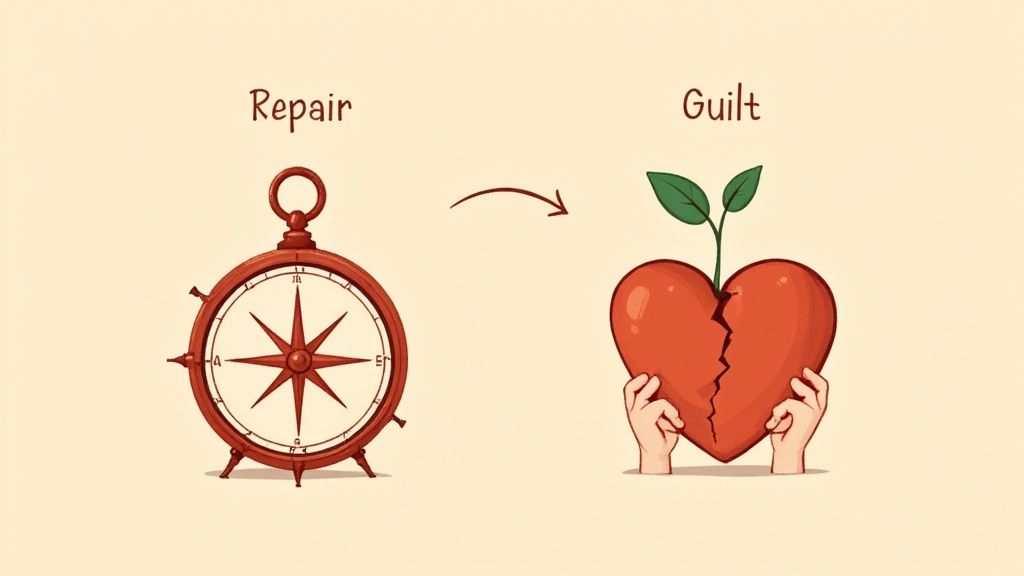
While shame is a destructive force that pulls you down, guilt can be surprisingly productive. When you learn to separate your actions from who you are, guilt stops being a source of pain and becomes a powerful motivator for change. Think of it less as a weight and more as a compass, pointing you toward the relationships and behaviors that need your attention.
The goal isn't to erase guilt entirely. It's about learning how to listen to its message. Guilt is simply a signal that your actions have strayed from your core values, giving you a clear opportunity to realign yourself and take restorative action.
Separate Your Actions From Your Identity
The first and most critical step is to constantly remind yourself: “I did a bad thing,” not “I am bad.” This distinction is the absolute key to using guilt constructively. Your past actions are events that happened; they are not a permanent reflection of your character or your potential for growth.
Shame fuses your actions to your identity, but you can break that connection. Acknowledge the mistake, accept the feeling of guilt it brings, and then immediately shift your focus to what you can do about it now. This simple reframing moves your mindset from self-punishment to problem-solving.
Making Meaningful Amends
Taking responsibility is a powerful antidote to the helplessness that so often comes with guilt. Making amends isn't just about saying "I'm sorry"—it's about demonstrating change and taking concrete steps to repair the harm you caused.
Making amends is a process of accountability that rebuilds trust, both with others and with yourself. It proves through action that you are committed to living differently, turning past mistakes into a foundation for a more honest future.
So, what does that look like in practice?
- Direct apologies: A sincere apology without excuses, justifications, or turning it back on the other person.
- Restitution: If possible, taking action to fix or replace what was broken or lost.
- Living amends: This is the most important one. It means consistently showing up as a reliable, honest, and sober person over time.
Practice Self-Forgiveness and Service
After making amends to others, the final step is to forgive yourself. This isn't a one-time event but a continuous practice of accepting your humanity and acknowledging your commitment to change. It means letting go of the need to punish yourself for mistakes you are actively working to correct.
Engaging in acts of service can also be incredibly healing. Helping others connects you to your community and builds self-worth based on positive actions in the present. It reinforces the idea that you have value to offer, which directly counters the negative self-talk that guilt and shame produce.
Many therapeutic approaches focus on building this internal drive for change. You can explore how therapists use techniques like motivational interviewing therapy to help people find their own reasons for growth.
Proven Ways to Heal From Shame
https://www.youtube.com/embed/XZu7CGe6sQ8
Getting out from under the weight of deep-seated shame takes more than just gritting your teeth and pushing through. It demands real strategies and, for most of us, professional support. While guilt can act as a compass, pointing you toward making amends, shame tells you to hide. Healing means actively learning new, healthier ways to relate to yourself and your past.
Fortunately, several therapeutic approaches are incredibly effective at dismantling shame’s destructive power. These methods give you the tools to challenge those toxic, shame-based beliefs and start building a foundation of self-worth—a non-negotiable for lasting recovery.
Cognitive Behavioral Therapy for Shame
Cognitive Behavioral Therapy (CBT) is a practical, hands-on approach that helps you spot and challenge the negative thought patterns that keep shame alive. The core idea is simple but powerful: your thoughts, not outside events, create your feelings.
In a CBT session, you and your therapist might zoom in on a specific shame-inducing thought, like, “I’m a complete failure because of what I did.” From there, you'll act like a detective, examining the evidence for and against that belief. This process helps you land on a more balanced and truthful perspective, like, “I made some serious mistakes, but my commitment to recovery today proves I’m capable of growth.”
Compassion-Focused Therapy
Compassion-Focused Therapy (CFT) goes right for the jugular of shame: that harsh, relentless inner critic. It teaches you how to cultivate an internal voice of warmth, kindness, and support—the same kind of encouragement you’d offer a good friend who was struggling.
This therapy helps you understand the neuroscience of your brain's "threat system," which is what shame constantly activates. You'll learn concrete techniques to soothe that system and calm your nerves. A key practice might involve guided meditations focused on self-compassion, helping you treat yourself with kindness even when painful memories come up.
For many, shame and guilt are tangled up in past traumatic experiences. Exploring trauma therapy can offer essential tools for profound healing. You can also get a clearer picture of how this sensitive work is done by reading our guide on what is trauma-informed therapy.
The Power of Group Therapy
Group therapy creates a safe, confidential space where you can share what you’re going through with people who actually get it. One of shame’s most powerful weapons is the lie that you are completely alone in your struggle. The moment you hear someone else voice the very same feelings of guilt and shame in recovery, that illusion shatters.
This shared experience, known in therapy as universality, is incredibly healing. It normalizes what you're feeling and builds a sense of belonging that directly fights back against the isolating nature of shame.
This work isn't just a "nice-to-have" in recovery; it's critical. Research shows that high levels of shame can seriously delay or even derail progress in recovery from substance use. Tackling these deep-seated emotions is a necessary part of building a resilient, sober life. Choosing to get help through these proven methods isn't a sign of weakness—it's a profound act of strength.
Frequently Asked Questions
Navigating the emotional minefield of early recovery brings up a ton of questions. We’ve put together direct, no-nonsense answers to some of the most common concerns we hear about guilt and shame.
Is It Normal to Feel So Much Guilt After Getting Sober?
Yes, it’s completely normal—in fact, it’s one of the surest signs that the fog is lifting and you’re starting to heal. When you’re no longer numbing yourself with substances, your awareness of past actions and their impact comes roaring back. It can feel like a tidal wave of regret.
Try to see it as a positive signal. That discomfort means your connection to your core values is getting stronger. While it’s tough to sit with, feeling that guilt shows you’re on the right track toward real accountability.
Can Guilt Ever Be a Good Thing in Recovery?
Absolutely. While shame is almost always a destructive force that says "I am bad," guilt can be a productive, motivating emotion when you know how to channel it. Guilt focuses on a specific action, telling you, "I did something bad."
That subtle difference is everything. When handled correctly, guilt can be the catalyst for:
- Making Amends: It gives you the push you need to repair relationships and take responsibility for your actions.
- Changing Behavior: It serves as a powerful reminder of what you don’t want to do again, strengthening your resolve.
- Rebuilding Self-Respect: Following through on the urge to make things right proves you’re capable of living with integrity.
What If I Can’t Forgive Myself for What I Did?
Self-forgiveness is a journey, not a switch you can flip. It’s often the hardest, longest part of the recovery process for many people. The first step is to fully accept that the past is set in stone; you can’t change it. What you can control, completely, are your actions today and tomorrow.
The goal isn't to forget what happened, but to accept your humanity and acknowledge your commitment to living differently now. It means letting go of self-punishment for mistakes you are actively working to correct.
Practice small acts of self-compassion. Talk it over with a therapist or your sponsor. Every single positive choice you make from this day forward is an act of self-forgiveness in motion. It happens slowly, one good decision at a time.
At Altura Recovery, we understand that healing from guilt and shame is a cornerstone of lasting sobriety. Our compassionate, evidence-based outpatient programs provide the tools and support you need to navigate these feelings and build a future free from their weight. Learn more about how we can help at https://www.alturarecovery.com.