The intense urge to drink can feel overwhelming, often derailing even the most determined recovery journeys. While willpower has its place, successfully curbing alcohol cravings long-term requires more than just grit; it demands a strategic toolkit of evidence-based techniques.
Cravings are not a sign of personal failure. They are a predictable, neurobiological part of healing from alcohol use disorder. Understanding them as temporary signals, rather than commands, is the first step toward regaining control. This guide moves beyond generic advice to provide a comprehensive roundup of nine powerful, clinically-supported strategies.
From cognitive reframing and emotional regulation skills to medical support and lifestyle adjustments, these methods offer actionable pathways to manage urges and build resilience. Whether you're in early recovery, strengthening a long-term plan, or supporting a loved one, these techniques provide a roadmap. We will explore the practical tools that can empower you to navigate triggers effectively and build a life where cravings no longer dictate your choices. Let’s explore the methods that can help you find lasting freedom.
1. Cognitive Behavioral Therapy (CBT) for Craving Management
Cognitive Behavioral Therapy (CBT) is a powerful, evidence-based approach for curbing alcohol cravings by targeting the root of the issue: your thoughts. Founded by pioneers like Aaron Beck, this therapy operates on the principle that our thoughts, feelings, and behaviors are interconnected. By identifying and challenging the distorted thinking patterns that trigger cravings, you can fundamentally change your response to them.
This method is not about willpower alone; it's about building a practical skill set. CBT teaches you to recognize and interrupt automatic negative thoughts before they spiral into a full-blown craving and subsequent action.
How to Apply CBT for Cravings
A cornerstone of CBT is the practice of cognitive restructuring. This involves actively reframing unhelpful thoughts that justify drinking. For instance, you might identify the thought, "I had a terrible day, I deserve a drink to unwind." CBT helps you challenge this by asking, "Will alcohol truly solve my problems, or will it create more?" You then replace it with a more balanced and constructive thought, such as, "I had a tough day, so I'll engage in a healthy activity that actually helps me relax, like going for a walk or listening to music."
This technique is often practiced through thought records or journals, where you document the situation, your automatic thoughts, the resulting feelings, and a more adaptive response. This structured approach helps make the process of challenging thoughts a new, healthier habit.
Actionable Tips for Implementation
To make CBT work for you in curbing alcohol cravings, consider these strategies:
- Keep a Craving Journal: Track the situations, people, thoughts, and feelings that precede a craving. This helps you identify your personal triggers with clarity.
- Practice Thought-Stopping: When a craving-related thought enters your mind, consciously tell yourself "Stop!" and immediately pivot to a pre-planned, positive thought or activity.
- Conduct Behavioral Experiments: If you fear you can't socialize without alcohol, test that belief. Attend a social event and stick to non-alcoholic drinks, observing the actual outcome versus your feared one.
- Work with a Professional: A licensed therapist can guide you through this process, providing personalized strategies and support. Many find that practicing these skills in a structured environment, such as through group therapy activities, reinforces their learning and provides peer encouragement.
2. Dialectical Behavior Therapy (DBT) Skills Training
Dialectical Behavior Therapy (DBT) is a comprehensive, skills-based therapy that equips you with practical tools for curbing alcohol cravings. Developed by Dr. Marsha M. Linehan, DBT blends cognitive-behavioral principles with mindfulness, teaching you to accept your intense emotions while actively working to change your response to them. This dual approach is highly effective for managing the emotional dysregulation that often fuels the urge to drink.
Instead of just fighting cravings, DBT provides a structured way to tolerate distress and regulate emotions without resorting to alcohol. It is built on four key skill modules: mindfulness, distress tolerance, emotion regulation, and interpersonal effectiveness, which together form a powerful defense against relapse triggers.
How to Apply DBT Skills for Cravings
A core component of DBT for craving management is distress tolerance. These skills are designed for surviving crisis moments without making them worse. For example, when an overwhelming craving hits, you can use the TIPP skills: change your Temperature (splash cold water on your face), engage in Intense exercise, practice Paced breathing, and use Progressive muscle relaxation.
Another powerful technique is the "ACCEPTS" acronym, which helps distract you from the craving in a healthy way. You can engage in Activities, Contribute to others, make Comparisons to feel better, generate different Emotions, Push away the thoughts temporarily, use other Thoughts, or create intense Sensations (like holding ice) to ride out the urge.
Actionable Tips for Implementation
To effectively integrate DBT into your strategy for curbing alcohol cravings, consider these tips:
- Practice Skills Proactively: Don't wait for a crisis. Rehearse distress tolerance and mindfulness skills daily so they become second nature when a strong craving emerges.
- Create a Skills "Go-Kit": Keep handouts or notes of your most effective DBT skills accessible on your phone, in your wallet, or in your car for immediate reference.
- Track Your Skill Usage: Keep a simple log of which skills you use and how effective they are for different triggers. This helps you learn what works best for your unique situation.
- Commit to the Structure: DBT is most effective when learned comprehensively. If possible, engage with a therapist or group that teaches all four modules to build a complete toolkit.
3. Mindfulness and Meditation Practices
Mindfulness and meditation are powerful tools for curbing alcohol cravings by training your brain to observe thoughts without judgment. Pioneered by figures like Jon Kabat-Zinn, this approach is centered on paying deliberate attention to the present moment. It teaches that cravings are temporary mental and physical events, not commands you must follow, creating a crucial space between the urge and your reaction to it.
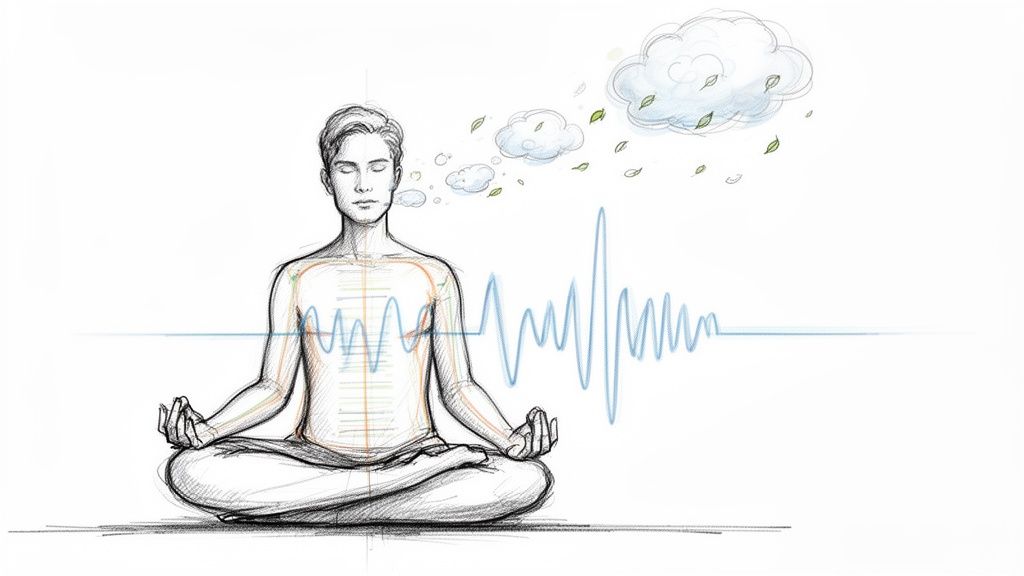
Instead of fighting or suppressing a craving, mindfulness invites you to acknowledge its presence, observe the sensations it creates, and watch it pass. This practice reduces the craving’s power and helps regulate the stress and anxiety that often fuel the desire to drink.
How to Apply Mindfulness for Cravings
A core technique is the "urge surfing" meditation. When a craving for alcohol arises, instead of resisting it, you sit with it. You mentally note the physical sensations in your body and the thoughts in your mind as if you were an impartial scientist. You might observe a tightness in your stomach or the thought, "Just one drink will be fine."
By observing these phenomena without acting on them, you learn that cravings, like waves, build in intensity, crest, and then naturally subside. This experience provides direct proof that you don't need to give in to make the discomfort go away; it will pass on its own.
Actionable Tips for Implementation
To integrate mindfulness into your routine for curbing alcohol cravings, try these strategies:
- Start Small and Be Consistent: Begin with a 5-minute guided meditation daily using an app like Insight Timer or Calm. Consistency is more important than duration.
- Practice a Body Scan: Lie down and bring your attention to different parts of your body, from your toes to your head. This builds awareness of physical sensations tied to triggers.
- Use Breath as an Anchor: When a craving hits, focus on the physical sensation of your breath for a few minutes. This simple act grounds you in the present moment.
- Explore Targeted Practices: Beyond general mindfulness, exploring specific meditation practices for anxiety can further enhance your ability to cope with intense cravings.
4. Medication-Assisted Treatment (MAT)
Medication-Assisted Treatment (MAT) is a highly effective, evidence-based approach that combines FDA-approved medications with counseling and behavioral therapies. Endorsed by organizations like SAMHSA and the American Society of Addiction Medicine, MAT addresses the physiological aspects of addiction that can make curbing alcohol cravings so difficult. It works by normalizing brain chemistry, blocking the euphoric effects of alcohol, and relieving physiological cravings.
This comprehensive strategy treats the whole person, providing a powerful tool for those with moderate to severe alcohol dependence. By stabilizing the body's neurobiology, MAT allows individuals to more fully engage in and benefit from the therapeutic process.
How to Apply MAT for Cravings
The core of MAT involves using specific medications to interrupt the addiction cycle. For example, a doctor might prescribe Naltrexone to block the rewarding feelings alcohol provides, significantly reducing the motivation to drink. Another common medication, Acamprosate, works to rebalance brain chemicals that are disrupted by long-term alcohol use, easing post-acute withdrawal symptoms like anxiety and restlessness that often trigger cravings.
A classic scenario involves a person in early recovery using acamprosate to manage persistent unease and cravings, which allows them to focus on rebuilding relationships and developing new coping skills in therapy. This integrated approach tackles both the biological and psychological drivers of addiction simultaneously.
Actionable Tips for Implementation
To successfully incorporate MAT into your strategy for curbing alcohol cravings, consider these steps:
- Consult a Specialist: Work with a psychiatrist or physician experienced in addiction medicine to determine if MAT is right for you and to find the appropriate medication.
- Be Patient with the Process: Finding the right medication and dosage can take time. It's important to maintain open communication with your provider about how you're feeling.
- Combine with Therapy: Medication is most effective when used as a component of a comprehensive recovery plan that includes behavioral therapy and support groups.
- Report Side Effects: Don't hesitate to inform your doctor about any side effects. Adjustments can often be made, or alternative medications may be available.
- View it as a Tool: Use medication to support your recovery efforts, not as a replacement for the essential work of therapy, lifestyle changes, and building a support network.
5. Motivational Interviewing and Motivational Enhancement Therapy
Motivational Interviewing (MI) is a collaborative counseling style designed to strengthen your personal motivation for change. Developed by psychologists William Miller and Stephen Rollnick, this approach helps you explore and resolve the internal ambivalence that fuels drinking behavior. Instead of telling you what to do, an MI practitioner guides you to discover your own reasons for curbing alcohol cravings.
This method is built on a foundation of partnership and empathy, recognizing that lasting change comes from within. Motivational Enhancement Therapy (MET) is a more structured adaptation, often used in substance use treatment, that combines the principles of MI with personalized feedback to accelerate the process of change.
How to Apply MI/MET for Cravings
The core of this approach is resolving ambivalence, the state of having mixed feelings about sobriety. A therapist using MI will help you voice both your reasons for wanting to drink and your reasons for wanting to stop. For example, they might use reflective listening to highlight your commitment to your family whenever you express it, gently guiding you to see how sobriety aligns with your core values.
This non-confrontational dialogue helps tip the balance in favor of change. You become the primary advocate for your own recovery, which is far more powerful than being told why you should quit. This strengthens your intrinsic resolve, making it easier to manage cravings when they arise.
Actionable Tips for Implementation
To get the most out of this approach for curbing alcohol cravings, try these strategies:
- List Your Values: Before a session, write down your most important life goals and values. This gives you a clear foundation to explore how drinking conflicts with what you truly want.
- Embrace Ambivalence: Be open about your conflicting feelings. Share both your desire to drink and your commitment to change with your therapist.
- Practice Self-Talk: Use the same principles on your own. When a craving hits, ask yourself open-ended questions like, "What are the pros and cons of drinking right now?"
- Focus on Your "Why": Articulate your own reasons for change out loud, both in therapy and to yourself. Hearing your own voice state your commitment can be a powerful motivator.
6. Peer Support Groups and Community-Based Programs
Peer support groups are foundational for curbing alcohol cravings by fostering connection, accountability, and a shared sense of purpose. Programs like Alcoholics Anonymous (AA) and SMART Recovery operate on the principle that mutual support from those with similar lived experiences is a powerful force for change. They combat the isolation that often fuels addiction, providing a structured, supportive social network dedicated to sobriety.
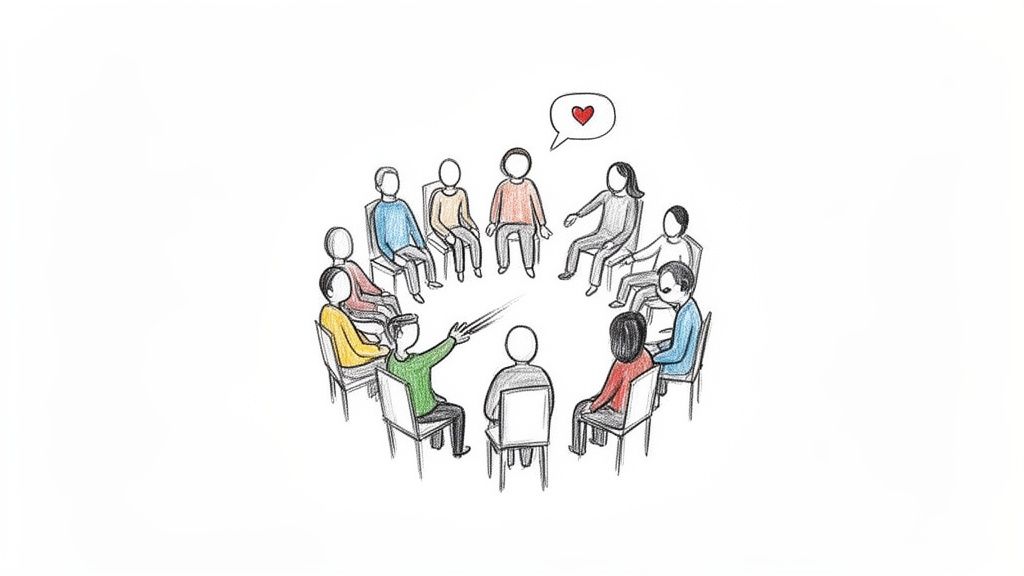
This approach is not just about avoiding alcohol; it’s about building a new life where sobriety is a shared goal. By regularly attending meetings, members gain practical wisdom and encouragement from others who have successfully navigated cravings and other challenges in recovery.
How to Apply Peer Support for Cravings
The core of peer support is consistent engagement. For someone in early recovery, this might mean following the common suggestion of attending "90 meetings in 90 days" to build a strong foundation and a robust sober network. The group setting offers immediate access to support when cravings strike. Instead of isolating, you can call another member or attend a meeting, replacing the impulse to drink with a positive, community-oriented action.
These groups provide a framework for navigating daily life without alcohol. For instance, a working professional can find evening meetings that fit their schedule, ensuring they have consistent support without disrupting their career. This integration of recovery into everyday life is key for long-term success.
Actionable Tips for Implementation
To make peer support an effective tool for curbing alcohol cravings, consider these strategies:
- Explore Your Options: Try various groups like AA, SMART Recovery, LifeRing, or Refuge Recovery to find a philosophy and community that resonates with you.
- Give It Time: Attend several meetings of a group before deciding if it's the right fit. Building comfort and connection takes time.
- Build a Network: Actively get phone numbers from other members. Having someone to call during a moment of intense craving can be a lifeline.
- Find a Sponsor: In programs like AA, a sponsor provides one-on-one guidance, accountability, and support, which is invaluable for navigating early sobriety.
- Combine Approaches: Pair group support with individual therapy for comprehensive care. This structure is often a core component of supportive environments, as you can discover more about sober living houses and their community-based models.
7. Relapse Prevention Planning and High-Risk Situation Management
Relapse Prevention (RP) is a proactive, cognitive-behavioral strategy designed to anticipate and manage high-risk situations before they lead to a setback. Developed by G. Alan Marlatt, this model views relapse not as a failure but as a predictable event that can be prevented with the right skills. It empowers you to identify personal triggers and develop a concrete plan for navigating them, transforming potential crises into opportunities to strengthen your recovery.
This approach is about building a personalized defense system. By mapping out your unique vulnerabilities, from stressful work deadlines to specific social events, you shift from a reactive state of "hoping for the best" to a prepared state of "knowing what to do." This preparation is a key component of effectively curbing alcohol cravings when they arise.
How to Apply Relapse Prevention Planning
The core of RP is creating a detailed, written plan. This involves identifying specific high-risk situations and outlining coping strategies for each one. For example, you might recognize that Friday evenings after a long work week are a major trigger. Your plan could involve scheduling a standing activity, like going to the gym or attending a support group meeting, to break the old routine of heading to a bar.
Another common scenario is managing social pressure. An RP plan might include rehearsing phrases to decline a drink, having a non-alcoholic beverage ready, and establishing a firm departure time. By thinking through these scenarios in advance, you reduce decision fatigue and the likelihood of acting impulsively when a craving hits.
Actionable Tips for Implementation
To build a robust relapse prevention plan for curbing alcohol cravings, follow these steps:
- Identify Your Triggers: List 5-10 specific situations, emotions, or people that trigger your cravings. Be as detailed as possible (e.g., "driving past a specific liquor store on my way home").
- Develop Multiple Coping Strategies: For each trigger, create at least three distinct responses. This could include calling a support person, engaging in a distracting hobby, or practicing a mindfulness exercise.
- Write It Down: Keep your plan accessible on your phone, in a notebook, or in your wallet. Having a physical or digital copy makes it easier to consult in a moment of need.
- Share and Rehearse: Discuss your plan with a therapist, sponsor, or trusted friend. Role-playing your responses to high-risk situations can build the confidence needed to use them effectively.
- Update Regularly: Your life and triggers will change. Review and update your plan every 3-6 months to ensure it remains relevant to your current recovery journey.
8. Lifestyle Change and Behavioral Activation
Lifestyle change, coupled with Behavioral Activation, is a proactive strategy for curbing alcohol cravings by fundamentally altering the routines and rewards in your life. This approach operates on a simple but powerful premise: cravings often thrive in environments of boredom, isolation, and a lack of fulfillment. By systematically replacing drinking-related behaviors with healthy, meaningful activities, you create a life where alcohol becomes less relevant.
This method directly addresses the neurobiological reward deficit common in addiction. Instead of seeking a temporary lift from alcohol, you engage in activities that provide natural and sustainable sources of dopamine and serotonin, building a genuinely satisfying sober life from the ground up.
How to Apply Behavioral Activation for Cravings
The core of this strategy is to schedule and engage in positive activities, regardless of your immediate motivation. Cravings often tell you that nothing else will be enjoyable, but Behavioral Activation challenges this by proving otherwise. You start by identifying activities that align with your values or once brought you joy, even if they seem minor.
For instance, an individual who used to drink after work out of habit might replace that routine with a new fitness class. This not only provides healthy stress relief but also introduces them to a new, sober social circle. The goal is to fill the voids that drinking once occupied with experiences that build self-esteem, purpose, and positive reinforcement, making the sober path more rewarding than the alternative.
Actionable Tips for Implementation
To effectively integrate lifestyle changes for curbing alcohol cravings, consider these steps:
- Start Small: Begin with low-effort activities that genuinely interest you, like a 15-minute walk, reading a chapter of a book, or listening to a podcast. Small wins build momentum.
- Schedule Your Activities: Treat your new, healthy activities like non-negotiable appointments. Put them in your calendar to create structure and accountability.
- Find Incompatible Activities: Choose hobbies that directly conflict with drinking, such as early morning workouts, volunteering commitments, or taking a class that requires focus.
- Build a Sober Network: Join clubs, groups, or classes centered around your interests. Building new, positive social connections is a critical part of reinforcing your sober identity.
9. Trauma-Informed Therapy and EMDR
For many, the urge to drink is deeply connected to unresolved trauma. Trauma-Informed Therapy and Eye Movement Desensitization and Reprocessing (EMDR) address this root cause, providing a powerful pathway for curbing alcohol cravings by healing the underlying emotional wounds that trigger them. This approach recognizes that substance use is often a coping mechanism for the overwhelming stress of past traumatic events.
Developed by Dr. Francine Shapiro, EMDR is a structured therapy that helps the brain reprocess traumatic memories. By using bilateral stimulation, such as eye movements, it reduces the vividness and emotional charge of these memories, effectively unlinking them from the automatic craving response. This therapy doesn't erase the memory but helps you store it differently, so it no longer triggers distress.
How Trauma-Informed Therapy Helps Cravings
The core principle is that by treating the trauma, you neutralize the trigger. For example, a veteran experiencing PTSD from combat may find that certain sounds or situations trigger intense anxiety and an immediate craving for alcohol to numb those feelings. Through EMDR, the traumatic combat memories can be processed, diminishing the PTSD symptoms and, consequently, the associated desire to drink. The craving becomes less powerful because the emotional fire fueling it has been put out.
This process creates a sense of safety and empowerment, allowing individuals to develop healthier coping strategies instead of turning to alcohol. It’s a foundational approach for those whose cravings are not just a habit but a reaction to deep-seated pain.
Actionable Tips for Implementation
To effectively use this approach for curbing alcohol cravings, consider these steps:
- Find a Certified Professional: Ensure your therapist is formally trained and certified in EMDR. The EMDR International Association (EMDRIA) is a reliable resource for finding qualified practitioners.
- Establish Safety First: Before processing trauma, work with your therapist to develop strong grounding techniques and coping skills to manage any distress that may arise.
- Be Patient with the Process: Healing from trauma is not a quick fix. It requires time, commitment, and self-compassion. Allow yourself space between sessions to integrate the experience.
- Integrate with Other Support: Combine EMDR with other supportive therapies, support groups, or holistic practices for comprehensive healing. For individuals whose cravings may be linked to past traumatic experiences or who experience co-occurring anxiety, exploring specialized therapies like EMDR therapy for anxiety can be a crucial step in healing and managing symptoms.
Curbing Alcohol Cravings: 9-Strategy Comparison
| Approach | 🔄 Implementation complexity | ⚡ Resource requirements | ⭐ Expected effectiveness | 📊 Key advantages / results | 💡 Ideal use cases |
|---|---|---|---|---|---|
| Cognitive Behavioral Therapy (CBT) for Craving Management | Moderate — structured, therapist‑led sessions and homework | Therapist time, client commitment, low-tech materials | ⭐⭐⭐⭐ — strong evidence for addiction | Concrete skills, measurable progress; addresses cognitive roots of cravings | Motivated clients wanting skill-based therapy; integrates with MAT/IOP |
| Dialectical Behavior Therapy (DBT) Skills Training | High — multi‑module program (group + individual + coaching) | DBT‑trained clinicians, time (often long program), skills coaching | ⭐⭐⭐⭐⭐ — excellent for emotion dysregulation & co‑occurring disorders | Broad toolbox (mindfulness, distress tolerance); strong crisis support | Clients with co‑occurring mental health conditions or severe emotion dysregulation |
| Mindfulness & Meditation Practices | Low — practice‑based; scalable from brief to intensive | Time daily, apps or instructor optional, low cost | ⭐⭐⭐⭐ — effective when practiced consistently (weeks to months) | Reduces reactivity, increases awareness of cravings; low risk | Self-directed clients, adjunct to therapy, stress/anxiety reduction needs |
| Medication‑Assisted Treatment (MAT) | Moderate — medical evaluation, prescription, monitoring | Prescriber (addiction psychiatrist), medication access, follow‑up visits | ⭐⭐⭐⭐⭐ — strong for moderating neurobiological cravings | Significantly reduces cravings/relapse risk; enables engagement in therapy | Moderate–severe dependence or when biologic support is needed |
| Motivational Interviewing / MET | Low–Moderate — clinician skill dependent; brief or ongoing | Trained counselor; flexible session length | ⭐⭐⭐⭐ — improves engagement and readiness to change | Reduces defensiveness, strengthens intrinsic motivation | Ambivalent clients or early stage of change needing engagement |
| Peer Support Groups & Community Programs | Low — community‑run meetings; variable structure | Time commitment, travel/virtual access, finding right group | ⭐⭐⭐⭐ — strong for long‑term support and accountability | Sense of belonging, peer wisdom, low cost and wide availability | Long‑term maintenance, social support needs, complementary to therapy |
| Relapse Prevention Planning & High‑Risk Management | Moderate — individualized assessment and rehearsed plans | Therapist guidance, time to create and update plans | ⭐⭐⭐⭐ — empowers coping; reduces relapse likelihood | Concrete action plans, early warning detection, practical tools | Clients entering high‑risk contexts or transitioning out of treatment |
| Lifestyle Change & Behavioral Activation | Moderate — sustained behavior scheduling and support | Time, access to activities, possible costs, social resources | ⭐⭐⭐⭐ — improves mood and reduces triggers over months | Builds sober identity, increases natural rewards and purpose | Those with boredom/lack of reinforcement driving substance use |
| Trauma‑Informed Therapy & EMDR | High — specialized trauma training and careful pacing | EMDR/trauma‑trained therapist, emotional stability required | ⭐⭐⭐⭐⭐ — highly effective for trauma‑driven cravings/PTSD | Rapid reduction of trauma charge; decreases automatic triggers | Clients with unresolved trauma or PTSD underlying substance use |
Integrating Your Toolkit for Sustainable Recovery
Navigating the path to recovery from alcohol use disorder is a profoundly personal journey, and as we've explored, curbing alcohol cravings is rarely accomplished with a single, isolated technique. Instead, sustainable success is built by assembling a personalized and integrated toolkit. The strategies discussed in this article, ranging from cognitive reframing with CBT to emotional regulation with DBT and neurochemical support through MAT, are not mutually exclusive options. Their true power is unlocked when they are strategically combined to create a comprehensive defense system that addresses your unique needs.
Think of it as building a custom support structure. You might use mindfulness practices to create a moment of pause when a craving first strikes, giving you the space to then apply a DBT distress tolerance skill. That immediate coping mechanism can then be reinforced by long-term work in trauma-informed therapy like EMDR, which helps dismantle the root causes of those triggers. This layered approach ensures you have both in-the-moment tactics and foundational strategies for lasting change.
The Synergy of a Multi-Faceted Approach
The most effective plans for curbing alcohol cravings recognize that recovery involves the mind, body, and social environment.
- Mind-Body Connection: Combining Medication-Assisted Treatment (MAT) to stabilize brain chemistry can make it significantly easier to engage with and benefit from therapeutic work like CBT. When the physical compulsion is lessened, you have more cognitive resources to challenge negative thought patterns and build new habits.
- Skills and Support: Integrating the practical skills learned in Relapse Prevention Planning with the communal wisdom and accountability of peer support groups creates a powerful feedback loop. You can test your high-risk situation strategies in the real world and then process the outcomes with a supportive community that understands your challenges.
- Behavior and Motivation: Leveraging Motivational Interviewing to clarify your personal reasons for change provides the "why" that fuels the "how" of Lifestyle Change and Behavioral Activation. When your daily actions align with your deepest values, the motivation to choose recovery over relapse becomes intrinsic and powerful.
Ultimately, your journey is not about perfectly executing every strategy, but about finding the right combination that works for you. It's about being compassionate with yourself, recognizing that what you need may change over time, and remaining committed to building a life where you are in control. Each tool you add to your kit strengthens your resilience, making it easier to navigate triggers and reaffirm your commitment to a healthier, more fulfilling future free from the constraints of alcohol cravings. This integrated, adaptable approach is the cornerstone of building a recovery that doesn't just survive, but truly thrives.
If you are ready to build a personalized, comprehensive toolkit for curbing alcohol cravings, the expert team at Altura Recovery is here to guide you. Our evidence-based outpatient programs in Houston integrate these powerful therapeutic modalities to create a treatment plan tailored to your unique journey. Take the first step toward lasting freedom by contacting us today at Altura Recovery.