Alcohol cravings can feel like an overwhelming force, disrupting your focus and threatening your commitment to sobriety. These intense urges are a common part of the recovery journey, stemming from complex changes in brain chemistry and learned behavioral patterns. However, they are not commands you must obey. Learning how to effectively curb alcohol cravings is a fundamental skill for building a sustainable, sober life. The key is understanding that you can develop control over these physiological and psychological responses with the right tools and strategies.
This guide provides a comprehensive roundup of 10 evidence-based, actionable strategies to not only survive these challenging moments but to build lasting resilience. We will explore a range of powerful tools designed to empower you on your path to real, sustainable freedom from alcohol. The goal is not just to resist an urge, but to fundamentally change your relationship with it.
Instead of generic advice, this listicle offers a practical toolkit. You will learn specific techniques from proven therapeutic models like Cognitive Behavioral Therapy (CBT) and Dialectical Behavior Therapy (DBT), discover the role of medication and physical activity, and get clear guidance on building a supportive lifestyle. Each point is designed to give you a concrete action you can take, whether you need immediate relief in a high-risk situation or are building a long-term relapse prevention plan. We will delve into everything from mindfulness practices that help you sit with discomfort to crisis planning that prepares you for the unexpected, providing a robust framework to regain control.
1. Cognitive Behavioral Therapy (CBT) Techniques
Cognitive Behavioral Therapy (CBT) is a powerful, evidence-based psychotherapy that helps you manage problems by changing how you think and behave. Pioneered by figures like Aaron Beck, this approach operates on the core principle that your thoughts, feelings, and actions are interconnected. When you want to curb alcohol cravings, CBT provides a structured way to identify and challenge the automatic negative thoughts that trigger the urge to drink.
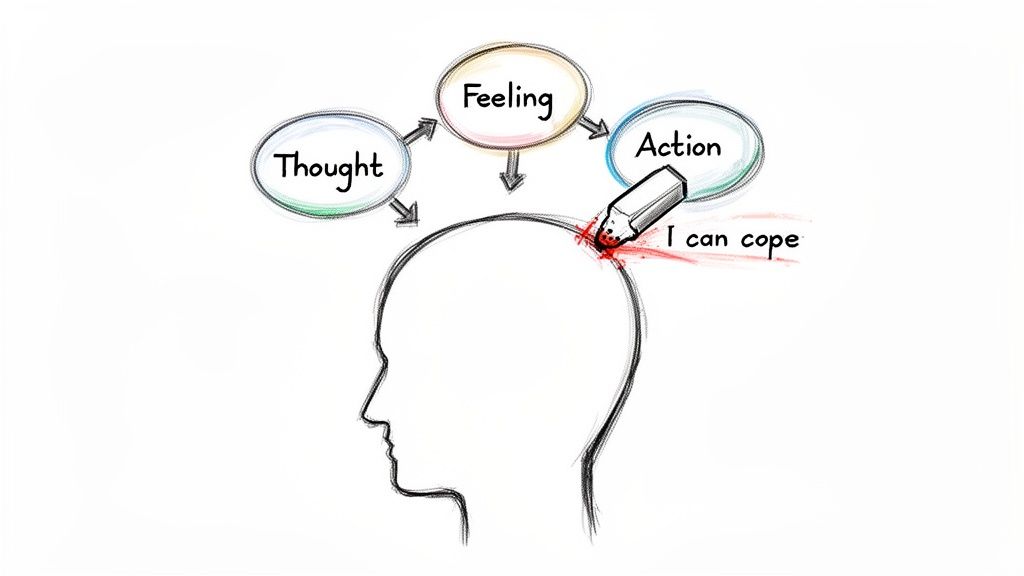
This method isn’t about willpower alone; it's about building practical skills to dismantle the thought patterns that lead to drinking. By recognizing these cognitive distortions, you can systematically reframe them into more balanced and realistic perspectives, weakening the craving’s power over time.
How to Implement CBT Techniques
CBT is most effective when practiced consistently, both with a therapist and on your own. Start by identifying the specific situations, thoughts, and feelings that precede an alcohol craving.
- Thought Record: Keep a journal to track your cravings. Note the situation, the automatic thought (e.g., "I need a drink to relax after this stressful day"), and the resulting feeling (e.g., anxiety). Then, actively challenge and reframe that thought ("Drinking will only make me feel worse tomorrow; I can take a walk to relax instead").
- Behavioral Experiments: Test your beliefs. If you believe you can't socialize without alcohol, try attending a short social event sober and observe the actual outcome. This provides real-world evidence to counter your negative assumptions.
- The STOP Technique: When a craving hits, use this four-step process:
- Stop what you are doing.
- Take a few deep breaths to ground yourself.
- Observe your thoughts and feelings without judgment.
- Proceed with a healthier, more intentional action.
Working with a therapist at a facility like Altura Recovery can accelerate this process, providing professional guidance to identify your unique triggers and develop personalized coping strategies. This structured approach helps transform your mental responses, making it a cornerstone of effective relapse prevention.
2. Dialectical Behavior Therapy (DBT) Skills
Dialectical Behavior Therapy (DBT) offers a powerful, skills-based approach to managing overwhelming emotions and the intense urges that drive addictive behaviors. Developed by Marsha Linehan, DBT blends cognitive-behavioral techniques with concepts of mindfulness and acceptance. The therapy operates on the core principle of finding a balance between accepting your current state and actively working toward change, which is crucial when you want to curb alcohol cravings.
This method is particularly effective for individuals who experience intense emotional reactions that trigger the desire to drink. Instead of fighting a craving with sheer willpower, DBT equips you with concrete skills to tolerate distress, regulate your emotions, and improve your relationships, reducing the underlying reasons you might turn to alcohol in the first place.
How to Implement DBT Skills
DBT is structured around four key skill modules that can be practiced daily to build resilience against cravings. The goal is to have these tools ready before a crisis hits.
- Distress Tolerance (The TIPP Skill): When an acute craving feels unbearable, use the TIPP skill to rapidly change your body chemistry and lower emotional intensity.
- Temperature: Splash your face with cold water or hold an ice pack to your cheeks to trigger the "dive response."
- Intense Exercise: Engage in a short burst of vigorous activity, like jumping jacks or running in place, for 60 seconds.
- Paced Breathing: Slow your breathing down, making your exhale longer than your inhale (e.g., inhale for 4 seconds, exhale for 6).
- Paired Muscle Relaxation: Tense and then relax different muscle groups throughout your body.
- Emotion Regulation (The ABC PLEASE Skill): This skill set focuses on reducing your vulnerability to negative emotions over the long term. It involves Accumulating positive experiences, Building mastery, and Coping ahead of stressful situations, while also caring for your physical health through proper nutrition (PhysicaL illness), balanced meals, avoiding mood-altering drugs, getting adequate sleep, and regular exercise.
- Opposite Action: This skill involves identifying the emotion driving your craving (e.g., sadness, shame) and doing the opposite of what the emotion tells you to do. If shame makes you want to isolate and drink, Opposite Action would guide you to reach out to a supportive friend instead.
Learning these skills in a structured setting, such as a DBT-informed program at Altura Recovery, ensures you receive expert guidance and support. Consistent practice makes these techniques second nature, providing a reliable defense against the powerful pull of alcohol cravings.
3. Mindfulness and Meditation Practices
Mindfulness and meditation are powerful tools for managing cravings by fundamentally changing your relationship with them. Popularized by figures like Jon Kabat-Zinn and addiction specialist Judson Brewer, this approach teaches you to observe your urges without judgment. Instead of being controlled by a craving, you learn to see it as a temporary mental and physical event that will eventually pass on its own.
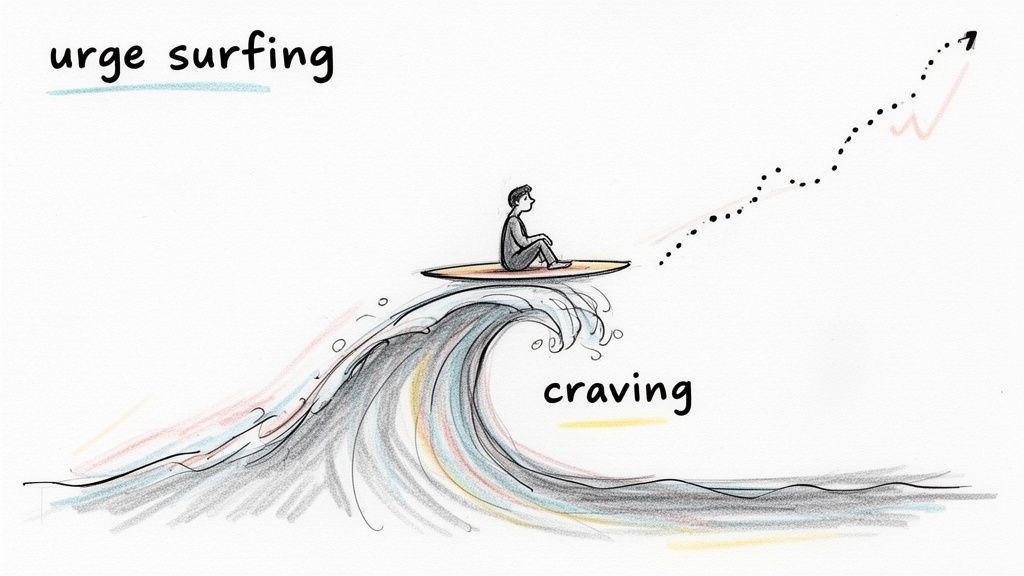
This practice isn't about eliminating cravings entirely; it’s about reducing their power and your automatic reaction to them. By training your brain to pause and observe, you create a crucial space between the urge and your action, allowing you to choose a healthier response. Over time, this conscious awareness can significantly reduce both the frequency and intensity of alcohol cravings.
How to Implement Mindfulness and Meditation
Integrating mindfulness requires consistent practice, starting with small, manageable steps. The goal is to build a new habit that you can rely on when urges feel overwhelming.
- Urge Surfing: Visualize your craving as a wave. Acknowledge its presence, notice it building in intensity, reaching a peak, and then naturally subsiding. Instead of fighting the wave, you "surf" it by observing its entire lifecycle without acting on it.
- The 5-4-3-2-1 Grounding Technique: When a craving hits, bring your awareness to the present moment. Identify: 5 things you can see, 4 things you can touch, 3 things you can hear, 2 things you can smell, and 1 thing you can taste. This pulls your focus away from the internal craving and into your external environment.
- Daily Meditation: Dedicate 5-10 minutes each day to guided meditation using apps like Calm or Insight Timer. Consistent practice strengthens your brain's ability to remain calm and focused. Beyond formal practice, integrating mindful meditation into daily life can offer Mindful Meditation Secrets for Emotional and Physical Well-being.
To deepen your understanding and technique, this guided meditation offers a practical starting point:
Practices like these build emotional resilience, equipping you with an internal toolkit to navigate recovery challenges calmly and effectively.
4. Exercise and Physical Activity
Physical activity is a powerful, evidence-based strategy that helps curb alcohol cravings by addressing both the mind and body. When you exercise, your brain releases endorphins, which are natural mood elevators that mimic the rewarding feelings alcohol can provide, but in a healthy way. This process simultaneously reduces stress hormones like cortisol, directly combating a common trigger for drinking.
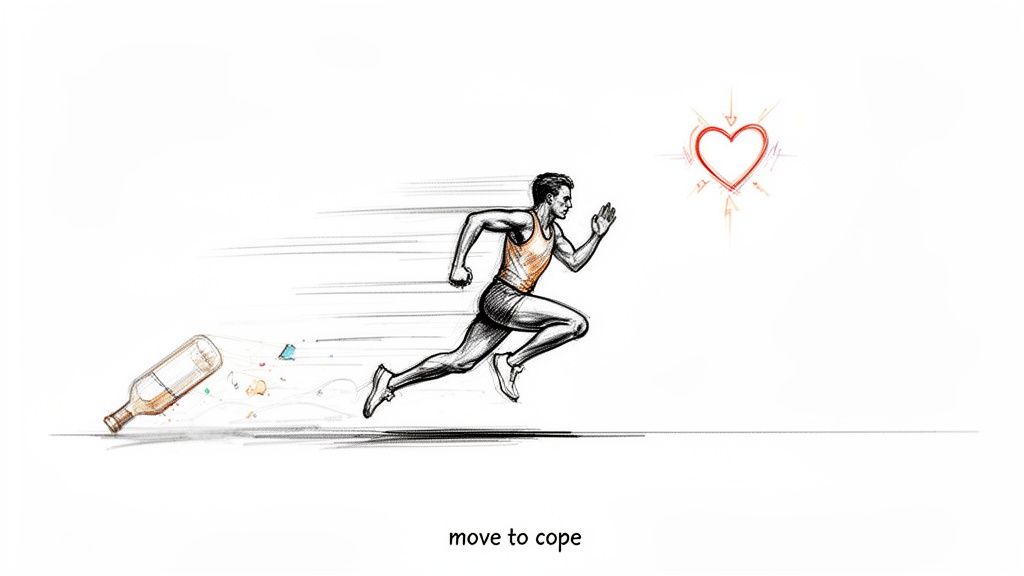
Engaging in regular exercise restructures your daily routine, replacing time that might have been spent drinking with a constructive activity. It offers a healthy outlet for managing difficult emotions like anxiety or frustration, effectively short-circuiting the emotional-craving-drinking cycle and improving overall well-being.
How to Implement Exercise and Physical Activity
Integrating movement into your life doesn't require an extreme fitness overhaul. Consistency is more important than intensity, especially when you are starting out.
- Immediate Craving Interruption: When a strong craving hits, engage in a short, vigorous activity. A 20 to 30-minute jog, a quick HIIT session at home, or even a brisk walk can disrupt the craving cycle and provide immediate relief.
- Structured Routine: Schedule exercise at times when your cravings are typically strongest, such as in the evening after work. This proactive approach helps manage urges before they become overwhelming. For those looking to integrate physical activity, exploring how to build a sustainable early morning exercise routine can provide a powerful tool for managing stress and boosting overall well-being.
- Community and Connection: Join a recovery-focused running group, a sober sports league, or group fitness classes. This combines the physiological benefits of exercise with the motivational power of social support and accountability.
- Find What You Enjoy: You are more likely to stick with an activity you genuinely like. Experiment with different forms of movement like yoga, swimming, dancing, or team sports to discover what feels rewarding to you.
By making physical activity a non-negotiable part of your recovery, you build resilience, improve your mood, and gain a tangible tool to manage cravings. This strategy empowers you to actively take control of your health, one workout at a time.
5. Support Groups and Peer Accountability
Connecting with others who share similar experiences is a foundational element of sustained recovery. Support groups and peer accountability systems provide a structured, non-judgmental environment where you can share struggles, celebrate victories, and learn from the collective wisdom of those on the same path. This approach operates on the principle that shared experience and mutual support combat the isolation that often fuels addiction.
These groups are not just about talking; they are about building a network of real-world support that normalizes the recovery journey. Hearing others describe their own challenges with cravings and how they overcame them provides powerful, tangible proof that long-term sobriety is achievable. This sense of community and shared purpose can be a critical lifeline, especially during high-risk moments.
How to Implement Support Groups and Peer Accountability
Integrating peer support into your routine requires active participation and a willingness to be open. The goal is to build a reliable network you can turn to before a craving escalates into a relapse.
- Find Your Fit: Explore different types of groups to find one that aligns with your beliefs and needs. Popular options include Alcoholics Anonymous (AA), which uses a 12-step spiritual model, and secular alternatives like SMART Recovery, which focuses on self-empowerment and cognitive techniques.
- Engage Actively: Don't just attend; participate. Share your experiences, listen to others, and consider getting a sponsor or an accountability partner. This one-on-one relationship provides personalized guidance and immediate support when you need to curb alcohol cravings.
- Build a Proactive Habit: Attend meetings regularly, even when you feel strong in your recovery. Building these connections during stable times creates a solid foundation to rely on when challenges arise.
- Combine with Other Strategies: Peer support is most effective when used alongside other recovery efforts, like therapy and lifestyle changes. You can learn more about how to build a support system that integrates multiple layers of help.
Leveraging the power of peer accountability transforms recovery from a solitary battle into a collaborative effort. At facilities like Altura Recovery, we often integrate peer support principles into our programs, recognizing that connection is a powerful antidote to addiction.
6. Medication-Assisted Treatment (MAT) and Pharmacotherapy
Medication-Assisted Treatment (MAT) is an evidence-based approach that combines FDA-approved medications with counseling and behavioral therapies to treat substance use disorders. Popularized by organizations like NIDA and SAMHSA, this method addresses the biological aspects of alcohol dependence. Medications work by reducing cravings, managing withdrawal symptoms, or creating a negative physical reaction to alcohol, making it a powerful tool to curb alcohol cravings.
MAT isn't about replacing one substance with another; it's a clinical strategy to rebalance brain chemistry disrupted by long-term alcohol use. When integrated into a comprehensive treatment plan, medications significantly reduce the risk of relapse and provide the stability needed to engage fully in therapy. This approach acknowledges that addiction is a medical condition that often responds well to targeted pharmacological intervention.
How to Implement Medication-Assisted Treatment
Implementing MAT requires professional medical supervision to ensure safety and effectiveness. The process starts with a thorough psychiatric evaluation to determine the most suitable medication for your specific needs, health history, and recovery goals.
- Naltrexone: This medication works by blocking the euphoric effects and feelings of intoxication from alcohol, which can significantly reduce the motivation to drink. The extended-release injectable form, Vivitrol, is administered once a month, improving adherence.
- Acamprosate (Campral): Best for those who have already stopped drinking, acamprosate helps restore the brain's natural chemical balance. It is particularly effective at reducing the protracted withdrawal symptoms like insomnia, anxiety, and restlessness that often trigger a relapse.
- Disulfiram (Antabuse): This medication creates a strong deterrent effect. If you drink alcohol while taking disulfiram, you will experience a severe negative reaction, including nausea, vomiting, and headache. This builds a powerful psychological barrier against drinking.
Effective MAT is always paired with therapy and support. It's a critical component of a holistic recovery plan, not a standalone cure. Programs at Altura Recovery integrate medication management with individual and group therapy, ensuring you receive comprehensive care. Open communication with your medical provider is essential, especially regarding medication-assisted treatment during different life stages. For instance, understanding the complexities of MAT during pregnancy is a specialized but vital area of knowledge.
7. Trigger Identification and Avoidance Planning
Trigger identification and avoidance planning is a proactive, strategic approach to managing cravings before they even begin. Rooted in relapse prevention models developed by experts like Terence Gorski, this method focuses on systematically identifying the people, places, emotions, and situations that provoke the urge to drink. The core principle is that while coping with cravings is essential, preventing them by avoiding high-risk scenarios is an equally powerful tool.
This strategy moves beyond reactive coping to a more intentional form of life design. By understanding your unique triggers, you can architect a daily environment that supports sobriety and minimizes exposure to temptations. This isn't about hiding from the world; it's about making conscious choices that protect your recovery and reduce the daily mental load of fighting urges.
How to Implement Trigger Identification and Planning
Effective implementation requires honesty, self-awareness, and consistent effort. Start by creating a comprehensive list of every potential trigger you can think of, then build a concrete plan around it.
- Create a Trigger Inventory: Write down all potential triggers. Be specific. Examples include a particular friend group, the drive home from work past a liquor store, feelings of boredom on a Sunday afternoon, or even the stress of an upcoming deadline.
- Rate and Categorize: Organize your list by type (e.g., social, emotional, environmental) and rate each trigger on a risk scale from 1 to 10. This helps prioritize which ones to address first. For instance, "Friday night happy hour with coworkers" might be a 9, while "seeing a beer commercial" might be a 3.
- Develop "If-Then" Scenarios: Create specific, actionable plans for your highest-rated triggers. This turns a vague intention into a clear directive.
- If my friends invite me to the bar, then I will suggest coffee or a walk instead.
- If I feel overwhelmed and lonely after work, then I will call my support person or go to a meeting.
- If I have unstructured free time on the weekend, then I will go to the gym or work on a pre-planned hobby.
Sharing this plan with a therapist or a trusted support person provides crucial accountability. This structured approach helps you regain control, transforming your environment from a source of risk into a foundation for lasting recovery.
8. Healthy Lifestyle, Routine Building & Behavioral Activation
Creating a structured and meaningful life is a cornerstone strategy to curb alcohol cravings. This approach combines building consistent routines, adopting healthy habits, and using Behavioral Activation, a therapeutic technique designed to overcome inertia and depression by systematically increasing engagement in rewarding activities. Recovery often leaves a void where drinking once was; this method intentionally fills that space with purpose, structure, and well-being.
This strategy operates on the principle that mood and motivation often follow action, not the other way around. By establishing predictable daily patterns for sleep, nutrition, and exercise, you stabilize your body’s chemistry and reduce the emotional volatility that can trigger cravings. Proactively scheduling meaningful activities rebuilds a sense of identity and self-worth outside of substance use, making alcohol a less appealing coping mechanism.
How to Implement a Structured Lifestyle
Start by building a foundational routine and gradually layering in more complex, value-driven activities. Consistency is more important than perfection, especially in early recovery.
- Establish Bookend Routines: Create a non-negotiable morning and evening routine. For example, a morning routine could be: wake at 7 a.m., drink a glass of water, stretch for 10 minutes, and eat a healthy breakfast. An evening routine might involve dinner by 7 p.m., no screens after 9 p.m., and reading before bed at 10 p.m.
- Schedule Your Days: Use a planner or calendar to block out your time, especially during periods you previously spent drinking. Replace a happy hour habit with a scheduled walk, a support group meeting, or dedicated time for a hobby like learning an instrument.
- Practice Behavioral Activation:
- Identify Values: List what is truly important to you (e.g., family, creativity, community).
- Brainstorm Activities: Create a menu of activities that align with those values (e.g., scheduling a weekly family dinner, joining an art class, volunteering).
- Start Small: Schedule one small, achievable activity each day, like a 15-minute walk.
- Track Your Mood: Rate your mood before and after the activity to see its positive impact.
These structured changes are particularly effective for managing the emotional rollercoaster of early sobriety. Building a healthy routine can also counteract the persistent fatigue and anhedonia characteristic of post-acute withdrawal syndrome (PAWS), helping to restore your brain's natural reward system.
9. Individual Therapy and Counseling
Individual therapy and counseling offer a personalized, one-on-one approach to understanding the deep-rooted causes of alcohol cravings. This confidential setting allows you to work with a trained professional to explore the specific issues driving your substance use, such as trauma, co-occurring mental health conditions like anxiety or depression, or complex relationship dynamics. The focus is on your unique circumstances, allowing for a tailored treatment plan that addresses your personal triggers and goals.
This method moves beyond surface-level coping mechanisms to uncover the “why” behind your cravings. A therapist can help you connect past experiences and unconscious patterns to your current desire to drink, providing insights that are difficult to achieve on your own. By creating a safe space to process setbacks, celebrate progress, and build self-awareness, individual counseling becomes a crucial tool to curb alcohol cravings for the long term.
How to Implement Individual Therapy and Counseling
Finding the right therapeutic fit is key to making progress. The goal is to build a trusting relationship where you can be open about your struggles and collaborate on effective strategies.
- Find a Specialist: Seek a therapist with certifications in addiction counseling (like a CADC or LCAC) and experience in modalities relevant to you, such as Eye Movement Desensitization and Reprocessing (EMDR) for trauma or Motivational Interviewing to strengthen your commitment to change.
- Establish Clear Goals: From the beginning, work with your counselor to set measurable goals. This could include identifying three major craving triggers or developing two new healthy responses to stress within the first month.
- Be Honest and Open: Your therapist can only help you with what you share. Be transparent about your cravings, any lapses, and your honest thoughts about drinking. This honesty is the foundation of effective therapy.
- Practice Between Sessions: Therapy is not just the time you spend in the room. Actively practice the skills and complete any "homework" your therapist assigns. This reinforces new thought patterns and behaviors, making them more automatic over time.
A skilled therapist at a center like Altura Recovery can guide you through this process, adapting the therapeutic approach to your evolving needs. This personalized support helps you build the resilience and insight necessary to navigate recovery successfully.
10. Crisis Planning and Coping Cards/Resources
When a powerful craving strikes, your ability to think rationally can be overwhelmed by the immediate, intense urge to drink. A pre-written crisis plan and portable coping cards act as a crucial bridge between that high-risk impulse and a more thoughtful, recovery-focused decision. These tools provide a concrete, step-by-step guide to navigate acute distress, essentially doing the thinking for you when you are most vulnerable.
This strategy is about preparing for the storm before it hits. By externalizing your best coping mechanisms and motivations into a physical or digital format, you create an immediate, accessible resource. This preparation is a foundational element of many therapeutic approaches, including Dialectical Behavior Therapy (DBT), designed to help you tolerate distress without resorting to old, destructive habits. It’s a proactive defense to help you curb alcohol cravings effectively.
How to Implement Crisis Planning and Coping Cards
Creating these resources when you are calm and clear-headed is key to their success. They should be personalized, practical, and readily available at a moment’s notice.
- Create a Wallet Card: Design a small, durable card that fits in your wallet or pocket. List 3-5 immediate actions you can take, such as: "Practice 5-4-3-2-1 grounding," "Call my sponsor," "Do 20 push-ups," or "Splash cold water on my face."
- Develop a Digital Note: Use a notes app on your phone to create a detailed crisis plan. Include sections like "My Reasons for Recovery" (e.g., my kids, my health, my job), "My Support System" with phone numbers, and emergency contacts like the SAMHSA National Helpline: 1-800-662-4357.
- Build an Escalation Plan: Your plan should outline progressive steps. For example:
- First: Try a coping skill from my wallet card.
- Next: If the craving persists, call a trusted friend or family member from my support list.
- Then: If I still feel at risk, contact my therapist or sponsor.
- Emergency: If I feel I am going to relapse, go to a support group meeting or seek immediate professional help.
Having these tangible reminders gives you a structured path to follow, reinforcing your commitment to recovery when cravings feel insurmountable. Regularly reviewing and updating these resources with a therapist at a facility like Altura Recovery ensures they remain relevant and effective for your journey.
10-Point Comparison: Curbing Alcohol Cravings
| Strategy | Implementation Complexity 🔄 | Resource Requirements ⚡ | Expected Outcomes 📊 | Key Advantages ⭐ | Ideal Use Cases / Tips 💡 |
|---|---|---|---|---|---|
| Cognitive Behavioral Therapy (CBT) Techniques | Moderate — structured sessions + homework | Moderate — trained therapist, regular sessions | Strong evidence for craving reduction and skills generalization (⭐⭐⭐) | Teaches concrete coping & cognitive restructuring | Best for those with identifiable thought triggers, co-occurring anxiety/depression |
| Dialectical Behavior Therapy (DBT) Skills | High — multi-module, lengthy (often year-long) | High — DBT-certified clinicians, group + phone coaching | High for emotion-driven cravings and relapse prevention (⭐⭐⭐) | Builds distress tolerance, emotion regulation, mindfulness | Ideal for severe emotional dysregulation, trauma histories, need for skills training |
| Mindfulness and Meditation Practices | Low–Moderate — practice-dependent competency | Low — apps, groups, self-practice | Moderate; reduces intensity/frequency over time (⭐⭐) | Accessible, low-cost, improves present-moment awareness | Good for self-guided stress reduction, complements therapy; practice regularly |
| Exercise and Physical Activity | Low — easy to start, habit formation required | Low — can be free; may need classes/equipment | Moderate; immediate mood/craving relief and long-term benefits (⭐⭐) | Addresses physiological drivers, boosts mood & sleep | Useful as an immediate craving interrupt and routine builder |
| Support Groups and Peer Accountability | Low–Moderate — finding right fit and commitment | Low — peer-led options, many free | High for long-term recovery and social support (⭐⭐⭐) | Provides belonging, accountability, shared strategies | Best for those needing peer connection and sustained community support |
| Medication-Assisted Treatment (MAT) and Pharmacotherapy | Moderate — medical assessment, monitoring | High — prescriber, medication costs, follow-up | High for biological craving reduction and relapse prevention (⭐⭐⭐) | Directly targets physiology; stabilizes while skills build | Recommended for moderate–severe dependence or when biological support is needed |
| Trigger Identification & Avoidance Planning | Moderate — systematic assessment and planning | Low–Moderate — therapist help useful, time investment | High for preventing high-risk exposure when followed (⭐⭐⭐) | Proactive prevention, concrete written plans | Ideal early in recovery or before high-risk situations; use if-then plans |
| Healthy Lifestyle, Routine Building & Behavioral Activation | Moderate — habit change over weeks–months | Low–Moderate — time, possible coaching | High long-term benefits for mood, identity, reduced cravings (⭐⭐⭐) | Restores natural reward systems, builds purpose and routine | Best for rebuilding life after PAWS; start small and anchor habits |
| Individual Therapy and Counseling | Moderate–High — tailored, ongoing work | Moderate–High — skilled therapist, time, cost | High for addressing root causes and tailored relapse prevention (⭐⭐⭐) | Personalized approach, flexible modalities (CBT, EMDR, MI) | Recommended for co-occurring disorders, trauma, or complex histories |
| Crisis Planning & Coping Cards/Resources | Low — create brief portable tools | Low — wallet/phone resources, occasional clinician input | Immediate utility in acute moments; reduces impulsive relapse (⭐⭐) | Portable, easy-to-use, engages rational decision-making | Essential for high-risk moments; practice using them before crisis |
Building Your Integrated Path to Lasting Recovery
Navigating the path to sobriety is not about discovering a single secret weapon against cravings; it's about methodically building a personalized, multi-layered defense system. The journey to effectively curb alcohol cravings is a process of integration, weaving together the powerful threads of therapeutic skills, practical lifestyle adjustments, robust support networks, and, when beneficial, clinical interventions. Each strategy discussed in this guide, from Cognitive Behavioral Therapy to crisis planning, plays a distinct and vital role in your recovery toolkit.
Think of it like building a fortress. Your immediate coping skills, such as mindfulness exercises or reaching out to a sponsor, are the frontline defenders that manage acute threats. Your daily routines, consistent exercise, and healthy nutrition are the strong walls and infrastructure that provide baseline stability and resilience. Therapeutic approaches like DBT and individual counseling are the strategic command center, where you learn to understand the enemy, anticipate its moves, and develop sophisticated counter-maneuvers.
Key Takeaways: From Knowledge to Action
The most crucial takeaway is that you have agency and a diverse array of options. You are not powerless against an urge. Instead, you are an active participant in your recovery, equipped with an ever-growing set of skills.
- Proactive vs. Reactive: Don't just wait for a craving to strike. Proactively build a life that is less hospitable to them. This means identifying and managing your triggers, establishing fulfilling routines, and nurturing your physical and mental health every day.
- Integration is Power: A single strategy is rarely enough. The real strength comes from combining them. Use CBT techniques to challenge a craving-inducing thought while also engaging in a DBT skill like distress tolerance, and then follow up by calling a supportive friend. This layered approach creates a formidable barrier.
- Skill, Not Will: Overcoming cravings is not a simple test of willpower. It is a demonstration of skill. Like any skill, it requires practice, patience, and the understanding that you will get better with time and consistent effort. Setbacks are learning opportunities, not failures.
Your Actionable Next Steps
Empowerment comes from action. Reading and understanding these concepts is the first step, but applying them is what creates lasting change. Start small and build momentum.
- Create Your "Coping Card": Don't wait for a crisis. Take 15 minutes right now to write down three immediate actions you can take when a craving hits. Include one mindfulness technique (e.g., 4-7-8 breathing), one distraction (e.g., go for a walk), and one support contact (e.g., a friend or sponsor's number). Put this on a notecard in your wallet or as a note on your phone.
- Schedule a "Recovery Audit": Set aside 30 minutes this week to review your daily routine. Identify one small, positive change you can implement. Could you schedule a 20-minute walk after work? Could you prep a healthy breakfast the night before? Small, consistent changes build a strong foundation.
- Explore Professional Support: If you haven't already, research local support groups or consider scheduling an initial consultation with a therapist specializing in addiction. Taking this step is a sign of strength and a commitment to your long-term well-being.
Ultimately, learning to curb alcohol cravings is about more than just stopping a behavior; it is about reclaiming your life. It's about building a future where you are in control, guided by your values, and capable of navigating challenges with confidence and resilience. Every technique you master and every healthy habit you build is a step toward a more vibrant, authentic, and fulfilling existence, free from the constraints of alcohol. This journey is yours to design, and you have the tools to build a life you are proud to live.
If your efforts to curb alcohol cravings feel overwhelming or you need a more structured, supportive environment, professional guidance is your next step. Altura Recovery provides comprehensive, evidence-based outpatient programs in Houston designed to equip you with the skills for lasting sobriety while you maintain your daily life. Contact Altura Recovery today to learn how our compassionate, expert team can help you build your personalized path to freedom.