
When substance use and a mental health condition like depression, anxiety, or PTSD exist together, it's known as a dual diagnosis or co-occurring disorder. This creates a complex cycle where one condition often worsens the other, making recovery feel like an uphill battle. Untangling this connection requires more than just addressing addiction; it demands integrated care that treats both issues simultaneously, recognizing that they are deeply intertwined. For many, the idea of stepping away from work, family, or academic commitments for residential treatment isn't feasible.
This guide is designed for adults seeking effective care that accommodates their daily responsibilities. We focus on the best dual diagnosis treatment centers, with a strong emphasis on high-quality outpatient programs like Intensive Outpatient (IOP) and Partial Hospitalization (PHP). These flexible models provide the structured support and therapeutic intensity necessary for recovery without demanding a full-time, residential stay. In some cases, an underlying and untreated condition, like adult ADHD, can contribute significantly to substance use. Learning how to talk to your doctor about ADHD can be a vital first step in receiving an accurate diagnosis and building a comprehensive treatment plan that addresses all co-occurring conditions.
Here, you will find a curated roundup of the top treatment centers and resource directories. We'll provide a clear overview of each option, complete with screenshots and direct links, so you can easily compare their program features, therapy modalities, insurance acceptance, and patient reviews. Our goal is to equip you with the specific, actionable information needed to find a program that not only fits your schedule but also provides the integrated, evidence-based care essential for lasting, sustainable healing.
1. Altura Recovery
Altura Recovery distinguishes itself as a premier outpatient dual diagnosis treatment center in Houston, offering a sophisticated and highly integrated model of care. It is meticulously designed for adults who need to balance their recovery with ongoing personal and professional responsibilities. The center’s core philosophy is built on treating substance use and co-occurring mental health disorders simultaneously, not as separate issues, ensuring a more cohesive and effective path to wellness.
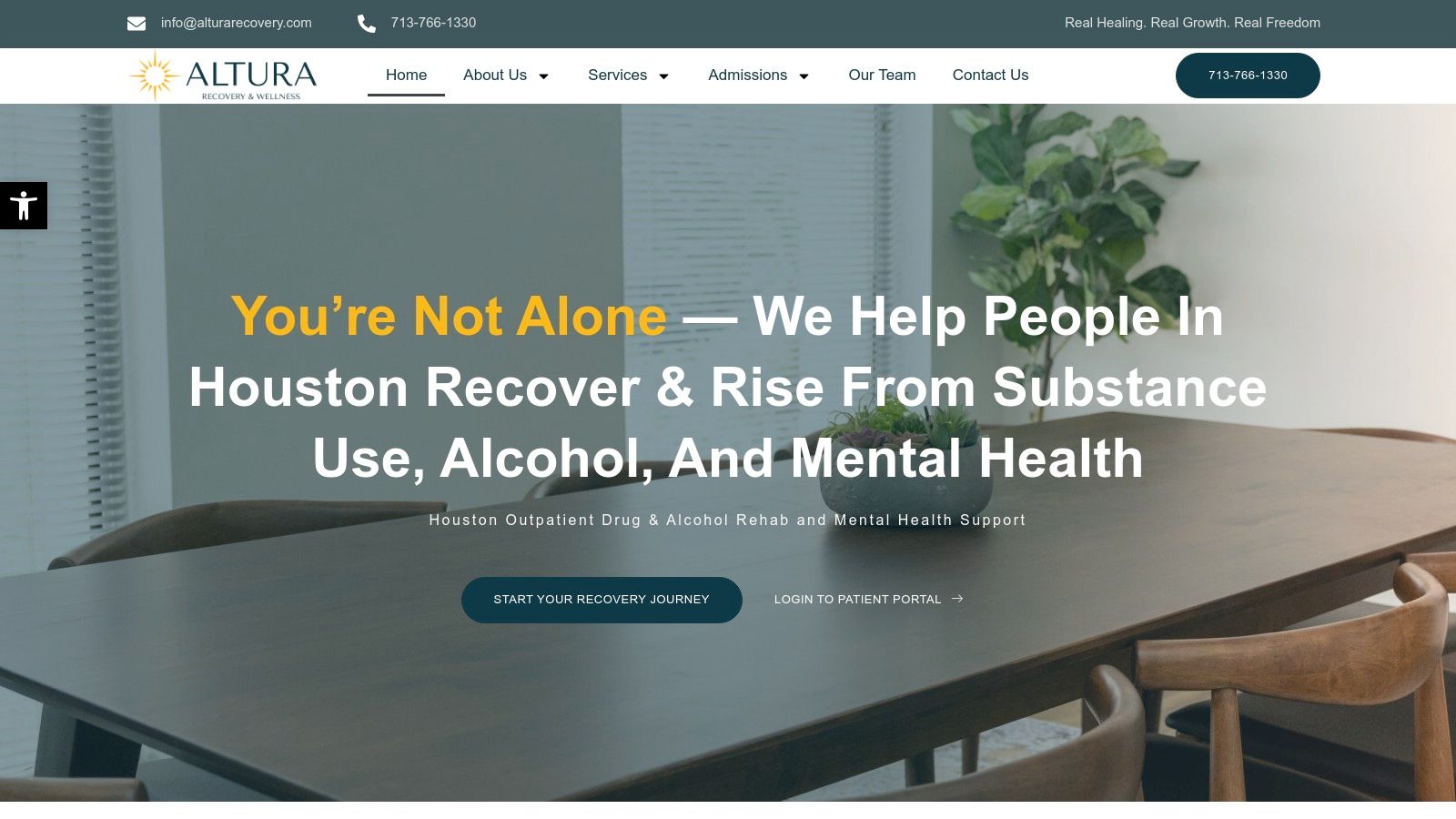
What makes Altura a standout among the best dual diagnosis treatment centers is its structured step-down continuum of care combined with a robust clinical framework. Clients progress through a Partial Hospitalization Program (PHP), an Intensive Outpatient Program (IOP), and a Supportive Outpatient Program (SOP), allowing them to gradually decrease treatment intensity as they gain confidence and skills. This measured approach helps prevent overwhelming transitions and promotes sustainable, long-term recovery by integrating healing into real-world living from day one.
Key Features and Clinical Approach
Altura’s treatment model is both comprehensive and evidence-based, providing clients with a rich toolkit for recovery. The program is led by licensed clinicians who deliver a full spectrum of services.
- Integrated Psychiatric Care: Upon entry, clients receive thorough psychiatric evaluations to accurately diagnose co-occurring conditions like depression, anxiety, PTSD, or bipolar disorder. This is followed by strategic medication management to stabilize symptoms and support therapeutic progress. For a deeper understanding of this crucial component, you can explore their resources on medication management for mental health at alturarecovery.com.
- Diverse Therapeutic Modalities: Treatment plans are highly personalized, drawing from a wide range of proven therapies. These include Cognitive Behavioral Therapy (CBT), Dialectical Behavior Therapy (DBT), Eye Movement Desensitization and Reprocessing (EMDR), and trauma-informed group sessions.
- Holistic and Practical Support: Beyond clinical therapy, Altura integrates mindfulness practices, life-skills training, relapse prevention education, and motivational recovery coaching. The inclusion of staff with lived experience offers an invaluable layer of empathy, understanding, and peer-informed guidance.
- Family Involvement: Recognizing that addiction impacts the entire family system, Altura provides family workshops and therapy sessions to heal relationships, improve communication, and build a unified support network.
Who It's Best For
Altura Recovery is an ideal choice for individuals who require a structured and clinically rigorous treatment program without the need for residential care. Its flexible scheduling, with both day and evening options as well as virtual services, makes it particularly suitable for:
- Working professionals who must maintain their careers.
- Students balancing academic commitments.
- Parents and caregivers with family responsibilities.
- Individuals transitioning from inpatient care who need continued, structured support.
Practical Information
- Location & Access: Services are delivered in Houston, TX, with virtual options available for increased accessibility.
- Cost & Insurance: Altura does not publicly list pricing or specific insurance providers. Prospective clients must contact the admissions team directly to verify insurance coverage and discuss financial options.
- Pros:
- Expert, integrated dual diagnosis care with psychiatric evaluations and medication management.
- Flexible step-down model (PHP/IOP/SOP) that adapts to client progress.
- Comprehensive therapies (CBT, DBT, EMDR) and wraparound support services.
- Accessible scheduling (day/evening/virtual) for those with daily commitments.
- Cons:
- Outpatient-only model may not be suitable for those needing medically supervised detox.
- Lack of public information on costs, accepted insurance, and accreditations requires direct inquiry.
Website:https://www.alturarecovery.com
2. FindTreatment.gov (SAMHSA)
When starting your search, an authoritative and unbiased resource is invaluable. FindTreatment.gov, operated by the Substance Abuse and Mental Health Services Administration (SAMHSA), serves as the U.S. government's official and confidential treatment locator. It’s a powerful, free tool designed to connect individuals with a comprehensive national database of substance use and mental health treatment facilities, making it an essential first step for anyone seeking the best dual diagnosis treatment centers.
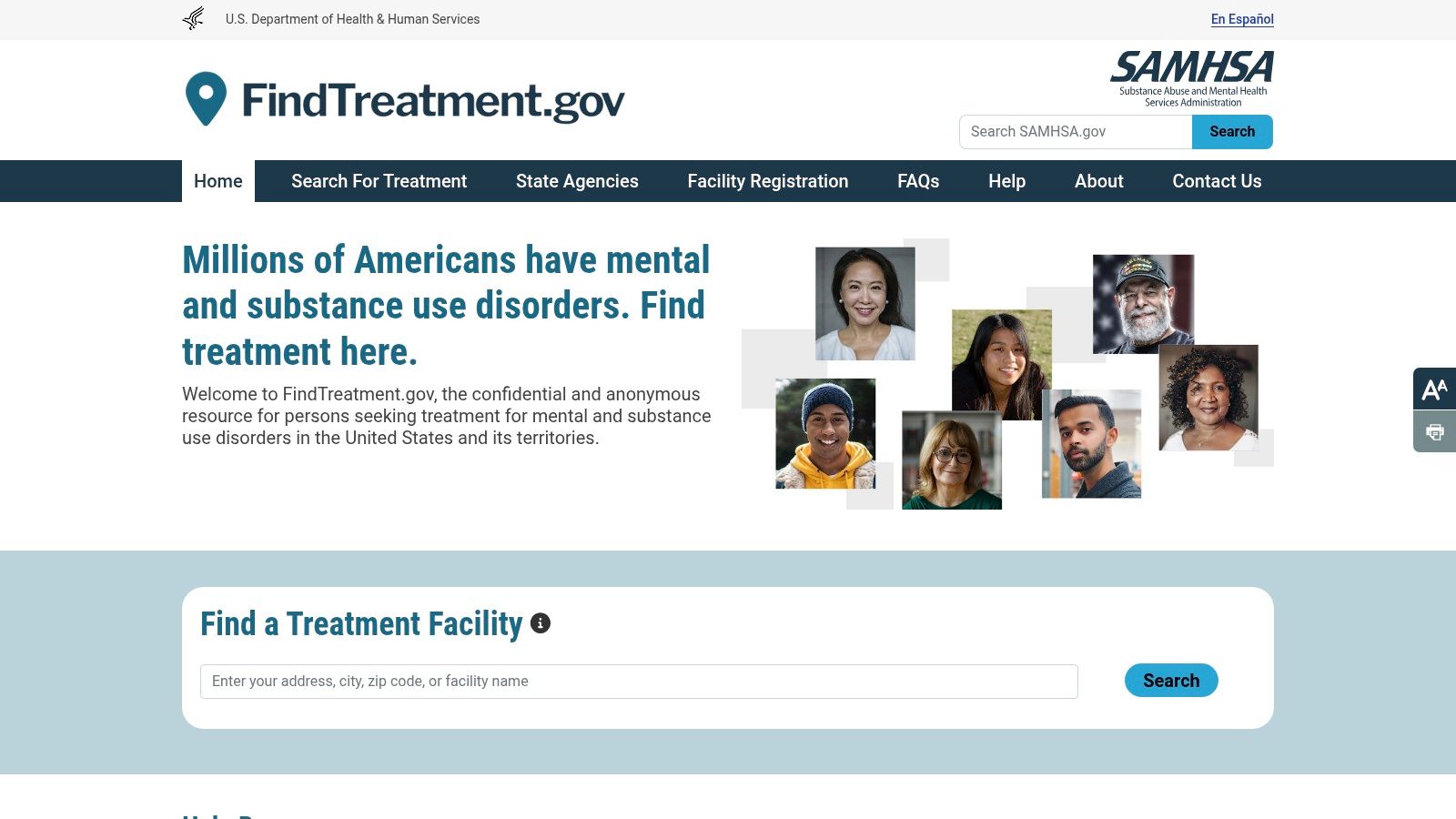
This platform excels by offering an objective, no-cost alternative to commercial directories. Unlike for-profit sites that may feature sponsored listings, FindTreatment.gov provides a neutral playing field, listing verified programs without bias. Its primary function is to empower users with information, allowing you to filter results based on the specific criteria that matter most for your recovery journey.
Key Features and User Experience
The website's interface is straightforward and user-friendly. You can begin a search by simply entering your location. From there, its robust filtering system becomes its greatest asset, especially for those needing integrated care.
- Co-occurring Disorder Filter: Easily narrow your search to show only facilities that specialize in treating co-occurring mental health and substance use disorders.
- Payment Options: Filter by payment assistance like Medicaid, Medicare, private insurance, or sliding-scale fee programs to find affordable care.
- Levels of Care: Specify your needs, from outpatient programs (IOP/PHP) and telehealth to residential or hospital inpatient services.
- Specialized Services: Additional filters include options for specific age groups, languages spoken, and services for veterans or LGBTQ+ individuals.
For immediate help, the site prominently features the SAMHSA National Helpline (1-800-662-4357), a free, 24/7 service for live treatment referrals and information.
Practical Tips for Using the Platform
To maximize your search, always verify the information directly with the treatment center. While SAMHSA strives for accuracy, facility details can change. Use the platform to build a shortlist of potential centers, then call them to confirm program specifics, availability, and insurance acceptance. This direct contact is also a crucial first step in finding a team you feel comfortable with, an important part of building a strong support system for recovery.
| Feature | Details |
|---|---|
| Cost & Access | Completely free to use, no account required. Access is available to anyone with an internet connection. |
| Scope | National database covering all U.S. states and territories. |
| Pros | Free, authoritative, and unbiased. Excellent filters for affordability and specialized dual diagnosis care. |
| Cons | Directory information is not always perfectly up-to-date; users must call facilities to verify all details. |
Website:https://findtreatment.gov
3. Shatterproof ATLAS
For those seeking to evaluate treatment options based on objective quality data, Shatterproof ATLAS (Addiction Treatment Locator, Assessment, and Standards) is an indispensable resource. Developed by the national nonprofit Shatterproof, this platform moves beyond simple directory listings by incorporating evidence-based quality measures and patient-reported experiences into its search results. This unique approach helps users find the best dual diagnosis treatment centers by focusing on what truly matters: adherence to best practices and proven outcomes.
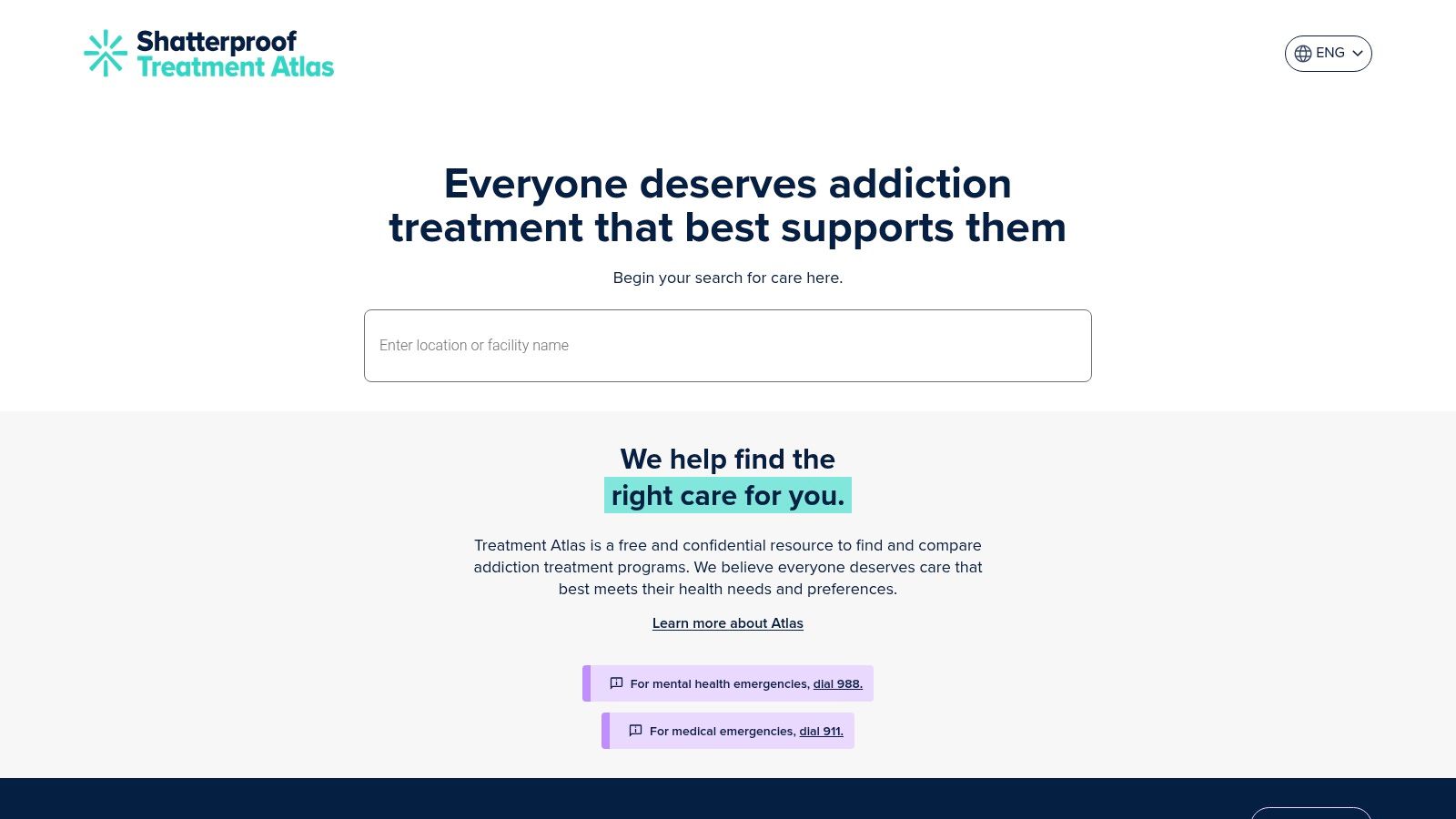
ATLAS distinguishes itself by providing transparency in a field often clouded by marketing claims. It empowers you to compare facilities side-by-side using standardized quality indicators, such as whether a provider offers FDA-approved medications for addiction or employs credentialed staff. By integrating direct feedback from former patients, the tool provides a clearer, more holistic picture of a center's effectiveness and care environment.
Key Features and User Experience
The ATLAS platform is designed to guide you from initial assessment to facility selection. It starts with an optional, confidential self-assessment to help you identify the appropriate level of care for your specific situation. Its search and comparison tools are what make it truly powerful for finding integrated dual diagnosis care.
- Evidence-Based Quality Metrics: Filter and compare centers based on their use of proven treatment methods for both substance use and mental health conditions.
- Patient Experience Data: Listings incorporate feedback and ratings from past patients, offering insights into the real-world quality of care.
- Comprehensive Service Filters: Search specifically for facilities that offer co-occurring disorder treatment, medication management, various therapy types, and different levels of care (IOP, PHP, residential).
- Side-by-Side Comparisons: Easily view multiple facilities at once to contrast their services, accepted insurance plans, and quality ratings.
The user interface is clean and intuitive, making complex data easy to understand and act upon. It effectively translates clinical standards into accessible information for patients and their families.
Practical Tips for Using the Platform
Start by completing the brief confidential assessment on the ATLAS website. This will provide personalized recommendations for the level of care that best fits your needs. Use the quality indicators as a starting point to create a shortlist of high-performing dual diagnosis centers. When reviewing patient feedback, look for recurring themes related to staff compassion, program structure, and support for co-occurring disorders. As with any directory, always call the facility directly to verify details and ask specific questions about their integrated treatment approach.
| Feature | Details |
|---|---|
| Cost & Access | Free for all users. No account is needed to search and compare treatment facilities. |
| Scope | Not yet nationwide. Coverage is limited to participating states, so availability varies depending on location. |
| Pros | Focuses on evidence-based quality metrics and patient feedback. Provides transparent, side-by-side comparisons. |
| Cons | Limited geographic coverage. The amount of data available can vary significantly between different facilities. |
Website:https://www.treatmentatlas.org
4. Psychology Today — Treatment Centers Directory
While government-run databases offer unbiased information, private directories like the one from Psychology Today provide a different kind of value through detailed, visually rich profiles. Known primarily for its therapist locator, Psychology Today also hosts a comprehensive Treatment Centers Directory, making it a powerful resource for finding some of the best dual diagnosis treatment centers, especially when you want to get a feel for a facility's environment and specialties at a glance.
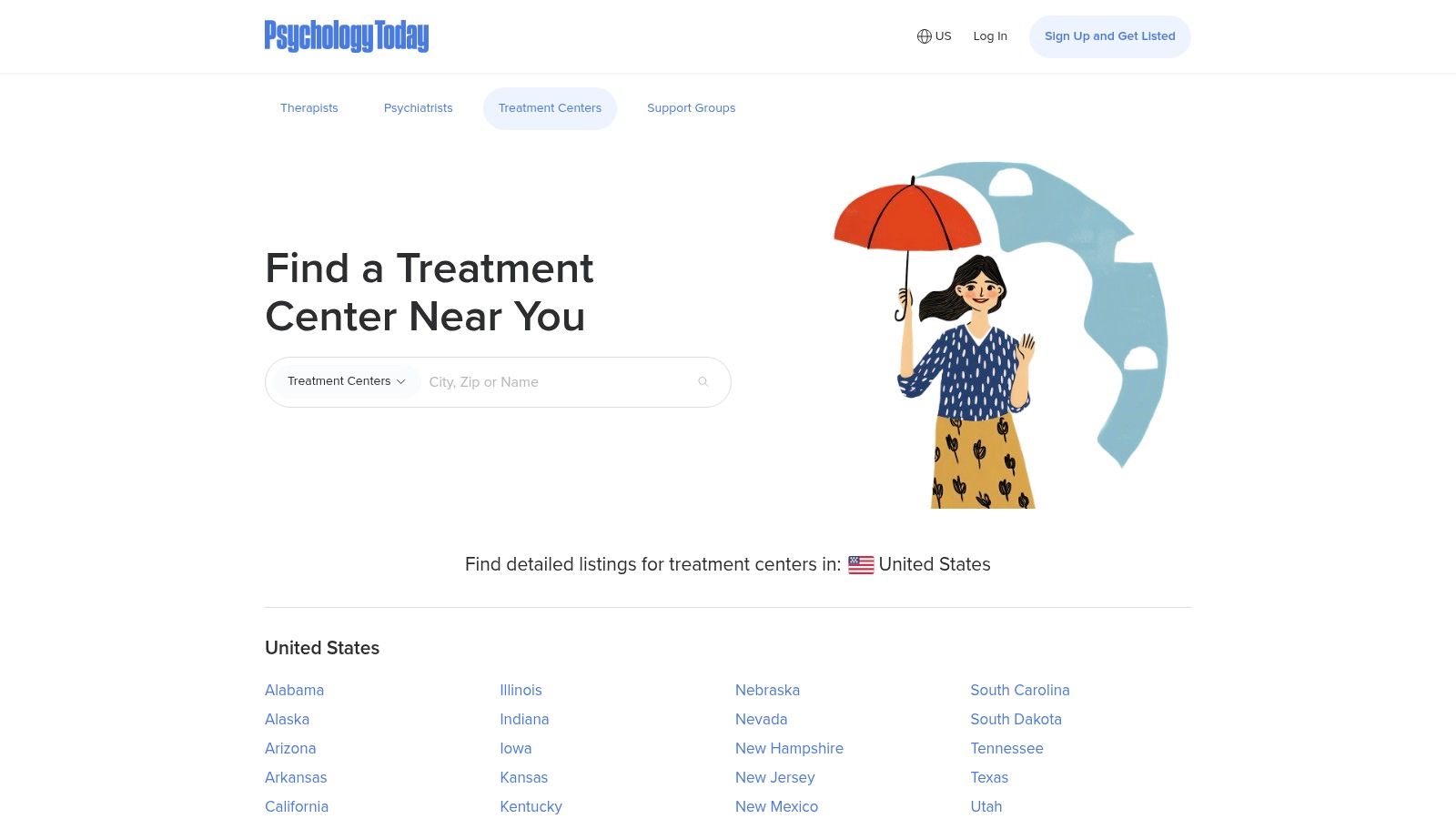
This directory shines by allowing treatment centers to create in-depth profiles that go beyond basic data. You can often find photos of the facility, detailed descriptions of their treatment philosophy, and lists of specific therapeutic modalities offered. This rich content helps you form a more personal connection and assess whether a program’s approach aligns with your needs before you even make a call.
Key Features and User Experience
The platform is designed for easy navigation, starting with a simple location-based search. Its strength lies in the detailed filters and the comprehensive nature of the facility profiles, which often feel like a digital brochure.
- Dual Diagnosis Filter: A dedicated "Dual Diagnosis/Co-Occurring Disorders" checkbox lets you immediately narrow down options to facilities equipped for integrated care.
- Detailed Profiles: Centers can showcase their environment with photos, list their core specialties, and describe their unique approach to recovery.
- Insurance and Cost Filters: Easily filter by accepted insurance providers to find programs that are financially accessible.
- Direct Contact Options: Most profiles feature a direct phone number and a built-in confidential messaging system to contact the admissions team, streamlining the initial inquiry process.
The user interface is clean and familiar, making it simple to compare multiple centers in your area and create a shortlist of potential programs that specialize in dual diagnosis treatment.
Practical Tips for Using the Platform
Because the listings on Psychology Today are paid and self-reported by the treatment centers, it is crucial to perform your own due diligence. Use the directory as a discovery tool to identify potential centers, but always verify their credentials. Check state licensing boards and read independent reviews before making a commitment. When you contact a facility, ask specific questions about their experience with your particular co-occurring disorders and confirm all details mentioned in their profile.
| Feature | Details |
|---|---|
| Cost & Access | Free for users to browse and search. The treatment centers pay a fee to be listed in the directory. |
| Scope | Nationwide coverage in the U.S., with a large number of listings in most metropolitan areas. |
| Pros | Wide coverage and detailed profiles with photos. Direct contact features make it easy to start the intake process. |
| Cons | Listings are paid advertisements; information is self-reported and may not be independently verified. |
Website:https://www.psychologytoday.com/us/treatment-rehab
Altura Recovery: Houston’s Outpatient Integrated Dual Diagnosis Care
While government-run directories offer unbiased data, commercial platforms like Rehabs.com provide a different kind of value through user-friendly interfaces, detailed program descriptions, and integrated insurance verification tools. This popular online directory serves as a vast resource for individuals and families searching for addiction and mental health care, making it a strong contender for finding the best dual diagnosis treatment centers that fit specific logistical and financial needs.
Rehabs.com excels by combining a searchable database with extensive editorial content and user-generated reviews. Unlike purely informational sites, it aims to streamline the entire process from initial search to contacting a facility. Its powerful filtering system allows users to quickly narrow down options based on critical factors like insurance coverage, location, and, most importantly, the ability to treat co-occurring disorders.
Key Features and User Experience
The platform is designed to be intuitive, allowing you to quickly find and compare facilities. The search begins with your location and desired level of care, but its true utility lies in its advanced filtering options that address the practical concerns of seeking treatment.
- Insurance Filtering: A standout feature is the ability to filter results by specific insurance providers, including major carriers like Aetna, Blue Cross Blue Shield, TRICARE, and state programs like Medicaid.
- Dual Diagnosis Focus: The site has a dedicated "Dual Diagnosis/Co-Occurring Disorders" filter and state-specific pages that list programs specializing in integrated treatment.
- Comprehensive Listings: Profiles often include detailed program descriptions, photos, user reviews, and lists of therapies offered, providing a more in-depth look at each center.
- Contact & Verification: Most listings feature contact forms and phone numbers, with some offering a tool to verify your insurance benefits directly through the site.
The combination of user reviews and detailed facility information helps paint a clearer picture of what to expect from a program before you even make a call.
Practical Tips for Using the Platform
When using Rehabs.com, it is crucial to recognize that it is a commercial directory with sponsored listings. Be mindful that top-ranked results may be paid advertisements. Use the platform to gather a broad list of options, then perform your own due diligence by visiting the facility’s official website and reading independent reviews. Always verify insurance and program details directly with the provider, as the information on third-party sites can sometimes be outdated.
| Feature | Details |
|---|---|
| Cost & Access | Free for users to search. Be aware that contact forms and hotlines may connect you with sponsored treatment partners. |
| Scope | National directory with extensive listings across the United States. |
| Pros | Excellent, user-friendly filters for insurance and co-occurring disorders. Detailed facility profiles and user reviews. |
| Cons | Contains sponsored and paid listings, which can influence search results. Users must independently verify the quality and details of centers. |
Website:https://rehabs.com
6. Hazelden Betty Ford Foundation
With a legacy spanning decades, the Hazelden Betty Ford Foundation is one of the most recognized names in addiction treatment. Its website serves as a comprehensive portal to its extensive network of care, which is deeply rooted in an integrated approach to co-occurring disorders. For those searching for the best dual diagnosis treatment centers, this platform provides not just information but a direct pathway to a well-established system of evidence-based recovery services.
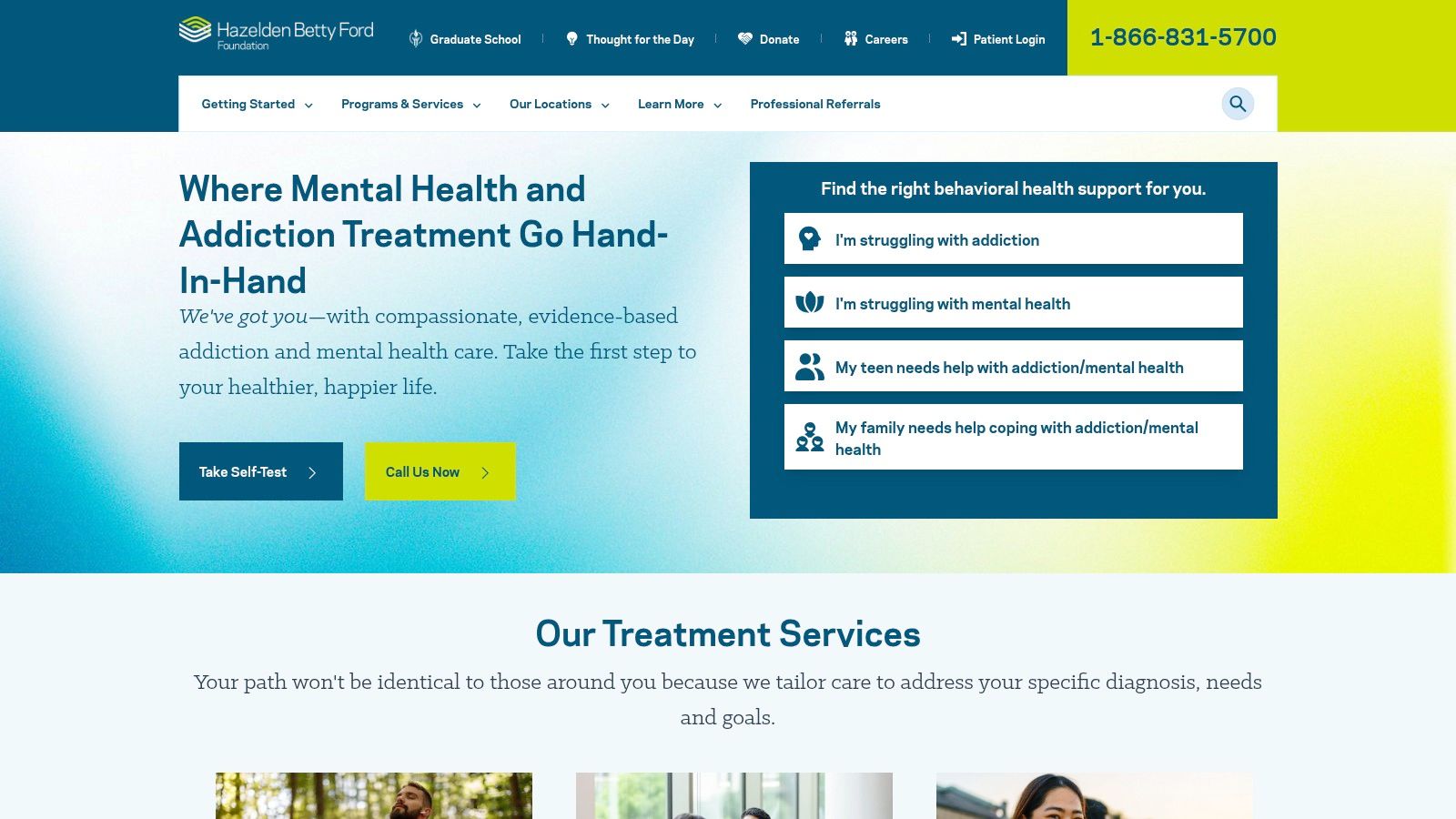
What sets this platform apart is its combination of a trusted reputation with modern, accessible care options. It transparently outlines its treatment philosophy, which combines the 12-Step model with clinical therapies to address both substance use and mental health conditions simultaneously. The site is designed to guide potential patients and their families through the complex process of understanding treatment, verifying insurance, and initiating admission with clarity and support.
Key Features and User Experience
The Hazelden Betty Ford website is organized to facilitate an easy and informative user journey, from initial research to making contact. It clearly presents its continuum of care, allowing users to explore options that fit their specific circumstances, whether they need intensive inpatient care or flexible outpatient programs.
- Integrated Dual-Diagnosis Care: The site emphasizes its expertise in treating co-occurring disorders across all levels of care, including inpatient, outpatient (PHP/IOP), and virtual telehealth services.
- Nationwide Locations: Users can easily browse treatment centers across multiple U.S. states, viewing the specific programs and services offered at each facility.
- Insurance and Financial Support: A dedicated section allows you to check insurance coverage online. The foundation also provides financial case managers to help navigate benefits and costs.
- Specialized Programs: The platform details programs tailored for different demographics, including professionals, young adults, and families, along with robust alumni support networks.
Its approach often incorporates a variety of therapeutic modalities, demonstrating a commitment to treating the whole person. This can include holistic methods, which are becoming more common in comprehensive recovery plans. You can learn more about the benefits of holistic therapy in addiction treatment to understand how it complements traditional approaches.
Practical Tips for Using the Platform
Start by using the "Find Treatment" or "Locations" tabs to identify a center near you or one that offers a specific program you need. Utilize the online insurance verification tool for a preliminary check, but always follow up with a call to the admissions team. Their specialists can provide the most accurate, up-to-date information on your specific plan's coverage, out-of-pocket costs, and program availability. Be prepared to discuss your situation in detail to ensure they can recommend the appropriate level of care.
| Feature | Details |
|---|---|
| Cost & Access | Accepts most major private insurance plans; online verification tool available. Offers financial case managers. |
| Scope | National provider with multiple inpatient and outpatient locations across the U.S., plus virtual care options. |
| Pros | Longstanding reputation, a full continuum of integrated care, and clear insurance guidance with dedicated support. |
| Cons | Can be out-of-network for some plans, leading to higher costs. Does not typically accept Medicare or Medicaid. |
Website:https://www.hazeldenbettyford.org
7. Recovery Centers of America (RCA)
Recovery Centers of America (RCA) operates on the principle that high-quality, neighborhood-based care should be accessible and immediate. With multiple facilities primarily across the East Coast and Midwest, RCA focuses on providing a full continuum of care for addiction and co-occurring mental health disorders. Their website serves as a direct portal to this network, emphasizing streamlined admissions and a system-wide approach to integrated treatment, making it a strong contender for those seeking one of the best dual diagnosis treatment centers.
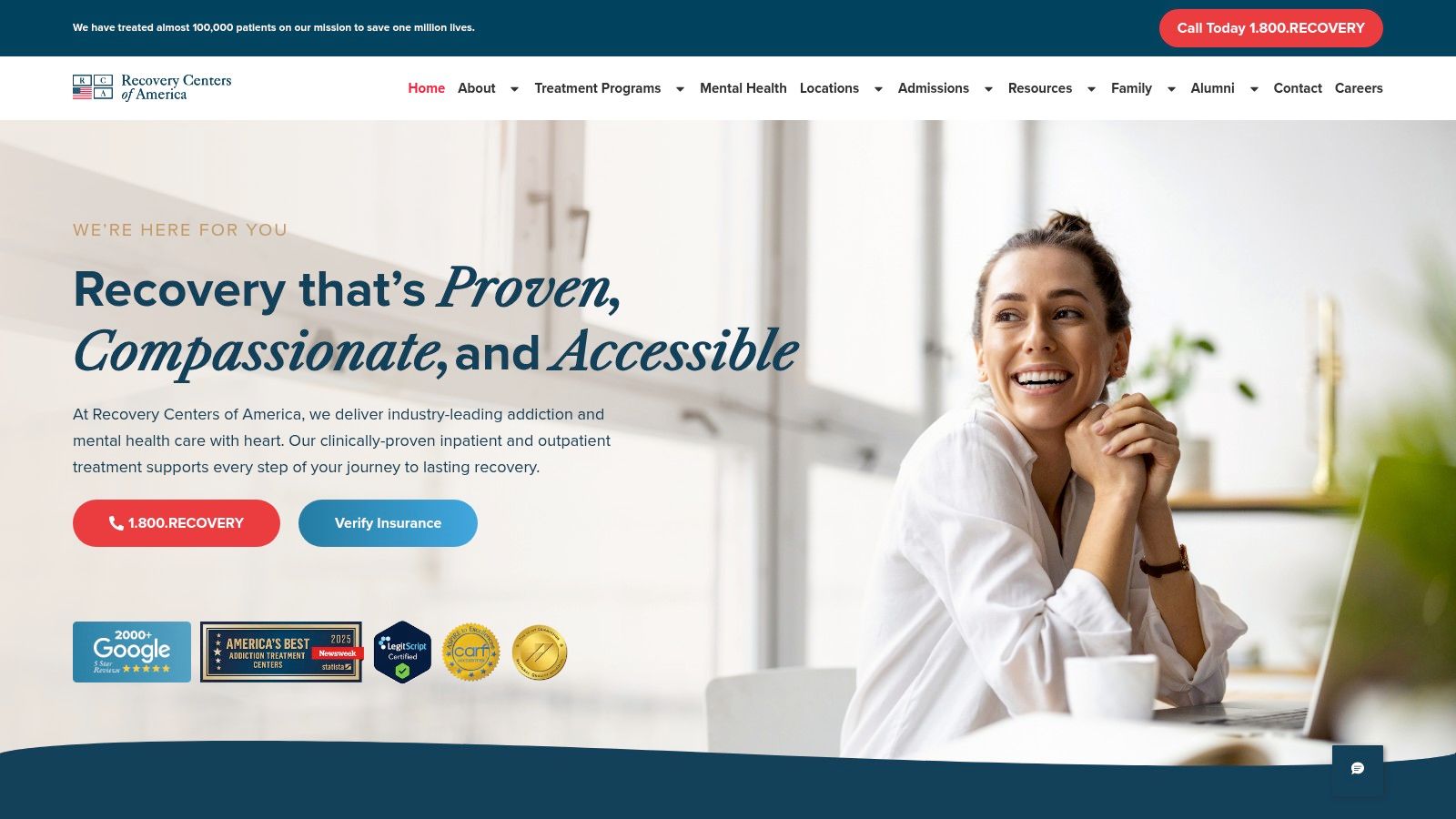
What sets RCA apart is its centralized, patient-first logistics. The organization offers same-day admissions when possible, coordinated transportation to its facilities, and an online insurance verification tool to remove common barriers to starting treatment. This focus on accessibility is combined with a dedicated co-occurring disorders treatment track, ensuring that individuals receive specialized, integrated care from day one.
Key Features and User Experience
The RCA website is designed to be a clear and direct resource for individuals and families in crisis. It provides detailed information on each location, the levels of care offered, and its specialized programs. The user experience is geared toward rapid response and information gathering.
- Dedicated Co-occurring Pathway: RCA’s system-wide "Balance Pathway" is specifically designed for dual diagnosis, integrating psychiatric care, medication management, and therapies that address both substance use and mental health conditions simultaneously.
- Streamlined Admissions: The site features a prominent phone number and an online form for a 100% confidential assessment and insurance benefits check, aiming to get individuals into care as quickly as possible.
- Transportation Assistance: A unique and practical offering is their coordination of transportation, helping to eliminate a significant logistical hurdle for many seeking inpatient or residential care.
- Full Continuum of Care: Users can explore a range of services, from medical detox and residential treatment to outpatient programs like PHP and IOP, ensuring continuity as their recovery needs evolve.
The platform provides comprehensive resources on what to expect during treatment, which is particularly helpful for managing symptoms that can arise during early recovery. Understanding these challenges can be empowering; you can learn more about managing prolonged symptoms with resources on post-acute withdrawal syndrome.
Practical Tips for Using the Platform
When exploring the RCA website, use the "Locations" tab to find the center nearest you and review its specific program offerings and accepted insurance plans. Take advantage of the online insurance verification form or call their admissions line directly to get a clear and immediate understanding of your coverage and out-of-pocket costs. This proactive step can prevent surprises and allow you to focus entirely on treatment and recovery.
| Feature | Details |
|---|---|
| Cost & Access | Accepts most major private insurance plans; online verification tool available. Admissions team provides financial guidance. |
| Scope | Regional network of treatment centers, primarily in the Eastern and Midwestern United States. |
| Pros | Integrated dual-diagnosis focus system-wide. Streamlined admissions with transportation support and insurance verification. |
| Cons | Geographic reach is limited to specific regions. In-network insurance coverage can vary significantly between locations. |
Website:https://recoverycentersofamerica.com
Top 7 Dual Diagnosis Treatment Centers Comparison
| Service | Implementation / Complexity 🔄 | Resource Requirements ⚡ | Expected Outcomes ⭐ / 📊 | Ideal Use Cases 💡 | Key Advantages ⭐ |
|---|---|---|---|---|---|
| Altura Recovery | Moderate — outpatient step‑down model (PHP → IOP → SOP); clinical intake required | Moderate — clinician time; insurance likely required; pricing not listed | High — integrated dual‑diagnosis, evidence‑based therapies → sustained recovery ⭐⭐⭐⭐ | Working professionals or students needing flexible outpatient care and virtual options | Integrated dual‑diagnosis care, lived‑experience staff, broad evidence‑based modalities |
| FindTreatment.gov (SAMHSA) | Low — searchable federal locator and 24/7 helpline; no account needed | Low — free to use; treatment costs depend on facility and coverage | Variable — outcomes depend on selected facility; good starting point 📊 ⭐⭐ | Initial nationwide search for programs, payment filters, or immediate referrals via helpline | Authoritative, free, nationwide database with filters for payment and levels of care |
| Shatterproof ATLAS | Moderate — short needs assessment and side‑by‑side comparisons; region‑based access | Low — free; availability limited to participating states | Good — emphasizes quality indicators and patient experience to improve fit ⭐⭐⭐ 📊 | Comparing program quality and patient‑reported experience where available | Quality measurement focus; built‑in patient feedback for better matching |
| Psychology Today — Treatment Centers Directory | Low — browse detailed profiles, message admissions directly | Low — free browsing; listings are paid/self‑reported by centers | Variable — wide coverage but information is self‑reported; useful for quick leads ⭐⭐ | Rapidly generate a local short list and contact admissions directly | Extensive nationwide coverage, granular filters, direct contact/ messaging |
| Rehabs.com | Low — filterable directory with state/city pages for dual diagnosis | Low — free browsing; may include paid/partner listings or forms | Variable — practical for insurance matches; quality varies by listing ⭐⭐ | Finding programs that match specific insurance plans and local resources | Insurance filtering, editorial content, FAQs, and contact/verification options |
| Hazelden Betty Ford Foundation | High — multi‑level care (inpatient/outpatient/virtual) with formal admissions | High — costs can be significant if out‑of‑network; financial case managers available | High — longstanding programs and comprehensive services with strong outcomes ⭐⭐⭐⭐ 📊 | Individuals seeking established residential care or full continuum with family/alumni support | National reputation, multiple care levels, clear insurance guidance and financial support |
| Recovery Centers of America (RCA) | Moderate — systemwide co‑occurring pathway, streamlined admissions in many locations | Moderate — varies by site and insurer; offers online verification and transport | Good — integrated co‑occurring pathway and coordinated care across campuses ⭐⭐⭐ | Regional patients needing same‑day admissions, transportation, and coordinated intake | Streamlined admissions, benefits verification, transportation assistance, dedicated pathway for co‑occurring disorders |
Your Action Plan for Choosing the Right Path to Recovery
Navigating the landscape of mental health and substance use treatment can feel overwhelming, but you have now taken a crucial first step: gathering information. This guide has equipped you with a curated list of the best dual diagnosis treatment centers and powerful search tools, from the comprehensive government database of FindTreatment.gov to the quality-metrics focus of Shatterproof ATLAS and the specialized care models of national providers like Hazelden Betty Ford and Recovery Centers of America. The most important takeaway is that the "best" center is not a universal title but a deeply personal fit based on your unique clinical, logistical, and financial needs.
Your journey forward is about transforming this knowledge into a concrete, actionable plan. The goal is no longer to find every possible option, but to identify the right option for you or your loved one.
From Information to Action: Your Next Steps
The tools and centers reviewed are your starting point, not your final destination. Use them strategically to build a shortlist and vet your top contenders. Here is a practical framework to guide you:
Create Your Shortlist (2-3 Programs): Start with broad search tools like FindTreatment.gov or Rehabs.com to identify local or virtual programs that accept your insurance. Cross-reference promising results with directories like Psychology Today to read about their specific approach to co-occurring disorders. Focus on programs that explicitly mention integrated treatment, not just two separate tracks for mental health and addiction.
Prepare Your Questions: Before making any calls, create a list of non-negotiable questions. This prevents you from forgetting critical details during an emotional conversation. Your questions should be specific and targeted toward evaluating their dual diagnosis expertise.
- Clinical Approach: "Can you describe your process for creating an integrated treatment plan for co-occurring disorders?" or "What specific evidence-based therapies, like DBT or EMDR, do you use for dual diagnosis clients?"
- Staff Expertise: "Are your therapists dually licensed or specifically trained in treating co-occurring disorders?" and "What is the client-to-therapist ratio in your intensive outpatient program (IOP)?"
- Medication Management: "How is psychiatric medication management integrated into the substance use treatment plan? Is the prescriber on-site?"
- Flexibility & Support: "What does your step-down process from PHP to IOP look like?" and "How do you support working professionals who need to maintain their careers?"
Conduct Your Interviews: Call the admissions department of each program on your shortlist. Pay close attention not just to what they say, but how they say it. Do they sound knowledgeable, compassionate, and patient? A quality program will welcome your detailed questions and provide transparent answers.
Key Insight: The initial phone call is a preview of the program's culture. If the admissions team is rushed, evasive, or unorganized, it may be a red flag regarding the quality of care and client communication you can expect.
Embracing a Holistic Recovery
True, lasting recovery extends beyond clinical therapy. It involves rebuilding your entire well-being: mind, body, and spirit. As you stabilize and gain momentum, incorporating healthy habits becomes essential for managing stress, improving mood, and building resilience against relapse. For many, this includes re-establishing a connection with their physical health. As part of a holistic recovery journey, individuals may also find it beneficial to explore resources on how to safely reintroduce exercise and rebuild physical fitness, especially if activity has been limited during challenging times.
Choosing to seek help is the most courageous decision you can make. The path ahead requires commitment, but with the right support system and a treatment plan tailored to your needs, a future defined by health and hope is entirely within reach.
At Altura Recovery, we specialize in providing the integrated, evidence-based care that is essential for treating co-occurring disorders. Our flexible outpatient programs are designed for adults who need comprehensive support that fits into their daily lives. Contact our compassionate admissions team to learn how our personalized dual diagnosis treatment can guide you on your path to lasting recovery.