
Anger is a powerful, natural emotion, but when it controls you, it can damage relationships, careers, and your well-being. The common advice to simply "count to ten" often feels inadequate in the heat of the moment, failing to address the root cause of overwhelming frustration or rage. True emotional regulation isn't about suppressing anger but about understanding its sources and channeling its energy constructively.
This guide moves beyond surface-level tips to provide ten in-depth, evidence-based anger management techniques. Each method offers a unique approach, from immediate physiological calming strategies to long-term cognitive restructuring. To gain a deeper understanding of your specific anger triggers and patterns, consider utilizing an anger problems test to identify areas for focused improvement.
Our goal is to empower you with a versatile toolkit to manage frustration, irritation, and intense anger more effectively. Whether you are dealing with a momentary flare-up or navigating a persistent struggle, these strategies provide actionable steps to transform your relationship with anger. By integrating these practices, you can build lasting emotional resilience, improve your communication, and regain control over your responses, leading to healthier outcomes in your personal and professional life.
1. Deep Breathing Exercises
One of the most immediate and effective anger management techniques is deep, diaphragmatic breathing. This physiological approach directly counters the body's "fight-or-flight" response, which often accompanies feelings of anger. When you feel enraged, your sympathetic nervous system activates, increasing heart rate and blood pressure. Controlled, slow breathing stimulates the parasympathetic nervous system, creating a relaxation response that makes it physiologically difficult to sustain intense anger.

How to Implement Deep Breathing
This technique is valued by everyone from military personnel using tactical breathing in high-stress situations to athletes managing pre-competition nerves.
- Box Breathing: This simple method is easy to remember under pressure. Inhale slowly for four counts, hold your breath for four counts, exhale for four counts, and hold again for four counts. Repeat this "box" cycle several times.
- 4-7-8 Technique: Popularized by Dr. Andrew Weil, this method involves inhaling through your nose for a count of four, holding your breath for a count of seven, and exhaling completely through your mouth for a count of eight. The extended exhale is key to promoting relaxation.
Tips for Success
To make deep breathing a reliable tool, practice is essential. Don’t wait until you're already angry to try it for the first time. Integrate these exercises into your daily routine, perhaps for a few minutes each morning or evening. Focusing on the physical sensation of the air entering and leaving your body can anchor you in the present moment, creating a powerful buffer against reactive anger. As one of several healthy coping mechanisms, it provides a crucial pause between a trigger and your reaction. You can learn more about how breathing exercises fit into a broader wellness strategy on our blog.
2. Cognitive Behavioral Therapy (CBT)
Cognitive Behavioral Therapy (CBT) is a powerful psychological approach that targets the root cause of anger by identifying and restructuring the distorted thinking patterns that fuel it. This technique moves beyond managing symptoms to address the core beliefs and automatic thoughts that lead to aggressive responses. By examining the connection between thoughts, feelings, and behaviors, CBT provides a framework for developing more rational and balanced reactions to frustrating situations, making it a cornerstone of modern anger management techniques.
How to Implement CBT Principles
Developed by pioneers like Aaron Beck, CBT is a highly effective, evidence-based therapy used in various settings, from court-ordered programs to professional development training.
- The ABC Model: This foundational CBT exercise helps deconstruct an angry outburst. Identify the Activating event (the trigger), the Belief (your interpretation of the event), and the Consequence (your emotional and behavioral response). The goal is to challenge the belief to change the consequence.
- Cognitive Restructuring: This involves actively identifying and challenging irrational thoughts, such as catastrophic thinking ("This traffic jam will ruin my entire day!") or overgeneralizing ("I always get disrespected!"). You learn to replace them with more realistic and helpful alternatives.
Tips for Success
Consistency is crucial for rewiring ingrained thought patterns. Start by keeping a "thought record" to track situations that trigger your anger, the thoughts that arise, and how you react. This practice builds self-awareness, which is the first step toward change. Actively question the evidence for your angry thoughts and consider alternative explanations for others' behavior. For many, applying these techniques within a structured therapeutic setting provides the necessary guidance and accountability. You can discover more about how therapeutic approaches like CBT are adapted for specific needs on our blog.
3. Progressive Muscle Relaxation (PMR)
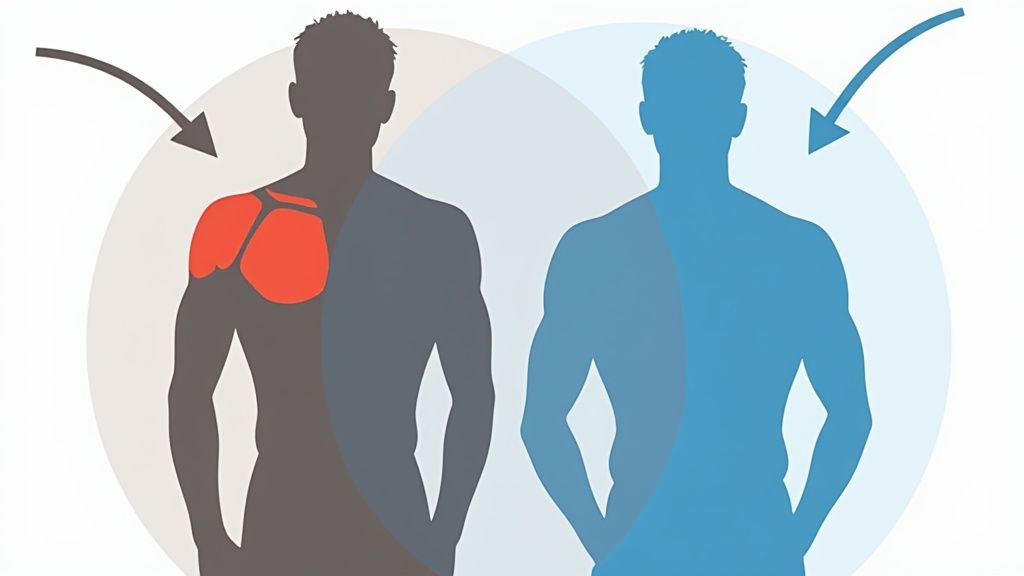
Anger often manifests physically, causing muscles to tense up in preparation for a "fight" response. Progressive Muscle Relaxation (PMR) is a powerful anger management technique that directly addresses this physical tension. Developed by Edmund Jacobson, this method involves systematically tensing and then relaxing specific muscle groups. This process helps you become more aware of what physical tension feels like, enabling you to consciously release it when you first notice anger building, thereby de-escalating the emotional response.
How to Implement PMR
PMR is used widely, from corporate wellness programs managing workplace stress to physical therapy for tension-related conditions. The core principle is creating a stark contrast between tension and relaxation.
- Tense and Release: Find a quiet place and sit or lie down comfortably. Start with your feet, tensing the muscles for about five seconds, then releasing them completely for 20-30 seconds.
- Work Systematically: Gradually move up your body, applying the tense-and-release cycle to your calves, thighs, abdomen, arms, and finally, your face.
- Focus on the Sensation: Pay close attention to the feeling of warmth and looseness that follows the release of tension in each muscle group.
Tips for Success
To effectively use PMR as an anger management technique, consistency is key. Practice 3-4 times a week, especially during calm moments, so the skill becomes second nature. Initially, guided audio recordings can be very helpful in learning the sequence. By practicing regularly, you train your body to recognize and release the physical precursors of an angry outburst, giving you greater control over your reactions. This awareness is a foundational skill for managing difficult emotions.
4. Time-Out Strategy
The time-out strategy is a behavioral technique where an individual intentionally removes themselves from an anger-triggering situation. This method is not about avoidance but about creating a strategic pause to prevent escalation and allow for emotional regulation. By creating physical distance, you give your brain and body a chance to calm down, interrupting the cycle of reactivity and allowing rational thought to catch up with intense emotion.

How to Implement a Time-Out
This technique is widely used in various settings, from couples therapy to workplace conflict resolution, because it effectively de-escalates conflict.
- Communicate Clearly: Don’t just walk away. Calmly state your need for a break. Say something like, "I'm feeling overwhelmed and need to take a 20-minute break to cool down before we continue."
- Establish a Plan: Decide where you will go and what you will do. The goal is to engage in a calming activity, not to sit and fume. Consider a short walk, listening to music, or practicing deep breathing exercises.
Tips for Success
To make this one of your go-to anger management techniques, establish the ground rules with family or colleagues ahead of time. Agree on a signal or phrase that signifies a time-out is needed, ensuring it's respected by all parties. Set a specific time to reconvene, which shows a commitment to resolving the issue rather than abandoning it. Use the time apart to reflect on your feelings and the other person's perspective. The key is to return to the conversation only when you are genuinely calm and ready to engage constructively.
5. Mindfulness and Meditation
Mindfulness is the practice of maintaining a non-judgmental, moment-to-moment awareness of your thoughts, feelings, bodily sensations, and surrounding environment. Rather than suppressing anger, this contemplative approach teaches you to observe it as it arises. This creates a critical pause between an emotional trigger and your reaction, empowering you to choose a more constructive response instead of being controlled by impulse.
How to Implement Mindfulness
Pioneered in Western contexts by figures like Jon Kabat-Zinn, mindfulness is now a cornerstone of many therapeutic and wellness programs, including Mindfulness-Based Stress Reduction (MBSR). It's used in corporate wellness to manage executive stress and even in prison rehabilitation to help individuals with anger management.
- Body Scan Meditation: Lie down comfortably and bring your attention sequentially to different parts of your body, from your toes to your head. Notice any sensations without judging them. This practice helps ground you in your physical self, away from angry thoughts.
- Observing Thoughts: Sit quietly and simply watch your thoughts come and go like clouds in the sky. When an angry thought appears, label it "anger" or "thinking" and let it pass without getting entangled in its narrative.
Tips for Success
Consistency is more important than duration. Start with just five minutes a day, perhaps using a guided meditation app to help you focus. The goal is not to eliminate anger but to change your relationship with it. By practicing observation, you become better at noticing the early warning signs of anger, such as a tightening jaw or racing thoughts.
This technique is one of the most powerful anger management techniques because it addresses the root of reactivity. You can explore how mindfulness is used as one of many coping strategies for anxiety and depression on our blog, as these conditions often co-occur with anger.
6. Assertive Communication
Assertive communication is a powerful anger management technique that focuses on expressing your needs, feelings, and boundaries clearly and respectfully. Unlike aggressive communication (hostile) or passive communication (silent), assertiveness allows you to address anger-inducing situations directly and constructively. This approach prevents resentment from building up by tackling issues head-on, reducing the likelihood of an angry outburst.
How to Implement Assertive Communication
This communication style is a cornerstone of everything from workplace conflict resolution to couples therapy. It empowers you to advocate for yourself without violating the rights of others.
- Use the 'I Feel' Formula: Structure your statements as "I feel [emotion] when you [specific behavior] because [impact on you]." This focuses on your experience rather than blaming the other person.
- State Needs Clearly: Instead of making vague complaints, be specific about what you need to resolve the situation. For example, "I need you to speak to me in a calmer tone" is more effective than "Stop yelling at me."
- Maintain Calm Body Language: Keep your posture open, maintain eye contact, and use a steady, even tone of voice. Non-verbal cues are just as important as the words you use.
Tips for Success
Becoming assertive takes practice, especially if you are used to more passive or aggressive styles. Start with low-stakes situations to build your confidence. The goal is to propose collaborative solutions rather than just listing grievances. Active listening is also crucial; hear the other person's perspective to find common ground. This method is fundamental to establishing healthy relationships, and you can learn more about how setting boundaries is a key part of recovery on our blog.
7. Physical Exercise and Activity
Channeling anger into vigorous physical activity is a powerful anger management technique that provides both immediate relief and long-term emotional regulation. Exercise directly counters the physiological stress response by burning off excess adrenaline and cortisol. In their place, it stimulates the production of endorphins, the body's natural mood elevators, creating a sense of calm and well-being that makes it difficult to sustain intense rage.
How to Implement Physical Activity
This technique is a cornerstone of everything from corporate wellness initiatives designed to reduce workplace stress to rehabilitation programs for violent offenders, where it offers a constructive outlet for aggression.
- Immediate Release: When you feel a surge of anger, engage in a short, intense burst of activity. This could be a brisk walk, a quick set of push-ups or squats, or even punching a boxing bag. The goal is to physically express the energy in a non-destructive way.
- Preventative Maintenance: Incorporate regular exercise into your weekly routine. Activities like running, swimming, martial arts, or team sports build resilience to stress over time, making you less susceptible to anger triggers in the first place.
Tips for Success
To harness the full benefits of physical exercise for anger management, maintaining a consistent routine is paramount. Choose an activity you genuinely enjoy to ensure you stick with it. Aim for at least 150 minutes of moderate activity per week as a baseline for preventative care. You can find valuable insights on motivation for consistent training. By viewing exercise as a tool for both crisis intervention and long-term mental wellness, it becomes one of the most effective anger management techniques available.
8. Humor and Perspective Shifting
Shifting your perspective through humor is a powerful cognitive anger management technique. It involves intentionally looking for the absurdity or irony in a frustrating situation, which can reduce its perceived importance and defuse the emotional intensity. This approach works by creating mental distance from the anger trigger, allowing you to see the bigger picture and preventing an immediate, unthinking reaction. By finding a moment of lightness, you interrupt the anger cycle before it escalates.
How to Implement Humor and Perspective Shifting
This technique is widely used in high-stress professions and therapeutic settings to build resilience and manage emotional strain.
- Find the Absurdity: When something frustrating happens, actively look for the ridiculous or ironic element. For example, if you spill coffee on yourself right before a big meeting, you might picture yourself as a character in a clumsy sitcom, turning a moment of rage into one of self-deprecating humor.
- Ask Perspective Questions: A key part of this strategy is reframing the event's importance. Ask yourself, "Will this matter in a day? A week? A year?" This simple question often reveals that the trigger is a minor inconvenience, not a major catastrophe, making anger feel like an overreaction.
Tips for Success
To effectively use humor, it's crucial to practice it when you are calm so it becomes a natural response. Start by looking for humor in everyday frustrations. Share funny videos or memes with friends to cultivate a lighter mindset. Remember to use gentle, inclusive humor rather than sarcasm or jokes at someone else's expense, which can worsen conflict. This technique provides a crucial mental reset, making it one of the most effective anger management techniques for stopping emotional spirals.
9. Anger Journaling and Expression
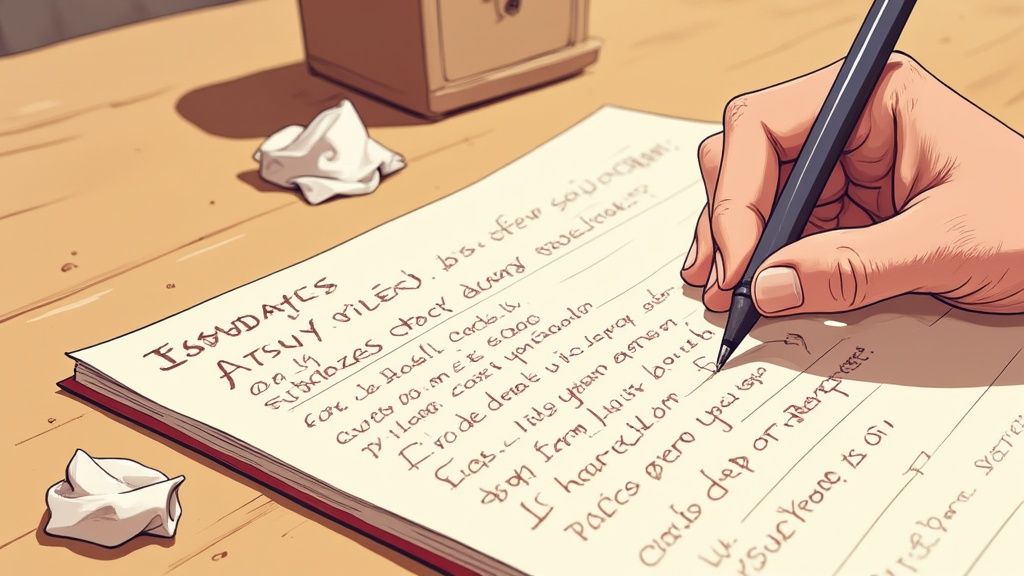
Anger journaling is a written cathartic practice where you express angry thoughts and feelings on paper without censorship. This technique provides a safe, private outlet for emotional release and processing, which helps prevent impulsive actions driven by intense anger. By externalizing your thoughts, you can begin to identify patterns in your anger triggers and reactions, moving from a state of overwhelming emotion to one of objective analysis.
How to Implement Anger Journaling
This expressive writing technique is a cornerstone of many therapeutic and self-development practices, from prison rehabilitation programs to creative writing workshops for trauma survivors.
- Freewriting: Set a timer for 15-20 minutes and write continuously about what is making you angry. Don't worry about grammar, spelling, or structure; the goal is to let your thoughts flow naturally and uncensored.
- Prompt-Based Writing: If you need a starting point, use prompts to guide your expression. Start with phrases like, "I'm angry because…" or "What I really want to say is…" to unlock deeper feelings.
Tips for Success
The key is to create a clear boundary between expressing your anger and acting on it. This journaling exercise is about the expression, not about validating destructive impulses. Write for yourself, with no audience in mind. Consider destroying the writing afterward through shredding or burning as a symbolic act of letting go. After your emotions have settled, you can review what you wrote to look for recurring triggers or unhealthy thought patterns. This transforms raw emotion into one of the most insightful anger management techniques for self-awareness and constructive problem-solving.
10. Social Support and Talking It Out
Voicing your feelings to a trusted person is a powerful anger management technique that externalizes internal turmoil. This act of "talking it out" prevents anger from festering and helps you process the emotions behind it. When you share your experience, you often gain valuable perspective, empathy, or practical advice that you couldn't access while isolated in your frustration. This approach leverages social connection to diffuse anger and reinforce healthy coping strategies.
This method is a cornerstone of many therapeutic models and support systems, from formal therapy to peer-led groups.
How to Implement Social Support
- Identify Your Circle: Create a short list of trusted, non-judgmental friends, family members, or a professional therapist you can contact when feeling overwhelmed.
- Use Support Programs: Leverage resources like Employee Assistance Programs (EAPs) at work, which offer confidential counseling, or join an anger management support group where shared experiences foster a sense of community.
- Be Clear About Your Needs: When you reach out, state what you need. Say, "I just need to vent for a few minutes, I don't need advice right now," or "I'm stuck on this problem and would love your perspective."
Tips for Success
To make talking it out an effective tool, choose your confidants wisely. Seek out empathetic listeners who can validate your feelings without escalating your anger. Be mindful of creating a reciprocal relationship; offer to be a listening ear for them as well. For persistent or deep-seated anger, a professional counselor or therapist can provide a safe, structured environment to explore the root causes. Ultimately, using social support transforms anger from a solitary burden into a shared, manageable experience.
10-Point Comparison of Anger Management Techniques
| Technique | 🔄 Implementation Complexity | 💡 Resource Requirements | ⚡ Speed / Efficiency | ⭐ Key Advantages | 📊 Ideal Use Cases |
|---|---|---|---|---|---|
| Deep Breathing Exercises | Very low — easy to learn | None; portable practice | Immediate (seconds–minutes) ⚡ | Rapid physiological calming; reduces arousal ⭐ | Acute anger, public settings, crisis de-escalation |
| Cognitive Behavioral Therapy (CBT) | High — structured professional process | Trained therapist, time, homework | Slow to moderate (weeks–months) | Addresses root causes; durable behavior change ⭐ | Chronic anger, clinical treatment, court-ordered programs |
| Progressive Muscle Relaxation (PMR) | Moderate — stepwise practice | Quiet space; 15–20 min sessions | Moderate (session-based) ⚡ | Lowers physical tension; increases body awareness ⭐ | Anxiety-related anger, sleep prep, stress relief programs |
| Time-Out Strategy | Low — simple behavioral step | Private space, agreed signal/timer | Fast (minutes) ⚡ | Prevents impulsive reactions; immediate de-escalation ⭐ | Relationship conflicts, workplace disputes, parent-child moments |
| Mindfulness and Meditation | Moderate — skill-building over time | Time, guided resources or group practice | Slow for full benefits; not immediate | Builds long-term emotional resilience; reduces reactivity ⭐ | Ongoing emotion regulation, prevention, clinical programs |
| Assertive Communication | Moderate — requires skill learning | Practice, coaching or workshops helpful | Moderate (improves with practice) ⚡ | Resolves issues constructively; prevents resentment ⭐ | Interpersonal conflicts, workplace, couple/family therapy |
| Physical Exercise and Activity | Low–Moderate — choose accessible routines | Time, space, optional equipment | Fast for acute relief; sustained benefit with routine ⚡ | Reduces stress hormones; improves mood and sleep ⭐ | Immediate energy release, preventative self-care, rehab programs |
| Humor & Perspective Shifting | Low–Moderate — social timing matters | Mental flexibility; social awareness | Immediate when appropriate ⚡ | Quickly reduces tension; reframes situations ⭐ | Social settings, mild conflicts, mood regulation |
| Anger Journaling & Expression | Low — simple writing practice | Notebook or digital device; private time | Moderate (15–20 min sessions) | Cathartic release; reveals patterns for reflection ⭐ | Personal reflection, therapy prep, tracking triggers |
| Social Support & Talking It Out | Low–Moderate — network-dependent | Trusted people or professionals | Variable (can be immediate) ⚡ | Validation, alternative perspectives, problem-solving ⭐ | Processing events, ongoing support, crisis debriefing |
Integrating Your Anger Toolkit for Lasting Change
Navigating the landscape of anger management techniques can feel like learning a new language. Throughout this guide, we have explored a diverse set of powerful, evidence-based strategies designed to help you reclaim control over your emotional responses. From the immediate, calming effect of deep breathing exercises and progressive muscle relaxation to the long-term cognitive restructuring offered by CBT and anger journaling, each tool has a unique role to play. We've seen how assertive communication can replace aggressive outbursts, how physical exercise can diffuse pent-up energy, and how a simple time-out can prevent irreversible damage to your relationships.
The true power of these methods lies not in mastering a single one, but in building a personalized and versatile toolkit. Think of it as a workshop for your emotional well-being. Some situations may call for the precision of assertive communication, while others might require the immediate release provided by a brisk walk or the quiet introspection of mindfulness. The goal is to move beyond a reactive state and into a proactive one, where you have a collection of trusted strategies at your disposal.
Your Path Forward: From Knowledge to Practice
The journey toward effective anger management is one of consistent practice, not perfection. Merely knowing about these techniques is not enough; the key is to integrate them into the fabric of your daily life. Here are your actionable next steps:
- Start Small and Be Specific: Don't try to implement all ten techniques at once. Choose one or two that resonate with you the most. If you struggle with physical tension, commit to practicing Progressive Muscle Relaxation every evening. If your anger stems from feeling unheard, focus on one specific assertive communication script for a week.
- Practice During Calm Moments: Rehearsing these skills when you are not angry is crucial. Practicing deep breathing for five minutes each morning or journaling about minor frustrations helps build the neural pathways that make these responses automatic during high-stress situations. This is how you build "emotional muscle memory."
- Track Your Progress: Use your anger journal not just to vent, but to identify patterns and celebrate wins. Note which anger management techniques you used and how effective they were. Seeing tangible progress, no matter how small, is a powerful motivator for continued effort.
Recognizing When to Seek Professional Support
While self-guided practice is invaluable, it's also important to recognize when professional guidance is needed. If your anger feels unmanageable, leads to destructive behavior, or is intertwined with other challenges such as substance use, past trauma, or co-occurring mental health conditions, seeking support is a sign of profound strength and self-awareness. Licensed therapists and specialized programs provide a structured, safe environment to explore the deeper roots of anger. They can offer personalized strategies, accountability, and evidence-based therapies tailored to your unique circumstances. Embracing professional help is not an admission of failure; it is a powerful step toward securing lasting emotional freedom and building a more peaceful, fulfilling life.
If you feel your anger is connected to substance use or other mental health challenges, you don't have to navigate it alone. The compassionate, expert team at Altura Recovery specializes in integrated treatment plans that address co-occurring disorders, providing you with the comprehensive support needed for true healing. Contact us today to learn how our evidence-based anger management techniques can become a cornerstone of your recovery journey.