
If you’ve recently stopped drinking, that bone-deep, relentless exhaustion you’re feeling is one of the most common—and frustrating—parts of withdrawal. The simple truth is that alcohol withdrawal and fatigue go hand in hand because your body and brain are working overtime to heal and find their footing again. This physical and mental marathon is a normal, expected part of early recovery.
Why Am I So Tired After Quitting Alcohol?

The overwhelming tiredness you're feeling is your body’s way of telling you a massive repair process is underway. Think of it like a city-wide power grid restarting after a long blackout. For a while, the system ran on an unstable, external generator (alcohol). Now that it’s gone, the entire grid has to reboot, reroute connections, and bring its primary power source back online. That monumental effort eats up a huge amount of energy, leaving you feeling completely drained.
This process isn't just physical; it's deeply neurological and psychological, too. Your body is navigating a complex rebalancing act, and the resulting fatigue is a sign of healing, not weakness.
The Foundation of Withdrawal Fatigue
Before we dive into the specifics of withdrawal, it's important to understand how alcohol will ruin your sleep in the first place. This sets the stage for the exhaustion that follows when you quit. Chronic drinking messes with essential sleep cycles, leading to poor rest even while you're still consuming alcohol.
When you stop, this underlying sleep debt crashes into the acute stress of withdrawal, creating a perfect storm for severe fatigue.
For a quick overview of what's happening and why, this table breaks down the key aspects of withdrawal fatigue.
Fatigue During Alcohol Withdrawal at a Glance
| Symptom Aspect | Core Reason | Typical Duration |
|---|---|---|
| Physical Exhaustion | The central nervous system is working hard to stabilize heart rate, blood pressure, and core functions without alcohol's depressive effect. | Most intense during the first 5-7 days of acute withdrawal. |
| Sleep Disruption | The brain struggles to regulate sleep-wake cycles, often causing severe insomnia or restless, non-restorative sleep. | Can last for weeks or even months into post-acute withdrawal. |
| Mental & Emotional Drain | Resisting cravings, managing mood swings, and navigating early sobriety requires immense mental energy, leading to cognitive fatigue. | Varies widely but can persist for several months as new coping skills are built. |
| Nutritional Deficits | Chronic alcohol use depletes key vitamins (like B vitamins) and minerals essential for energy production. | Can improve within weeks with proper nutrition and supplementation. |
As you can see, the fatigue isn't just one thing—it's a combination of physical, mental, and nutritional challenges that your body is working hard to overcome.
Key Reasons for Post-Alcohol Exhaustion
Several factors contribute to this intense tiredness, each playing a critical role in your body's recovery journey:
- Physiological Recalibration: Your central nervous system, heart rate, and blood pressure are all scrambling to stabilize without alcohol's depressive effects. This biological effort is physically taxing.
- Sleep Disruption: While alcohol ruins restorative sleep, withdrawal often brings on severe insomnia or nights filled with tossing and turning. Your body is desperate for quality rest but just can't seem to get it.
- Nutritional Deficiencies: Heavy drinking can strip your body of essential vitamins and minerals—especially B vitamins—that are vital for energy production. It's like trying to run a marathon on an empty tank.
- Mental and Emotional Toll: The sheer mental effort it takes to fight cravings, manage intense mood swings, and navigate the emotional rollercoaster of early sobriety is draining, adding a heavy layer to your overall fatigue.
Understanding the Science Behind Withdrawal Exhaustion
The bone-deep exhaustion that hits during alcohol withdrawal isn’t just in your head—it’s the direct result of your brain chemistry going through a massive, high-stress reset. To really get why alcohol withdrawal and fatigue are so tightly linked, we have to look at how your nervous system first adapts to chronic drinking, then violently rebounds when the alcohol is suddenly gone.
Think of your central nervous system like a car. It has an accelerator (glutamate, an excitatory neurotransmitter) to speed things up, and a brake (GABA, an inhibitory neurotransmitter) to slow things down. Alcohol is a depressant, which means it basically stands on the brake, enhancing GABA’s effects. That’s what causes the slowed reflexes, slurred speech, and relaxed feeling you get from drinking.
To keep from grinding to a halt, your brain starts to compensate. It does a wild balancing act by flooring the accelerator, cranking up glutamate levels just to maintain a normal speed. Over time, this becomes the new normal: a system running with one foot jammed on the brake and the other slammed on the gas.
The Rebound Effect Unpacked
When you abruptly stop drinking, you yank your foot off the brake. The problem is, your brain doesn't get the message right away and keeps the accelerator floored. The result is a nervous system stuck in overdrive. This sudden, unopposed surge of excitatory activity is what triggers the classic symptoms of acute withdrawal.
This state of constant neural redlining is incredibly draining. Your body is firing on all cylinders without any of the calming influence it learned to depend on.
"The brain of a person experiencing alcohol withdrawal is in a state of hyper-excitement. It's like an engine revving at its absolute limit for days on end. This process consumes an enormous amount of metabolic energy, leading directly to the physical and mental exhaustion that defines early recovery."
This internal chaos shows up in a few key ways that feed your fatigue:
- Anxiety and Restlessness: The constant glutamate surge creates that awful, jittery feeling of intense anxiety and an inability to get comfortable, making real rest impossible.
- Insomnia: With your brain’s activity turned up to eleven, deep, restorative sleep is off the table. Any sleep you do get is often light, broken, and plagued by nightmares.
- Physical Symptoms: A racing heart, high blood pressure, sweating, and tremors are all signs your body is working overtime just to handle basic functions.
A good way to picture this is to imagine holding a beach ball underwater. As long as you were drinking, you were applying constant downward pressure (the brake). The second you let go (stop drinking), the ball (your nervous system) doesn’t just float to the surface—it shoots out of the water with incredible force. That upward surge is the withdrawal state, and it’s exhausting to ride out.
Why Your Body Feels So Depleted
This neurochemical storm kicks off a chain reaction of physiological responses that make the exhaustion even worse. You're not just tired from poor sleep; your body is depleted from fighting an intense battle on multiple fronts.
The Stress Hormone Surge
Your body interprets this hyper-excited state as a full-blown crisis, flooding your system with stress hormones like cortisol and adrenaline. These are meant for short-term "fight or flight" moments, but during withdrawal, they stay elevated, keeping you in a state of high alert. It’s like having too many apps running in the background on your phone—it drains the battery fast.
The Cellular Repair Work
On top of managing the immediate crisis, your body is also starting the long-overdue work of repairing cellular damage. Alcohol is toxic to nearly every organ, from your brain and liver to your digestive tract. Healing all that damage is a metabolically expensive job that requires a huge amount of energy and nutrients.
Ultimately, alcohol withdrawal and fatigue are two sides of the same coin. The exhaustion isn't a sign of weakness or a personal failing. It’s a completely predictable biological response as your brain and body fight their way back to balance. Understanding this science is the first step toward giving yourself the patience and compassion you need to get through it.
Mapping Your Recovery From Acute to Protracted Fatigue
The exhaustion that hits when you quit alcohol isn’t a single, flat experience. It’s a process that changes over time. Understanding the stages can help you set realistic expectations and see a clear path forward. Think of it like recovering from a deep wound—first, there's the intense, acute crisis, which is then followed by a much longer period of internal healing and strengthening.
This visual timeline helps show how the nervous system flips from being suppressed by chronic alcohol use to the hyper-excited state of withdrawal.

This process shows why your body is so overwhelmed in early recovery. It’s like it went from having the emergency brake constantly pulled to suddenly being stuck with the gas pedal floored.
The First Wave: Acute Withdrawal Fatigue
The first stage is acute withdrawal fatigue. This is the bone-deep exhaustion that typically dominates the first 5 to 7 days after your last drink. It’s the most intense period, driven by the body's initial shock and that severe neurological rebound we talked about earlier.
During this phase, your body is in full-blown crisis mode. It’s wrestling with severe sleep disruption, physiological instability, and intense cravings, all of which drain your energy at an unbelievable rate. The fatigue here is profound, often coming with other physical symptoms like tremors, sweating, and anxiety.
The main goal during acute withdrawal isn't just managing exhaustion—it's about safe, medically supervised stabilization. Keeping you safe is the number one priority as your system starts its difficult recalibration.
The Long Haul: Protracted Withdrawal Fatigue
Once the initial crisis subsides, you enter a longer, more subtle phase known as protracted withdrawal fatigue. This is a core part of Post-Acute Withdrawal Syndrome (PAWS), a cluster of symptoms that can stick around for weeks or even months. While the intense physical symptoms are gone, a persistent feeling of low energy, mental fog, and emotional ups and downs often remains.
This lingering exhaustion is the result of your brain slowly healing and re-establishing normal neurotransmitter function. The circuits that control your sleep, mood, and energy are still under repair.
Protracted withdrawal is the body's long-term remodeling project. The emergency crew has left, but now the slow, meticulous work of rebuilding the damaged infrastructure begins. This is why patience and consistent support are non-negotiable for lasting recovery.
During this stage, the fatigue might come and go. You could have days where you feel energetic and clear-headed, followed by stretches of deep tiredness and trouble concentrating. This is a completely normal part of the brain's healing process. Getting a handle on Post-Acute Withdrawal Syndrome is key to navigating this tough but temporary phase without losing hope.
To spell out the differences, let’s compare these two stages side-by-side.
Comparing Acute vs Protracted Withdrawal Fatigue
This table breaks down how fatigue shows up differently in the two main phases of alcohol withdrawal, clarifying the cause, symptoms, and focus for each.
| Feature | Acute Withdrawal Fatigue (First 7 Days) | Protracted Withdrawal Fatigue (Weeks to Months) |
|---|---|---|
| Primary Cause | Severe neurochemical rebound and physiological shock from alcohol cessation. | Slow healing of brain pathways, neurotransmitter re-regulation, and emotional adjustment. |
| Key Symptoms | Intense physical exhaustion, severe insomnia, tremors, anxiety, and high stress. | Persistent low energy, mental fog, mood swings, irritability, and fluctuating sleep quality. |
| Management Focus | Medical safety and stabilization are the top priorities. Comfort measures support this process. | Building healthy routines, nutritional support, therapy, and developing coping skills. |
Recognizing that alcohol withdrawal and fatigue appears in these two distinct phases is empowering. It helps you understand that the initial, crushing exhaustion will pass, but the journey back to full energy requires a longer-term strategy. This knowledge allows you to give yourself grace on the tough days and celebrate the small wins as your body and mind continue to heal.
How Fatigue Connects to Other Withdrawal Risks
The bone-deep exhaustion that comes with alcohol withdrawal isn’t just about feeling tired. It’s a critical symptom that winds itself around every other risk, making each one more dangerous.
Think of this fatigue as a crack in a dam. On its own, it’s a problem, but its real danger is how it weakens the entire structure, making a total collapse more likely. It’s almost never an isolated symptom; instead, it acts like a domino, knocking over your cognitive and emotional defenses one by one.
When your energy is completely gone, your ability to handle even the smallest stressor disappears. This kicks off a nasty feedback loop: withdrawal symptoms drain you, and the exhaustion makes those same symptoms feel ten times worse.
The Cognitive and Emotional Domino Effect
One of the first things to go is your cognitive function. That infamous withdrawal “brain fog”—the mental molasses that slows down your thinking—is made significantly worse by physical exhaustion. When you’re running on empty, your brain simply can’t keep up with focus, memory, or clear decision-making.
This mental slowdown bleeds directly into your emotional state. Simple tasks start to feel like climbing a mountain, which can quickly spiral into frustration, hopelessness, and a sense of failure. This emotional drain is a massive risk in early recovery.
- Amplified Anxiety and Depression: Fatigue shatters your emotional resilience. This leaves you wide open to the anxiety and depression that almost always surface during withdrawal. It's tough to use coping skills when you're too exhausted to even think straight.
- Eroded Motivation: Recovery takes a huge amount of mental energy. When you're fighting profound fatigue, the motivation you need to show up for therapy, connect with support, or even just take a shower can completely vanish, leaving you feeling trapped.
Learning to navigate these intense emotional waves is non-negotiable. Building strong emotional regulation skills for adults gives you the practical tools to get through these moments without reaching for a drink.
Linking Exhaustion to Severe Medical Risks
While brain fog and mood swings are incredibly difficult, the link between alcohol withdrawal and fatigue and severe medical complications is what’s truly alarming. The state of extreme neurological hyperactivity that causes such deep fatigue is the very same process that drives the most dangerous withdrawal symptoms. This level of exhaustion is a clear sign that your central nervous system is under a terrifying amount of strain.
When that strain hits its limit, it can trigger life-threatening emergencies.
"The body's state of depletion during severe withdrawal is profound. This isn't just tiredness; it's a systemic crisis. The same neurological chaos that drains every ounce of energy can also trigger seizures or progress to delirium tremens, the most severe form of alcohol withdrawal."
Hospital data shows just how real this concern is. Roughly 20% of patients admitted for alcohol withdrawal end up developing severe symptoms like hallucinations, seizures, or delirium tremens (DTs), which come with a much higher risk of permanent harm or death. You can discover more insights about these global health statistics on WHO.int.
This connection highlights a crucial point: the fatigue you’re feeling is a surface-level symptom of a deep, potentially dangerous storm brewing inside your body. It's a flashing red light warning you that your system is struggling to rebalance. Trying to ride this out alone, especially when severe fatigue is present, is a gamble you can’t afford to take. A medically supervised detox is the only safe way to navigate the full spectrum of withdrawal symptoms and prevent a medical crisis.
Actionable Strategies to Rebuild Your Energy
Knowing why you feel so drained is one thing. Doing something about it is another. This is your playbook for fighting back against the bone-deep exhaustion that often defines early sobriety. Instead of just waiting for the fatigue to pass, you can take an active role in rebuilding your energy from the ground up.
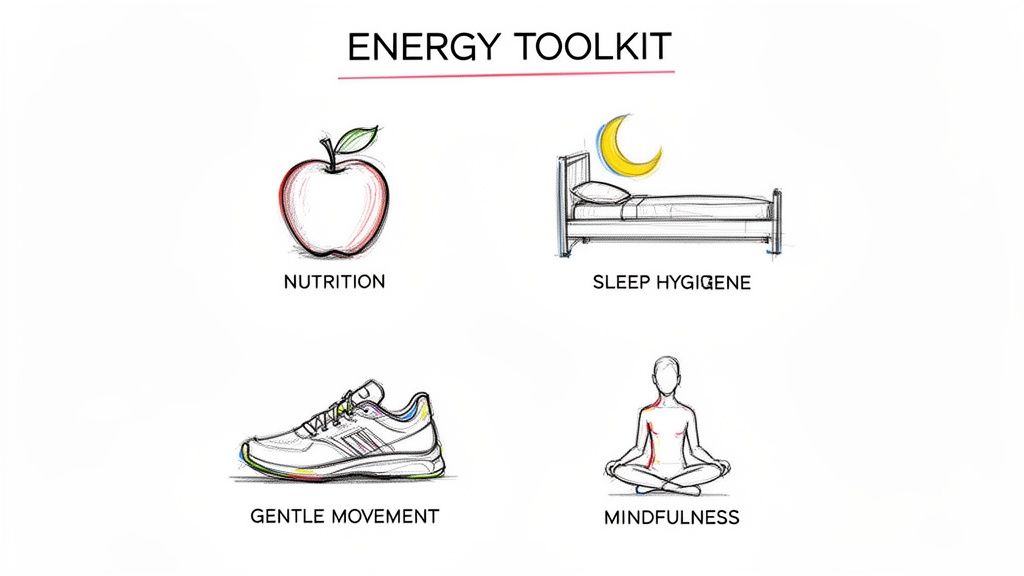
The trick is to focus on small, consistent actions that give your body exactly what it needs to heal. Think of it as supplying your internal repair crew with the best possible tools and materials. By methodically addressing nutrition, sleep, movement, and your mental state, you create a powerful foundation for reclaiming your vitality.
Fuel Your Brain and Body With Smart Nutrition
Your body is running a repair marathon, and it needs high-quality fuel to finish the race. Chronic alcohol use often strips the body of crucial nutrients, especially B vitamins, which are the spark plugs for energy production. It also sends blood sugar levels on a wild roller-coaster ride, causing energy spikes and crashes that make fatigue even worse.
Stabilizing your system starts with what's on your plate. You want to aim for meals that provide a steady, reliable stream of energy—not a quick jolt followed by a crash.
- Prioritize Lean Protein: Chicken, fish, beans, and lentils should be a part of every meal. Protein is key for stabilizing blood sugar and gives your brain the amino acids it needs to start rebuilding crucial neurotransmitters.
- Embrace Complex Carbohydrates: Swap the sugary snacks and white bread for whole grains, sweet potatoes, and vegetables. These release energy slowly and steadily, preventing the brutal energy dips that deepen fatigue.
- Hydrate Relentlessly: Dehydration is a notorious energy thief. Keep a water bottle handy at all times. Sipping throughout the day helps your cells function correctly and flush out lingering toxins.
While you might come across various tips for feeling better after drinking, like using saunas for hangover relief, your most sustainable energy gains will come from focusing on core internal strategies like nutrition and hydration.
Establish Non-Negotiable Sleep Hygiene
Insomnia during withdrawal can feel like an impossible beast to tame. But by creating a strict, predictable sleep routine, you send powerful signals to your brain that it’s time to power down. Good sleep hygiene isn't just a suggestion; it’s a non-negotiable part of combating fatigue.
Sleep is the cornerstone of neurological repair. Protecting your sleep schedule isn't a luxury in early recovery; it's a critical component of healing the brain and restoring your energy levels.
Start by setting a consistent bedtime and wake-up time, even on weekends. This simple step helps regulate your body’s internal clock, or circadian rhythm. Next, turn your bedroom into a sanctuary dedicated only to rest.
- Dim the Lights: An hour before you plan to sleep, lower the lights in your home. This is a physical cue to your brain to start producing melatonin, the hormone that makes you sleepy.
- Eliminate Screens: The blue light from phones, tablets, and TVs actively shuts down melatonin production. Put all screens away at least 60-90 minutes before bed. No exceptions.
- Create a Wind-Down Ritual: Find a calming activity you can do every night, like reading a physical book, taking a warm bath, or listening to quiet music. This ritual becomes a powerful signal to your body and mind that it's time to shift into rest mode.
Incorporate Mindful Movement to Create Energy
When you’re completely exhausted, exercise is probably the last thing on your mind. But here's the counterintuitive truth: gentle, mindful movement can actually create energy instead of draining it. The goal isn't to run a 5K. It's simply to wake your body up and get your blood flowing, which helps clear away that persistent mental fog.
Start small. Seriously small. A simple 10-minute walk outside can make a world of difference. The blend of light physical activity and fresh air is a great combination for boosting both your mood and your circulation without demanding too much from your system. Gentle yoga or simple stretching can also work wonders for releasing physical tension and calming a restless mind.
Use Therapy to Manage the Mental Toll
The mental effort it takes to get through early sobriety is a massive energy drain in itself. Fighting off cravings, managing anxiety, and navigating mood swings is exhausting work. This is where therapy comes in. It gives you practical strategies to manage that mental load more efficiently, freeing up your energy for physical healing.
Approaches like Cognitive Behavioral Therapy (CBT) can teach you how to spot and challenge the negative thought patterns that feed feelings of fatigue and hopelessness. Learning simple mindfulness and deep-breathing exercises gives you an in-the-moment tool for calming your nervous system when things feel overwhelming. Exploring different self-care activities for mental health also helps you regain a sense of control and relief, making the entire journey feel more manageable.
Building a Sustainable Path to Recovery
Getting through the bone-deep exhaustion of withdrawal takes more than just gritting your teeth; it demands a real plan, one built with support and structure. The fatigue that comes with alcohol withdrawal is a serious challenge, but it's absolutely something you can manage with the right professional help. Trying to power through it on your own isn't just overwhelming—it can be dangerous, especially when that relentless exhaustion eats away at your resolve.
A recovery that lasts is built on a foundation of expert care, tackling both the immediate crisis of detox and the longer road to healing. This is where a step-down model of treatment shines. It gives you a safe framework to get through the acute phase, then provides ongoing support as you work through the lingering exhaustion of Post-Acute Withdrawal Syndrome (PAWS).
The Power of Personalized Care
Real, effective treatment is never a one-size-fits-all prescription. Your story is your own, shaped by your unique history, health, and life. A personalized care plan sees you as a whole person, weaving together medical supervision and targeted therapy to build a strategy that actually fits you.
This approach makes sure every piece of your recovery is handled in a connected, thoughtful way:
- Medical Supervision: Licensed clinicians are there to watch over you, safely managing withdrawal symptoms and using medication if needed to ease the discomfort and lower the risks.
- Therapeutic Support: Through one-on-one and group therapy, you'll gain the skills to handle cravings, manage your emotions, and get to the root of what drove the addiction in the first place.
- Life Skills Training: This is the practical side—rebuilding daily routines, finding healthy ways to manage stress, and creating a life that feels full and rewarding without alcohol. This directly helps you head off the triggers that can lead back to drinking.
Creating a Resilient Support Network
Recovery doesn't happen in a bubble. A strong, reliable support system is one of the most vital parts of any sustainable plan. Professional treatment helps you lay the groundwork for this network. It connects you with others who genuinely get what you're going through and guides your family on how to become a true source of strength. This partnership is what builds the resilience you need for lasting sobriety.
Professional treatment is not just a service you receive; it is a partnership. It’s about working alongside experts who combine clinical knowledge with genuine compassion to help you rebuild your life, one step at a time, free from the grip of exhaustion.
This kind of collaborative effort empowers you to move forward with real confidence. For more on this, check out our detailed article on how to build a support system in recovery, which is packed with actionable advice. A structured outpatient program provides the tools, accountability, and community needed to turn the hope of recovery into your reality.
Common Questions About Withdrawal Fatigue
When you're in the thick of it, recovery can bring up some urgent questions. Here are clear, straightforward answers to the most common concerns we hear about alcohol withdrawal and the exhaustion that comes with it.
How Long Does Fatigue From Alcohol Withdrawal Last?
There's no single answer, but the timeline generally happens in two phases. The most intense, can't-get-off-the-couch exhaustion usually peaks during the first 5-7 days of acute withdrawal.
After that, many people find themselves in a period of protracted withdrawal, where lower energy levels, brain fog, and sleep problems can linger for several weeks or even months. How long it lasts really depends on your drinking history, your overall health, and the kind of support you have in place. This is where professional guidance becomes so important for managing those lingering symptoms.
Can Medication Help With My Withdrawal Fatigue?
Yes, but not in the way you might think. There’s no magic pill that just erases fatigue. Instead, a medical provider will look for the root causes of your exhaustion and prescribe medications to treat those issues. The goal isn't to mask the tiredness but to fix what's fueling it.
A full medical evaluation is always the first step. This makes sure any prescription you receive supports your energy and overall health without creating a new problem or dependency.
For example, if severe anxiety is burning through your energy reserves all day, a doctor might prescribe something to help calm that down. Or, if your sleep is completely chaotic, they might use a non-addictive medication to help reset your natural cycle.
Is It Safe to Manage Withdrawal Fatigue on My Own?
Trying to manage alcohol withdrawal by yourself is never a good idea. The medical risks, including life-threatening seizures, are just too high. The fatigue you're feeling is a major symptom of this whole complex process your body is going through.
On top of the physical danger, that persistent exhaustion is a huge risk factor for relapse. It just wears you down, making it incredibly hard to stay motivated and emotionally stable.
Going through a professional program gives you three things you can't get at home:
- Medical Safety: You’ll have professionals watching over you to manage any dangerous symptoms.
- Therapeutic Tools: You'll learn real strategies for coping with the mental and emotional drain of fatigue.
- A Supportive Community: You’ll be surrounded by people who actually get what you’re going through and will cheer you on.
Working with a structured program dramatically increases your odds of getting through this safely and successfully.
You don't have to navigate the exhaustion and uncertainty of withdrawal on your own. At Altura Recovery, we offer a compassionate, structured path forward with personalized outpatient programs designed to fit into your life. Don't face this challenge alone—start your journey to Real Healing, Real Growth, and Real Freedom today.