Group therapy is a cornerstone of effective outpatient addiction treatment, providing a vital space for connection, shared experience, and skill development. However, maintaining engagement and momentum can be challenging. Standard process groups, while valuable, can sometimes fall into repetitive patterns, leaving clients disengaged and facilitators searching for fresh, impactful approaches to keep sessions dynamic and relevant.
This guide moves beyond generic advice to offer a comprehensive roundup of 10 powerful and evidence-informed addiction group therapy ideas. These concepts are specifically tailored for outpatient settings, where individuals are actively balancing their recovery journey with work, family, and other daily responsibilities. The goal is to provide actionable, structured activities that foster deep, meaningful progress.
Each entry in this list is presented as a complete module. You will find clear therapeutic goals, step-by-step facilitation instructions, and practical materials lists. We also include specific adaptations for clients with co-occurring disorders and suggestions for virtual group delivery, ensuring these strategies are versatile and inclusive. A cornerstone of any successful group therapy, especially for vulnerable populations, involves understanding how to create psychological safety, enabling members to share openly without fear of judgment. This collection is designed for clinicians looking to invigorate their intensive outpatient program (IOP) curriculum, as well as for individuals and families seeking to understand the transformative potential of structured group work in achieving lasting recovery.
1. Cognitive Behavioral Therapy (CBT) Group Sessions
Cognitive Behavioral Therapy (CBT) is a cornerstone of addiction treatment, making it one of the most effective and evidence-based addiction group therapy ideas available. This approach operates on the principle that psychological problems are based, in part, on unhelpful ways of thinking and learned patterns of unhelpful behavior. A CBT group session focuses on identifying, challenging, and replacing these negative thought patterns and behaviors that fuel substance use.
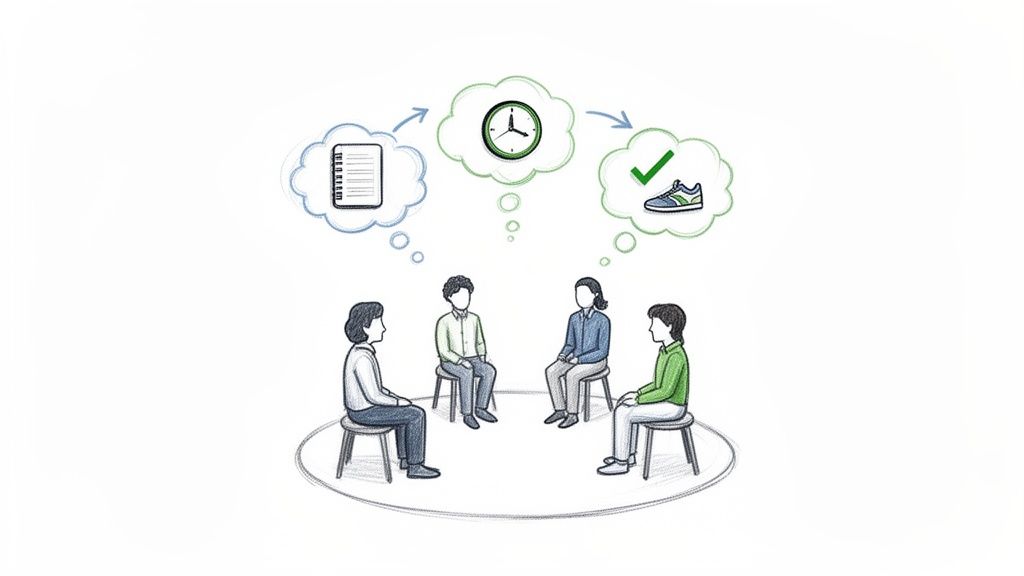
In a group setting, participants learn to recognize their personal triggers and develop practical coping skills. The collaborative environment allows members to practice these new skills with peers, receive constructive feedback, and realize they are not alone in their struggles. This model is highly structured, goal-oriented, and equips individuals with tangible tools for long-term recovery.
How It Works: A Practical Example
A facilitator might begin by introducing the "cognitive triangle," which illustrates the connection between thoughts, feelings, and behaviors. The group then works through a member's recent craving experience.
- Trigger: Seeing a bar on the way home from work.
- Automatic Thought: "I've had a hard day; one drink won't hurt."
- Feeling: Anxious, stressed, deprived.
- Behavior: Stopping at the bar.
The group collaboratively helps the member challenge the automatic thought ("one drink always leads to more for me") and brainstorms alternative behaviors, such as calling a sponsor or taking a different route home. This real-time problem-solving builds self-efficacy and provides a replicable strategy for future situations.
Actionable Tips for Facilitators
To maximize the impact of CBT group sessions, facilitators should:
- Start with psychoeducation about the cognitive model before asking members to share personal examples.
- Use structured worksheets like thought records to help participants track and analyze their cognitive patterns. This creates a visual aid they can take home.
- Encourage peer feedback during thought-challenging exercises, fostering a sense of shared learning and support.
- Role-play real-world scenarios to help members practice new coping skills in a safe environment.
- Integrate trauma-informed care by emphasizing choice, collaboration, and safety. Avoid pressuring members to share details of traumatic events and focus on skill-building for managing present-day triggers. For virtual groups, use breakout rooms for smaller, more intimate skill-practice sessions.
2. Dialectical Behavior Therapy (DBT) Skills Groups
Dialectical Behavior Therapy (DBT) offers a powerful, skills-based approach for addiction group therapy ideas, especially for clients with co-occurring substance use and emotional dysregulation. Developed by Marsha Linehan, DBT operates on the principle of balancing acceptance and change. It teaches concrete skills across four key modules: mindfulness, distress tolerance, emotion regulation, and interpersonal effectiveness.
In a group setting, members learn to non-judgmentally observe their urges, tolerate painful emotions without resorting to substance use, and manage relationships that may trigger relapse. This structured, psychoeducational format provides a predictable and safe environment. Participants learn that intense emotions are manageable, and they build a toolbox of practical alternatives to substance use.
How It Works: A Practical Example
A facilitator introduces the distress tolerance skill "ACCEPTS" to help members cope with a sudden, intense craving without acting on it.
- Activities: Go for a walk, listen to music.
- Contributing: Do something helpful for someone else.
- Comparisons: Think of a time you felt worse but got through it.
- Emotions: Watch a funny movie to evoke a different feeling.
- Pushing Away: Temporarily block the situation from your mind.
- Thoughts: Count to 100 or do a puzzle.
- Sensations: Hold an ice cube or take a hot shower.
A group member shares a recent experience of wanting to use after a fight with a partner. The group then helps them brainstorm which ACCEPTS skills they could have applied in that moment, turning a potential crisis into a learning opportunity.
Actionable Tips for Facilitators
To run effective DBT skills groups for addiction, facilitators should:
- Begin with mindfulness as the foundational module, as it underpins all other DBT skills.
- Use a skills diary or card for members to track their use of DBT skills between sessions, reinforcing learning and accountability.
- Incorporate extensive role-playing, especially for the interpersonal effectiveness module, to practice new communication styles in a safe context.
- Maintain a structured format by starting each session with a mindfulness exercise and reviewing the previous week’s skills practice.
- Adapt for virtual settings by using digital whiteboards to explain skills and breakout rooms for smaller group practice, ensuring active participation from everyone. Emphasize that phone coaching support between sessions is a key component of comprehensive DBT.
3. Motivational Enhancement Therapy (MET) Groups
Motivational Enhancement Therapy (MET) is a client-centered counseling approach that helps individuals resolve their ambivalence about engaging in treatment and stopping substance use. As one of the most empathetic addiction group therapy ideas, MET operates on the core principles of Motivational Interviewing, emphasizing collaboration and evocation rather than confrontation. The group environment is non-judgmental, designed to elicit and strengthen a person’s own motivation for change.
In an MET group, the facilitator guides the conversation, but the power lies within the members themselves. As participants share their personal experiences, struggles with change, and reasons for considering sobriety, they build a collective sense of hope and momentum. This approach is particularly effective for individuals who are mandated to treatment or are in the early stages of change, as it honors their autonomy and meets them where they are.
How It Works: A Practical Example
A facilitator might start a session by asking members to explore their personal values using a values card sort exercise. Afterward, the group discusses the "pros and cons" of their current substance use in a non-confrontational way.
- Member's Stated Value: "Being a reliable parent is the most important thing to me."
- Member's "Con" of Use: "When I drink, I sometimes miss my son's soccer games."
- Facilitator's Reflection: "So on one hand, being a present father is a top priority for you, and on the other hand, drinking sometimes gets in the way of that. What's that like for you?"
This technique, known as "developing discrepancy," gently highlights the conflict between a member’s core values and their current behaviors. Hearing peers explore similar discrepancies strengthens each individual's internal resolve to align their actions with their values, fostering intrinsic motivation for recovery.
Actionable Tips for Facilitators
To effectively lead MET groups, facilitators should:
- Listen for and amplify "change talk," which are statements members make that favor change (e.g., "I'm tired of feeling this way").
- Use reflective listening to show you understand a member’s perspective without judgment. Summarize and reframe their statements to highlight their own insights.
- Ask open-ended questions to encourage exploration (e.g., "What are some of the good things about making a change?"). Avoid giving unsolicited advice.
- Roll with resistance rather than arguing. Acknowledge the member's perspective and gently redirect the conversation toward their own motivations.
- Celebrate small steps and commitments to change. Affirming any positive movement, no matter how minor, builds confidence and momentum. For virtual sessions, use polls to gauge the group’s readiness for change on a scale of 1-10.
4. Relapse Prevention Planning Groups
Relapse Prevention (RP) is a critical component of sustainable recovery, and dedicating group sessions to it is one of the most practical addiction group therapy ideas. Based on cognitive-behavioral principles, these groups help clients identify high-risk situations, understand their personal relapse warning signs, and develop effective coping strategies. The goal is to reframe relapse not as a failure of willpower, but as a predictable part of the recovery process that can be managed with proactive planning.
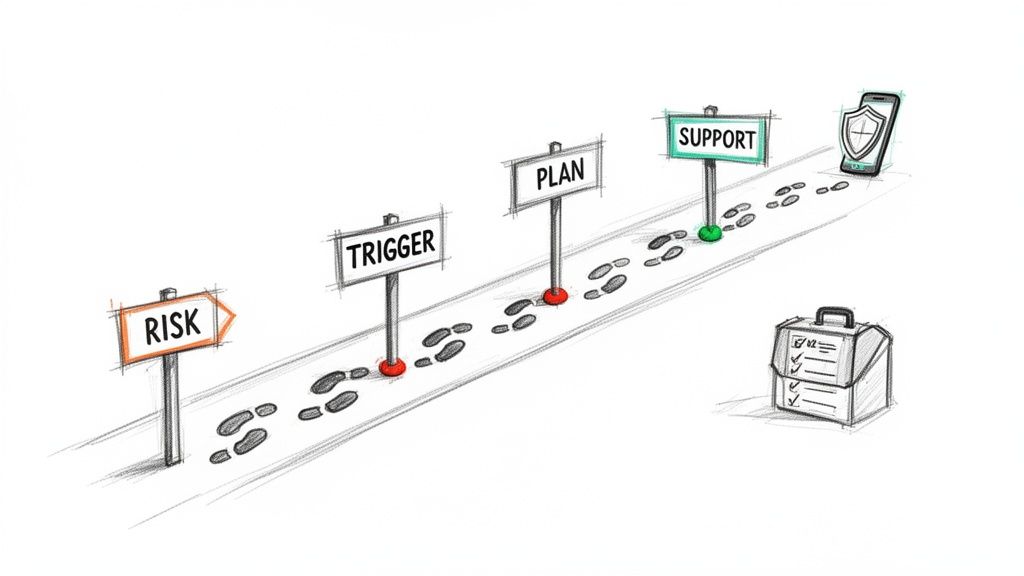
In this group setting, participants deconstruct past relapses to find patterns and triggers. This collaborative analysis normalizes the experience and transforms it into a powerful learning opportunity. Members create a tangible, written relapse prevention plan, building confidence and a sense of control over their recovery journey.
How It Works: A Practical Example
A facilitator could focus a session on creating a "High-Risk Situation Hierarchy." Each member lists situations that trigger cravings, from least to most challenging. The group then selects a common, moderately difficult scenario, such as attending a family gathering where alcohol will be served.
- Identify Warning Signs: The group brainstorms emotional signs (anxiety, resentment) and cognitive signs ("I can handle just one drink to be social").
- Develop Coping Strategies: Members suggest proactive strategies like bringing their own non-alcoholic beverages, planning an exit strategy, and identifying a sober ally to text during the event.
- Practice Responses: Using role-play, one member practices politely declining a drink offer while another plays the role of a persistent relative.
This exercise provides a script and a rehearsed set of actions, significantly lowering the anxiety associated with the actual event and equipping members with proven tools.
Actionable Tips for Facilitators
To run an effective Relapse Prevention Planning group, facilitators should:
- Create a detailed inventory of both external triggers (people, places) and internal warning signs (emotions, thoughts) with the group.
- Develop multiple coping strategies for each high-risk situation, emphasizing that having a "Plan A, B, and C" is essential.
- Use role-playing extensively to help members practice new behaviors until they feel natural and automatic.
- Encourage written plans that members can carry with them or review daily. This makes the plan a concrete tool rather than an abstract idea.
- Establish accountability partners within the group, encouraging members to check in with each other before and after navigating high-risk situations.
5. Trauma-Informed Recovery Groups
Given the profound link between trauma and substance use, Trauma-Informed Recovery Groups are an essential component of comprehensive addiction group therapy ideas. This approach, advocated by experts like Bessel van der Kolk and organizations such as SAMHSA, operates on the core principle of "what happened to you?" rather than "what's wrong with you?". It creates a therapeutic environment that prioritizes physical, psychological, and emotional safety, helping members manage addiction by addressing its underlying traumatic roots.
In a trauma-informed group, the focus is not on re-living traumatic events but on building skills to cope with their lasting effects. Participants learn grounding techniques, emotional regulation strategies, and how to establish a sense of safety within themselves and their relationships. The group fosters connection and co-regulation, validating members' experiences without requiring explicit disclosure, which can be re-traumatizing.
How It Works: A Practical Example
A facilitator might start a session by establishing safety, leading a 5-senses grounding exercise to help members become present. The topic could be "Understanding Triggers vs. Cravings," explaining how sensory input (a sight, sound, or smell) can trigger a trauma response that is often misinterpreted as a craving.
- Trauma Trigger: The smell of a specific aftershave reminds a member of their abuser.
- Automatic Thought: "I feel terrified and out of control."
- Feeling: Panic, dread, intense anxiety.
- Behavior: The member immediately wants to use their substance of choice to numb the overwhelming feeling.
The group explores how this is a survival response, not a moral failing. They collaboratively practice "resourcing," helping the member identify internal strengths and external supports they can access when triggered. The focus remains on building present-day safety and coping skills rather than analyzing the past trauma itself.
Actionable Tips for Facilitators
To effectively run a Trauma-Informed Recovery Group, facilitators should:
- Establish predictability by starting and ending on time, outlining the session's agenda, and maintaining consistent group norms.
- Teach and practice grounding techniques at the beginning and end of every session. Offer a variety of options like breathwork, sensory awareness, or physical stretching.
- Use trauma-informed language, avoiding victim-blaming or pathologizing terms. Emphasize resilience, survival, and strength.
- Provide choice and control to members at all times. Explicitly state that no one has to share and that members can pass on any activity or discussion.
- Focus on psychoeducation about the nervous system and the effects of trauma on the brain and body. This helps destigmatize symptoms and empowers members with knowledge.
6. Peer-Led Recovery Support Groups (12-Step Adaptation)
While traditional 12-step groups like Alcoholics Anonymous (AA) operate independently, many clinical programs integrate their core principles into structured, peer-led sessions. This powerful hybrid model leverages the community-driven power of mutual support within a therapeutic framework, making it a vital addiction group therapy idea. The approach emphasizes shared experience, spiritual principles of acceptance and surrender, and the collective strength found in working through sequential recovery steps.
In these adapted groups, members draw strength and hope from one another’s stories, fostering deep connections and accountability. This model creates a crucial bridge between formal clinical treatment and long-term community-based recovery. It introduces clients to the language and culture of 12-step fellowships (or alternatives like SMART Recovery) in a supportive, professionally guided environment.
How It Works: A Practical Example
A facilitator might dedicate a session to exploring "Step One: We admitted we were powerless over our addiction—that our lives had become unmanageable." The facilitator would not lecture but would instead open the floor for discussion.
- Prompt: "What does 'unmanageable' look like in your life? Can anyone share an example of a time they felt powerless over their substance use?"
- Member 1 Share: Discusses losing a job due to their substance use, a clear sign of unmanageability.
- Member 2 Share: Relates to this by sharing how their relationships have suffered, offering validation and a sense of shared struggle.
- Facilitator Role: The facilitator guides the conversation, ensures it remains focused on the step, and helps members connect their personal experiences to the broader principle of acceptance as a foundation for change.
This process helps members internalize the first step not as a sign of failure, but as a liberating admission that opens the door to seeking help.
Actionable Tips for Facilitators
To effectively integrate peer-led models, facilitators should:
- Bridge professional and peer support by explaining the distinct roles of therapists and sponsors, helping clients understand how to utilize both resources.
- Address spiritual concerns early by discussing the broad interpretation of a "Higher Power" and introducing secular alternatives like SMART Recovery or LifeRing to accommodate diverse belief systems.
- Integrate meeting attendance into a client’s formal treatment plan, treating it as a key component of their recovery journey.
- Discuss the benefits of sponsorship, guiding members on what to look for in a sponsor and how to initiate that relationship.
- Use trauma-informed language, emphasizing that "powerlessness" is about the substance, not about the individual’s inherent strength or worth. Frame it as a strategic surrender to win a larger battle.
7. Life Skills and Coping Strategy Groups
Recovery extends far beyond simple abstinence; it requires building a fulfilling life that makes substance use unnecessary. Life Skills and Coping Strategy Groups are practical, action-oriented sessions designed to equip individuals with the competencies needed to navigate daily challenges. This makes them one of the most foundational addiction group therapy ideas, as they directly address the real-world stressors that can trigger relapse.
These groups focus on tangible skills like financial management, job readiness, communication, and stress reduction. By improving a person's ability to manage their environment and responsibilities, these sessions lower overall stress levels, increase self-esteem, and reduce common barriers to maintaining long-term recovery.
How It Works: A Practical Example
A facilitator might run a session on financial literacy, a common area of difficulty for those in early recovery. The group would begin by discussing the connection between financial stress and the urge to use substances.
- Problem: A group member shares their anxiety about managing debt accumulated during active addiction.
- Skill Introduction: The facilitator introduces a simple budgeting tool, like the 50/30/20 rule (50% for needs, 30% for wants, 20% for savings/debt).
- Group Application: Members work together to create a mock budget for a hypothetical person, discussing common pitfalls and strategies for sticking to a plan.
- Take-Home Task: Each member is encouraged to use a provided worksheet to create a basic budget for themselves before the next session.
This approach transforms a major source of anxiety into a manageable task with a clear path forward, empowering members to take control of their lives.
Actionable Tips for Facilitators
To run an effective Life Skills and Coping Strategy Group, facilitators should:
- Assess group needs at the outset to tailor topics, whether it's parenting skills, sleep hygiene, or job interviewing.
- Break complex skills into manageable steps. Instead of a single session on "employment," dedicate separate sessions to resume building, interview practice, and workplace communication.
- Provide tangible resources such as checklists, worksheets, and links to community resources that members can take home and use immediately.
- Invite guest speakers like financial advisors or employment specialists to enhance credibility and provide expert advice.
- Incorporate trauma-informed principles by ensuring all activities are choice-based and validating the emotional difficulty of rebuilding a life. For virtual sessions, use screen sharing to walk through online tools like budgeting apps or job search websites together.
8. Family and Relationship Recovery Groups
Addiction is often referred to as a "family disease" because it profoundly impacts relationship dynamics. Family and Relationship Recovery Groups are a vital component of holistic treatment, making them one of the most impactful addiction group therapy ideas available. These sessions involve family members and significant others in the recovery process, addressing codependency, communication breakdowns, and unhealthy family systems.
In a group setting, family members learn that they are not alone and receive validation for their experiences. The focus is on healing the entire family unit, not just the individual with the substance use disorder. These groups provide a structured environment to rebuild trust, learn healthy communication skills, and establish supportive boundaries for long-term recovery.
How It Works: A Practical Example
A facilitator might introduce the concept of "The Three C's" for family members: they didn't cause the addiction, they can't control it, and they can't cure it. The session could then focus on a common family conflict.
- Scenario: A spouse finds a hidden bottle, leading to an argument.
- Old Behavior: The spouse yells, makes accusations, and threatens, while the individual in recovery becomes defensive and withdrawn.
- Learned Skill: The group practices "I-statements" to communicate feelings without blame.
- New Behavior: The spouse might say, "When I found the bottle, I felt scared and betrayed because it breaks our agreement about a sober home."
This approach shifts the dynamic from accusation to a shared emotional experience. The group can then brainstorm how to reinforce boundaries respectfully and discuss a plan for handling future discoveries, empowering both parties with constructive tools.
Actionable Tips for Facilitators
To maximize the impact of Family and Relationship Recovery Groups, facilitators should:
- Provide initial psychoeducation separately for family members to help them understand addiction as a disease before joining combined sessions.
- Establish clear guidelines and ground rules for communication in combined sessions to ensure emotional safety and respect.
- Teach specific communication techniques like active listening and "I-statements" using role-play scenarios relevant to the families' experiences.
- Address safety concerns and domestic violence protocols before bringing family members into the treatment setting.
- Integrate aftercare planning that specifically involves family relationships, setting realistic expectations for the recovery journey ahead. Offer flexible scheduling options, like evenings or weekends, to accommodate working family members.
9. Mindfulness and Meditation-Based Groups
Mindfulness and meditation groups are powerful addiction group therapy ideas that teach participants to observe their thoughts, feelings, and cravings without judgment. This approach is rooted in the practice of present-moment awareness, helping individuals detach from the automatic reactions that drive substance use. By cultivating this skill, members can learn to tolerate discomfort and "ride the wave" of an urge until it passes, rather than immediately acting on it.
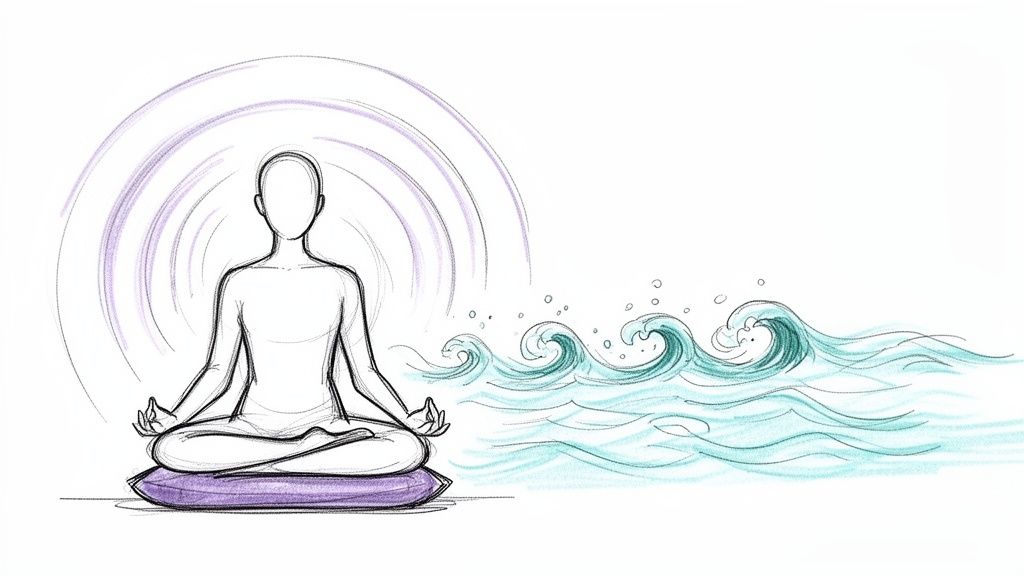
In a group setting, participants engage in guided practices like body scans, mindful breathing, and walking meditation. This shared experience normalizes the challenges of staying present and creates a calm, supportive space. The goal is not to eliminate cravings but to change one's relationship to them, reducing their power and building resilience against relapse.
How It Works: A Practical Example
A facilitator might introduce the concept of "urge surfing." The group is guided through a short meditation focusing on the breath. The facilitator then asks members to bring to mind a recent craving, noticing where they feel it in their body without trying to change it.
- Awareness: Acknowledge the craving is present ("I feel a tightness in my chest and my thoughts are racing about using.").
- Observation: Notice the physical and mental sensations as if they were waves, observing them rise, crest, and eventually fall.
- Non-Judgment: Practice self-compassion, reminding oneself that cravings are a normal part of recovery and do not need to be acted upon.
Group members share their experiences, noting how the intensity of the urge shifted when they simply observed it. This practice directly builds the skill of tolerating distress and breaking the link between trigger and use.
Actionable Tips for Facilitators
To run an effective mindfulness-based group, facilitators should:
- Start small with short, guided practices of 3-5 minutes and gradually increase the duration as the group becomes more comfortable.
- Offer variety by including sitting meditation, mindful walking, and body scan exercises to accommodate different comfort levels and learning styles.
- Normalize difficulty by acknowledging that minds wander and it can be hard to sit still. Emphasize that the practice is about gently returning focus, not achieving a perfectly clear mind.
- Provide take-home resources, such as recordings of guided meditations or links to apps like Headspace or Insight Timer, to encourage practice between sessions.
- Adapt for virtual settings by encouraging participants to find a quiet, comfortable space. Use clear audio and guide them to focus on physical sensations in their immediate environment to ground the practice.
10. Specialized Co-Occurring Disorder (Dual Diagnosis) Groups
Addressing the complex interplay between substance use and mental health conditions is a critical aspect of modern addiction treatment. Specialized Co-Occurring Disorder groups, often called Dual Diagnosis groups, are essential addiction group therapy ideas designed for individuals managing both a substance use disorder (SUD) and a concurrent mental health diagnosis like depression, PTSD, or bipolar disorder. This integrated approach acknowledges that the conditions are intertwined and must be treated simultaneously for sustainable recovery.
In these specialized groups, participants learn how their mental health symptoms can trigger substance use and vice versa. The group environment helps to destigmatize mental illness and medication, fostering a safe space where members can openly discuss the challenges of managing both conditions. The focus is on developing integrated coping strategies that address both sets of symptoms, rather than treating them as separate issues.
How It Works: A Practical Example
A facilitator might lead a discussion on the link between social anxiety and alcohol use. A group member shares their fear of social events and their pattern of drinking heavily beforehand to "loosen up."
- Co-Occurring Challenge: The member recognizes their anxiety leads to drinking, but also that hangovers and withdrawal worsen their anxiety, creating a vicious cycle.
- Integrated Skill-Building: The group brainstorms non-substance-based strategies for managing social anxiety. Ideas could include arriving with a sober friend, preparing conversation starters, or practicing mindfulness exercises before the event.
- Medication Education: The facilitator provides education on how prescribed anti-anxiety medication works and why it's a safer, more stable alternative to self-medicating with alcohol.
This process helps the member see the connection clearly and provides a practical, integrated toolkit for future social situations, directly addressing both the anxiety and the substance use.
Actionable Tips for Facilitators
To run an effective dual diagnosis group, facilitators should:
- Provide thorough psychoeducation on how specific mental health conditions (e.g., depression, anxiety) and substance use mutually reinforce one another.
- Normalize psychiatric medication as a valid and often necessary tool in recovery, addressing common fears and misconceptions.
- Use integrated interventions that target both SUD and mental health symptoms, such as using CBT to challenge depressive thoughts that trigger cravings.
- Coordinate care closely with psychiatrists and medical staff to ensure a cohesive treatment plan, especially regarding medication management.
- Teach members about medication-substance interactions to highlight the risks of mixing prescribed drugs with alcohol or illicit substances.
- Foster a non-judgmental atmosphere where members feel safe discussing mental health symptoms, medication side effects, and psychiatric crises without shame.
Addiction Group Therapy: 10-Method Comparison
| Approach | 🔄 Implementation complexity | ⚡ Resource & time | ⭐ Expected effectiveness | 📊 Typical outcomes / impact | 💡 Ideal use cases |
|---|---|---|---|---|---|
| Cognitive Behavioral Therapy (CBT) Group Sessions | 🔄🔄 Moderate — structured 8–12 wk curriculum | ⚡⚡ Moderate — trained facilitator; homework required | ⭐⭐⭐⭐ Strong evidence for SUDs | Practical coping skills, reduced triggers, lower relapse risk | Adults who prefer structured, skills-based work and can complete homework |
| Dialectical Behavior Therapy (DBT) Skills Groups | 🔄🔄🔄🔄 High — multi-module, team-based model (6+ months) | ⚡ Low — requires certified DBT therapists, phone coaching, clinician team | ⭐⭐⭐⭐⭐ Very effective for dual diagnosis and emotion dysregulation | Improved emotion regulation, relapse prevention, better co-occurring symptom control | Individuals with co-occurring mental health disorders, trauma, or severe dysregulation |
| Motivational Enhancement Therapy (MET) Groups | 🔄 Low — non-confrontational, brief model | ⚡⚡⚡ High efficiency — short (4–6) sessions, low infrastructure | ⭐⭐⭐ Effective for engagement and readiness to change | Increased treatment engagement/retention and short-term commitment to change | Early recovery, ambivalent or mandated participants needing motivation |
| Relapse Prevention Planning Groups | 🔄🔄 Moderate — plan-focused, practice-oriented | ⚡⚡ Moderate — brief modules, practice and role-play needed | ⭐⭐⭐⭐ High for preventing known relapse pathways | Concrete prevention plans, better warning-sign recognition, increased preparedness | Transitioning clients, those with prior relapse history, preparing for less structure |
| Trauma-Informed Recovery Groups | 🔄🔄🔄 High — safety-first, careful pacing | ⚡ Low — requires specialized training and possible adjunct individual therapy | ⭐⭐⭐⭐ Effective when trauma is addressed safely | Reduced retraumatization, improved safety and engagement, better long-term outcomes | Survivors of trauma or PTSD where addiction is trauma-linked |
| Peer-Led Recovery Support (12‑Step Adaptation) | 🔄 Low — peer-facilitated, community-driven | ⚡⚡⚡ Very efficient — low cost, widely available, ongoing | ⭐⭐⭐ Variable but strong long-term support potential | Sustained community support, social network, ongoing accountability | Those seeking long-term community/spiritual support and aftercare integration |
| Life Skills and Coping Strategy Groups | 🔄🔄 Moderate — practical skills curriculum | ⚡⚡ Moderate — diverse facilitators/guest speakers beneficial | ⭐⭐⭐ Good for functional recovery and stability | Improved employment, financial stability, daily functioning, reduced barriers | Working professionals, those rebuilding stability or entering workforce |
| Family and Relationship Recovery Groups | 🔄🔄🔄 High — multi-person coordination, boundary work | ⚡ Low — scheduling complexity; may need multiple clinicians | ⭐⭐⭐⭐ Strong impact on relapse prevention and relational repair | Reduced enabling, improved communication, strengthened support systems | Individuals with involved families or those addressing relationship contributors to use |
| Mindfulness and Meditation-Based Groups | 🔄🔄 Low–moderate — practice-based, adaptable | ⚡⚡ Moderate — minimal equipment; requires regular practice | ⭐⭐⭐⭐ Effective for stress, craving reduction, emotion regulation | Reduced craving intensity, improved impulse control, lower anxiety | High-stress/anxious individuals and those open to contemplative practices (with trauma modifications) |
| Specialized Co‑Occurring Disorder (Dual Diagnosis) Groups | 🔄🔄🔄 High — integrated psychiatric and addiction care | ⚡ Low — requires psychiatric coordination, specialized clinicians | ⭐⭐⭐⭐ Essential for many — improves overall outcomes | Better medication adherence, coordinated symptom management, reduced relapse risk | Individuals diagnosed with both SUD and psychiatric disorders needing integrated care |
Building a Personalized Path to Recovery
Recovery from addiction is unique to each individual and benefits from a personalized plan. Incorporating a blend of evidence-based modules maximizes growth and builds a resilient foundation. The following closing insights will help you apply these addiction group therapy ideas in real life.
Key Takeaways
- Holistic approach: Combining CBT, DBT and trauma-informed methods creates a well-rounded toolkit.
- Skills focus: Structured lessons on emotional regulation, relapse prevention and mindfulness translate directly into daily coping.
- Co-occurring care: Addressing mental health alongside substance use strengthens overall recovery outcomes.
- Family involvement: Engaging loved ones in group sessions improves communication and support networks.
- Peer-led support: Sharing lived experiences in 12-step adaptations enhances accountability and hope.
- Virtual access: Online formats break geographic limits and accommodate busy schedules.
Integrating Modalities Into Your Routine
Using these addiction group therapy ideas means fitting sessions into a realistic weekly schedule. Plan blocks for CBT skill drills, DBT distress tolerance exercises and mindfulness meditation. For example, slot a 60-minute relapse prevention meeting on Tuesdays and a 30-minute meditation practice on Fridays.
Keep a simple recovery journal to track which modality resonates most. After each group, note key insights, emotional shifts and any new coping techniques. Reviewing these entries helps you spot patterns, adjust your focus and celebrate small victories.
Actionable Next Steps
- Audit available groups: List each session type offered by your outpatient program or local clinic.
- Set goals: Define specific targets, such as improving distress tolerance or reducing cravings by tracking frequency.
- Create a schedule: Mix and match 45 to 60-minute sessions to cover CBT, DBT, trauma work and mindfulness weekly.
- Engage a sponsor or coach: Partner with a peer or professional to reinforce key exercises between sessions.
- Monitor progress: Use simple outcome measurements, like a craving scale or mood rating, to measure growth.
Why Mastering These Approaches Matters
Earning competence in diverse group-based therapies equips you with multiple strategies for stress, triggers and setbacks. As these skills become second nature, you gain confidence in managing life’s challenges without resorting to substance use.
Building Resilience and Community
A tailored recovery plan fosters deeper connections with peers and providers, reducing isolation and enhancing accountability. Shared experiences in structured groups build empathy and mutual support, laying the groundwork for lasting sobriety.
As you continue to combine and refine these addiction group therapy ideas, remember that flexibility and reflection are key. Your personalized path evolves over time, adapting to new goals, life stages and healing milestones.
Stay committed to growth, celebrate every win, and know that help, hope and real freedom are within reach.
Ready to take the next step in designing your recovery journey? Reach out to Altura Recovery to explore our customizable group therapy options. Visit Altura Recovery to learn how evidence-based addiction group therapy ideas can transform your path to lasting wellness.