When addiction takes hold in a family, it doesn’t just impact one person. It’s a quiet crisis that slowly unravels the entire family fabric, creating a ripple effect that leaves everyone feeling isolated, anxious, and exhausted.
If your daily life has become a cycle of worry, broken promises, and simmering tension, you're not alone. This guide is a practical roadmap, moving past the cold statistics to acknowledge the real emotional, financial, and relational turmoil families face. Structured support isn't just for the person struggling—it's essential for everyone involved.
The Reality of Addiction Within a Family
The consequences of a loved one's addiction are profound and far-reaching. Polling data shows that over half of all American adults (54%) report having a family member who has struggled with alcohol addiction.
For those directly affected, the strain is immense:
- 76% cite a negative impact on family relationships.
- 70% report damage to their own mental health.
- 57% experience significant financial strain.
You can explore the full study about the substance use crisis and its family impact for more details. These numbers simply confirm what countless families already know from personal experience: addiction reshapes every corner of life.
This infographic breaks down the three primary areas where families feel the weight of addiction.
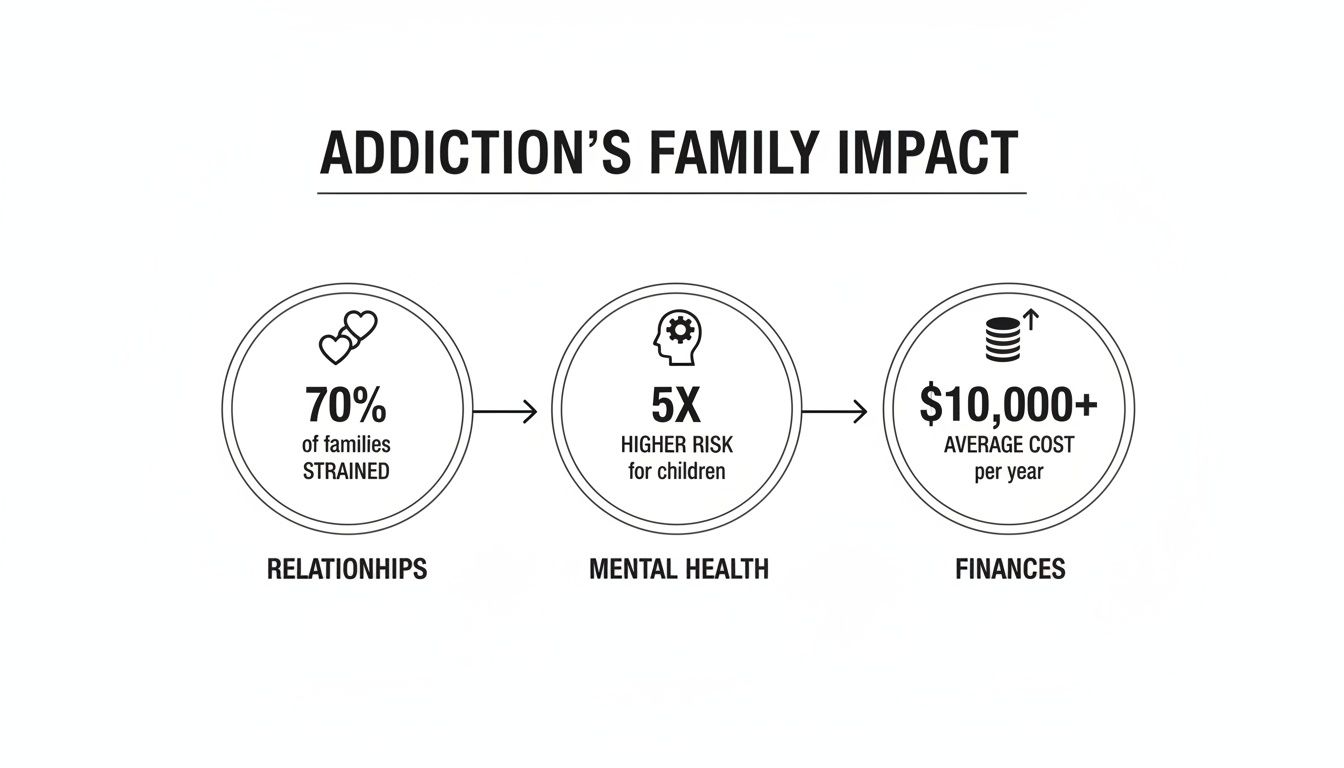
As you can see, the damage isn’t contained to a single area. It creates a compounded crisis that hits relationships, mental stability, and financial security all at once.
Why Family-Centered Approaches Are Essential
Because addiction harms the whole family system, healing has to be a collective effort. This is why family-centered approaches, like those we use at Altura Recovery, are so critical. They offer a path to recovery for everyone.
By treating addiction as a family issue, you address the underlying dynamics that may contribute to substance use. This creates a stronger, more resilient support system that is vital for long-term, sustainable recovery.
A family-focused approach concentrates on a few key goals:
- Rebuilding Trust: It creates a safe, mediated space to have the tough conversations needed to start repairing broken bonds.
- Improving Communication: Families learn healthier ways to express feelings and needs without falling into old patterns of blame or anger.
- Establishing Boundaries: Everyone learns how to set healthy limits that protect their own well-being while encouraging accountability from their loved one.
- Shared Education: Understanding the science of addiction helps the family move from frustration toward empathy and compassion.
When a family engages in this process together, they can finally stop the cycle of dysfunction. Instead of just surviving, you can start building a new foundation—one based on mutual support, honesty, and understanding. This guide will give you the actionable strategies you need to begin that healing journey.
How to Start a Difficult Conversation About Addiction

If your gut is telling you something is wrong, listen to it. That persistent knot of worry—sparked by a shift in their mood, strange absences, or secretive behavior—is usually pointing toward a real problem.
Approaching someone you love about a potential addiction is one of the hardest things you’ll ever do. But it's also an act of profound love and a vital first step. The goal isn’t to confront or accuse them. It’s simply to open a door for an honest conversation, maybe for the first time.
Success hinges on your timing, your tone, and how well you prepare. A calm, compassionate approach can be the difference between them shutting down completely and finally feeling safe enough to admit they need help.
Preparing for the Conversation
Don’t rush into this. A conversation sparked by a moment of anger or frustration will almost certainly backfire, triggering immediate denial and defensiveness. Before you say a single word, you need to get ready, both emotionally and practically.
Your job is to gather specific, non-judgmental facts. Vague accusations like, "You're always drinking!" are easy to swat away. Concrete examples are much harder to dispute.
- "I was really worried when you didn't come home until 3 a.m. last night and then missed our breakfast plans."
- "I’ve noticed you’ve had to borrow money twice this month after you said all the bills were covered."
- "When we were on the phone yesterday, your speech sounded slurred, and it made me concerned for your safety."
Notice how these statements focus on observable behavior and how it affected you. It’s a much gentler way in than a direct attack on their character. You should also think through their likely reactions—denial, anger, maybe even relief—and plan how you’ll respond calmly to each one. This mental rehearsal will help you stay grounded when emotions are running high.
Your primary goal is to express love and concern, not to win an argument or force a confession. You're planting a seed—showing them you are a safe person to turn to when they're ready.
Choosing the Right Time and Place
Timing is everything. Ambushing someone when they’re exhausted, stressed out, or possibly under the influence is a recipe for disaster. You need a setting that is private, comfortable, and free from any interruptions.
Look for a window when your loved one is sober, relatively calm, and might be more receptive. This could be over coffee on a quiet morning or during a relaxed weekend afternoon. Put your phones on silent, turn off the TV, and remove any other distractions. The environment itself should send a clear message: This is important, and you have my full attention.
Using “I” Statements to Communicate Concern
The words you choose will either build a bridge or a wall. The single most powerful tool for this conversation is the "I" statement. This technique frames the issue from your perspective, keeping the focus on your feelings instead of placing blame. It’s designed to minimize defensiveness and keep the conversation centered on care.
The difference is stark.
| Blaming "You" Statement (Avoid) | Caring "I" Statement (Use) |
|---|---|
| "You need to stop drinking so much. It's destroying this family." | "I feel scared when I see how much you're drinking. I'm worried about you." |
| "Why are you always lying about where you've been?" | "I feel hurt and confused when your plans change without explanation." |
As you can see, "I" statements get the same point across without sounding like an accusation. They invite empathy instead of sparking a fight.
Try opening the conversation with a simple, open-ended question like, "I'm worried about you. Can we talk about what's been going on?" This signals that you're here to listen, not to lecture—creating the best possible foundation for a productive dialogue.
Establishing Healthy Boundaries Without Guilt
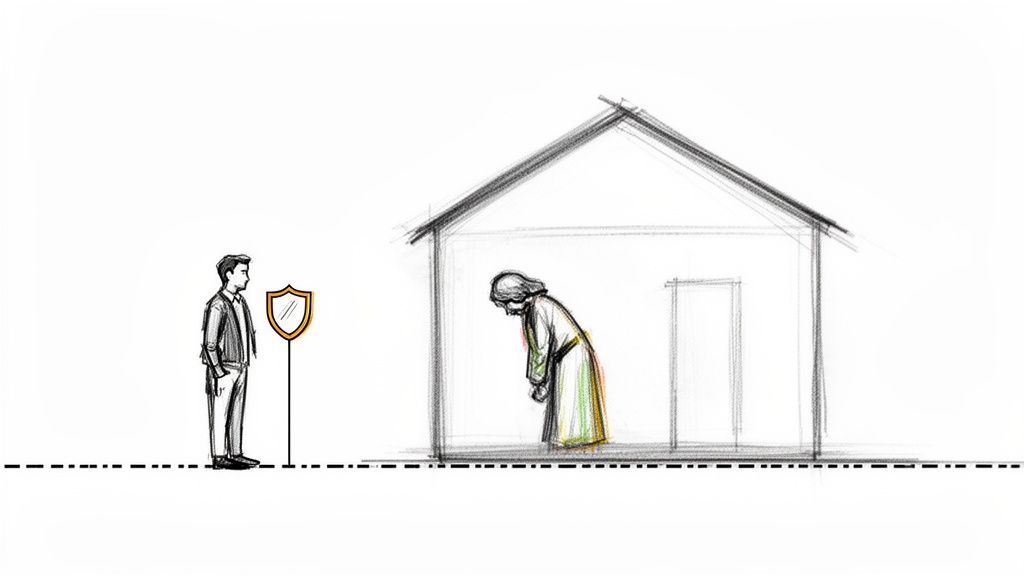
Loving someone with an addiction often feels like a painful balancing act. Your instinct is to help, to shield them from pain. But in trying to rescue them, you might accidentally be enabling the very behavior you want to stop. This is where boundaries become your most powerful tool for real change.
Setting a boundary isn’t about punishment; it’s an act of profound love for both your family member and yourself. It’s about drawing a line to protect your own mental, emotional, and financial health while letting your loved one feel the natural consequences of their choices. Often, this is the very thing that helps them finally see the true cost of their addiction.
Differentiating Support from Enabling
The first step is learning to see the crucial difference between genuine support and enabling. Support empowers recovery. Enabling, on the other hand, prolongs the addiction by sweeping away the consequences.
It’s a subtle distinction, but it changes everything. Think of it this way: Supportive actions help the person, while enabling behaviors help the addiction. Keeping this idea in mind can be a lifeline when you're in the middle of a crisis and unsure of what to do.
It can be tough to tell the difference in the heat of the moment. Here’s a table to make it clearer.
Supportive Actions vs Enabling Behaviors
| Scenario | Supportive Action (Promotes Recovery) | Enabling Behavior (Hinders Recovery) |
|---|---|---|
| Financial Distress | Offering to help them find a financial counselor or create a budget. | Giving them cash, paying their rent, or covering debts caused by their addiction. |
| Legal Trouble | Encouraging them to contact a lawyer and take responsibility. | Bailing them out of jail or paying their legal fines without any accountability. |
| Missed Obligations | Allowing them to face the consequences, such as explaining their absence to their boss. | Calling their employer to make up an excuse for why they missed work. |
| Emotional Support | Listening with empathy and encouraging them to seek professional treatment. | Minimizing the problem or making excuses for their destructive behavior. |
Seeing these side-by-side helps clarify your role. Your goal isn't to control them but to stop participating in the chaos addiction creates.
Designing Your Boundaries
The best boundaries are clear, consistent, and communicated calmly. They aren't threats you yell during an argument. They are calm, firm statements about what you will and will not do from now on.
Your boundaries need to be specific to your life and, most importantly, enforceable by you. Start by identifying the behaviors that are draining your energy and causing the most harm to you and your family.
Here are a few real-world examples of what healthy boundaries sound like:
- "I love you, and for that reason, I can no longer give you money."
- "You are always welcome in my home, but you cannot be here if you are under the influence."
- "I will no longer lie to your boss or anyone else to cover for you."
- "I am always ready to drive you to a therapy appointment or a support group meeting."
Notice the pattern? These statements are firm but still loving. They focus on your actions, which is the only thing you can truly control.
Boundaries are not about controlling your loved one's behavior. They are about choosing how you will respond to their behavior to protect your own well-being and encourage their recovery.
Communicating Boundaries and Managing Guilt
Once you’ve decided on your boundaries, the next step is to communicate them clearly and without apology. Find a time when your loved one is calm and sober. Explain that you're doing this because you love them and want them to get well, but you also need to protect yourself.
Be prepared for pushback. They might get angry, try to manipulate you, or beg you to change your mind. This is where your resolve will be tested. Do not argue, defend, or negotiate your boundaries. Simply restate them calmly. If the conversation gets heated, it's okay to walk away and say you can talk later when things are calm.
Feeling guilty is almost a given, especially at first. When that wave of guilt hits, remind yourself that you are not causing their pain; the addiction is. By holding firm, you are breaking a toxic cycle and creating the space needed for real change to begin. Learning to set these limits is a skill, and there are great resources out there like these teaching boundaries activities that can help foster respect and personal space.
Ultimately, maintaining your boundaries is one of the most powerful and supportive things you can do. It sends a clear message: you believe in their ability to recover, but you also affirm that you deserve to live a life free from the chaos.
When to Bring in Professional Family-Centered Treatment
Trying to navigate a loved one’s addiction on your own can feel like you're lost at sea without a compass. While setting boundaries and learning to communicate better are huge first steps, there often comes a point where professional guidance is the only way to truly heal the family unit.
This is where family-centered treatment comes in. It’s a game-changer for lasting recovery.
Addiction is often called a "family disease" for a good reason—it doesn't just impact one person; it throws the entire system off balance. Over time, unhealthy dynamics, roles, and communication patterns take root, often without anyone even realizing it. Professional treatment offers a structured, safe space to untangle these complexities and start building a healthier future, together.
What Does Family-Centered Care Actually Look Like?
When you engage in professional addiction family support, you're doing more than just showing up for a few meetings. You're diving into a therapeutic process designed to heal relationships, arm everyone with knowledge, and build a rock-solid foundation for sobriety. The focus shifts from just treating the individual’s substance use to addressing the entire family dynamic.
This kind of care typically includes a few key pieces:
- Family Systems Therapy: This isn't just group chat. It's a specific type of counseling that sees the family as a single emotional unit. A therapist helps everyone see the roles they've unconsciously fallen into—the enabler, the hero, the scapegoat—and guides the family toward healthier, more balanced ways of interacting.
- Educational Workshops: These sessions are invaluable. They teach you about the science of addiction, what the recovery process really looks like, and the tricky nature of codependency. Understanding the "why" behind the disease helps replace blame and frustration with empathy and effective support.
- Communication Coaching: A therapist acts as a guide, teaching family members how to use "I" statements, practice active listening, and share their needs constructively. It's about learning to talk to each other without falling back into the old, painful patterns of conflict.
As you look into professional treatment, it’s also smart to get a handle on your health insurance coverage. Take some time to familiarize yourself with Essential Health Benefits (EHBs). These are mandated by the Affordable Care Act and include coverage for mental health and substance use disorder services, which can make a huge difference.
Healing the Whole Family System
Here's the core idea behind family-centered treatment: for a person to sustain recovery, their home environment has to become a place of stability and support. If they return to the exact same stressful dynamics that fueled their substance use in the first place, the risk of relapse skyrockets.
Collective healing isn't just a nice bonus; it's essential for long-term success.
This process helps everyone involved by:
- Rebuilding Broken Trust: It creates a mediated space to work through past hurts and betrayals. With a professional guiding the conversation, these difficult talks can be productive instead of destructive.
- Redefining Family Roles: It helps family members break free from unhealthy roles and start relating to one another as individuals again, which is where genuine connection happens.
- Creating a Unified Front: The family learns to operate as a team, all aligned on the goal of supporting recovery instead of unintentionally working against each other.
Protecting the Youngest Family Members
Addiction's impact is especially tough on children. The instability and emotional chaos of living in a home affected by substance use can leave lasting scars, sometimes creating a cycle that continues for generations.
The impact of parental substance use disorders on American children is a pressing public health challenge. Research shows that almost 19 million U.S. children lived with at least one parent or primary caregiver who had a substance use disorder. Learn more about these critical findings from the NIH.
Professional family-centered treatment is one of the most powerful tools we have to break this cycle.
It gives kids a voice, helps them process their feelings in an age-appropriate way, and shows them what a healthy family looks like. This kind of intervention can soften the long-term negative impacts, helping them build resilience and avoid developing their own substance use or mental health issues down the road. You’re not just healing your family for today—you’re protecting its future.
Building Your Own Support Network for Self-Preservation
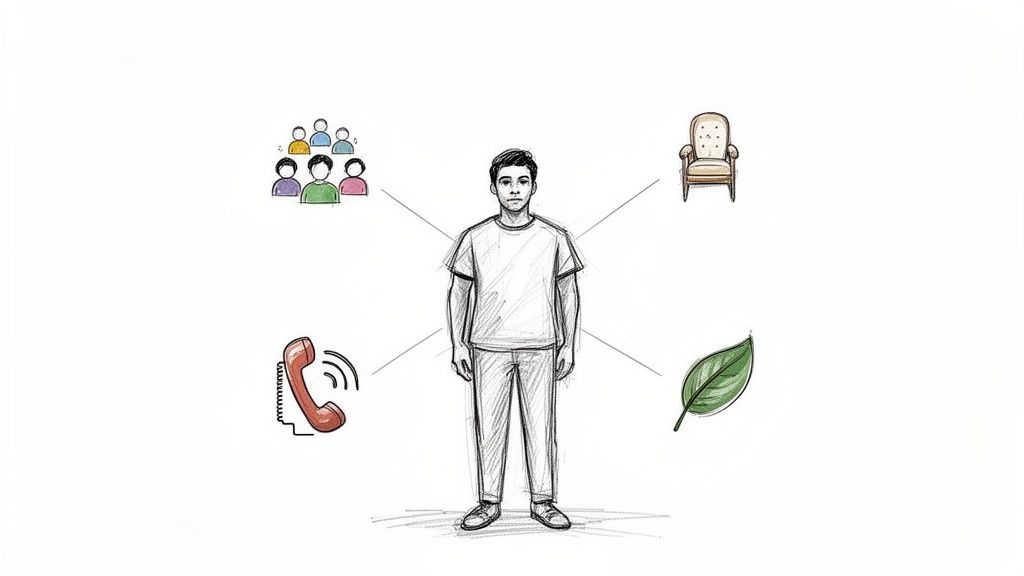
Supporting a loved one through addiction is a marathon, not a sprint. Trying to run it alone is a surefire way to burn out. You simply cannot pour from an empty cup. Building your own support system isn't selfish—it's an act of self-preservation that allows you to offer help from a place of strength, not exhaustion.
This network becomes your emotional lifeline. It’s what gives you the reinforcement you need to manage the stress, process the grief, and protect your own well-being. It’s just as vital as the professional care your loved one receives.
Finding People Who Get It
One of the hardest parts of loving someone with an addiction is the feeling that no one could possibly understand what you’re going through. This is exactly why peer support groups designed for families are so powerful. They connect you with people walking the same difficult path.
Two of the most well-known and effective resources are:
- Al-Anon: A fellowship for friends and family members of people with alcoholism. The focus is entirely on your healing and coping strategies, regardless of whether your loved one is seeking treatment.
- Nar-Anon: A similar program designed for those affected by a loved one's drug addiction. It provides a safe, anonymous space to share your experiences and learn from others who have been there.
These groups offer a unique kind of addiction family support by validating your feelings of anger, guilt, and sadness. You learn you aren’t alone, and you pick up new ways to cope and detach with love—which is essential for your own mental health.
You didn’t cause it, you can’t control it, and you can’t cure it. This well-known Al-Anon principle is a freeing reminder to release the burden of responsibility for your loved one’s addiction and focus on your own healing.
The Importance of Individual Therapy
While peer groups offer community, individual therapy provides personalized, professional guidance. Working with a therapist who specializes in family dynamics and addiction can give you tools tailored to your specific situation.
A good therapist can help you:
- Process complex emotions: Address feelings of grief, anger, and betrayal in a confidential setting.
- Reinforce boundaries: Help you practice setting and holding firm to the healthy boundaries you've established.
- Address codependency: Identify and work through any codependent patterns that may be harming your well-being.
- Develop coping mechanisms: Learn practical strategies for managing the immense stress and anxiety that come with this experience.
Think of therapy as your personal training ground. It’s where you build the emotional muscle you need to stay resilient through this long and often unpredictable journey.
Prioritizing Your Personal Well-Being
Beyond formal support, your daily self-care habits are what will sustain you. These are not luxuries; they are fundamental necessities for survival when you're in a constant state of high alert.
Your well-being plan should be simple and practical.
- Protect Your Physical Health: Prioritize sleep, eat nourishing meals, and move your body regularly. Stress takes a physical toll, and a healthy body is better equipped to handle it.
- Stay Connected to Your Life: Don't let your loved one's addiction consume your entire world. Make time for friends, hobbies, and activities that bring you joy and a sense of normalcy.
- Find Healthy Outlets for Stress: Whether it's journaling, meditating, walking in nature, or listening to music, find a consistent practice that helps you release tension.
Building this network for yourself is the most proactive step you can take. It empowers you, protects you from burnout, and ultimately makes you a more effective and resilient source of support for the person you love.
Taking the First Step Toward Family Healing
Navigating a loved one's addiction is a marathon, not a sprint. Every step you've already taken—from that first difficult conversation to setting firm boundaries—is more than just a reaction. You’re building a foundation for healing, piece by piece. These actions aren't isolated; they connect to form a clear path forward for the entire family. You have far more influence on this journey than you might realize.
The hard truth is that most people struggling with a substance use disorder never get professional help. Of the 52.6 million people who needed treatment recently, only a staggering 23% actually received it. That gap is where families come in. You are often the primary motivator and the strongest pillar of support, which is why your involvement is one of the most critical parts of recovery. You can find more details in these addiction treatment statistics that highlight just how vital your role is.
Your consistent, supportive actions can be the very thing that helps your loved one finally say yes to help.
Creating a Unified Path Forward
When you bring all these strategies together, you create a powerful, unified front. The goal shifts from simply getting your loved one to stop using to healing the entire family system. This isn't about one person's problem anymore; it's about everyone getting the chance to thrive again.
This unified approach works best when a few key actions are in harmony:
- Consistent Communication: Keep using "I" statements to share your feelings without placing blame. It keeps the conversation open and honest.
- Maintained Boundaries: Hold firm to the limits you’ve set. This consistency creates a stable environment and encourages accountability.
- Ongoing Self-Care: Your well-being is non-negotiable. Stay connected to your support system, whether that's Al-Anon, therapy, or just a few trusted friends.
When these pieces click into place, the home environment can transform from chaos to stability. That stability provides the best possible launchpad for long-term recovery.
Your Next Step with Altura Recovery
Recognizing you need professional guidance isn't a sign of failure—it's a sign of strength. The path of addiction family support is incredibly complex, and having an expert partner can make all the difference. At Altura Recovery, we don't just treat the individual in isolation. We work with the entire family to rebuild trust, improve communication, and heal together.
Taking that first step toward professional help can feel intimidating, but it's the most hopeful move you can make. It's an investment in a future where your entire family can find peace and recovery.
Our outpatient programs are designed to integrate into your real life. We offer flexible scheduling and specialized approaches like family systems therapy to address the unique dynamics that addiction creates. We’re here to build a personalized plan that supports everyone involved.
When you’re ready, reaching out is simple. Contact Altura Recovery for a confidential, no-pressure consultation. Let us help you and your loved ones take the first real step toward healing, growth, and lasting freedom.
Common Questions About Family Support and Addiction
When you're navigating a loved one's struggle with addiction, the questions can feel endless and overwhelming. These aren't simple problems with easy answers; they're deeply emotional and complex. Below, we've tackled some of the most pressing questions that come up for families, offering clear, compassionate guidance based on years of experience.
What if My Loved One Refuses to Get Help?
This is one of the most common—and heartbreaking—realities families face. You've offered support, pleaded, and researched, but they still say no. When this happens, your focus has to shift from persuading them to protecting yourself and the healthy structure you’ve worked to build.
It’s crucial to continue enforcing the boundaries you’ve set. This isn’t about punishment; it’s about preventing you from unintentionally shielding them from the natural consequences of their actions.
Your energy is best spent on what you can actually control:
- Your own well-being: Don't stop going to your support groups, like Al-Anon or Nar-Anon. These are your lifeline.
- Your own healing: You and other family members deserve support, too. Individual or family therapy can be a game-changer.
- Your response: Step away from arguments and rescue missions. Constant conflict drains your energy and rarely leads to a breakthrough.
Sometimes, a person has to hit a personal low before they become willing to accept help. While it’s painful to watch, it can be a necessary part of the process. A professionally guided intervention can be a powerful tool, but it must be planned with an addiction specialist to ensure it's both safe and effective.
How Can I Support My Loved One Without Enabling Them?
It's a tough line to walk. The difference between genuine support and enabling can feel blurry in the moment. The key is to ask yourself: does my action promote their recovery, or does it make it easier for their addiction to continue?
Support involves actions that encourage responsibility and healing. Enabling involves actions that unintentionally shield the person from the consequences of their addiction. You are supporting the person, not the addiction.
Think of it this way: support is offering a ride to a therapy appointment, showing up for a family session, or celebrating a recovery milestone with them. It’s a vote of confidence in their ability to get well.
Enabling, on the other hand, looks like giving them cash you suspect will go toward drugs, calling their boss with a fake excuse for their absence, or cleaning up their messes so no one else finds out.
What Is the Role of Family Therapy in Addiction Recovery?
Addiction doesn't just damage the person using; it sends shockwaves through the entire family system. That’s why family therapy is so vital for lasting recovery. Its purpose is to heal the whole unit, not just the individual.
A skilled therapist creates a safe, structured space where you can finally tackle the issues that have been simmering under the surface.
In these sessions, families learn how to:
- Spot and change unhealthy communication habits.
- Set and maintain clear, respectful boundaries.
- Process feelings of betrayal and start rebuilding trust.
- Understand the science of addiction, which helps replace judgment with empathy.
This process gives every family member a voice and a role in creating a healthier dynamic. It dramatically improves the chances of long-term recovery by transforming the home environment into a stable, supportive foundation for healing.
At Altura Recovery, we know that recovery is a team effort. Our programs are designed with the whole family in mind, offering the tools and guidance everyone needs to heal and move forward together. To learn more about how our outpatient services can help your family, visit us at https://www.alturarecovery.com.