The abstinence violation effect (AVE) is that crushing wave of guilt and self-blame that hits after you have a slip-up in recovery. It’s the voice in your head that turns one mistake into a total catastrophe, whispering that you’ve failed completely and might as well give up.
This isn’t just feeling bad about a lapse. It’s a powerful psychological reaction that can hijack your recovery, turning a minor detour into a full-blown relapse, all thanks to an “all-or-nothing” mindset.
Understanding What Drives the AVE
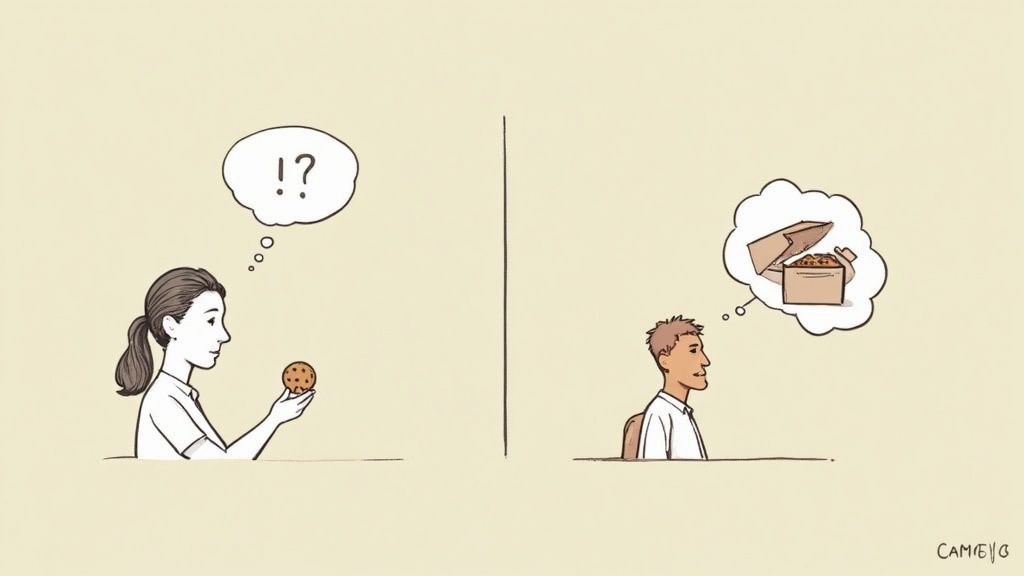
Think about it like this: you’ve been on a strict diet for a month, feeling great. Then, at a party, you eat a single brownie. Instead of just acknowledging it and moving on, your inner critic screams, "You've already blown it, so you might as well eat the whole tray." That leap from a single choice to abandoning your goal entirely? That's the abstinence violation effect in action.
This isn't a sign of weakness; it's a predictable psychological trap. It’s fueled by two core mental processes that, once you understand them, lose a lot of their power.
Cognitive Dissonance in Recovery
Cognitive dissonance is the intense mental static you feel when your actions don't line up with your values. When you’ve committed to sobriety but then have a drink, your brain is suddenly forced to hold two clashing ideas at once: "I am a person in recovery," and "I just did the very thing I promised myself I wouldn't do."
This clash creates serious psychological tension. To make the discomfort go away, it often feels easier to change the belief ("I guess I'm not really cut out for this") than to undo the action you just took. This mental gymnastics makes it feel logical to just keep going with the lapse.
The Role of Personal Attribution
The second driver is personal attribution—how you explain the reason for the slip-up. When the AVE takes hold, you’re far more likely to blame the lapse on some permanent, internal flaw in your character instead of seeing it as a mistake influenced by circumstances.
Your thoughts might sound like this:
- "I failed because I'm just not strong enough."
- "See? I have zero willpower."
- "I knew I was going to mess this up eventually."
This kind of self-blame turns the lapse from a one-time event into proof of a personal failing. It demolishes your self-efficacy—your belief in your own ability to succeed—and makes getting back on track feel pointless.
The abstinence violation effect is a major player in relapse rates across the board. Research shows that approximately 40% to 60% of people who have a lapse will go on to have a full relapse within their first year, largely because of the psychological fallout from the AVE. You can dig deeper into these findings at prairieviewpsychology.ca.
By spotting these thought patterns, you can start to understand https://alturarecovery.com/blog/what-does-relapse-mean-in-mental-health and begin to reframe a lapse for what it is: a learning opportunity, not a life sentence. That mental shift is the key to building the resilience you need for long-term recovery.
The Psychological Trap of a Single Lapse

Why does one small slip in recovery so often feel like a total catastrophe, pushing you right back to square one? It's not a lack of willpower. The answer lies in a powerful psychological vortex that can turn a minor misstep into a perceived failure.
This vortex is known as the abstinence violation effect, and it thrives on a few specific thought patterns that trap you in a cycle of self-blame and hopelessness.
At the heart of the trap is a cognitive distortion called all-or-nothing thinking. This rigid mindset frames your recovery journey as a simple pass-or-fail test. You're either perfectly abstinent or a complete failure—there’s absolutely no middle ground.
When you're caught in this black-and-white perspective, a single lapse isn't just a mistake; it's definitive proof that you've failed the entire exam. This mindset immediately flips a switch in your brain from "I'm succeeding" to "I've failed," making it feel logical, even inevitable, to abandon all your progress.
The Mental Static of Cognitive Dissonance
This all-or-nothing belief system pours fuel on the fire of cognitive dissonance—the intense mental discomfort that kicks in when your actions conflict with your goals. You hold the belief, "I am committed to my recovery," but your recent action says, "I just had a slip-up."
Your brain scrambles to resolve this contradiction because holding two opposing ideas is psychologically exhausting. The easiest way to quiet the static is to change one of the beliefs. Instead of seeing the lapse as a temporary error, the abstinence violation effect convinces you to change your core belief about yourself.
- Before the lapse: "I am strong and capable of staying sober."
- After the lapse: "I guess I'm not strong enough after all."
This mental shift doesn't just resolve the dissonance; it gives you a permission slip to continue the lapse. If you've already decided you're a failure, then having another drink or placing another bet no longer conflicts with your new, negative self-perception.
When a Mistake Becomes Your Identity
The final piece of this psychological puzzle is personal attribution. This is how you explain the cause of the lapse to yourself. Under the influence of the abstinence violation effect, you don’t attribute the slip to external factors like stress or a high-risk situation. Instead, you turn the blame inward, making it about who you are as a person.
A lapse becomes proof of a permanent, personal flaw rather than a temporary, situational mistake. It’s the difference between thinking, "I made a bad choice," and believing, "I am a bad person."
This internalization is incredibly destructive. It convinces you that the problem isn't your behavior but your very character. Thoughts like, "I'm just too weak for this," or "I was bound to fail eventually," start to dominate your thinking.
This constant self-criticism erodes your self-efficacy, which is your belief in your own ability to succeed. And when you stop believing you can achieve recovery, your motivation plummets.
The intense feelings that follow—guilt, frustration, and deep disappointment—can feel overwhelming. In fact, learning to navigate the powerful emotions of guilt and shame in recovery is a critical skill for preventing a lapse from escalating. You can explore this topic further in our guide on how guilt and shame affect the recovery journey.
Together, these three forces—all-or-nothing thinking, cognitive dissonance, and negative personal attribution—create a powerful psychological vortex. They pull you from a manageable, single lapse into a downward spiral that feels impossible to escape. Recognizing this trap for what it is—a predictable pattern of thinking, not a reflection of your worth—is the first and most critical step toward breaking free.
How AVE Shows Up in Real Life
The abstinence violation effect isn’t some dry psychological theory—it's a deeply personal experience that can derail even the most committed recovery journey. Seeing how it plays out in the real world is the key to defusing its power. The pattern is painfully familiar: a small lapse triggers a tidal wave of guilt, which then fuels the decision to abandon recovery completely.
These scenarios aren't about a lack of willpower. They are classic examples of the abstinence violation effect in action, where the psychological reaction to a mistake becomes far more destructive than the mistake itself.
A Common Scenario in Alcohol Recovery
Imagine Sarah, sober for six months. She’s at her best friend's wedding, a social minefield packed with triggers. She skillfully navigates the cocktail hour with a soda, but during the toasts, someone presses a glass of champagne into her hand. Feeling cornered and wanting to blend in, she takes a single sip.
Instantly, shame crashes down on her. Her inner voice flips from supportive to vicious.
"You've completely failed. Six months of hard work down the drain for one stupid sip. You're just not cut out for this. Since you've already ruined your sobriety, what's the point of stopping now?"
This all-or-nothing thinking is the engine of AVE. Instead of framing the sip as a manageable slip-up, Sarah sees it as a total, irreversible failure. The crushing guilt and self-blame make the thought of continuing to drink feel almost logical. It feels easier to lean into the "failure" than to face the discomfort of her mistake. Tragically, that single sip spirals into several more drinks, leading to a multi-day relapse. Recognizing the early warning signs of alcohol addiction and the thought patterns that precede them is essential to preventing such spirals.
When AVE Appears in Behavioral Addictions
The abstinence violation effect isn't just limited to substance use. It's an equally powerful force in behavioral addictions, like gambling.
Consider Mark, who is in recovery for a gambling addiction. He's successfully avoided betting for nearly a year by blocking websites and staying clear of casinos. One day, bored and restless, he downloads a sports betting app, telling himself he'll "just look at the odds." He places a small, seemingly harmless $10 bet on a game. He loses.
The loss isn't the real problem; the psychological fallout is. Mark is swamped by frustration and self-loathing. He doesn't think, "That was a mistake, I need to delete this app." Instead, the AVE script kicks in:
- All-or-Nothing Thinking: "A whole year of progress is gone. I'm back at square one."
- Personal Attribution: "I'm just weak. I'll never be able to beat this."
- Cognitive Dissonance: To resolve the conflict between his recovery goal and his action, he abandons the goal. "I've already failed, so I might as well try to win my money back."
This kind of thinking creates a permission slip to keep going. Mark spends the rest of the night chasing his losses, digging himself into a much deeper financial and emotional hole. The initial $10 lapse became the catalyst for a major relapse because of how he interpreted the event, not the event itself.
These mental traps are known as cognitive distortions—flawed ways of thinking that feel true in the moment but don't hold up to scrutiny. Understanding them is the first step toward challenging them.
Cognitive Distortions Driving the Abstinence Violation Effect
| Cognitive Distortion | AVE-Driven Thought Example | Healthier Reframe |
|---|---|---|
| All-or-Nothing Thinking | "I had one drink, so my sobriety is ruined. I might as well keep drinking." | "One drink is a slip, not a failure. I can stop right now and get back on track." |
| Catastrophizing | "This one mistake proves I'll never recover. My whole life is a mess now." | "This is a difficult moment, but it doesn't define my future. What's one thing I can do right now?" |
| Personalization | "I slipped up because I'm a weak person and a failure." | "I made a mistake in a challenging situation. It's about my behavior, not my worth as a person." |
| Emotional Reasoning | "I feel so guilty and ashamed, so it must mean I've failed completely." | "Feelings aren't facts. I feel guilty, and that's okay, but I can still make a better choice for myself." |
Recognizing these thought patterns as they happen gives you the power to pause and choose a different response—one rooted in self-compassion instead of self-sabotage.
The Role of AVE in Eating Disorders
The abstinence violation effect also plays a critical role in eating disorders, where strict, rigid rules around food create fertile ground for guilt and shame. Someone recovering from binge eating disorder might follow a structured meal plan for weeks. Then, at an office party, they eat a brownie that wasn't on their plan.
This single deviation can trigger an intense AVE response. The person might feel overwhelming guilt, convinced they've completely failed their recovery. This feeling of failure then justifies a full-blown binge, as the all-or-nothing mindset tells them their efforts are now pointless. In fact, this link is well-documented. A 2018 survey found that 72% of individuals in recovery from eating disorders reported a major spike in guilt and shame right after a lapse in their dietary plan. You can read more about these findings at ninayashin.com.
Across all these examples, the theme is the same. The initial slip is not the catastrophe; the avalanche of shame, guilt, and catastrophic thinking that follows is what turns a minor setback into a major relapse. Recognizing this pattern is the first step toward responding with self-compassion instead of self-destruction.
Your Action Plan for Overcoming a Lapse
A lapse doesn't have to spiral into a full-blown relapse. Those first few moments after a slip-up are absolutely critical, but they're also moments where you have the power to steer things back on course. Instead of letting the abstinence violation effect take the wheel, you can use a clear, practical plan to get back on track right away.
This isn’t about pretending the lapse never happened. It's about responding to it with skill and self-compassion, turning a moment of weakness into a powerful learning opportunity. The key is to break the cycle of guilt and shame before it picks up speed.
As the visual below shows, a simple lapse can quickly snowball into a full relapse, mostly because of the intense psychological pressure that follows.
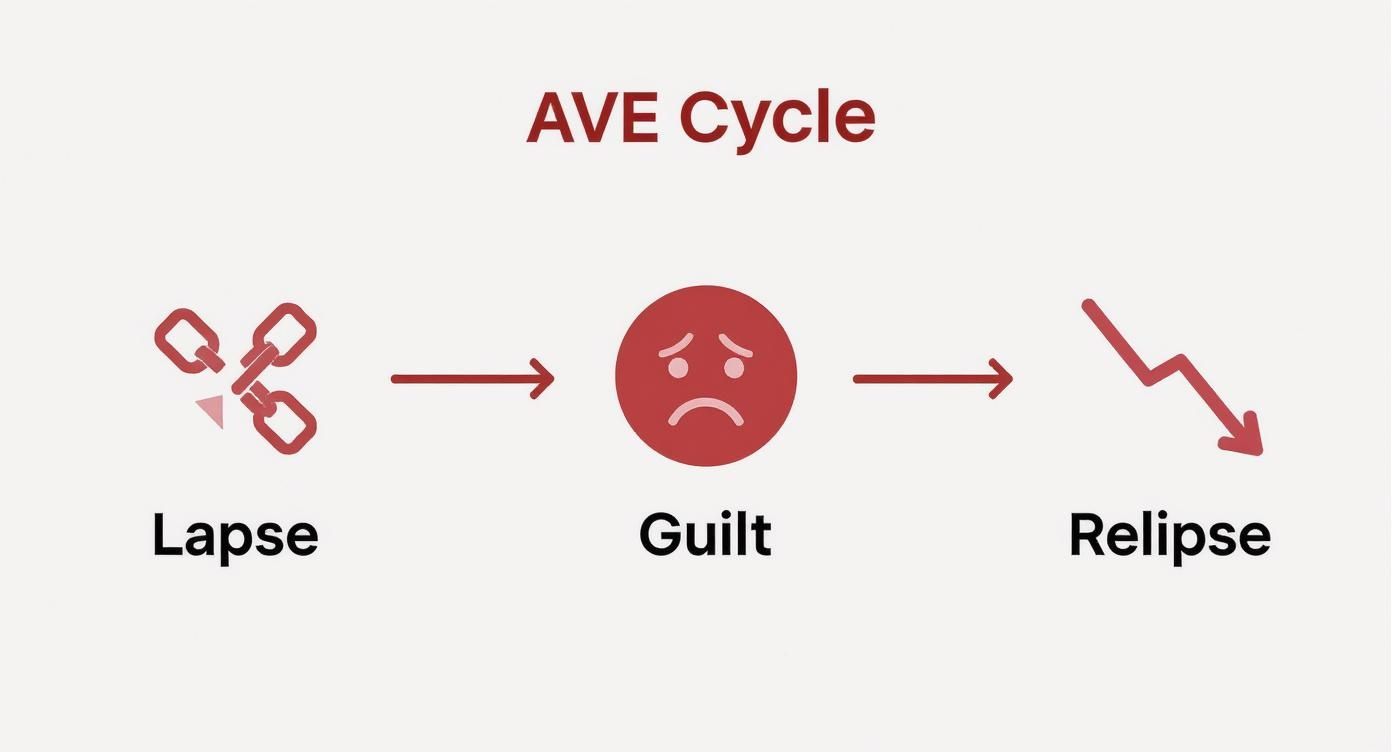
This flow illustrates how the real danger isn't always the initial slip itself. It's the crushing wave of guilt that can make you feel like you might as well give up entirely.
Step 1: Immediately Pause and Reframe
The first instinct after a lapse is usually panic, quickly followed by a brutal inner critic. Your very first move should be to intentionally hit the pause button. Don't make another decision while you're flooded with those feelings of guilt or shame.
Instead of letting catastrophic thoughts like, "I've ruined everything," take over, it's time to practice cognitive reframing. This just means you're consciously challenging that first, negative interpretation of what happened.
A lapse is not a moral failure; it is a data point. It provides valuable information about your triggers, your coping skills, and the situations that put your recovery at risk.
Treat the slip-up like a scientist would treat an unexpected experiment result—with curiosity, not judgment. Start gathering that data by asking yourself some objective questions:
- What was going on right before the lapse? (Where were you? Who was with you?)
- What emotions were you feeling? (Stressed, lonely, bored, angry?)
- What was the thought process that led to the decision?
This simple shift in perspective pulls you out of the role of a "failure" and puts you back in the driver's seat as someone actively participating in their own recovery, learning and adjusting as you go.
Step 2: Practice Radical Self-Compassion
The abstinence violation effect feeds on shame. Your most powerful weapon against it is self-compassion. This isn't about making excuses for what you did; it's about treating yourself with the same kindness and understanding you'd offer a good friend in the exact same spot.
Shame tells you that you are bad. Self-compassion acknowledges that you did something you regret, but it separates that action from your worth as a person.
Here are two quick exercises you can use to activate self-compassion right now:
- Mindful Self-Compassion Break: Place a hand over your heart, take a deep breath, and silently repeat these phrases: "This is a moment of suffering. Suffering is a part of life. May I be kind to myself in this moment."
- Talk to Yourself Like a Friend: Literally ask yourself, "What would I say to a friend who is going through this?" You'd almost certainly offer support and encouragement, not criticism. Give yourself that same grace.
Step 3: Activate Your Lapse Response Plan
Waiting until a crisis hits to figure out what to do is a recipe for disaster. A proactive Lapse Response Plan is a pre-written guide you create when you're feeling calm and clear-headed. It takes all the guesswork out of the equation when you're feeling your most vulnerable.
Your plan should be simple and easy to follow. It could include things like:
- Key Contacts: A list of three to five trusted people to call, like a sponsor, therapist, or a supportive family member.
- Safe Actions: A short list of healthy things you can do immediately, like going for a walk, listening to a specific playlist, or journaling.
- Important Reminders: A few sentences you’ve written to your future self, reminding you of your recovery goals and that one lapse doesn't erase all your progress.
Having this plan ready means you can shift into constructive action instead of getting stuck spinning in shame. The goal is to connect with support and use healthy coping mechanisms as quickly as possible. Developing a strong toolkit of what healthy coping mechanisms are is a fundamental part of building a resilient recovery. Check out our guide on building these essential skills to make your plan even stronger.
This structured approach is backed by larger health initiatives. A WHO report, for example, emphasizes how vital it is to build psychological support and coping strategies into any program to help manage the abstinence violation effect and boost long-term success. You can see more on countering the abstinence violation effect through these methods. By reframing what happened, practicing self-compassion, and activating a plan you already made, you can stop the AVE in its tracks and turn a potential crisis into a foundation for a stronger, more resilient recovery.
Building Long-Term Resilience to Setbacks
True recovery isn’t about chasing a perfect, unbroken streak of abstinence. It’s about building the muscle to get back up after a setback, stronger and wiser than before. Proactively developing this resilience is your best defense against the powerful psychological pull of the abstinence violation effect.
Instead of just waiting for a lapse to happen, you can build a strong foundation that softens its impact if it does. This means shifting your mindset, preparing for challenges, and proving to yourself that you are more than capable of lasting change. It’s about becoming the architect of your own recovery, fully equipped to handle whatever comes your way.
Dismantling the Perfectionist Mindset
The abstinence violation effect absolutely thrives on perfectionism. That “all-or-nothing” thinking that turns a single slip into a full-blown relapse is rooted in the toxic belief that recovery has to be flawless. The very first step in building resilience is to tear down that impossible standard.
Recovery is a human process. That means it’s going to be messy and imperfect. Your goal should always be progress, not perfection.
By setting realistic, human-centered expectations, you reframe the entire journey. A lapse is no longer a sign of total failure but an expected part of the learning process—an opportunity to gather data and adjust your strategy.
This mindset shift is incredibly liberating. It lifts the immense pressure of being perfect and allows you to approach setbacks with curiosity and self-compassion instead of shame and self-blame.
Identifying and Planning for High-Risk Triggers
Resilience isn't just about bouncing back; it's about anticipating challenges so you're less likely to get knocked down in the first place. This requires getting brutally honest about your personal high-risk triggers—the specific situations, emotions, or people that make you feel the most vulnerable.
Once you know what they are, you can build a tailored plan to navigate them. This proactive approach puts you back in the driver's seat.
- Situational Triggers: If you know weddings are a tough environment, create a game plan beforehand. Maybe you bring a sober friend, have a pre-written exit line ready, or decide to attend for only a short period.
- Emotional Triggers: If stress or loneliness reliably sparks cravings, develop a go-to list of healthy coping mechanisms. This could be calling a supporter, going for a run, or losing yourself in a creative hobby.
- Social Triggers: If certain friends or family members tend to encourage risky behavior, you might need to set clear boundaries or limit your time with them while you build a stronger foundation.
Having a plan in place for these moments means you’re not making critical decisions when your defenses are low. You’re just executing a strategy you created when you were feeling strong and clear-headed.
Building Unshakeable Self-Efficacy
Self-efficacy is your core belief in your own ability to succeed, and it is a cornerstone of long-term recovery. The abstinence violation effect systematically destroys this belief by framing a lapse as proof that you're just not strong enough. You fight back by actively collecting evidence of your own strength and capability.
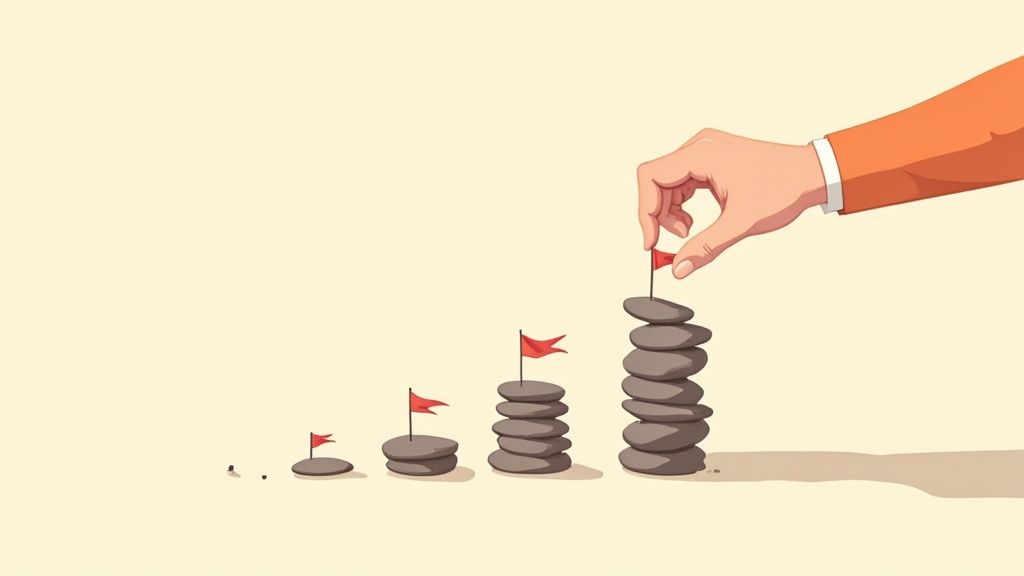
How? By setting and achieving small, consistent goals. Each tiny victory acts as a building block, reinforcing the belief that you can trust yourself.
Instead of getting overwhelmed by a goal like "staying sober forever," concentrate on achievable daily targets:
- Attend one support group meeting this week.
- Call your sponsor or therapist every day for just five minutes.
- Do a healthy stress-relief activity for 15 minutes each evening.
Every single time you meet one of these small goals, you provide your brain with concrete proof of your commitment and ability. This creates a positive feedback loop that steadily builds the kind of unshakeable self-efficacy that can withstand the psychological blow of a future lapse.
Engaging in therapies like Cognitive Behavioral Therapy (CBT) can sharpen these skills even further. CBT gives you the mental tools to challenge and reframe the destructive thought patterns that fuel the abstinence violation effect. By combining a strong support system with these proven therapeutic strategies, you create a robust, multi-layered defense that supports genuine resilience and lasting recovery.
Got Questions About the Abstinence Violation Effect?
Navigating recovery means you’ll have questions about the psychological curveballs life can throw. The Abstinence Violation Effect (AVE) is one of the most common yet confusing experiences, so let’s clear up a few key points to help you understand it inside and out.
Is a Lapse the Same Thing as a Relapse?
No, and this distinction is absolutely critical. A lapse is a single, isolated slip-up—like having one drink after a period of sobriety. A relapse, on the other hand, is a full-blown return to old, destructive patterns of use.
The abstinence violation effect is the psychological bridge that can turn a temporary lapse into a total relapse. It’s that voice in your head that says, "Well, you've already blown it," flooding you with guilt and all-or-nothing thinking. That feeling often convinces people they've failed completely, making it seem pointless to get back on track.
Does Experiencing the Abstinence Violation Effect Mean I Failed?
Absolutely not. Experiencing the AVE doesn’t mean you’ve failed; it means you’re human. It's a predictable psychological reaction to a setback, not a statement about your character, your willpower, or your chances of long-term recovery.
Think of it as a cognitive bug, not a personal flaw. The thoughts and feelings that come with AVE—shame, guilt, catastrophic thinking—are incredibly common but ultimately distorted. Recognizing this pattern for what it is is the first step toward shutting it down.
When you understand AVE, you can learn to see a lapse as just a data point—a moment to learn about your triggers and strengthen your coping skills—rather than as the final verdict on your journey.
Can AVE Happen with Behavioral Addictions, Too?
Yes, absolutely. The abstinence violation effect isn't just about substance use. It's a powerful force in any recovery process that involves stopping a specific behavior.
You see it play out in challenges like:
- Gambling Addiction: Placing one small bet can trigger the feeling that all progress is lost, leading directly to a much larger betting spree.
- Eating Disorders: Breaking a strict food rule can spark intense guilt and a subsequent binge, often driven by the thought, "I've already ruined my diet anyway."
- Compulsive Shopping: Making one unplanned purchase can easily spiral into a larger spending event fueled by feelings of failure and hopelessness.
The underlying psychological engine—cognitive dissonance and crushing self-blame—is the exact same in all these scenarios.
What’s the Best Way to Stop AVE in Its Tracks?
The single most effective strategy is to have a plan before a lapse even happens. When you're caught in a moment of intense shame and guilt, it’s nearly impossible to think clearly. That's why a pre-made Lapse Response Plan is your best defense.
Keep your plan simple and actionable. It should include things like calling your sponsor or therapist immediately, consciously practicing self-compassion instead of beating yourself up, and reframing the slip as a learning opportunity, not a catastrophe. By acting fast, you can interrupt the negative thought spiral before it gathers steam and turns a manageable mistake into a major setback.
At Altura Recovery, we understand that recovery is a journey of resilience, not perfection. Our expert team provides the tools and compassionate support needed to navigate challenges like the abstinence violation effect and build a strong foundation for lasting sobriety. If you're ready to find real healing and growth, learn more about our outpatient programs.