
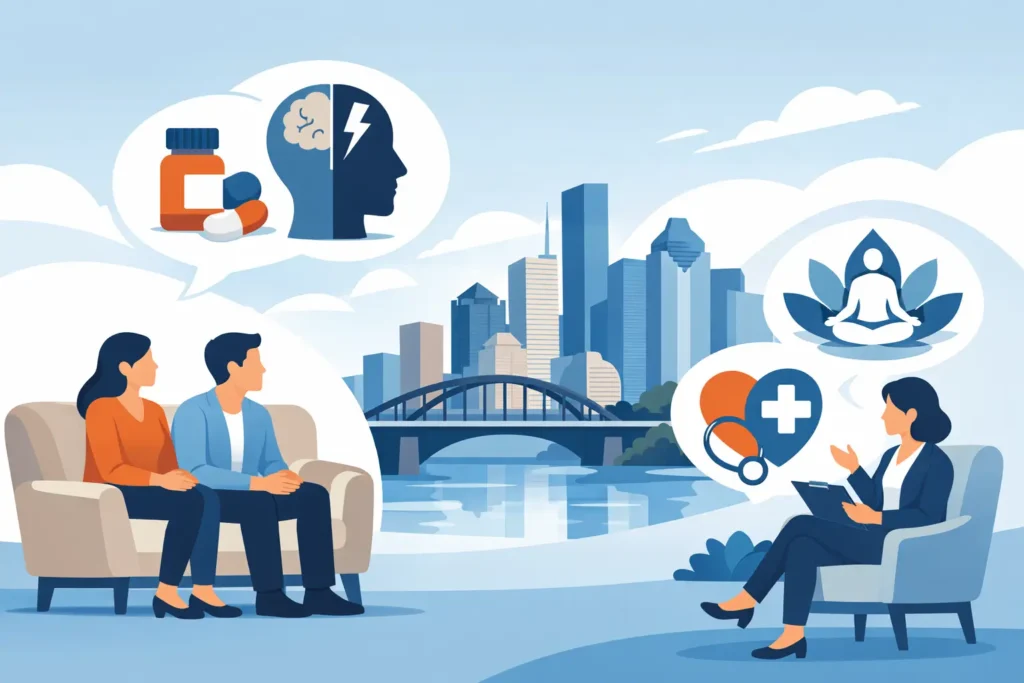
Trying to stop using while anxiety, depression, trauma, or mood swings are still running the show can feel like pushing uphill every day. That is why dual diagnosis treatment Houston clients often need is not just addiction treatment with a few therapy sessions added on. It is integrated care that addresses substance use and mental health at the same time, with enough structure to support change and enough flexibility to fit real life.
For many people, the pattern is familiar. Drinking or drug use may start as a way to sleep, calm down, focus, numb out, or get through social situations. Over time, the substance use creates more problems, while the underlying mental health symptoms keep pulling in the same direction. When treatment only addresses one side of that cycle, progress can stall. People may stay sober for a short stretch but still feel emotionally overwhelmed, or they may stabilize psychiatrically without building the recovery skills needed to prevent relapse.
Why dual diagnosis treatment in Houston needs to be integrated
A co-occurring disorder means a person is dealing with both a substance use disorder and a mental health condition. That can include alcohol addiction and depression, opioid use and PTSD, stimulant misuse and anxiety, or many other combinations. The exact diagnosis matters, but the bigger point is that each condition can intensify the other.
This is where integrated treatment matters. If therapy focuses only on substance use, it may miss the panic, grief, trauma, or attention problems driving the behavior. If care focuses only on mental health, it may not fully address cravings, triggers, relapse patterns, and the impact of substances on mood and decision-making. Good treatment looks at the whole picture instead of treating symptoms in separate lanes.
That whole-person approach is especially important in outpatient care. Many adults, students, and young people in Houston cannot simply step away from work, school, parenting, or family obligations for an extended residential stay. They need treatment that is clinically serious but still realistic. A strong outpatient model can provide therapy, psychiatric support, recovery structure, and practical life stabilization while clients continue living in their own environment.
What effective dual diagnosis treatment Houston programs include
The best care is rarely one-size-fits-all. Someone stepping down from detox may need a high level of support at first, while someone catching the problem earlier may do well in an intensive outpatient setting. What matters most is that the treatment plan reflects the person in front of you, not a generic checklist.
A solid dual diagnosis program usually includes individual therapy, group therapy, and psychiatric care when appropriate. Individual sessions help clients understand the connection between symptoms, stress, relationships, trauma, and substance use. Group work gives structure, accountability, and a chance to practice honesty and emotional regulation with others who understand the process. Psychiatric support can help assess whether medication may reduce depression, anxiety, mood instability, sleep disruption, or other symptoms that interfere with recovery.
Trauma-informed care also matters. Not everyone with a substance use disorder has a trauma history, but many do. When treatment ignores that reality, people can feel misunderstood or pushed too fast. Trauma-informed care does not mean avoiding hard work. It means building safety, pacing treatment thoughtfully, and helping clients develop coping skills before expecting them to confront painful material head-on.
Evidence-based approaches such as cognitive behavioral therapy, dialectical behavior therapy skills, relapse prevention planning, motivational work, and family support can all play an important role. The right combination depends on the person. Some clients need help managing intrusive thoughts and panic. Others need support rebuilding daily routines, repairing trust at home, or learning how to tolerate emotions without escaping them.
Outpatient care can work when it matches the level of need
One of the biggest misconceptions about treatment is that outpatient means less serious care. In reality, outpatient treatment can be highly structured and clinically effective, especially for people who need to stay connected to everyday responsibilities.
Partial Hospitalization Programs, or PHP, offer a more intensive schedule while still allowing clients to return home at the end of the day. Intensive Outpatient Programs, or IOP, provide strong therapeutic support with greater scheduling flexibility. General outpatient therapy can then help maintain progress over time. This step-down model often gives people the best chance at lasting recovery because support evolves as stability grows.
That said, outpatient treatment is not right for every situation. If someone is medically unstable, at high risk of self-harm, or unable to stay safe outside a supervised setting, a higher level of care may be necessary first. Good providers are honest about that. The goal is not to force every client into one program. The goal is to place each person in the level of care that gives them the best chance to recover and rise.
Signs a person may need dual diagnosis support
Sometimes the need is obvious. A person may already have a mental health diagnosis and know that substance use is making it worse. Other times, it is less clear. A loved one may look like they are only dealing with addiction, when in fact untreated depression, trauma, bipolar symptoms, or severe anxiety are shaping the entire pattern.
A few signs often point toward co-occurring issues. Substance use may increase during periods of emotional distress. Attempts to quit may lead to intense mood symptoms that seem bigger than ordinary stress. A person may swing between periods of control and periods of crisis. They may isolate, struggle at work or school, lose motivation, or have trouble managing sleep, anger, fear, or relationships even when they genuinely want help.
Families often notice these patterns before the person does. They see the way drinking changes after a panic attack, or how drug use follows conflict, shame, or emotional shutdown. When both conditions are in play, blaming, minimizing, or treating it as a willpower problem usually makes things worse. Compassion paired with clinical structure is far more effective.
What to look for in a Houston provider
If you are comparing programs, look beyond marketing language. Ask whether mental health and addiction are treated together by the same clinical team. Ask how psychiatric care is coordinated with therapy. Ask whether the program is trauma-informed, what levels of outpatient care are available, and how treatment plans are tailored to adults, teens, or young adults with different needs.
Flexibility matters too, especially in a city as large and demanding as Houston. Long commutes, work shifts, school schedules, and family responsibilities can all affect whether a person actually stays engaged in treatment. A program should be structured enough to create momentum, but practical enough that attendance and consistency are realistic.
It also helps to ask how the provider handles relapse, family involvement, and long-term planning. Recovery is rarely linear. A strong program does not treat setbacks as failure. It uses them as information, helping clients understand what happened, strengthen coping skills, and re-engage with care quickly.
For many people in Houston and surrounding communities, the right setting is one that supports real-world reintegration rather than pulling them completely out of daily life for an extended period. That is where comprehensive outpatient recovery services can be especially valuable. With the right level of support, people can practice new skills where they actually live, work, study, and relate to others.
Recovery gets stronger when treatment addresses the life around the symptoms
Mental health and addiction treatment cannot stop at symptom reduction alone. Sobriety matters. Stabilization matters. But meaningful recovery also includes learning how to live differently.
That may mean rebuilding a daily routine, improving emotional regulation, returning to school, showing up more consistently at work, or creating healthier boundaries in relationships. It may mean learning how to tolerate boredom, disappointment, loneliness, or success without reaching for a substance. It may also mean finding support that continues after the most intensive phase of treatment ends.
This is where recovery coaching, family support, life skills work, and holistic services can make a real difference. They help bridge the gap between clinical insight and everyday action. When people begin to experience clarity, consistency, and self-trust, treatment stops feeling like crisis management and starts becoming transformation.
At Altura Recovery, that kind of change is the point. Comprehensive outpatient care should not only help people get through the immediate crisis. It should help them build a life that feels more manageable, more grounded, and more free.
If you or someone you love is struggling with both mental health symptoms and substance use, the right next step is not to figure everything out alone. It is to find care that sees the full picture and treats it with skill, compassion, and structure.