Some people know exactly what is wrong, but not why nothing seems to stick. They may stop drinking for a few weeks, then crash into panic, depression, insomnia, or rage. Or they may start therapy for anxiety, yet keep using substances to get through the day. Dual diagnosis treatment exists for this exact situation – when substance use and mental health symptoms are tangled together and need care at the same time.
When only one part gets treated, the other often keeps the cycle going. A person might get sober but feel emotionally flooded. They might stabilize their mood for a while but continue using alcohol or drugs in ways that undermine progress. Effective care looks at the full picture, not just the most visible symptom.
What dual diagnosis treatment means
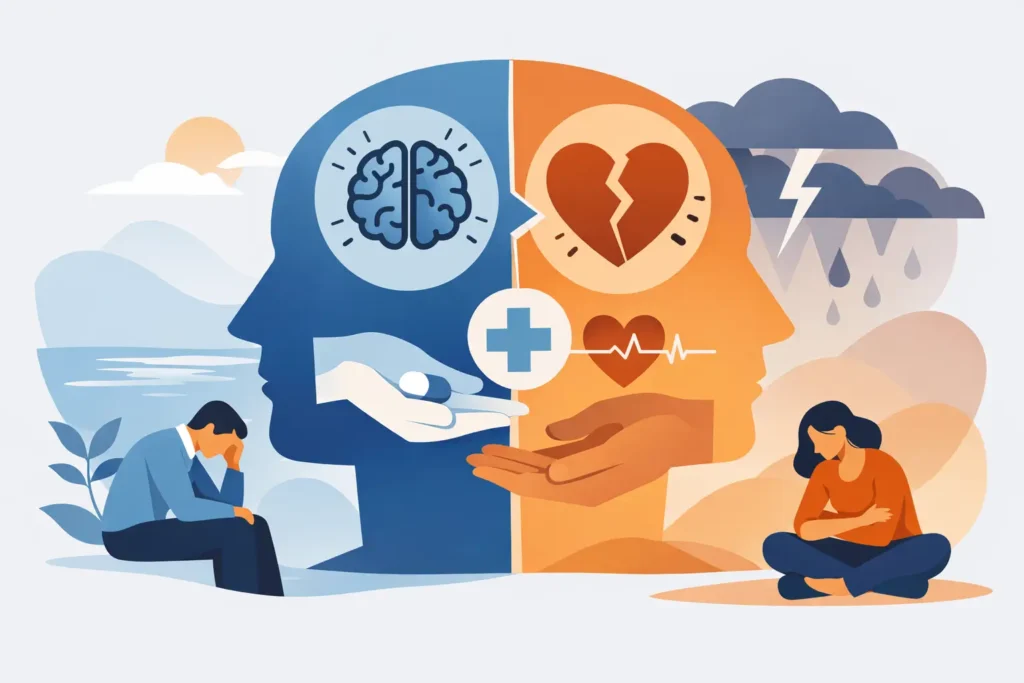
Dual diagnosis treatment is designed for people living with both a substance use disorder and a mental health condition. That may include alcohol addiction and depression, opioid use and PTSD, stimulant misuse and anxiety, or other combinations. The key point is not the label. It is that both issues affect each other, and both need structured attention.
This matters because co-occurring conditions rarely behave in a simple, linear way. Substance use can intensify psychiatric symptoms, and mental health struggles can increase cravings, impulsivity, and relapse risk. In some cases, symptoms begin before substance use. In others, substance use worsens or helps trigger emotional instability. Often, it is a mix of both.
That is why an integrated approach tends to work better than fragmented care. Instead of telling someone to get sober first and deal with anxiety later, or to fix their depression before addiction can be addressed, dual diagnosis care treats the overlap directly.
Why treating both at once matters
A person using substances may look unmotivated, resistant, or inconsistent from the outside. But sometimes what is really happening is untreated trauma, bipolar symptoms, panic attacks, ADHD, grief, or severe shame. Likewise, someone in mental health treatment may appear to be “not responding,” when substance use is quietly interfering with sleep, mood, medication, and judgment.
Treating both conditions together improves the odds of real stability. It can help reduce relapse, support better emotional regulation, improve relationships, and make therapy more effective. It also gives people language for what they are experiencing. That alone can be relieving. There is a big difference between thinking, “I keep failing,” and understanding, “There are two active conditions here, and both deserve treatment.”
This kind of care is especially valuable for people who need to keep living real life while they recover. Students, working professionals, parents, and young adults often cannot step away from everything for months at a time. Outpatient treatment can provide structure, therapy, psychiatric support, and accountability while allowing someone to stay connected to work, school, or family responsibilities.
What dual diagnosis treatment often includes
No two treatment plans should look exactly alike. Still, strong dual diagnosis treatment usually includes a few core pieces working together.
Clinical assessment and individualized planning
The first step is a careful assessment, not a quick assumption. Clinicians need to understand substance use history, mental health symptoms, trauma exposure, family dynamics, medical needs, relapse patterns, and current functioning. Timing matters too. Some symptoms may shift once substances are reduced. Others may reveal a longer-standing psychiatric concern that was never fully addressed.
A good treatment plan responds to that complexity. It is not one-size-fits-all, and it should change as the person does.
Therapy that addresses substance use and mental health together
Integrated therapy helps clients understand how thoughts, emotions, behaviors, and triggers connect. Evidence-based approaches may include cognitive behavioral therapy, dialectical behavior therapy skills, trauma-informed therapy, motivational interviewing, and relapse prevention work. For some people, group therapy is where insight clicks. For others, individual therapy is where they finally feel safe enough to be honest.
The right mix depends on the person. Someone with unresolved trauma may need a slower pace and stronger stabilization before deeper trauma work. Someone with severe anxiety may need practical coping tools early so they can tolerate recovery without self-medicating.
Psychiatric and medication support
Medication can be helpful, but it is rarely the whole answer. In dual diagnosis care, psychiatric support may involve evaluating current prescriptions, addressing sleep issues, managing withdrawal-related symptoms, or treating underlying conditions such as depression, bipolar disorder, or anxiety disorders.
This is an area where nuance matters. Not every person with co-occurring disorders needs medication, and not every medication is a good fit for someone in recovery. Careful monitoring, honest communication, and coordination across the treatment team are essential.
Structure and accountability
People do better when treatment is consistent enough to interrupt chaos. Depending on need, that might mean a Partial Hospitalization Program, an Intensive Outpatient Program, or standard outpatient therapy with recovery support. Higher structure can help clients coming out of detox or inpatient care. Lower levels of care may fit those who are stable enough to work or attend school while still needing regular clinical support.
For many people, this middle ground is where treatment becomes sustainable. They receive meaningful care without disappearing from daily life.
Signs someone may need dual diagnosis treatment
Not everyone recognizes the pattern right away. Sometimes family members see it first. A person may benefit from dual diagnosis treatment if they keep relapsing after mental health crises, use substances to sleep or calm down, experience intense mood swings alongside drinking or drug use, or struggle to make progress in therapy because substance use keeps interfering.
It may also be the right fit when sobriety brings a wave of emotional symptoms that feel hard to manage alone. That does not mean treatment is failing. It often means deeper issues are finally surfacing and need support.
Common challenges during recovery
Integrated treatment is effective, but that does not mean it feels easy. Early recovery can be messy. A person may grieve the loss of substances before they trust healthier coping skills. They may feel embarrassed by their diagnosis or worry that needing both addiction and mental health treatment means their situation is worse than other people’s.
It is not worse. It is simply more layered.
There can also be practical challenges. Work schedules, family obligations, transportation, and finances all affect access to care. That is one reason flexible outpatient services matter so much, especially in a large city like Houston where daily responsibilities do not pause for treatment. The best programs recognize that recovery has to function in real life, not just in theory.
What families should understand
Families often ask whether the mental health issue caused the addiction or the addiction caused the mental health issue. Sometimes that can be sorted out over time. Sometimes it cannot, at least not neatly. What matters most is that both are active and both need attention.
Loved ones can help by avoiding moral language and focusing on patterns, safety, and support. Shame tends to drive secrecy. Clear boundaries and family involvement, when appropriate, can strengthen treatment and reduce chaos at home. Recovery is deeply personal, but it is rarely strengthened by isolation.
What progress actually looks like
Progress in dual diagnosis treatment is not always dramatic at first. Sometimes it looks like sleeping through the night. Telling the truth in group. Making it to work consistently. Learning how to sit with anxiety without using. Not texting an ex during a spiral. Taking medication as prescribed. Leaving a triggering environment earlier than usual.
These changes may seem small from the outside, but they are often the foundation of long-term freedom. Real healing is built through repeated, steady shifts in how a person copes, relates, and responds.
For people looking for outpatient support in Houston, programs that combine evidence-based addiction care, trauma-informed therapy, psychiatric support, and practical life rebuilding can make a real difference. Altura Recovery is one example of a provider built around that integrated model.
The most hopeful truth about dual diagnosis care is also the most grounding one: you do not need to have every answer before starting. If substance use and mental health symptoms keep feeding each other, that is enough reason to reach for treatment that addresses both with clarity, structure, and compassion.