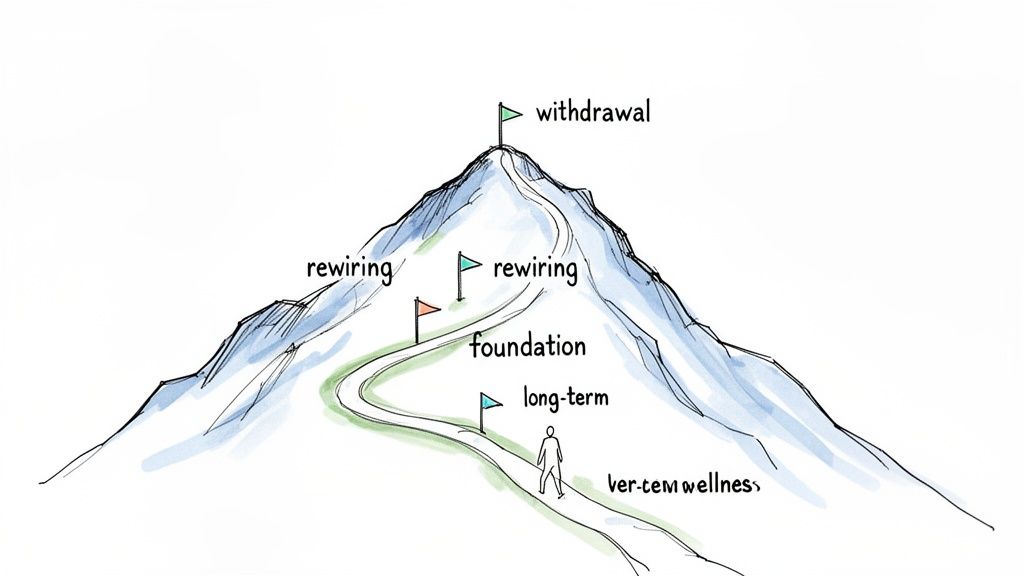
Deciding to get sober can feel like you’re staring at a mountain, unsure of the path ahead. The alcohol recovery timeline isn’t a single straight line, but it does follow a series of predictable stages that mark your progress from the first tough days of detox to long-term, stable wellness. Knowing these phases helps turn that intimidating mountain into a manageable climb, one step at a time.
Mapping Your Journey to Sobriety
Think of recovery from alcohol use disorder as a gradual ascent. The initial climb is almost always the steepest and most demanding part. But as you keep going, the path gets clearer, and the view from higher up becomes more and more rewarding. While everyone’s experience is deeply personal, these core stages offer a reliable map of what to expect.
This process is about more than just not drinking; it’s a profound recalibration of your brain and body. Chronic alcohol use literally rewires your brain’s communication system, creating deep-seated dependencies. The recovery timeline tracks how your brain methodically repairs those connections, rebuilds healthy pathways, and relearns how to function without alcohol.
The 5 Key Stages of the Alcohol Recovery Timeline
The journey from active alcohol use to sustained sobriety is generally organized into five distinct phases, each with its own focus, challenges, and milestones. Understanding where you are on this timeline can empower you to anticipate hurdles and, just as importantly, celebrate your progress.
Here’s a quick overview of the main stages you’ll encounter:
| Recovery Stage | Typical Duration | Primary Focus |
|---|---|---|
| Acute Withdrawal | 5-10 Days | Medical stabilization and safely managing physical symptoms. |
| Post-Acute Withdrawal | 2 Weeks – 2 Years | Managing emotional and psychological symptoms as the brain heals. |
| Early Recovery | 1-6 Months | Building foundational sobriety skills and new coping mechanisms. |
| Maintenance | 6 Months – 5 Years | Integrating sober habits into your identity and preventing relapse. |
| Long-Term Recovery | 5+ Years | Thriving in sobriety and pursuing personal growth. |
Recognizing these signposts helps demystify the process. Instead of facing a chaotic and unpredictable future, you can see a structured path forward, which is exactly what this guide will break down for you.
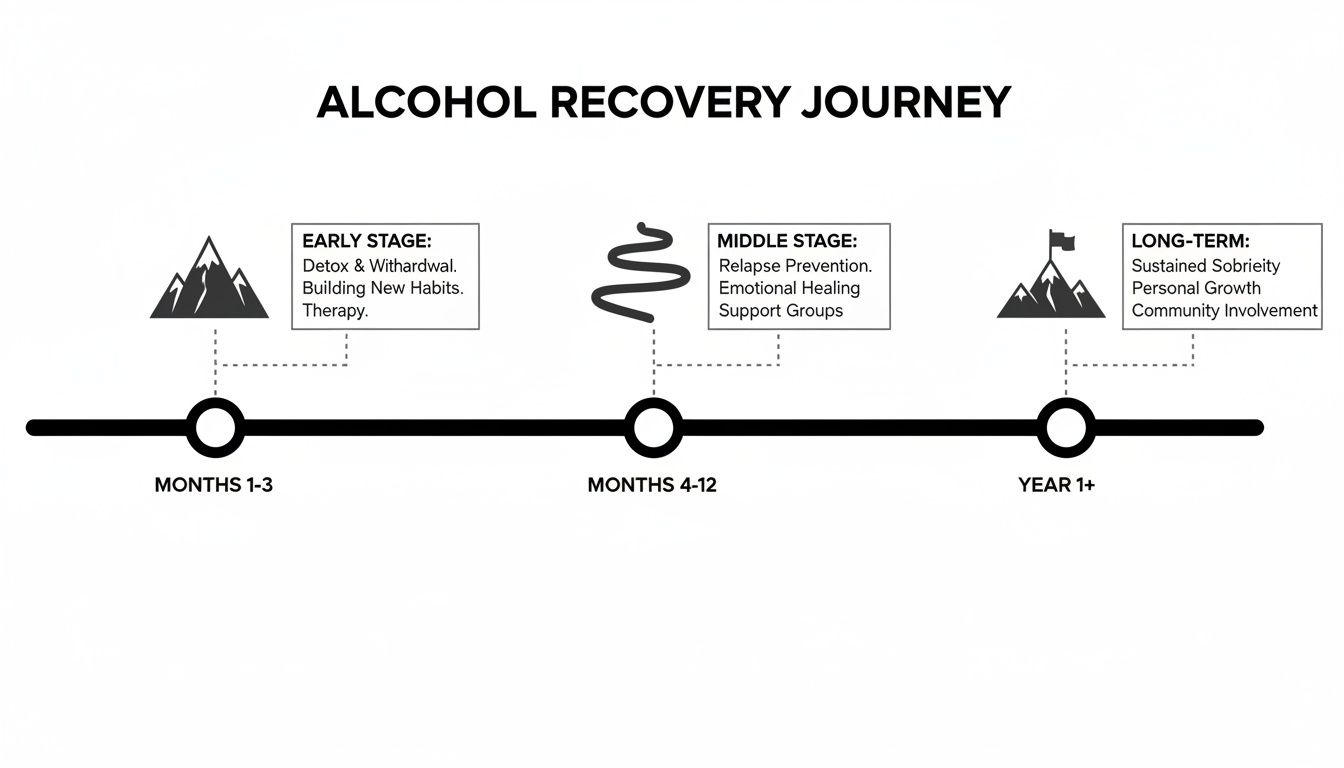
This visual timeline helps illustrate how the most intensive effort is concentrated at the very beginning of the journey. That hard work upfront is what paves the way for a more stable, manageable, and fulfilling life in sobriety.
It’s crucial to remember that recovery isn't a race. It’s a commitment to a new way of living, one where you prioritize your health and well-being.
Each stage you move through is a victory. It represents significant progress in healing your mind and body from the effects of alcohol. It’s about reclaiming your health, one day at a time.
With a clear map in hand, you can navigate each phase with more confidence and clarity. Let's break down exactly what to expect in each one.
The First 72 Hours: Navigating Acute Alcohol Withdrawal
The journey on the alcohol recovery timeline kicks off with its most physically demanding stage: acute withdrawal. This is your body's powerful, immediate backlash to the absence of a substance it’s learned to depend on. It’s an intense but necessary process as your system starts to heal and recalibrate.
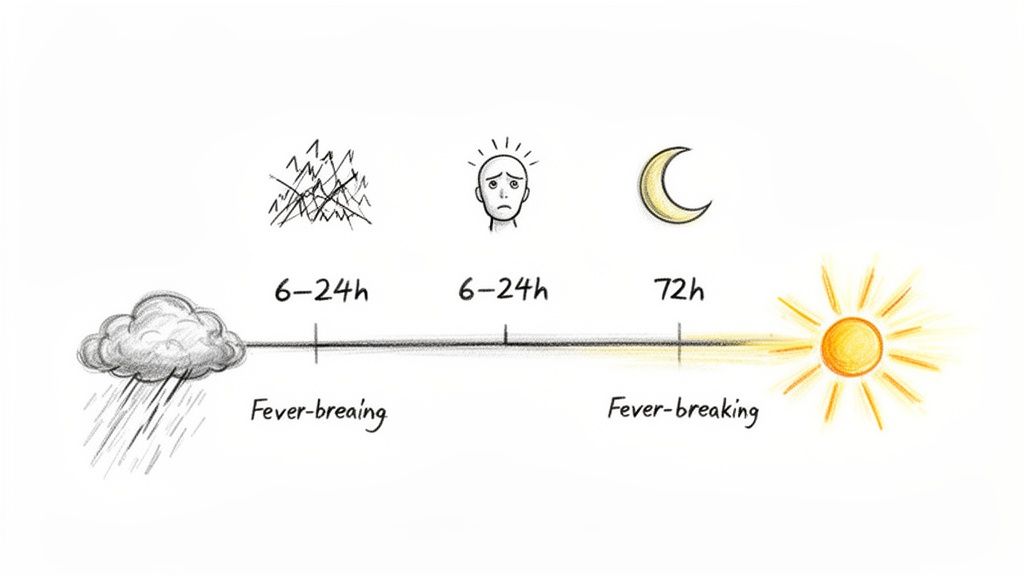
This phase usually starts within 6 to 24 hours after your last drink. During this time, your central nervous system, which alcohol had been suppressing, rebounds into a state of overdrive. This sudden, jarring shift is what triggers the first wave of withdrawal symptoms.
What to Expect in the First 24 Hours
The first day is often marked by a swift onset of both physical and psychological symptoms. These are unmistakable signs that your body is starting the detoxification process. While they’re certainly uncomfortable, they are a normal part of this initial healing phase.
Common symptoms you might experience include:
- Anxiety and Restlessness: A feeling of being on edge or unable to settle is incredibly common as your brain chemistry scrambles to rebalance.
- Tremors or Shakes: Often starting in the hands, these involuntary muscle movements are a classic sign of early withdrawal.
- Insomnia: It’s very difficult to fall or stay asleep when your nervous system is stuck in high-alert mode.
- Nausea and Headaches: Your digestive system and entire body are reacting to the chemical changes, leading to physical discomfort.
This initial period is often tough, but getting through it successfully sets the stage for the deeper healing that follows. This whole detox process typically lasts from 5 to 10 days, with the most intense symptoms peaking between 24 and 72 hours. You can find more insights about alcohol recovery statistics from our friends at Lowcountry Sober Living.
The Peak of Withdrawal: 24 to 72 Hours
The period between one and three days after your last drink is generally when acute withdrawal symptoms hit their peak intensity. This is the most critical window for medical supervision because the risks are at their highest. Your body is working overtime to stabilize itself without alcohol.
During this peak, the symptoms from the first 24 hours can worsen, and new ones might appear. It's absolutely essential to monitor for more severe signs that demand immediate medical attention.
Why Medical Supervision is Non-Negotiable
Trying to detox from alcohol on your own is not just difficult—it can be dangerous and potentially life-threatening. The risk of severe complications like seizures or delirium tremens (DTs) is highest during this 24-72 hour window. A professional medical detox provides a safe, controlled environment where symptoms can be managed with medication and 24/7 care, ensuring your safety and making the process as comfortable as possible.
Potential Severe Withdrawal Symptoms
While most people will experience mild to moderate symptoms, a small percentage may face severe complications. Recognizing these signs is crucial for getting help immediately.
- Hallucinations: Seeing, hearing, or feeling things that aren't there can be frightening and disorienting.
- Seizures: Uncontrolled electrical storms in the brain can occur, especially in people with a history of heavy, long-term drinking.
- Delirium Tremens (DTs): A severe and rare condition marked by extreme confusion, a rapid heartbeat, fever, and dangerously high blood pressure.
Successfully navigating these first 72 hours is a monumental first step. It’s the foundation upon which your entire recovery is built, clearing the way for the next phase of healing your brain and body.
The Next 90 Days: Rebuilding Your Brain and Body
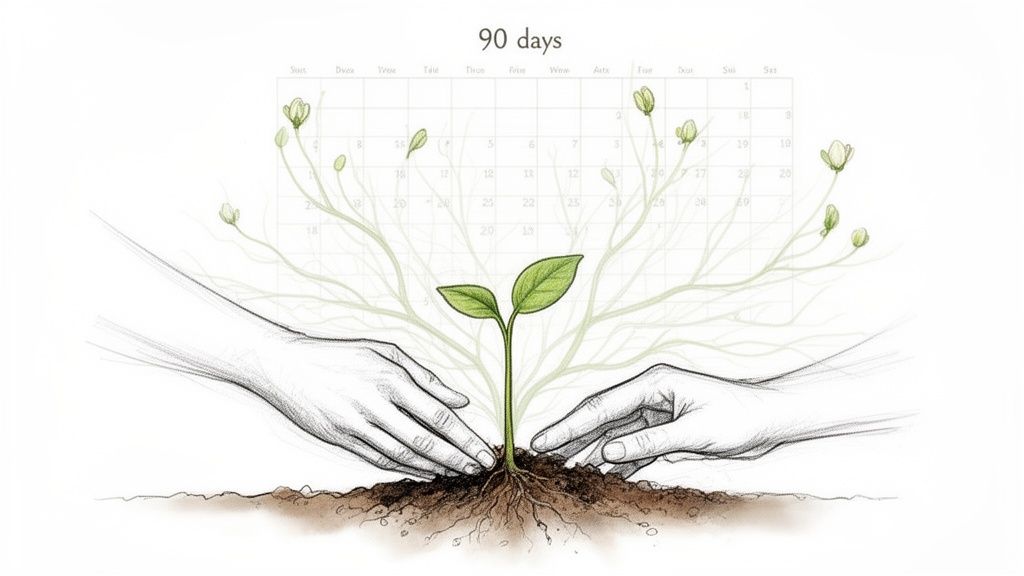
Once the physical storm of acute withdrawal passes, a quieter but far more complex phase of healing begins. This period, roughly the next three months, is a critical window in your alcohol recovery timeline. It’s where the real, long-term work of rebuilding your brain and body gets underway.
Think of it like reclaiming a garden after a storm. The initial debris is gone (that was acute withdrawal), but now you have to tend to the soil itself. It's time to pull the deeper weeds, enrich the depleted ground, and carefully nurture the new growth. That’s exactly what your brain is doing now—pruning the old neural pathways tied to drinking and forging stronger, healthier connections.
Understanding Post-Acute Withdrawal Syndrome (PAWS)
This 90-day window is often defined by something called Post-Acute Withdrawal Syndrome (PAWS). Unlike the raw physical sickness of the first week, PAWS is more about the psychological and emotional rollercoaster that comes with brain repair. These symptoms are direct proof that your brain is healing, but they can feel confusing and demoralizing without the right context.
During this time, it's common to experience:
- Intense Cravings: Sudden, powerful urges to drink that can feel like they come out of nowhere as your brain’s reward system recalibrates.
- Mood Swings: You might feel irritable, anxious, or down for no obvious reason. Your emotional thermostat is trying to find its new normal.
- Sleep Disruptions: Trouble falling or staying asleep is common, as are unusually vivid dreams. Your body is relearning how to manage its natural sleep cycles.
- Cognitive Fog: Many people report issues with short-term memory, concentration, and solving problems as the prefrontal cortex slowly comes back online.
It's absolutely essential to frame these experiences as signs of progress, not failure. Every frustrating mood swing or out-of-the-blue craving is evidence that your brain is working hard to find its balance without alcohol.
This period is a high-risk window for relapse precisely because the healing process can feel so unsteady. Understanding that these symptoms are temporary and a normal part of recovery is essential for staying committed to your journey.
Milestones of Brain and Body Repair
While PAWS is challenging, this phase is also packed with incredible progress. In the early days of abstinence (up to 90 days), cravings can hit hard as your brain rewires pathways altered by chronic alcohol use. But you’ll also notice positive changes happening quickly.
Within just 1-2 weeks, sleep patterns often start to stabilize, and your mood may begin to lift. By the second and third months, deeper healing takes over. Brain volume starts to recover, the cognitive fog begins to clear, and you'll notice a real increase in your emotional resilience. You can learn more about how long alcohol recovery takes to get a better sense of these shifts.
This is the time when the foundation for lasting sobriety is truly built. It’s not about just getting by; it’s about actively participating in your own healing.
Tending to Your Recovery Garden
Getting through these 90 days requires proactive tools and strategies—the "water" and "sunlight" for your recovering brain. Evidence-based therapies are the best way to tend to this new growth and build a stable foundation.
Here are the key tools for this stage:
- Cognitive Behavioral Therapy (CBT): This is all about learning to spot the negative thought patterns that trigger cravings and swap them for healthier, more constructive ones. Think of it as learning to identify and pull new weeds before they can take root.
- Dialectical Behavior Therapy (DBT): DBT gives you practical skills for managing emotional distress and improving relationships, which are often strained by addiction. It teaches you how to ride out emotional storms without reaching for a drink.
- Medication Management: For some, a psychiatrist may prescribe medications to help manage persistent anxiety, depression, or intense cravings. This can provide crucial support while your brain chemistry finds its footing.
- Structured Outpatient Programs: Programs like an Intensive Outpatient Program (IOP) offer consistent support, accountability, and community—all of which are vital during this high-risk period.
By engaging in these therapies, you’re not just passively waiting for your brain to heal. You are actively giving it the tools it needs to rebuild stronger and more resilient than before. This dedicated effort transforms a vulnerable 90 days into a powerful foundation for a lifetime of recovery.
Laying the Foundation for a Sober Life (3 Months to 1 Year)
Making it past the 90-day mark is a huge milestone on the alcohol recovery timeline. This is where the focus really starts to shift. You’re moving out of the survival phase—getting through withdrawal and fighting off intense cravings—and into the construction phase: actively building a fulfilling, sober life that you actually enjoy.
Think of the first three months as clearing the land and pouring the concrete slab for a new house. It was hard, messy work. Now, you get to start framing the walls. The goal is no longer just not drinking; it's learning how to live well without it. The work becomes more deliberate, focused on creating new, healthy patterns to replace the old, destructive ones.
From Surviving to Thriving
In this phase, the thick brain fog of early sobriety finally starts to lift, giving you a much clearer view of the road ahead. While Post-Acute Withdrawal Syndrome (PAWS) can still pop up, the waves of anxiety or fatigue often become less frequent and less intense. This new mental space is invaluable—it lets you put energy into building the life you want, instead of spending all your effort just battling the urge to drink.
Key things start to click into place during this period:
- Building Healthy Routines: Simple, consistent schedules for sleeping, eating, and moving your body are game-changers. They stabilize your mood and energy, giving your healing brain the predictable structure it desperately needs.
- Mending Relationships: With your emotions becoming more stable, you can start the delicate process of rebuilding trust. This happens through honest conversations and, most importantly, consistent sober actions that show you’ve changed.
- Mastering Coping Skills: You’ll move beyond the basic "just get through the next five minutes" tricks. Now, you start mastering more advanced strategies for handling stress, disappointment, and other big feelings without reaching for a drink.
This is where the concepts you learned in therapy, like the skills taught at Altura Recovery, really come to life. You’re not just talking about theories anymore; you're using them in real-world moments, getting stronger and more resilient every time you navigate a tough situation successfully.
Getting Proactive About Relapse Prevention
A core part of building this foundation is creating a solid, proactive relapse prevention plan. This isn't about nervously waiting for a crisis to strike. It's about looking ahead, identifying your personal high-risk situations, and having a clear game plan before you need it. It’s like being a good architect who designs a building to handle an earthquake long before the ground ever shakes.
Relapse prevention isn’t passive hope; it’s an active skill. It requires an honest inventory of your personal triggers—the people, places, feelings, and events that spark an urge to drink—and then creating a specific, step-by-step plan to deal with them.
Your plan should be something you can actually look at when you feel vulnerable. Write it down. It needs to be crystal clear about who you will call, what calming activity you will do, and where you can go to feel safe when a trigger hits.
Building Your Support Structure
Nobody builds a house by themselves, and nobody builds a lasting recovery alone, either. This phase is all about weaving yourself into a community of support. Showing up consistently for therapy, support groups, or an outpatient program creates accountability and connection—two of the most powerful forces against relapse.
- Individual Therapy: This is your space to dig into the underlying reasons you drank, like unresolved trauma or co-occurring disorders like anxiety or depression.
- Group Therapy: Offers a powerful sense of "me too," reminding you that you aren't alone. You get to learn from the wins and setbacks of others who truly get it.
- Supportive Outpatient Programs (SOP): These programs provide a great middle ground—offering structure and skill-building while you get back to your daily life, work, and family.
By the time you get close to the one-year mark, these intentional actions—building routines, mending fences, planning for triggers, and connecting with others—start to feel less like work and more like second nature. The foundation you’ve spent months carefully building is now solid, ready to support a lifetime of growth.
Achieving Long-Term Sobriety and Personal Growth
Hitting the one-year mark on the alcohol recovery timeline is a massive milestone. This is the point where recovery starts to feel less like a constant, white-knuckle effort and more like a natural part of who you are. The focus begins to shift from just staying sober to using that sobriety as a launchpad for real, meaningful personal growth.
Think of that first year as pouring a solid foundation. Now, from one to five years and beyond, you finally get to design and build the life you want to live on top of it. The daily chatter about relapse tends to quiet down, freeing up the mental and emotional space to explore who you are—and who you want to become—without alcohol in the picture.
Redefining Your Life and Purpose
With the immediate crisis of active addiction shrinking in the rearview mirror, this long-term phase is all about thriving, not just surviving. Sobriety cracks open doors to possibilities that were once completely fogged over by alcohol. All that energy and clarity you’ve fought for can now be channeled into building a more authentic and fulfilling life.
This is the perfect time to:
- Explore New Hobbies and Passions: You might discover a love for hiking, painting, volunteering, or learning a new skill that brings you genuine joy, not just a chemical buzz.
- Strengthen Relationships: With better emotional regulation and clearer communication, you can finally build the deeper, more honest connections you’ve been craving with loved ones.
- Advance in Your Career: That renewed focus and reliability can open up professional opportunities you thought were lost, bringing a new sense of accomplishment.
This stage is about moving beyond the label of "a person in recovery" and becoming a person who just happens to be in recovery—living a full, vibrant life that stands on its own.
Navigating Deeper Healing
The stability that long-term sobriety provides creates a safe platform to start addressing the underlying issues that may have fueled the addiction in the first place. Many people find this is the ideal time to work on more complex challenges with a therapist or through a specialized program like those at Altura Recovery.
This phase isn't about being "cured"; it's about continuous growth. It's the point where you use the resilience you’ve built to heal on a deeper level, addressing core wounds and building a stronger sense of self.
For anyone with a co-occurring disorder—like anxiety, depression, or PTSD—this period is absolutely critical for integrated treatment. Without the constant chaos of active addiction, you can fully engage in therapies like EMDR for trauma or advanced CBT for managing mental health. This is the work that solidifies your recovery for the long haul.
The Declining Risk of Relapse
One of the most encouraging parts of this phase is the statistical shift in relapse risk. While staying vigilant is always smart, the odds of maintaining sobriety swing dramatically in your favor the longer you stay committed.
It often takes a few tries to achieve lasting sobriety, but success is incredibly common. After five years of continuous abstinence, the risk of relapse drops to below 15%. That's a powerful testament to the brain's ability to heal and the strength of the healthy habits you’ve built. Better yet, completing a structured aftercare plan for 3-5 years can boost success rates to nearly 90%. You can dig into the data on long-term recovery outcomes in this study.
This isn’t a finish line, but a wide-open road. Long-term recovery is an ongoing journey of self-discovery, connection, and celebrating the freedom you have worked so hard to achieve. It’s about building a life so rich and rewarding that alcohol simply has no place in it anymore.
Common Questions on the Road to Recovery
Starting the journey to sobriety brings up a lot of questions. It's completely normal. Getting clear, honest answers about the alcohol recovery timeline can make the road ahead feel less intimidating and give you the confidence to keep moving forward. Here are a few things people often ask.
What Exactly Is Post-Acute Withdrawal Syndrome (PAWS)?
Post-Acute Withdrawal Syndrome, or PAWS, is what happens when withdrawal symptoms stick around long after the initial, physical sickness of detox is over. Forget the intense shakes and nausea of the first week; PAWS is much more subtle, showing up as lingering psychological and emotional curveballs.
You might notice things like:
- Sudden mood swings that come out of nowhere.
- Waves of low energy or feeling completely drained.
- Brain fog that makes it hard to focus or remember things.
- Sleep that’s all over the place.
Think of PAWS as your brain rewiring itself. It’s working hard to find its balance after being dependent on alcohol, and these symptoms are just signs of that deep healing process. They can pop up for months, but the good news is, they do fade with time.
Does a Relapse Mean I’ve Failed at Recovery?
Absolutely not. Let’s get this straight: a relapse is a setback, not a failure. It doesn't erase all your progress or mean you can't get sober for good. In fact, it's a pretty common part of the recovery landscape for many people who go on to build strong, lasting sobriety.
The most powerful way to handle a relapse isn’t with shame—it’s with immediate, honest action. Treat it as a tough lesson. It’s showing you a weak spot, a trigger you missed, or a gap in your coping plan. The key is to reconnect with your support system right away.
Call your therapist, your sponsor, or your outpatient program. Getting back to your recovery plan without delay is what turns a stumble into a stepping stone, making you that much stronger for the road ahead.
How Can My Family and Friends Actually Help?
Having people in your corner is a game-changer. The best thing loved ones can do is to become educated allies in your recovery, not just sideline observers.
Here’s what truly helpful support looks like:
- Creating a Safe Zone: This means keeping alcohol out of the house and steering clear of booze-soaked social events, especially in the early days.
- Offering Real Encouragement: This is about cheering you on without judging or trying to micromanage your recovery. It’s support, not supervision.
- Showing Up for Therapy: Attending family sessions can be huge. It helps mend broken trust and teaches everyone how to communicate in healthier ways.
- Doing Their Homework: When your family learns what addiction actually is—a medical condition, not a moral failing—it builds the empathy needed to understand the fight you're in.
How Long Does This Whole Recovery Thing Take?
Recovery isn't a project with a deadline; it's a new way of living that unfolds for a lifetime. Everyone’s timeline is unique. While the toughest physical and mental battles usually happen in the first year, staying sober is an ongoing practice. Over time, the focus shifts from actively fighting cravings to mindfully building a full, healthy life without alcohol, supported by new habits and a solid community.
At Altura Recovery, we know that no two recovery paths are the same. Our outpatient programs are built to give you the expert support and practical skills you need while you keep up with your work and family life. Learn more about how we can help you build a foundation for lasting sobriety.