Addiction group therapy is a cornerstone of effective recovery, providing a space for shared experience, peer support, and skills development. However, the success of these sessions hinges on the depth and relevance of the topics discussed. Generic, surface-level conversations often fail to engage clients or address the complex, underlying issues that fuel substance use. For clinicians in intensive outpatient (IOP), partial hospitalization (PHP), and supportive outpatient (SOP) programs, a well-structured curriculum with dynamic addiction group topics is essential for guiding clients toward sustainable change.
This article moves beyond basic prompts and provides a comprehensive roundup of 10 essential topics designed for today's clinical needs. We will explore practical, evidence-based approaches to common challenges in recovery, ensuring every session is impactful. By focusing on actionable strategies, clinicians can foster a therapeutic environment that truly resonates with individuals, families, and young adults.
Each topic in this list is broken down into a clear, actionable framework, including:
- The core purpose of the session.
- Specific sample prompts and activities to facilitate discussion.
- Adaptation notes for IOP/PHP settings and co-occurring disorders.
- Evidence-based facilitation tips, including trauma-informed adjustments.
By integrating these structured and thoughtful addiction group topics, you can create a dynamic, effective, and transformative group therapy experience. This guide is designed to equip you with the tools needed to support clients in achieving meaningful, long-term recovery.
1. Relapse Prevention and Trigger Management
Relapse prevention and trigger management is a cornerstone of effective addiction treatment, making it one of the most essential addiction group topics. This module equips individuals with the practical skills to identify high-risk situations and manage the internal and external cues, or triggers, that can lead back to substance use. It moves beyond simply avoiding substances to building a proactive defense system for sustained recovery.
The core principle involves helping clients recognize their unique patterns of use. By deconstructing past relapses, the group can collaboratively identify common triggers like stress, specific people, certain locations, or even emotional states like boredom or loneliness. This foundational work is crucial for developing personalized coping strategies.
Sample Prompts and Activities
- Trigger Mapping: Ask participants to create a visual map of a typical day, pinpointing potential triggers they might encounter from morning to night. Discuss alternative routes, responses, or protective actions for each identified trigger.
- Coping Skills Role-Play: Facilitate role-playing scenarios where one member describes a high-risk situation (e.g., being offered a drink at a work event) and the group practices assertive refusal skills and immediate coping responses.
- Developing a Relapse Prevention Plan: Guide each member in creating a written plan. This document should include a list of their top three triggers, three go-to sober supports with contact information, and three immediate distraction techniques for intense cravings.
Clinical Adaptations and Facilitator Tips
- Co-Occurring Disorders: Connect triggers directly to mental health symptoms. For instance, explore how social anxiety might trigger a desire to use substances as a coping mechanism and integrate anxiety-reduction techniques into the plan.
- Trauma-Informed Approach: Be mindful that many triggers are linked to trauma. Create a safe environment by allowing members to "pass" on sharing sensitive details and focus on somatic coping skills (e.g., grounding exercises) to manage physiological responses to triggers without re-traumatization.
- IOP/PHP/SOP: In more intensive settings like IOP, dedicate sessions to building comprehensive plans based on models like Marlatt's Relapse Prevention Therapy (RPT). For SOP, focus on reviewing and updating these plans to reflect real-world challenges encountered since the last session.
Facilitator Insight: Encourage clients to view a lapse not as a failure, but as a learning opportunity. Frame the discussion around, "What did we learn from this, and how can we strengthen the plan?" This reframing reduces shame and promotes resilience.
2. Co-Occurring Mental Health and Substance Use (Dual Diagnosis)
Addressing the intersection of mental health and addiction is a critical component of comprehensive treatment, making co-occurring disorders a vital addiction group topic. This focus acknowledges that substance use is often a symptom or coping mechanism for underlying psychiatric conditions like depression, anxiety, or PTSD. An integrated approach, where both issues are treated simultaneously, is essential for preventing relapse and fostering holistic wellness.
The core principle is to help clients understand the bidirectional relationship between their mental health and substance use. The group setting provides a safe space to explore how depressive episodes might trigger cravings, or how substance use exacerbates anxiety symptoms. This psychoeducation normalizes the experience of dual diagnosis and empowers individuals to seek integrated care, rather than treating each issue in isolation.
Sample Prompts and Activities
- Symptom Interaction Chart: Ask participants to create a two-column chart. In one column, they list their primary mental health symptoms (e.g., panic, low motivation), and in the other, they list corresponding substance use behaviors. Discuss the patterns that emerge as a group.
- Medication Management Discussion: Facilitate a structured conversation about the role of psychiatric medication in recovery. Prompts can include, "How does your medication affect your cravings?" or "What are some healthy ways to remember to take your medication consistently?"
- Integrated Wellness Planning: Guide members in creating a wellness plan that includes goals for both mental health and sobriety. This could involve scheduling therapy appointments, practicing mindfulness for anxiety, and identifying sober supports for moments of psychiatric distress.
Clinical Adaptations and Facilitator Tips
- Co-Occurring Disorders: This topic is inherently designed for dual diagnosis. Tailor sessions by focusing on the specific co-occurring disorders prevalent in the group (e.g., a group on PTSD and alcohol use, or major depression and stimulant use).
- Trauma-Informed Approach: Acknowledge that trauma is a common root of co-occurring disorders. Frame discussions around resilience and coping rather than pathology. Use grounding techniques to help members stay present when discussing difficult emotions or experiences related to their mental health.
- IOP/PHP/SOP: In intensive programs (IOP/PHP), groups can incorporate evidence-based models like Seeking Safety or Dialectical Behavior Therapy (DBT) skills training. For SOP, sessions should focus on maintaining stability, problem-solving real-world challenges, and coordinating care between addiction counselors and psychiatric providers.
Facilitator Insight: Emphasize that treating the mental health condition is a form of relapse prevention. Frame psychiatric care, medication adherence, and therapy not as separate issues, but as foundational pillars supporting long-term sobriety. This perspective reduces stigma and increases engagement in mental health treatment.
3. Coping Skills Development and Healthy Coping Strategies
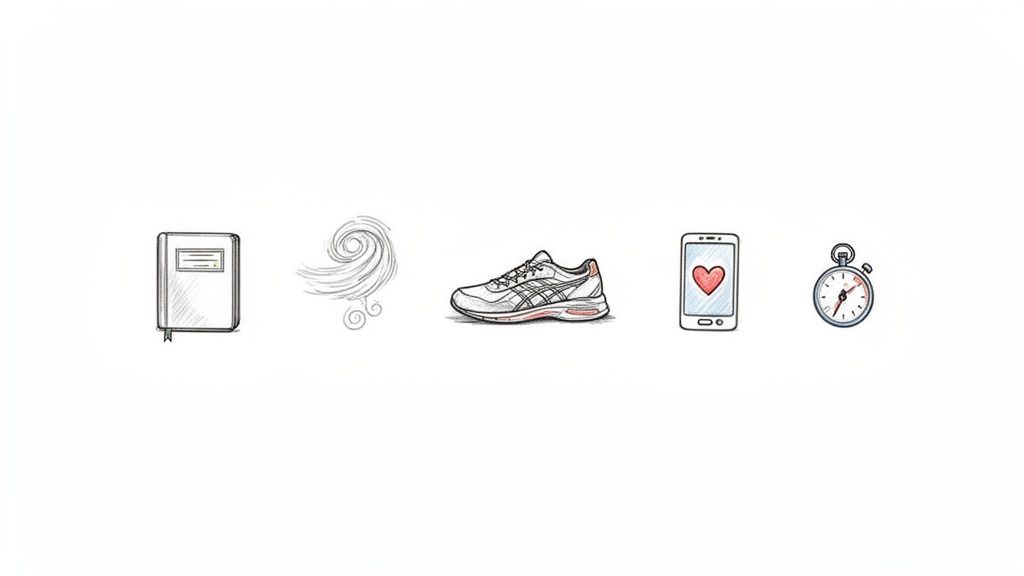
Developing a robust set of healthy coping skills is a foundational element of recovery and a vital addiction group topic. This module shifts the focus from simply stopping substance use to actively building a toolkit of alternative behaviors for managing stress, difficult emotions, and life’s challenges. It empowers individuals to respond to internal and external pressures constructively, rather than turning to substances as a default solution.
The core principle is skill acquisition and practice. Instead of viewing sobriety as an act of willpower alone, this approach treats it as a skill that can be learned, practiced, and mastered. The group setting provides a safe, supportive laboratory where members can learn evidence-based techniques like mindfulness, distress tolerance, and emotional regulation, and then practice applying them to real-world scenarios.
Sample Prompts and Activities
- Building a Coping Skills "Toolbox": Provide a list of 20-30 diverse coping skills (e.g., grounding, deep breathing, positive self-talk, distraction). Ask members to select 5-7 that resonate with them and write them on a "toolbox" worksheet, explaining why they chose each one and in what situation they might use it.
- "Skill of the Week" Practice: Introduce one specific skill, such as a 5-4-3-2-1 grounding exercise. Dedicate the first 10 minutes of the group to practicing it together. Assign homework for members to use the skill at least once daily and report back on their experience in the next session.
- Problem-Solving Scenarios: Present a common problem (e.g., "You have a conflict with your boss"). Guide the group through a structured problem-solving process: define the problem, brainstorm potential solutions (healthy coping responses), evaluate the pros and cons of each, and select a course of action.
Clinical Adaptations and Facilitator Tips
- Co-Occurring Disorders: Directly link coping skills to specific mental health symptoms. For clients with anxiety, focus on mindfulness and relaxation techniques. For those with depression, emphasize behavioral activation skills like scheduling positive activities.
- Trauma-Informed Approach: Introduce skills that regulate the nervous system, such as somatic exercises or self-soothing techniques (e.g., using a weighted blanket, listening to calming music). Ensure all skills are presented as choices, allowing clients to opt out of anything that feels activating or uncomfortable.
- IOP/PHP/SOP: In more intensive programs like IOP, dedicate entire group sessions to specific skill sets from models like Dialectical Behavior Therapy (DBT), such as Distress Tolerance or Emotion Regulation. In SOP, the focus can shift to troubleshooting the application of these skills in the community and refining their use for long-term maintenance.
Facilitator Insight: Frame coping skills as personal experiments. Encourage clients with the mindset of, "Let's try this skill and see what data we collect." This removes the pressure of perfect execution and promotes curiosity, making clients more likely to engage with and adopt new strategies.
4. Family Systems, Relationships, and Communication
Addiction is often called a "family disease" because its effects ripple outward, profoundly impacting relationships and household dynamics. This makes family systems one of the most vital addiction group topics, as it shifts the focus from the individual in isolation to the interconnected network of relationships they belong to. The goal is to help clients understand and heal the dysfunctional patterns, such as codependency, enabling, and communication breakdowns, that often develop around substance use.
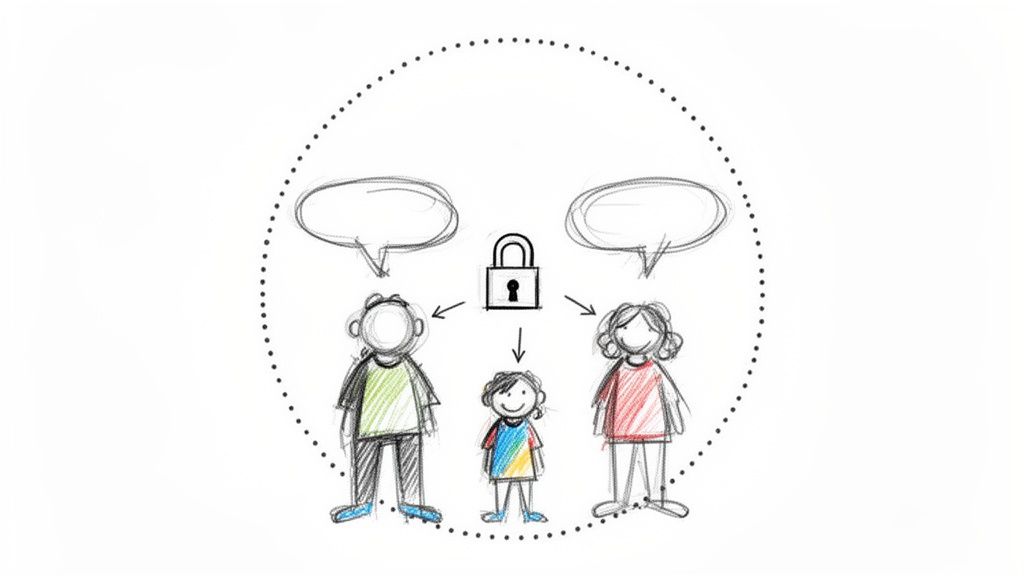
This approach is rooted in the idea that for recovery to be sustainable, the environment the person returns to must also support healing. By exploring concepts like family roles (e.g., hero, scapegoat, lost child) and practicing new communication skills, the group helps members prepare to rebuild trust and establish healthier connections. It empowers them to set boundaries and break generational cycles of dysfunction.
Sample Prompts and Activities
- Family Role Identification: Ask members to read descriptions of common family roles in addictive systems and discuss which role they identify with most, both in their family of origin and their current family structure. Explore how these roles have influenced their behaviors.
- Boundary Setting Practice: Use a "Dear Man" exercise from DBT (Describe, Express, Assert, Reinforce) to help clients write and then role-play a conversation where they set a necessary boundary with a loved one (e.g., "I will not lend you money if you are using").
- Genogram Creation: Guide participants in creating a simple family genogram (a family tree of relationships and behaviors) to visually map patterns of addiction, mental health issues, and communication styles across generations.
Clinical Adaptations and Facilitator Tips
- Co-Occurring Disorders: Frame the discussion around how a loved one's mental health symptoms (e.g., a parent's anxiety) may have contributed to enabling behaviors. Teach clients how to communicate support without sacrificing their own boundaries or recovery.
- Trauma-Informed Approach: Acknowledge that family-of-origin dynamics are a significant source of trauma. Establish clear group norms against blaming and allow members to focus on their own feelings and needs, rather than detailing traumatic events involving family members unless they choose to.
- IOP/PHP/SOP: In IOP/PHP, integrate family therapy sessions or multi-family groups where possible. For SOP, the focus can shift to navigating real-world challenges in relationships, such as rebuilding trust with a partner or parenting sober.
Facilitator Insight: Emphasize that this work is not about blaming family members but about understanding patterns and taking personal responsibility for one's own side of the relationship. Encourage the use of "I" statements to shift the focus from accusation ("You always…") to personal experience ("I feel… when…").
5. Trauma-Informed Recovery and PTSD Management
Addressing the profound link between trauma and substance use is a critical component of comprehensive care, making trauma-informed recovery a vital addiction group topic. This approach recognizes that for many, substance use began as a way to cope with the overwhelming effects of traumatic experiences. Instead of treating addiction in isolation, this model integrates an understanding of trauma’s impact on the brain, body, and behavior into every aspect of recovery.
The central goal is to create a safe and stable environment where individuals can explore the connection between their trauma history and substance use patterns without re-traumatization. The group focuses on psychoeducation about trauma responses like hypervigilance and emotional dysregulation, helping clients see their use not as a moral failing but as a survival strategy. This foundation is essential before any deeper processing can occur, shifting the focus from "What's wrong with you?" to "What happened to you?".
Sample Prompts and Activities
- Window of Tolerance Exercise: Use a visual diagram to help participants identify when they are in their optimal zone (the "window"), and when they are hyper-aroused (anxious, angry) or hypo-aroused (numb, disconnected). Discuss how substance use has been a way to manage being outside this window.
- Grounding Skills Practice: Dedicate time in each session to practicing 2-3 grounding techniques (e.g., the 5-4-3-2-1 sensory method, holding a cold object, deep breathing). Ask members to share which techniques work best for them and when they have used them outside of the group.
- Safe Place Visualization: Guide the group through a scripted visualization to create a mental "safe place." This internal resource can be accessed during moments of distress or craving, providing an immediate self-soothing tool.
Clinical Adaptations and Facilitator Tips
- Co-Occurring Disorders: For clients with PTSD, integrate elements from evidence-based models like the "Seeking Safety" curriculum, which focuses on developing coping skills for both trauma and addiction simultaneously without requiring detailed trauma narratives.
- Trauma-Informed Approach: Safety is paramount. Establish clear group guidelines, including the right to pass, and avoid activities that could be unexpectedly triggering (e.g., certain types of music or physical touch). Always prioritize stabilization and skill-building before any trauma exploration.
- IOP/PHP/SOP: In IOP/PHP, groups can provide extensive psychoeducation on the neurobiology of trauma and introduce somatic regulation skills. In SOP, the focus shifts to applying these skills in real-world situations and managing triggers as they arise in daily life, reinforcing long-term stability.
Facilitator Insight: Emphasize that healing from trauma is not about forgetting what happened, but about reducing its power over the present. Frame recovery as a process of reclaiming control over one's own body and emotional responses, with sobriety as the foundation for that work.
6. Motivational Interviewing and Readiness for Change
Motivational Interviewing (MI) is a foundational, client-centered approach that makes for a powerful addiction group topic. Instead of confronting or directing, this method collaboratively explores and resolves ambivalence about change. It is particularly effective for groups where members are at different stages of readiness, creating a non-judgmental space to build internal motivation rather than imposing external pressure.
The core principle of MI in a group setting is to evoke "change talk" from the participants themselves. The facilitator acts as a guide, using reflective listening and open-ended questions to help members identify their own reasons for pursuing recovery. This process respects client autonomy, reduces resistance, and strengthens their personal commitment to goals that align with their core values, making it a critical tool for sustainable recovery.
Sample Prompts and Activities
- Decisional Balance Scale: Ask participants to create a four-quadrant grid to weigh the pros and cons of continuing their substance use against the pros and cons of making a change. Discussing these openly in a group setting can highlight shared struggles and strengthen resolve.
- Values Card Sort: Provide a deck of cards with different values listed (e.g., "honesty," "family," "health," "security"). Have each member choose their top five and discuss how their substance use has either supported or conflicted with these core values.
- Looking Forward and Backward: Use a prompt like, "Describe what your life might look like in five years if you continue on your current path. Now, describe what it could look like if you make a significant change." This helps generate aspirational change talk.
Clinical Adaptations and Facilitator Tips
- Co-Occurring Disorders: Frame the discussion around how both substance use and mental health symptoms affect cherished values. For example, "How does anxiety prevent you from living a life aligned with your value of 'connection'?" This integrates both issues seamlessly.
- Trauma-Informed Approach: MI's non-confrontational style is inherently trauma-informed. Avoid any language that could be perceived as shaming or demanding. Emphasize choice and personal control, which can be deeply empowering for individuals with trauma histories.
- IOP/PHP/SOP: In IOP/PHP, MI can be used to establish initial treatment goals and build therapeutic alliance. In SOP, the focus can shift to reinforcing commitment and problem-solving ambivalence that arises when facing long-term recovery challenges in the real world.
Facilitator Insight: Your primary role is to listen for and amplify change talk. When a client says, "I guess I'm tired of my family worrying," reflect it back with emphasis: "So, caring for your family is really important to you, and you're starting to see how your use gets in the way of that." This reinforces their own motivation.
7. Life Skills Training and Real-World Reintegration
Effective recovery extends beyond abstinence into the practical challenges of daily life, making life skills training a critical component among addiction group topics. This module focuses on rebuilding the fundamental competencies that may have deteriorated during active addiction, such as financial management, employment readiness, and time management. It bridges the gap between the structured environment of treatment and the autonomy of independent, sober living.
The goal is to empower clients with the confidence and tools needed to manage real-world responsibilities without feeling overwhelmed, a common relapse trigger. By addressing practical stressors like finding stable housing, creating a budget, or preparing for a job interview, the group provides a supportive space to learn and practice skills that directly contribute to self-sufficiency and stability, which are cornerstones of long-term recovery.
Sample Prompts and Activities
- Weekly Budget Challenge: Ask participants to track their spending for one week and create a simple budget. The group can then discuss common financial pitfalls, share tips for saving money, and explore resources for financial literacy.
- Job Interview Role-Play: Set up mock interviews where members can practice answering common questions, including how to address gaps in employment history. Provide constructive feedback on communication, body language, and confidence.
- "A Day in My Sober Life" Scheduling: Guide members in creating a detailed, balanced daily or weekly schedule that integrates recovery meetings, work or school, self-care (like exercise and nutrition), and healthy social recreation.
Clinical Adaptations and Facilitator Tips
- Co-Occurring Disorders: For clients with conditions like ADHD or depression, focus on breaking down tasks into smaller, manageable steps. Connect time management skills directly to managing symptoms, such as scheduling appointments or ensuring consistent medication routines.
- Trauma-Informed Approach: Recognize that financial instability or unemployment may be linked to past trauma. Foster an environment of non-judgment and focus on empowerment. Celebrate small successes and emphasize that building life skills is a gradual process, not a race.
- IOP/PHP/SOP: In intensive programs, integrate vocational rehabilitation services or financial counseling directly into the treatment plan. For SOP, sessions can serve as accountability check-ins where clients report on their progress with specific life skills goals set in previous sessions.
Facilitator Insight: Frame life skills not as chores, but as acts of self-care and empowerment. Remind clients that mastering a budget or creating a daily routine is a powerful way to build self-esteem and create a life that is too valuable to lose to relapse.
8. Substance-Specific and Behavioral Addiction Topics
While many recovery principles are universal, addressing the unique physiological and psychological challenges of specific substances or behaviors is a critical component of targeted treatment. These focused addiction group topics allow for discussions tailored to the nuances of opioid, alcohol, stimulant, or benzodiazepine use, as well as behavioral addictions like gambling or internet use. This specificity creates a space where members can share highly relevant experiences and strategies.
This approach acknowledges that the withdrawal timeline for benzodiazepines is vastly different from that of cocaine, and the community resources for opioid use disorder often involve medication-assisted treatment (MAT). By grouping individuals with shared experiences, facilitators can delve into substance-specific relapse patterns, cravings, and harm reduction strategies, fostering a deeper sense of understanding and targeted support among participants.
Sample Prompts and Activities
- Physiological Impact Timeline: Ask participants to collaboratively create a timeline detailing the acute and post-acute withdrawal symptoms (PAWS) specific to their substance. Discuss coping strategies for each phase and destigmatize the physical and emotional experiences.
- Behavioral Addiction Chain Analysis: For gambling or internet addiction, guide members through a chain analysis of a recent episode. Have them map the trigger, thoughts, feelings, behaviors, and consequences to identify intervention points unique to that specific behavior.
- Resource Scavenger Hunt: Divide the group to research and present on resources tailored to their primary substance. This could include finding local MAT providers, benzodiazepine tapering support groups, or Gamblers Anonymous meetings.
Clinical Adaptations and Facilitator Tips
- Co-Occurring Disorders: Explore how specific substances are used to self-medicate certain mental health symptoms. For example, discuss the link between stimulants and ADHD or alcohol and social anxiety, and then brainstorm recovery strategies that address both conditions simultaneously.
- Trauma-Informed Approach: Recognize that certain substances may be deeply linked to trauma (e.g., opioids for numbing emotional pain). When discussing withdrawal or cravings, incorporate grounding techniques to help members stay present and manage the intense emotions that may surface when the substance is removed.
- IOP/PHP/SOP: In IOP/PHP, these groups can provide essential psychoeducation on neurobiology and pharmacology specific to the substance. In SOP, sessions can focus on navigating long-term recovery challenges, such as managing stimulant-induced anhedonia or the protracted withdrawal from benzodiazepines.
Facilitator Insight: Validate the unique struggle associated with each addiction. A statement like, "The psychological pull of gambling is different from the physical dependence on opioids, and both are incredibly difficult to overcome," can help members feel seen and reduce comparison or judgment within the group.
9. Peer Support, Sponsorship, and Community Integration
Peer support and community integration are vital addiction group topics that address the profound sense of isolation many individuals experience. This theme emphasizes that recovery is not a solitary journey but a collective effort built on shared experience, mutual accountability, and genuine connection. It helps clients transition from a clinical support system to a sustainable, real-world network that can support them long-term.
The focus is on moving beyond formal treatment and building a robust social foundation for sobriety. Group discussions explore the practical aspects of engaging with recovery communities like 12-Step programs, SMART Recovery, or Recovery Dharma. The concept of sponsorship is demystified, presenting it as a mentorship relationship that provides personalized guidance and support from someone with lived experience.
Sample Prompts and Activities
- Community Exploration: Provide a list of local and online recovery meetings (AA, NA, SMART, etc.). Ask members to attend at least one new meeting before the next session and report back on their experience, focusing on the atmosphere and what they observed.
- "Sponsor Qualities" Brainstorm: Have the group collectively brainstorm the qualities they would look for in a sponsor or recovery mentor. Discuss how to approach someone and what to expect from that relationship.
- Sober Social Planning: Challenge the group to plan a hypothetical sober weekend. Each member contributes one enjoyable, substance-free activity, creating a shared resource list of local events, hobbies, or outings that promote healthy socializing.
Clinical Adaptations and Facilitator Tips
- Co-Occurring Disorders: For clients with social anxiety, role-play initiating conversations at meetings or asking for phone numbers. Normalize the discomfort and frame it as a manageable step toward building a support system that benefits both their recovery and mental health.
- Trauma-Informed Approach: Acknowledge that group dynamics can be triggering for trauma survivors. Emphasize that finding a "good fit" is key and that it is okay to leave a meeting or group that feels unsafe. Highlight the importance of boundaries within peer relationships.
- IOP/PHP/SOP: In IOP/PHP, facilitate "field trips" to local 12-step or other recovery meetings to reduce barriers and anxiety. For SOP, sessions can focus on navigating challenges within the recovery community, such as managing disagreements or avoiding "groupthink."
Facilitator Insight: Frame community integration as an act of "finding your people." Encourage clients to explore diverse options until they find a community where they feel a true sense of belonging, not just an obligation to attend. This empowers them to build an authentic support network.
10. Mindfulness, Meditation, and Stress Reduction in Recovery
Mindfulness and stress reduction techniques are powerful, evidence-based tools in addiction recovery, serving as a critical topic for group discussion. This approach helps individuals detach from the automatic, reactive cycle of craving and use by cultivating present-moment awareness. Instead of being controlled by difficult thoughts and emotions, clients learn to observe them with non-judgmental acceptance, creating the mental space needed to choose a healthier response.

The core principle is to train the brain to pause before reacting. By engaging in practices like guided meditation, breathwork, and mindful movement, participants develop the ability to tolerate discomfort and manage stress without resorting to substances. This makes it one of the most empowering addiction group topics, as it gives clients an internal locus of control over their recovery journey.
Sample Prompts and Activities
- Mindful Body Scan: Lead the group through a 10-minute guided body scan meditation. Ask participants to focus attention on different parts of their body, noticing sensations like warmth, tingling, or tension without judgment. Discuss how this practice can ground them during moments of high stress or intense cravings.
- Mindful Walking: Dedicate a portion of the session to a slow, deliberate walking practice, either indoors or outdoors. Instruct members to pay full attention to the sensation of their feet on the ground and the movement of their body.
- "Urge Surfing" Exercise: Guide clients in visualizing a craving as a wave. They learn to "surf" the wave by mindfully noticing its rise, crest, and eventual fall, understanding that cravings are temporary and do not require action.
Clinical Adaptations and Facilitator Tips
- Co-Occurring Disorders: For clients with anxiety or panic disorders, focus on grounding breathwork techniques (e.g., box breathing) to regulate the nervous system. Emphasize that the goal isn't to eliminate anxiety but to change one's relationship with it.
- Trauma-Informed Approach: Be aware that for some trauma survivors, closing their eyes or focusing on internal sensations can be dysregulating. Offer modifications like keeping a soft gaze on a fixed point in the room or focusing on an external anchor like a sound.
- IOP/PHP/SOP: In intensive programs, integrate a structured curriculum like Mindfulness-Based Relapse Prevention (MBRP). In SOP, sessions can focus on applying mindfulness to real-world challenges encountered during the week, such as a stressful work meeting or a family conflict.
Facilitator Insight: Normalize the "wandering mind." Reassure clients that the goal of meditation isn't to have an empty mind, but to gently and non-judgmentally guide their attention back to the anchor (like the breath) each time it strays. This act of returning is the practice itself.
Addiction Group Topics: 10-Point Comparison
| Topic | Complexity 🔄 | Resource requirements ⚡ | Expected outcomes 📊 | Ideal use cases 💡 | Key advantages ⭐ |
|---|---|---|---|---|---|
| Relapse Prevention and Trigger Management | Moderate — structured CBT + role‑play | Low–Moderate — trained facilitator, worksheets, group time | 📊 Fewer relapses; stronger personalized coping | Individuals post‑detox or in IOP/PHP facing clear triggers | ⭐ Direct relapse reduction; peer accountability |
| Co‑Occurring Mental Health and Substance Use (Dual Diagnosis) | High — integrated psychiatric and addiction care | High — psychiatrists, specialized therapists, medication monitoring | 📊 Better stabilization; improved long‑term recovery | Clients with SUD plus depression, PTSD, bipolar, anxiety | ⭐ Addresses root causes; reduces misdiagnosis |
| Coping Skills Development and Healthy Coping Strategies | Low–Moderate — skills practice and repetition | Low — facilitator, practice time, simple materials | 📊 Improved daily coping; reduced anxiety and reactivity | Early recovery, those needing practical stress tools | ⭐ Transferable life skills; builds self‑efficacy |
| Family Systems, Relationships, and Communication | Moderate–High — multi‑member dynamics, sensitive facilitation | Moderate — family sessions, trained systems therapist | 📊 Stronger support network; reduced family triggers | Clients with engaged families or relationship concerns | ⭐ Strengthens supports; repairs relationships |
| Trauma‑Informed Recovery and PTSD Management | High — safety protocols, graduated processing | High — trauma‑trained clinicians, EMDR/somatic modalities | 📊 Reduced trauma‑driven relapse; deeper integration | Individuals with trauma histories or PTSD symptoms | ⭐ Tackles underlying trauma; increases safety in recovery |
| Motivational Interviewing and Readiness for Change | Moderate — clinician skill in MI techniques | Low–Moderate — trained facilitator, structured exercises | 📊 Increased engagement and intrinsic motivation | Ambivalent or precontemplative clients | ⭐ Reduces resistance; honors autonomy |
| Life Skills Training and Real‑World Reintegration | Low–Moderate — practical coaching, role‑play | Moderate — vocational resources, community referrals | 📊 Improved employment/housing stability and routine | Transitioning clients, working professionals/students | ⭐ Reduces life chaos; supports independent living |
| Substance‑Specific and Behavioral Addiction Topics | Moderate–High — tailored content, safety for withdrawal | Moderate–High — medical oversight, multiple group options | 📊 Targeted relapse prevention; informed MAT use | Clients with specific substance or behavioral addictions | ⭐ Substance‑relevant strategies; specialized peer support |
| Peer Support, Sponsorship, and Community Integration | Low — peer‑led, flexible formats | Low — community groups, time for engagement | 📊 Sustained social support and belonging | Long‑term recovery maintenance and social reintegration | ⭐ 24/7 peer availability; low‑cost, sustainable support |
| Mindfulness, Meditation, and Stress Reduction | Low–Moderate — practice consistency required | Low — facilitator/apps, minimal equipment | 📊 Reduced stress/cravings; improved emotional regulation | Those seeking complementary, non‑pharmacologic tools | ⭐ Evidence‑based, low‑cost, complements other therapies |
Building a Foundation for Lasting Recovery
The journey of recovery is not a linear path but a dynamic process of building resilience, self-awareness, and a supportive community. The comprehensive list of addiction group topics detailed throughout this article, from Relapse Prevention to Mindfulness and Stress Reduction, serves as a blueprint for a robust and adaptive group therapy curriculum. Each topic represents a critical pillar supporting the structure of a new, sober life. By weaving these diverse themes into the fabric of treatment, clinicians can create a therapeutic environment that addresses the whole person, not just the symptoms of their addiction.
The true power of this integrated approach lies in its ability to meet clients wherever they are. One week, a group may need to focus intensely on managing acute triggers and cravings, while the next may call for a deeper exploration of unresolved trauma or the complexities of family dynamics. A well-rounded curriculum provides the flexibility to address these evolving needs, ensuring that the therapeutic work remains relevant, engaging, and impactful. This adaptability is the hallmark of effective outpatient care, where real-world challenges constantly intersect with the recovery process.
The Synergy of Integrated Group Topics
No single topic exists in a vacuum. The skills learned in a session on Coping Strategies directly support the goals of Relapse Prevention. Similarly, progress made in Co-Occurring Disorders groups, where clients address anxiety or depression, significantly enhances their ability to engage with the vulnerable work required in Trauma-Informed Recovery. This synergy is what builds a truly durable foundation for sobriety.
Consider the interplay between these key areas:
- Skill Application: A client learns a communication technique in a Family Systems group and then applies it during a real-world scenario discussed in a Life Skills session.
- Emotional Regulation: Mindfulness practices from a Stress Reduction group become the go-to tool for a client when a trigger is identified in a Relapse Prevention session.
- Community Reinforcement: The bonds formed in a Peer Support group provide the courage for an individual to open up about their experiences with co-occurring mental health challenges.
This interconnectedness demonstrates that a comprehensive list of addiction group topics is more than just a checklist; it's a dynamic framework for fostering holistic healing. It equips individuals not just with the tools to stay sober but with the emotional intelligence, practical skills, and interpersonal competencies needed to thrive in all areas of life.
Actionable Next Steps for Lasting Change
Moving from knowledge to action is the most critical step in recovery. The ultimate goal of exploring these group topics is to empower clients to build a life where recovery is not a constant battle but a sustainable, fulfilling way of being. The value of mastering these concepts lies in their real-world applicability. It's about translating a group discussion on healthy boundaries into a difficult but necessary conversation with a loved one. It’s about turning a worksheet on cognitive distortions into an automatic, internal response when negative self-talk arises.
By engaging deeply with these addiction group topics, individuals move beyond passive learning and into active practice. They are not just abstaining from a substance; they are fundamentally rewiring their responses to stress, rebuilding their relationships, and rediscovering their sense of purpose. This transformative process, facilitated within the safe container of a therapeutic group, is what paves the way for a future defined not by past struggles, but by resilience, growth, and enduring freedom.
If you are seeking a program that masterfully integrates these essential addiction group topics into a personalized and compassionate treatment plan, Altura Recovery is here to help. Our evidence-based outpatient programs in Houston are designed to provide the tools, support, and community needed to build a lasting foundation for recovery. Learn more about our approach and begin your journey toward healing today.