Cross addiction is what happens when someone in recovery from one dependency—say, alcohol—simply picks up a new one. It’s the brain’s attempt to fill a void, swapping one compulsive habit for another, whether that’s a different substance or a compulsive behavior.
This isn't a failure of willpower. It's a sign that the real work of recovery, addressing the why behind the addiction, hasn't happened yet. True recovery isn't just about putting down a drink or a drug; it's about healing the underlying issues that made the substance feel necessary in the first place.
The Whack-a-Mole Game of Recovery
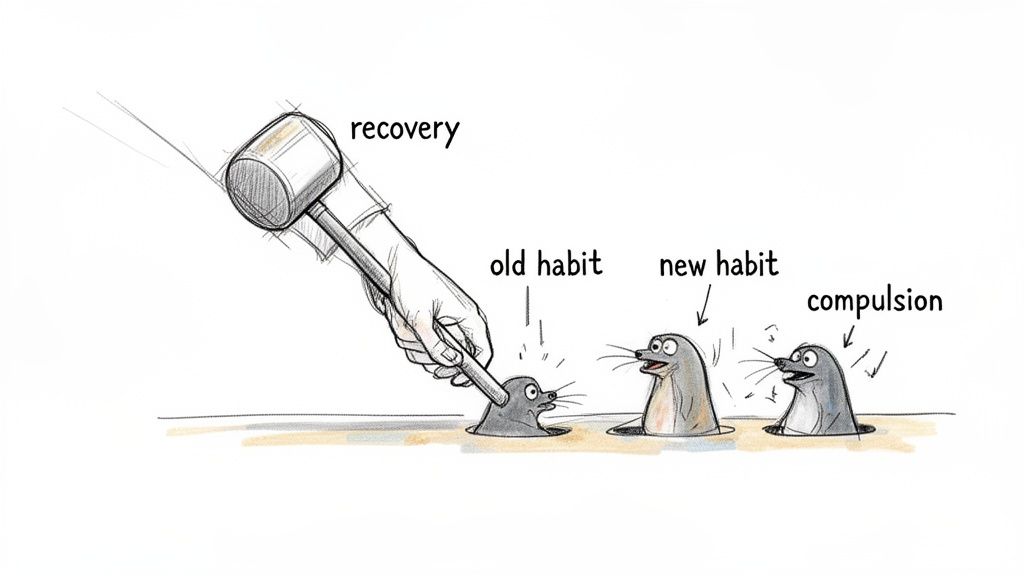
If you're trying to picture cross addiction, think of that old arcade game, Whack-a-Mole. You finally smack down your primary addiction—maybe it’s opioids—and feel a rush of victory. But a second later, another mole pops up on the other side of the board. This new one might look different; maybe it’s compulsive gambling, excessive shopping, or even workaholism.
This pattern is often called addiction transfer. It happens because addiction isn't really about one specific drug or behavior. It’s a condition rooted deep in the brain's reward pathways. When you take away one source of intense dopamine release, the brain, still wired for that rush, starts scrambling to find a replacement.
The core issue is that the underlying drivers of the addiction—such as unresolved trauma, anxiety, or poor coping skills—haven't been addressed. You’ve only removed a symptom, not the cause.
Understanding Addiction Transfer
Addiction transfer can sneak up on you because the new habit often feels less dangerous or more socially acceptable at first. Here’s a quick look at how we often see this play out in real-world recovery journeys.
Cross Addiction at a Glance
This table helps illustrate the difference between how recovery might look on the surface and what’s really happening when addiction transfer is at play.
| Concept | Common Misconception | The Reality of Cross Addiction |
|---|---|---|
| Recovery | "I've stopped drinking, so I'm sober." | True sobriety means healing the root causes, not just swapping dependencies. |
| New Habits | "Shopping/gambling isn't as bad as my old habit." | Any compulsive behavior can hijack the brain's reward system and cause harm. |
| Progress | "I'm in control because I quit the 'hard' stuff." | The underlying addictive pattern remains, just with a new target. |
| Goal | "Just stay away from my drug of choice." | The real goal is learning to manage stress and emotions without any compulsive escape. |
It's a subtle but critical distinction. Without addressing the core problem, you're just trading one set of consequences for another.
Common Patterns of Addiction Swapping
The transfer can happen in a few predictable ways:
- Substance to Substance: This is the most classic example. Someone in recovery from heroin might start drinking heavily, wrongly believing that alcohol is a “safer” or more manageable alternative.
- Substance to Behavior: A person who quits cocaine might find themselves chasing a similar rush through compulsive gambling or online shopping. The high is different, but the brain mechanism is the same.
- Behavior to Behavior: An individual who finally gets a handle on a gambling problem might pivot to compulsive eating or extreme exercise to cope with stress.
The danger here is that while the "mole" looks different, the game hasn't changed. The compulsive cycle continues, new risks pile up, and the odds of relapsing on the original substance skyrocket. Lasting recovery isn't about getting better at whacking moles; it’s about unplugging the machine entirely by healing the reasons the game started in the first place.
Common Patterns of Addiction Transfer in Real Life
Cross-addiction isn’t just some clinical term; it’s a real-life pattern that unfolds in predictable, often sneaky, ways. The brain is just looking for that old, familiar rush or escape, but the new behavior can look surprisingly different from the last one. That's what makes it so tough to spot.
Understanding these common pathways is the first step toward recognizing what cross-addiction looks like in your own life or for someone you care about. These patterns show just how easily one compulsive behavior can slip into the place of another when the real, underlying issues aren't being addressed.
From One Substance to Another
The most straightforward kind of addiction transfer is simply swapping one drug for another. This usually happens when the new substance is seen as less harmful, legal, or more socially acceptable, creating a false sense of security.
Opioids to Alcohol or Benzodiazepines: Someone in recovery from an opioid addiction might start drinking or using prescription sedatives like Xanax to chase the calming, euphoric feeling they miss. This is an incredibly dangerous trade. Mixing these central nervous system depressants dramatically multiplies the risk of a fatal overdose.
Stimulants to Caffeine or Nicotine: After quitting powerful stimulants like cocaine or meth, it’s common to see someone start chain-smoking or chugging energy drinks. While these are legal, they still light up the brain’s reward circuits in a similar way, keeping that cycle of dependency spinning.
Alcohol to Prescription Pills: A person who has successfully put down the bottle might start misusing prescription painkillers or anxiety meds. Because a doctor prescribed them, there’s a deceptive feeling of safety. But the addictive hook is just as strong, and the core need to self-medicate is still running the show.
From Substances to Compulsive Behaviors
Sometimes, the brain’s hunt for a substitute doesn’t lead to another chemical but to an action. We call these process or behavioral addictions, and they can be every bit as destructive as a drug habit.
Addiction transfer is driven by the brain's reward system, which doesn't really care if the high comes from a substance or a behavior. The thrill of gambling and the rush from drug use both trigger a flood of dopamine and serotonin, creating a powerful, reinforcing experience the brain starts to crave.
Here are a few common examples:
Gambling or Compulsive Shopping: The heart-pounding thrill of a potential win or the immediate rush of a new purchase can deliver a high that feels strikingly similar to one from drugs. For someone who has given up a substance, the risk and anticipation baked into these activities can become a powerful new obsession.
Disordered Eating or Excessive Exercise: Behaviors around food and fitness can quickly turn compulsive. They’re often used as a way to manage anxiety or claw back a sense of control that was lost during active addiction. What begins as a healthy habit can quietly twist into an isolating and harmful obsession.
Workaholism or Internet Addiction: Pouring every ounce of energy into work or getting lost in the endless scroll of social media can be an effective way to numb out and avoid difficult emotions. The tricky part? Society often praises these behaviors, making them an insidious and easy-to-justify replacement for a previous addiction.
Exploring the Root Causes and Risk Factors
Why does one person in recovery build a new life, while another gets caught in a frustrating cycle of swapping one addiction for another? The answer has nothing to do with willpower or character. It's all about the intricate wiring of our brains—a complex mix of chemistry, genetics, and personal history.
At its core, addiction is a brain disease. It fundamentally changes the reward system, training it to seek out intense sources of pleasure or relief. This vulnerability means the brain doesn't really care if the rush comes from alcohol or a winning bet.
When you take away the original substance, those well-worn neural pathways are still there, primed and ready for something new to slot right in. So, understanding cross addiction isn't about seeing a new problem. It’s about recognizing the same underlying issue showing up in a different costume.
Unpacking Key Vulnerabilities
Some factors dramatically raise the risk of developing a cross addiction. Think of these as creating fertile ground for addiction transfer, making someone far more likely to swap one dependency for another just to cope.
Co-Occurring Mental Health Disorders: Conditions like anxiety, depression, bipolar disorder, and PTSD are powerful drivers behind substance use. If these underlying issues aren't treated right alongside the addiction, a person will almost certainly look for another way to self-medicate their symptoms.
Unresolved Trauma: Past trauma literally rewires the brain’s stress response. Without properly processing these experiences through proven therapies like EMDR, the need to numb emotional pain stays incredibly high. This makes any potential escape—a new drug, a compulsive behavior—look very appealing.
Genetic Predisposition: A family history of addiction can make a person’s brain more sensitive to the rewarding effects of substances and certain behaviors. It’s a biological risk factor that increases their odds of developing a dependency in any form.
This concept map shows how addiction often jumps from substances to behaviors, hijacking the very same reward pathways in the brain.
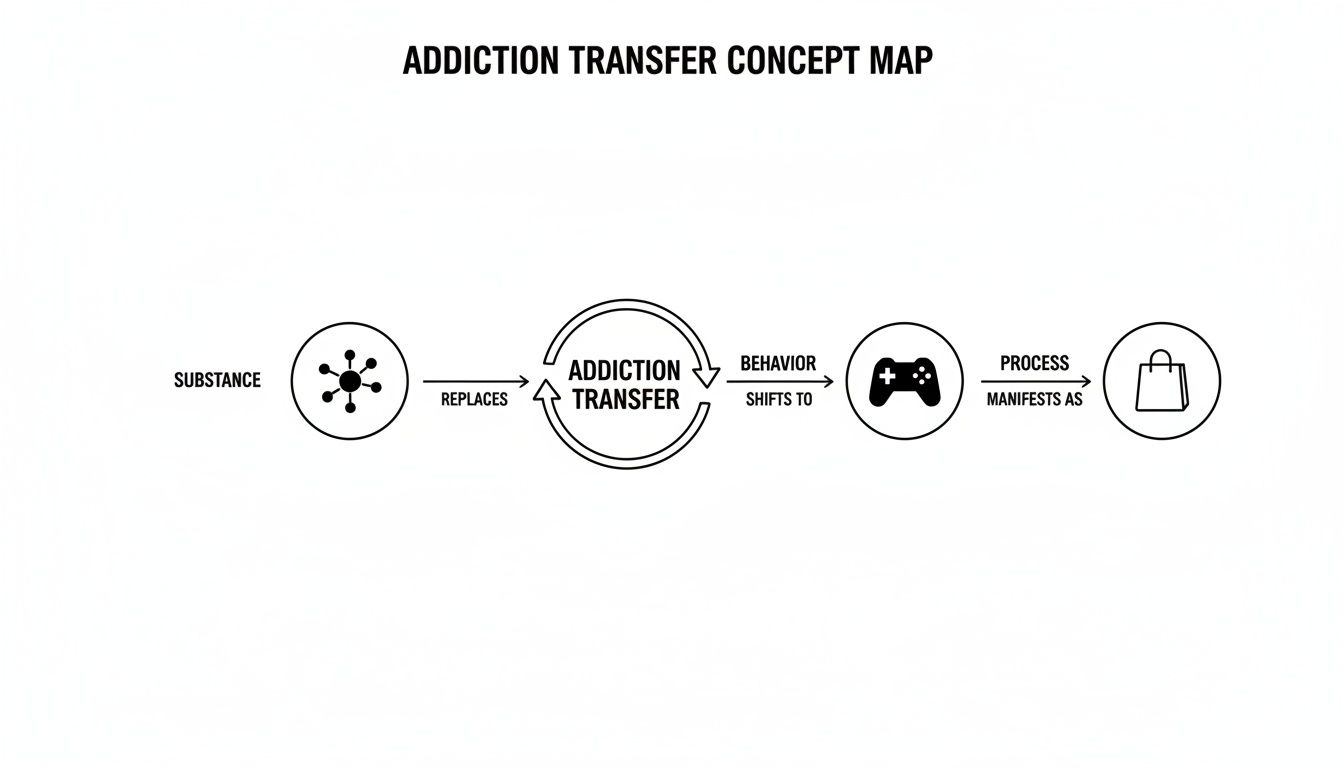
As the visual makes clear, the real issue is the compulsive pattern itself, not the specific substance or activity.
The Global Scope of Risk
While these personal factors shape the risk, they also reflect much bigger societal patterns. We see cross-dependence when someone recovering from one substance use disorder pivots to another compulsive behavior, all driven by the same neurological vulnerabilities. Global research shows just how widespread this underlying risk is.
A landmark study from the World Mental Health Surveys revealed that while the lifetime prevalence for drug use disorders (DUDs) was 3.5% worldwide, it soared to 4.8% in high-income nations and peaked at an alarming 8.4% in the United States.
This data highlights how our environment and economic conditions can influence addiction rates, which in turn fuels the risk of addiction transfer. You can learn more about the global patterns in drug use disorders from this vital research. Tackling these root causes with an integrated approach is the only way to break the cycle and achieve recovery that truly lasts.
How to Recognize the Warning Signs of a New Addiction
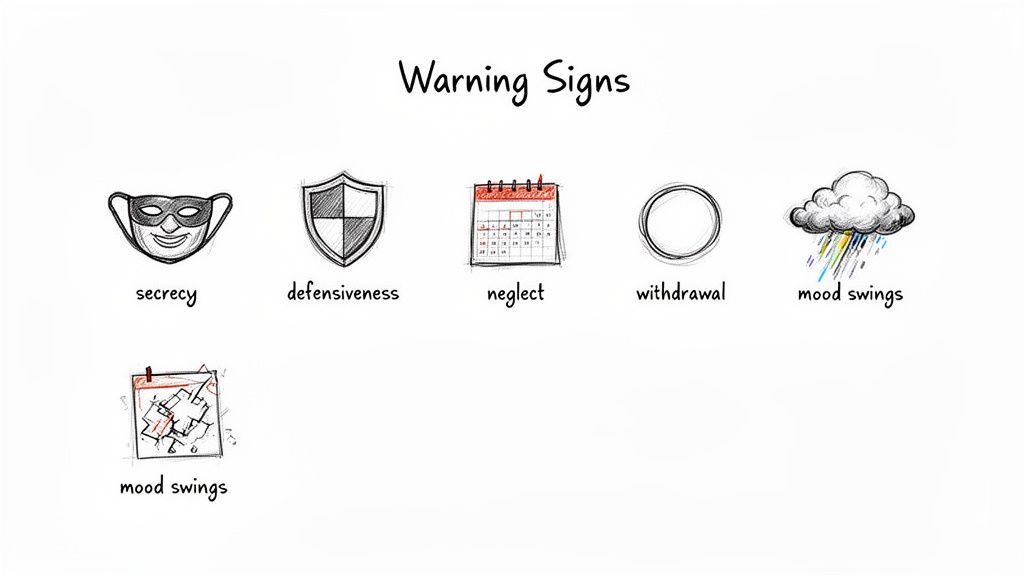
Spotting the slide from recovery into a new dependency is tricky. The signs are usually subtle at first, just like with the original addiction. A cross-addiction doesn't just show up overnight.
Instead, it quietly weaves itself into a person's life. This slow creep makes it easy for both the individual and their loved ones to rationalize or completely miss what's happening.
Knowing these red flags is the key to stepping in early. The new behavior might even look harmless—or positive, like a sudden devotion to work or extreme exercise—but it's the compulsive pattern underneath that tells the real story. Paying close attention to shifts in behavior, emotions, and social habits can help you catch the problem before it digs in.
Behavioral Red Flags
Often, the most obvious signs of a developing cross-addiction are behavioral. These are the actions that show someone's focus is drifting away from their recovery and toward a new compulsive habit that’s starting to run the show.
- Increasing Secrecy or Dishonesty: Hiding the new behavior is a classic tell. This could be anything from concealing shopping bags and clearing a browser history after online gambling to being evasive about where they've been. If they’re lying about the time or money involved, that’s a major warning.
- Neglecting Responsibilities: When the new activity starts getting in the way of work, school, or family commitments, you’re looking at a serious problem. Maybe they’re missing deadlines, showing up late, or breaking promises because their attention is locked elsewhere.
- Defensiveness When Questioned: If you gently bring up concerns about their new habit and get an angry or annoyed reaction, that's a huge red flag. This kind of defensiveness often means they know, on some level, that their behavior is becoming an issue.
Emotional and Social Warning Signs
Just as telling are the internal and interpersonal changes that signal a new dependency. These shifts often mirror the same emotional chaos that fueled the original addiction in the first place.
The core issue isn't the specific substance or activity; it's the compulsive need to escape, numb, or control feelings. An intense emotional reliance on a new habit—feeling anxious or irritable without it—is a clear sign that the addiction has simply found a new home.
Key emotional and social clues to watch for include:
- Intense Mood Swings: Feeling euphoric while engaging in the new behavior, followed by a crash into irritability, anxiety, or depression when they can’t.
- Social Withdrawal: Pulling away from their support system—like therapy, 12-step meetings, or sober friends—in favor of activities or people connected to the new habit.
- Loss of Interest: Dropping hobbies and activities that were once a source of joy or a healthy part of their recovery plan.
Catching these signs early gives everyone a chance to get to the bottom of what's driving the what is cross addiction cycle. It opens the door to building a stronger, more sustainable recovery.
To make these signs even clearer, the table below breaks down the common red flags you might see as an addiction transfers from one thing to another.
Red Flags Identifying a Potential Cross Addiction
| Category | Warning Sign | Example in Recovery |
|---|---|---|
| Behavioral | Substituting one compulsive habit for another | Quits drinking but starts gambling online for hours every night. |
| Emotional | Experiencing intense mood swings tied to the new activity | Feels euphoric after a shopping spree but becomes deeply irritable when unable to buy something. |
| Social | Withdrawing from recovery-focused friends and groups | Skips 12-step meetings to spend more time at the gym with a new, intense workout crowd. |
| Cognitive | Rationalizing or justifying the new excessive behavior | "I work hard, so I deserve to spend this much money," or "This isn't like my old addiction; it's healthy." |
| Physical | Neglecting self-care or experiencing health issues | Develops insomnia from excessive caffeine intake or loses a significant amount of weight from over-exercising. |
Recognizing these patterns isn’t about placing blame; it’s about protecting a hard-won recovery. When you know what to look for, you can act quickly to get the right support and get back on track.
Why Young Adults and Professionals Face Unique Risks
Cross-addiction isn’t a one-size-fits-all problem. It shows up differently depending on a person's life stage, career, and the unique pressures they're under. For young adults and working professionals, in particular, the environment is often ripe with stressors that can easily fuel the jump from one addiction to another.
For young adults, the transition to independence is a minefield of academic deadlines, social anxiety, and the immense weight of figuring out who they are. When a substance like alcohol or marijuana is removed, the emotional chaos underneath doesn't just disappear. This leaves them incredibly vulnerable to swapping one habit for another behavior that promises a similar escape or a feeling of control.
We often see this play out in a few common ways:
- Compulsive Gaming or Internet Use: The immersive digital world offers a powerful, instant distraction from real-world pressures and social awkwardness.
- Disordered Eating: Controlling food, calories, or exercise can create a false sense of stability and accomplishment when everything else in life feels chaotic.
- Stimulant Misuse: It's alarmingly easy to trade one chemical dependency for another by turning to prescription stimulants like Adderall to cope with intense academic demands.
The High-Stress Professional Environment
For working professionals, the landscape of risk is shaped by corporate culture and the relentless pressure to perform. A high-stakes career can create an environment where certain behaviors aren’t just tolerated but are sometimes actively encouraged, making it dangerously easy to mask a new addiction. The same drive and ambition that once fueled a substance use disorder can be seamlessly redirected.
In this world, recovery becomes a delicate balancing act. The goal isn't to kill ambition but to manage stress without letting healthy drives morph into compulsive escapes that jeopardize well-being and sobriety.
Professionals often trade a visible addiction for one that seems more socially acceptable or even productive. Think of workaholism, where 80-hour workweeks become a convenient way to avoid personal problems at home. Or a dependency on prescription stimulants to maintain razor-sharp focus through endless meetings. Even relying on alcohol for "networking" or to "unwind" after a tough day can quickly become a substitute crutch.
Alarming Trends and Early Onset
Research makes it clear just how early these patterns can begin, with multiple addictive behaviors often clustering together well before adulthood. For example, studies show that among high school students, the co-occurrence of addictions is far from a coincidence.
In one study of adolescents, 46.0% had one addiction, 12.2% had two, and 4.5% had three or more, revealing a significant overlap. You can explore more findings on co-occurring addictions in youth from this study. This data shows that the foundation for what is cross addiction is often laid years before someone enters college or the workforce, making early, targeted intervention absolutely critical for both young people and professionals.
Building a Resilient Recovery with Integrated Treatment
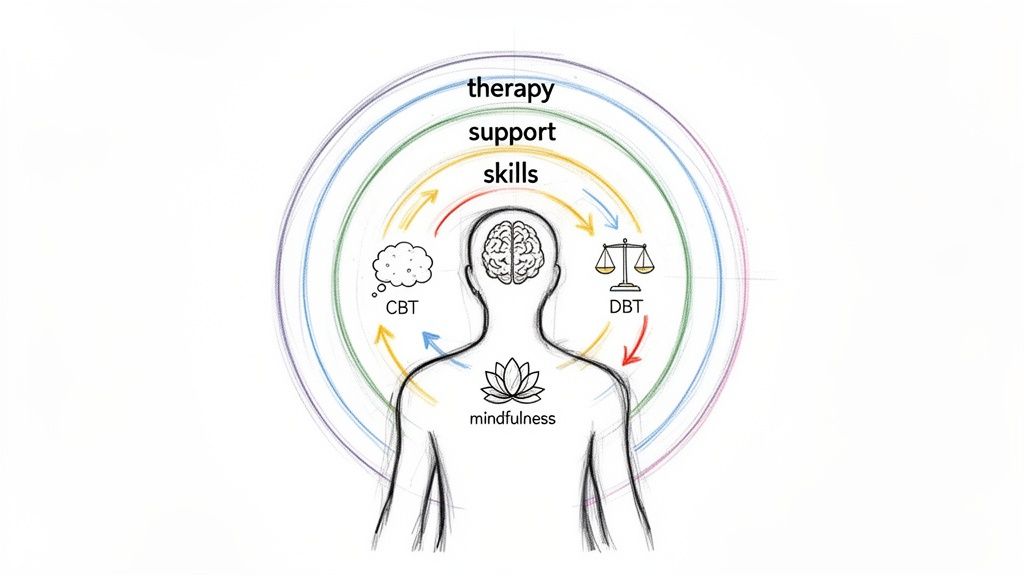
Lasting sobriety takes more than just willpower. It demands a resilient recovery built on a foundation of holistic wellness, because the cycle of cross addiction shows us that simply stopping one substance is rarely the whole story. To truly break free, treatment has to address the whole person—mind, body, and spirit—through an integrated approach.
This is where dual diagnosis treatment becomes non-negotiable. It’s a model of care designed to treat a substance use disorder and any co-occurring mental health conditions like anxiety, depression, or PTSD at the same time. By tackling these issues together, we dismantle the underlying engine that drives addictive behaviors instead of just playing whack-a-mole with the symptoms.
Healing the Whole Person with Evidence-Based Therapies
Effective treatment gives people the practical tools they need to manage emotions and rewire destructive thought patterns. Instead of looking for an external fix, they learn how to build internal strength and coping skills that make swapping one addiction for another far less likely. Two cornerstones of this process are Cognitive Behavioral Therapy (CBT) and Dialectical Behavior Therapy (DBT).
These therapies empower people to finally understand their triggers and develop healthier responses. You can get a better sense of how this works by checking out our guide on addiction topics for groups.
An integrated plan treats the root causes of suffering, not just the substance or behavior of the moment. It’s about building a life so fulfilling and stable that the need for a compulsive escape simply fades away.
Key Therapeutic Approaches for Preventing Cross Addiction
Cognitive Behavioral Therapy (CBT) helps people identify and challenge the negative thought patterns and core beliefs that lead to self-sabotage. For instance, someone might learn to reframe the thought "I can't handle this stress without a drink" into a more empowering belief like, "I have other, healthier ways to manage stress."
Dialectical Behavior Therapy (DBT) provides crucial skills in four key areas: mindfulness, distress tolerance, emotional regulation, and interpersonal effectiveness. DBT is especially powerful for those who use substances to numb intense emotions, teaching them how to navigate discomfort without reaching for a compulsive escape.
Understanding risk profiles is also a huge part of building a resilient recovery. Research has identified clear patterns that distinguish high-risk individuals from others. A recent study found that a staggering 42.6% of participants fell into a 'high risk' profile, showing significantly higher rates of addictive behaviors across the board—from alcohol and drugs to gambling.
This data underscores the importance of a comprehensive approach, as it shows how one addiction often clusters with others. It reinforces the absolute need for integrated care that heals the whole person and breaks the cycle for good.
Have More Questions About Cross Addiction?
As you move through recovery, it's natural for new questions to pop up. To help you get clear on the details, here are some straightforward answers to the questions we hear most often about cross addiction.
Is Cross Addiction the Same Thing as a Relapse?
Not quite, and it’s a really important distinction to make. A relapse usually means going back to your original substance of choice. Cross addiction, on the other hand, is when you manage to stay away from that substance but get hooked on something new—whether that’s another drug, like painkillers, or a compulsive behavior, like gambling.
Even though it’s not a technical relapse, a cross addiction is incredibly risky. It fires up the exact same reward pathways in the brain that the original addiction did. This keeps the whole cycle of dependency alive and makes you far more likely to eventually relapse on your first drug of choice.
Can You Really Get Addicted to a Behavior?
Absolutely. This is a critical point that trips a lot of people up because the brain’s addiction machinery isn't just for chemicals. It’s entirely possible—and common—to transfer that dependency onto behaviors that give you a similar rush or sense of escape.
These are often called “process addictions” and can sneak up on you. Common examples include:
- Compulsive shopping
- Excessive gaming or internet use
- Workaholism
- Disordered eating
These behaviors light up the brain's reward center in a way that feels a lot like drugs or alcohol, making them deceptive and powerful substitutes.
Holistic treatment is the key to breaking this cycle. It gets to the root causes of addiction instead of just playing whack-a-mole with one specific substance. By addressing the underlying trauma, anxiety, or depression, you build a foundation of wellness that makes you resilient against just swapping one dependency for another.
How Does Holistic Treatment Help Prevent Cross Addiction?
A holistic approach looks at the whole picture. Instead of only treating, say, alcoholism, an integrated plan also addresses the deep-seated anxiety that’s driving the need to self-medicate in the first place.
By using therapies like CBT and DBT, it doesn't just teach you how to not drink; it teaches you healthy coping skills and emotional regulation that apply to all potential addictions. This is what truly breaks the cycle for good.
At Altura Recovery, we know that real recovery means healing the whole person, not just putting a band-aid on one symptom. Our integrated outpatient programs are built to address both substance use and the co-occurring mental health conditions that drive it, giving you the tools for a resilient, lasting sobriety. If you’re seeing the signs of cross addiction in yourself or someone you care about, take the first step toward real healing by visiting https://www.alturarecovery.com.