The journey through recovery is rarely a solo mission. Relationships can be your greatest strength or a significant trigger, often at the same time. Lasting sobriety isn't just about stopping substance use; it’s about learning how to connect with others in a healthier way. This makes the intersection of relationships and recovery a critical area to understand and navigate.
Why Your Connections Are Central to Healing
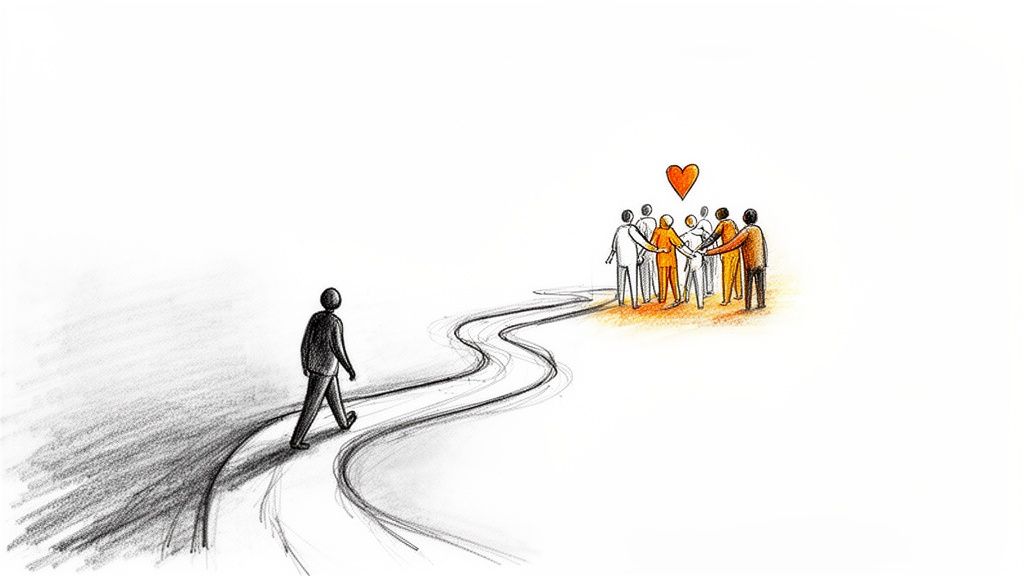
Picture yourself standing at a crossroads. One path leads back to isolation and the familiar, destructive patterns you know so well. The other, though uncertain, winds toward a community of people waiting with open arms. This is the choice so many face in early recovery—the fear of reconnecting with loved ones balanced against the deep-seated need for support.
Addiction thrives in isolation, but healing happens in community. The quality of your relationships directly influences how sustainable your sobriety will be. In a way, they act as a mirror, reflecting your progress and holding you accountable when you stumble.
The Double-Edged Sword of Relationships
Healthy relationships are an incredible buffer against relapse. They provide encouragement, a sense of belonging, and real motivation to stay the course. When you have people who genuinely celebrate your milestones and offer a non-judgmental ear during tough times, the path forward just feels less overwhelming.
On the other hand, unhealthy or toxic dynamics can be one of the biggest threats to your recovery. These connections might involve enabling behaviors, unresolved conflicts, or exposure to triggering environments. Without clear boundaries, these relationships can unintentionally pull you back toward the very life you’re working so hard to leave behind.
Understanding this duality is the first step. Recovery is fundamentally a relational process. It’s not just about what you’re moving away from, but also who you’re moving toward. Building and nurturing connections that heal is just as important as any clinical work you do in treatment.
"The opposite of addiction is not sobriety. It is human connection." – Johann Hari
This idea gets to a vital truth: real recovery involves rebuilding your world, not just removing a substance from it. The journey is about learning to give and receive love, trust, and support in ways that are authentic and life-affirming. As you progress, you'll learn to identify which relationships to nurture, which to mend, and which you may need to release. This process isn't always easy, but it is absolutely essential for creating a life where sobriety can truly flourish.
How Addiction Rewires Your Closest Connections
To have any hope of mending relationships torn apart by addiction, we have to start with the why. It’s never just about broken promises or bad decisions; it’s about biology. Substance use disorder (SUD) physically changes the brain’s chemistry, and those changes hit attachment, trust, and communication right where they live.
Think of addiction as a hijacker storming the brain’s “relationship control panel.” This system is wired for survival and connection—it prioritizes things like food, water, and bonding with the people we love. But an SUD hijacks that panel, tricking the brain into believing the substance is the #1 thing needed to survive. Over time, using isn't a choice anymore; it becomes a perceived necessity that shoves everything—and everyone—else aside.
This neurological shift explains actions that feel baffling and cruel to family members, like lying, stealing, or shutting everyone out. It’s not that the person is deliberately choosing the substance over their loved ones; it’s that their brain's wiring has been reconfigured to put it first. Getting a handle on this biological reality is the first real step toward compassion—for the person struggling and for the family members who’ve been hurt.
Why Family Dynamics Change
When a family is under the crushing stress of addiction, people naturally fall into predictable roles to cope. These aren’t conscious choices. They’re survival instincts kicking in to create some sense of stability, even if it's a dysfunctional one. Seeing these patterns for what they are is the key to breaking them.
Some of the most common roles include:
- The Enabler: This person, almost always with good intentions, tries to "help" by cushioning the consequences. They might pay overdue bills, invent excuses for missed work, or lie to cover up for the person, which only allows the addiction to march on without hitting any real-world walls.
- The Hero: Often an older child, the hero works tirelessly to prove the family is okay by being perfect. They become an overachiever at school, in sports, or at work, hoping their success will somehow balance out the chaos and fix the family’s problems.
- The Scapegoat: This person acts out, getting into trouble at school or with the law. Their behavior becomes the family’s “official” problem, which conveniently distracts everyone from the addiction brewing beneath the surface.
- The Lost Child: This person’s strategy is to become invisible. They are quiet, keep to themselves, and do everything possible to avoid causing trouble. They learn early on that staying out of the way is the safest bet in a chaotic home.
These roles lock everyone into a painful dance where real connection becomes nearly impossible. Everyone is just trying to manage overwhelming stress, but the coping skills they’ve developed end up blocking healthy communication. This is a core reason why relationships and recovery are so deeply intertwined.
Healing isn't a solo mission. It requires the entire family system to unlearn old habits and find healthier ways of relating to one another.
The Path Forward Is Understanding
Breaking these toxic patterns starts with acknowledging them without pointing fingers. These roles aren't who people are; they are the survival strategies people adopted when things felt unbearable. The pain caused by addiction is absolutely real, but so is the science that explains it.
Holding both of those truths creates a foundation for empathy, which is the only thing strong enough to rebuild the trust and communication that addiction destroyed.
By looking at the "why" behind the hurt, families can start to shift from a place of anger and blame to one of compassion and teamwork. This pivot is the true starting line for repair. It’s where everyone involved can finally begin to unwind old patterns and learn how to connect in a way that is honest, supportive, and built to last.
Building a Resilient Recovery Support System
Figuring out how addiction damages relationships is step one. Actively building a network that protects your sobriety is step two. A resilient support system isn't something that just happens—it's built with intention. Think of it like assembling a personal "board of directors" for your recovery, where every single member plays a distinct and vital role in guiding you toward lasting success.
This team isn’t just a list of people to call during a crisis. It’s about surrounding yourself with individuals who consistently champion your growth, respect your boundaries, and offer accountability without judgment. The right people act as a firewall, protecting your hard-won progress from the triggers and negative influences that can threaten it. Your focus has to shift from simply having people around to strategically choosing who gets a seat at your table.
Identifying Your Core Support Players
A strong recovery network is diverse, with each person offering a unique brand of support. You wouldn't ask your accountant for medical advice, and the same principle applies here. Different people fill different needs, and recognizing this is key to building a well-rounded team.
Your essential players will often include:
- Clinical Professionals: This is your therapist, counselor, or psychiatrist. They provide evidence-based guidance, helping you unpack the root causes of addiction and develop healthy coping skills. They’re your strategic advisors.
- A Sponsor or Mentor: This is someone who has walked the path before you. They offer lived experience, practical advice for navigating daily challenges, and a direct line to someone who truly understands the recovery journey from the inside out.
- Sober Peers: Connecting with others in recovery creates a powerful sense of belonging and shared understanding. These are the folks who just get it without you having to explain everything. Participating in structured support groups is a fantastic way to forge these connections. To get a better feel for this, you can explore various group substance abuse activities that build community.
- Supportive Family and Friends: These are the loved ones who have educated themselves on addiction and are committed to supporting your recovery—not your past behaviors. They respect your boundaries and genuinely celebrate your progress.
Your support system is your recovery's first line of defense. It’s not about quantity; it’s about the quality of the connections and the specific roles each person plays.
This intentional approach to building relationships ensures you have the right support for the right challenge, creating a safety net that is both strong and versatile.
Differentiating Healthy from Unhealthy Support
One of the most critical skills you'll learn in early recovery is how to tell who is a genuine asset to your journey and who might be a liability. This isn’t about slapping "good" or "bad" labels on people. It's about recognizing which relational dynamics promote healing and which ones keep you stuck in old, destructive patterns.
Healthy support feels empowering. Unhealthy influences often leave you feeling drained, guilty, or defensive.
Here’s how to tell the difference:
Hallmarks of Healthy Support:
- They listen more than they talk, trying to understand your experience.
- They respect the boundaries you set without making you feel guilty.
- They celebrate your wins and offer encouragement, not criticism, after a setback.
- They hold you accountable to your recovery goals in a loving, non-judgmental way.
- Their presence in your life makes you feel stronger and more capable.
Red Flags of Unhealthy Influence:
- They minimize your struggles or tell you to "just get over it."
- They pressure you to engage in old behaviors or hang out in triggering places.
- They constantly bring up past mistakes, often using them as leverage.
- They enable by making excuses for you or shielding you from consequences.
- They make your recovery all about them and their feelings.
Learning to spot these patterns empowers you to make conscious choices about who you allow close to you. This selection process is a profound act of self-care and one of the most important parts of building a life where sobriety can truly thrive. It is a cornerstone of managing relationships and recovery effectively.
Practical Steps to Rebuild Trust and Communication
When addiction shatters trust, a single apology or grand gesture won't fix it. Trust isn't repaired; it’s rebuilt, slowly and deliberately, one consistent action at a time.
Think of it like laying bricks where an old wall has crumbled. Every honest conversation, every kept promise, and every moment you take ownership is a new brick set carefully in place. One brick doesn't mean much on its own, but over time, they create a solid, reliable foundation you can both lean on.
This whole process is about moving past words and proving change through your behavior. It demands patience from your loved ones and an unwavering commitment from you. Apologies are just the starting line; living amends—making things right through daily actions—are what truly heal the wounds left behind.
Practicing Radical Honesty
The first, non-negotiable step is a full commitment to radical honesty. In the past, deception was probably a survival tool—a way to hide substance use or sidestep conflict. In recovery, it's poison. Rebuilding trust means doing a complete 180, even when it’s uncomfortable.
This is about being truthful about your feelings, your struggles, and where you’re going. It’s about sharing information before you’re asked, which slowly chips away at the suspicion that’s built up over the years. It isn’t about confessing every minor detail, but about creating an environment where secrets can no longer grow.
Rebuilding trust is a marathon, not a sprint. Consistency is far more powerful than intensity. Each day you choose honesty over deceit, you are actively participating in the healing of your relationships and recovery.
Mastering Healthier Communication
If honesty lays the bricks of trust, then effective communication is the mortar holding them together. During active addiction, conversations often spiral into blame, defensiveness, and misunderstanding. To break that toxic cycle, you have to learn new skills.
Two of the most powerful tools are:
- Using "I Statements": This simple trick shifts the focus from blaming the other person to expressing your own feelings. Instead of saying, “You always make me feel guilty,” you might say, “I feel overwhelmed and defensive when we discuss my past.” It opens the door to dialogue instead of slamming it shut with an accusation.
- Active Listening: This means listening to understand, not just to cook up your next response. It involves giving the other person your full attention, acknowledging their feelings (“I hear that you felt abandoned and scared”), and asking questions to clarify. It shows you value their experience, which is a massive step in healing relational wounds.
Having a strong support system is key to practicing these new skills safely. This visual breaks down the process of building that network.
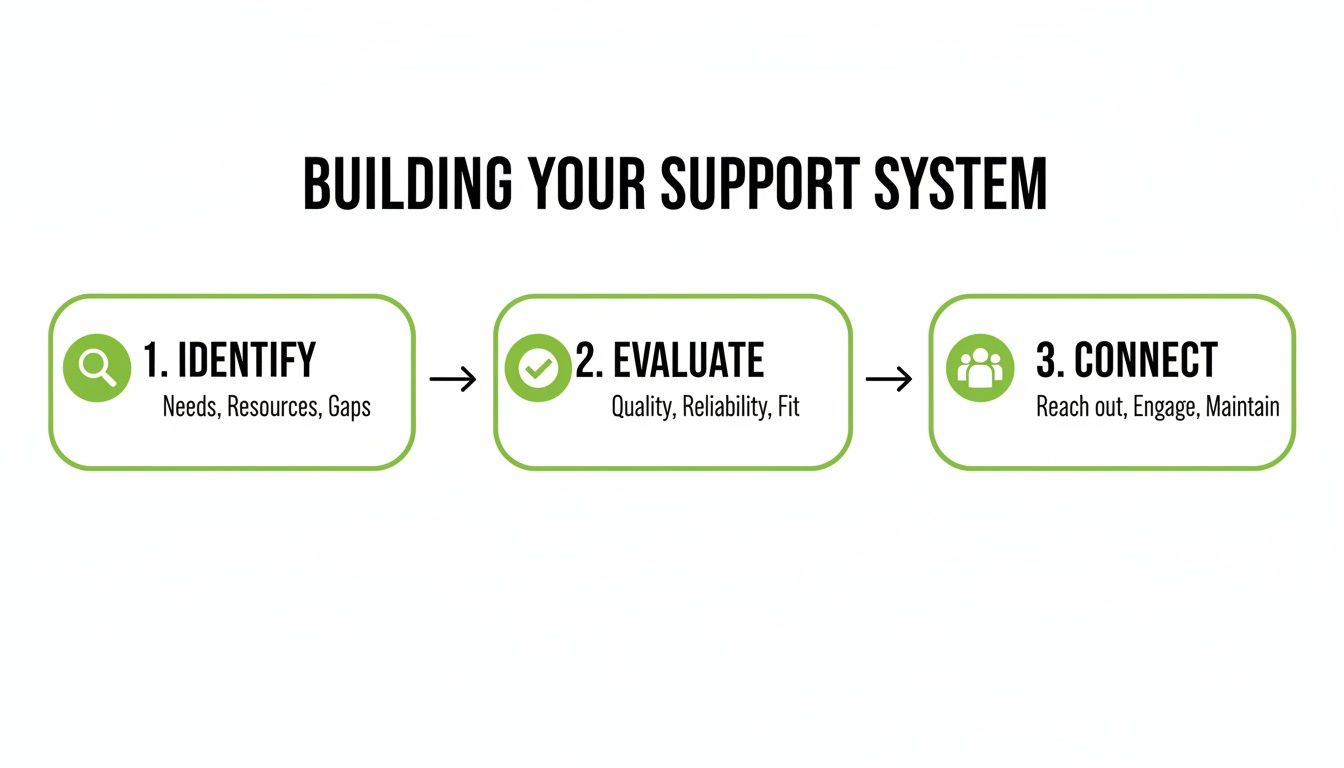
As you can see, a solid network doesn't just happen. It's built through intentional stages of identifying, evaluating, and connecting with people who genuinely support your recovery.
The table below breaks down the subtle but powerful differences between communication that connects and communication that creates conflict.
Healthy vs Unhealthy Communication in Recovery
Here’s a quick comparison of communication patterns that can either help or hinder the process of rebuilding trust and fostering supportive relationships during recovery.
| Communication Tactic | Healthy Approach (Fosters Connection) | Unhealthy Approach (Creates Conflict) |
|---|---|---|
| Expressing Feelings | Uses "I statements" to own emotions. "I feel hurt when…" | Uses "You statements" to blame. "You always make me feel…" |
| Listening | Listens to understand, asks clarifying questions. | Listens only to find flaws or prepare a defense. |
| Taking Responsibility | Acknowledges past actions without excuses. "I know I hurt you." | Justifies or minimizes behavior. "I only did that because…" |
| Conflict Resolution | Aims for mutual understanding and a solution. | Aims to "win" the argument or prove a point. |
| Body Language | Open posture, eye contact, and engaged presence. | Crossed arms, avoiding eye contact, looks distracted. |
Learning to spot these patterns in real-time gives you the power to steer conversations toward healing instead of letting them slide back into old, destructive habits.
Demonstrating Accountability Through Action
Accountability is the backbone of trust. It means taking full ownership of your past actions—no excuses, no justifications. It’s also about proving, through your consistent behavior, that you are committed to a different way of living.
Here are a few tangible ways to show accountability:
- Follow Through on Commitments: If you say you’ll be home at 7, be home at 7. If you promise to go to a family therapy session, be there. Every kept promise, no matter how small, adds another brick to that new foundation.
- Be Transparent About Your Recovery: Share your progress, your challenges, and the steps you’re taking to stay sober. This could be mentioning you’re heading to a meeting, talking with your sponsor, or going to a therapy appointment. Transparency reduces the fear and uncertainty your loved ones are feeling.
- Accept Consequences Gracefully: Part of rebuilding trust is accepting the natural outcomes of past actions without getting angry or resentful. This demonstrates maturity and a genuine understanding of the harm that was caused.
Since trust is often so deeply damaged, practicing specific trust exercises for couples can provide a structured way to start reconnecting in a safe environment. These activities are designed to encourage vulnerability and reinforce the reliability that is so vital to both relationships and recovery. By leaning into these tough but necessary conversations and actions, you pave the way for real, lasting healing.
Setting Boundaries for Sustainable Sobriety
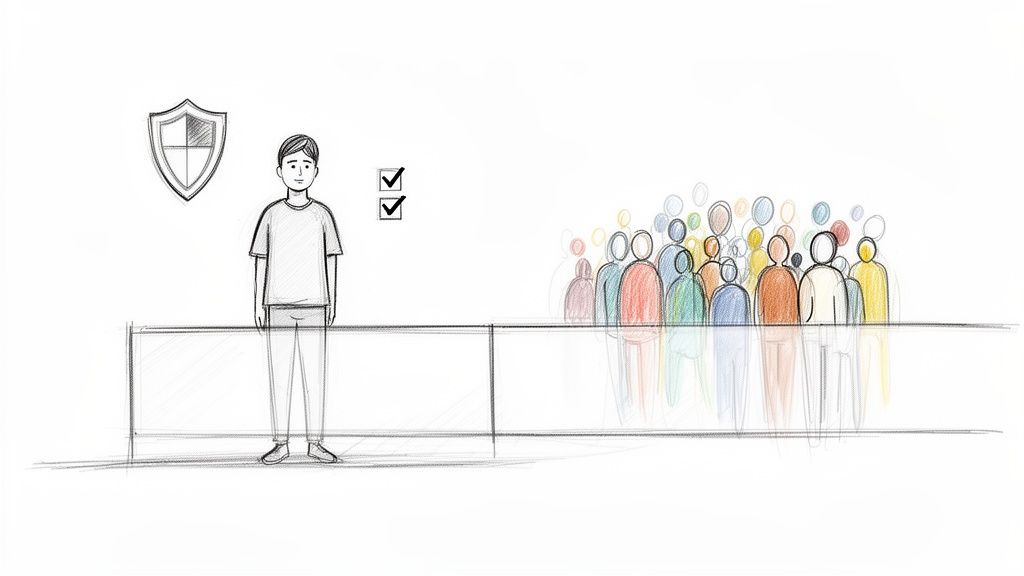
Think of boundaries as the guardrails that keep your recovery journey safely on the road. For many, the word "boundary" sounds like building a wall to shut people out. The truth is, setting boundaries is a powerful act of self-respect. It's about defining what you need to stay safe and sober, not pushing people away for good.
In early recovery, you're more vulnerable to triggers and unhealthy influences. The old ways of interacting with the world are no longer an option, but the new, healthier ways don't feel like second nature yet. Boundaries create the breathing room you need to heal, strengthen your resolve, and practice new coping skills without getting pulled back into old dynamics.
They send a clear signal—to yourself and others—that your sobriety is the top priority. This is a non-negotiable piece of navigating the complexities of relationships and recovery.
Understanding Different Types of Boundaries
Boundaries aren't a one-size-fits-all tool; they take different forms depending on the situation and the relationship. Getting clear on the main types helps you spot where you need to build stronger guardrails in your own life.
- Emotional Boundaries: These protect your emotional well-being. This might mean not taking responsibility for someone else's feelings, refusing to get dragged into guilt-tripping arguments, or limiting contact with people who are constantly critical of your recovery.
- Physical Boundaries: This is all about your personal space and physical safety. It can be as simple as not wanting a hug when you're feeling overwhelmed or as serious as refusing to get in a car with someone who has been drinking.
- Social Boundaries: These are about protecting your sobriety in social settings. Examples include declining invitations to bars or parties where heavy substance use is the main event, leaving an event early, or asking friends not to use substances around you.
Setting these rules can feel incredibly hard at first, especially with people you love. Guilt and fear of abandonment are completely normal reactions. You might worry about hurting someone's feelings or that they’ll just give up on you.
"A boundary is not a wall. It is a guideline that demonstrates self-respect and teaches others how to treat you. In recovery, it's a non-negotiable tool for survival."
This shift in perspective moves the focus from rejection to protection. You aren’t saying, "I don't care about you." You're saying, "I have to care for my recovery first, so I can continue to be here for you in a healthy way."
How to Communicate Your Needs Firmly but Kindly
How you set a boundary is just as important as the boundary itself. The goal is to be clear and firm, not aggressive or apologetic. Having a simple, repeatable script can help you communicate your needs without opening the door to a debate.
A really effective formula is: "I feel [your emotion] when [the specific behavior]. I need [what you need to happen]. If this can't happen, I will [the action you will take to protect yourself]."
Let's see it in action:
- Example 1 (Social Boundary): "I feel anxious when I'm at a party where everyone is drinking heavily. I need to leave now to protect my sobriety. I'd love to see you for coffee next week instead."
- Example 2 (Emotional Boundary): "I feel hurt when you bring up my past mistakes during our calls. I need our conversations to focus on the present. If that keeps happening, I'm going to have to end the call."
Notice how these statements are calm, specific, and centered on your needs and actions. You aren't trying to control the other person; you are controlling your own response. That’s the very heart of a healthy boundary. It’s a sign of a strong recovery, not a weak relationship.
Navigating Recovery in Your Relationships
Understanding that addiction damages relationships is one thing; knowing exactly how to start healing that damage is something else entirely. It takes a clear, structured game plan. The best treatment programs get this, recognizing that lasting recovery isn't just an individual project—it involves the entire family system.
Healing isn’t a solo mission. It’s about turning confused, hurt, and exhausted family members into a team of effective, educated allies who are all working toward the same goal.
Evidence-based therapies are the foundation for this work. They give everyone a framework for untangling the incredibly complex knots that addiction ties within a family. By treating the family as a whole, these approaches help everyone learn healthier ways to talk, listen, and support one another.
Healing the Entire Relationship Ecosystem
One of the most powerful tools in our arsenal is Family Systems Therapy. This approach is built on a simple but profound idea: a family is a single, interconnected unit. When one person is struggling, everyone feels the ripple effects. This therapy shifts the focus away from blaming the person with the SUD and instead helps everyone see—and change—the unhealthy patterns and roles the family has fallen into.
Instead of just putting a bandage on the symptoms, this therapy gets to the root of the dysfunction. It helps families unlearn enabling behaviors and build a new foundation on trust, respect, and solid boundaries. This is the heart of managing relationships and recovery.
Another critical tool is Dialectical Behavior Therapy (DBT). Addiction often puts emotional growth on hold, leaving people without the skills to manage intense feelings. DBT provides a practical toolkit for handling distress, communicating more effectively, and staying present through mindfulness.
When someone in recovery learns to manage their own emotions, they can show up in their relationships with more calm and clarity. It helps break the old, painful cycles of conflict and reaction that likely defined their interactions in the past.
Addressing Trauma and Practicing New Skills
Addiction and relational trauma are often deeply intertwined. To heal these wounds, a therapy like Eye Movement Desensitization and Reprocessing (EMDR) can be incredibly effective. EMDR helps the brain properly process and file away traumatic memories that would otherwise act as powerful triggers, paving the way for safer, more stable connections with the people you love.
Structured programs, like our Intensive Outpatient (IOP) and Partial Hospitalization (PHP) programs at Altura Recovery, provide a safe space to put all these new skills into practice. Think of it as a workshop. Here, you can try out new ways of communicating or setting boundaries with guidance from clinicians and support from peers before you take those skills home.
As you work on your recovery, exploring professional couples counselling services can also give you and your partner essential support and strategies designed just for you. A complete approach—one that combines individual therapy, family work, and specialized methods like these—is what heals the entire relationship ecosystem. It doesn’t just aim for sobriety; it creates the conditions for real, lasting change for everyone involved.
Common Questions About Relationships in Recovery
When you're navigating recovery, relationships often bring up some of the toughest, most practical questions. The answers here are meant to give you clear, straightforward guidance, reinforcing the strategies we've discussed for building healthy connections on your journey.
How Long Does It Take to Rebuild Trust After Addiction?
There’s no magic timeline here. Rebuilding trust is a slow, steady process built on consistent, honest actions—not a stopwatch. It’s less about how much time has passed and more about the quality of the effort you put in every single day.
Demonstrating accountability and protecting your sobriety are the only things that count. For loved ones, this means practicing patience and learning to recognize and appreciate small, consistent changes. The goal is progress, not perfection.
Should I Start Dating in Early Recovery?
Most recovery experts and people with long-term sobriety will give you the same advice: wait at least one full year before jumping into a new romantic relationship. Your first year is a critical time for self-discovery and for building a rock-solid foundation for your new life.
The emotional rollercoaster of a new romance can be a massive distraction at best and a powerful trigger at worst. Your number one job is to build a healthy, stable relationship with yourself and your support system first.
The most important relationship to nurture in early recovery is the one you have with yourself. Pouring your energy into self-care, therapy, and building sober friendships creates the stability needed for future healthy partnerships.
What If My Family Pushes Back on My New Boundaries?
It's completely normal to get some pushback when you introduce new boundaries into old family dynamics. The key is to communicate them calmly, firmly, and consistently without letting yourself get pulled into an argument.
Explain why the boundary is vital for your recovery and what will happen if it isn't respected. For example, "I need to end our phone calls if you start bringing up my past mistakes." Family therapy can be an incredible tool here, helping everyone learn and adapt to these healthier dynamics together.
How Can I Support a Loved One Without Enabling Them?
This is a big one. Support encourages recovery; enabling shields someone from the natural consequences of their actions. To truly support someone, you can offer emotional encouragement, celebrate their wins (no matter how small), and show up for things like family therapy.
To stop enabling, you have to stop making excuses for them, giving them money without accountability, or fixing the problems they create. Setting and holding firm, clear boundaries is the most loving and effective way to shift from an enabling role to a truly supportive one.
At Altura Recovery, we know that healing involves your entire support system. Our family workshops and evidence-based therapies are designed to help you and your loved ones navigate the often-tricky intersection of relationships and recovery. To see how we can support your journey, visit us at https://www.alturarecovery.com.