Yes, alcohol can absolutely trigger panic attacks. It’s a strange and frustrating paradox: the very thing you might reach for to calm your nerves can turn on you, causing the exact opposite effect.
This isn't a rare occurrence. It can happen while you’re drinking, during the dreaded next-day withdrawal (ever heard of ‘hangxiety’?), or as a result of long-term changes to your brain chemistry. Think of alcohol as a high-interest loan for calmness—it gives you a quick sense of relief, but the payback is steep, often leaving you more vulnerable to anxiety and even a full-blown panic attack.
The Vicious Cycle of Alcohol and Anxiety
If you've ever used a drink to take the edge off, only to find yourself hit with a wave of dread and a racing heart hours later, you're not alone. That initial feeling of relaxation is real, but as the alcohol wears off, your nervous system can rebound with a vengeance. This isn't just "in your head"; it's a direct physiological response to how alcohol messes with your brain.
This cycle is incredibly common. Anxiety disorders are the most prevalent mental health conditions on the planet, affecting a staggering 359 million people as of 2021. The link between alcohol and anxiety is a well-documented two-way street: drinking can worsen anxiety, and people struggling with anxiety are often more likely to drink. You can find more details on the global impact of alcohol on anxiety disorders00079-8/fulltext) in recent research.
Why Does a Relaxant Cause Panic?
So, how does a substance known for "loosening you up" end up causing such intense fear? It happens in a few distinct ways, and understanding them is the first step to breaking the cycle.
We're going to break down the three main scenarios where alcohol can set the stage for a panic attack:
- During Intoxication: While you're drinking, alcohol can throw your body's systems out of whack. Things like a sudden drop in blood sugar or a spike in heart rate can send physical signals that your brain misinterprets as a threat, triggering panic.
- During Withdrawal: This is the classic "hangxiety" scenario. As your body works hard to clear the alcohol, your nervous system, which was suppressed, swings back into overdrive. This rebound effect creates the perfect internal storm for anxiety and panic.
- Through Long-Term Changes: Over time, consistent alcohol use can actually rewire your brain, depleting the natural calming chemicals you rely on. This makes you more susceptible to anxiety and panic attacks even when you haven't had a drink.
To make this easier to grasp, here’s a quick summary of how these scenarios play out.
How Alcohol Triggers Panic Attacks at Different Stages
| Stage | Mechanism | Common Experience |
|---|---|---|
| Intoxication (While Drinking) | Alcohol disrupts your body’s equilibrium, causing physical symptoms (like heart palpitations or dizziness) that the brain can mistake for danger. | "I was just having a few drinks with friends and suddenly felt like I couldn't breathe. My heart was pounding out of my chest for no reason." |
| Withdrawal (The 'Hangxiety' Phase) | Your brain, which compensated for alcohol’s sedative effects, becomes over-excited as the alcohol leaves your system. This leads to a surge of adrenaline and anxiety. | "The morning after drinking, I woke up with a feeling of intense dread and fear. I felt shaky, on-edge, and convinced something terrible was about to happen." |
| Long-Term Use | Chronic drinking can alter neurotransmitter levels, particularly GABA (your brain’s main “calm down” signal), making you generally more anxious and prone to panic. | "I've noticed my baseline anxiety is just higher these days. Even on days I don't drink, I feel a sense of panic simmering just below the surface." |
The key takeaway here is simple but powerful:
Alcohol-induced panic is a real, physical, and surprisingly common phenomenon. Recognizing this link is the first critical step toward regaining control.
Once you understand how alcohol is hijacking your brain’s natural calming systems, you can start to move from a place of fear to one of empowerment. Effective, specialized help is available to help you manage both alcohol use and anxiety together, so you don't have to keep fighting this battle alone.
The Brain Chemistry Behind Alcohol-Induced Panic
To get why a depressant like alcohol can flip the switch and trigger panic, we need to look at what it does to your brain’s delicate chemical balance. Think of your brain as having a gas pedal and a brake. Alcohol’s main move is to slam on the brake, which is what gives you that initial wave of calm and relaxation.
This "brake" is a neurotransmitter called GABA (gamma-aminutyric acid). GABA's job is to slow down brain activity, dial down stress, and keep you feeling mellow. Alcohol essentially impersonates GABA, cranking up its effects. That’s why you feel less inhibited and more at ease after a drink or two.
But your brain is smart—it’s always trying to maintain equilibrium. When it senses this constant, artificial braking from alcohol, it fights back to rebalance the system. It does this by dialing down its own natural GABA production and making the "gas pedal"—an excitatory neurotransmitter called glutamate—extra sensitive.
The Rebound Effect
This is where the real trouble starts. As the alcohol begins to wear off, your brain is thrown into a state of neurochemical chaos. The artificial brake is suddenly gone, your natural brake system is running on fumes, and the gas pedal (glutamate) is now hair-trigger sensitive and basically stuck to the floor.
This abrupt swing from sedation to overstimulation is what’s known as the rebound effect. Your nervous system, no longer suppressed, lurches into a state of high alert. This leaves you feeling anxious, agitated, and incredibly vulnerable to a full-blown panic attack.
It’s like your brain’s volume knob is suddenly busted. The calming music has stopped, and all you can hear is blaring static with no way to turn it down. This piercing internal alarm is what can easily spiral into overwhelming panic.
This cycle—from the initial drink to withdrawal and long-term changes—is all part of the same disruptive process.
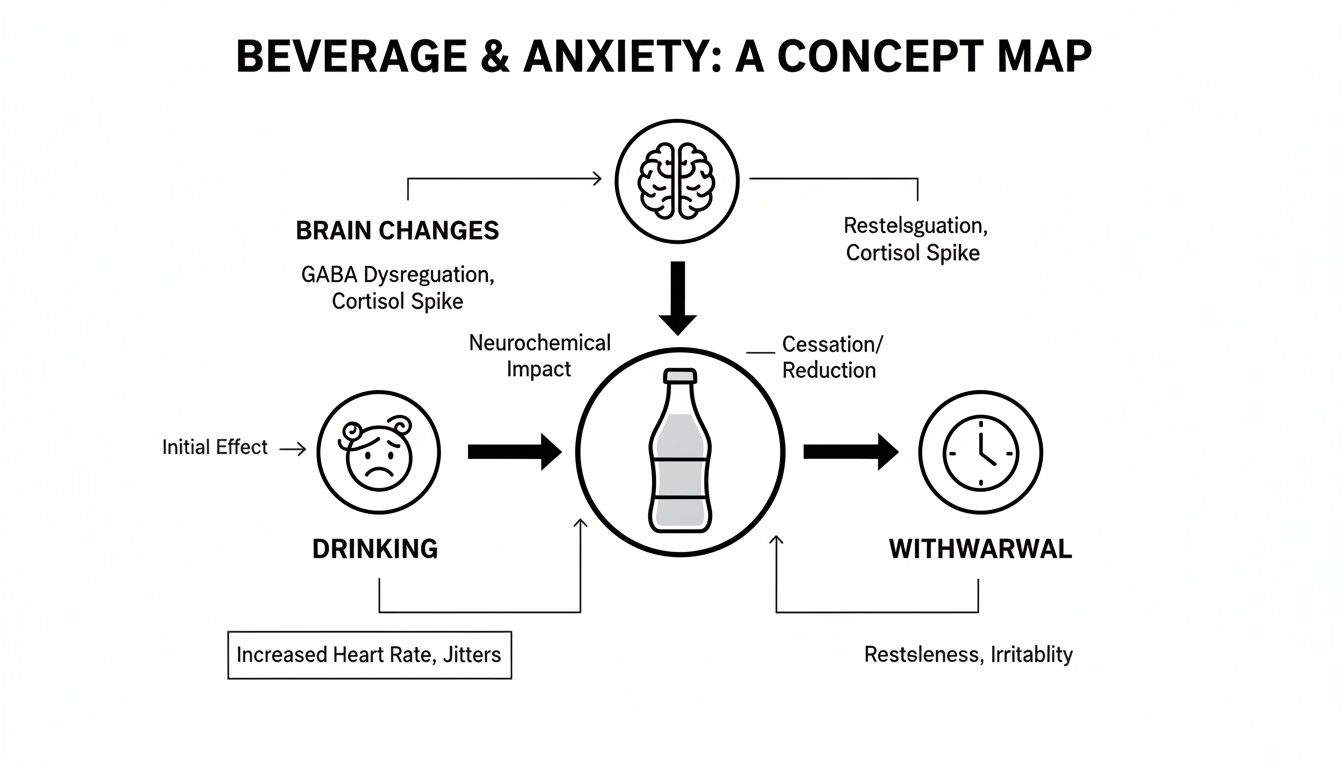
Whether it's the immediate effect, the withdrawal phase, or lasting brain alterations, alcohol messes with the very systems designed to keep you calm and centered.
Stress Hormones and Long-Term Changes
Over time, this repeated cycle of drinking and withdrawal can cause much more lasting damage. The constant yo-yoing of your brain chemistry throws your body's entire stress response system out of whack. For a deeper dive, it’s worth understanding the impact of stress hormones like cortisol and how they affect your overall health.
Chronic, heavy alcohol use eventually rewires your brain in a few dangerous ways:
- Depleted GABA Receptors: Your brain becomes less responsive to its own calming signals, even when you're not drinking.
- Elevated Glutamate Levels: Your baseline level of anxiety and agitation creeps higher and higher.
- Dysregulated Stress Response: Your body becomes primed to overreact to even minor stressors, making panic attacks far more likely.
In short, long-term drinking systematically erodes your brain’s natural resilience to stress. It wears down the very systems you need to manage anxiety, trapping you in a vicious cycle where the thing you think is helping—the alcohol—is actually the primary source of the problem.
Recognizing Panic Symptoms From Intoxication to Withdrawal
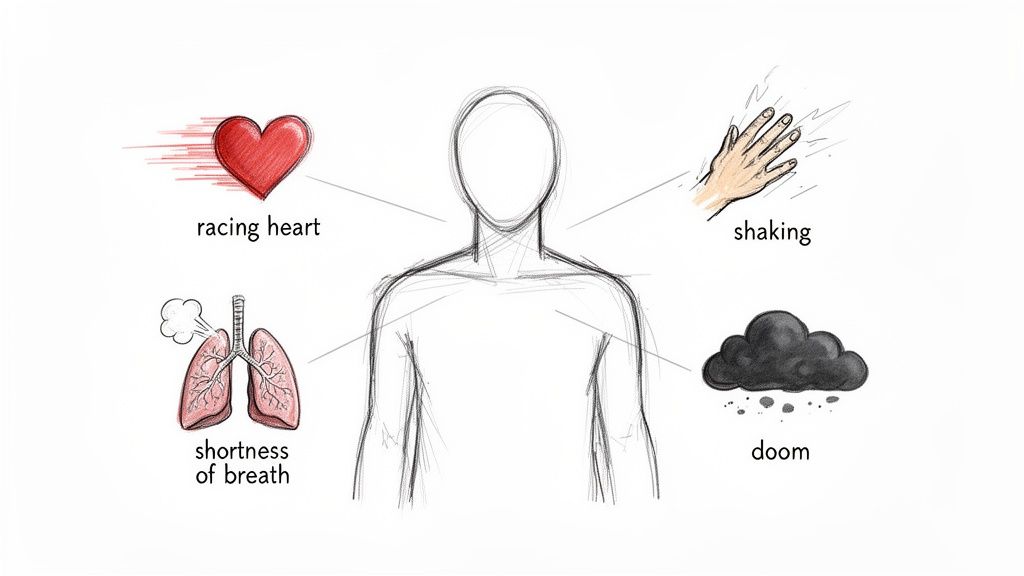
It’s easy to get confused between a really bad hangover and an alcohol-induced panic attack—both can leave you feeling absolutely awful. The key difference, though, is the sheer psychological terror that defines a panic attack. A hangover is mostly physical misery, but a panic attack is a sudden, crushing wave of fear that feels genuinely life-threatening.
This terrifying experience tends to pop up in two main scenarios: while you’re still intoxicated or, more often, during withdrawal. When you're drinking, alcohol can trigger physical changes—like a racing heart or a sharp dip in blood sugar—that your brain misreads as a direct threat. This confusion can flip the switch on your fight-or-flight response when there’s no real danger.
Hangxiety and Withdrawal Panic
The more common trigger for full-blown panic is the withdrawal phase, often dubbed "hangxiety." As the alcohol wears off and leaves your system, your central nervous system goes into overdrive, creating a perfect storm for anxiety and panic. The symptoms here go way beyond a simple headache and a queasy stomach.
What you're feeling is an intense sense of impending doom and a frightening loss of control. It’s critical to connect these sensations directly back to the alcohol. Research has found that about 20% of people with a substance use disorder also have a co-occurring anxiety or mood disorder, making this link especially powerful. You can learn more about the dual diagnosis of alcohol and anxiety to understand this connection better.
The symptoms are severe and can be deeply frightening, hitting you with both physical and mental distress.
Key Symptoms of an Alcohol-Related Panic Attack:
- A Racing or Pounding Heart: It might feel like your heart is about to beat right out of your chest, a sensation often mistaken for a heart attack.
- Shaking and Trembling: Uncontrollable shaking in your hands or throughout your body is a classic sign of an overstimulated nervous system.
- Shortness of Breath: You might gasp for air, feel like you can't breathe deeply enough, or sense your throat is closing up.
- An Overwhelming Sense of Dread: This is the hallmark of panic—a terrifying, unshakable feeling that something terrible is about to happen.
- Derealization: A bizarre feeling of being detached from your surroundings, almost like you’re watching a movie of your own life.
These symptoms aren't just part of a bad hangover; they are distress signals from a nervous system in turmoil. Recognizing them as a direct consequence of alcohol is the first step toward breaking the cycle.
Understanding these signs is vital. For those with a history of heavy drinking, these symptoms can sometimes overlap with a more severe and prolonged condition. Learning about post-acute withdrawal syndrome can provide more context on how withdrawal symptoms can linger. By identifying what you're experiencing, you can move from a place of fear to one of informed action.
Understanding Your Personal Risk Factors
Why can one friend drink socially without a flicker of trouble while another ends up in the terrifying grip of a panic attack after just a few drinks? The difference almost always comes down to a unique cocktail of personal risk factors. These factors make some people far more vulnerable to alcohol’s power to scramble the nervous system.
While not everyone who drinks will experience this, for those with certain predispositions, alcohol is like pouring gasoline on a smoldering fire.
One of the biggest predictors is a personal or family history of anxiety. If you already live with something like Generalized Anxiety Disorder, social anxiety, or PTSD, your brain's internal alarm system is already dialed up. Using alcohol to try and dial it down creates a dangerous feedback loop. The temporary relief it offers ultimately makes the underlying anxiety much, much worse. For a deeper dive into this connection, you can learn more about managing comorbid posttraumatic stress disorder.
The Harm Paradox Explained
This vulnerability creates a cruel twist known as the "harm paradox." It’s a situation where the very people drinking to find relief from anxiety are the ones who end up suffering the most severe consequences. Their attempt to find calm completely backfires, leading instead to more intense anxiety, a greater chance of panic attacks, and a higher likelihood of developing an alcohol use disorder (AUD).
This isn't just a theory; it's backed by solid data. A major analysis from the University of Minnesota revealed that people with pre-existing anxiety or depression experience more severe AUD symptoms for every single drink they consume. Their risk of developing an alcohol use disorder is between 20-40%—a huge jump compared to the 5% risk in the general population. Discover more insights about this research on AlcoholHelp.com.
This paradox highlights a critical truth: for anyone with a history of anxiety, alcohol is not a sustainable coping mechanism. It’s a high-interest loan on your mental well-being, and the repayment often arrives in the form of panic.
Ultimately, your personal risk profile is shaped by a few key things:
- Genetic Predisposition: A family history of either anxiety or alcohol use disorders can significantly increase your sensitivity.
- Existing Mental Health Conditions: Any underlying anxiety disorder dramatically cranks up your risk.
- Patterns of Self-Medication: If you consistently turn to alcohol to quiet social fears or get through daily stress, you're priming your brain for this negative cycle.
Recognizing these factors is the first real step toward understanding why your body reacts the way it does. It also clarifies why breaking the cycle means you have to address both the drinking and the anxiety at the same time.
How to Manage an Alcohol-Induced Panic Attack in the Moment
When a panic attack hits, it feels like your internal alarm system is blaring with no off switch. Your goal in that moment isn’t to solve the anxiety, but simply to ride out the wave safely.
The first and most important thing is to tell yourself that this intense, overwhelming fear is temporary. It’s a direct chemical reaction to the alcohol leaving your system, not a sign that you’re losing control forever.
You might be tempted to have another drink. Don’t. While it feels like a quick fix, it only postpones the rebound anxiety and makes it worse, digging the cycle of panic even deeper. Instead, the job is to pull yourself back into the present moment. Using powerful grounding techniques for anxiety can anchor you when the feelings get too intense, dialing down the symptoms just enough to get through.
Simple Grounding Techniques to Use Right Now
The trick is to shift your focus away from the internal storm and onto your physical surroundings. Simple sensory exercises can break the fear loop and give your nervous system a chance to reset.
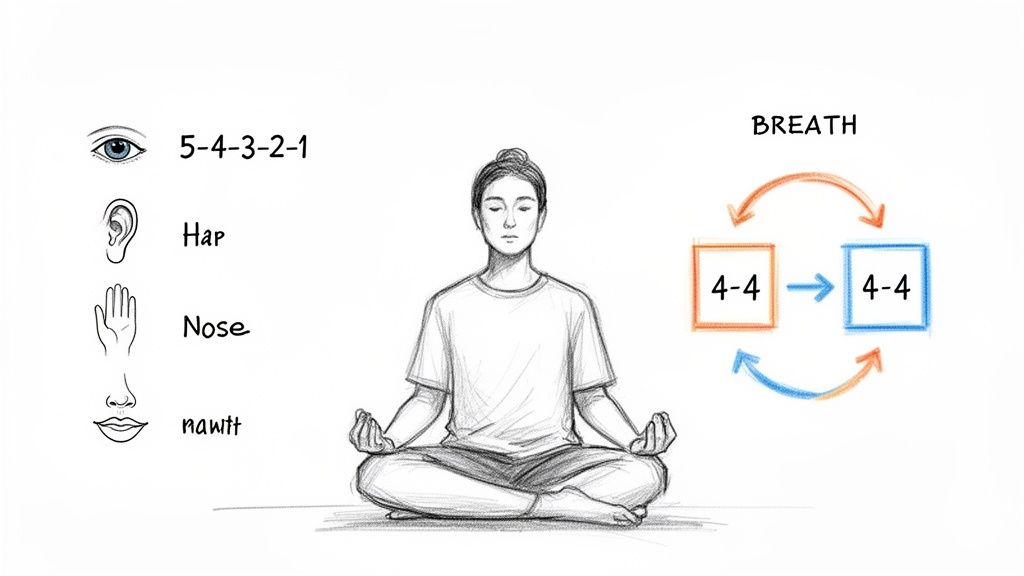
One of the most effective methods is the 5-4-3-2-1 technique:
- 5: Name FIVE things you can see around you. Notice a lamp, a picture on the wall, or the color of your shirt.
- 4: Focus on FOUR things you can touch. Feel the texture of your jeans, the cool glass of a window, or the weight of your phone in your hand.
- 3: Listen for THREE things you can hear. It could be the hum of the fridge, the sound of traffic outside, or just your own breathing.
- 2: Identify TWO things you can smell. Maybe it's the faint scent of coffee in the air or soap from the bathroom.
- 1: Name ONE thing you can taste. Notice the lingering taste of toothpaste or the sip of water you just took.
This exercise doesn’t make the panic vanish instantly. What it does is redirect your brain's attention from the chaos inside to the solid reality outside. That small shift is often enough to give your nervous system a break.
Controlled breathing is another powerful tool. Try “box breathing”: Inhale slowly for a count of four, hold your breath for four, exhale slowly for four, and hold again for four. Repeat this cycle a few times. For more exercises like this, you can explore other mindfulness exercises for stress relief.
While these strategies are incredibly helpful for managing the wave of panic, some situations need immediate medical attention. If you experience chest pain, severe confusion, or have a seizure, call 911 right away.
Finding Lasting Relief from Alcohol and Anxiety
While in-the-moment coping skills are great for surviving a panic attack, they don't fix the underlying problem. Lasting relief only comes when you break the destructive cycle where alcohol and anxiety feed each other. This means tackling both issues at the same time through what’s known as integrated treatment for a dual diagnosis—the gold standard of care.
Trying to fix one problem while ignoring the other is like trying to patch a leak in a boat while still drilling new holes in the hull. It just doesn't work. You have to address both the substance use and the anxiety together to build a truly stable foundation for recovery. This is where evidence-based therapies become your most important tools.
Proven Therapies for Dual Diagnosis
Effective treatment isn't about willpower; it's about learning new, healthier ways to cope so you no longer need to self-medicate. Two of the most powerful therapies for this are:
- Cognitive Behavioral Therapy (CBT): This approach helps you get under the hood of your own thoughts. CBT gives you practical tools to identify, challenge, and reframe the anxious thought patterns that trigger panic, changing your automatic reactions to stress.
- Dialectical Behavior Therapy (DBT): DBT is a game-changer for anyone who feels hijacked by intense emotions. It teaches concrete skills in mindfulness, distress tolerance, and emotional regulation, so you can navigate tough feelings without reaching for a drink.
The connection between drinking and anxiety isn't just a coincidence; it's a causal one. A massive 29-year study in South America confirmed that alcohol consumption directly fuels the prevalence of anxiety. In Argentina, for instance, researchers found a bidirectional nightmare: alcohol worsened anxiety, and that heightened anxiety then drove more drinking. It’s a vicious cycle, and you can read the full research about these findings to see just how deep the connection runs.
The goal of therapy is not just to stop the panic but to build a life where you feel equipped to manage stress and anxiety without needing alcohol as a crutch.
Finding the Right Support
Getting professional, compassionate help doesn't have to upend your life. Flexible outpatient programs offer intensive support while still allowing you to keep up with work, school, and family. These programs often include services like medication management for mental health, which can add another layer of stability to your recovery.
By seeking professional help, you give yourself the best possible chance to build a stable, panic-free future. It’s a proactive and hopeful step toward regaining control and finding the lasting peace you deserve.
Frequently Asked Questions
The link between a few too many drinks and a sudden wave of terror can feel confusing and deeply unsettling. Let's clear up some of the most common questions people have about this frightening connection.
Can Just One Night of Heavy Drinking Cause a Panic Attack?
Yes, absolutely. A single night of heavy drinking is more than enough to trigger a panic attack, especially as the alcohol starts to wear off. People often call this miserable experience "hangxiety."
Here’s what’s happening: as your blood alcohol level plummets, your nervous system, which was suppressed by the alcohol, rebounds with a vengeance. It jolts into an overstimulated state, causing a racing heart, a sense of dread, and agitation that can quickly spiral into a full-blown panic attack. It’s a direct physiological reaction to your brain chemistry getting thrown completely off balance.
Is It a Panic Attack or Just a Bad Hangover?
While symptoms like a pounding headache, nausea, and the shakes can definitely overlap, the real difference is the intense psychological fear. A hangover is mostly a physical ordeal—you feel sick, exhausted, and drained.
An alcohol-induced panic attack, on the other hand, is completely dominated by an overwhelming sense of terror. You might feel a sense of impending doom, or even a terrifying conviction that you are losing control or dying.
The intense emotional distress is the ultimate hallmark of a panic attack. If your physical symptoms are paired with a crushing sense of fear that feels totally out of proportion to the situation, it’s almost certainly a panic attack.
If I Stop Drinking Will the Panic Attacks Go Away?
For many people, the answer is a resounding yes. Quitting alcohol often significantly reduces or completely stops the panic attacks tied to intoxication and withdrawal. Once alcohol stops disrupting your brain's delicate chemical balance, your nervous system can finally start to regulate itself properly again.
But there's a catch. If you were using alcohol to self-medicate an underlying anxiety disorder, those symptoms might feel more intense once you stop drinking. This is precisely why getting professional, integrated treatment is so important—it helps you manage both the drinking and the root causes of the anxiety to build a truly stable foundation for wellness.
What Is the Best Help for Alcohol-Induced Panic Attacks?
Hands down, the most effective solution is an integrated treatment program that addresses both issues at once. This is often called dual diagnosis or co-occurring disorders treatment. This approach is critical because it acknowledges that the alcohol use and the anxiety disorder are tangled together and need to be treated that way.
Look for programs that use evidence-based therapies like Cognitive Behavioral Therapy (CBT) and Dialectical Behavior Therapy (DBT). These methods don't just put a bandage on the problem; they give you durable, healthy coping skills to manage stress and reframe anxious thoughts, getting to the core of what drives the cycle of panic and drinking in the first place.
If you're caught in the cycle of alcohol and anxiety, you don’t have to find your way out alone. At Altura Recovery, we specialize in integrated outpatient care for dual diagnosis, helping you heal the root causes of both conditions. Learn how our flexible, compassionate programs can guide you toward lasting freedom.