
Relapse is not a sudden failure but a gradual process with clear, identifiable warning signs. While recovery is a journey of immense growth and hard-won progress, recognizing the subtle shifts in behavior, emotion, and thinking is a critical skill for maintaining long-term sobriety. This guide is designed to move beyond fear and into empowerment, providing a detailed roadmap to the most common signs and symptoms of relapse. By learning to spot these indicators early, you can intervene effectively, reinforce your recovery, and prevent a temporary lapse from turning into a full-scale return to substance use.
This article breaks down the 8 most critical signs, from emotional changes like mood swings to behavioral shifts like neglecting self-care. For each sign, we will provide more than just a description. You will find:
- Actionable self-help steps you can take immediately.
- Clear guidance on when to seek professional care.
- Tailored advice for leveraging outpatient options like Intensive Outpatient Programs (IOP) and Partial Hospitalization Programs (PHP).
- Practical tips for family members on how to spot signs and offer support.
Understanding these signals is the first and most powerful step toward protecting your recovery. It allows you to address challenges proactively, utilize your support systems, and strengthen the foundation you have worked so hard to build. This list provides the awareness and the tools needed to navigate the complexities of recovery with confidence and resilience.
1. Emotional Numbness or Mood Swings
One of the most critical, yet often overlooked, signs and symptoms of relapse is a significant shift in your emotional state. This can manifest as either emotional numbness, known as anhedonia, or as sudden, unpredictable mood swings. Early in recovery, you work hard to develop healthy coping mechanisms to process feelings. When these skills begin to falter, emotional dysregulation becomes a powerful internal trigger, making a return to substance use seem like a viable, albeit destructive, solution for managing internal discomfort.
Emotional numbness is the inability to feel pleasure or joy from activities you once loved, creating a flat, gray emotional landscape. On the other end of the spectrum, mood swings might look like intense irritability over minor issues, sudden bursts of anxiety, or deep, unexplained sadness. These aren't just "bad days"; they are persistent patterns that disrupt your daily life and indicate that your emotional foundation is becoming unstable.
Spotting Emotional Dysregulation
Recognizing these shifts requires self-awareness. Consider these real-world examples:
- A young adult in a Partial Hospitalization Program (PHP) feels persistently numb and disconnected, even when celebrating a personal achievement with family.
- A professional in a virtual Intensive Outpatient Program (IOP) finds themselves snapping at coworkers over small mistakes, a stark contrast to their typically calm demeanor.
- Someone in recovery notices they no longer look forward to their weekly hiking trip, a hobby that once brought them peace and clarity.
Immediate Steps You Can Take
If you notice these emotional signs, it’s crucial to act immediately rather than waiting for them to escalate.
- Track Your Mood: Use a journal or a mood-tracking app on your phone to log your emotional state several times a day. This creates a data-driven picture of your patterns that you can share with your therapist.
- Use Your Skills: Re-engage with the emotional regulation skills learned in your treatment program, such as Dialectical Behavior Therapy (DBT) techniques like Opposite Action or mindfulness exercises.
- Communicate Openly: Immediately inform your therapist or support group about these changes. Don’t downplay them; they are significant relapse indicators.
- Check-In Daily: Establish a daily check-in with an accountability partner or sponsor to verbalize your emotional state and receive objective feedback.
When to Seek Professional Support
While self-help strategies are effective first steps, professional intervention is necessary when emotional changes persist or intensify. Contact your outpatient provider if your mood swings are impacting your work or relationships, or if feelings of numbness and hopelessness last for more than a few days. If you are part of an outpatient program like Altura's IOP, request an immediate one-on-one session to adjust your treatment plan or schedule a psychiatric medication review to ensure your current regimen is still effective.
2. Social Withdrawal and Isolation
One of the most dangerous signs and symptoms of relapse is actively pulling away from the very people who support your recovery. This social withdrawal involves isolating yourself from loved ones, recovery communities, and your professional support network. Sobriety is built on connection and accountability; when you begin to avoid meetings, therapy sessions, or family gatherings, you dismantle these protective barriers and create a private space where thoughts of substance use can grow unchecked.

This isolation is rarely a conscious decision to relapse but rather a subtle drift. It often stems from shame, anxiety, or the feeling that you are a burden to others. You might start by skipping one support group meeting, then another, until you've stopped going entirely. This withdrawal isn't just about physical absence; it can also be emotional, like not answering texts from your sponsor or being disengaged during family dinners.
Spotting Social Withdrawal
Recognizing the slide into isolation requires an honest look at your recent behaviors. Consider these real-world examples:
- A client in an Intensive Outpatient Program (IOP) stops attending evening group sessions without providing a reason.
- A young professional who once enjoyed weekly family dinners now consistently declines invitations, citing work as an excuse.
- Someone in recovery stops responding to daily check-in texts from their accountability partner and misses scheduled meetings.
- A resident in a sober living facility spends more and more time alone in their room instead of participating in house activities.
Immediate Steps You Can Take
If you recognize this pattern in yourself, taking immediate, deliberate action to reconnect is vital for your recovery.
- Schedule Connections: Treat your support meetings and therapy sessions like non-negotiable work appointments. Block them out on your calendar.
- Establish Accountability: Create a clear accountability plan with a recovery peer or sponsor that includes daily check-ins, even if it’s just a brief text.
- Leverage Virtual Options: If transportation or scheduling makes in-person attendance difficult, use virtual IOP or support group options to stay connected from home.
- Be Honest: Tell your therapist or support group that you're feeling the urge to isolate. Voicing this is the first step to addressing the underlying cause.
When to Seek Professional Support
While reaching out to peers is a great start, professional guidance is essential if the urge to isolate persists or if you've already withdrawn significantly. Contact your outpatient provider if you've missed multiple therapy sessions or support meetings. If you are part of a program like Altura’s, this is a clear signal to reconnect with your case manager. They can help you re-engage with demographic-specific group therapy (for professionals, young adults, etc.) to foster connections with relatable peers and adjust your relapse prevention plan to include mandatory social engagement goals.
3. Neglecting Self-Care and Daily Routines
A cornerstone of sustainable recovery is the structure provided by consistent self-care and daily routines. When these foundational habits begin to crumble, it's a significant warning sign of an impending relapse. This neglect of personal hygiene, sleep, nutrition, and wellness practices indicates that your physical and mental health are deteriorating. This physical decline often fuels cognitive distortions, creating a dangerous cycle where feeling unwell reinforces emotional vulnerability and increases substance cravings.
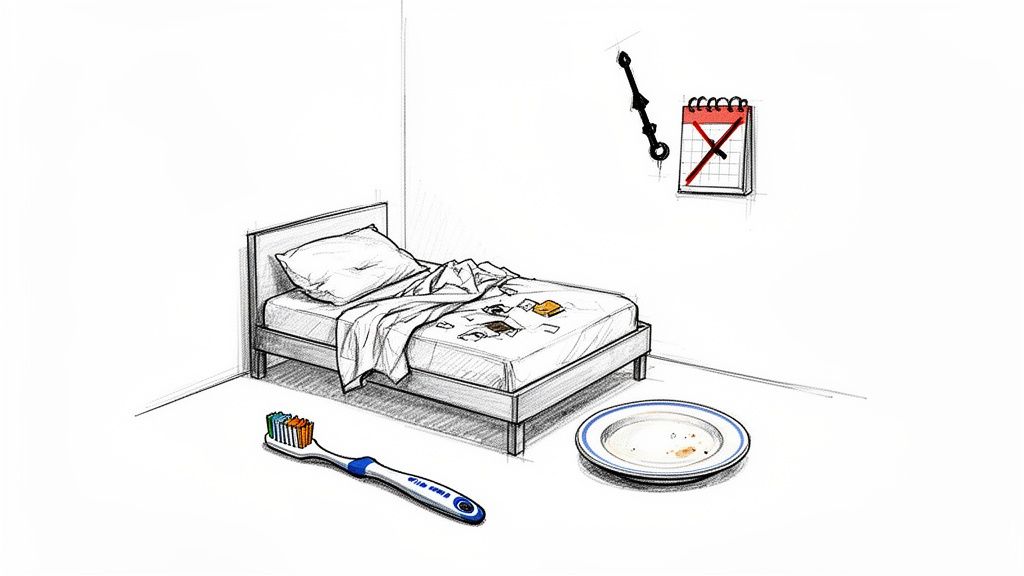
This goes beyond simply having an "off" day or a messy room. It is a noticeable pattern of abandoning the very activities that support your well-being. Poor sleep disrupts emotional regulation, inadequate nutrition affects mood and energy, and a decline in personal appearance can reflect a deeper internal struggle with self-worth. These are not just superficial changes; they are critical signs and symptoms of relapse that show your recovery infrastructure is becoming unstable.
Spotting Self-Care Neglect
Recognizing this slide requires honest self-assessment or feedback from loved ones. Consider these real-world examples:
- A professional in an outpatient program stops their morning gym routine and begins sleeping poorly, citing work stress as the reason.
- A young adult client starts eating irregularly, skipping meals, and shows a visible decline in their personal appearance and hygiene.
- Someone in recovery begins consistently canceling or "forgetting" important medical and dental appointments they had previously prioritized.
Immediate Steps You Can Take
If you notice your routines slipping, it is vital to take immediate, structured action to get back on track.
- Create a Checklist: Develop a simple daily self-care checklist covering sleep, nutrition, hygiene, and movement. Physically checking off items can restore a sense of accomplishment.
- Schedule It: Treat self-care activities like non-negotiable appointments. Block out time in your calendar for exercise, meal prep, or your evening wind-down routine.
- Start Small: If a full routine feels overwhelming, commit to one small, manageable self-care practice each day, such as a five-minute walk or making your bed.
- Find an Accountability Partner: Ask a sponsor, therapist, or trusted friend to check in with you daily about your basic self-care habits.
When to Seek Professional Support
While you can rebuild routines on your own, persistent neglect often requires professional intervention. Contact your treatment provider if you are unable to re-establish a healthy routine after a week or if the neglect is severely impacting your mood and energy. If you are in an IOP or PHP, this is a critical issue to bring to your primary therapist. They can help you utilize life skills training to develop sustainable routines or recommend a psychiatric evaluation, as severe sleep disruption is a major relapse risk that may require medical support.
4. Dishonesty and Deception
A breakdown in honesty is one of the most definitive signs and symptoms of relapse. Deception, whether through small omissions or outright lies, signals a conscious or subconscious move away from the principles of recovery and back toward the behaviors that sustain addiction. Lying to treatment providers, family, or accountability partners about your whereabouts, feelings, or adherence to your recovery plan creates the secrecy needed for a relapse to take hold. It is often the first tangible step back toward substance use.
This erosion of integrity doesn’t happen overnight. It may start with minimizing cravings in a group therapy session to appear “stronger” or telling a loved one you attended a support meeting when you skipped it. These small dishonesties are dangerous because they break down the foundation of trust and accountability essential for long-term sobriety. They reveal an internal conflict where the desire to use is beginning to outweigh the commitment to recovery.
Spotting a Breakdown in Honesty
Recognizing dishonesty requires paying attention to inconsistencies between words and actions. Consider these real-world examples:
- A client in a PHP program reports they are managing stress well but their family observes increasing isolation and irritability.
- Someone in a virtual IOP program minimizes the frequency of their substance cravings to their therapist, fearing it will be seen as a failure.
- A professional lies about having lunch with an old colleague when they actually met up with a former using friend.
- A young adult claims to be taking their prescribed psychiatric medication but is secretly skipping doses, creating emotional instability.
Immediate Steps You Can Take
If you catch yourself being dishonest, it’s a critical warning sign that requires immediate action to get back on track.
- Commit to Radical Honesty: The next time you speak with your therapist, sponsor, or support group, make a commitment to be 100% truthful, especially about the things you are most ashamed of. Your treatment team can’t help you with problems they don't know exist.
- Identify the "Why": Use a journal to explore the fear or shame driving the deception. Are you afraid of disappointing someone? Do you feel ashamed of your cravings? Pinpointing the root cause is the first step to addressing it.
- Inform Your Support System: Immediately tell your accountability partner or sponsor that you have been dishonest. Acknowledging the behavior out loud reduces its power and reinstates your commitment to transparency.
- Review Your Relapse Prevention Plan: Revisit your plan and add specific honesty commitments. For example, vow to text your sponsor immediately after having a craving instead of hiding it.
When to Seek Professional Support
While self-correction is a powerful tool, a pattern of dishonesty requires professional intervention to prevent a full-blown relapse. Contact your outpatient provider if you find you are unable to stop lying or if the lies are becoming more significant. If you are enrolled in an outpatient program, request an individual session to address this specific behavior. Discussing the underlying drivers for deception with a therapist can help you develop strategies to manage shame and fear, reinforcing honesty as a core recovery skill.
5. Overconfidence, Complacency, and Cognitive Distortions
A dangerous yet common warning sign of relapse is a shift in thinking that creates a false sense of security. This often appears as overconfidence or complacency, where you begin to believe your recovery is "cured" or "complete." This mindset paves the way for cognitive distortions: irrational ways of thinking like rationalization, minimization, or all-or-nothing thinking. When you believe you've mastered recovery, you might lower your defenses, stop engaging in crucial maintenance work, and create internal permission to return to old, destructive habits.
Overconfidence leads to dismantling the very support system that got you stable, such as skipping therapy, discontinuing medication without medical advice, or re-engaging with high-risk people or places. Cognitive distortions then provide the flawed logic needed to justify these risky behaviors. Thoughts like "one drink won't hurt" or "I already missed a meeting, so I might as well give up" are powerful internal triggers that directly precede a physical relapse. These are not signs of strength; they are critical signs and symptoms of relapse that show your cognitive foundation is cracking.
Spotting Faulty Thinking Patterns
Recognizing these cognitive shifts is key to preventing them from escalating. Consider these real-world examples:
- A professional who has been sober for six months decides they no longer need their weekly IOP group session, believing they have "moved past" needing that level of support.
- A young adult stops taking their prescribed psychiatric medication because they "feel fine now," failing to recognize the medication is what contributes to their stability.
- Someone in recovery starts socializing with old using friends, rationalizing that they are strong enough to "handle it" and won't be influenced.
- An individual thinks, "I've worked so hard; I deserve a reward," and begins to view substance use as a justifiable treat (minimization).
Immediate Steps You Can Take
If you recognize these thought patterns in yourself, take immediate action to ground your recovery in humility and realism.
- Practice Thought Monitoring: Use a journal to write down and challenge distorted thoughts as they arise. Apply Cognitive Behavioral Therapy (CBT) techniques to reframe them with more rational, recovery-focused thinking.
- Create a Relapse Prevention Plan: Write down specific "if-then" scenarios. For example, "If I think about skipping my support meeting, then I will immediately call my sponsor."
- Track Your Practices: Monitor your attendance at therapy, use of coping skills, and engagement with your support network. A decrease in these activities is a clear red flag.
- Build Humility: Re-engage with your support group or peers. Sharing your experience reminds you that recovery is a continuous process, not a destination.
When to Seek Professional Support
While self-awareness is a powerful tool, cognitive distortions can be incredibly convincing and difficult to overcome alone. It is time to seek professional help if you find yourself consistently justifying risky behaviors or have already stopped participating in key aspects of your recovery plan. Contact your outpatient provider immediately if you have stopped or want to stop therapy, meetings, or medication. In a program like Altura's PHP, you can request a relapse prevention review with your therapist to identify these cognitive vulnerabilities and strengthen your treatment plan before a lapse occurs.
6. Increased Stress, Unresolved Trauma, and Mental Health Deterioration
A significant increase in stress, the resurfacing of unresolved trauma, or a decline in your mental health are powerful catalysts for relapse. Recovery requires a stable internal foundation, but these factors can severely erode that stability. Mounting stress activates the brain’s reward circuitry and impairs judgment, making substance use seem like a quick fix. Similarly, unaddressed trauma and worsening psychiatric conditions like depression or anxiety create an intense internal pressure that significantly heightens relapse vulnerability.
This cluster of triggers represents a critical danger zone in recovery. When your capacity to cope is overwhelmed by external pressures or internal turmoil, old, destructive patterns can reemerge. The brain, under duress, may revert to familiar, albeit harmful, coping strategies. It’s also crucial to be aware of how certain mental health conditions, like the hidden signs of depression in men, can manifest subtly, often contributing to the path to relapse.
Spotting These Internal Triggers
Recognizing when stress and mental health are reaching a breaking point is key. Consider these common scenarios:
- A working professional facing unexpected job loss experiences a surge in depressive symptoms and notices a sharp increase in substance cravings.
- A young adult in an IOP program begins having flashbacks from past trauma during a stressful academic period, feeling intensely vulnerable to using.
- Someone managing a bipolar disorder diagnosis experiences a mood episode that coincides with a return of obsessive thoughts about substance use.
- A client navigating complex family dynamics faces a major relationship conflict, triggering thought patterns and behaviors from their period of active use.
Immediate Steps You Can Take
If you identify these signs and symptoms of relapse in yourself, proactive intervention is essential.
- Practice Stress Management: Immediately re-engage with stress-reduction techniques learned in therapy, such as CBT, mindfulness, or grounding exercises.
- Review Your Crisis Plan: A solid relapse prevention plan should include specific steps for high-stress periods. Review and implement that plan now.
- Increase Support: Proactively reach out to your sponsor, support group, or therapist. Don't wait for the situation to worsen; anticipate the need for more support.
- Process in Group Therapy: Use your group therapy sessions to process current stressors and learn from peers who are managing similar challenges.
When to Seek Professional Support
While self-help strategies are a vital first response, unmanaged stress, trauma, and mental health deterioration require professional intervention. Contact your outpatient provider immediately if your anxiety or depression symptoms are worsening, or if stress is causing you to actively consider using. If you are in a program like Altura’s IOP, ask for a one-on-one session to address these triggers. It may also be necessary to schedule a psychiatric evaluation to manage your mental health symptoms more effectively and reduce your relapse risk.
7. Abandoning Coping Skills and Relapse Prevention Strategies
One of the most telling signs and symptoms of relapse is when an individual stops using the very tools designed to keep them safe. Abandoning coping skills and relapse prevention strategies is like a pilot deciding to ignore their navigation instruments in a storm. These skills, learned through rigorous practice in treatment, are the foundation of a stable recovery. When their use declines, it signals that an individual’s ability to manage triggers, cravings, and daily stressors without substances is eroding, making relapse highly probable.
This abandonment often starts subtly. It’s not a conscious decision to relapse but a gradual drift fueled by complacency or overconfidence. The belief that one is "cured" or "fine now" leads to neglecting the daily maintenance required for long-term recovery. This neglect leaves a person vulnerable, as they no longer have practiced, go-to strategies when life inevitably presents challenges, whether it's work stress, relationship conflict, or sudden anxiety.
Spotting the Abandonment of Skills
Recognizing this drift is key to intervening early. Consider these common scenarios:
- A professional who once used stress management techniques before big meetings now forgoes them, believing their workload is manageable, only to feel overwhelmed later.
- A young adult in a PHP program stops their daily journaling practice because they've been feeling good, leaving them without an outlet when a significant stressor returns.
- Someone in recovery neglects to review their relapse prevention plan and its trigger list, inadvertently accepting an invitation to a high-risk social event.
- An individual stops using grounding techniques for anxiety, causing their internal distress to build until substance use feels like the only option for relief.
Immediate Steps You Can Take
If you recognize that you're letting your skills slip, take immediate action to reinforce these critical habits.
- Treat Skills Like Medication: View your coping skills as essential daily maintenance, not optional tools for emergencies. Schedule time for them just as you would for an important appointment.
- Create Visual Reminders: Write down your top 3-5 coping skills and place them where you'll see them daily, such as on a sticky note on your bathroom mirror or as your phone's wallpaper.
- Schedule Daily Practice: Commit to practicing at least one skill every day for five minutes, even when you feel calm and stable. This keeps the neural pathways strong.
- Build a "Coping Menu": Create a written list of all the techniques you’ve learned. When you’re stressed and experiencing brain fog, you can refer to this menu instead of trying to recall a skill from memory.
When to Seek Professional Support
While self-correction is powerful, professional guidance is crucial if you find it difficult to re-engage with your skills or realize they are no longer effective. If you’ve stopped using your strategies because they don’t seem to be working anymore, contact your outpatient provider immediately. In an IOP or PHP setting like Altura's, you can use individual therapy sessions to troubleshoot and refine your skills, ensuring they are tailored to your current life challenges. Group therapy also offers a space to learn how others apply their skills and to practice communication techniques in a supportive environment.
8. Contact with High-Risk People, Places, or Substance-Related Cues
One of the most concrete signs and symptoms of relapse is the reintroduction of high-risk triggers into your environment. This happens when you intentionally or unintentionally expose yourself to people, places, or objects associated with your past substance use. Early recovery is built on creating a safe, supportive environment, so dismantling those boundaries significantly compromises your stability. These exposures are powerful because they activate deeply ingrained psychological and physiological responses, making a return to substance use feel familiar and easily accessible.

This doesn't always look like a dramatic return to an old scene. It can be as subtle as driving a familiar route past a bar, accepting a social invitation from a former using friend, or keeping old paraphernalia as a memento. These actions lower your defenses and normalize the idea of using again, creating a slippery slope where a momentary lapse in judgment can quickly escalate. A concerning behavior that often signals a step towards relapse is actively seeking out substances or engaging with 'substance-related cues'. This could involve searching online for ways to obtain prescription stimulants, such as finding Adderall.
Spotting High-Risk Exposures
Recognizing these environmental threats requires honest self-assessment. Consider these real-world examples:
- A professional in recovery runs into a former using friend at a networking event and agrees to "get a drink sometime," exchanging numbers.
- A young adult rationalizes they can attend a party where they know substances will be present, believing they have enough willpower to abstain.
- Someone begins socializing with a new group of friends who drink heavily, telling themselves they can just "be around alcohol" without partaking.
Immediate Steps You Can Take
If you recognize you are increasing your exposure to triggers, you must reinforce your boundaries immediately.
- Create a Written List: Identify and write down every person, place, and situation that poses a risk to your recovery. Be specific.
- Develop Avoidance Strategies: For each item on your list, create a clear plan. This could mean deleting phone numbers, changing your route to work, or declining certain invitations.
- Plan for Unexpected Encounters: Write out and rehearse specific scripts for what you will say if you unexpectedly meet a high-risk person.
- Build Alternative Networks: Actively invest time in building new, sober social circles through recovery groups, hobbies, or community activities.
When to Seek Professional Support
While self-management is key, professional guidance is crucial when you find yourself repeatedly drawn to high-risk situations or struggling to set boundaries. If you are deliberately seeking out triggers or find your cravings are unmanageable after an accidental exposure, contact your therapist or outpatient program immediately. In a virtual IOP, you can schedule an emergency session to explore the underlying reasons for this behavior, such as loneliness or peer pressure, and develop stronger coping strategies and relapse prevention plans.
8-Point Relapse Signs Comparison
| Warning sign | Implementation complexity 🔄 | Resource & efficiency ⚡ | Expected outcomes ⭐ | Ideal use cases 💡 | Key advantages 📊 |
|---|---|---|---|---|---|
| Emotional Numbness or Mood Swings | Moderate 🔄 — needs assessment and ongoing mood monitoring | Low–Moderate ⚡ — journaling, therapy, possible med review | High ⭐ if identified early; reduces relapse likelihood | Early detection in SOP/IOP; clients with sudden mood shifts | Restores emotional regulation; enables timely clinical adjustments |
| Social Withdrawal and Isolation | Low–Moderate 🔄 — observable but may require proactive outreach | Moderate ⚡ — outreach, group access, family engagement | High ⭐ when reconnected; strengthens protective factors | Missed groups/appointments; declining communication with supports | Measurable attendance metrics; rapid impact from reintegration |
| Neglecting Self-Care and Daily Routines | Low 🔄 — concrete behaviors to monitor and re-establish | Low–Moderate ⚡ — lifestyle supports, occasional specialist referrals | Moderate–High ⭐ — routine improvements boost resilience | Declines in hygiene, sleep, nutrition, exercise | Immediate psychological benefits; restores structure and energy |
| Dishonesty and Deception | High 🔄 — trust repair and exploration of underlying shame/trauma | Moderate–High ⚡ — intensive therapy, accountability systems | Variable ⭐ — repairable but trust rebuilding takes time | Inconsistent reports, secrecy about use or whereabouts | Rebuilding honesty restores therapeutic alliance; uncovers co-occurring issues |
| Overconfidence, Complacency, Cognitive Distortions | Moderate 🔄 — subtle, requires cognitive assessment | Low–Moderate ⚡ — CBT, monitoring, structured relapse plans | High ⭐ if challenged early; prevents premature treatment reduction | Clients reducing sessions/meds or rationalizing risk | Reinforces maintenance mindset; cognitive restructuring effective |
| Increased Stress, Unresolved Trauma, Mental Health Deterioration | High 🔄 — trauma work can be intensive and triggering | High ⚡ — EMDR, psychiatric care, increased clinical support | High ⭐ when treated appropriately; addresses root relapse drivers | Acute life stressors, resurfacing trauma, worsening depression/anxiety | Targets root causes; dual-diagnosis care yields lasting benefit |
| Abandoning Coping Skills and Relapse Prevention Strategies | Low 🔄 — easy to observe but needs consistent reinforcement | Low ⚡ — practice, refreshers, group sessions | High ⭐ — rapid protective benefit once skills are reinstated | Drop in journaling, mindfulness, or coping-statement use | Skills are teachable and measurable; immediate relapse protection |
| Contact with High-Risk People, Places, or Cues | Moderate 🔄 — requires environmental assessment and boundary work | Moderate–High ⚡ — planning, possible lifestyle changes, sober housing | High ⭐ when managed; reduces cue-induced cravings and exposure | Reconnecting with using peers, visiting triggering locations | Observable/avoidable risks; stimulus-control strategies highly effective |
Building a Proactive and Sustainable Recovery
Navigating the path of recovery is a dynamic journey, not a final destination. Understanding the subtle and overt signs and symptoms of relapse is one of the most powerful tools you can possess. This knowledge transforms potential setbacks into opportunities for growth, allowing you to proactively reinforce your commitment to sobriety before a crisis occurs.
Throughout this guide, we've explored the critical indicators that signal a potential return to substance use, from emotional shifts like mood swings and numbness to behavioral changes like social withdrawal and neglecting self-care. We examined how overconfidence can be as risky as unresolved stress and why abandoning coping skills is a significant red flag. Recognizing these patterns in yourself or a loved one is not a sign of failure; it is a crucial moment of self-awareness. It’s your recovery sounding an alarm, giving you a chance to respond with intention and support.
From Awareness to Action: Your Next Steps
The true value of recognizing these signs lies in taking immediate, decisive action. Ignoring these warnings allows them to build momentum, making it harder to regain your footing. The key is to interrupt the pattern as early as possible.
Acknowledge and Validate: The first step is to honestly acknowledge what is happening without judgment. If you notice yourself romanticizing past use or isolating from your support system, name it. This isn't a moral failing; it's a symptom that requires attention, just like any other health issue.
Re-engage Your Support System: This is the time to lean on your network. Call your sponsor, schedule an extra session with your therapist, or confide in a trusted friend or family member who understands your recovery journey. Voicing your struggles reduces their power and opens the door to guidance and accountability.
Revisit Your Relapse Prevention Plan: Your relapse prevention plan is a living document. Pull it out and review your identified triggers, coping strategies, and emergency contacts. What worked before might need adjustment. This is an opportunity to update your strategy based on your current life circumstances and challenges.
The Power of Proactive Recovery Management
Mastering the ability to identify these early signs and symptoms of relapse fundamentally changes your relationship with recovery. It shifts you from a reactive stance, where you are constantly trying to put out fires, to a proactive one, where you are the architect of your own stability. This skill builds resilience, deepens self-trust, and empowers you to navigate life's inevitable stressors without compromising your well-being.
Key Takeaway: Relapse is a process, not an event. The signs detailed in this article are the milestones in that process. By learning to spot them, you gain the power to intervene long before substance use becomes a reality.
Embracing this proactive mindset is the cornerstone of sustainable, long-term healing. It acknowledges that recovery requires ongoing maintenance, self-compassion, and the courage to ask for help when you need it most. Remember, every challenge you successfully navigate strengthens your resolve and reinforces the healthy habits that lead to a fulfilling, substance-free life. Your journey is a testament to your strength, and every day you choose recovery is a victory.
If you recognize these warning signs in yourself or a loved one and need professional guidance, don't wait. Altura Recovery specializes in flexible outpatient programs (PHP/IOP) designed to help you manage the signs and symptoms of relapse while maintaining your daily life. Visit Altura Recovery to learn how our evidence-based, compassionate care can help you strengthen your foundation for a lasting recovery.