Getting sober isn't like flipping a switch. It’s a journey with a surprisingly predictable map, and understanding that map is the key to navigating it successfully. This framework is formally known as the Transtheoretical Model, but most of us in the recovery world simply call it the stages of change. It provides a realistic, compassionate roadmap for healing by showing that readiness to change unfolds over time.
Your Roadmap for Navigating the Recovery Journey
Forget the all-or-nothing pressure. Recovery is a gradual climb, complete with twists, turns, and the occasional slide back. Developed by psychologists James Prochaska and Carlo DiClemente in the late 1970s, this model breaks the process down into distinct, manageable phases. It’s a game-changer because it removes the shame of not being "ready" and instead focuses on making progress from wherever you are right now.
Figuring out which stage you or a loved one is in is the first, most powerful step toward taking meaningful action. It allows us to provide support that actually fits the situation, rather than pushing an agenda that’s doomed to fail. This approach fosters genuine growth and builds a much stronger foundation for lasting sobriety. If you want to get a clearer picture of what the physical and emotional journey can look like, reviewing a comprehensive quitting alcohol timeline can be incredibly helpful.
The Five Core Stages of Change
The model outlines five core stages that people move through on their way to recovery: precontemplation, contemplation, preparation, action, and maintenance. This framework has been absolutely critical in shaping modern, effective treatments—including the outpatient programs here at Altura Recovery. We align our therapeutic approach with a client's specific stage of readiness, which dramatically improves their chances of long-term success.
This flow chart gives a great visual of how people typically move from one stage to the next, starting with a total lack of awareness and progressing toward a new, sustained way of life.
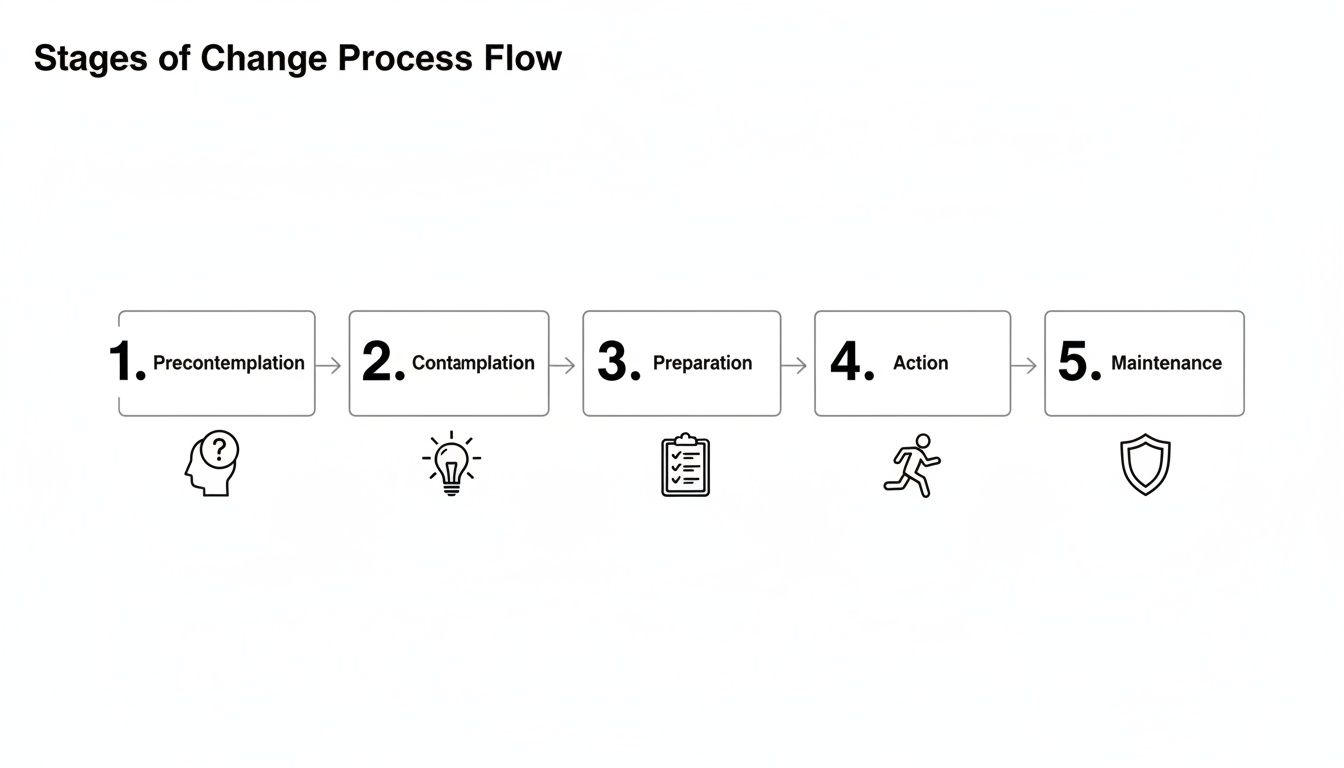
As you can see, each phase represents a completely different mindset. That's why each one requires a unique approach to encourage movement forward. Recognizing these subtle but powerful shifts is the key to providing the right kind of support at exactly the right time.
To make this even clearer, here's a quick breakdown of what defines each stage.
Quick Guide to the Stages of Change
| Stage | Core Characteristic | Common Thought |
|---|---|---|
| Precontemplation | Unaware or unwilling to see a problem. | "I don't have a problem. Everyone else is overreacting." |
| Contemplation | Acknowledging a problem exists but not ready to act. | "Maybe I should do something about this, but I'm not sure." |
| Preparation | Getting ready to make a change in the near future. | "Okay, I'm going to quit. What do I need to do first?" |
| Action | Actively changing behaviors and habits. | "I'm going to meetings, avoiding my triggers, and sticking to my plan." |
| Maintenance | Working to sustain the changes and prevent relapse. | "I've been sober for months. How do I keep this going for life?" |
This table simplifies the journey, but remember that movement between these stages isn't always linear. People can cycle back and forth, and that's a normal part of the process. The goal is always progress, not perfection.
Recognizing the First Signs of Change
The road to recovery rarely starts with a sudden, dramatic decision. More often, it begins with a quiet internal tug-of-war, long before anyone commits to action. The earliest phases, Precontemplation and Contemplation, are defined by this inner conflict and denial, making them incredibly tough for both the person struggling and the people who love them.
In the Precontemplation stage, the person simply doesn’t see their substance use as a problem. Think of it like a car's "check engine" light that's been on for weeks—the warning is clearly there, but the driver just keeps driving, hoping it’ll turn off on its own.
People in this phase tend to get defensive when confronted. You’ll hear them rationalize their behavior ("I only drink to unwind"), blame others for their problems ("If my boss wasn't so demanding…"), or insist everyone else is overreacting. Any pressure to change just gets met with more resistance because, in their mind, there's nothing to fix.
The Shift from Denial to Ambivalence
Moving into the Contemplation stage is a huge, though often invisible, step. This is where the person starts to admit—even just to themselves—that their substance use might be a problem. It’s a period of intense ambivalence, where one part of them wants to change while the other digs its heels in.
This mental debate can be completely paralyzing. Someone might spend hours researching treatment centers online but never pick up the phone. They’ll make endless pro-and-con lists about quitting but stay stuck, unable to actually commit. They see the consequences stacking up but aren't quite ready to do what it takes to stop them.
For family members, this stage is maddening. The person is so close, yet so far. The key here is to offer support without pushing. Your goal isn't to win an argument but to gently nurture their growing awareness and keep the conversation going.
Supporting Someone in the Early Stages
Helping someone move through these first phases is a delicate dance. It requires empathy, patience, and a refusal to get drawn into fights. Loved ones can make a real difference by:
- Expressing concern without accusation: Stick to "I" statements that focus on your feelings, like, "I get scared when I don't hear from you at night."
- Highlighting the disconnect: In a calm moment, you can gently point out the gap between who they say they want to be and what their actions show (e.g., "You've always said family is your priority, but we haven't seen you at a Sunday dinner in months.").
- Ditching the lectures and ultimatums: These tactics almost always backfire, cranking up the defensiveness and pushing the person further away.
The journey from denial to action is a powerful one. According to the 2023 National Survey on Drug Use and Health, of the 48.7 million Americans with a substance use disorder last year, a remarkable 46% now identify as being in recovery. This shows just how many people successfully navigate these early, difficult stages to build new lives. You can explore more addiction and recovery statistics to understand the bigger picture.
Building the Foundation for Lasting Change
After wrestling with the pros and cons in the Contemplation stage, a person moves into the Preparation phase. This is where a decisive shift happens—the focus moves from thinking about change to actively planning for it.
The internal debate finally quiets down. A vague "maybe someday" crystallizes into a determined "okay, I’m doing this soon." This critical transition is marked by small but powerful actions that signal a real commitment to recovery. They aren't just thoughts anymore; they're the first tangible steps on a new path, the initial blueprints for a successful future.
From Intention to Action Plan
Think of this stage like mapping out a cross-country road trip before you even start the car. You wouldn't just jump in and drive without a destination, a route, or a plan for where to stop. Recovery works the same way. A solid, well-designed plan provides essential direction and builds the confidence needed to move forward.
Key actions taken during the Preparation stage often include:
- Setting a specific quit date: This transforms an abstract idea into a concrete deadline, creating a clear starting line for the journey.
- Confiding in a trusted friend or family member: Just saying the words out loud creates accountability and starts the process of building a support system.
- Researching and scheduling an assessment: Making that call to a treatment provider like Altura Recovery is a huge step that connects someone with professional, experienced guidance.
- Removing triggers from the environment: This might mean getting rid of all the alcohol in the house or deleting a dealer's phone number from a contacts list.
The core of the Preparation stage is creating a detailed, personalized blueprint for the hard work ahead. It's about anticipating challenges and putting the necessary resources and support systems in place before the Action stage begins.
This strategic planning is vital because it addresses potential obstacles before they can derail progress. For example, by identifying high-risk situations (like social events where drinking is the main activity), a person can develop specific coping strategies in advance. This forethought dramatically increases the chances of navigating the early, vulnerable days of action successfully. It’s one of the most critical parts of understanding the stages of change in recovery.
4. Putting Your Recovery Plan into Action
After all the internal debate and careful planning, this is where the rubber meets the road. The Action stage is when your recovery blueprint becomes your daily reality. It’s an active, hands-on phase that demands significant energy and commitment as you start consciously changing behaviors, environments, and even relationships to build a new, sober life.
This isn’t just about not using; it’s about actively building something new in its place. Action means showing up for therapy, engaging fully in group sessions, and putting those new coping skills to the test. It looks like making the tough but rewarding choice to leave a party early or saying no to an old hangout spot that screams "trigger." Every one of these small, deliberate decisions strengthens your resolve and builds momentum.

From Deliberate Action to Lifelong Maintenance
Once these new, healthier behaviors start to feel more automatic—a process that typically takes around six months—you graduate into the Maintenance stage. This isn't a finish line where you can finally let your guard down. Think of it more like tending to a garden you’ve just planted. The back-breaking work of tilling the soil is done, but now it needs consistent watering, weeding, and protection to thrive.
Maintenance is the long game. It's the process of sustaining the changes you fought so hard for and integrating them so deeply into your life that they become your new normal. The focus shifts from the daily struggle of making changes to the mindful practice of keeping them. This is all about building resilience, managing triggers with confidence, and protecting the progress you've earned.
Maintenance is where recovery becomes a part of your identity, not just a set of rules you follow. It's about turning conscious, effortful choices into unconscious, healthy habits for life.
Solidifying Your New Habits
In both the Action and Maintenance stages, building a strong support network is non-negotiable. Connecting with peers who just get it provides a level of encouragement and accountability you can’t find anywhere else. This is where outpatient programs and group therapy become absolute lifelines.
Learning about different group activities for substance abuse can give you ideas for forging these vital connections. The goal is to create a sober life that’s not only sustainable but genuinely enjoyable—a life you are excited to protect.
To keep your momentum strong, it helps to explore powerful behavioral change strategies that can reinforce your commitment when motivation dips. While the risk of relapse is real, especially early on, the odds get better with time. Relapse rates for substance use disorder are 40-60%, similar to other chronic illnesses like asthma or diabetes. But the good news is that this risk drops dramatically to under 15% after five years of continuous sobriety, showing that long-term recovery is absolutely achievable.
How to Handle Setbacks and Prevent Relapse
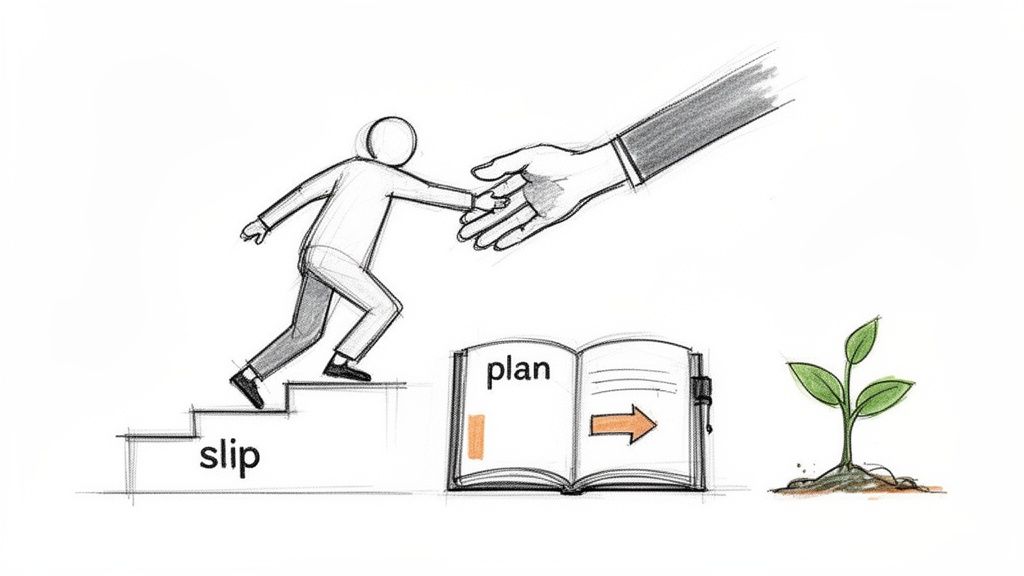
On the road to recovery, it’s almost a guarantee that you’ll hit some bumps. The key is to see setbacks not as failures, but as powerful course corrections. The journey through the stages of change in recovery is almost never a straight shot from point A to point B.
Many people stumble, but a slip doesn't wipe out all the hard work you've put in. It's an opportunity to learn something new about your triggers, test your coping skills, and come back stronger.
It also helps to know the difference between a slip and a relapse. A slip is a brief return to old behaviors that you catch and correct quickly. A relapse is a more significant slide back into old patterns of substance use. Understanding this distinction can help lift the shame that often keeps people from getting back on their feet right away.
Understanding Relapse Warning Signs
The best way to keep a minor slip from snowballing into a full relapse is to spot the warning signs early. They often creep in subtly before becoming obvious. Being mindful of these shifts in your thoughts, feelings, and actions is the core of effective relapse prevention.
Common triggers and warning signs include:
- Romanticizing past use: You start remembering only the "good times" you had while using, conveniently forgetting all the negative consequences.
- Isolating from your support system: You begin pulling away from your therapist, skipping support groups, or avoiding the sober friends who keep you grounded.
- Poor self-care: You're neglecting the basics like sleep, nutrition, and exercise, leaving you feeling emotionally raw and physically drained.
- Increased stress or emotional distress: A major life event throws you for a loop, and you find yourself overwhelmed without leaning on your healthy coping skills.
An Action Plan for Getting Back on Track
If a slip happens, how quickly you respond makes all the difference. Don't let shame or guilt keep you stuck. The goal is to break the cycle immediately and turn the moment into a catalyst for growth.
A setback is a setup for a comeback. By handling a slip with honesty and immediate action, you turn a moment of weakness into a foundation for greater, more resilient long-term sobriety.
Take these steps right away:
- Be Honest: Acknowledge what happened without beating yourself up. Reach out to someone you trust—your therapist, sponsor, or a sober family member—as soon as possible.
- Seek Support: Jump right back into your recovery community. Get to a meeting, book an extra session with your therapist, or call your recovery coach. Don't wait.
- Analyze the Trigger: Work with your support network to figure out what led to the slip. Once you know the "why," you can build a solid plan to handle that trigger differently next time.
This proactive approach is what builds true resilience. It’s important to remember that while recovery has its challenges, it is absolutely possible. In fact, long-term data from the CDC and NIDA shows that up to 75% of people with a substance use disorder eventually find lasting recovery, often after an average of five attempts. You can find more insights on recovery statistics at AddictionHelp.com.
Finding Support Tailored to Your Stage of Change
Knowing the stages of change is like having a map of your recovery journey—it shows you exactly where you are. But a map alone won't get you to your destination; you also need the right vehicle for the terrain ahead. Recovery isn't a one-size-fits-all process, and your support system shouldn't be either. The most effective, compassionate care meets you right where you're at.
Think about it this way: someone in the Preparation stage is ready to build a solid action plan. They need practical guidance, help with goal-setting, and a clear connection to a treatment provider. On the other hand, a person deep into the Maintenance stage is focused on protecting their hard-won progress. They need strategies for long-term resilience and relapse prevention, not beginner's instructions.
Aligning Treatment with Your Current Stage
Different levels of care are specifically designed to support you through these distinct phases of recovery. As you move from planning to doing, the intensity and focus of your treatment should shift right along with you.
- Preparation Stage: This is the perfect moment to get a professional assessment and start creating your recovery blueprint. Expert guidance helps you set realistic goals and build a strong foundation before you take that first big step.
- Action Stage: This is where the work really begins. Intensive outpatient programs (IOP) provide the structure, accountability, and skills-based learning needed to actively change behaviors and navigate the challenges of early sobriety.
- Maintenance Stage: Once you've established new habits, the goal becomes sustaining them. Supportive outpatient programs (SOP) and ongoing therapy offer the long-term community connection and accountability essential for preventing relapse and solidifying your new life.
The ultimate goal is to provide the right tools at the right time. By matching the intervention to the individual's readiness, we create a clear path forward, empowering them to build a life free from addiction.
This stage-matched approach is especially critical for those with dual-diagnosis needs, where integrated therapies like CBT and DBT can help move someone from Contemplation to Action. It’s a vital consideration when you realize that of the 35 million people with drug use disorders worldwide, only one in seven ever receives treatment.
By finding IOP programs near you that understand and apply this model, you ensure the care you receive truly fits your needs, giving you the best possible chance at success. For more insights, you can explore global addiction and treatment statistics at AddictionHelp.com.
Common Questions About the Stages of Change
When you're navigating the recovery journey, questions are a good sign—they mean you're engaged and looking for a way forward. Here are some straightforward answers to the questions we hear most often about the stages of change.
How Long Does Each Stage Last?
There’s no magic number here. The time spent in each stage is as individual as the person going through it. Someone might move through a stage in a few weeks, while another person could spend years in Contemplation, weighing the pros and cons.
The real goal isn't speed; it's steady, forward movement, no matter how small the steps feel.
Can Someone Go Through the Stages in a Different Order?
While the stages usually follow a certain path, the journey is almost never a straight line. It's completely normal to cycle back and forth. For example, a person deep in the Action stage could have a tough day and slip back into Contemplation to rethink their strategy.
Think of it less like a ladder and more like a spiral staircase. Moving back a step isn't failure—it's just part of the process of finding what works.
How Can I Help Someone in the Precontemplation Stage?
This is easily the most delicate stage to navigate from the outside. Your instinct might be to push, lecture, or lay down ultimatums, but that approach almost always backfires by strengthening their denial.
The best thing you can do is express your concern calmly, without judgment.
Focus on building trust. Gently share how their actions are affecting you, using objective language. Encouraging them to talk to a professional—without forcing it—can plant a seed that might grow later on.
By offering support instead of trying to control the situation, you create a safe space where they can start to consider a different future for themselves.
At Altura Recovery, we know every person's path is different. Our outpatient programs are built to meet you right where you are, providing the exact support you need for every stage of your journey. Learn how our personalized approach can help you or a loved one today.