
Substance abuse treatment is rarely a solitary journey. The power of connection, shared experience, and structured interaction is a cornerstone of lasting recovery. However, not all group sessions are created equal. The most effective programs move beyond simple discussion to incorporate dynamic, evidence-based exercises that build tangible skills and foster profound change. This guide moves beyond theory to offer a practical, comprehensive roundup of powerful group activities for substance abuse, providing clinicians, facilitators, and individuals in recovery with a detailed roadmap for sessions that promote genuine healing.
This listicle breaks down ten distinct, evidence-informed group modalities, from Cognitive Behavioral Therapy (CBT) and Dialectical Behavior Therapy (DBT) to peer-led support and mindfulness-based approaches. For each item, you will find a clear clinical rationale, step-by-step facilitation instructions, and practical adaptations for various needs, including trauma-informed considerations and virtual formats. Our goal is to equip you with the tools to build a supportive and transformative group environment that addresses the complex interplay of thoughts, emotions, and behaviors fueling addiction.
These methods empower participants to develop resilience and construct a solid foundation for lasting sobriety. For facilitators looking to further enhance engagement and effectiveness, exploring essential topics for group discussions can provide valuable insights for structuring impactful sessions. By focusing on actionable strategies, we aim to transform group therapy from a passive experience into an active, skill-building process where every member can thrive. This resource is designed to be a definitive guide for anyone committed to facilitating meaningful, outcome-driven recovery groups.
1. 12-Step Facilitation Groups (AA/NA/CA)
12-Step Facilitation is a structured approach that introduces clients to the principles of peer-led support groups like Alcoholics Anonymous (AA), Narcotics Anonymous (NA), and Cocaine Anonymous (CA). These groups, founded on the 12-step model, foster personal accountability, spiritual growth, and mutual aid as foundational pillars of long-term recovery. Participants work through a series of structured steps, often with the guidance of a sponsor, while attending regular meetings to share experiences and build a sober support network.
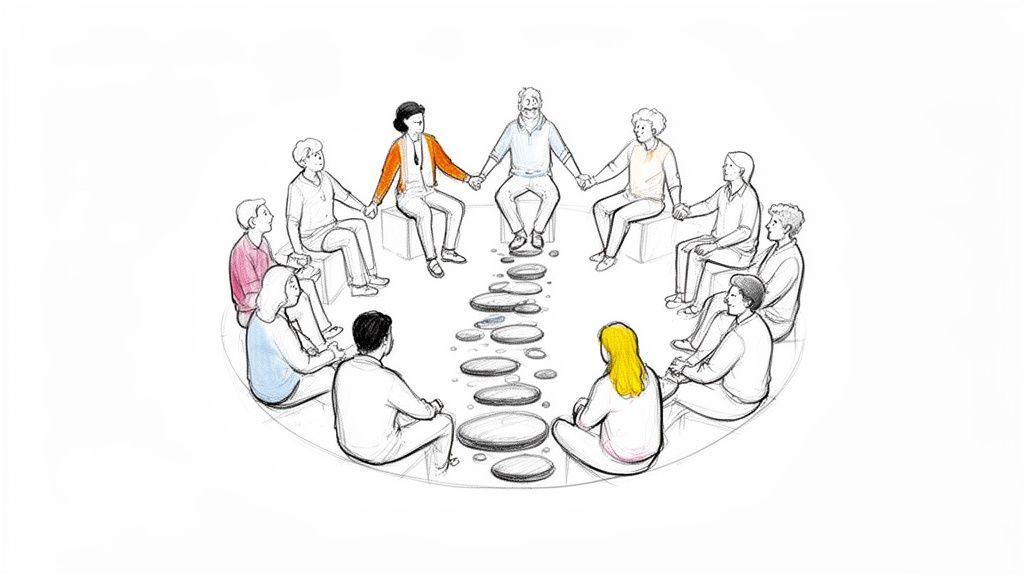
This approach is highly effective for individuals who benefit from structure, community, and a clear path forward. The model's longevity and global reach, with hundreds of thousands of meetings available worldwide, make it one of the most accessible group activities for substance abuse. It provides a ready-made sober social network to replace old, high-risk environments.
Implementation and Clinical Integration
Integrating 12-step principles with professional clinical therapy offers a powerful combination for comprehensive care, especially for those with co-occurring disorders.
- Goals: Introduce the 12-step philosophy, encourage meeting attendance, and facilitate engagement with the recovery community and sponsorship.
- Time: Sessions are typically 60-90 minutes, with the expectation that clients attend community meetings outside of formal treatment.
- Materials: "The Big Book" of Alcoholics Anonymous, NA's "Basic Text," meeting directories, and worksheets for step work.
- Trauma-Informed Adaptations: Facilitators should emphasize the principle of "take what you need and leave the rest," allowing clients to engage at their own pace. Creating a safe space to discuss potential triggers within the 12-step language is crucial. It’s also important to validate any past negative experiences clients may have had and help them find meetings that feel safe and welcoming.
- Virtual Options: Many 12-step groups offer robust online meetings via platforms like Zoom, making support accessible 24/7. These can be integrated into a virtual IOP or outpatient program.
By establishing attendance expectations within a treatment plan and helping clients find a sponsor aligned with their needs, clinicians can leverage the community-based power of 12-step programs to reinforce therapeutic goals and support lasting sobriety.
2. Cognitive Behavioral Therapy (CBT) Group Sessions
Cognitive Behavioral Therapy (CBT) groups are a cornerstone of modern addiction treatment, offering a structured, evidence-based approach to recovery. This modality focuses on helping clients identify, challenge, and change the destructive thought patterns and behaviors that fuel substance use. In a collaborative group setting, participants learn practical skills for managing cravings, navigating high-risk situations, and developing healthier coping mechanisms, all while benefiting from peer support and accountability.
The strength of CBT lies in its practical, goal-oriented nature. It empowers individuals by teaching them that while they cannot control every aspect of their environment, they can control how they interpret and respond to it. As one of the most effective group activities for substance abuse, CBT provides a tangible toolkit for relapse prevention and is highly recommended by organizations like SAMHSA as a first-line treatment.
Implementation and Clinical Integration
CBT groups are most effective when integrated into a comprehensive treatment plan that may also include individual therapy and medication management, especially for clients with co-occurring disorders.
- Goals: Teach clients to recognize cognitive distortions linked to substance use, develop and practice new coping skills, improve problem-solving abilities, and build self-efficacy in maintaining sobriety.
- Time: Sessions are typically 60-90 minutes, held once or twice weekly, often as part of an Intensive Outpatient Program (IOP) or Partial Hospitalization Program (PHP).
- Materials: Whiteboard or flip chart, worksheets for identifying automatic thoughts (thought records), coping skill handouts, and role-playing scenarios.
- Trauma-Informed Adaptations: Facilitators must create an environment of emotional safety, allowing clients to opt out of exercises that feel too activating. When discussing thought patterns, it's vital to validate the survival function that certain beliefs may have served in the past, even while working to change them. Cognitive Processing Therapy (CPT), a CBT-based trauma therapy, can be adapted for this context.
- Virtual Options: CBT is highly adaptable to virtual platforms. Digital worksheets can be shared via screen-sharing, and breakout rooms can be used for smaller group exercises or role-playing, making it a staple of virtual IOPs.
By assigning graduated homework, such as practicing a new coping skill in a low-stress situation, and creating accountability partnerships, clinicians can help clients transfer the skills learned in group to their everyday lives, solidifying their recovery foundation.
3. Dialectical Behavior Therapy (DBT) Skills Groups
Dialectical Behavior Therapy (DBT) skills groups offer a highly structured, evidence-based approach to teaching practical skills in four key areas: mindfulness, distress tolerance, emotion regulation, and interpersonal effectiveness. Originally developed by Dr. Marsha Linehan to treat borderline personality disorder, its application has proven exceptionally effective for individuals with substance use disorders, particularly those who also struggle with emotional dysregulation, self-harm, and co-occurring mental health conditions.
DBT operates on the core dialectic of acceptance and change, helping clients both accept themselves and their current reality while simultaneously working to change ineffective behaviors. This balance is crucial for addiction recovery, as it teaches individuals how to manage intense emotions and urges without resorting to substance use. As a structured and skill-focused modality, DBT makes for one of the most powerful group activities for substance abuse treatment.
Implementation and Clinical Integration
Integrating DBT skills groups into a comprehensive treatment plan provides clients with tangible tools to navigate recovery challenges. It is especially beneficial when combined with individual therapy to process personal issues and reinforce skill application.
- Goals: Teach specific skills to manage cravings, regulate emotions, tolerate distress, and improve relationships. Reduce life-threatening behaviors and therapy-interfering behaviors.
- Time: Group sessions typically last 90-120 minutes weekly, often as part of a 6-month or longer curriculum to cover all modules.
- Materials: DBT Skills Training Handouts and Worksheets, a whiteboard for instruction, and participant diaries or "diary cards" for tracking urges and skill use.
- Trauma-Informed Adaptations: Facilitators must create a non-judgmental environment, validating clients' emotional experiences without necessarily validating maladaptive behaviors. When discussing distress tolerance, it’s vital to ensure skills are not presented as a way to "just get over" trauma but as tools to manage overwhelming moments safely. Pace the introduction of skills based on the group's capacity to prevent overwhelm.
- Virtual Options: DBT skills groups adapt well to virtual platforms. Digital diary cards, screen-sharing for worksheets, and breakout rooms for practicing interpersonal skills can effectively replicate the in-person experience in a telehealth or virtual IOP setting.
Clinicians can enhance effectiveness by assigning skill-based homework and using the first part of each group session to review how participants applied these skills during the week. This accountability and real-world practice are cornerstones of the DBT model.
4. Motivational Interviewing (MI) Group Facilitation
Motivational Interviewing (MI) is a client-centered, collaborative counseling style designed to strengthen a person’s own motivation and commitment to change. In a group setting, MI harnesses the power of peer influence to explore and resolve ambivalence about substance use. Instead of confronting or directing, facilitators guide members to voice their own arguments for change, fostering a collective momentum toward recovery.
This approach is particularly powerful for individuals who are uncertain or resistant to treatment, as it respects their autonomy and avoids creating a power struggle. As a core component of many evidence-based practices, MI is one of the most versatile group activities for substance abuse. It helps participants build intrinsic motivation by aligning their recovery goals with their personal values, which is a key predictor of long-term success.
Implementation and Clinical Integration
MI groups are highly effective when integrated into early-stage treatment, helping to build rapport and prepare clients for more intensive therapeutic work. It serves as the foundation for models like Motivational Enhancement Therapy (MET).
- Goals: Enhance intrinsic motivation, resolve ambivalence about change, elicit and reinforce "change talk," and strengthen commitment to recovery goals.
- Time: Sessions typically last 60-90 minutes, focusing on open-ended questions, affirmations, reflections, and summaries (OARS).
- Materials: Whiteboard or large paper for group brainstorming, values clarification worksheets, and goal-setting templates.
- Trauma-Informed Adaptations: The MI spirit of partnership, acceptance, and compassion is inherently trauma-informed. Facilitators must ensure the group environment remains non-judgmental and empowering, giving clients full control over what they share. Avoid any language that could be perceived as coercive or shaming.
- Virtual Options: Virtual MI groups can be highly effective. Using breakout rooms for smaller discussions or polling features to ask scaling questions ("On a scale of 1-10, how ready are you to change?") can increase engagement and personal reflection.
By using evocative questions and strategically reflecting a client’s own words, facilitators can help the entire group shift its perspective from ambivalence to action. This process builds a supportive peer culture where members encourage each other's progress.
5. Trauma-Informed Group Therapy (TIG)
Trauma-Informed Group Therapy (TIG) is a specialized approach that addresses the profound link between traumatic experiences and substance use. It operates from the core understanding that many individuals turn to substances as a way to cope with the overwhelming symptoms of trauma. This therapy model prioritizes creating an environment of safety, trustworthiness, and empowerment, allowing members to explore trauma responses without re-traumatization.
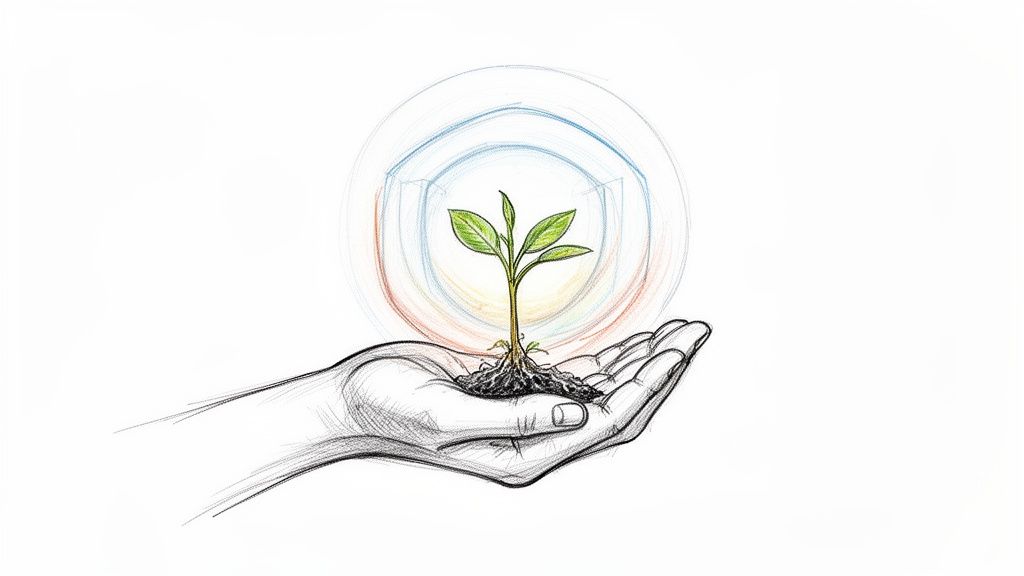
This approach is vital because unresolved trauma can be a significant barrier to lasting recovery. By directly teaching concepts like the "window of tolerance" and nervous system regulation, TIG equips individuals with healthy coping skills to manage triggers. It is one of the most essential group activities for substance abuse for clients with a known trauma history, as it provides a secure foundation for all other therapeutic work.
Implementation and Clinical Integration
Integrating TIG requires a deep commitment to the principles outlined by SAMHSA and pioneers like Bessel van der Kolk. The focus shifts from "What's wrong with you?" to "What happened to you?"
- Goals: Establish physical and psychological safety, build distress tolerance skills, educate on the neurobiology of trauma, and reduce trauma-related symptoms that trigger substance use.
- Time: Sessions are typically 60-90 minutes. It's crucial to limit group size to 6-8 members to ensure containment and safety.
- Materials: Whiteboard for psychoeducation, grounding objects (e.g., stress balls, textured stones), worksheets on the window of tolerance, and facilitator guides based on SAMHSA's TIC principles.
- Trauma-Informed Adaptations: This entire modality is trauma-informed. Key practices include establishing explicit safety and confidentiality agreements, screening members for active, acute trauma symptoms before placement, and having facilitators skilled in grounding techniques. Clear boundaries are set regarding the level of detail shared about traumatic events to prevent vicarious traumatization.
- Virtual Options: Virtual TIG can be effective but requires enhanced safety protocols. Facilitators must ensure each client has a private, secure space and a pre-established safety plan in case of distress. Using features like private chat for check-ins can help maintain individual support.
Clinicians often coordinate TIG with individual trauma-processing therapies like EMDR or CPT. The group provides the stabilization and coping skills necessary for the client to safely engage in the deeper processing work done one-on-one.
6. Recovery Capital and Life Skills Development Groups
Recovery Capital and Life Skills Development Groups shift the focus from solely managing addiction to building a fulfilling, sustainable life in recovery. This approach, grounded in the concept of "recovery capital" popularized by David Best, helps individuals develop the personal, social, and community resources needed to overcome barriers to sobriety. Sessions teach practical competencies like financial management, employment skills, nutrition, and healthy relationship-building.
These groups are highly effective because they address the real-world challenges that can trigger relapse, such as unemployment, housing instability, or poor health. By building tangible skills, participants gain confidence and create a positive identity separate from their past substance use. This makes them one of the most practical and empowering group activities for substance abuse, directly equipping clients for long-term success.
Implementation and Clinical Integration
Integrating life skills development with clinical therapy helps clients address the psychological barriers preventing them from applying these new competencies. It creates a holistic treatment plan that supports both internal and external change.
- Goals: Enhance life skills, build personal and social resources (recovery capital), improve self-efficacy, and reduce practical barriers to sustained recovery.
- Time: Sessions are typically 60-90 minutes and can be structured as a multi-week modular series focusing on different skills.
- Materials: Budgeting worksheets, resume templates, nutritional guides, communication role-playing scripts, and contact lists for community resources.
- Trauma-Informed Adaptations: Acknowledge that trauma can significantly impact executive functioning, making tasks like budgeting or job searching feel overwhelming. Break skills down into small, manageable steps and celebrate every effort. Be mindful that topics like housing and finances can be highly triggering, and create a non-judgmental space for discussion.
- Virtual Options: Skills-based workshops, such as resume writing or online job searching, are highly effective in a virtual format. Digital tools like budgeting apps and telehealth platforms for nutritional counseling can be integrated seamlessly into an online program.
By partnering with community agencies for employment or housing and celebrating milestones like securing a job or apartment, clinicians can help clients build a life where recovery is not only possible but rewarding.
7. Relapse Prevention and Coping Skills Groups
Relapse Prevention and Coping Skills Groups are structured therapeutic sessions designed to equip individuals with the tools needed to identify and manage high-risk situations. Based heavily on Cognitive-Behavioral Therapy (CBT) principles, these groups help clients understand the chain of events leading to relapse, develop effective coping mechanisms, and create a proactive plan to maintain sobriety. The focus is on building resilience and self-efficacy by deconstructing past relapses and rehearsing future responses.
This model is a cornerstone of modern addiction treatment because it is both educational and highly practical. Instead of viewing relapse as a failure, it reframes it as a predictable and preventable part of the recovery process. These sessions are some of the most essential group activities for substance abuse, as they empower clients with tangible skills to navigate cravings, emotional distress, and social pressures that threaten their long-term stability.
Implementation and Clinical Integration
Integrating relapse prevention into the treatment continuum ensures that clients are prepared for real-world challenges as they transition through different levels of care, from PHP to IOP and beyond.
- Goals: Identify personal relapse triggers (internal and external), build a robust toolbox of cognitive and behavioral coping skills, and develop a personalized, written relapse prevention plan.
- Time: Sessions are typically 60-90 minutes and are often scheduled multiple times per week in early recovery, with frequency decreasing as stability increases.
- Materials: Whiteboards for mapping relapse cycles, worksheets for identifying triggers, role-playing scenarios, and relapse prevention plan templates.
- Trauma-Informed Adaptations: Facilitators must create a non-judgmental atmosphere where clients can discuss past relapses without shame. It's crucial to connect coping skills directly to managing trauma-related symptoms like hypervigilance or emotional dysregulation, which are often significant relapse triggers. Start with low-intensity triggers before moving to more difficult, trauma-related ones.
- Virtual Options: Role-playing scenarios and skills practice can be effectively conducted via video conferencing. Digital whiteboards and shared documents allow for collaborative creation of relapse prevention plans, making this model highly adaptable for virtual programs.
By using real-life examples relevant to the group and practicing skills repeatedly, clinicians can move beyond intellectual discussion and help clients build the "muscle memory" needed to respond effectively when faced with a trigger.
8. Family Therapy and Couples Groups
Family Therapy and Couples Groups are structured interventions that involve clients alongside their family members or significant others. These groups recognize that addiction impacts the entire family system. The focus is on repairing relationships, improving communication, addressing codependency and enabling behaviors, and rebuilding trust, which are all critical components for sustainable recovery. By healing the family unit, the client's support system is strengthened significantly.
This approach is highly beneficial because it addresses the relational dynamics that often contribute to substance use. Models like Multidimensional Family Therapy (MDFT) or peer-led groups such as Al-Anon provide a space for shared healing. Including loved ones makes these sessions some of the most impactful group activities for substance abuse, creating a unified front against addiction and fostering empathy among all participants.
Implementation and Clinical Integration
Integrating family work into a client's treatment plan provides a holistic approach that addresses the individual's environment, not just their internal struggles. This is vital for long-term success, as a healthy home life provides a powerful buffer against relapse.
- Goals: Improve communication skills, establish healthy boundaries, educate family on the disease of addiction, and facilitate a supportive home environment.
- Time: Sessions typically last 60-90 minutes and can be held weekly or bi-weekly depending on the program's structure.
- Materials: Whiteboard for diagramming family dynamics, communication worksheets, psychoeducational handouts on addiction and codependency, and boundary-setting role-play scenarios.
- Trauma-Informed Adaptations: It is essential to screen participants for domestic violence or active abuse before including them in a group setting. Facilitators must establish and enforce strict ground rules for respectful communication. Starting with foundational skills like "I" statements before tackling contentious issues helps create safety and prevent re-traumatization.
- Virtual Options: Family and couples therapy sessions can be conducted effectively via secure video conferencing platforms. Virtual formats can be especially helpful for families who are geographically separated, allowing key members to participate from anywhere.
By coordinating family sessions with individual therapy, clinicians ensure that clients can process the complex emotions that arise and integrate the skills learned into their personal recovery journey.
9. Mindfulness-Based Relapse Prevention (MBRP) and Meditation Groups
Mindfulness-Based Relapse Prevention (MBRP) integrates mindfulness practices like meditation and conscious awareness with cognitive-behavioral relapse prevention strategies. This approach, developed by experts like G. Alan Marlatt and Jon Kabat-Zinn, teaches individuals to observe their thoughts, cravings, and emotions without reacting impulsively. By fostering non-judgmental, present-moment awareness, participants learn to interrupt the automatic chain of events that often leads from a trigger to substance use.

This method is highly effective for clients who struggle with impulsivity, anxiety, or chronic relapse, providing them with tangible skills to manage internal discomfort. Instead of avoiding or suppressing difficult feelings, MBRP empowers individuals to sit with them, reducing their power. This makes it one of the most transformative group activities for substance abuse because it fundamentally changes a person's relationship with their own inner experience.
Implementation and Clinical Integration
Combining MBRP with traditional therapeutic modalities like CBT and DBT provides a holistic approach to recovery, addressing both cognitive distortions and emotional dysregulation.
- Goals: Increase awareness of personal triggers and cravings, develop skills for tolerating discomfort, and decrease impulsive reactions to stressful situations.
- Time: Sessions typically last 60-90 minutes, including guided meditation, group discussion, and psychoeducation.
- Materials: Meditation cushions or chairs, audio guides for meditation (apps like Insight Timer or Headspace), and worksheets for tracking mindfulness practice and craving experiences.
- Trauma-Informed Adaptations: Always provide options for body posture during meditation (e.g., sitting in a chair vs. on the floor, eyes open or closed). Emphasize that the goal is not to "clear the mind" but to notice when it wanders without judgment. Use invitational language ("if you feel comfortable, bring your attention to…") to give clients full agency over their experience.
- Virtual Options: Guided meditations and group discussions translate seamlessly to virtual platforms like Zoom. Clinicians can share audio files and use breakout rooms for paired exercises, making this modality highly accessible for telehealth programs.
By integrating short, guided practices like the body scan and mindful breathing into sessions, facilitators can teach clients to ground themselves during moments of distress, providing a practical tool for immediate use in their daily lives.
10. Peer-Led Recovery Support and Accountability Groups
Peer-Led Recovery Support groups shift the traditional dynamic by placing individuals with lived recovery experience at the center of facilitation. Instead of a licensed clinician, a certified peer recovery specialist guides the session, fostering a non-hierarchical environment built on mutual understanding, shared wisdom, and empowerment. This model leverages the unique power of "having been there" to build trust and model a tangible path to recovery.
These sessions are highly effective for clients who may feel intimidated by clinical formality or who crave connection with others who truly understand their journey. By focusing on practical support and accountability, these group activities for substance abuse create a powerful bridge between formal treatment and long-term community integration. Models like the Recovery Café have demonstrated success in creating these peer-run community spaces.
Implementation and Clinical Integration
Peer-led groups serve as a vital complement to clinical therapy, enhancing the overall recovery ecosystem by providing relational support and real-world guidance.
- Goals: Build a strong, non-clinical support network, develop practical recovery skills, increase accountability, and empower participants through shared experience.
- Time: Sessions are often flexible, typically 60-90 minutes, and can be scheduled at times convenient for working professionals, such as evenings or weekends.
- Materials: Group guidelines, check-in prompts, goal-setting worksheets, relapse prevention plans, and resource lists for community services.
- Trauma-Informed Adaptations: Peer specialists, often trained in trauma-informed care, can create an exceptionally safe space by sharing their own vulnerabilities appropriately. They must establish and maintain clear group norms around respectful communication, confidentiality, and avoiding graphic descriptions of trauma. Clinical supervision is crucial to help peers navigate complex group dynamics. For clients and facilitators seeking additional external support structures, our guide can help in finding and integrating resources like these local support options: explore various forms of quit smoking support groups.
- Virtual Options: Peer support translates seamlessly to virtual platforms. Using secure video conferencing, peers can host check-ins, support groups, and one-on-one mentoring, greatly expanding access to care.
By integrating credentialed peer specialists and providing them with clinical supervision, treatment programs can offer a more holistic, empowering, and relatable recovery experience that significantly boosts client engagement and long-term success.
Comparison of 10 Substance Abuse Group Activities
| Intervention | Implementation Complexity 🔄 | Resource & Cost ⚡ | Expected Outcomes 📊⭐ | Ideal Use Cases 💡 | Key Advantages ⭐ |
|---|---|---|---|---|---|
| 12-Step Facilitation Groups (AA/NA/CA) | Low 🔄 — peer-led, minimal setup; ongoing attendance expected | Very low ⚡ — volunteer-led, free or low-cost venues | Strong community support, sustained abstinence and relapse prevention ⭐⭐⭐ | Long‑term maintenance, peer support, community reintegration | Large accessible network; clear accountability; mutual aid ⭐ |
| Cognitive Behavioral Therapy (CBT) Group Sessions | Moderate 🔄 — manualized protocols; clinician facilitation required | Moderate ⚡ — trained therapists, materials, homework tracking | Measurable reduction in substance‑use risk and co-occurring symptoms; skill acquisition ⭐⭐⭐ | Early recovery, co-occurring anxiety/depression, structured IOP/PHP | Evidence‑based, skill-focused, measurable progress ⭐ |
| Dialectical Behavior Therapy (DBT) Skills Groups | High 🔄 — multi‑component team model; long duration (6–12+ months) | High ⚡ — certified clinicians, phone coaching, individual therapy coordination | Reduced self‑harm, improved emotion regulation and lower relapse in complex cases ⭐⭐⭐⭐ | Dual‑diagnosis with emotional dysregulation, BPD features, self‑harm risk | Teaches distress tolerance and mindfulness; strong for complex presentations ⭐ |
| Motivational Interviewing (MI) Group Facilitation | Moderate 🔄 — clinician needs MI competency; non‑directive style | Low–Moderate ⚡ — training for facilitators; flexible group length | Increased readiness to change, improved engagement and retention ⭐⭐⭐ | Ambivalent or mandated clients, pre‑contemplation/contemplation stages | Non‑confrontational; complements other treatments; boosts motivation ⭐ |
| Trauma‑Informed Group Therapy (TIG) | High 🔄 — careful screening, safety planning, skilled facilitation | High ⚡ — trauma‑trained staff; integration with EMDR/somatic therapies | Reduced re‑traumatization, improved trauma symptoms and retention ⭐⭐⭐⭐ | Clients with PTSD/trauma histories whose substance use is trauma‑linked | Prioritizes safety, empowerment; prevents trauma‑driven relapse ⭐ |
| Recovery Capital & Life Skills Development | Moderate 🔄 — multi‑domain coordination; varied module content | Moderate ⚡ — guest experts, community partnerships, peer mentors | Improved housing/employment, functioning, and long‑term stability ⭐⭐⭐ | Transition planning, reintegration, young adults or professionals | Builds practical competence; addresses structural relapse drivers ⭐ |
| Relapse Prevention & Coping Skills Groups | Moderate 🔄 — individualized plans, frequent early practice | Moderate ⚡ — clinician time for assessments and role‑plays | Reduced relapse incidence/duration; faster recovery from lapses ⭐⭐⭐ | Early recovery, high‑risk periods, step‑down care (PHP→IOP→OP) | Concrete, actionable strategies and crisis plans; repeatable practice ⭐ |
| Family Therapy & Couples Groups | High 🔄 — complex dynamics, scheduling, safety screening | High ⚡ — skilled facilitators, possible separate family sessions | Better engagement, repaired relationships, improved retention and support ⭐⭐⭐ | Clients with supportive families or relational drivers; adolescents | Addresses systemic drivers, reduces enabling, builds long‑term support ⭐ |
| Mindfulness‑Based Relapse Prevention (MBRP) | Low–Moderate 🔄 — practice‑oriented groups; facilitator-led meditations | Low ⚡ — recordings/apps, trained facilitator; low ongoing cost | Reduced craving reactivity, improved emotion regulation and resilience ⭐⭐⭐ | Craving management, stress/anxiety, maintenance phase | Enhances awareness and self‑compassion; scalable and sustainable ⭐ |
| Peer‑Led Recovery Support & Accountability | Low 🔄 — peer facilitation; requires training and supervision | Low ⚡ — peer specialists, informal venues; cost‑effective | Increased engagement, reduced isolation, improved retention (complementary) ⭐⭐⭐ | Community support, step‑down care, those preferring lived‑experience guidance | Lived experience modeling; low power differential; high accessibility ⭐ |
Integrating Group Work into a Cohesive Recovery Plan
Throughout this guide, we have explored a comprehensive collection of evidence-informed group activities for substance abuse, from clinically-structured sessions like CBT and DBT to peer-led support circles and mindfulness practices. Each modality offers a unique set of tools, perspectives, and therapeutic benefits. However, the most profound and lasting change emerges not from participating in a single type of group, but from weaving these diverse experiences into a personalized and cohesive recovery tapestry.
Addiction is a multifaceted condition, affecting an individual’s psychological health, emotional regulation, social connections, and daily life skills. A singular approach is rarely sufficient. A truly effective treatment plan recognizes this complexity and strategically combines different group modalities to create a robust, multi-layered support system.
The Power of a Blended Approach
Imagine a recovery journey where each group activity builds upon the others. A person might attend a CBT group to identify and challenge the negative thought patterns that fuel their substance use. The same individual could then join a DBT skills group to learn concrete techniques for managing distressing emotions when those thoughts arise, preventing an impulsive reaction.
Simultaneously, participating in a peer-led support group provides a space to share these experiences with others who understand, reinforcing a sense of community and shared purpose. Add in a trauma-informed therapy group to safely process underlying issues, and a life skills workshop to build a foundation for a stable future, and the result is a powerful synergy. This integrated model ensures that recovery is not just about stopping a behavior; it’s about healing the whole person.
The goal is to create a therapeutic ecosystem where clinical guidance, peer support, and practical skill-building work in concert. This approach addresses the "why" behind addiction while equipping individuals with the "how" of sustainable recovery.
Tailoring the Journey: From PHP to Long-Term Sobriety
The ideal blend of group activities for substance abuse is not static; it evolves with the individual's progress. A person in a more intensive level of care, such as a Partial Hospitalization Program (PHP), may need a daily regimen of structured clinical groups to establish stability. As they transition to a Supportive Outpatient Program (SOP), the focus might shift toward relapse prevention, family therapy, and building recovery capital to navigate real-world triggers and responsibilities.
Key takeaways for creating a dynamic plan include:
- Start with a Strong Foundation: Early recovery often benefits most from skill-based groups (CBT, DBT) and psychoeducation to build essential coping mechanisms.
- Integrate Peer Support: As stability grows, peer-led and 12-Step facilitation groups become crucial for long-term accountability and community connection.
- Address Deeper Issues: Once foundational skills are in place, trauma-informed groups and process-oriented therapy can help address the root causes of addiction.
- Focus on the Future: Life skills and relapse prevention groups empower individuals to build a meaningful life beyond substance use, making recovery a more attractive and sustainable path.
By thoughtfully selecting and sequencing these group activities, treatment providers and individuals can create a pathway that fosters not just abstinence, but genuine personal growth, emotional resilience, and a renewed sense of purpose. The journey of recovery is a dynamic process of healing, and the right combination of group support provides the map, the tools, and the companionship needed for the road ahead.
Finding a program that masterfully integrates these diverse group activities for substance abuse is key to building a strong foundation for lasting sobriety. At Altura Recovery, we create personalized, step-down treatment plans that blend clinical, peer-driven, and skill-based groups to support your unique journey. Discover how our comprehensive approach can guide you toward real healing and freedom by visiting us at Altura Recovery.