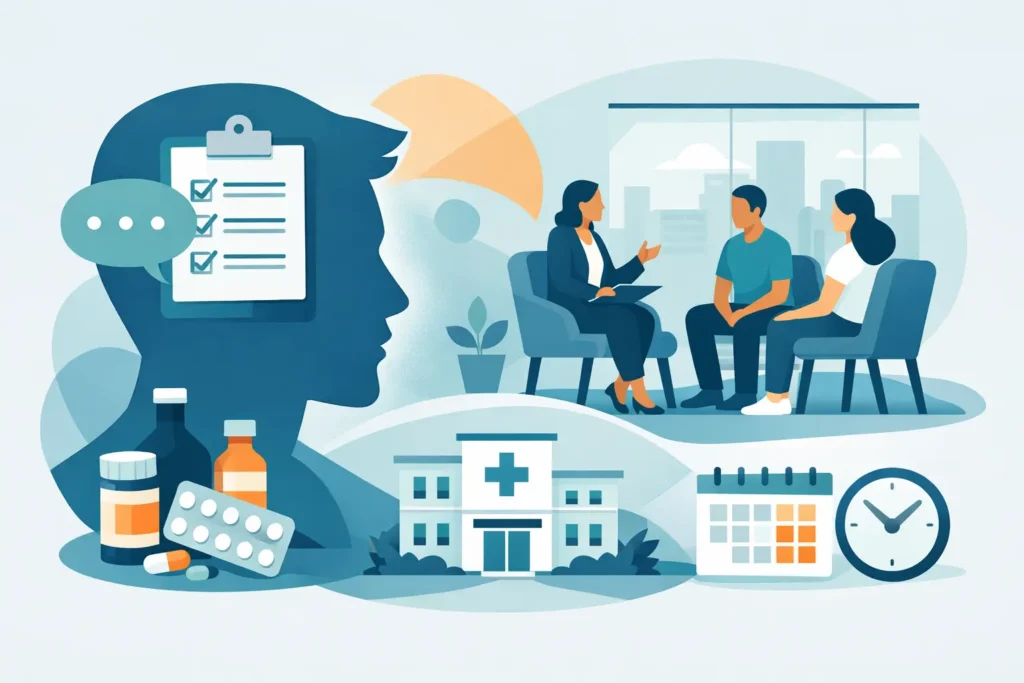
Think of a sober living house as the essential bridge between the highly structured, protective world of inpatient rehab and the full independence of going back home. It's a supportive, substance-free home where people in early recovery can practice living sober in the real world, but with a safety net firmly in place.
This environment is built on two core principles: peer support and accountability. It's the place where you start to rebuild your life, brick by brick.
Rebuilding Your Life with Supportive Scaffolding
Imagine trying to repair a house after a major storm. You wouldn't just leave the damaged walls exposed to the wind and rain. You’d put up sturdy scaffolding all around it. That scaffolding provides support, creates a safe platform for the hard work of reconstruction, and allows the rebuilding to happen carefully and correctly.
A sober living house works the exact same way for someone rebuilding their life in recovery.
It’s important to know this isn't a clinical treatment facility like a detox center or residential rehab. Instead, a sober living house is a stable, safe home where you can start applying the skills you learned in treatment. It’s a space to navigate real-world challenges—like finding a job, managing a budget, or mending relationships—without the immediate pressures and triggers of your old environment.
A Community Focused on Growth
The real power of a sober living home comes from the built-in community. You're living alongside other people who just get it. They understand the daily grind of recovery, creating a potent network of peer support that battles the intense isolation so common in the early days.
The entire structure of the home is designed to help you build healthy habits and take personal responsibility. This typically includes:
- House Rules: Things like curfews, mandatory house meetings, and guest policies create a predictable and safe atmosphere for everyone.
- Accountability Measures: Regular drug and alcohol screenings are standard, ensuring the home stays a truly substance-free sanctuary.
- Shared Responsibilities: Everyone pitches in with chores and upkeep, which helps rebuild routine and a sense of purpose.
This model is becoming more and more crucial in the continuum of care. The demand for this kind of structured, post-rehab support is skyrocketing, with the sober living homes market growing to $6.88 billion at a compound annual growth rate of 9.7%. Experts project it will hit $9.82 billion by 2029, a trend fueled by a better public understanding of addiction and the clear benefits of these supportive homes. You can discover more insights about the sober living market growth if you're interested in the data.
A sober living house provides the essential middle ground between the highly structured world of inpatient rehab and the complete freedom of independent life. It’s the training ground where new coping skills become ingrained habits.
Ultimately, a sober living home is much more than just a roof over your head. It provides the time, space, and community you need to turn the principles of recovery into a real, sustainable way of life.
Pairing Sober Living with Outpatient Treatment for Success
Think about your recovery like learning a critical new skill—say, becoming a master carpenter. Your outpatient program, whether it’s a PHP or an IOP at Altura Recovery, is the workshop where you learn from the experts. Every day, you show up for intensive lessons, learn how to use new tools (coping skills), and get direct guidance on your technique from seasoned professionals.
But where do you go after class? That’s where a sober living house comes in. It’s the supervised, fully-equipped woodshop where you practice what you’ve learned. You’re surrounded by other apprentices who are just as serious about building a new life, and you hold each other accountable to the rules of the shop.
This combination creates a powerful, immersive learning environment. While outpatient treatment provides the clinical instruction, the sober living home offers the 24/7 structure you need to turn those lessons into muscle memory.
Creating a Full-Circle Support System
Pairing outpatient care with a sober living home lets you rebuild your life in real-time, without hitting pause on everything else. You can keep up with work, school, or family responsibilities—thanks to the flexible scheduling of an IOP or PHP—while still being fully immersed in a culture of recovery.
It’s a dual-pronged approach that tackles recovery from every angle. You get expert clinical therapy during the day and return to a safe, supportive, and trigger-free environment at night. This constant reinforcement is a game-changer, closing the dangerous gaps of unstructured time and isolation where relapse so often takes root.
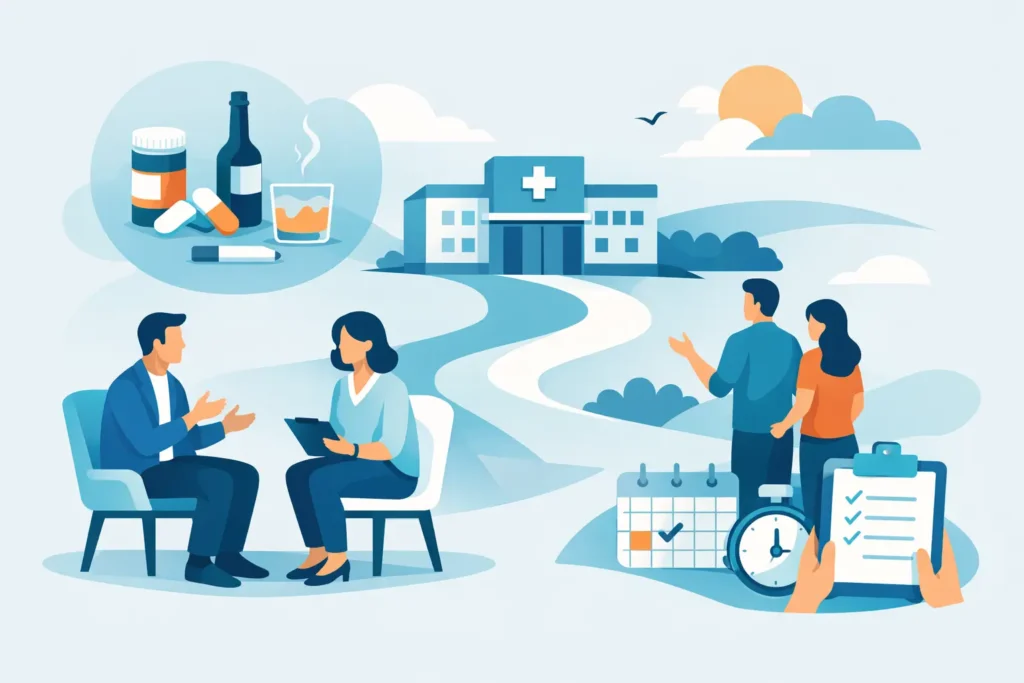
The diagram below shows how this works in practice, illustrating how structured treatment and a sober home form a vital bridge between intensive care and a stable, independent life.
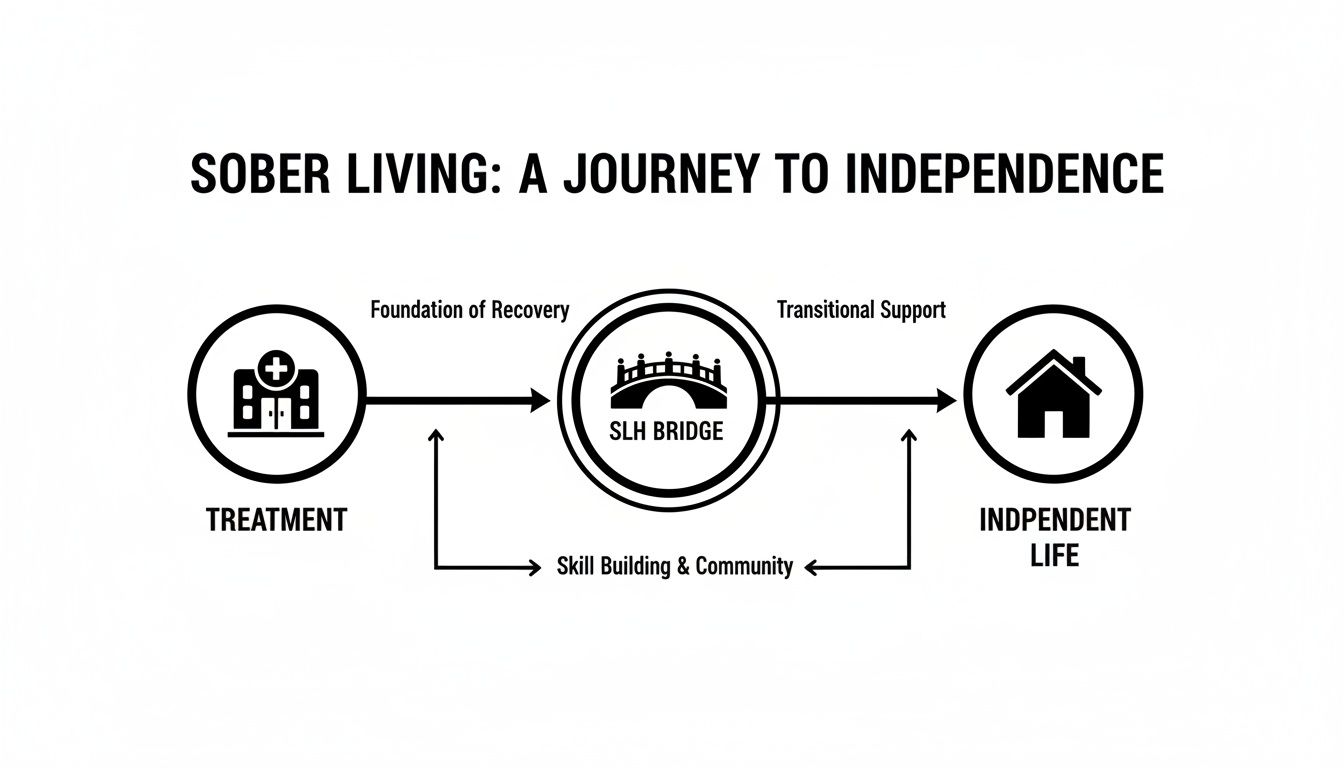
As you can see, this path isn't about just getting through treatment. It's about methodically building the skills and resilience needed to transition back into the world, stronger and more prepared than before.
How Sober Living and Outpatient Treatment Work Together
To make it even clearer, let’s break down how these two essential services complement each other. Each one plays a distinct but interconnected role in building a solid foundation for recovery.
| Feature | Outpatient Program (Altura Recovery) | Sober Living House |
|---|---|---|
| Primary Role | Delivers clinical therapy and medical oversight. | Provides a structured, substance-free living environment. |
| Focus | Addresses the "why" behind addiction: trauma, mental health, and emotional regulation. | Focuses on the "how" of daily sober living: routine, accountability, and life skills. |
| Accountability | Managed by licensed therapists and medical staff through scheduled sessions. | Enforced 24/7 by a house manager and peers through house rules and drug testing. |
| Support System | Professional support from clinicians and therapeutic peer groups. | Peer-driven support from housemates who share the same daily goals and challenges. |
| Skill Building | Teaches evidence-based coping skills like CBT and DBT in a formal setting. | Offers a safe place to practice those new skills in real-world social situations. |
This table shows there’s very little overlap. Instead, the two services lock together to provide a comprehensive safety net, covering both the internal psychological work and the external environmental challenges of early recovery.
The Power of an Integrated Approach
This isn’t just a nice idea; it’s rapidly becoming the gold standard in addiction care. The behavioral health industry is increasingly recognizing that a safe, stable home is not just helpful but essential for lasting recovery. This shift is a key driver behind the market’s projected growth from $5.41 billion to $9.54 billion, as more providers adopt this integrated model. You can read the full analysis on behavioral health trends here.
The synergy is what makes it so effective. The skills you learn in your morning therapy session about managing cravings get put to the test that same evening—but you’re practicing them in a house full of supportive peers, not alone in a risky environment.
By pairing the clinical rigor of an IOP or PHP with the practical, real-world application of a sober living house, you are not just hoping for recovery—you are actively building it from the ground up, every single day.
This strategy offers a clear, decisive advantage. Instead of driving home from a tough therapy session feeling raw and alone, you’re returning to a community that gets it. The structure of the home provides guardrails that keep you on track when you’re most vulnerable.
- Clinical Skills: You learn proven techniques like CBT and DBT in your outpatient program.
- Real-World Practice: You apply those skills every day in the sober living community.
- Professional Guidance: Your therapists and clinicians at Altura Recovery provide expert direction.
- Peer Accountability: Your housemates offer 24/7 encouragement and accountability.
This powerful combination ensures every angle of your recovery is covered. It transforms abstract therapeutic concepts into concrete, lived experience, building a durable foundation for a future you can count on.
The Core Benefits of a Structured Sober Environment
Think of early recovery like trying to grow a fragile seedling. If you plant it in an open field, it’s at the mercy of unpredictable storms and harsh weather. But if you place it inside a greenhouse, you create a controlled, nurturing space where it can develop strong roots before it has to face the outside world. A sober living house is that greenhouse.
It provides a protective, supportive atmosphere intentionally designed to help you rebuild.
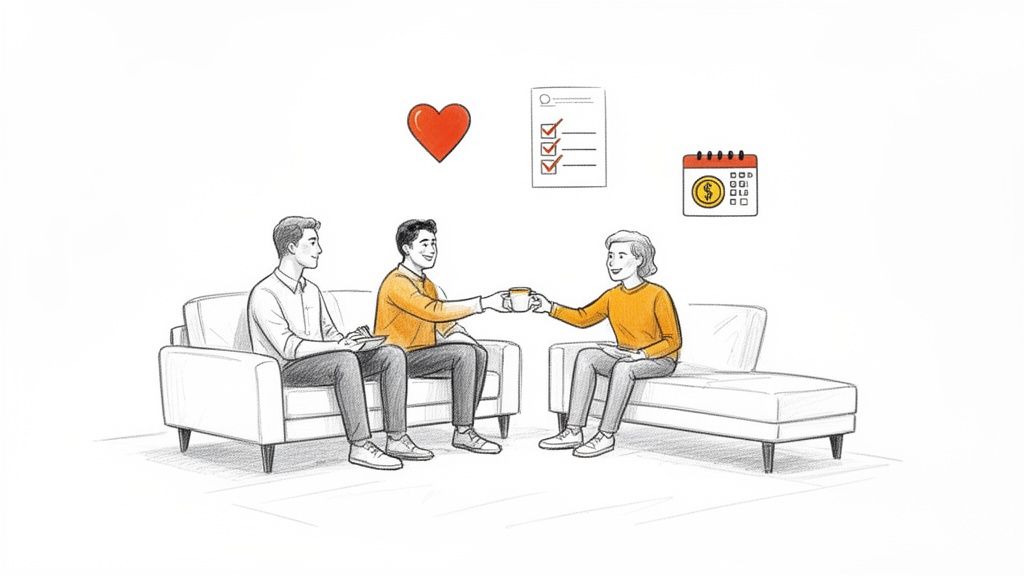
This environment isn't just about removing drugs and alcohol; it's about actively laying a new foundation for your life. The benefits go far beyond just having a safe place to sleep—it’s where personal responsibility, resilience, and real-world skills come together.
The Power of True Peer Support
One of the most immediate benefits is the built-in community. Imagine coming home after a brutal day where every little thing felt like a trigger. In your old environment, you might have to face that feeling all alone.
In a sober living home, you can sit on the porch with a housemate who gets it—really gets it—because they’re walking the same path. That shared experience is a powerful antidote to the isolation that so often derails early recovery.
It’s a space where you can be vulnerable without being judged and celebrate small wins with people who understand just how monumental they feel. These connections create an informal, 24/7 support system. Learning to communicate in these settings is a skill for life, and digging into different addiction topics for groups together only makes those bonds stronger.
Accountability That Builds Trust
At first glance, house rules and regular drug testing can seem restrictive. But their real purpose is to create a circle of trust and safety that protects everyone’s hard-won sobriety. Accountability here isn’t about punishment; it’s about a shared commitment.
When every single resident agrees to the same standards, it builds an environment where recovery is the collective priority. This structure removes the guesswork and provides the clear, predictable boundaries that were often missing in active addiction.
The system works because it’s mutual. You aren’t just being held accountable—you’re helping hold your housemates accountable, too. This dynamic shifts responsibility from a personal burden to a shared goal, strengthening everyone’s resolve.
The data backs this up. Sober living homes dramatically improve recovery outcomes. Research shows that residents who stay for at least six months can achieve 70-80% sobriety maintenance. Some models even report up to 94% abstinence among graduates, highlighting the profound impact of a structured, committed community.
Developing Essential Life Skills for Independence
Beyond just staying sober, a sober living house is a practical training ground for life. For many people in early recovery, essential life skills were pushed aside during active addiction. This is the place to relearn and practice them.
In this supportive context, residents get daily practice with crucial skills:
- Financial Responsibility: Managing a budget, paying rent on time, and saving money become normal, expected routines.
- Time Management: Juggling a job or school with outpatient treatment, house meetings, and personal time teaches invaluable organizational skills.
- Healthy Socializing: You learn how to build real, sober friendships and create a new social circle centered on positive activities.
- Conflict Resolution: Living with other people inevitably brings disagreements. This provides real-world opportunities to practice healthy communication and solve problems constructively.
- Routine and Self-Care: From waking up on time to cooking healthy meals, you re-establish the daily discipline necessary for long-term well-being.
This focus on practical skills is what closes the gap between formal treatment and a self-sufficient, fulfilling life. You don’t just learn about recovery; you learn how to live in recovery, turning conscious efforts into the healthy, automatic habits that last.
How to Choose the Right Sober Living House
Deciding on a sober living house is a huge step in the recovery journey. Honestly, it's one of the most critical choices you'll make. This home will be the backdrop for your transition back into everyday life, so finding a place that truly supports your personal needs isn't just a nice-to-have, it's essential. You’re not just looking for an available bed; you're searching for a community that will fiercely protect your sobriety and help you grow.
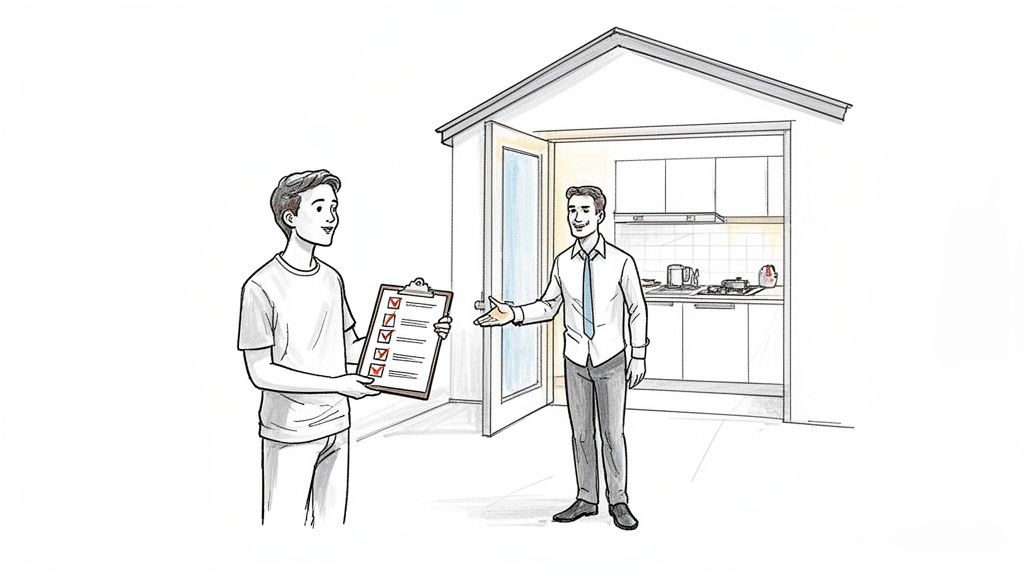
So, where do you start? Begin with people you already trust. The best first call is to your treatment provider, like Altura Recovery. Our team has built strong relationships with reputable, high-quality sober living partners right here in the Houston area. We can point you toward homes that align with our own evidence-based philosophy. Beyond that, look for state-level certification bodies or alliances—they often keep directories of accredited homes that meet specific quality standards.
Key Factors to Evaluate in a Sober Home
Once you have a shortlist of potential homes, it's time to put on your inspector hat. You're evaluating the foundation, the structure, and the overall environment to make sure it’s a safe place to build your new life. A quality sober living house will be transparent, open, and proud of how they operate.
Here are the non-negotiables to look for:
- Accreditation and Licensing: Is the home certified by a recognized organization? This is your assurance that they meet baseline standards for safety, ethics, and quality.
- Clear and Enforced Rules: A detailed resident handbook is a fantastic sign. Look for clear rules on curfews, chores, meetings, and guest policies. Then ask how they're consistently enforced.
- A Present House Manager: An on-site or easily reachable house manager is the anchor of the home. They provide structure, resolve conflicts, and keep the house running smoothly. This is a must.
- Solid Drug Testing Protocol: Ask about the frequency and type of drug and alcohol testing. Regular, random testing is the industry standard for a reason—it keeps the environment safe for everyone.
- The Overall Vibe: When you visit, pay attention to how it feels. Is it a supportive community or just a glorified flop house? The culture should feel positive and completely focused on recovery.
Critical Questions to Ask During Your Visit
Touring a home and talking to the house manager is your chance to get the real story. Don't be shy about asking direct questions; a good provider will welcome them. This conversation is your window into the day-to-day reality of living there.
Choosing a sober living house isn't just a logistical step; it’s an investment in your recovery. The right environment provides the structure, support, and accountability needed to turn therapeutic lessons into lasting life skills.
Before you go, jot down a list of questions to make sure you cover all your bases. The answers you get will paint a very clear picture of whether the home is the right fit.
To help you get started, we've put together a checklist of essential questions. Think of this as your personal vetting tool to compare different homes and make a confident decision.
| Category | Question to Ask |
|---|---|
| Safety & Protocol | "What is the exact procedure if a resident relapses? Is there a zero-tolerance policy, or is there a process to connect them with a higher level of care?" |
| Staff & Support | "What kind of training does the house manager have? Are they in recovery themselves?" |
| Costs & Fees | "What does the monthly rent include? Are there any additional fees for things like drug testing, supplies, or transportation?" |
| Community Structure | "What do house meetings look like? How often are they held, and what is typically discussed?" |
| House Rules | "What are the rules for having guests over? Are there specific hours or designated areas for visitors?" |
| Conflict Resolution | "How are disagreements or conflicts between residents handled?" |
| Recovery Program | "Are residents required to attend 12-step meetings or be enrolled in an outpatient program like an IOP?" |
| Resident Life | "What are the expectations for employment or school? How long do residents typically stay?" |
Arming yourself with these questions helps you choose a sober living house that offers more than just a room—it offers a genuine opportunity for healing and growth. This isn't just about finding a place to stay; it's about finding a place to thrive.
A Day in the Life: Rules, Costs, and Expectations
Stepping into a sober living house can feel like entering a new world, one with its own rhythm and a clear set of guidelines. Knowing the daily structure and financial commitments upfront helps take the anxiety out of the transition and sets you up for success. This isn't just a place to sleep; it’s an active, structured environment built to forge the habits that make recovery last.
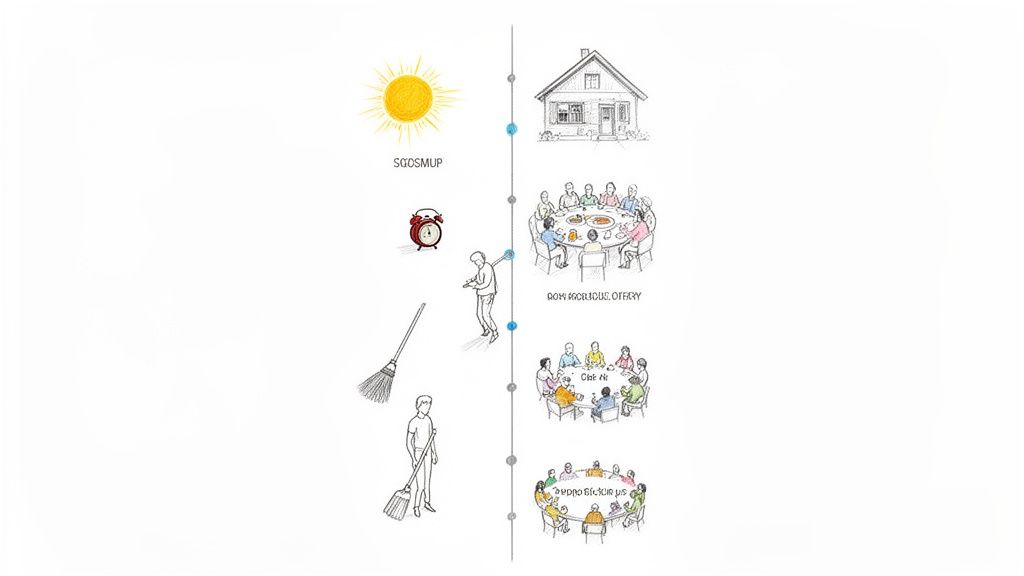
Life in a quality sober living home is all about purposeful structure. A typical day is designed to replace the chaos of addiction with predictability, community, and personal responsibility. While every house has its own unique feel, the core routine is designed to help you build a solid foundation.
What a Typical Day Involves
Mornings usually kick off early to help everyone get on a healthy sleep schedule. After personal hygiene, you’ll likely have assigned chores, like helping with breakfast prep or tidying up the common areas. This isn’t just busy work—it’s about taking ownership, contributing to the community, and practicing real-world accountability.
The daytime hours are focused on productive activities that push your recovery forward. This nearly always includes a mix of:
- Work or School: Most residents are required to be employed, actively looking for a job, or enrolled in classes.
- Outpatient Treatment: If you’re in a program like Altura Recovery’s IOP or PHP, your day is built to accommodate your therapy sessions.
- Support Meetings: Attending 12-step meetings like AA or NA is almost always a non-negotiable part of the weekly schedule.
Evenings are for winding down, reflecting, and connecting with housemates. After a shared dinner, many homes hold a mandatory house meeting. It's a time to check in, talk through challenges, and offer support before curfew, which is strictly enforced to keep the environment safe and predictable for everyone.
The Resident Agreement and House Rules
When you move in, you’ll sit down and sign a resident agreement, often called a "recovery contract." This document lays out all the house rules in black and white, leaving no room for confusion.
The rules in a sober living house aren't meant to be punitive. They exist to create a predictable, safe, and fair environment where every single resident has the best possible chance to succeed.
This contract is the bedrock of the community. It covers everything from curfew times and guest policies to the zero-tolerance stance on drug and alcohol use. It also spells out expectations for chores, meeting attendance, and respectful communication, making sure everyone is on the same page and working toward the same goal.
Understanding the Costs and Length of Stay
The financial piece is an important part of the puzzle. Rent in a sober living house typically falls between $450 to $900 per month, which varies based on the home's location and amenities. This fee almost always covers:
- Your furnished room (often shared with one roommate)
- All utilities, including electricity, water, and Wi-Fi
- Household supplies for common areas (think paper towels, cleaning products)
- The costs associated with regular drug and alcohol screening
What it doesn't usually cover are your groceries, transportation, and other personal items.
So, how long should you plan to stay? While most homes have a 30-day minimum, the research is clear: a longer stay is directly linked to better, more lasting outcomes. Staying for six months or more can boost sustained sobriety rates to between 70-80%. The longer you immerse yourself in this supportive and structured setting, the more deeply those new, healthy habits take root, preparing you for a successful return to independent living.
Your Recovery Journey Starts Here at Altura Recovery
We’ve spent this guide talking about sober living as the essential support structure—think of it as the scaffolding that goes up around a building, allowing for safe, deliberate reconstruction in early recovery. A sober living home is so much more than just a roof over your head; it’s a structured, real-world workshop where the clinical skills you learn in therapy get put to the test every single day. This one-two punch of expert treatment and practical application is what builds a sobriety that’s meant to last.
Here at Altura Recovery, we don’t just recommend this combination—we see it as fundamental to success. Our evidence-based outpatient programs (PHP, IOP, and SOP) provide the therapeutic blueprint for healing. But we know from experience that the hours you spend outside of our sessions are where the real work of recovery happens. That's why we consider a high-quality sober living house a non-negotiable part of the recovery process, giving our clinical work the stable, accountable ground it needs to truly take root.
Your Next Step with Altura Recovery
Trying to find the right sober living partner on your own can feel like a full-time job, but you don’t have to do it alone. Our team is deeply connected in the Houston recovery community, and we actively help our clients find and vet reputable sober homes that share our commitment to genuine, lasting change. We make sure any environment we suggest is safe, supportive, and built for growth.
If you’re already in one of our outpatient programs or thinking about joining, pairing it with a supportive living environment can make all the difference. It creates a protective space where you can pour all your energy into healing, surrounded by a community of people who get it because they’re walking the same path.
The journey back from addiction is the most important work you will ever do. Giving yourself the advantage of Altura Recovery's clinical expertise combined with the structure of a sober living home is the strongest start you can possibly make.
We’re here to help you take that next confident step. Talk to our compassionate admissions team about how a sober living house can be woven directly into your personalized treatment plan. Contact Altura Recovery today and let’s start building your path toward Real Healing and the freedom that comes with it.
Common Questions About Sober Living
Even after getting a clearer picture of sober living, it’s completely normal to have more questions. This is a big step, after all. Committing to a structured, sober environment is a major decision, and it’s smart to get all the facts first.
We’ve pulled together some of the most common questions we hear from individuals and families. Our goal is to give you direct, honest answers so you can move forward with confidence.
What Is the Difference Between a Sober Living House and a Halfway House?
While people often use these terms interchangeably, there are some important distinctions. Knowing the difference is key to finding the right fit for your recovery.
A halfway house is usually a government-funded facility. It often acts as a bridge for people leaving the criminal justice system, and living there can be a requirement of their release.
A sober living house, on the other hand, is almost always privately owned. Residents are there by choice because they want to build a solid foundation for their recovery. These homes tend to offer more freedom while still providing the essential structure, peer community, and a strict no-substance policy that makes early sobriety work.
Can I Work or Go to School While in a Sober Living House?
Absolutely—in fact, it’s usually required. The whole point of a sober living home is to help you successfully reintegrate into a productive, self-sufficient life. Holding down a job, actively looking for one, or being enrolled in school is a core part of that process.
This structure is designed to work seamlessly with outpatient treatment. Flexible programs, like the ones at Altura Recovery, are built so you can attend therapy sessions while still meeting your obligations at work or school. It’s an integrated approach that lets you practice your recovery skills in the real world, every single day.
How Are Rules Enforced in a Sober Living House?
Rules are the bedrock of a safe, recovery-focused environment. They’re typically enforced by a live-in house manager or through a peer-led community council, which helps ensure everyone is held to the same standard.
Accountability isn't about punishment; it's about a shared commitment to protecting the sober environment for every single person who lives there. This mutual agreement builds trust and reinforces the collective goal of lasting recovery.
Enforcement always includes regular and random drug and alcohol testing. The consequences for breaking a rule are spelled out clearly in the agreement you sign when you move in. While a relapse might mean having to leave the home for a bit, a quality provider won’t just put you on the street. They’ll work with you and your clinical team at Altura Recovery to get you to a higher level of care, often with a clear plan to return once you’re stable.
How Does My Family Get Involved or Support Me?
Family involvement can be a game-changer for long-term recovery. While sober living homes have firm rules about visitors and overnight guests to protect the integrity of the environment, healthy family participation is always encouraged.
This is where the partnership with an outpatient program like ours becomes so important. At Altura Recovery, we offer dedicated family therapy and educational workshops. These sessions help your loved ones understand addiction, learn how to set healthy boundaries, and improve communication—all of which helps the entire family system heal and build a strong foundation for your new life.
At Altura Recovery, we know from experience that a structured, supportive sober living environment is a critical piece of a successful recovery plan. It provides the stability and accountability needed to make our clinical work stick. Contact our admissions team today to learn how we find the right sober living partner to support your journey to Real Healing and lasting freedom.