
Xanax withdrawal isn’t just a bad case of the nerves. The symptoms can span from manageable but miserable anxiety and insomnia all the way to life-threatening emergencies like seizures and psychosis. When the brain gets used to having Xanax around to stay calm, taking it away forces a difficult and often painful readjustment.
It’s critical to understand that this is a predictable physiological response—not a personal failure.
Why Stopping Xanax Is So Challenging
To get a real handle on Xanax withdrawal, it helps to think about how your brain keeps itself calm naturally. It uses a neurotransmitter called Gamma-Aminobutyric Acid, or GABA, which essentially acts like the brake pedal for your entire central nervous system. GABA slows down nerve activity, dialing back feelings of anxiety and panic.
When you take Xanax, you're not just tapping the brakes—you're slamming on a supercharged, power-assisted braking system. It dramatically amplifies GABA's effects, producing that profound, fast-acting sense of relief. But over time, your brain adapts to this "borrowed calm." It gets lazy, producing less of its own GABA and even reducing the number of receptors that respond to it. In short, it outsources the job of staying relaxed to the medication.
The Brain's Rebound Effect
When Xanax is suddenly gone, that external support vanishes. Your brain is left with a weakened natural braking system and no power booster. This abrupt shift sends nerve activity surging out of control, triggering the intense rebound anxiety and other physical and psychological xanax withdrawal symptoms that define the detox process.
Physical dependence is the body's adaptation to a substance. It's a normal, expected neurobiological response to consistent benzodiazepine use, not a sign of weakness or a moral failing. The challenge lies in safely guiding the brain back to its own state of balance.
This is exactly why quitting "cold turkey" is so dangerous. The brain is thrown into a state of hyper-excitability with no way to regulate itself, which dramatically increases the risk of severe complications.
Xanax Withdrawal At a Glance
The journey back to balance happens in phases. The table below offers a quick snapshot of what to expect as your body and mind begin the delicate process of recalibrating without Xanax.
| Withdrawal Phase | Typical Onset | Common Symptoms | Key Considerations |
|---|---|---|---|
| Early/Acute | 6-12 hours after the last dose | Rebound anxiety, insomnia, irritability, muscle spasms, sweating | Symptoms often peak within the first few days. Medical supervision is critical to manage risks like seizures. |
| Protracted | After the acute phase, lasting weeks to months | Lingering anxiety, mood swings, cognitive fog ("brain fog"), sleep disturbances | Emotional and therapeutic support is essential for managing persistent symptoms and preventing relapse. |
Understanding this timeline helps set realistic expectations and underscores the need for a structured, supportive approach to safely navigate withdrawal.
Your Week-By-Week Withdrawal Timeline
Trying to understand what Xanax withdrawal will feel like can be overwhelming. Having a rough timeline, though, gives you a roadmap. It helps you anticipate the challenges and see each stage for what it is: a temporary part of your body's healing process. While everyone's experience is a bit different, the journey usually follows a predictable pattern.
Because Xanax is a short-acting benzodiazepine, its effects wear off fast. This means withdrawal can kick in much sooner than with similar medications. Many people start feeling the first signs within just 6 to 8 hours of their last dose. These symptoms usually get more intense and peak around the second day. For more clinical insights, you can read about the withdrawal process for veterans and others at VeteranAddiction.org.
This infographic breaks down the three main phases of withdrawal—Acute, Post-Acute, and Protracted—and what to expect in each.

As the visual shows, the toughest symptoms hit early on, but the full journey to recovery can be a longer road that requires ongoing support.
The First 48 Hours: Initial Onset
This first phase starts quickly. Within the first day, you might experience a powerful return of the very symptoms Xanax was meant to treat. Clinicians call this the rebound effect.
- Rebound Anxiety: A sudden and often jarring spike in anxiety and restlessness.
- Insomnia: You might find it impossible to fall asleep or stay asleep, even when you feel completely exhausted.
- Irritability: Small frustrations can feel huge, leading to a much shorter temper than usual.
These early symptoms are your brain’s first signal that it’s missing the medication it learned to rely on to stay calm.
Days 3 to 7: The Acute Phase
This is often the most difficult stretch of the timeline. During these days, Xanax withdrawal symptoms typically reach their peak intensity. Your central nervous system is essentially in a state of overdrive, struggling to function without the powerful calming effects of alprazolam. The physical discomfort can be intense, and psychological distress is very common.
Symptoms during this peak can include:
- Physical Tremors: Uncontrollable shaking, especially in the hands.
- Muscle Spasms and Pain: Aches and cramps that can feel like a severe case of the flu.
- Sweating and Nausea: Your body's stress response can trigger these highly uncomfortable reactions.
- Sensory Hypersensitivity: Lights may seem painfully bright, and everyday sounds can feel overwhelmingly loud.
The acute phase is when medical supervision is absolutely critical. The risk of serious complications, including life-threatening seizures, is highest during this time. A professionally managed detox isn't just for comfort—it's for safety.
Week 2 and Beyond: The Post-Acute Phase
After the first week, the most severe physical symptoms usually start to fade. But the journey isn’t over. This next stage is often called Post-Acute Withdrawal Syndrome (PAWS), and it involves psychological and emotional symptoms that are less intense but can linger.
You might experience waves of symptoms that come and go, which can be incredibly frustrating. Common experiences during this stage include:
- Brain Fog: Trouble concentrating, memory issues, and a general feeling of mental slowness.
- Mood Swings: Bouncing between periods of depression or apathy and moments of feeling okay.
- Lingering Anxiety: A persistent, low-grade anxiety that isn't as sharp as in the acute phase but is still disruptive.
- Sleep Disturbances: While severe insomnia might improve, you could still deal with inconsistent or poor-quality sleep.
This phase can last for several weeks or even months. It’s a time of gradual healing as your brain chemistry slowly recalibrates. Getting through it successfully takes patience, self-compassion, and a strong support system to help you manage the emotional ups and downs.
What Makes Your Xanax Withdrawal Experience Unique
There’s no single, universal blueprint for Xanax withdrawal. While timelines offer a general map, your personal journey will be shaped by a combination of factors that are entirely your own. The intensity and duration of your Xanax withdrawal symptoms depend on your specific circumstances, which is why a one-size-fits-all detox plan isn't just ineffective—it’s unsafe.
Think of it like a physiological debt. A larger loan taken out over a longer period requires a more careful, extended repayment plan. In the same way, a higher dose of Xanax used for months or years creates a more significant physical dependence, demanding a much more gradual and cautious tapering process to safely recalibrate your system.
Key Factors Influencing Withdrawal Severity
Several variables are at play in determining what your withdrawal will look like. Understanding them helps you and your medical team build a plan that truly fits your needs, making the process both safer and more comfortable.
Here are the key influencers:
- Dosage and Duration of Use: This is the single biggest factor. Someone taking a high dose for several years will almost certainly face a tougher withdrawal than someone on a low dose for a few months. Research points to a higher risk of severe withdrawal in people taking more than 4 mg per day for 12 weeks or longer, but dependence can form even at lower doses.
- Your Individual Biology: How your body processes and clears Xanax affects how quickly withdrawal kicks in and how long it sticks around. Things like your age, liver function, and even your unique genetic makeup influence your metabolic speed.
- Co-occurring Health Conditions: If you're also managing other issues like depression, PTSD, or chronic pain, withdrawal gets more complicated. The stress of detox can amplify these conditions, and their symptoms can easily overlap with withdrawal, making it harder to know what's causing what.
The Impact of Long-Term Use
How long you’ve been taking Xanax is a critical piece of the puzzle. Using it consistently for as little as three to six weeks can be enough for your body to become physically dependent. Over months or years, the brain's adaptation becomes much more profound, making the journey back to baseline a far more delicate process.
This isn't just theory; it's what we see in clinical practice every day. Comprehensive reviews estimate that 40–80% of people who have taken benzodiazepines for six months or more will experience withdrawal symptoms when they stop. On top of that, up to 44% of these long-term users report that their symptoms are moderate to severe during the tapering process. You can dig into the studies behind these numbers in this breakdown of benzodiazepine withdrawal statistics from Benzoinfo.com.
Because of all these variables, a personalized, medically supervised taper isn’t just a good idea—it is essential for your safety. A healthcare professional can adjust the tapering schedule based on your unique history and how your body responds, minimizing severe symptoms and risks.
Ultimately, accepting that your experience is unique is the first step toward creating a realistic and compassionate recovery plan. It frees you from comparing your journey to anyone else’s and lets you focus on getting the specific support and strategies you need to heal safely.
Recognizing Life-Threatening Withdrawal Symptoms
While most Xanax withdrawal symptoms are intensely uncomfortable, a few cross the line into genuine medical emergencies. Knowing how to spot these critical warning signs isn't just helpful—it can be life-saving. Trying to ride out severe symptoms at home is a dangerous gamble with potentially devastating consequences.
When the central nervous system is suddenly deprived of Xanax, it can become dangerously overactive. This hyper-excitable state is what triggers the most severe complications. Think of it like an engine revving out of control with no way to slow it down, pushing the brain and body to their absolute limits.
Seizures: The Most Urgent Risk
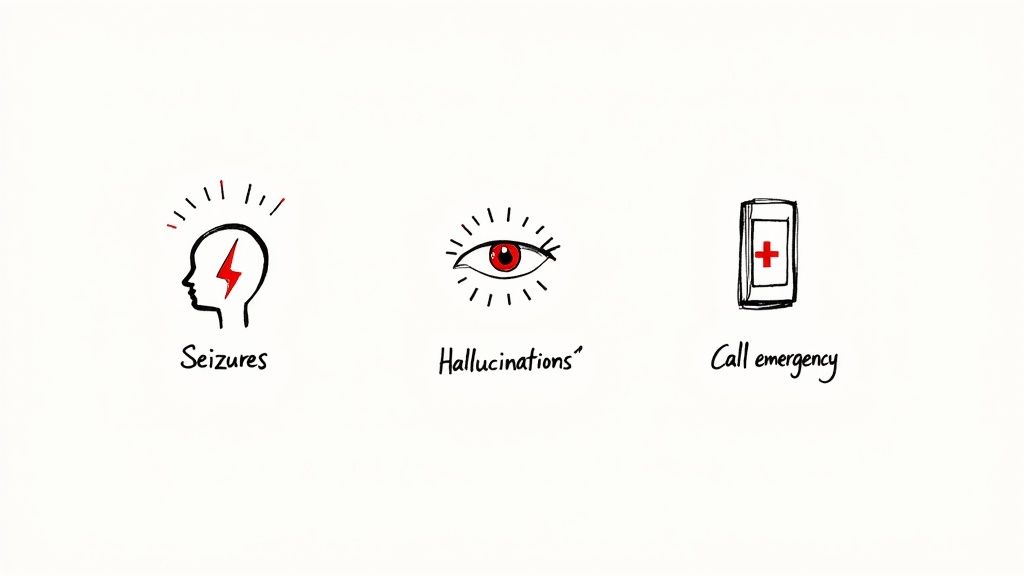
The single most dangerous of all Xanax withdrawal symptoms is a grand mal seizure. It can happen without warning, especially during the acute withdrawal phase when brain activity is at its most chaotic.
A grand mal seizure involves a loss of consciousness and violent muscle contractions. This is a critical medical event that demands immediate emergency intervention. The risk is significantly higher for people who have been on high doses for a long time or who stop taking Xanax abruptly—what’s known as going “cold turkey.”
Hallucinations and Psychosis
Severe withdrawal can also disrupt your perception of reality, signaling that the brain is under extreme distress. This can show up in a few frightening ways.
- Hallucinations: Seeing, hearing, or feeling things that aren’t actually there. This can be confusing and terrifying.
- Delusions: Developing strong, false beliefs that are not based in reality.
- Delirium: A state of severe confusion, disorientation, and an inability to think or speak clearly.
These symptoms are signs of psychosis, a temporary but severe mental state that requires urgent medical care to ensure the safety of the individual and everyone around them.
Immediate Action Is Non-Negotiable: If you or a loved one experiences a seizure, hallucinations, or severe confusion, this is a medical emergency. Do not wait for it to pass. Call 911 immediately or go to the nearest emergency room.
Extreme Psychological Distress
Beyond psychosis, the psychological toll of withdrawal can become life-threatening. The intense rebound anxiety and depression that can surface are not to be underestimated.
Suicidal thoughts or ideations can emerge, driven by an overwhelming sense of hopelessness and discomfort. Any mention of self-harm must be taken seriously and warrants immediate professional help.
The intense anxiety can also manifest physically, sometimes as chest pain. This resource offers a more detailed guide on understanding anxiety-related chest pain symptoms, which can help differentiate a panic response from a cardiac event—though a medical evaluation is always the safest course. Recognizing these red flags empowers you to act decisively when it matters most.
Proven Strategies for a Safer Detox
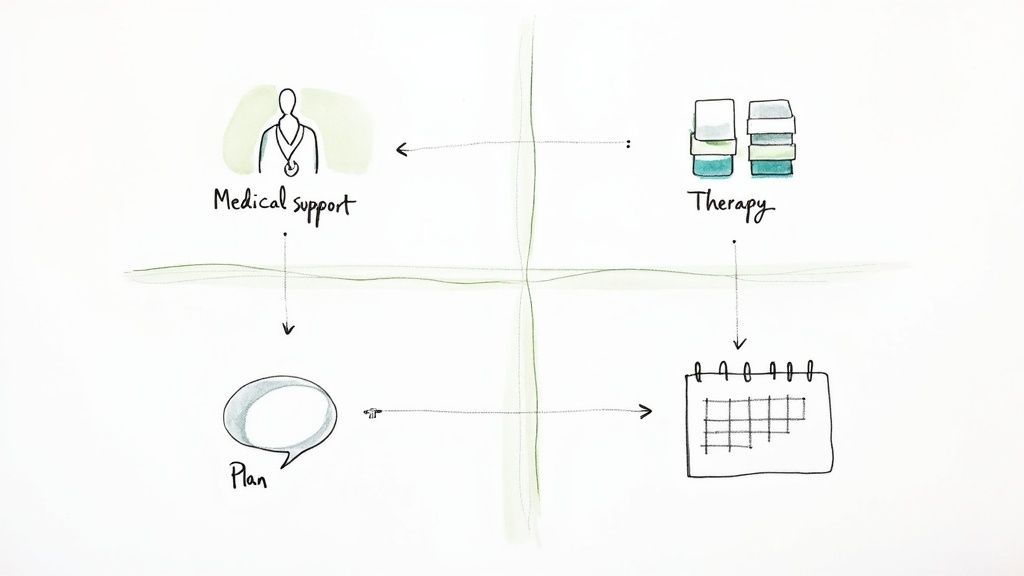
Trying to get off Xanax feels like walking a tightrope, and it's a walk you should never, ever do alone. This isn't about willpower; it's about smart, safe, and supportive strategy. The best approaches are all about keeping you stable and comfortable, giving your brain and body the solid ground they need to heal. This means a careful blend of medical oversight, real therapeutic support, and practical skills for getting through the day.
The absolute first rule of Xanax detox is a simple one: never stop taking Xanax abruptly. Quitting "cold turkey" is like yanking the emergency brake on a speeding train. It sends a massive shock to your central nervous system, which has grown used to the drug. This sudden jolt is what unleashes the most dangerous Xanax withdrawal symptoms, including life-threatening seizures. A gradual, medically guided taper isn't just a good idea—it's the universally recognized gold standard for getting off benzodiazepines safely.
The Gold Standard: The Medically Supervised Taper
A taper is just a methodical plan for slowly reducing your Xanax dose over weeks or even months. This isn't a race. The slow, controlled reduction gives your brain the time it needs to wake up and start producing its own GABA again—the natural neurotransmitter that keeps you calm. Think of it like letting the air out of a tire slowly instead of slashing it. You avoid a dangerous blowout.
A medical professional will design a taper schedule just for you, based on your current dose, how long you've been on it, and your overall health. They generally use one of two main strategies:
- Direct Taper: This is the most straightforward approach, where your daily dose of Xanax itself is gradually lowered. The cuts are small and spaced out to keep withdrawal symptoms at a manageable level.
- Substitution Taper: In some cases, especially with a short-acting drug like Xanax, a doctor might switch you to a longer-acting benzodiazepine like diazepam (Valium). Because Valium leaves your system more slowly, it creates a much smoother ride with fewer intense withdrawal peaks and valleys.
The point of a taper isn’t just to stop the medication. It's to do it safely and with as little misery as possible. A planned, clinical approach is non-negotiable, as research has repeatedly shown that stopping without one can lead to devastating outcomes.
For example, one major study highlighted the very real dangers, finding that among high-risk groups, discontinuing benzodiazepines was linked to a higher mortality rate compared to those who continued their prescription.
Comfort Medications and Symptom Management
Even with the most careful taper, you're probably going to feel some withdrawal symptoms. The good news is that a medical team has options to help manage the discomfort and make the whole process much more tolerable. These aren't new medications to get dependent on; they're temporary tools to target specific symptoms.
Common comfort medications might include:
- Anti-seizure Medications: Drugs like carbamazepine or gabapentin can help stabilize your nervous system and dramatically lower the risk of seizures.
- Beta-blockers: Medications like propranolol are great for taming the physical side of anxiety—the racing heart, the shakes, the sweating.
- Sleep Aids: Getting decent sleep is a huge challenge. A doctor might prescribe a non-benzodiazepine option like hydroxyzine to help you get the rest your brain desperately needs to heal.
Beyond prescriptions, don't underestimate the power of simple comforts. Things like a deep pressure blanket can be incredibly calming for an overstimulated nervous system. If you're curious, this guide to weighted blankets offers a great breakdown of how they work.
The Role of Therapy in Building Resilience
Getting through detox is just step one. Most people were prescribed Xanax for a reason—usually an underlying anxiety or panic disorder. If you don't address that root cause, the odds of relapse are incredibly high. This is where therapy comes in, giving you the tools to manage life's challenges without needing to reach for a pill.
Cognitive Behavioral Therapy (CBT) is one of the most effective methods out there. It teaches you how to catch, challenge, and change the anxious thought loops that send you spiraling. Instead of reacting with panic, you learn new, healthier ways to respond to stress.
Therapy helps you build a mental toolbox that will serve you for the rest of your life, long after the last pill is gone. This complete approach—combining a safe taper, symptom relief, and psychological support—is the most proven and reliable path to lasting freedom from Xanax.
Finding The Right Professional Support System
Information is powerful, but taking action is what actually kicks off the recovery process. Getting through Xanax withdrawal isn't something you can just read about—it demands a strong, professional support system to see you through safely.
Deciding on the right level of care will be the most important choice you make. This isn't a journey for guesswork. The risks tied to Xanax withdrawal symptoms, especially life-threatening seizures, make professional oversight non-negotiable. Thankfully, there's a full spectrum of care designed to meet you where you are, from 24/7 medical supervision to flexible outpatient programs that work around your life.
Understanding Your Treatment Options
The "best" program is the one that fits your specific situation—your dose, how long you've been using, and your overall health. The goal is to match the intensity of the treatment to the intensity of your needs, creating a plan that feels supportive, not suffocating.
Here’s a breakdown of the different levels of care you'll encounter:
- Medical Detox (Inpatient): This is the highest level of care, and it's essential for anyone at high risk of severe withdrawal. In a medical detox facility, you get around-the-clock monitoring from doctors and nurses who can immediately step in to manage dangerous symptoms.
- Partial Hospitalization Programs (PHP): A step down from inpatient, PHPs offer a highly structured treatment schedule for several hours a day, five to seven days a week. You get intensive therapy and medical support but return home or to a sober living environment at night.
- Intensive Outpatient Programs (IOP): IOPs give you a more flexible but still powerful level of support. Treatment typically involves a few hours of therapy and group sessions several evenings a week, allowing you to keep up with work, school, or family commitments.
- Supportive Outpatient Programs (SOP): This is often the final stage in a formal treatment plan. SOP provides ongoing weekly support to help you sharpen your coping skills and navigate the real-world challenges of long-term recovery.
The Power of a Step-Down Approach
Recovery isn't a one-and-done event; it's a gradual process of healing and building new strengths. A step-down approach is designed to give you continuous support that adapts as your needs change. You might start in a more intensive program like a PHP or IOP, then transition to a less intensive SOP as you become more confident and stable on your own.
This method ensures you are never left without a safety net. It provides a structured pathway from acute withdrawal management to independent, sober living, reducing the risk of relapse by building a strong foundation of skills and support over time.
This continuum of care is what helps you integrate recovery into your actual life. As you step down, you take on more personal responsibility while still having access to therapists and a network of peers who get it. For many, continuing this journey in a structured, supportive home is a game-changer. Our guide to finding a quality sober living near you offers key insights into how these communities can protect and reinforce your progress.
Choosing the right path forward empowers you to build a future defined by your well-being, not by withdrawal.
Frequently Asked Questions About Xanax Withdrawal
When you’re facing Xanax withdrawal, a lot of questions come up. The internet is full of conflicting information, but getting clear, straightforward answers is crucial. Here, we tackle some of the most common concerns people have, using our clinical experience to give you the facts.
Can Even Low Doses of Xanax Cause Withdrawal?
Yes, absolutely. It's a dangerous myth that only high-dose or long-term users are at risk. Even if you've been taking a low, prescribed dose for just a few weeks, your brain has already started to adapt.
This process is called physical dependence, and it’s a normal physiological response, not a sign of misuse or a character flaw. Your brain simply gets used to the drug's presence, so when you try to stop, it sends out alarm signals. This is precisely why everyone, regardless of their dose, needs a medically supervised taper to quit safely.
What Is Rebound Anxiety?
Rebound anxiety is the intense, often overwhelming return of anxiety that hits shortly after stopping Xanax. For many people, this wave of anxiety is far worse than what they were originally trying to treat.
Think of it like a dam. Xanax holds back a flood of anxious brain activity. When you suddenly remove the dam, all that pent-up neural energy comes rushing back, creating a powerful and distressing surge of panic that can feel impossible to manage on your own.
Why Is Quitting Xanax “Cold Turkey” So Dangerous?
Stopping Xanax abruptly is one of the most dangerous things you can do. It throws your central nervous system into a state of absolute shock, causing brain activity to spike uncontrollably. This is what leads to the most severe and life-threatening withdrawal symptoms.
Going "cold turkey" dramatically increases the risk of:
- Grand Mal Seizures: These can happen without any warning and are always a medical emergency.
- Psychosis: This isn’t just confusion; it can involve terrifying hallucinations and delusions.
- Extreme Panic Attacks: Unmanageable terror that can feel like you’re dying.
A gradual, medically guided taper isn't just a recommendation—it's the only safe way to get off this medication.
How Long Do Xanax Withdrawal Symptoms Last?
The timeline is different for everyone, but there's a general pattern. The first acute symptoms usually kick in within 6 to 12 hours of the last dose. They tend to peak within the first few days and begin to ease up after about a week.
But the process often doesn't end there. Many people go through a longer phase called Post-Acute Withdrawal Syndrome (PAWS). During PAWS, less severe but still frustrating symptoms like mood swings, brain fog, and waves of anxiety can pop up for several weeks or even months as the brain continues its slow, steady work of healing and rebalancing.
Navigating Xanax withdrawal safely requires expert guidance and a strong support system. The team at Altura Recovery specializes in creating personalized outpatient treatment plans that help you manage withdrawal comfortably while you continue with your daily life. Learn more about our evidence-based programs and start your journey to real healing today.