Substance abuse recovery is not a journey taken in isolation. While individual therapy is crucial, the shared experience and mutual support found in group settings can unlock profound healing and reinforce long-term sobriety. Effective substance abuse group activities are more than just discussions; they are structured, evidence-based interventions designed to build essential coping skills, challenge destructive thought patterns, and foster a genuine sense of community.
Many of these dynamic approaches move 'beyond talk' to emphasize active participation and experiential learning, aligning with core interactive training principles that enhance engagement and skill retention. This guide moves past generic advice to explore 10 powerful group therapy models that provide the specific tools and support necessary for sustainable recovery.
We will delve into the objectives, core techniques, and practical implementation tips for each model. From Cognitive Behavioral Group Therapy to experiential activities, you will gain a clear understanding of how these structured group sessions facilitate real, lasting change. This list is designed to offer actionable insights for individuals seeking treatment, family members providing support, and professionals facilitating recovery, highlighting how each activity contributes to a comprehensive and effective treatment plan.
1. Cognitive Behavioral Group Therapy (CBGT)
Cognitive Behavioral Group Therapy (CBGT) is a cornerstone among substance abuse group activities, providing a structured, evidence-based framework for recovery. This approach combines the core principles of Cognitive Behavioral Therapy (CBT) with the supportive dynamic of a group setting. It operates on the premise that thoughts, feelings, and behaviors are interconnected, and by changing negative thought patterns, individuals can change their behaviors related to substance use.
How It Works
In a CBGT session, participants learn to identify the specific thoughts and situations that trigger cravings and substance use. A trained facilitator guides the group through exercises to challenge and reframe these automatic negative thoughts. The group environment provides a unique advantage; members receive peer feedback, share successful coping strategies, and realize they are not alone in their struggles. This collective experience helps build accountability and motivation.
Practical Implementation Tips
To effectively run a CBGT session, facilitators should focus on structure and engagement.
- Optimal Group Size: Keep groups to 8-12 members to ensure everyone has a chance to participate meaningfully.
- Use Visual Aids: Employ worksheets, diagrams, and whiteboards to illustrate the connection between thoughts, feelings, and actions. This makes abstract concepts more concrete.
- Structured Sessions: Begin each session with a brief check-in, introduce a core concept or skill, facilitate a group discussion or activity, and conclude with a plan for practicing the skill.
- Establish Ground Rules: Start by creating clear confidentiality agreements and rules for respectful communication to foster a safe and trusting environment.
CBGT is particularly effective for individuals who benefit from structured learning and for treating co-occurring disorders like anxiety or depression alongside substance use. Its focus on practical, teachable skills provides participants with tangible tools to manage their recovery long-term.
2. Motivational Interviewing (MI) Group Sessions
Motivational Interviewing (MI) Group Sessions adapt a person-centered counseling style to a group setting, making it one of the most empathetic substance abuse group activities. This approach is designed to explore and resolve ambivalence about change. Rather than dictating a path, the facilitator guides participants to find their own intrinsic motivation to stop substance use by aligning their recovery goals with their personal values.
How It Works
In an MI group, the facilitator creates a collaborative and non-confrontational atmosphere. The focus is on evoking "change talk" from participants themselves, which are statements that favor moving toward a goal. The group dynamic amplifies this process, as members hear peers articulate their own reasons for change, which can be profoundly influential. The facilitator uses techniques like open-ended questions, affirmations, reflective listening, and summarizing to empower individuals to become their own advocates for recovery.
Practical Implementation Tips
To facilitate an effective MI group session, the leader must foster a partnership with the participants.
- Use Open-Ended Questions: Instead of asking "Do you want to stop using?", ask "What might be some of the good things about making a change?" This encourages exploration.
- Listen Reflectively: Paraphrase and reflect back what participants say to show you are listening and to help them hear their own thoughts more clearly.
- Amplify Change Talk: When a participant expresses a desire, ability, or reason to change, acknowledge and explore it further. For example, if someone says, "I'm tired of disappointing my family," respond with, "Family is very important to you."
- Roll with Resistance: Avoid arguing or confronting resistance. Instead, reframe it as part of the ambivalent process and explore the participant's perspective without judgment.
MI is especially powerful for individuals in the early stages of recovery who are unsure about their commitment to change. It helps build a strong, self-directed foundation for the hard work of recovery.
3. Twelve-Step Facilitation (TSF) Groups
Twelve-Step Facilitation (TSF) is a structured, evidence-based approach that integrates the principles of 12-step programs like Alcoholics Anonymous (AA) and Narcotics Anonymous (NA) into a clinical treatment setting. Unlike traditional peer-led meetings, TSF is guided by a professional facilitator who helps clients understand and engage with the 12-step philosophy. It bridges the gap between professional therapy and community-based peer support, making it one of the most widely recognized substance abuse group activities.
How It Works
A TSF group guides participants through core 12-step concepts such as acceptance, surrender, and active involvement in the recovery community. The facilitator educates members on the spiritual and psychological underpinnings of each step, encouraging them to attend community meetings and find a sponsor. The group provides a safe space to discuss challenges and successes in applying these principles, combining the accountability of a clinical setting with the proven support system of a 12-step fellowship.
Practical Implementation Tips
To effectively run a TSF group, facilitators should aim to connect clinical goals with community support.
- Use Endorsed Materials: Utilize structured manuals, like the NIDA-endorsed TSF protocol, to guide sessions and ensure fidelity to the model.
- Encourage Meeting Attendance: Motivate participants to attend multiple community-based 12-step meetings per week to build their support network outside of therapy.
- Respect Spiritual Diversity: Frame spiritual concepts like a "Higher Power" in broad, inclusive terms, allowing each member to define it for themselves.
- Educate on Literature: Familiarize the group with key 12-step literature, such as the "Big Book" of Alcoholics Anonymous, to deepen their understanding.
TSF is particularly effective for individuals who are open to a spiritual framework for recovery and can benefit from the long-term, no-cost support offered by community fellowships. Its structured nature provides a clear roadmap for achieving and maintaining abstinence.
4. Dialectical Behavior Therapy (DBT) Groups
Originally developed to treat borderline personality disorder, Dialectical Behavior Therapy (DBT) has become a powerful modality in the world of substance abuse group activities. This highly structured therapy blends cognitive-behavioral techniques with concepts of mindfulness and acceptance. Its core "dialectic" involves balancing the need for change with acceptance of oneself, helping individuals move past the shame and self-judgment that often fuel addiction.
How It Works
DBT groups systematically teach participants skills in four key areas: mindfulness, distress tolerance, emotion regulation, and interpersonal effectiveness. Unlike less structured therapies, DBT sessions are curriculum-driven, focusing on building a practical toolkit for managing overwhelming emotions and triggers without resorting to substance use. The group setting provides a forum for members to practice these new skills, role-play challenging social interactions, and validate each other’s experiences in a safe, controlled environment.
Practical Implementation Tips
A successful DBT group requires adherence to its evidence-based structure to be effective.
- Start with Mindfulness: Always begin with a mindfulness exercise to ground participants and prepare them for learning. This is the foundational skill upon which others are built.
- Use Handouts: Utilize official DBT skills training handouts and worksheets to provide clear, consistent instructions for each skill.
- Establish Clear Protocols: Adhere to the DBT structure, which includes a clear agenda, homework review, new skill introduction, and wrap-up.
- Focus on Skills, Not Processing: Keep the group focused on learning and practicing skills rather than turning it into a general process group.
DBT is exceptionally effective for individuals with co-occurring disorders, such as substance use combined with mood or personality disorders. As part of a comprehensive approach, its structured nature provides clear, actionable steps for those who struggle with emotional dysregulation. To understand how DBT fits into broader care, you can learn more about integrated dual diagnosis treatment on alturarecovery.com.
5. Contingency Management (CM) Groups
Contingency Management (CM) is a behavioral therapy approach that uses positive reinforcement to encourage abstinence and treatment engagement. As one of the more tangible substance abuse group activities, CM groups operate on the principle of operant conditioning: desired behaviors, such as negative drug tests or consistent attendance, are immediately rewarded with prizes or vouchers. This system creates a powerful, motivating incentive for clients to meet their recovery goals.
How It Works
In a CM group, the focus is on reinforcing positive actions rather than punishing negative ones. Participants understand that specific, measurable behaviors will earn them tangible rewards. For example, a client providing a clean urine sample might get to draw a prize from a "fishbowl," where rewards range from small items to larger, more desirable prizes. The group setting adds a communal element, where members can celebrate each other's successes, fostering a supportive and goal-oriented atmosphere.
Practical Implementation Tips
To successfully implement a CM group, structure and consistency are key.
- Objective Verification: Use reliable methods like urinalysis or breathalyzers to confirm target behaviors. This removes subjectivity and builds trust in the system.
- Escalating Rewards: Design a reward schedule where the value of potential prizes increases with sustained abstinence. This encourages long-term commitment.
- Clear Rules: Ensure all participants understand exactly which behaviors are rewarded and how the reward system works.
- Combine Approaches: Integrate CM with other therapeutic modalities, such as cognitive behavioral therapy, to address the underlying causes of addiction while motivating behavioral change.
CM is particularly effective for individuals who are motivated by immediate, concrete rewards and for treating addiction to stimulants like cocaine and methamphetamine, where its efficacy is well-documented. Its structured, goal-driven nature provides a clear path for participants to see and feel their progress.
6. Mindfulness-Based Relapse Prevention (MBRP) Groups
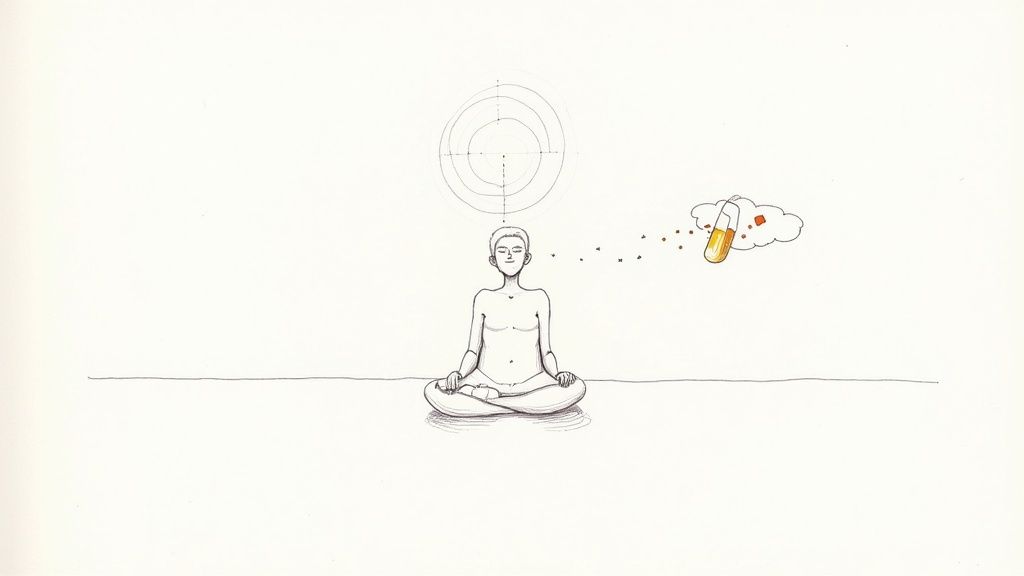
Mindfulness-Based Relapse Prevention (MBRP) is a highly effective substance abuse group activity that blends mindfulness practices, such as meditation and body awareness, with conventional relapse prevention strategies. Developed by researchers like Sarah Bowen and G. Alan Marlatt, this approach teaches individuals to observe their thoughts, feelings, and cravings with non-judgmental awareness. The core principle is to create a pause between an urge and an action, allowing for a more conscious response rather than an automatic, habitual one.
How It Works
In an MBRP group, a facilitator guides participants through various mindfulness exercises, including sitting meditations and body scans. The goal is to cultivate a "third-person" perspective on internal experiences like cravings or negative emotions. Instead of being swept away by these states, members learn to recognize them as temporary and manageable. The group setting offers a supportive space to discuss the challenges of mindfulness practice and share insights on how it applies to real-life high-risk situations.
Practical Implementation Tips
To successfully facilitate an MBRP group, it's crucial to make the practice accessible and relevant.
- Start Small: Begin sessions with brief, 3-5 minute guided meditations to build tolerance and familiarity before moving to longer periods of silence.
- Practice Together: Lead mindfulness exercises during group time to provide a shared experience and troubleshoot difficulties before assigning home practice.
- Use Guided Recordings: Provide participants with guided meditation audio files to ensure consistency and support their daily practice at home.
- Normalize Difficulties: Openly discuss common challenges like a wandering mind or physical discomfort to reduce frustration and encourage persistence.
MBRP is particularly beneficial for individuals who feel overwhelmed by intense cravings or emotional triggers. It equips them with invaluable coping skills for relapse prevention by fundamentally changing their relationship with discomfort. To further build these skills, you can learn more about effective coping strategies on alturarecovery.com.
7. Community Reinforcement Approach (CRA) Groups
The Community Reinforcement Approach (CRA) is a comprehensive behavioral model that shifts the focus from solely internal factors to a person’s external environment. As one of the most effective substance abuse group activities, CRA operates on the principle that reinforcing a sober lifestyle makes it more rewarding than substance use. The group setting is used to teach skills that help individuals rearrange their social, recreational, familial, and vocational lives to support long-term recovery.
How It Works
In a CRA group, a facilitator guides participants in analyzing their environments to identify triggers and reinforcers. The core of the work involves systematically increasing the positive reinforcement for sobriety. This includes improving relationships, finding enjoyable sober activities, securing stable employment, and learning effective communication skills. The group provides a forum for problem-solving, skill practice, and mutual support as members work to build a life that is genuinely more appealing without substances.
Practical Implementation Tips
To successfully implement CRA groups, a focus on environmental restructuring and skill-building is key.
- Involve Family: Whenever possible, include family members or significant others in sessions to teach communication skills and build a supportive home environment.
- Connect with Resources: Build strong partnerships with local employment agencies, recreational clubs, and social services to provide tangible support for participants.
- Conduct Functional Analysis: Begin by helping each member identify the specific antecedents and consequences of their substance use to tailor interventions.
- Use Structured Protocols: Adhere to established CRA manuals and protocols to ensure the model is delivered with fidelity and effectiveness.
CRA groups are highly effective for individuals whose substance use is deeply intertwined with their social and environmental circumstances. By providing practical tools to rebuild a rewarding life, this approach empowers participants to create lasting, positive change.
8. Psychoeducational Groups for Substance Abuse
Psychoeducational groups are a foundational component of substance abuse group activities, focusing on educating participants about the nature of addiction, recovery, and related life skills. These structured sessions are designed to empower individuals by providing them with evidence-based knowledge. The core principle is that understanding the science behind addiction, its effects on the brain and body, and the mechanics of recovery can significantly reduce stigma and shame, thereby strengthening one's commitment to sobriety.
How It Works
In a psychoeducational group, a facilitator presents specific topics, such as the neurobiology of addiction, the stages of change, or strategies for managing post-acute withdrawal syndrome (PAWS). Unlike process-oriented groups that focus on emotional sharing, these sessions are more didactic, similar to a classroom setting. However, the group format encourages interaction, allowing members to ask questions, share how the information relates to their own experiences, and learn from one another's insights in a supportive environment.
Practical Implementation Tips
To ensure a psychoeducational session is impactful and engaging, facilitators should prioritize clarity and interaction.
- Use Credible Curricula: Rely on evidence-based materials from reputable sources like SAMHSA or the National Institute on Drug Abuse (NIDA) to ensure accuracy.
- Balance Education and Interaction: Mix lectures or presentations with interactive elements like Q&A sessions, group discussions, or short quizzes to maintain engagement.
- Incorporate Multimedia: Use videos, diagrams, and slides to explain complex topics, such as how substances affect brain chemistry, making the information more accessible and memorable.
- Provide Handouts: Offer summary sheets, resource lists, or worksheets that members can take with them to reinforce learning and for future reference.
Psychoeducational groups are especially beneficial in the early stages of recovery, as they provide a solid foundation of knowledge that informs better decision-making. They equip participants with the "why" behind their recovery journey, making other therapeutic activities more meaningful. Exploring various recovery group topics on alturarecovery.com can provide a wealth of ideas for structuring these educational sessions.
9. Peer Support and Mutual Support Groups
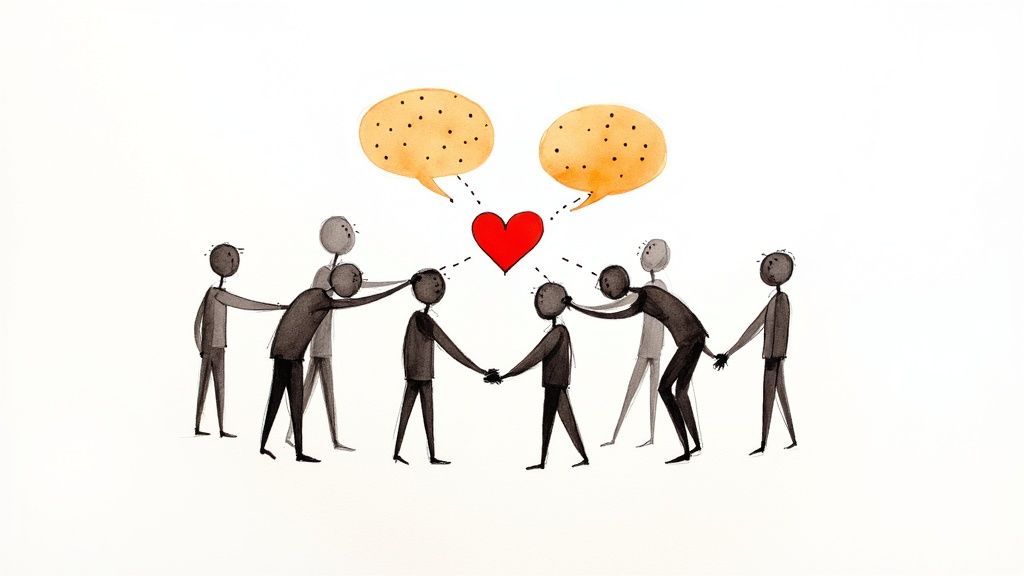
Peer Support and Mutual Support Groups are a foundational component of many recovery journeys, offering a community-driven alternative to professionally led substance abuse group activities. These groups are built on the principle of mutual aid, where individuals with shared lived experiences of addiction support one another. The therapeutic value comes from the collective wisdom, personal testimony, and the powerful experience of both giving and receiving help in a non-clinical setting.
How It Works
Unlike therapist-led groups, mutual support groups are run by and for their members. Participants share their personal stories, struggles, and successes, creating a powerful sense of belonging and reducing feelings of isolation. Popular models like Alcoholics Anonymous (AA) and Narcotics Anonymous (NA) use a 12-step framework, while others like SMART Recovery and LifeRing offer secular, evidence-based alternatives. This variety allows individuals to find a community that aligns with their personal beliefs and recovery goals.
Practical Implementation Tips
To help individuals integrate peer support into their recovery plan, consider the following:
- Explore Different Models: Encourage participants to try various meetings (e.g., AA, SMART Recovery, Celebrate Recovery) to find the best fit for their personality and needs.
- Encourage Sponsorship: In 12-step models, guide members toward finding a sponsor who can offer one-on-one guidance and support outside of formal meetings.
- Set Healthy Boundaries: Teach members how to establish and maintain personal boundaries within the group to ensure relationships remain supportive and non-codependent.
- Integrate with Professional Care: Position peer support as a complement, not a replacement, for clinical treatment. Understanding the differences between group therapy and peer support helps create a comprehensive recovery plan.
This approach is highly effective for individuals seeking long-term, community-based support and a sense of fellowship that extends beyond the walls of a treatment center.
10. Therapeutic Recreation and Experiential Activity Groups
Therapeutic Recreation and Experiential Activity Groups move recovery beyond traditional talk therapy by engaging participants in hands-on, activity-based interventions. These substance abuse group activities use recreational and creative pursuits to build healthy coping skills, improve self-esteem, and foster positive social connections. The core idea is that through direct experience, individuals can discover new, healthy sources of enjoyment and learn valuable life skills in a non-clinical setting.

How It Works
These groups leverage activities like adventure therapy (rock climbing, hiking), art, music, or equine therapy to create metaphors for recovery challenges. For instance, successfully navigating a difficult hiking trail can symbolize overcoming obstacles in sobriety. A facilitator helps the group process the experience, connecting the feelings and skills used during the activity back to their personal recovery journey. This experiential learning helps build confidence and provides a tangible sense of accomplishment.
Practical Implementation Tips
To maximize the therapeutic benefit of experiential activities, facilitators should prioritize safety, intention, and reflection.
- Match Activity to Group: Select activities that align with the group's physical abilities, interests, and therapeutic goals. Start with low-intensity options before introducing more significant challenges.
- Integrate Processing: Dedicate time before and after the activity for discussion. Ask questions like, "What did you learn about yourself during that challenge?" or "How can you apply that teamwork to your support system?"
- Set Clear Expectations: Establish rules for behavior, participation, and safety to create a structured and supportive environment where participants feel secure enough to be vulnerable.
- Focus on Skill-Building: Frame each activity as an opportunity to practice specific skills, such as communication, problem-solving, trust, or emotional regulation.
This approach is highly effective for individuals who find traditional therapy settings restrictive or who learn best by doing. Experiential activities provide a powerful, alternative pathway to healing by creating positive memories and demonstrating that a fun, fulfilling life without substances is possible.
Comparison of 10 Substance Abuse Group Activities
| Approach | Implementation Complexity 🔄 | Resource Requirements ⚡ | Expected Outcomes & Key Advantages 📊⭐ | Ideal Use Cases 💡 | Concise Tip 💡 |
|---|---|---|---|---|---|
| Cognitive Behavioral Group Therapy (CBGT) | Moderate — structured protocol, needs skilled facilitator | Moderate — clinician time, materials, group space | Strong evidence for reduced use and improved coping; cost-effective (⭐⭐⭐⭐) | Outpatient programs, community clinics, skill-building groups | Keep groups 8–12; use worksheets and clear rules |
| Motivational Interviewing (MI) Group Sessions | Moderate–High — skill-dependent, person-centered facilitation | Low–Moderate — trained facilitator; flexible format | Improves motivation, reduces resistance; complements other therapies (⭐⭐⭐⭐) | Ambivalent clients, primary care, prevention and engagement settings | Use open questions, reflect and amplify change talk |
| Twelve-Step Facilitation (TSF) Groups | Low — structured step progression, peer integration | Low — community meetings, minimal cost | Widely available community support and long-term fellowship (⭐⭐⭐) | Individuals receptive to spiritual/peer support; long-term recovery | Match sponsors and educate on 12‑step literature; respect diversity |
| Dialectical Behavior Therapy (DBT) Groups | High — multi-component program (groups, individual, team) | High — specialized training, therapist teams, long duration | Very effective for complex/co-occurring disorders and high-risk behaviors (⭐⭐⭐⭐⭐) | Dual-diagnosis, emotion dysregulation, high-risk populations | Start with mindfulness, maintain DBT structure and consultation team |
| Contingency Management (CM) Groups | Moderate — procedural, needs clear reinforcement schedules | High — funding for tangible rewards and verification systems | Strong short-term abstinence and engagement; objective tracking (⭐⭐⭐⭐) | Early recovery, clinics aiming to boost attendance/abstinence | Use escalating rewards, objective verification, plan sustainability |
| Mindfulness-Based Relapse Prevention (MBRP) Groups | Moderate — experiential plus CBT elements | Low–Moderate — facilitator mindfulness training, practice materials | Reduces relapse risk and improves urge management (⭐⭐⭐⭐) | Relapse prevention, stress-related triggers, polysubstance users | Begin with brief meditations; encourage daily home practice |
| Community Reinforcement Approach (CRA) Groups | High — coordinated, multi-domain intervention | High — employment, family involvement, community links | Improves environmental supports, quality of life, employment outcomes (⭐⭐⭐⭐) | Those needing social/environmental change and family engagement | Conduct functional analysis; coordinate community and employment services |
| Psychoeducational Groups for Substance Abuse | Low — curriculum-driven, structured lectures/discussion | Low — handouts, facilitator, multimedia | Increases knowledge, reduces stigma; good for early engagement (⭐⭐⭐) | Large groups, orientation sessions, court or school settings | Balance didactic content with interactive activities and Q&A |
| Peer Support and Mutual Support Groups | Low — peer-led; variable structure | Low — minimal cost, widely available | Strong normalization, sustained social support; variable clinical oversight (⭐⭐⭐) | Long-term recovery support, accessible community settings | Encourage sponsorship and combine with professional treatment |
| Therapeutic Recreation & Experiential Groups | Moderate — activity planning and processing required | Moderate–High — equipment, space, transportation | Increases engagement, builds coping and wellbeing (⭐⭐⭐) | Engagement-focused programs, reintegration, alternative therapies | Match activities to abilities; include reflection and skill transfer |
Finding the Right Group for Your Journey
The journey toward sobriety is multifaceted, and the power of connection cannot be overstated. Throughout this guide, we've explored a diverse landscape of ten evidence-based substance abuse group activities, each offering a unique pathway to healing and self-discovery. From the structured, thought-pattern-shifting exercises of Cognitive Behavioral Group Therapy (CBGT) to the acceptance and emotional regulation skills taught in Dialectical Behavior Therapy (DBT) groups, the common thread is the creation of a safe, supportive environment for growth.
These activities are more than just meetings; they are dynamic workshops for life. Motivational Interviewing (MI) sessions empower individuals to find their own reasons for change, while Mindfulness-Based Relapse Prevention (MBRP) provides the crucial tools to navigate cravings and triggers with awareness rather than reaction. The variety ensures that whether you are a working professional needing flexible options, a young adult navigating new life transitions, or an individual managing co-occurring mental health conditions, there is a therapeutic model that can align with your specific circumstances.
Key Takeaways for Your Recovery Path
The most crucial takeaway is that there is no single "best" approach. True, sustainable recovery often emerges from a blend of modalities. A comprehensive treatment strategy might combine the practical, goal-oriented nature of the Community Reinforcement Approach (CRA) with the profound peer connection found in Twelve-Step Facilitation (TSF) or other mutual support groups. The goal is to build a personalized toolkit of coping strategies, communication skills, and emotional resilience.
To make an informed choice, consider these actionable steps:
- Self-Assessment: Reflect on what you need most. Is it structured skill-building (DBT, CBT), motivational support (MI), community connection (TSF), or a way to manage environmental triggers (CRA)?
- Professional Consultation: Speak with an addiction specialist or therapist. They can assess your history, needs, and co-occurring disorders to recommend the most suitable group settings. For those exploring different modalities, it's beneficial to see practical treatment plan examples that outline the roadmap for recovery and well-being.
- Trial and Observation: Don't be afraid to visit different types of groups if possible. Experiencing the dynamic firsthand is often the best way to determine if a particular group’s philosophy and structure feel right for you.
Embracing the Power of Shared Experience
Ultimately, mastering the skills learned in these groups translates into a life with more freedom, stability, and fulfillment. These substance abuse group activities are designed to do more than just stop substance use; they aim to rebuild lives, repair relationships, and restore a sense of purpose. The shared vulnerability and collective strength found within a group setting can be one of the most powerful catalysts for change, reminding you that you are not alone in your struggles or your triumphs.
Choosing to engage in group therapy is a courageous step toward reclaiming your future. It is an investment in your well-being that provides both the clinical framework and the human connection essential for lasting recovery. Embrace the process, stay open to new perspectives, and trust in your ability to build a healthier, more rewarding life, one session at a time.
At Altura Recovery, we understand that a personalized approach is key to success. Our programs integrate a range of evidence-based group therapies, including CBT, DBT, and mindfulness, all within a compassionate, trauma-informed framework to support your unique journey. Visit Altura Recovery to learn how our dedicated team can help you or your loved one build a strong foundation for lasting sobriety.