Yes, alcohol can absolutely cause anxiety attacks. It’s a cruel irony, isn't it? The very thing so many of us reach for to take the edge off can end up sharpening our anxiety into a full-blown panic.
That first drink often feels like a sigh of relief. Your shoulders drop, your mind quiets down, and the world seems a little less hostile. But this calm is borrowed, not earned, and the payback can be brutal.
The Deceptive Calm of Alcohol
Think of alcohol as a high-interest loan for your brain’s chemistry. The immediate relaxation is the cash in your hand, but the “hangxiety” and potential for panic attacks that follow are the steep, unavoidable repayments. This cycle is incredibly deceptive, tricking you into believing alcohol is a solution when it’s actually fueling the problem.
Many people use a drink to unwind after a stressful day or to feel more comfortable in social situations. It works, for a little while, because alcohol boosts the effects of GABA, our brain's main calming neurotransmitter. GABA acts like the brakes on a car, slowing down brain activity and making you feel relaxed and sedated.
But your brain is a master of balance. It notices this artificial slowdown and pushes back hard to maintain its normal operating speed. As the alcohol wears off, this aggressive overcorrection leaves your system in a state of high alert, making you far more vulnerable to anxiety than you were before you ever took a sip.
The Rebound Effect Explained
This biological pushback is known as the rebound effect. To counteract the sedative properties of alcohol, your brain ramps up the production of glutamate, an excitatory neurotransmitter. Glutamate is the gas pedal. Once the alcohol is gone, you’re left with a brain that’s flooring the accelerator with no brakes in sight.
This sudden surge of glutamate is what triggers the intense agitation, restlessness, and heart-pounding nervousness you feel the morning after drinking. Your central nervous system is essentially in overdrive, creating the perfect internal storm for a panic attack.
Let’s break down how this chemical see-saw plays out.
Alcohol's Initial vs. Rebound Effects On The Brain
This table shows the drastic shift in your brain's chemistry, moving from the initial buzz to the anxious aftermath. It's a clear picture of why that temporary peace comes at such a high cost.
| Effect Stage | Impact on GABA (Calming Neurotransmitter) | Impact on Glutamate (Excitatory Neurotransmitter) | Resulting Feeling |
|---|---|---|---|
| Initial Consumption | Artificially boosted, creating a powerful sedative effect. | Suppressed to enhance the calming sensation. | Relaxed, calm, sociable, less inhibited. |
| Rebound Period | Levels drop sharply as the brain's natural production is suppressed. | Surges to counteract the alcohol, causing hyper-arousal. | Anxious, agitated, restless, on edge. |
The takeaway is simple: alcohol doesn't solve anxiety; it just postpones and amplifies it. This predictable neurochemical disruption is not a personal failing—it’s how the brain responds to the substance.
Alcohol's calming effect is borrowed from your future self. The temporary relief it provides is often paid back with heightened anxiety, restlessness, and a greater risk of panic as your body metabolizes it.
Understanding this dynamic is the first step toward breaking the cycle. By recognizing that the initial ease is just setting the stage for a much more intense and uncomfortable emotional state, you can start to see alcohol for what it is: a contributor to anxiety, not a cure.
How Alcohol Hijacks Your Brain's Chemistry
To get why a few drinks can spiral into a full-blown anxiety attack, we have to look at what’s happening inside your brain. Think of your brain’s chemistry as a finely tuned balancing act. On one side, you have calming signals, and on the other, you have excitatory signals. Most of the time, they work together to keep you feeling steady and in control.
But when alcohol shows up, it throws a wrench in the whole system. It’s like it leans heavily on the “calm” side of the scale.
This happens because alcohol mimics and boosts the effects of GABA (gamma-aminobutyric acid), which is your brain’s main calming chemical. GABA is essentially the brake pedal for your nervous system. It slows things down, eases stress, and gives you that initial wave of relaxation after your first drink. It’s why that glass of wine at the end of a long day feels so good—it’s artificially pressing the brakes.
Of course, your brain is smart. It’s always working to maintain balance, or what scientists call homeostasis. When it senses this artificial slowdown, it doesn't just sit back. It starts pushing back—hard.
The Great Chemical Rebound
As your body starts to metabolize the alcohol and the calming effects wear off, your brain’s emergency countermeasures kick in. It floods your system with glutamate, an excitatory neurotransmitter that acts like the gas pedal. Glutamate does the exact opposite of GABA; it revs everything up.
This sudden surge of glutamate plunges you into a state of hyper-arousal. Suddenly, your nervous system is on high alert, and every little thing feels amplified.
This infographic gives a simple but powerful visual of that shift from initial calm to rebound anxiety.
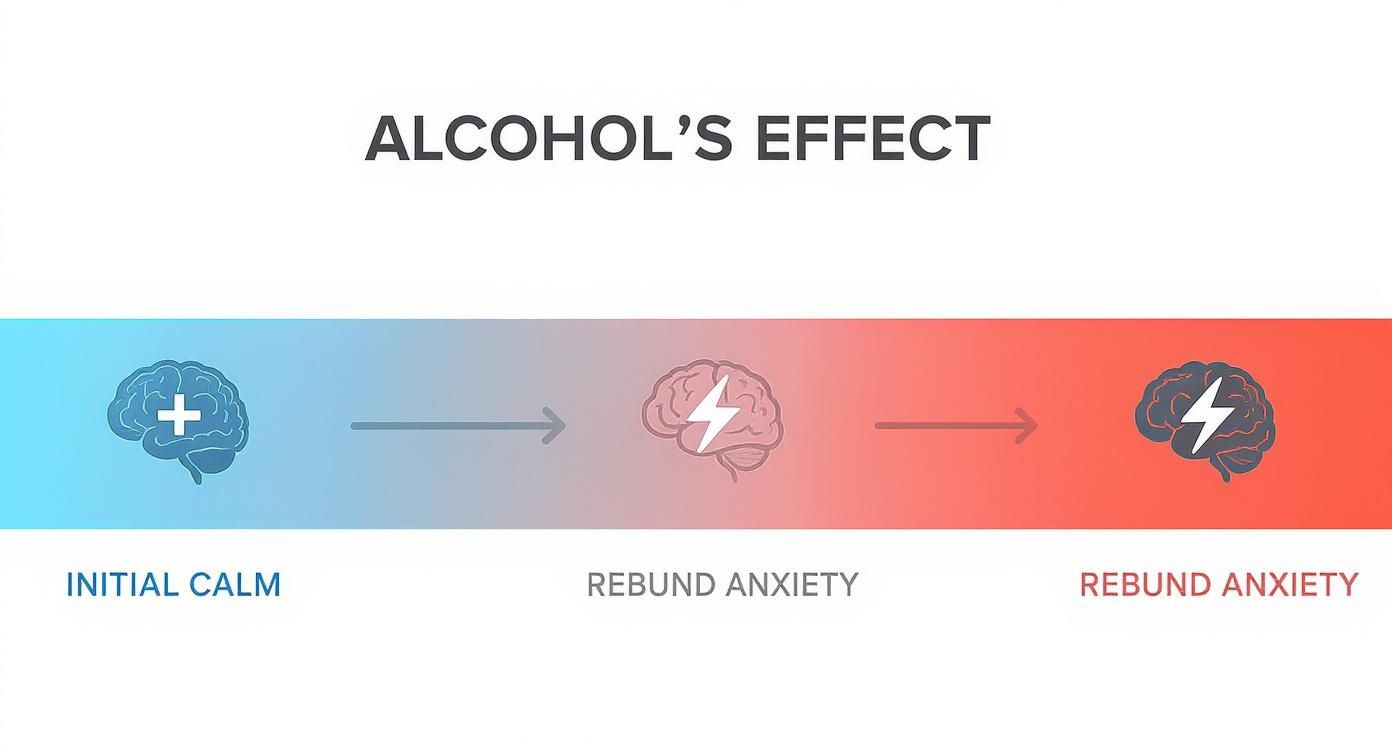
You can see how the brain's attempt to get back to normal actually overshoots the mark, creating the perfect storm for intense anxiety and panic.
This neurological whiplash is what people now call “hangxiety.” Your brain is overloaded with stimulating chemicals, which can lead to some pretty awful symptoms:
- A feeling of intense restlessness or agitation
- A racing heart and short, shallow breaths
- A sense of dread or that something terrible is about to happen
- Being extra sensitive to light and sound
For someone already prone to anxiety, this rebound effect isn't just uncomfortable—it can be the trigger for a full-blown panic attack.
Disrupting Your Mood Regulators
It’s not just about the GABA-glutamate seesaw, either. Alcohol also messes with other key mood regulators like serotonin and dopamine. These are the chemicals responsible for feelings of well-being, pleasure, and stability.
Over time, heavy or chronic drinking can deplete these neurotransmitters. This creates a vicious cycle: you feel down or anxious, so you drink to get temporary relief, but that drinking only worsens the underlying brain chemistry, making you feel even more anxious and depressed in the long run.
This is a massive global health issue. Anxiety disorders are the most common mental illness worldwide, and it's incredibly common for people to self-medicate with alcohol, not realizing they're pouring gasoline on the fire. This often leads to a dual diagnosis, where an alcohol use disorder and an anxiety disorder exist together, each one making the other worse. You can get more details on this connection from the World Health Organization's fact sheet on anxiety disorders.
The temporary calm from alcohol is a loan shark for your brain. The initial relief is tempting, but the repayment comes with staggering interest in the form of heightened anxiety and a destabilized nervous system.
Understanding this chemical hijacking is the first step. The anxiety you feel after drinking isn't a character flaw or a personal failing; it's a predictable biological reaction. Armed with this knowledge, you can start to see the difference between physical vs psychological dependence and begin finding healthier, more sustainable ways to manage stress.
Identifying Alcohol-Induced Anxiety Symptoms
It’s easy to write off those morning-after jitters as just a bad hangover. But it’s critical to know the difference between feeling a little off and something far more serious. Learning to connect the dots between your drinking and your anxiety is the first step toward getting your peace of mind back.
That vague sense of dread, regret, and unease after a night of drinking even has a name: “hangxiety.” This is your brain chemistry scrambling to rebalance itself. While uncomfortable, it's a pretty common experience.
For many people, though, this feeling can spiral well beyond simple worry and into a full-blown, terrifying panic attack. Understanding the difference is key.
Hangxiety Vs. Alcohol-Induced Panic
Hangxiety usually feels like a low-grade, nagging worry. You might find yourself replaying conversations from the night before or just feeling a general sense of impending doom. It’s deeply unpleasant but typically something you can manage to get through.
An alcohol-induced anxiety attack, on the other hand, is a sudden and overwhelming episode. This isn't just worry; it's a tidal wave of intense fear or terror that feels completely out of your control. The physical symptoms can be so severe that people often think they’re having a heart attack or losing their minds.
Comparing Hangxiety vs. Panic Attack Symptoms
To get a clearer picture, it helps to see the symptoms side-by-side. While both are unpleasant, one is a manageable discomfort and the other is an acute crisis.
| Symptom | Hangxiety | Alcohol-Induced Panic Attack |
|---|---|---|
| Intensity | A persistent, low-level feeling of unease and regret. | A sudden, overwhelming surge of intense fear or terror. |
| Physical Signs | Mild shakiness, fatigue, headache, and general discomfort. | Racing heart, chest pain, shortness of breath, dizziness, and sweating. |
| Mental State | Generalized worry, overthinking past events, and mild paranoia. | A profound sense of impending doom, detachment from reality, or fear of dying. |
| Duration | Can linger for most of the day as a background feeling. | Typically peaks within 10-20 minutes but can leave you shaken for hours. |
Recognizing these distinctions helps you move from confusion to clarity. That racing heart you feel at 3 a.m. isn’t just some random event; it's a direct physiological response to the alcohol leaving your system.
Common Red Flags to Watch For
The symptoms of an alcohol-triggered anxiety attack are both physical and psychological. They often show up hours after you've stopped drinking, catching you completely off guard right as your blood alcohol level is dropping back to zero.
Here are some of the most common signs that alcohol is the direct cause of your anxiety attacks:
- Sudden Night Waking: Jolting awake in the middle of the night with a pounding heart, gasping for air, or drenched in sweat.
- Intense Physical Sensations: Experiencing chest tightness, trembling, tingling in your hands and feet, or feeling dizzy and lightheaded.
- Overwhelming Sense of Dread: A sudden, paralyzing feeling that something terrible is about to happen, with no logical reason behind it.
- Feeling of Detachment: A strange sense of being disconnected from your own body or your surroundings, almost like you're watching a movie of yourself.
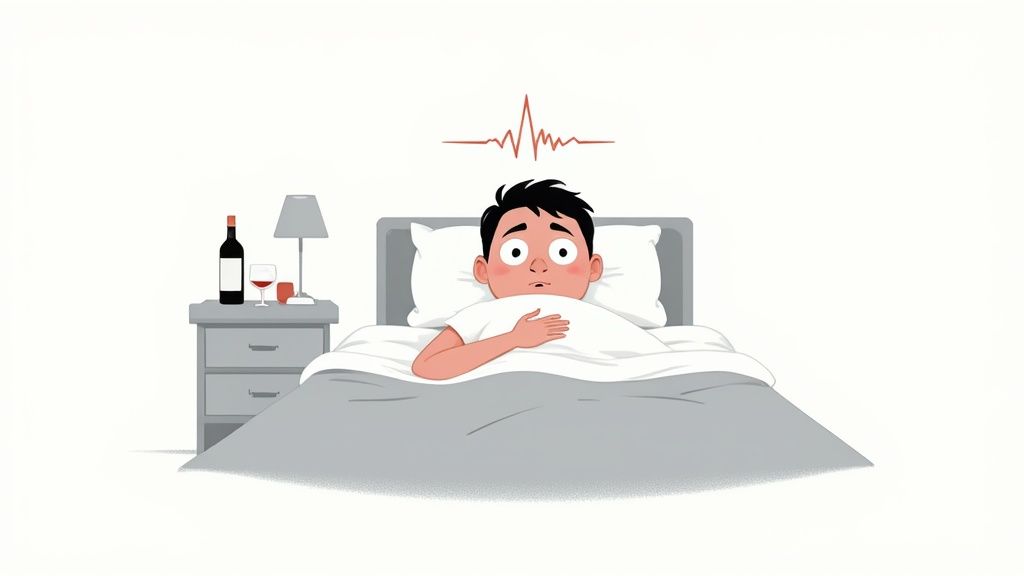
If you consistently experience intense anxiety, panic, or dread in the hours or the day after drinking, it's a clear signal. Your body is telling you that the neurochemical rebound from alcohol is too much for your system to handle.
By identifying these symptoms for what they are—a direct result of alcohol's impact on your brain—you can begin to understand the true source of your distress. This awareness is the first real step toward taking control and breaking the cycle.
Understanding Your Personal Risk Factors
Ever wonder why one person can have a few drinks and feel fine the next day, while another is plunged into a full-blown anxiety attack? The answer isn’t a mystery—it’s a mix of personal factors that can make you more vulnerable. Think of them as ingredients in a recipe for panic; the more you have, the more likely it is that alcohol will trigger one.
A huge piece of the puzzle is your baseline mental health. If you’re already living with something like Generalized Anxiety Disorder, Panic Disorder, or social anxiety, drinking is like throwing fuel on a fire. It can crank up your existing symptoms, turning a manageable issue into an acute crisis once the alcohol’s calming effects wear off and the rebound anxiety kicks in.
The Role of Genetics and Drinking Patterns
Your family tree plays a bigger part than you might think. Just like some families have a history of heart disease, you might have a genetic predisposition that affects how your brain handles alcohol and regulates anxiety. If close relatives struggle with either anxiety or alcohol use, your personal risk is probably higher.
Beyond your DNA, your drinking habits are a critical factor. Binge drinking—slamming a lot of alcohol in a short time—is a massive trigger. This pattern sends your brain chemistry on a rollercoaster, leading to a much harsher rebound effect and a sky-high chance of experiencing intense panic.
Your personal risk is a complex puzzle. It's not just about what or how much you drink, but also about your unique biology, your mental health history, and your lifestyle habits.
Physical Triggers That Compound the Problem
It's not all in your head. Several physical factors can directly open the door for alcohol to cause an anxiety attack.
- Sleep Disruption: Alcohol might make you drowsy, but it absolutely wrecks the quality of your sleep. By disrupting the deep, restorative REM cycle, it leaves you feeling groggy and on-edge the next day—a perfect setup for anxiety to take hold.
- Dehydration and Nutrition: Alcohol is a diuretic, which is just a fancy way of saying it dehydrates you. Even mild dehydration can spark symptoms like a racing heart or dizziness, which an anxious brain can easily mistake for the start of a panic attack. It also drains key nutrients like B vitamins that are vital for keeping your mood stable.
- Past Trauma: If you're carrying unresolved trauma, your nervous system is likely already on high alert. For some, the vulnerability or loss of control that comes with drinking can trigger those underlying trauma responses, which can show up as pure panic. Understanding how past events connect to current reactions is a game-changer, and specialized approaches can help. You can learn more about what is trauma-informed therapy and how it works.
Global data paints a clear picture of the link between heavy drinking and anxiety. Alcohol use disorders affect about 7% of the global population over the age of 15. In 2019 alone, alcohol was tied to 2.6 million deaths worldwide. These numbers aren't just statistics; they represent the massive impact alcohol has on both mental and physical health. You can explore more data on this global health issue and its regional trends on the National Center for Biotechnology Information website.
Actionable Strategies to Break the Cycle
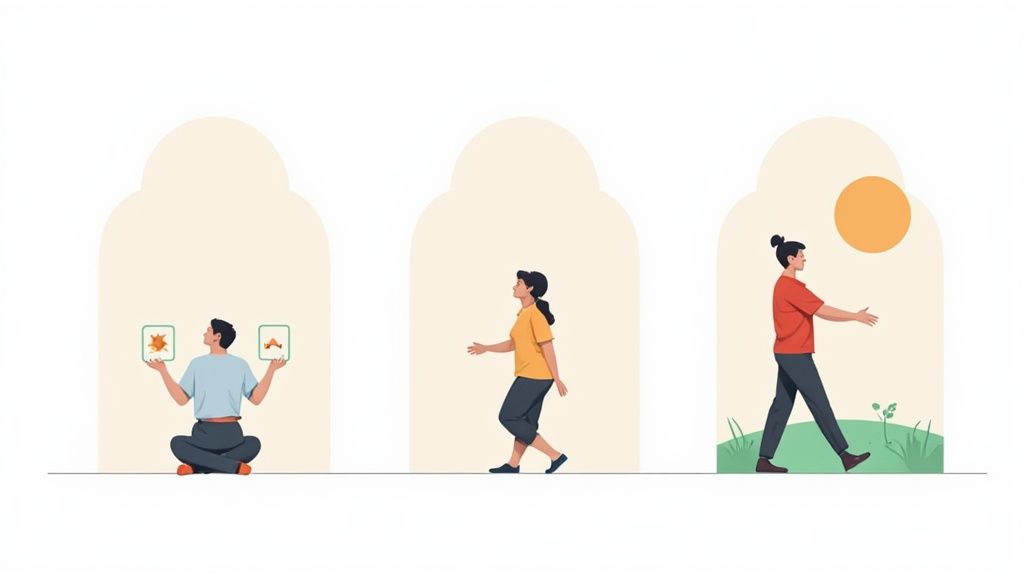
Knowing that alcohol can trigger anxiety attacks is the first step, but real change comes from taking action. Once you stop leaning on alcohol as a crutch, you need reliable strategies to hold you up instead. This means having a game plan for both those in-the-moment panic spikes and the long-term habits that build genuine resilience.
The goal here is to build a toolkit of healthy coping mechanisms. You want things that empower you to manage stress and anxiety on your own terms, finally breaking free from the impulse to grab a drink. These methods calm your nervous system the right way—naturally, without the brutal rebound effect that alcohol guarantees.
Grounding Techniques for Immediate Relief
When you feel those first tell-tale signs of panic creeping in—the racing heart, the shallow breath, that awful sense of dread—your number one job is to get your nervous system back under control. These grounding techniques are designed to pull you back from the edge.
1. The 5-4-3-2-1 Method
This trick is brilliant because it forces your brain to pay attention to the world around you instead of the storm inside your head. It’s incredibly simple, and you can do it absolutely anywhere.
- 5: Acknowledge five things you can see.
- 4: Notice four things you can feel or touch.
- 3: Listen for three separate sounds.
- 2: Identify two different smells.
- 1: Name one thing you can taste.
2. Box Breathing
This is a powerful but ridiculously easy practice for regulating your breathing, which is the fastest way to calm your entire body. When anxiety symptoms hit hard, simple tools like this are your best friend. In fact, exploring different breathing exercises for quick stress relief and a lower heart rate can give you even more options.
To try box breathing, just inhale slowly for a count of four, hold your breath for four, exhale for four, and hold again for four. A few minutes of this cycle can bring your heart rate down and ease panic in a very real way.
These aren't just distractions; they are physiological tools that directly counteract your body’s fight-or-flight response.
Building Long-Term Resilience Without Alcohol
Getting through a panic attack is crucial, but the real work is in creating a lifestyle that doesn't leave you so vulnerable to anxiety in the first place. This means you have to replace the job alcohol was doing with healthier, more sustainable habits.
Establish a Consistent Sleep Schedule: Alcohol absolutely destroys sleep quality. Making it a priority to get 7-9 hours of consistent, high-quality sleep every night is one of the single most effective ways to stabilize your mood and lower your baseline anxiety.
Incorporate Regular Physical Activity: You don't have to become a marathon runner. Just 20-30 minutes of moderate movement, like a brisk walk, is enough to release endorphins, burn off stress hormones, and clear your head.
Rethink Socializing: If your entire social life happens in a bar, it’s time for a change of scenery. Start suggesting coffee meetups, hiking trips, or even joining a class or a club together. This helps you build connections that aren't soaked in alcohol.
Developing these new routines takes time and practice. For anyone looking for a more structured path forward, exploring a variety of coping skills for substance abuse can offer a clear roadmap for building a resilient life, free from the anxiety-alcohol cycle.
Knowing When to Seek Professional Support
While self-help strategies can be powerful tools, sometimes they just aren’t enough to break the vicious cycle of alcohol and anxiety. Recognizing when you need expert guidance isn’t a sign of weakness—it’s a sign of strength. It’s the moment you decide to stop struggling alone and start building a real, solid foundation for recovery.
If you find yourself stuck in a pattern of drinking to manage or prevent anxiety, that’s a major red flag. This behavior often creates a self-feeding loop where the alcohol itself triggers anxiety attacks, which you then try to treat with more alcohol. It’s an exhausting and dangerous cycle to be trapped in.
Clear Signs It’s Time to Reach Out
It can be tough to know when to ask for help. The line between a bad habit and a serious problem can feel blurry, but certain signals make it clear that professional support has become necessary.
Consider reaching out if you experience any of the following:
- You can’t control your intake: You consistently drink more than you planned or for longer periods than you intended.
- Your life is disrupted: Your anxiety or drinking habits are negatively affecting your work, relationships, or health.
- Withdrawal symptoms appear: You feel physically or mentally unwell when you try to cut back or stop drinking.
- You self-medicate: You consciously use alcohol as your primary tool to cope with feelings of panic or dread.
These signs suggest the problem has grown beyond something you can manage with willpower alone. Research backs this up, revealing that individuals with anxiety are about 20% more likely to use alcohol as a coping mechanism. This connection can become a serious health issue, as studies show a significant link between alcohol use and increased odds of developing panic disorder. To dig deeper, you can learn more about how anxiety and alcohol use disorder are linked.
Finding the Right Path to Recovery
Seeking help doesn’t mean a one-size-fits-all solution. There are many effective pathways to recovery, each designed to address the complex relationship between substance use and mental health.
Getting professional help isn't about admitting defeat; it's about arming yourself with the right tools and a dedicated team to help you win the fight against the anxiety-alcohol cycle.
Effective support often involves a combination of therapy and specialized guidance. Cognitive Behavioral Therapy (CBT), for instance, is highly effective for both anxiety and addiction because it helps you identify and change the negative thought patterns that fuel the cycle. Exploring your options is the first step, and understanding the different approaches to addiction and mental health treatment can provide a clear roadmap for what to expect. Reaching out to an addiction specialist or joining a support group can provide the structure and community needed for lasting change.
Frequently Asked Questions
When you're trying to untangle the knot between alcohol and anxiety, a lot of specific questions pop up. We get it. Let’s tackle some of the most common ones with clear, direct answers to help you connect the dots.
How Long After Drinking Can an Anxiety Attack Occur?
It's a strange but common pattern: the anxiety attack doesn't hit while you're drinking. Instead, it usually ambushes you hours later, often in the middle of the night or the next morning as your blood alcohol level returns to zero.
This is all thanks to a neurochemical whiplash called the "rebound effect." Once the calming effects of alcohol wear off, your brain scrambles to rebalance itself by releasing a flood of stimulating chemicals. This sudden state of high alert is the perfect breeding ground for panic. It's exactly why "hangxiety" and morning-after panic attacks are so incredibly common.
Can Even a Small Amount of Alcohol Cause Anxiety?
Yes, for some people, it absolutely can. You don't need to binge drink to feel the anxious fallout. While heavier drinking definitely carries a bigger risk, even one or two drinks can be enough to throw your brain chemistry off balance.
Your personal sensitivity is the key factor here. A few things can make you more vulnerable:
- Pre-existing anxiety: If you already live with anxiety, your system is just more sensitive to these kinds of chemical shifts.
- Genetics: A family history of anxiety or alcohol use disorders can stack the deck against you.
- Current stress levels: When your brain is already overloaded with stress, it's far more likely to overreact to the effects of alcohol.
- Poor sleep or diet: Think of these as your baseline resilience. When they're off, your ability to handle alcohol’s negative side effects plummets.
If I Stop Drinking, Will My Anxiety Go Away?
For many people, quitting or seriously cutting back on alcohol leads to a huge drop in anxiety, especially if drinking was the main trigger for their panic attacks. It's common to hear people describe a profound sense of calm and stability setting in within just a few weeks of stopping.
But, if there's an underlying anxiety disorder, quitting alcohol is a critical first step, not a magic cure. In that case, the alcohol was probably pouring gasoline on a pre-existing fire. You'll still need to address the root cause of the anxiety with tools like therapy to find lasting relief.
What Are Good Non-Alcoholic Drinks for Social Situations?
The good news? The world of non-alcoholic drinks has gotten seriously impressive. You can easily take part in the social ritual of having a drink in your hand without any of the alcohol.
Ditch the boring soda and try something more sophisticated. Think sparkling water with a twist of lime, craft mocktails with fresh herbs and juices, a high-quality non-alcoholic IPA, or even kombucha on tap. Just holding a glass can make you feel more comfortable, and choosing an interesting alternative ensures you never feel like you're missing out.
At Altura Recovery, we know that breaking the cycle of alcohol and anxiety is tough to do alone. Our evidence-based outpatient programs are designed to help you build real-world coping skills without putting your life on pause. If you're ready to find lasting freedom from this struggle, visit us at https://www.alturarecovery.com to learn how we can help.